Manually creating SEO-optimized content at scale is becoming increasingly unsustainable. Between keyword research, content briefs, writing, optimization, and publishing, a single article can consume hours of valuable time. Content generation with SEO autopilot changes this equation entirely—automating the repetitive tasks while maintaining quality standards that satisfy both search engines and AI platforms.
This guide walks you through implementing an autopilot content system from initial setup to fully automated publishing. By the end, you'll have a functioning workflow that generates, optimizes, and publishes SEO content with minimal manual intervention.
Whether you're a solo marketer managing multiple sites or an agency scaling content operations, these steps will help you build a sustainable content engine that works while you focus on strategy and growth.
Step 1: Audit Your Current Content Workflow and Identify Automation Opportunities
Before automating anything, you need a clear picture of what you're actually automating. Think of this like optimizing a recipe—you can't improve the process until you understand every ingredient and step involved.
Start by mapping your entire content creation process from the moment an idea enters your pipeline to the second it goes live on your site. Document every single step: keyword research, competitor analysis, outline creation, brief writing, first draft, editing passes, SEO optimization, image selection, formatting, internal linking, publishing, and indexing notification.
Now comes the critical part—identify where you're spending the most time on repetitive, rules-based tasks. Keyword research that follows a consistent methodology? Automatable. Creating content briefs with similar structures? Automatable. Writing first drafts that follow your brand guidelines? Automatable. Strategic decisions about content direction and messaging? That stays with you.
Document your quality standards in concrete terms. What makes a piece of content acceptable for your brand? How many headings should it include? What's your target word count range? How do you approach internal linking? These standards become the guardrails for your automation system.
Calculate your current time investment per article. If you're spending four hours per piece and publishing twice weekly, that's roughly 32 hours monthly just on content creation. This baseline becomes your comparison point for measuring the efficiency gains from autopilot implementation.
The goal isn't to automate everything—it's to automate the mechanical tasks so you can focus on the strategic decisions that actually differentiate your content in a crowded market.
Step 2: Select and Configure Your SEO Autopilot Platform
Not all content automation platforms are built the same. The difference between a basic AI writing tool and a true SEO autopilot system comes down to three core capabilities: intelligent AI agents that understand different content types, seamless CMS integration that enables true automation, and built-in indexing features that get your content discovered immediately.
When evaluating platforms, look for systems that offer specialized AI agents rather than one-size-fits-all generation. Different content types require different approaches—a listicle demands a different structure than an in-depth guide. Platforms with multiple specialized agents can adapt their output based on content type and intent.
CMS integration is where many automation attempts fail. If you're still copying and pasting content from a writing tool into WordPress or Webflow, you haven't actually automated anything—you've just shifted the bottleneck. Look for platforms that connect directly to your CMS and can publish without manual intervention.
Set up your account and establish the connection to your website. This typically involves API authentication or plugin installation, depending on your CMS. For WordPress sites, this might mean installing a dedicated plugin. For Webflow or custom solutions, you'll likely use API keys to establish the connection.
Once connected, configure your brand voice settings within the platform. Upload existing content samples that represent your ideal tone and style. Define your target audience in specific terms—not just "marketers" but "B2B SaaS marketers managing organic growth strategies." The more specific your guidelines, the more consistent your automated output.
Run a test generation cycle with a single piece of content. Choose a straightforward topic from your keyword list and let the system generate it according to your settings. Review the output carefully—not to judge whether it's perfect, but to identify which settings need adjustment before scaling up.
This test cycle reveals gaps in your configuration. Maybe the tone is too formal, or the content lacks specific examples. These insights let you refine your settings before automating at scale.
Step 3: Build Your Keyword and Topic Pipeline
Your autopilot system is only as good as the keywords feeding it. Think of this like setting up a production line—you need a steady stream of raw materials organized by type and priority.
Start by organizing your target keywords into content clusters. A cluster might focus on "AI visibility tracking" with supporting keywords like "monitor AI mentions," "track ChatGPT references," and "measure AI search presence." This clustering ensures your automated content builds topical authority rather than creating isolated articles.
Assign content types to different keyword intents. Informational keywords like "what is AI visibility" naturally map to explainer articles. How-to keywords like "track AI mentions" align with step-by-step guides. Comparison keywords like "best AI tracking tools" work well as listicles. This intent-based assignment helps your autopilot system choose the right content structure automatically.
Configure priority rules based on multiple factors. Search volume matters, but so does competition level and business value. A high-volume keyword with intense competition might rank lower in your queue than a moderate-volume keyword where you can actually win rankings. Similarly, keywords that align closely with your product or service deserve priority over tangentially related topics.
Establish a sustainable publishing cadence. Many marketers make the mistake of automating content generation and then flooding their site with dozens of articles weekly. This creates indexing bottlenecks and can actually hurt your SEO performance. Start conservatively—perhaps three to five articles weekly—and scale up as you monitor indexing speed and performance. For guidance on scaling effectively, explore strategies for SEO content generation at scale.
Your publishing schedule should match your capacity to promote and build links to new content. If you're publishing faster than you can get those articles indexed and earning visibility, you're not optimizing for results—you're just creating digital clutter.
Step 4: Configure AI Agents and Content Generation Settings
This is where your autopilot system transforms from a simple writing tool into an intelligent content engine. Modern platforms use specialized AI agents—each trained for specific content types and optimization tasks.
Select the appropriate AI agents for different content types in your pipeline. A listicle agent understands how to structure comparison content with clear criteria and balanced coverage. A how-to guide agent knows to break processes into sequential steps with success indicators. An explainer agent focuses on clarity and progressive complexity. Matching the right agent to each content type ensures structural consistency without manual intervention.
Configure internal linking rules to automatically connect new content with your existing pages. Set parameters for how many internal links to include, which anchor text patterns to use, and how to prioritize linking to high-value pages. Smart internal linking rules might automatically link to your product pages when relevant, connect supporting articles to pillar content, and create bidirectional links between related topics.
Set up GEO optimization settings to improve visibility across AI search platforms. This goes beyond traditional SEO—you're now optimizing for how AI models like ChatGPT, Claude, and Perplexity understand and reference your content. Learn more about GEO SEO content generation to maximize your AI platform visibility.
Establish word count targets and formatting standards. Different content types warrant different lengths—a quick explainer might target 800-1200 words, while a comprehensive guide could aim for 2500-3500 words. Set heading structure requirements, paragraph length preferences, and formatting rules that maintain readability across all automated content.
Configure quality thresholds that trigger human review. You might set rules that flag content for manual review if it falls below certain readability scores, fails to meet word count targets, or can't find sufficient internal linking opportunities. These safeguards ensure your autopilot system maintains quality standards even when running unsupervised.
Step 5: Set Up Automated Indexing and Publishing Workflows
Content that sits unpublished or unindexed delivers zero value. This step connects your generation system to actual visibility in search engines and AI platforms.
Enable IndexNow integration to notify search engines immediately when new content goes live. Traditional indexing relies on search engines discovering your content through crawling—a process that can take days or weeks. IndexNow flips this model by proactively notifying search engines the moment you publish. This protocol is supported by Microsoft Bing, Yandex, and other search engines, dramatically reducing the time between publishing and indexing.
Configure automatic sitemap updates to keep your site structure current. Every time your autopilot system publishes new content, your XML sitemap should update automatically to include the new URLs. This ensures search engines always have an accurate map of your content, improving crawl efficiency and indexing speed.
Set up CMS auto-publishing rules with appropriate review gates based on your risk tolerance. Some marketers run fully automated publishing where content goes live without human review. Others implement a review queue where generated content awaits approval before publishing. A middle-ground approach might auto-publish certain low-risk content types while flagging high-stakes topics for review. Explore various SEO autopilot content tools to find the right balance for your workflow.
Test the complete workflow from keyword to indexed content. Select a test keyword, let your autopilot system generate the content, and monitor the entire process: generation completion, CMS publishing, sitemap update, IndexNow notification, and eventual indexing in search engines. This end-to-end test reveals any disconnects in your automation chain.
Set up monitoring for failed publishing attempts or indexing errors. Automation works brilliantly until it doesn't—and when something breaks, you need to know immediately. Configure alerts for publishing failures, indexing delays, or content that doesn't meet your quality thresholds.
Step 6: Monitor Performance and Optimize Your Autopilot System
Your autopilot system is now operational, but this is where the real work begins. The difference between mediocre automation and a high-performing content engine comes down to continuous optimization based on performance data.
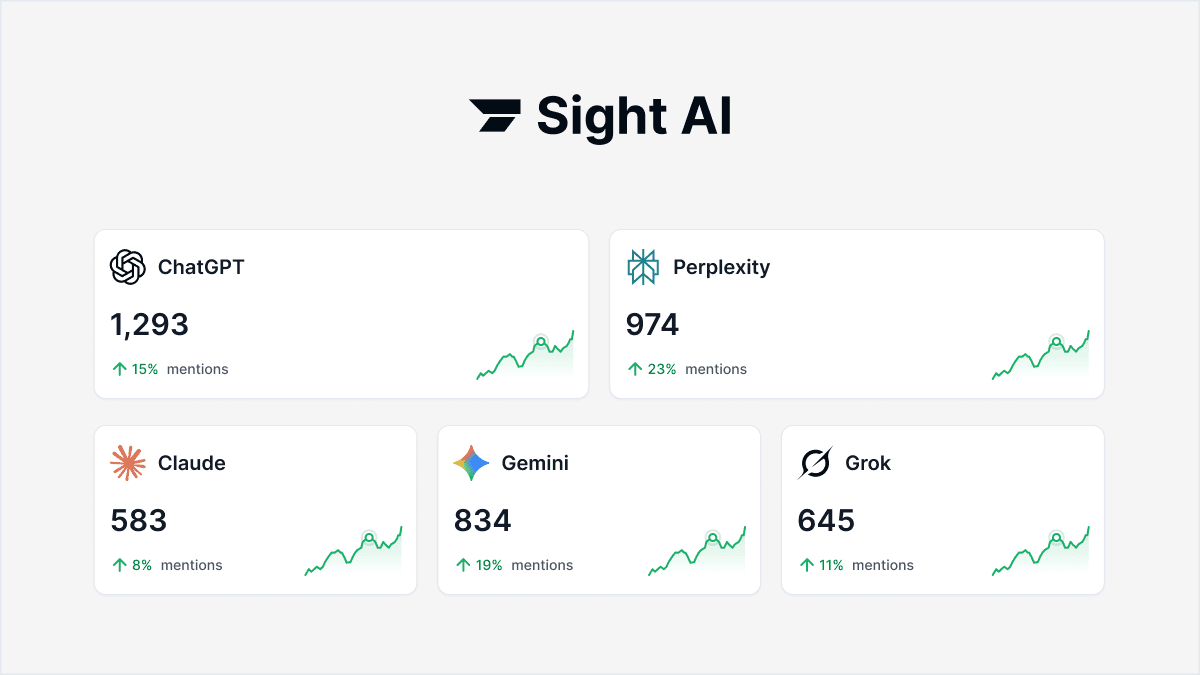
Track AI visibility scores to measure how AI models reference your content. Traditional SEO metrics like rankings and traffic tell part of the story, but in 2026, you also need to know whether AI platforms are mentioning your brand when users ask relevant questions. Monitor which topics and content types earn the most AI citations, and use these insights to refine your content generation settings.
Monitor indexing speed and search performance of autopilot-generated content. Compare indexing times before and after implementing IndexNow. Track how quickly new articles start appearing in search results and earning impressions. If certain content types index faster or perform better, adjust your keyword pipeline to prioritize those formats.
Identify underperforming content patterns and adjust generation settings accordingly. If listicles consistently outperform how-to guides in your niche, shift more keywords to the listicle format. If shorter articles earn better engagement than longer pieces, adjust your word count targets. Let data drive your configuration decisions rather than assumptions about what should work. Consider reviewing platform comparison guides to ensure you're using the best tools for your needs.
Iterate on prompts, guidelines, and agent configurations based on performance data. Your initial settings are educated guesses—your optimized settings come from analyzing what actually performs. If content with more specific examples earns better engagement, update your generation prompts to emphasize concrete examples. If certain heading structures improve readability scores, make those structures standard in your formatting rules.
Review your content quality weekly during the first month. Look for patterns in what works and what doesn't. Are your automated internal links relevant and helpful? Is the tone consistent with your brand? Does the content provide genuine value, or does it read like generic AI output? These qualitative assessments inform quantitative configuration changes.
Create a feedback loop between performance and generation. The best autopilot systems learn from their output—not through AI learning, but through your systematic optimization of settings based on results. This continuous improvement cycle is what transforms basic automation into a competitive advantage.
Putting It All Together
Your content generation autopilot is now operational. The key to long-term success is treating this as a system that improves over time—not a set-it-and-forget-it solution. Review performance weekly during the first month, then transition to bi-weekly optimization cycles as your system stabilizes.
Here's your quick implementation checklist: workflow audit completed with time baselines established, platform configured with CMS connected and tested, keyword pipeline built and prioritized by intent and business value, AI agents configured with brand guidelines and quality thresholds, IndexNow and auto-publishing enabled with monitoring in place, performance dashboard set up to track both traditional SEO and AI visibility metrics.
Start with a small batch of content to validate quality before scaling to full autopilot mode. Generate and publish five to ten articles, monitor their performance closely, and refine your settings based on real results. This validation phase prevents the costly mistake of automating mediocrity at scale.
The efficiency gains from content automation are substantial when implemented thoughtfully. You're not replacing human creativity and strategic thinking—you're eliminating the mechanical tasks that consume time without adding proportional value. This frees you to focus on the strategic decisions that actually differentiate your content and drive business results.
Remember that content generation with SEO autopilot is one component of a broader visibility strategy. Your automated content should work in concert with your link building efforts, technical SEO improvements, and brand positioning. The goal is sustainable organic growth, not just content volume.
As you scale your autopilot system, maintain the quality standards you established in Step 1. Automation should amplify your content capabilities while preserving the brand voice and value that makes your content worth reading. When done right, readers shouldn't be able to distinguish between your autopilot content and manually created pieces—they should just notice that you're publishing more frequently and covering topics more comprehensively.
Stop guessing how AI models like ChatGPT and Claude talk about your brand—get visibility into every mention, track content opportunities, and automate your path to organic traffic growth. Start tracking your AI visibility today and see exactly where your brand appears across top AI platforms.