Manual content creation is a bottleneck that prevents marketing teams from scaling their organic traffic efforts. Between keyword research, writing, editing, and publishing, a single blog post can consume hours of valuable time—time that could be spent on strategy and optimization. Autopilot mode for content generation changes this equation entirely.
By automating the repetitive aspects of content production while maintaining quality controls, teams can shift from producing a handful of articles per month to publishing consistently at scale. This guide walks you through setting up content generation with autopilot mode, from initial configuration to monitoring your automated content pipeline.
By the end, you'll have a functioning system that generates SEO and GEO-optimized articles designed to improve your brand's visibility across both traditional search engines and AI platforms like ChatGPT, Claude, and Perplexity.
Step 1: Define Your Content Strategy and Target Keywords
Your autopilot system is only as effective as the strategy behind it. Before activating any automation, you need a clear roadmap of what content to create and why it matters to your audience.
Start by identifying 10-20 seed keywords that align directly with your product and the search intent of your target audience. These aren't just any keywords. They should represent the questions your prospects ask, the problems they're trying to solve, and the information they need at different stages of their journey.
Think of it like building a content foundation. If you're in the AI-powered SEO space, your seed keywords might include "AI visibility tracking," "GEO optimization strategies," or "automated content indexing." Each keyword represents a conversation your brand needs to be part of.
Once you have your seed list, categorize each keyword by content type. Some keywords naturally fit listicle formats: "10 ways to improve AI visibility" or "7 tools for automated content publishing." Others demand explainer content: "What is generative engine optimization?" or "How AI models cite sources." How-to guides work best for process-oriented searches, while comparison articles help prospects evaluate options.
This categorization serves a critical purpose. Your autopilot system will use these content type assignments to select the appropriate article structure and AI agent specialization for each piece.
Map your keywords to buyer journey stages next. Someone searching "what is AI visibility" is at the awareness stage—they're learning about the concept. Someone searching "best AI visibility tracking tools" is evaluating solutions. Someone searching "how to set up IndexNow integration" is ready to implement. Your content queue should address all three stages to capture prospects wherever they enter your funnel.
Verify keyword difficulty and search volume before finalizing your list. High-volume, high-difficulty keywords might seem attractive, but they're often not the best starting point for autopilot content. Focus on keywords with moderate difficulty and decent volume—these give you the best chance of ranking quickly and validating your system's effectiveness.
Success indicator: You should have a spreadsheet with 10-20 keywords, each tagged with content type, buyer journey stage, and priority level. This becomes your autopilot system's instruction manual.
Step 2: Configure Your AI Content Writer Settings
Your autopilot system needs to understand how your brand communicates. This step is where you teach it your voice, your standards, and your non-negotiables.
Start with brand voice parameters. Are you conversational or formal? Do you use technical jargon or explain concepts in plain language? Do you address readers as "you" or maintain third-person distance? These choices shape how your automated content sounds to readers.
Most AI content writers with autopilot let you set tone preferences across a spectrum. For a SaaS company in the SEO space, you might choose "professional and technical with a focus on innovation." This tells the system to maintain authority while explaining complex concepts clearly—exactly what your audience of marketers and founders expects.
Define content length targets next. Not every article needs to be 3,000 words, but you do need consistency. Set minimum and maximum word counts for each content type. Your how-to guides might target 2,500-3,500 words, while your explainer articles might aim for 1,500-2,000 words. These targets ensure your autopilot system produces comprehensive content without unnecessary bloat.
Configure internal linking rules to connect new content with existing pages. This is where autopilot mode becomes particularly powerful. Instead of manually identifying linking opportunities after each article is written, you can set rules that automatically link to your product pages, cornerstone content, and related articles.
For example, you might configure a rule that any article mentioning "AI visibility tracking" links to your main tracking feature page. Any article discussing "content optimization" links to your AI content writer page. These connections strengthen your site's topical authority and help search engines understand your content relationships.
Establish quality thresholds that trigger human review when needed. Maybe you want any article scoring below 85% on readability to pause for review. Or any article that can't find sufficient internal linking opportunities. These safeguards ensure your autopilot system maintains standards even as it scales output.
Set formatting standards as well. Do you use bullet points or numbered lists? How do you structure your headings? What HTML tags are acceptable for your CMS? Defining these upfront prevents formatting inconsistencies that could undermine your content's professionalism.
Success indicator: Your AI content writer should have a complete profile that captures your brand voice, length requirements, linking strategy, and quality controls. Test it by generating a single article manually and reviewing whether it matches your standards.
Step 3: Build Your Content Queue and Publishing Schedule
With your strategy defined and your AI writer configured, it's time to build the content pipeline that your autopilot system will execute.
Load your keyword list into the content queue with assigned article types. This isn't just copying and pasting. You're creating a production schedule that balances different content formats, topics, and strategic priorities.
Let's say you identified 20 keywords in Step 1. You might queue them like this: five how-to guides addressing implementation questions, five explainer articles covering foundational concepts, five listicles showcasing tools or strategies, and five comparison pieces helping prospects evaluate options. This variety keeps your content fresh and addresses different search intents.
Set your publishing frequency based on two factors: your indexing capacity and audience expectations. If you're just starting out, publishing daily might overwhelm search engines and dilute your content's impact. Many teams find success with 3-5 articles per week—enough to build momentum without sacrificing quality.
Your indexing capacity matters because search engines need time to crawl, process, and rank new content. Publishing 50 articles in a week won't magically rank all 50 immediately. Spreading that same content over several weeks gives each article time to gain traction.
Create content clusters that group related topics for topical authority. Instead of randomly publishing articles across disconnected subjects, organize your queue into thematic groups. Week one might focus entirely on AI visibility tracking concepts. Week two shifts to content optimization strategies. Week three covers indexing and technical SEO.
This clustering approach signals to search engines that you're building comprehensive coverage of specific topics—exactly what they reward with higher rankings. It also helps AI models understand your expertise when they're deciding whether to cite your brand in their responses.
Balance evergreen content with timely pieces. Your autopilot queue should primarily consist of evergreen topics that remain relevant for months or years. But leave room for trend-responsive content that capitalizes on emerging conversations in your industry.
Success indicator: Your content queue should show a clear publishing schedule with articles distributed across content types, organized into thematic clusters, and balanced between evergreen and timely topics.
Step 4: Activate Autopilot Mode and Connect Your CMS
This is where your preparation pays off. Activating autopilot mode transforms your configured system from potential to production.
Enable autopilot mode with your configured settings. Most platforms make this a simple toggle, but take a moment to review your configuration one last time. Confirm your brand voice parameters are accurate, your content queue is properly loaded, and your quality thresholds are set appropriately.
Once activated, your autopilot system begins generating content according to your publishing schedule. The AI content writer pulls the next keyword from your queue, selects the appropriate article type, and produces a complete draft using the multiple AI agents you've configured.
Connect your CMS for auto-publishing next. Whether you're using WordPress, Webflow, or a custom integration, this connection allows your autopilot system to publish finished articles directly to your site without manual intervention.
The integration typically requires API credentials from your CMS. You'll authenticate your content generation platform with your website, grant it publishing permissions, and map content fields to ensure articles appear correctly. Title goes to the title field, body content to the main content area, meta descriptions to the appropriate meta tag.
Set up IndexNow integration for immediate search engine notification. This protocol is a game-changer for automated content. Instead of waiting for search engines to discover your new articles through regular crawling, IndexNow notifies them instantly when you publish.
The result? Your autopilot-generated content gets indexed faster, starts ranking sooner, and begins driving traffic weeks earlier than it would with traditional discovery methods. Major search engines including Google, Bing, and Yandex support IndexNow, making it essential for any high-volume content strategy.
Configure automated sitemap updates to ensure new content is discoverable. Your sitemap acts as a directory for search engines, listing all the pages they should crawl. When your autopilot system publishes new articles, it should automatically update your sitemap and notify search engines of the changes.
This automation closes the loop: content is generated, published to your CMS, added to your sitemap, and search engines are notified—all without human intervention. Your role shifts from content producer to content strategist, monitoring performance and refining your approach.
Success indicator: Publish a test article through your autopilot system and verify it appears correctly on your site, gets added to your sitemap, and triggers an IndexNow notification. If all three happen automatically, your system is configured correctly.
Step 5: Monitor Performance and Optimize Your Pipeline
Autopilot mode doesn't mean "set it and forget it." The most successful content automation systems include regular performance monitoring and continuous optimization.
Track content performance metrics across three dimensions: indexing speed, rankings, and AI visibility scores. Indexing speed tells you how quickly search engines discover and process your new content. If articles take more than a few days to appear in search results, something's wrong with your IndexNow integration or sitemap configuration.
Rankings show you whether your content is actually competing for your target keywords. Check rankings weekly for your most recent articles. Are they appearing on page one for your target terms? Page two? Not ranking at all? This data reveals whether your keyword targeting and content quality are aligned with search intent.
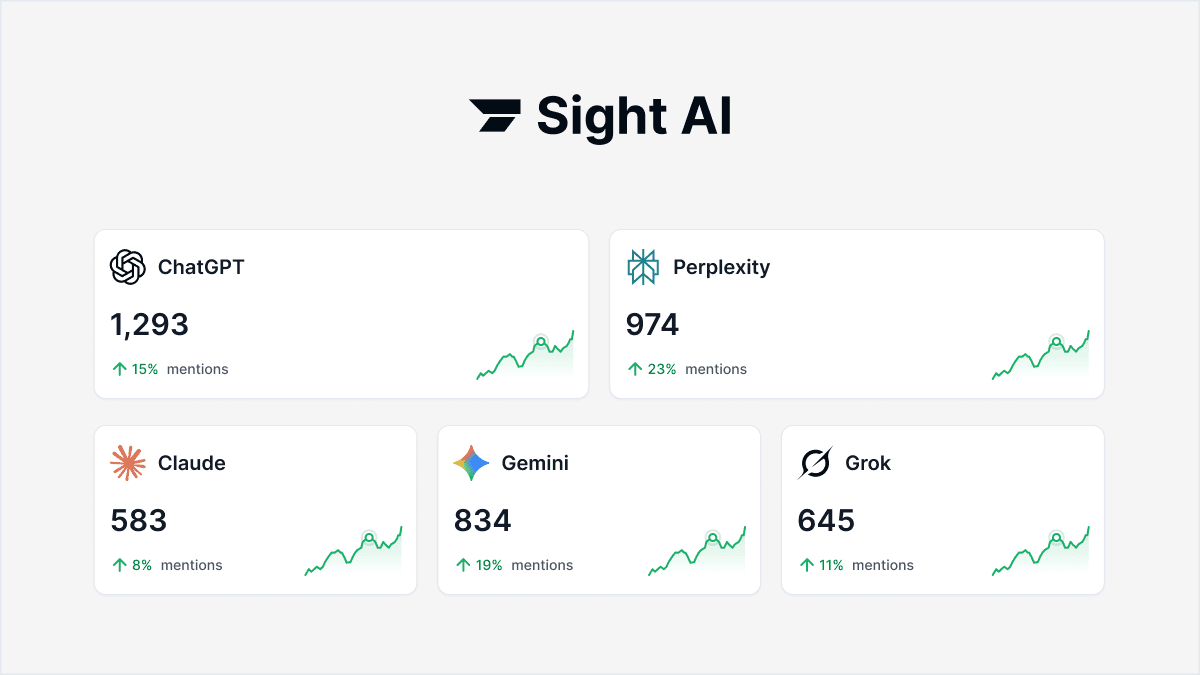
AI visibility scores measure how often AI models like ChatGPT, Claude, and Perplexity mention your brand or cite your content in their responses. This metric is increasingly important as more users turn to AI platforms for information instead of traditional search engines.
Review AI model mentions to see how your content influences brand citations. When someone asks Claude about AI visibility tracking, does it mention your brand? When ChatGPT explains content automation, does it reference your approach? These citations represent a new form of organic visibility that traditional SEO metrics don't capture.
The content that earns AI citations tends to share specific characteristics: comprehensive coverage of topics, clear structure with well-defined sections, authoritative tone backed by expertise, and practical examples that illustrate concepts. Understanding how AI models select content sources helps you refine your autopilot content to earn more mentions.
Identify top-performing content patterns to refine your keyword strategy. Maybe your how-to guides consistently outperform your listicles. Or your comparison articles drive more engagement than your explainers. These patterns tell you where to focus your content queue going forward.
Adjust autopilot settings based on performance data and content quality feedback. If articles are consistently too short to rank well, increase your minimum word count targets. If your internal linking isn't creating strong site architecture, refine your linking rules. If your brand voice feels inconsistent, tighten your tone parameters.
Success indicator: You should have a weekly review process that examines recent article performance, identifies patterns, and results in at least one optimization to your autopilot configuration. This continuous improvement approach ensures your system gets better over time.
Step 6: Scale and Refine Your Automated Content System
Once your autopilot system proves itself with your initial keyword set, it's time to expand your content coverage and increase your publishing velocity.
Expand keyword coverage as you validate what works for your audience. Your initial 10-20 keywords were your testing ground. Now that you understand which topics resonate and which content types perform best, you can confidently add 30, 50, or even 100 additional keywords to your queue.
Look for keyword expansion opportunities in your existing content performance. If your article about AI visibility tracking is ranking well and earning citations, explore related keywords: "AI visibility metrics," "tracking brand mentions in AI models," "AI citation analysis." These adjacent topics let you build topical authority around proven winners.
Add new content types and formats to your autopilot queue. Maybe you started with just how-to guides and explainers. Now you can introduce case study formats, technical deep-dives, or industry trend analyses. Each content type serves different search intents and attracts different audience segments.
Integrate AI visibility tracking to measure brand mentions across AI platforms systematically. Instead of manually checking how ChatGPT and Claude discuss your brand, use automated tracking that monitors mentions, analyzes sentiment, and identifies content opportunities based on what AI models are saying about your industry.
This integration creates a feedback loop: your autopilot system generates content optimized for both SEO and GEO, your AI visibility tracking measures how that content influences brand mentions, and you refine your content strategy based on what's actually moving the needle for AI citations.
Establish a review cadence to maintain quality as output scales. When you're publishing three articles per week, reviewing each one might be feasible. At 20 articles per week, you need a sampling approach. Maybe you review every fifth article in detail, or you focus reviews on high-priority topics while spot-checking the rest.
The goal isn't to manually edit every piece—that defeats the purpose of automation. Instead, you're monitoring for systematic issues that indicate your autopilot configuration needs adjustment. If you notice recurring problems with tone, structure, or accuracy, those are settings-level fixes, not article-level edits. Following AI content generation best practices helps you catch these issues early.
Success indicator: Your content output has increased by at least 3x from your initial pilot phase, your quality metrics remain stable or improve, and your AI visibility scores show consistent growth in brand mentions across AI platforms.
Putting It All Together
With autopilot mode configured, your content generation system now runs continuously—producing SEO and GEO-optimized articles, publishing them to your CMS, and notifying search engines automatically. The key to long-term success is treating this as a living system: monitor your AI visibility scores, track which content drives brand mentions in AI responses, and refine your strategy based on real performance data.
Here's your quick-start checklist to get autopilot mode running today. Define 10-20 target keywords categorized by content type and buyer journey stage. Configure your brand voice parameters, content length targets, internal linking rules, and quality thresholds. Build your content queue with a realistic publishing schedule organized into thematic clusters. Connect your CMS and enable IndexNow integration for automated publishing and instant indexing. Activate autopilot mode and verify your first test article publishes correctly. Review performance weekly and adjust your configuration based on what the data tells you.
Start with a manageable publishing frequency—three to five articles per week is a solid baseline for most teams. This gives you enough volume to see patterns and validate your approach without overwhelming your capacity to monitor quality. Once you've published 20-30 articles and confirmed they're performing as expected, you can confidently scale to higher frequencies.
The real power of content generation with autopilot mode isn't just volume. It's the ability to maintain consistent publishing while you focus on higher-leverage activities: analyzing performance data, refining your keyword strategy, identifying content gaps, and optimizing for the metrics that actually matter—rankings, traffic, and increasingly, AI visibility.
Speaking of AI visibility, traditional SEO metrics only tell half the story in 2026. Your content might rank on page one of Google, but if AI models aren't citing your brand when users ask relevant questions, you're missing a massive opportunity. Start tracking your AI visibility today and see exactly where your brand appears across top AI platforms like ChatGPT, Claude, and Perplexity—then use those insights to guide your autopilot content strategy toward topics that earn both search rankings and AI citations.
The future of content marketing isn't about choosing between automation and quality. It's about using automation to maintain quality at scale, freeing your team to focus on strategy, optimization, and the creative work that truly differentiates your brand.