Managing content pipelines across five, ten, or twenty clients simultaneously is one of the defining challenges of running a modern agency. Quality slips when you scale too fast, costs balloon when you hire to keep up, and now there's a new layer of complexity: making sure your clients' brands show up not just in Google results, but in AI-generated answers from ChatGPT, Claude, and Perplexity.
The good news is that the right content automation stack can genuinely transform how your agency operates. A well-configured set of tools lets a lean team punch well above its weight, handling research, drafting, optimization, publishing, and AI visibility tracking without proportional increases in headcount or hours.
The tools below were selected based on multi-client scalability, AI-powered content generation, SEO and GEO optimization capabilities, publishing automation, and pricing models that make sense for agency budgets. Whether you're building your first automation workflow or consolidating a bloated tool stack, this list covers the full spectrum. You can also explore how Sight AI's AI content generation features fit into a broader automated content creation workflow before diving in.
1. Sight AI
Best for: Agencies that need AI visibility tracking, SEO/GEO content generation, and automated indexing in one platform.
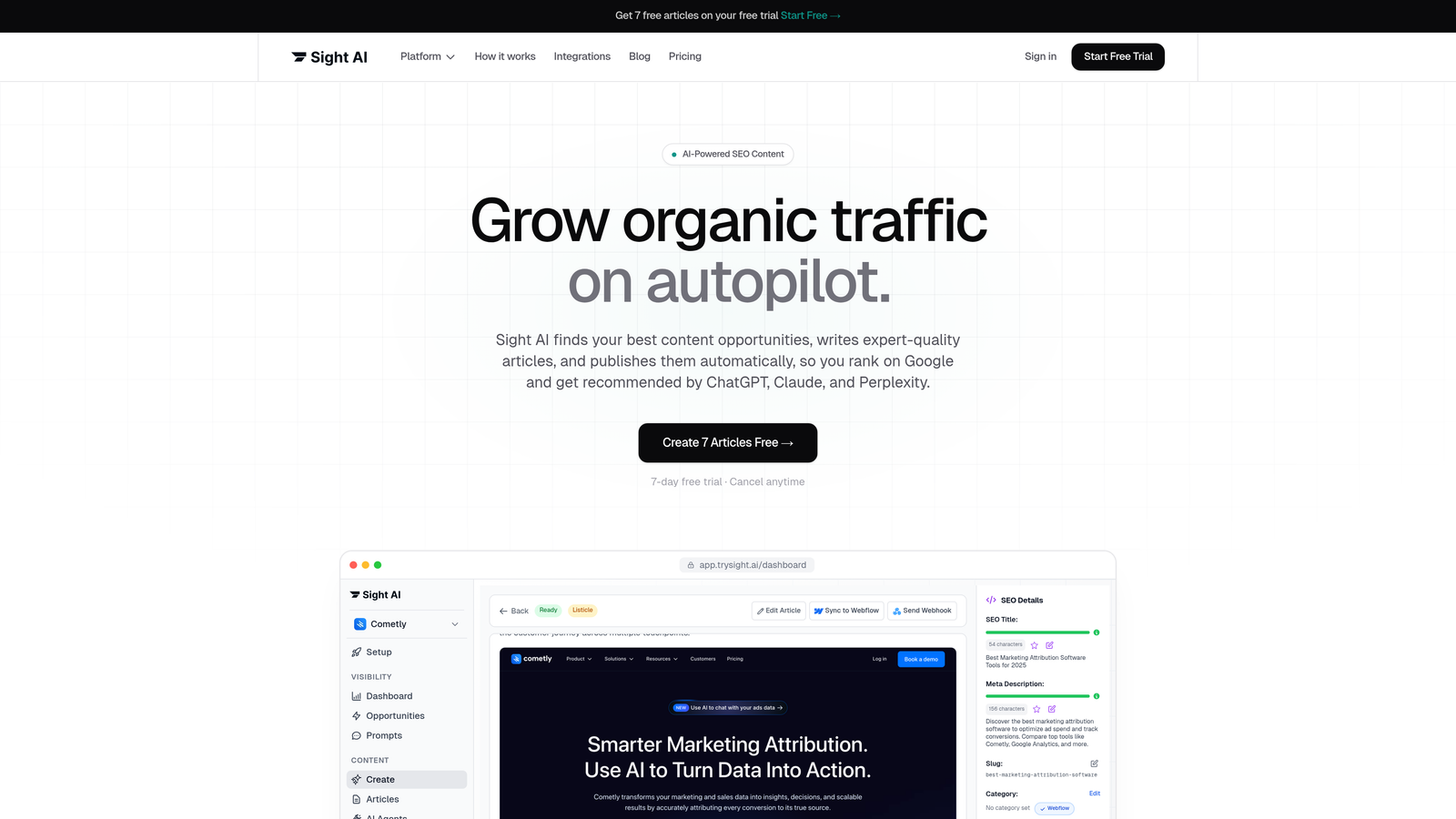
Sight AI is an all-in-one platform combining AI visibility tracking, SEO and GEO-optimized content generation with 13+ specialized AI agents, and automated indexing via IndexNow, built specifically for agencies managing organic growth and AI search presence across multiple clients.
Where This Tool Shines
Most content automation tools stop at creation. Sight AI goes further by tracking how AI models like ChatGPT, Claude, and Perplexity actually talk about your clients' brands, giving agencies a layer of intelligence that's increasingly critical as AI-generated answers replace traditional search results for many queries.
The Autopilot Mode is where agencies will find the most leverage. Rather than manually briefing and reviewing every piece, you can configure content pipelines that generate, optimize, and publish SEO and GEO-optimized articles across client accounts with minimal hands-on time. Combined with IndexNow integration, new content gets discovered and indexed faster, which matters when you're publishing at volume.
Key Features
AI Visibility Score: Tracks brand mentions and sentiment across ChatGPT, Claude, Perplexity, and 6+ AI platforms so agencies can monitor and improve clients' AI search presence.
13+ Specialized AI Writing Agents: Purpose-built agents for listicles, guides, explainers, and other content formats, each optimized for both traditional SEO and generative engine optimization.
Autopilot Mode: Hands-off content generation at scale, allowing agencies to configure ongoing content pipelines without manual intervention on every piece.
IndexNow Integration: Automated sitemap updates and IndexNow submission ensure new content is discovered by search engines faster, reducing the lag between publishing and ranking.
CMS Auto-Publishing: Direct publishing to client CMS platforms streamlines the final step of multi-client content pipelines and eliminates manual upload bottlenecks.
Best For
Agencies that are managing SEO content production across multiple clients and want to simultaneously track and improve those clients' presence in AI-generated search results. Particularly strong for teams that want a single platform rather than stitching together separate tools for writing, optimization, indexing, and AI monitoring.
Pricing
Agency plans are available at trysight.ai/pricing. Pricing is structured to accommodate agencies managing multiple client accounts.
2. Jasper
Best for: Marketing teams producing high-volume content across multiple formats with consistent brand voice.
Jasper is an AI-powered content platform with brand voice customization, an extensive template library, and team collaboration features designed for marketing teams producing content at volume.
Where This Tool Shines
Jasper's brand voice training is one of its strongest differentiators for agencies. You can train the platform on each client's tone, terminology, and style, then generate content that feels native to that brand rather than generically AI-written. This matters enormously when you're managing ten clients with ten distinct voices.
The collaboration and approval workflow features also make Jasper practical for agency teams where multiple people touch a piece before it goes live. Writers, editors, and account managers can work within shared workspaces without content getting lost in email chains.
Key Features
Brand Voice Training: Train Jasper on client-specific tone and style using a knowledge base, ensuring consistent output across all content for that account.
50+ Content Templates: Covers blog posts, ad copy, social media, email campaigns, and more, reducing setup time for common content types.
Team Collaboration: Shared workspaces with approval workflows support multi-person agency teams working across client accounts.
Chrome Extension and Integrations: Works alongside popular marketing tools and lets writers use Jasper directly within their existing browser-based workflows.
AI Art Generation: Generates visual content alongside copy, useful for social media and ad campaigns that require both elements.
Best For
Mid-size agencies producing diverse content formats across multiple clients, especially those where brand voice consistency and team collaboration are top priorities. Less suited to agencies whose primary need is SEO optimization or AI visibility tracking.
Pricing
Creator plan starts at $49/month. Teams plan starts at $125/month. Enterprise pricing is available for larger agencies.
3. Surfer SEO
Best for: Agencies focused on ranking content competitively through data-driven on-page optimization.
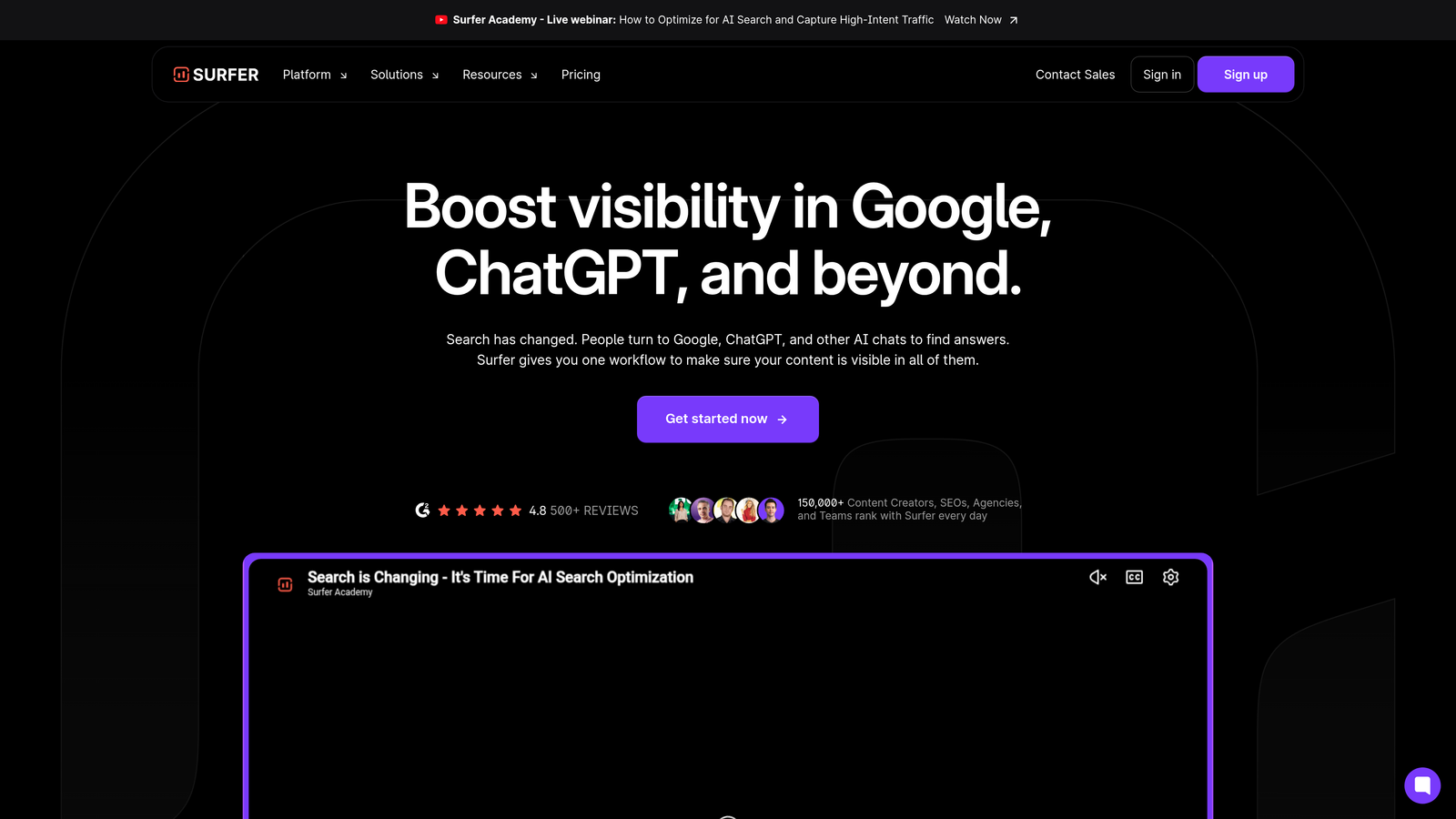
Surfer SEO is a data-driven content optimization platform that uses NLP analysis and SERP data to guide content creation, helping agencies produce articles that rank competitively for target keywords.
Where This Tool Shines
Surfer's Content Editor gives writers a real-time score as they write, based on analysis of the top-ranking pages for a given keyword. This takes the guesswork out of on-page optimization and gives agencies a repeatable, defensible process for producing content that performs in search.
The keyword clustering and content planning tools are particularly useful for agencies building out topical authority for clients. Rather than targeting keywords in isolation, you can map out entire content clusters and prioritize based on opportunity and effort.
Key Features
Content Editor with Real-Time Scoring: Guides writers with live optimization feedback based on what's actually ranking for the target keyword.
Keyword Clustering: Groups related keywords into content clusters to support topical authority strategies for client sites.
Surfer AI: Generates optimized first drafts directly within the platform, reducing time from brief to publishable content.
Audit Tool: Analyzes existing client content and identifies specific improvements to help underperforming pages regain rankings.
Integrations: Connects with Google Docs, WordPress, and Jasper for flexible workflow options.
Best For
SEO-focused agencies where ranking performance is the primary deliverable. Works well as a complement to AI writing tools like Jasper, adding a data layer that pure writing platforms lack. Less suited to agencies whose main need is multi-channel distribution or content operations management.
Pricing
Essential plan starts at $89/month. Scale plan starts at $129/month with higher content limits and additional features for growing agencies.
4. Copy.ai
Best for: Agencies that want to build custom multi-step content automation workflows without writing code.
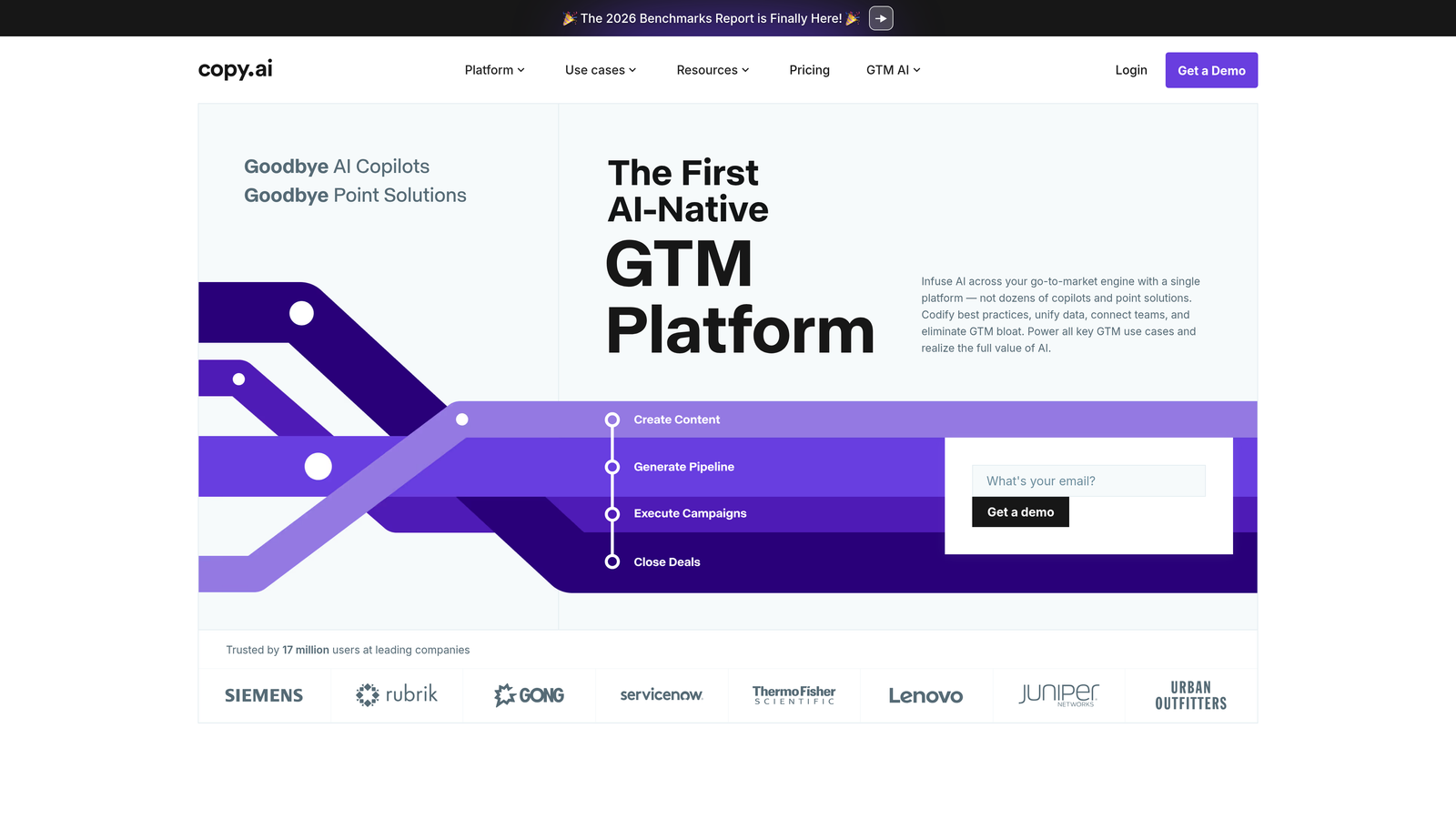
Copy.ai is an AI-powered platform with a workflow automation builder that lets agencies chain multiple AI actions together, automating repetitive content tasks from research through drafting and reformatting.
Where This Tool Shines
Copy.ai's workflow builder is what separates it from most AI writing tools. Instead of just generating content on demand, you can build automated pipelines: pull a topic, research it, generate an outline, write a draft, reformat it for social, and output everything in sequence. This is where real agency efficiency lives.
The pre-built workflow templates lower the barrier to entry. You don't need to architect everything from scratch; you can start with a template for common tasks like blog post creation or social media repurposing and customize from there.
Key Features
Workflow Builder: Create multi-step content automation pipelines that chain AI actions together for hands-off content production.
Pre-Built Workflow Templates: Ready-to-use templates for common agency tasks reduce setup time and provide a starting point for customization.
Brand Voice and Infobase: Store client-specific context, tone guidelines, and reference material so every output stays on-brand.
API Access: Allows agencies to integrate Copy.ai into their existing tech stack and build custom automations beyond the visual builder.
Multi-Format Output: Supports long-form blog posts, social content, and sales copy within the same platform.
Best For
Agencies that want to automate repetitive content tasks without a developer on staff. Especially useful for teams that handle high volumes of similar content types across clients and want to reduce the manual steps between brief and draft.
Pricing
Free tier available with limited features. Pro plan starts at $49/month. Team plans are available for larger agency teams with higher usage needs.
5. Writer
Best for: Large agencies managing brand governance, compliance, and terminology consistency across enterprise client portfolios.
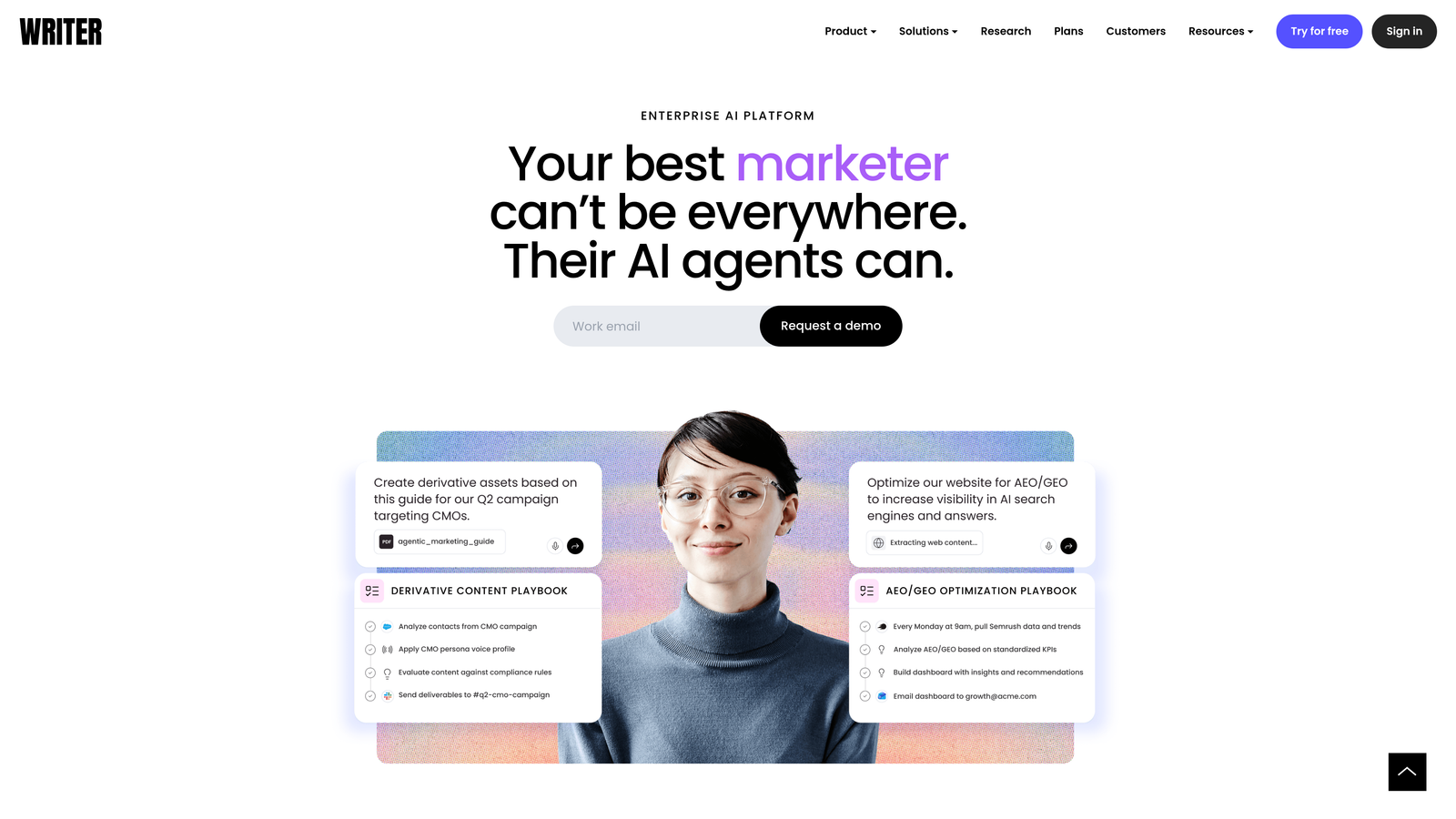
Writer is an enterprise-grade AI writing platform focused on brand governance, terminology management, and compliance, ideal for agencies that need consistent, on-brand content across complex client portfolios.
Where This Tool Shines
Writer approaches AI content generation from a governance-first perspective. The platform enforces style guides, flags off-brand terminology, and applies client-specific language rules automatically, making it well-suited to agencies working with clients in regulated industries or with strict brand standards.
The Knowledge Graph feature grounds AI output in approved company data rather than general training data, which reduces hallucinations and keeps content factually aligned with what the client has actually approved. For agencies where accuracy and compliance are non-negotiable, this is a significant advantage.
Key Features
AI Guardrails and Style Guide Enforcement: Automatically applies brand and style rules across all content, reducing the editorial overhead of catching off-brand outputs.
Custom Terminology Management: Define client-specific language rules and prohibited terms to maintain brand consistency at scale.
Knowledge Graph: Grounds AI outputs in approved company data, improving factual accuracy and reducing the risk of AI-generated errors.
Team Analytics and Quality Reporting: Provides visibility into content quality metrics across the team, useful for agencies tracking output standards.
SOC 2 Type II Compliance: Enterprise-grade security and compliance certifications for agencies working with sensitive client data.
Best For
Large agencies or those serving enterprise clients in regulated industries where brand governance, compliance, and security are primary concerns. Less suited to smaller agencies primarily focused on content volume or SEO performance.
Pricing
Custom enterprise pricing. Contact Writer directly for agency-specific quotes based on team size and client volume.
6. StoryChief
Best for: Agencies managing multi-channel content distribution across multiple client brands from a single hub.
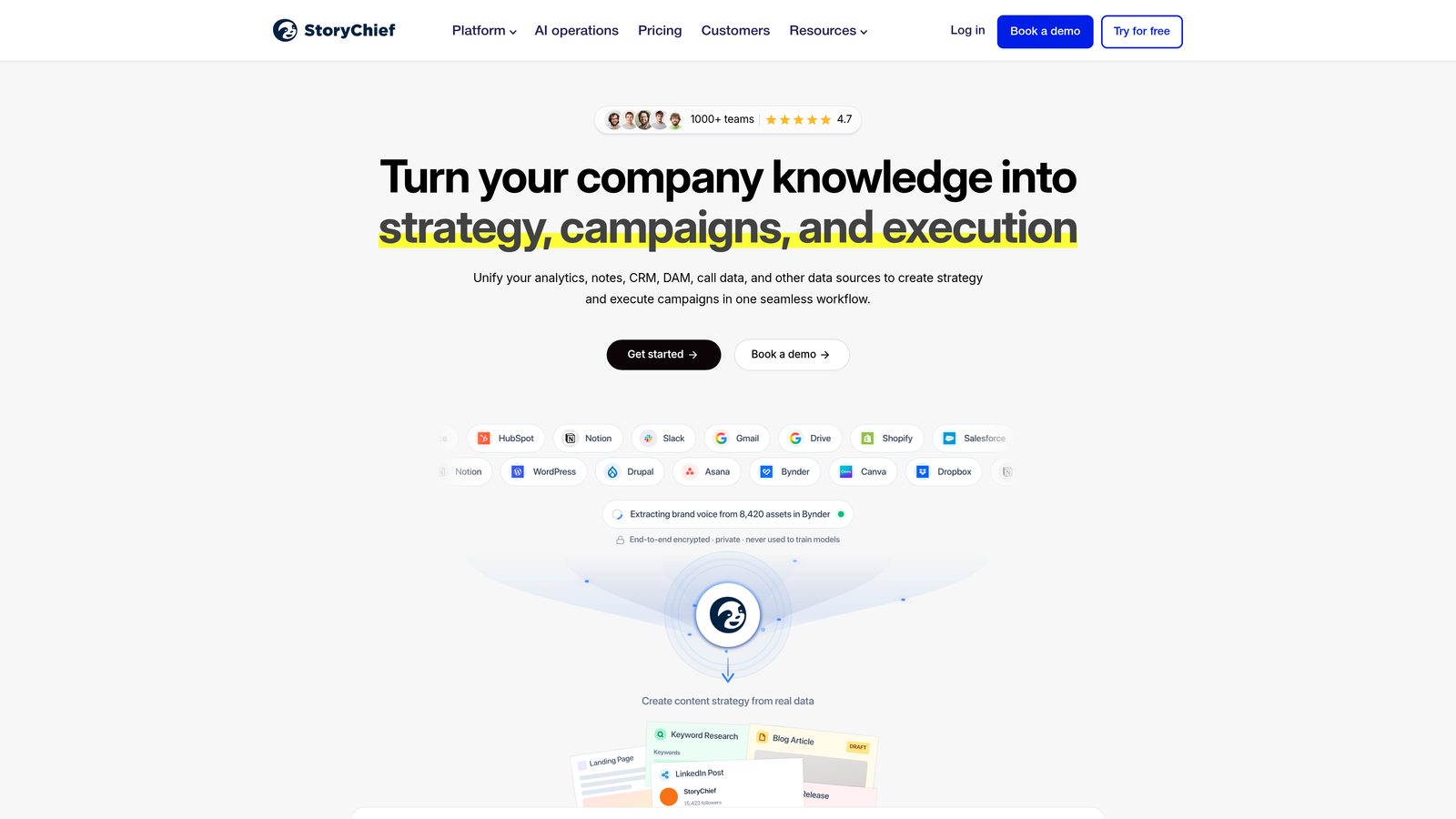
StoryChief is a content marketing platform built for multi-channel distribution, offering a centralized content calendar with one-click publishing to CMS platforms, social channels, and email newsletters.
Where This Tool Shines
StoryChief's real value is in collapsing the distribution step. Once content is approved, you can push it to WordPress, HubSpot, Medium, LinkedIn, Facebook, and email in a single action rather than logging into each platform separately. For agencies managing multi-channel campaigns across multiple clients, this alone saves meaningful time every week.
The multi-brand workspace structure is thoughtfully designed for agency use. Each client gets their own workspace with separate channels, calendars, and collaborators, so there's no risk of cross-contamination between accounts.
Key Features
Multi-Channel Publishing: One-click distribution to WordPress, HubSpot, Medium, social platforms, and email from a single interface.
Content Calendar with Approval Workflows: Centralized planning and review process with collaboration tools for agency teams and client stakeholders.
SEO Copywriting Assistant: Built-in readability and SEO scoring helps writers optimize content before publishing.
Multi-Brand Workspaces: Separate environments for each client account, keeping content, channels, and collaborators cleanly organized.
Cross-Channel Analytics: Performance data aggregated across all distribution channels for each client, simplifying reporting.
Best For
Agencies where content distribution and multi-channel management are the primary bottleneck. Particularly strong for teams that produce content across blogs, social, and email simultaneously and need a central hub to coordinate it all.
Pricing
Individual plan starts at $40/month. Team plan starts at $220/month with multi-brand workspaces and collaboration features suited to agency use.
7. Narrato
Best for: Agencies coordinating both in-house writers and external freelancers within a single content operations platform.
Narrato is a content operations platform that combines AI writing assistance with project management and freelancer coordination tools, designed for agencies balancing in-house and external content teams.
Where This Tool Shines
Narrato fills a gap that pure AI writing tools miss: the operational layer. Assigning tasks, setting deadlines, managing freelancer access, and tracking content through review stages are all handled within the same platform where the content is actually being written. This reduces the need for separate project management tools.
The SEO content briefs are a practical feature for agencies that brief freelancers or junior writers. Instead of manually compiling keyword data and competitor insights, Narrato generates structured briefs that give writers what they need to produce optimized content from the start.
Key Features
AI Content Assistant: Templates for blogs, social media, and web copy with AI-assisted drafting built into the workflow.
Content Workflow Automation: Task assignment, deadline tracking, and stage-based workflows keep multi-person content production organized.
Freelancer Management: Role-based access and payment tracking for external contributors, reducing the overhead of managing a distributed content team.
SEO Content Briefs: Automatically generated briefs with keyword suggestions and competitor analysis to guide writers before they start.
Publishing Integrations: Direct publishing to WordPress and custom CMS platforms to close the loop on the production workflow.
Best For
Agencies that rely on a mix of in-house staff and freelancers to produce content at scale. The project management and freelancer coordination features make it particularly useful for teams where content operations, not just content creation, is the challenge.
Pricing
Pro plan starts at $36/month. Business plan starts at $76/month with expanded team features and higher content limits.
8. ContentBot
Best for: Smaller agencies and solo operators seeking solid content automation capabilities on a tight budget.
ContentBot is an affordable AI content generation tool with automated blog post flows, import triggers, and scheduling capabilities, making it a practical option for agencies where budget is a primary constraint.
Where This Tool Shines
ContentBot's automated blog post flows let you set up trigger-based content generation, where a new topic or keyword input automatically kicks off outline creation, drafting, and scheduling. For smaller agencies handling a predictable content calendar, this kind of automation reduces the manual steps considerably.
The RSS feed import and content rewriting tools are useful for agencies that repurpose content across formats or need to refresh existing client articles efficiently. It's not the most feature-rich platform on this list, but it delivers solid automation at a price point that works for lean operations.
Key Features
Automated Blog Post Flows: Trigger-based content generation with customizable parameters for outline structure and paragraph depth.
Long-Form Content Writer: Generates full articles with outline control, giving writers a starting point that's closer to a complete draft.
Content Import Automation: Pulls content from RSS feeds and other sources to support repurposing and refresh workflows.
Paraphrasing and Rewriting Tools: Useful for refreshing existing client content without starting from scratch.
WordPress Integration: Direct publishing connection reduces the steps between draft and live content.
Best For
Solo operators and small agencies that need meaningful content automation without the price tag of enterprise platforms. A reasonable starting point for teams new to content automation who want to test workflows before committing to a larger platform investment.
Pricing
Starter plan at $19/month. Premium plan at $59/month with higher content limits and additional automation features.
9. Zapier + ChatGPT Integration
Best for: Agencies with technical confidence that want fully custom content automation pipelines connecting their entire tool stack.
Zapier connected to ChatGPT's API is not a single product but a powerful combination that lets agencies build bespoke content workflows integrating thousands of apps without writing code.
Where This Tool Shines
The flexibility here is unmatched. You can trigger content generation from a CRM update, a form submission, a calendar event, or virtually any other input across Zapier's library of connected apps. The resulting content can then flow through review steps, get published to a CMS, and log results in a spreadsheet, all automatically.
This combination works especially well for agencies that have already invested in a specific tool stack and need to connect the dots between them. Rather than switching platforms, you extend what you already have with AI-powered content generation wired into the exact triggers and outputs your workflow requires.
Key Features
6,000+ App Connections: Connect ChatGPT to virtually any tool in your agency's stack for bespoke content pipelines tailored to your exact workflow.
No-Code Workflow Builder: Visual Zap builder with conditional logic and filters lets non-developers create sophisticated automation sequences.
Flexible Triggers: Kick off content generation from form submissions, CRM updates, calendar events, or any other connected app event.
Multi-Step Zaps: Chain research, drafting, review, and publishing steps into a single automated sequence that runs without manual intervention.
Scalable Pricing: Task-based pricing means you only pay for what you use, which can be cost-effective for agencies with variable content volumes.
Best For
Technically confident agencies or those with a dedicated operations person who can configure and maintain complex workflows. Not recommended for teams that want a ready-to-use solution out of the box, but extremely powerful for those willing to invest time in setup.
Pricing
Free tier available with limited tasks per month. Team plan starts at $69.95/month. Costs scale with the number of automated tasks, so high-volume agencies should model usage before committing.
Choosing the Right Stack for Your Agency
The honest answer is that no single tool wins across every agency scenario. The right choice depends on where your biggest bottleneck actually lives, and what you're optimizing for as your agency grows.
If you're a solo operator or small agency just getting started with automation, ContentBot offers a low-cost entry point, while Copy.ai gives you more sophisticated workflow building at a reasonable price. For teams where freelancer coordination and content operations are the core challenge, Narrato is purpose-built for that problem.
Mid-size agencies focused primarily on SEO performance will get strong results pairing Surfer SEO with an AI writing tool like Jasper. If multi-channel distribution is where time gets lost, StoryChief directly addresses that bottleneck. And for agencies with technical resources who want maximum flexibility, the Zapier + ChatGPT combination can be configured to do almost anything.
For enterprise agencies or those serving clients with strict brand governance requirements, Writer stands apart from the field on compliance and terminology management.
Then there's the dimension that's becoming harder to ignore: AI visibility. As more users get answers from ChatGPT, Claude, and Perplexity rather than clicking through search results, agencies need to know whether their clients' brands are appearing in those answers and what those answers actually say. That's a capability most tools on this list don't address.
Sight AI is built for agencies that want to manage that new layer alongside traditional SEO content production. You get AI visibility tracking across 6+ platforms, a full content generation suite optimized for both SEO and GEO, automated indexing via IndexNow, and CMS auto-publishing, all in one platform rather than four separate subscriptions.
Stop guessing how AI models like ChatGPT and Claude talk about your clients' brands. Start tracking your AI visibility today and see exactly where your clients appear across top AI platforms, while automating the content production that gets them there.