The best tools for brand sentiment analysis in AI are platforms that repeatedly query ChatGPT, Claude, Perplexity, Gemini and Google AI Overviews with buyer prompts, then score how each answer frames your brand (positive, neutral or negative), which sources it cites, and how often competitors appear instead. In 2026, Sight AI and Profound lead for monitoring, with Promptwatch and Peec as focused alternatives and AirOps or Writesonic as content execution layers. Pick a monitoring-first tool if you need to know what LLMs think of your brand. Pick a content tool only once you know which gaps to close.
AI sentiment tracking differs from traditional social listening. It measures how AI models describe your company and how consistently that framing holds across platforms. It does not measure what people post about you. We evaluated each tool on AI platform coverage, sentiment depth, citation visibility, actionability, and integration with SEO and content workflows. Sight AI is listed first because it combines tracking with content generation, but each tool serves a distinct purpose.
How to evaluate an AI sentiment analysis tool
- Engine coverage: Check whether the tool tracks ChatGPT, Claude, Perplexity, Gemini, Copilot and Google AI Overviews/AI Mode separately. Sentiment often differs by engine because each one retrieves from different sources.
- Sentiment granularity: A single positive/negative label is less useful than attribute-level framing. Attribute-level framing tells you, for example, "praised for ease of use, criticized for pricing."
- Citation and source data: To change negative framing, you need to know which URLs the model relied on.
- Prompt control and sampling: LLM answers vary between runs. Look for tools that let you define your own prompts and that run them repeatedly on a schedule (daily or weekly), rather than relying on one-off snapshots.
- Competitive context: Share of voice and side-by-side competitor framing show whether a sentiment problem is specific to your brand or affects the whole category.
- Actionability: Check whether the tool helps you fix what it finds through content recommendations or publishing, or whether it only reports.
For a broader methodology, see our 6-step framework for measuring AI visibility performance.
Quick comparison
| Tool | Primary role | Sentiment analysis | Content execution | Best fit |
|---|---|---|---|---|
| Sight AI | Monitoring + content | Yes, across 6+ AI models | Yes (13+ agents, auto-publish) | Growth teams, agencies |
| Profound | Enterprise monitoring | Yes, with share of voice | Limited | Enterprise brands |
| Promptwatch | Prompt-level monitoring | Yes, change alerts | No | SEO/brand specialists |
| Peec | AI search visibility | Citation-focused | No | SEO teams |
| AirOps | Content workflows | No | Yes | Content ops teams |
| Writesonic | Content generation | No (core product) | Yes | Budget-conscious teams |
1. Sight AI
Best for: Teams that need AI sentiment monitoring and content generation in a single platform.
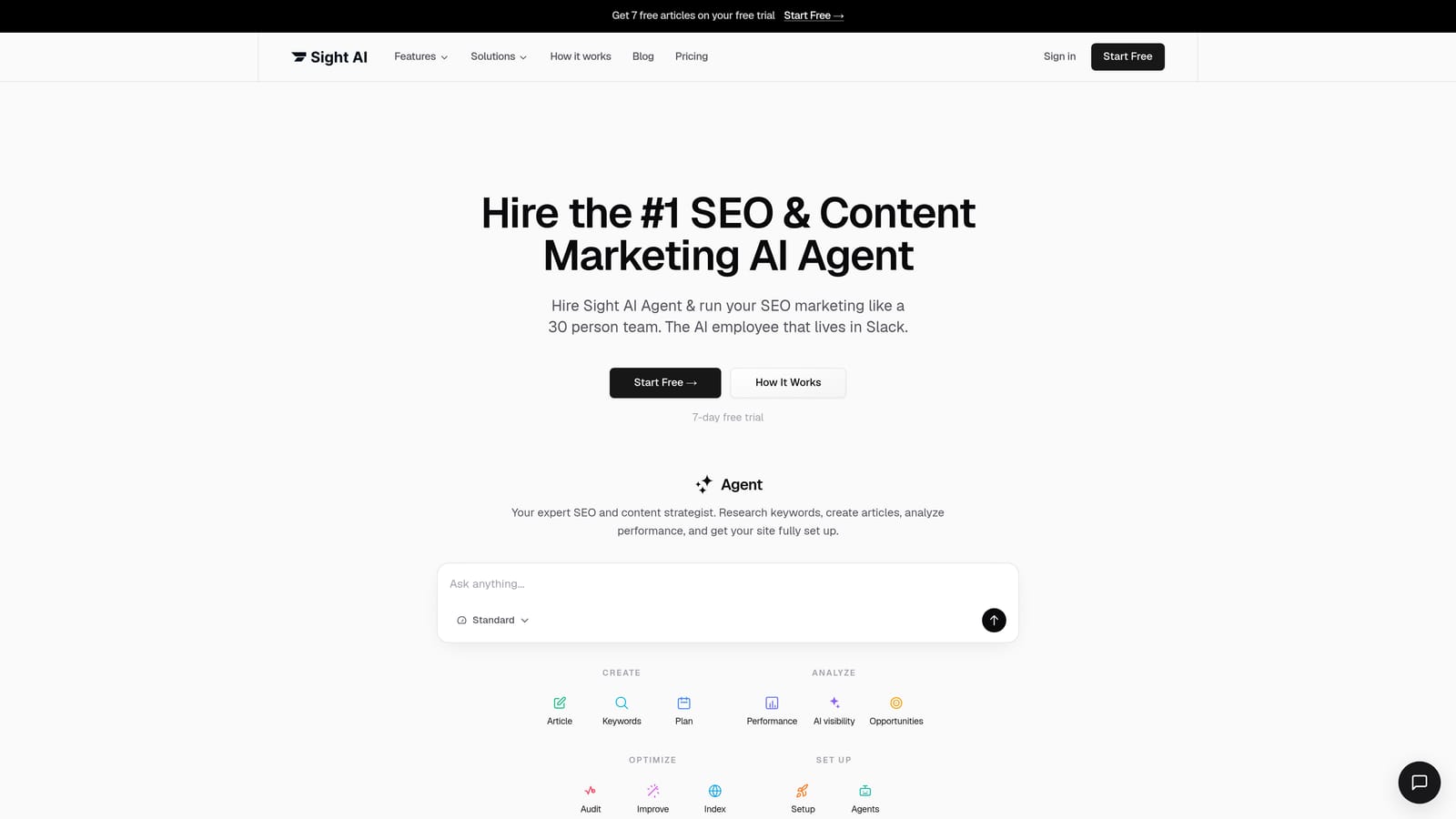
Sight AI is an all-in-one AI visibility platform. It tracks brand mentions and sentiment across 6+ AI models, generates SEO/GEO-optimized content to improve that visibility, and automatically indexes new content via IndexNow.
Where This Tool Shines
Most monitoring tools stop at the data. Sight AI is built around a closed loop:
- Discover how AI models describe your brand.
- Identify the content gaps driving poor sentiment.
- Use the platform's built-in content agents to publish material that directly addresses those gaps.
That end-to-end workflow is genuinely rare in this category.
The AI Visibility Score gives you a single, trackable metric for how your brand performs across platforms like ChatGPT, Claude, and Perplexity. Prompt tracking adds another layer. It shows which specific queries trigger brand mentions and which ones your competitors are winning instead. The dedicated AI brand sentiment tracking view breaks framing down per model, so you can see where tone diverges.
Key Features
AI Visibility Score: A unified sentiment and presence metric tracked across ChatGPT, Claude, Perplexity, and 3+ additional AI platforms.
Prompt Tracking: Identifies which queries trigger brand mentions and surfaces prompts where competitors appear instead of you.
13+ Specialized AI Content Agents: Purpose-built agents for generating GEO and SEO-optimized articles, listicles, guides, and explainers.
Autopilot Mode: Automates content publishing so your pipeline runs without manual intervention at every step.
IndexNow Integration: Automatically submits new content to search engines and updates your sitemap for faster content discovery.
CMS Auto-Publishing: Connects directly to your CMS so content moves from generation to live without extra steps.
Best For
Sight AI fits marketing teams and agencies that want to move beyond passive monitoring. If you need to understand your AI brand sentiment and act on it through content, this platform handles both. It's particularly well-suited for growth-focused teams where time-to-publish matters as much as data quality.
Pricing
Multiple tiers are available to suit different team sizes and use cases. Check trysight.ai for current plans and pricing details.
2. Profound
Best for: Enterprise marketing teams that need rigorous AI answer monitoring and competitive benchmarking.
Profound is an enterprise-focused AI answer monitoring platform. It tracks how brands appear in AI-generated responses across major LLMs, with share-of-voice analytics and competitive benchmarking built in.
Where This Tool Shines
Profound is built for scale and rigor. Rather than giving you a high-level snapshot, it goes deep on how your brand is represented relative to competitors across AI-generated answers. The share-of-voice analytics are particularly useful for enterprise teams that need to report on AI channel performance alongside traditional media metrics.
If you manage brand perception for a large organization where reporting structure and data quality are non-negotiable, Profound's enterprise-grade approach fits that environment well.
Key Features
Brand Mention Tracking: Monitors how your brand appears across major LLMs in AI-generated responses.
Share-of-Voice Analytics: Measures your brand's relative presence in AI search compared to competitors.
Competitive Benchmarking: Tracks how competitor brands appear in AI-generated answers alongside yours.
Enterprise Reporting: Delivers structured analytics suited to larger teams and stakeholder reporting requirements.
Best For
Profound suits enterprise marketing teams and large agencies that need structured, competitive AI brand monitoring. It is less suited to small teams or those looking for content generation alongside their tracking. For pure monitoring at scale, it's a strong option.
Pricing
Profound uses an enterprise pricing model. Visit profound.io for current details and to request a demo.
3. Promptwatch
Best for: Teams that want granular, prompt-level tracking of how AI responses evolve over time.
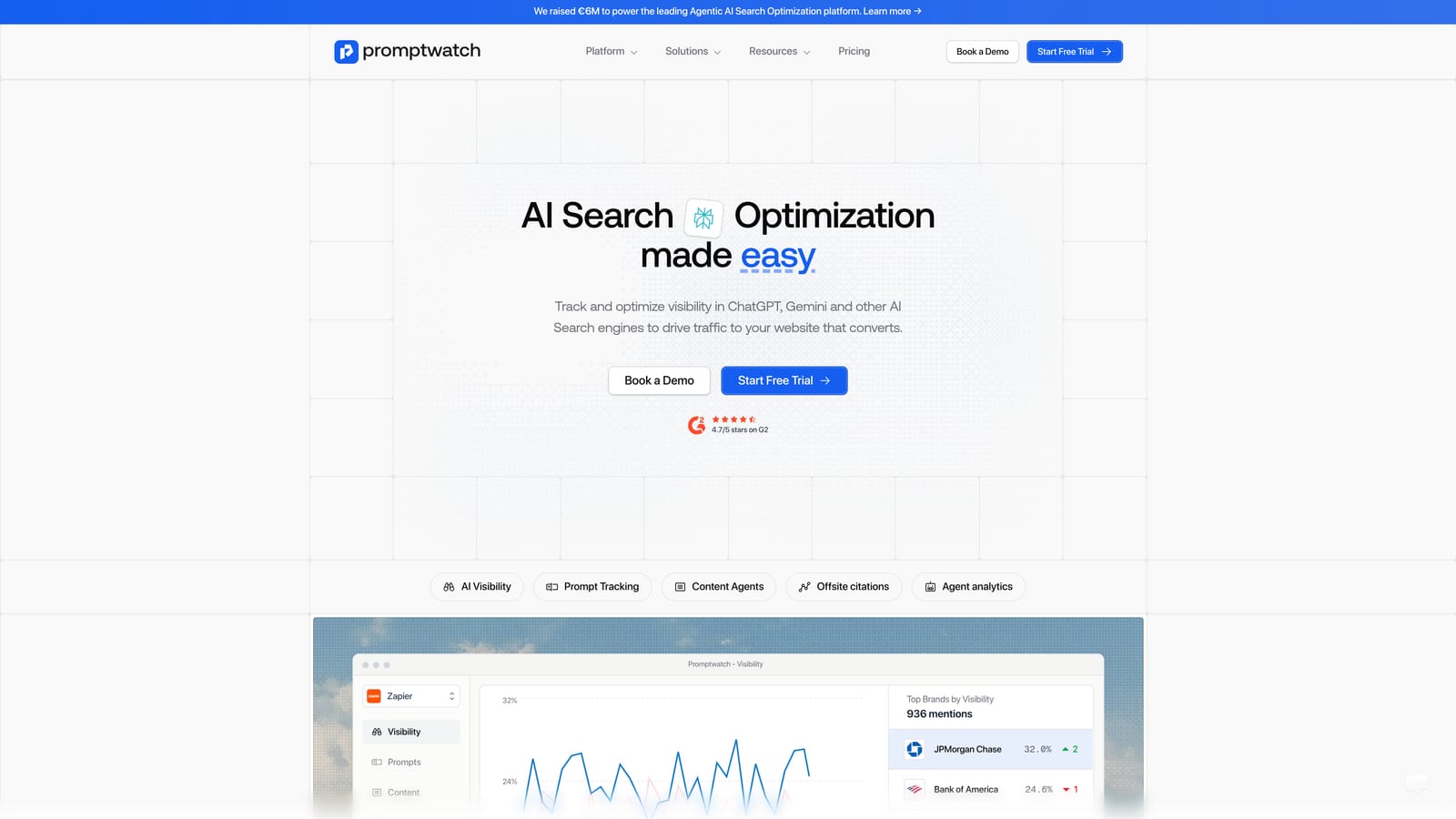
Promptwatch is a prompt-level AI monitoring tool. It tracks how specific queries return brand mentions over time, which helps you understand how AI response sentiment shifts across model versions and updates.
Where This Tool Shines
Most AI visibility tools give you a broad picture of brand presence. Promptwatch zooms in. It lets you track specific prompts over time, so you can see exactly how a query about your brand or category evolves as AI models are updated. That level of granularity is valuable when you need to understand the "why" behind sentiment changes.
Response drift detection is a standout capability here. If an AI model update changes how your brand is described in response to a key query, Promptwatch surfaces that shift with the context you need to respond.
Key Features
Prompt-Specific Tracking: Monitors individual queries over time rather than just aggregate brand presence metrics.
Response Drift Detection: Identifies when AI model updates change how your brand is described in specific responses.
Sentiment Change Alerts: Notifies you when tracked prompts show meaningful shifts in brand framing.
Mention Context Visibility: Provides granular insight into the surrounding context of brand mentions within AI responses.
Best For
Promptwatch suits SEO specialists, content strategists, and brand managers who need to understand how AI model updates affect specific queries relevant to their brand. It works best as a complement to broader monitoring tools. It is not a standalone solution for teams new to AI visibility.
Pricing
Check promptwatch.io for current plan options and pricing tiers.
4. Peec
Best for: SEO teams expanding their monitoring strategy to include AI-generated search results.
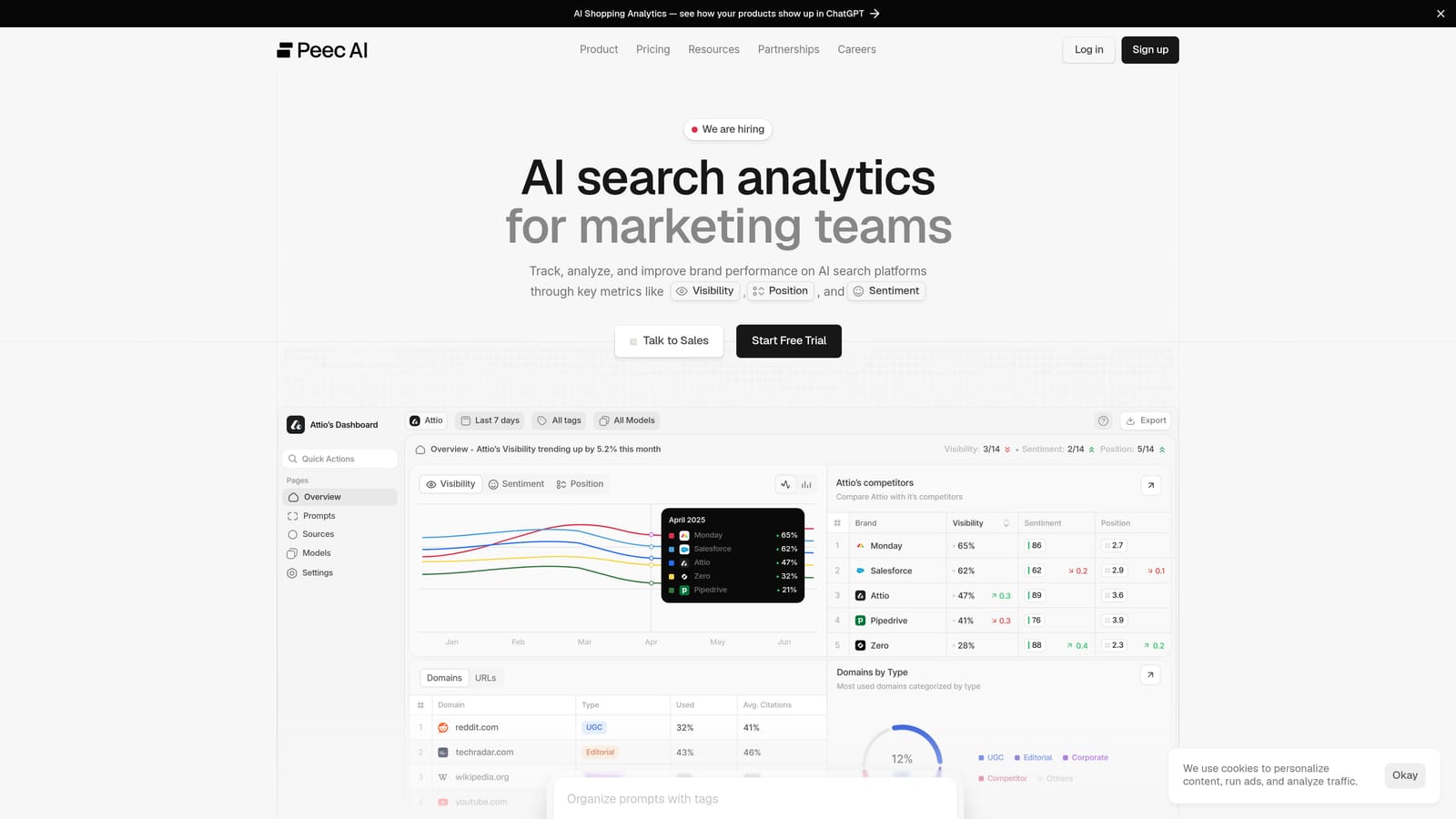
Peec is an AI search visibility tool designed with SEO-oriented workflows in mind. It focuses on measuring brand presence and citation frequency within AI-generated search results.
Where This Tool Shines
Peec bridges the gap between traditional SEO monitoring and AI search visibility. If your team already has a solid SEO reporting workflow and you want to extend it into AI channels without rebuilding your stack, Peec's reporting interface will feel familiar and approachable.
The focus on citation frequency is particularly relevant as AI models increasingly pull from specific sources when generating answers. Knowing whether your content is being cited, and how often, gives you a concrete signal for where your content strategy needs work.
Key Features
Brand Citation Tracking: Measures how frequently your brand is cited within AI-generated search results.
Visibility Scoring: Provides a structured score for your brand's presence in AI-generated answers.
Competitive Presence Comparison: Shows how your citation frequency compares to competitors in the same AI search context.
SEO-Oriented Reporting: Delivers data in a format that integrates naturally with existing SEO reporting workflows.
Best For
Peec suits SEO teams and digital marketers who already track organic search performance and want to add AI search visibility to their monitoring stack. It is a natural extension rather than a full platform replacement.
Pricing
Check peec.ai for current plan details and pricing options.
5. AirOps
Best for: Content teams that need scalable AI-powered content pipelines to support brand narrative management.
AirOps is an AI workflow automation platform for building scalable content pipelines. It is useful for teams that want to systematically publish brand-consistent content that can improve AI model perception over time.
Where This Tool Shines
AirOps isn't a sentiment monitoring tool. It's a content operations platform, and that distinction matters. Tools like Profound or Promptwatch tell you what's happening with your AI brand perception. AirOps helps you do something about it at scale through structured content workflows.
For teams that already have monitoring in place and need to accelerate content production, AirOps provides the automation infrastructure for repeatable, high-volume content pipelines. You don't have to rebuild processes from scratch each time.
Key Features
AI-Powered Content Workflow Automation: Automates repetitive steps in content creation and publishing workflows.
Custom Workflow Builder: Lets teams design content operations pipelines tailored to their specific processes.
CMS and Data Source Integrations: Connects with popular content management systems and data inputs.
Scalable Pipeline Management: Handles high-volume content operations without proportional increases in manual effort.
Best For
AirOps suits content operations teams and agencies that need to scale brand-consistent publishing as a strategy for improving AI model perception. It works best when paired with a dedicated AI visibility monitoring tool that identifies where content gaps exist.
Pricing
Check airops.com for current plans and pricing tiers.
6. Writesonic
Best for: Marketing teams that need high-volume, brand-consistent content generation with accessible pricing.
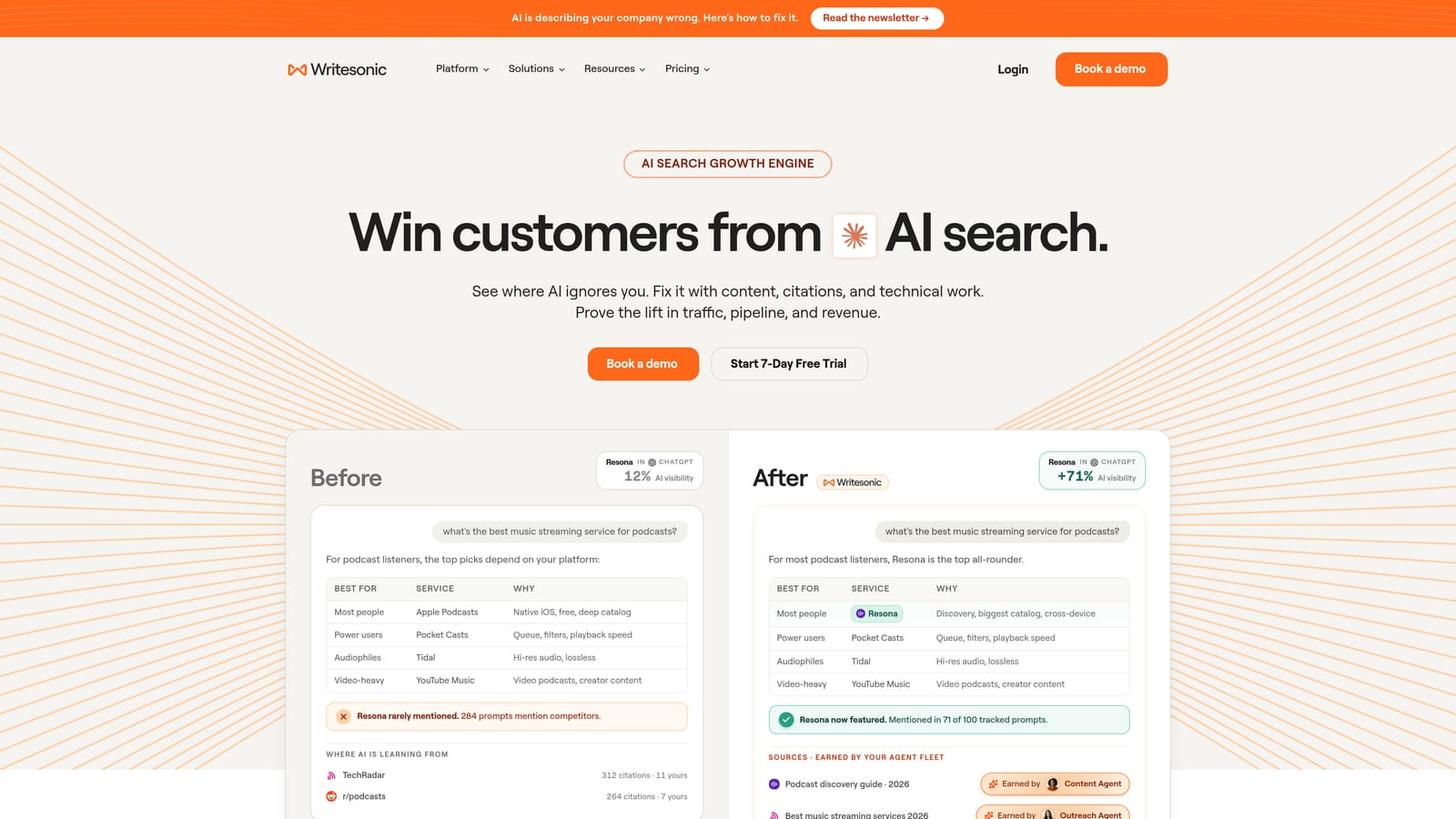
Writesonic is an AI content generation platform with brand voice controls. It helps marketing teams produce consistent, brand-aligned content at scale, which indirectly supports AI sentiment improvement through authoritative publishing.
Where This Tool Shines
Writesonic's brand voice controls are its most relevant feature for teams thinking about AI sentiment. Consistent, on-brand content published at volume gives AI models more material to draw from when forming responses about your brand. Writesonic makes that publishing cadence achievable for teams without large content budgets.
To be clear, Writesonic doesn't monitor AI sentiment. It helps you produce the content that can shift it. Think of it as the execution layer for a strategy informed by a dedicated monitoring tool.
Key Features
Brand Voice Customization: Maintains consistent tone and messaging across all AI-generated content output.
High-Volume Content Generation: Supports rapid, scalable content production across multiple formats.
SEO-Focused Writing Modes: Includes writing modes optimized for search visibility and content structure.
Freemium Access: Offers a free entry point with scalable paid plans as content needs grow.
Best For
Writesonic suits small to mid-sized marketing teams, solo founders, and agencies that need cost-effective, brand-consistent content at scale. It is a practical starting point for teams that want to improve AI brand perception through content volume before investing in a full monitoring stack.
Pricing
A freemium plan is available, and paid plans scale with usage and team size. Check writesonic.com for current pricing details.
Which Tool Is Right for Your Team
The tools in this list fall into two distinct categories. Knowing which one you need first shapes the right decision.
If your priority is understanding how AI models currently describe your brand, start with a monitoring-first tool:
- Sight AI is the strongest option if you want tracking and content generation in one platform.
- Profound is the right call for enterprise teams that need rigorous competitive benchmarking.
- Promptwatch suits teams that want granular, prompt-level visibility into how AI responses shift over time.
- Peec fits SEO teams extending their existing monitoring workflows into AI search.
If you already have monitoring in place and need to act on what you're learning, AirOps and Writesonic help you build the content pipelines that shift AI perception over time. Use them alongside a dedicated visibility tracker, not as replacements for one.
For most growth-focused teams, the most efficient path is a platform that handles both sides. Monitoring tells you where the gaps are, and content generation closes them. Running those steps in separate tools with no shared workflow creates friction that slows execution.
Frequently asked questions
Is Profound or a competitor better for tracking AI brand sentiment?
Profound is a strong choice for enterprises that prioritize share-of-voice reporting and competitive benchmarking across LLMs. Some teams also need to act on the findings. If you want attribute-level sentiment plus built-in content creation to fix negative framing, an all-in-one platform like Sight AI covers more of the workflow. SEO-focused tools like Ahrefs or content tools like Writesonic are not purpose-built for LLM sentiment. See the comparison table above for coverage differences.
What are the best enterprise AEO tools for understanding what LLMs think about a brand?
For enterprise answer engine optimization (AEO), prioritize tools that track multiple engines separately, run prompts on a recurring schedule, expose cited sources, and support team reporting. Profound and Sight AI are the strongest monitoring options in this list. Promptwatch adds prompt-level drift detection. The evaluation criteria section above explains what to test during a demo or trial.
Can I track brand sentiment specifically on Gemini and Google AI Overviews?
Yes, but coverage varies by vendor. Confirm that Gemini and Google AI Overviews or AI Mode are tracked as separate engines rather than bundled under one "Google" label. Results also differ by location, so US brands should verify that prompts run from US-based settings. Sight AI tracks Google's AI surfaces alongside ChatGPT, Claude and Perplexity.
How often should I measure AI brand sentiment?
Weekly tracking is a sensible baseline for most brands, with daily runs for high-stakes prompts such as pricing or comparison queries. LLM answers are non-deterministic, so a single check can mislead you. Track trends across several runs instead. Re-check after major model releases and after publishing content meant to shift framing, since changes can take weeks to appear.
How do I improve negative sentiment in AI answers?
Start by identifying which sources the AI models cite when describing you negatively. Then publish clear, factual content that addresses those specific points, such as pricing pages, comparison pages and updated documentation. Earning coverage on the third-party sites models trust also helps, as does making sure new pages get indexed quickly. Our guide to generative engine optimization (GEO) covers the content tactics in depth.
Stop guessing how AI models like ChatGPT and Claude talk about your brand. Start tracking your AI visibility today and see exactly where your brand appears across top AI platforms, which prompts you're winning, and where your content strategy needs to go next.