This list is for marketers, founders, and agencies who need to put a number on link research before they commit budget. The tools were chosen by comparing starting price, depth of backlink data, reporting and workflow features, and the kind of buyer each one suits. Prices change often, so this guide describes how each vendor structures its pricing rather than quoting figures; confirm current tiers on each vendor's pricing page before you buy.
Quick Comparison of Backlink Analysis Tools and Starting Prices
- Sight AI: teams adding AI search visibility to a link-building program; see website for pricing; tracks how AI models talk about your brand across 6+ AI platforms.
- Ahrefs: SEO teams needing deep competitor link research; tiered monthly plans, see website; a large, frequently updated live backlink index.
- Semrush: marketers wanting links alongside keywords and content tools; tiered monthly plans plus add-ons; backlink audit tied to an outreach workflow.
- Moz Pro: agencies and in-house teams reporting with familiar authority metrics; tiered monthly plans; Domain Authority as a client-recognized metric.
- Majestic: link specialists who want focused index data; separate Lite, Pro, and API plans; Trust Flow topical trust scoring.
- SE Ranking: budget-conscious agencies and small businesses; tiered by plan and tracking volume; white-label reporting at a budget-friendly tier.
- LinkResearchTools: penalty recovery and due diligence specialists; tiered plans; Link Detox risk scoring built for audits.
- Monitor Backlinks: small teams monitoring links they have already built; tiered by tracked domains and links; continuous link-loss alerts.
- Google Search Console: site owners wanting a free baseline; free; first-party link data straight from Google.
1. Sight AI
Sight AI is not a backlink tool, and it is listed first because it covers what backlink tools do not: how AI models such as ChatGPT, Claude, and Perplexity describe your brand. It is built for marketers, founders, and agencies who already invest in links and want to know whether that authority translates into mentions in AI-generated answers.
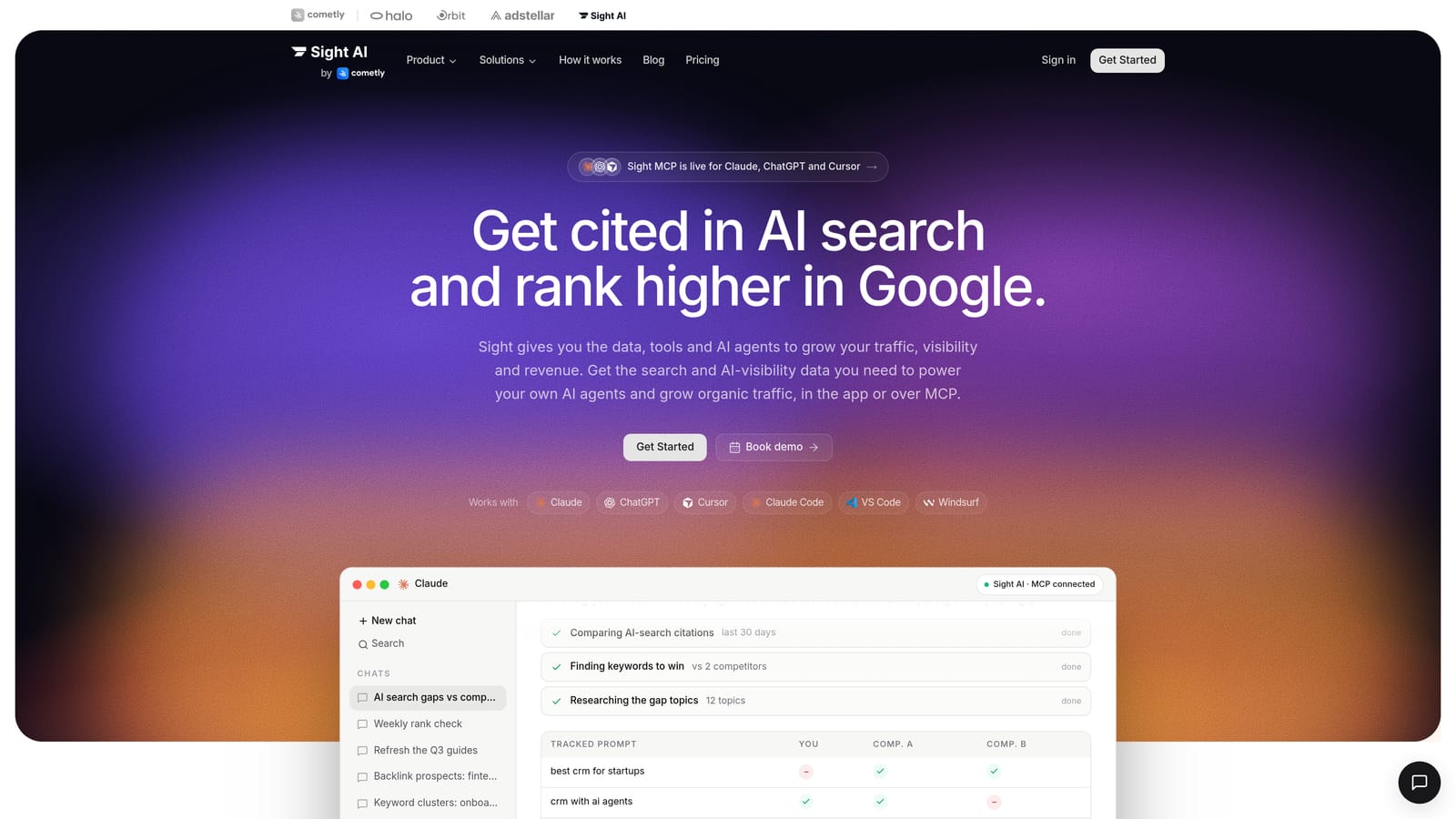
Its distinctive strength on this list is monitoring across 6+ AI platforms. Where every other tool here measures link profiles, Sight AI measures brand presence in AI responses, with sentiment attached. It also closes the loop on action: once you see which prompts you are missing from, its content writer can produce articles aimed at those gaps, and its indexing tools help new pages get discovered quickly.
- AI Visibility Score with sentiment analysis gives one trackable number for how often and how favorably AI models mention you.
- Brand mention tracking across ChatGPT, Claude, and Perplexity shows which platforms cite you and which ignore you.
- Prompt tracking lets you monitor the specific questions your buyers ask, so you can see movement over time.
- IndexNow indexing and automated sitemaps notify search engines when you publish or update pages, shortening the wait for discovery.
- AI Content Writer with 13+ agents drafts SEO and GEO-optimized articles, including listicles, guides, and explainers, with an Autopilot Mode.
Setup is light: connect your site, define the prompts and brand terms to track, and use the CMS auto-publishing and IndexNow integration if you want content to go live automatically. A marketer or content lead can run it day to day without technical help.
The limitation is plain: it does not crawl the web, build a link index, or score link profiles. You cannot use it to audit backlinks, find competitor link sources, or generate a disavow file. Treat it as a companion to one of the tools below, not a replacement. Pricing is listed on the Sight AI website; check it there for current plans.
Best for: Teams adding AI search visibility to their link-building program.
2. Ahrefs
Ahrefs is a full SEO suite best known for its very large, frequently refreshed live backlink index. It is designed for SEO teams and agencies that treat competitor link research as a core weekly task.
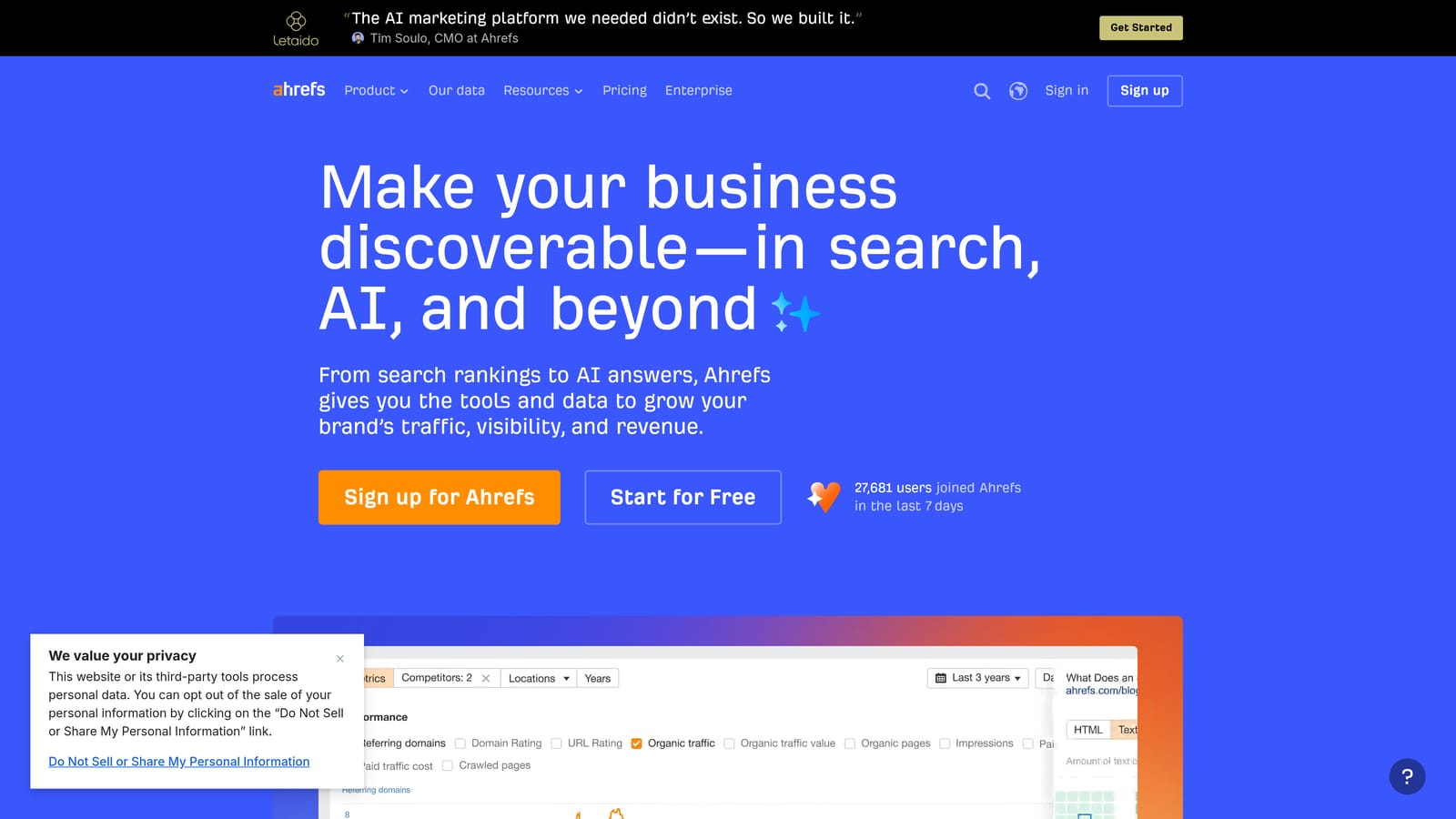
What sets it apart here is index freshness and scale. Site Explorer lets you drop in any domain and see referring domains, anchor text, new and lost links, and the pages attracting the most links. For prospecting, that depth is the main reason people pay for it.
- Site Explorer shows the full link profile of any domain, so you can reverse-engineer a competitor's strategy.
- Backlink checker surfaces referring domains, anchors, and link types for quick audits.
- Broken link reports reveal dead pages with inbound links, which are easy reclamation and outreach opportunities.
- Link intersect finds sites linking to competitors but not to you, a ready-made prospect list.
- Webmaster Tools free tier gives verified site owners a limited look at their own profile and site health at no cost.
It connects to Google Search Console and Looker Studio and offers an API, so reporting can be automated. Setup is quick for anyone who has used an SEO tool, though the breadth of reports takes a while to learn.
The main drawback is cost creep. Plans are tiered monthly, and extra seats and heavier usage raise the bill, which matters for agencies with many users. If you only want occasional link checks, you will be paying for much more than you use. Verify current tiers and any trial terms on the pricing page.
Best for: SEO teams needing deep competitor link research.
3. Semrush
Semrush is an all-in-one marketing suite in which backlink analysis sits alongside keyword research, site audits, and content tools. It suits marketers who want one login for most of their SEO work.
Its differentiator is the way auditing connects to action. Backlink Audit flags risky links and exports a disavow file, while the Link Building Tool turns prospects into an outreach pipeline you can manage inside the platform. Few others on this list join those steps so directly.
- Backlink Analytics profiles any domain's referring domains and anchors for competitor research.
- Backlink Audit scores your own links for toxicity, so you can spot problems before they build up.
- Link Building Tool generates prospects and tracks outreach status in one place.
- Disavow export produces a file ready to submit to Google for links you want ignored.
- Competitor gap compares your referring domains with rivals to show where you trail.
Integrations include Google Search Console, Google Analytics, Looker Studio, and an API. Setup is straightforward, but the interface is dense because of how many tools it contains, so expect some onboarding for new team members.
If links are all you need, you will be paying for a wide suite you do not use. Pricing is tiered monthly with add-ons, and those add-ons can change the real total, so price out your exact configuration rather than relying on the entry tier.
Best for: Marketers wanting links alongside keywords and content tools.
4. Moz Pro
Moz Pro is an SEO platform built around Link Explorer and Domain Authority. It is aimed at agencies and in-house teams that report to clients or executives who already recognize the metric.
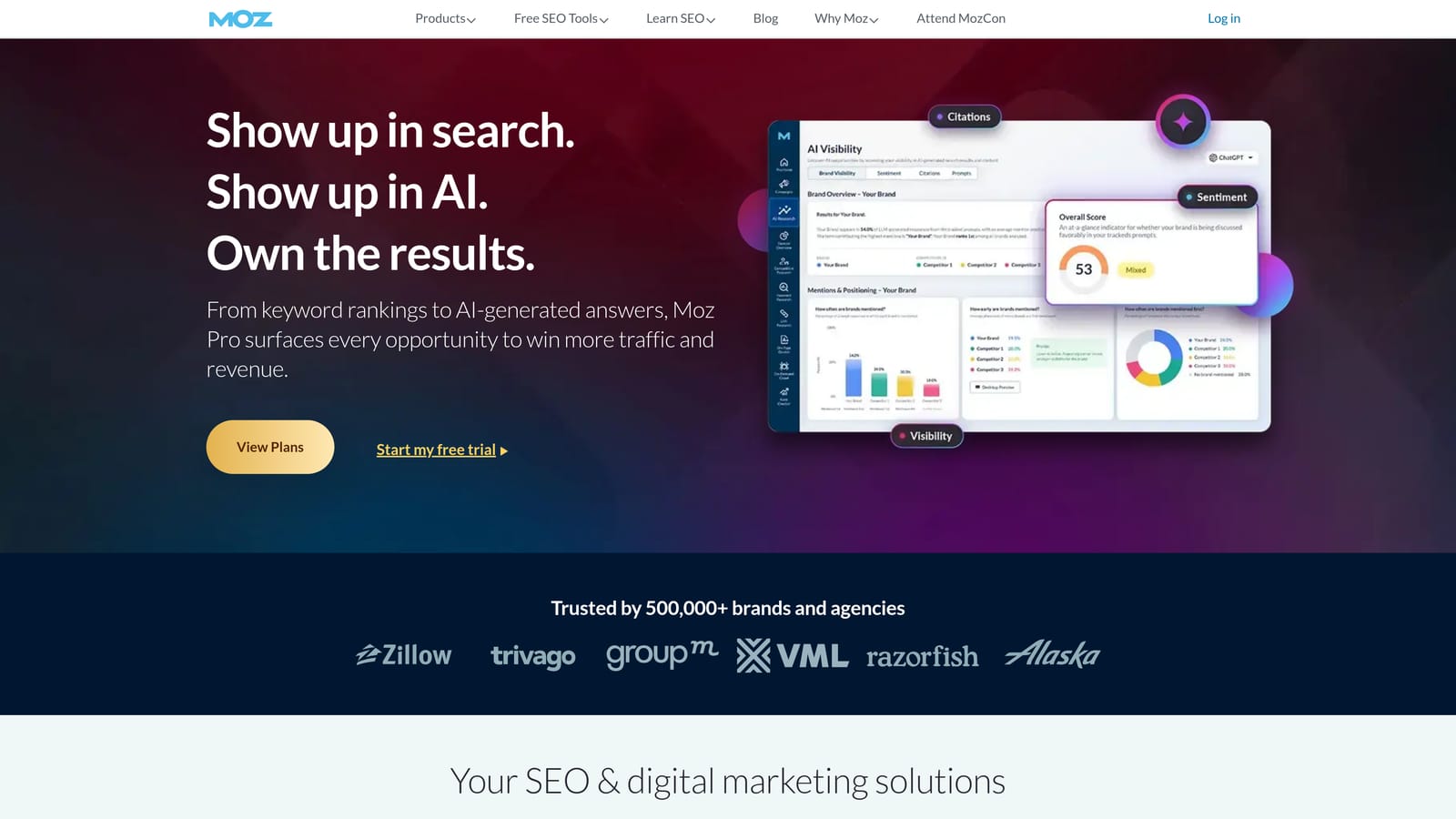
Domain Authority is its signature. It is a Moz-specific score, not a Google metric, and it is not comparable with Ahrefs' Domain Rating or Majestic's Trust Flow. Its value is familiarity: stakeholders know what it means, which makes reports easy to read.
- Link Explorer lets you inspect linking domains, anchors, and top pages for any site.
- Domain Authority gives a single comparative score that clients tend to understand quickly.
- Spam Score flags sites with traits associated with penalties, helping you triage questionable links.
- Link intersect highlights domains linking to competitors but not you.
- Campaign tracking monitors rankings and link changes over time for ongoing client work.
It integrates with Google Analytics and Search Console and has an API. Setup is easy and the interface is approachable, which helps with junior staff.
The trade-off is index size: Moz's link index is smaller than those of the largest competitors, so you may see fewer links for a given domain. For exhaustive prospecting, that gap matters; for client reporting, it often does not. Plans are tiered monthly, so confirm current limits and trial availability on the website.
Best for: Agencies and in-house teams reporting with familiar authority metrics.
5. Majestic
Majestic is a link-intelligence specialist that runs its own crawler and focuses on links alone. It is designed for link builders and analysts who want index data without the surrounding suite.
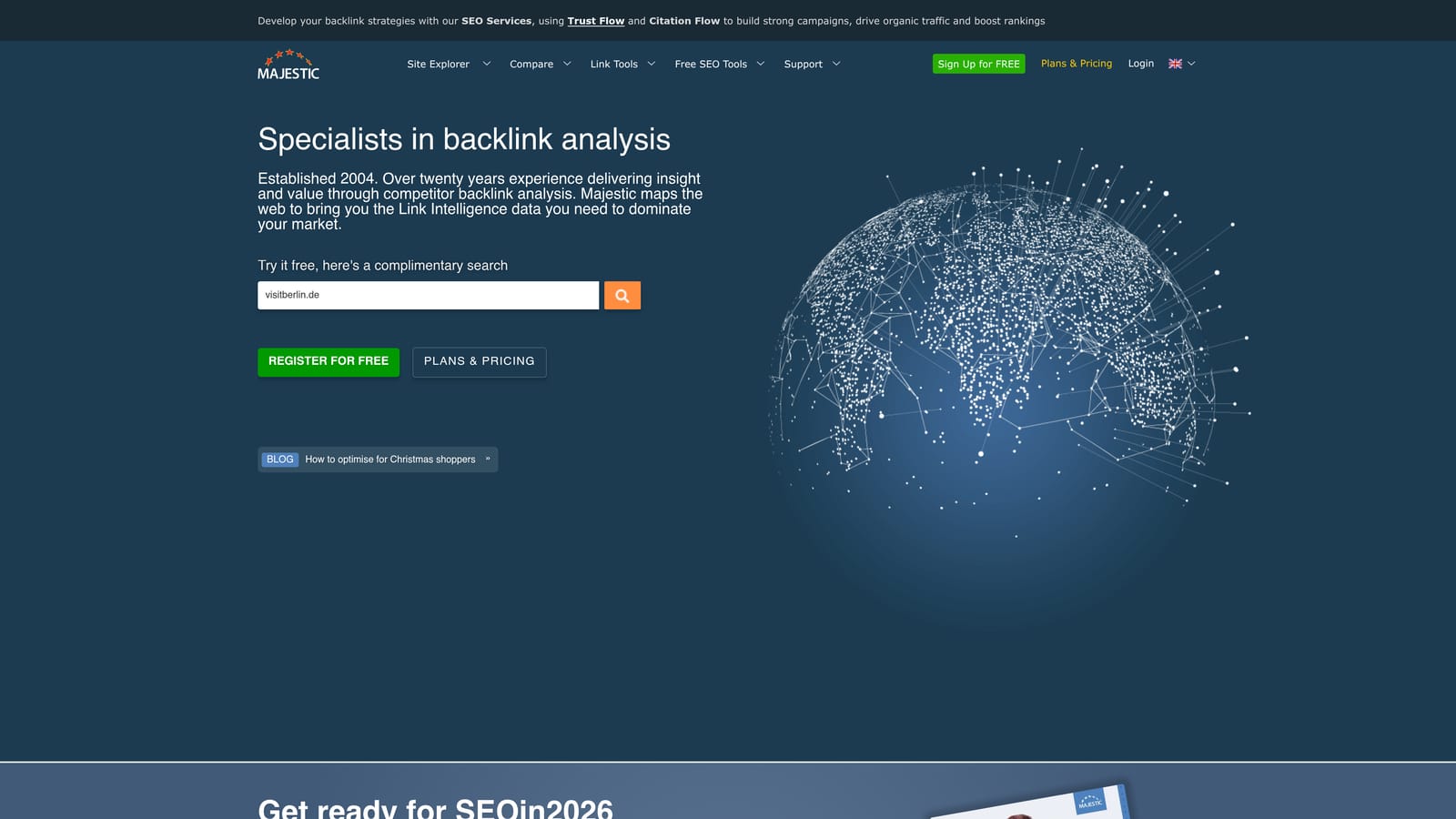
Its distinctive contribution is Trust Flow and Citation Flow. Trust Flow estimates quality based on closeness to trusted seed sites and includes topical categories, so you can see what subjects a site's links relate to. Like other vendor scores, it is proprietary and should not be compared across tools.
- Trust Flow and Citation Flow separate link quality from link quantity, exposing profiles padded with weak links.
- Historic and fresh indexes let you choose between a long-term view and recently discovered links.
- Site Explorer summarizes a domain's backlinks, referring domains, and topics.
- Link context shows where on the page a link sits, which helps judge its real value.
- Bulk backlink checker processes many URLs at once for large prospecting or audit lists.
An API is available, but integrations are otherwise thin. Setup is simple, though learning to interpret the metrics takes some time.
The interface looks dated, and the scope is links only: no rank tracking, no content tools. Pricing is split into separate Lite, Pro, and API plans, so check which one covers the features and limits you need.
Best for: Link specialists who want focused index data.
6. SE Ranking
SE Ranking is an affordable all-in-one SEO platform with a backlink checker and monitor included. It targets small businesses and agencies that need broad coverage without enterprise pricing.
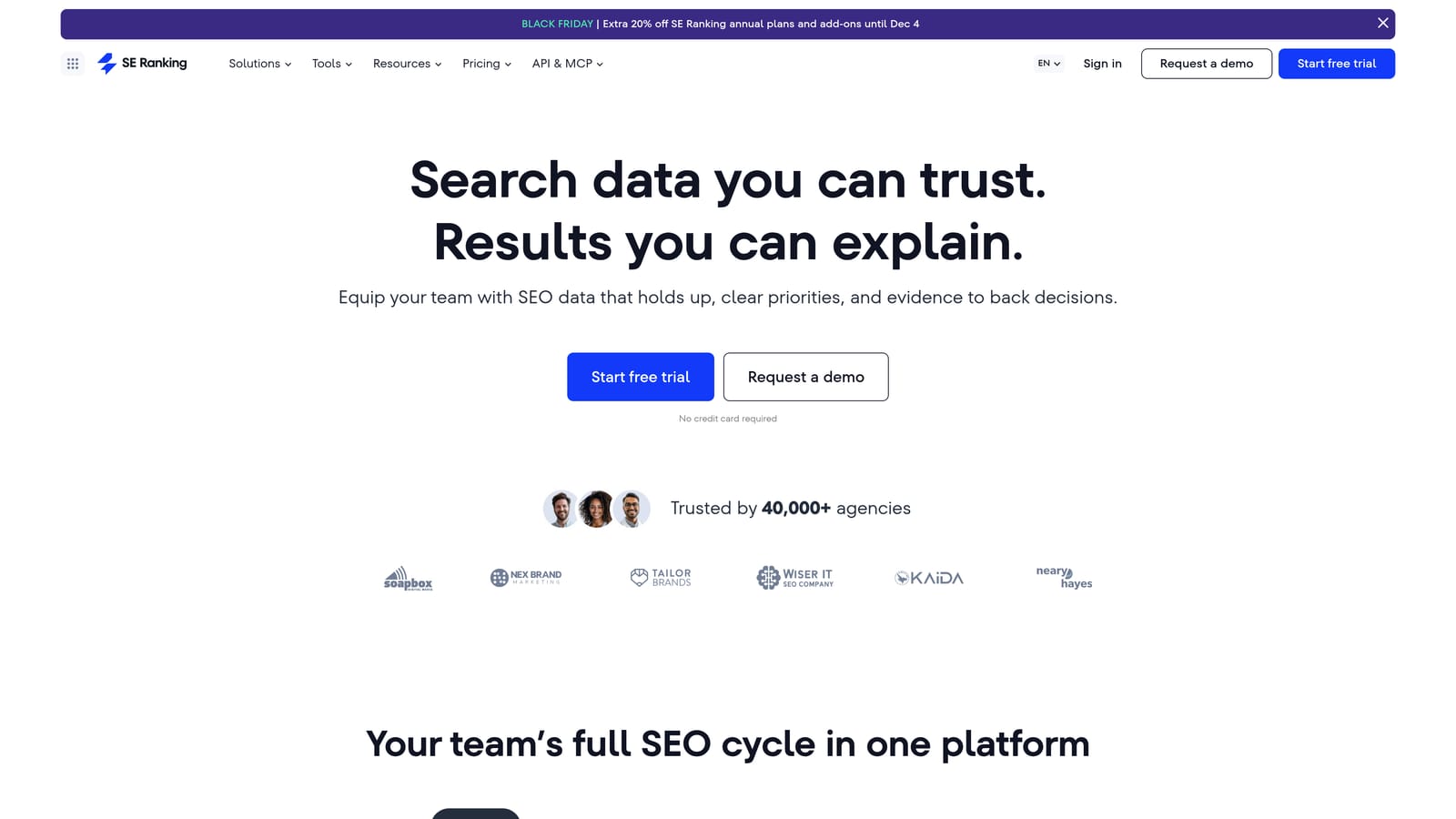
Its edge is white-label reporting available at a budget-friendly tier. Agencies can send clients branded reports covering links, rankings, and audits without buying a premium plan or a separate reporting product.
- Backlink Checker shows a domain's referring links for quick competitor or prospect checks.
- Backlink Monitor tracks links you have acquired and alerts you when their status changes.
- Toxic link flagging highlights risky links so you can decide what to disavow.
- White-label reports put your agency's branding on client deliverables.
- Rank tracking sits in the same account, so link work and ranking results are viewed together.
It connects to Google Analytics, Search Console, and Looker Studio, with an API for custom needs. Setup is quick and suits small teams without a dedicated SEO operations person.
Its backlink index is smaller than those of the larger tools, so deep competitor research may turn up fewer links. Pricing is tiered by plan and tracking volume, so the total depends on how many keywords and projects you track. Verify current tiers before comparing.
Best for: Budget-conscious agencies and small businesses.
7. LinkResearchTools
LinkResearchTools is a link audit and risk-analysis toolkit, built for penalty recovery and due diligence rather than everyday prospecting. Its buyers are specialist consultants and agencies handling manual-action cleanups or evaluating acquisitions.
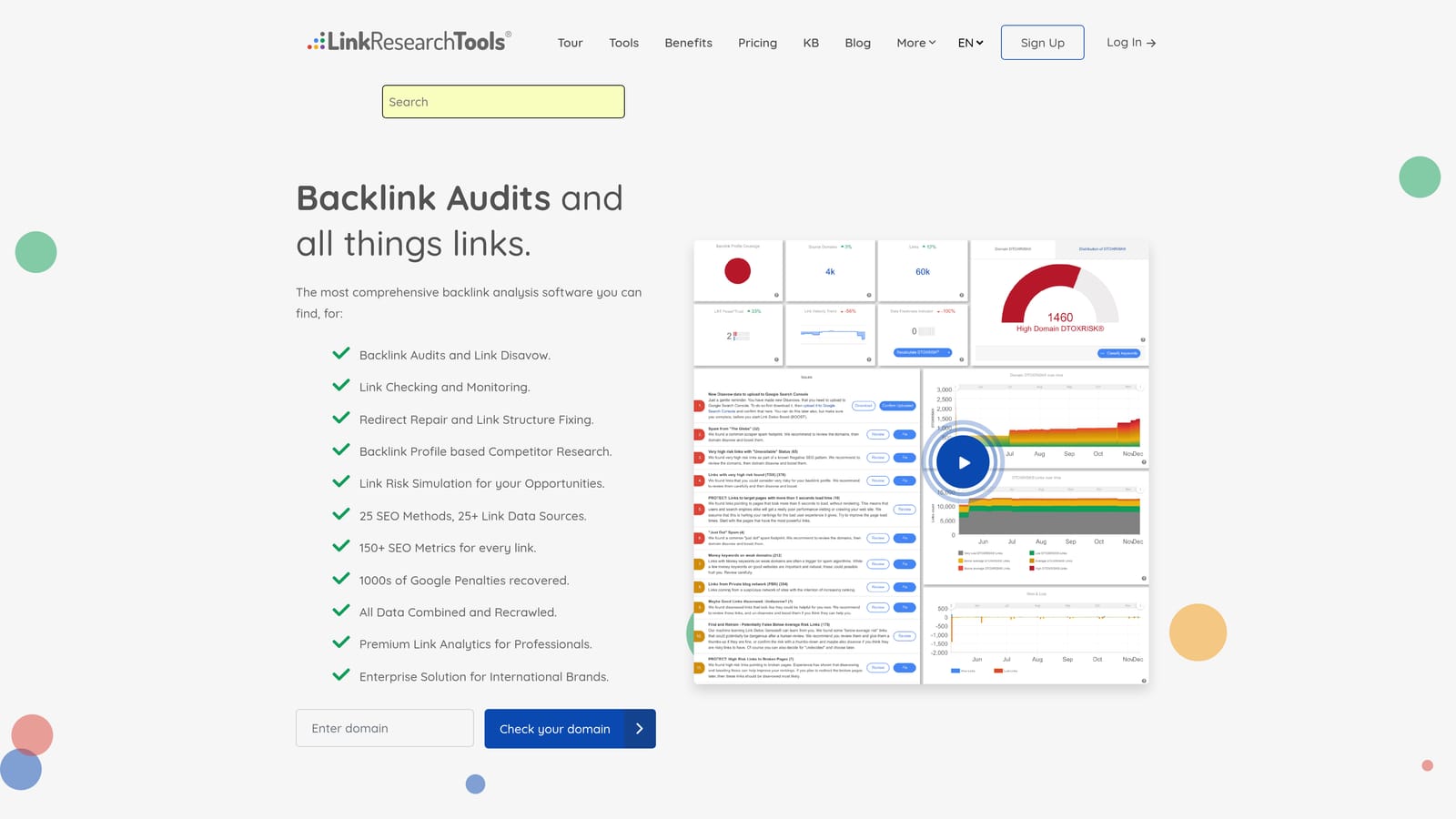
The standout is Link Detox, which scores link risk and groups problem links so you can build a cleanup plan. Because it merges link data from multiple sources, it can surface links that a single index misses, which matters when you are trying to find everything that might be hurting a site.
- Link Detox assigns risk scores to links, speeding up the triage of a bad profile.
- Link audits produce structured reviews you can use for recovery work or client reports.
- Multi-source link data combines several indexes for broader coverage of a profile.
- Competitive landscape analysis benchmarks a site's link profile against its rivals.
- Link Alerts notify you of new links so problems are caught early.
It offers an API and draws on third-party data sources. Expect real setup effort: the reports are detailed, and getting reliable results requires learning the methodology.
It is not for casual users. The learning curve is steep and the price is higher than lightweight tools, which is hard to justify if you only check links occasionally. Plans are tiered, so confirm what each includes on the website.
Best for: Penalty recovery and link due diligence specialists.
8. Monitor Backlinks
Monitor Backlinks is a link-tracking tool with alerts and built-in outreach. It is for small teams and freelancers who want to protect the links they have earned rather than research the entire web.
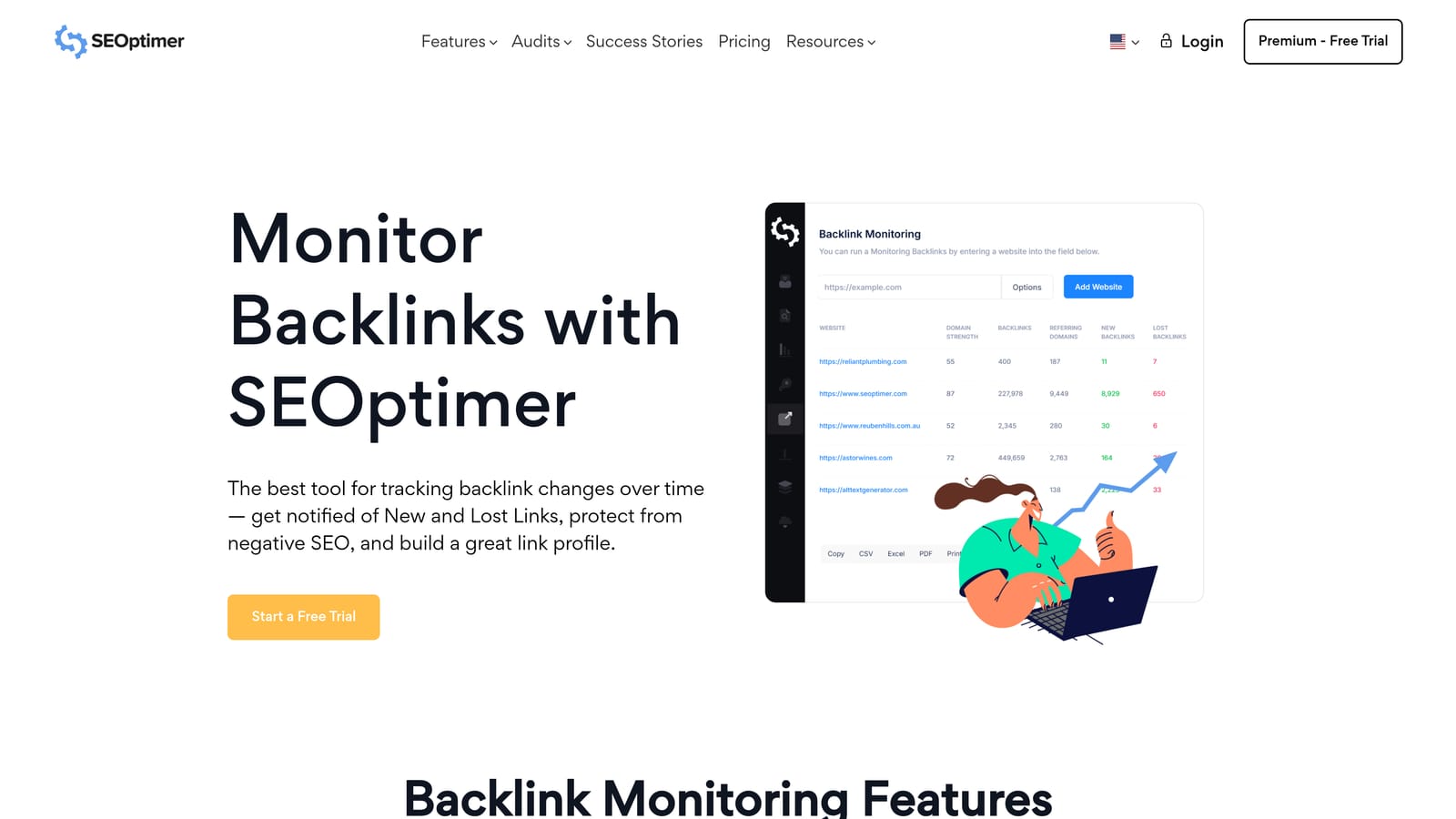
Its distinguishing feature is continuous link-loss alerting for a tracked portfolio. When a link is removed, changed to nofollow, or its page goes down, you hear about it, which lets you act while the relationship is still fresh.
- Lost and new link alerts tell you when your profile changes, so lost links can be recovered quickly.
- Competitor tracking shows the links rivals are gaining, giving you a steady stream of ideas.
- Keyword rank tracking ties link changes to ranking movement in one dashboard.
- Outreach emails let you contact site owners without a separate outreach tool.
It integrates with Google Analytics and Search Console. Setup takes minutes: add your domains, connect your accounts, and alerts begin.
It is not built for deep link discovery. If you need to mine a competitor's complete profile for prospects, a larger index is the better choice. Pricing is tiered by the number of tracked domains and links, so cost rises as your portfolio grows; check the current tiers on the site.
Best for: Small teams monitoring links they have already built.
9. Google Search Console
Google Search Console is Google's free tool for site owners, and its Links report is the only first-party link data on this list. Anyone who can verify a site can use it, from solo founders to enterprise teams.
Its advantage is source: the data comes directly from Google, at no cost, and it reflects links Google has actually found for your site. That makes it a useful reference point when third-party tools disagree with each other.
- Top linking sites lists the domains that link to you most, for a quick view of your main supporters.
- Top linked pages shows which of your pages attract links, revealing which content earns them.
- Anchor text summarizes how other sites describe your pages.
- Disavow tool access lets you submit a disavow file if you have a genuine problem to address.
It integrates with Google Analytics and Looker Studio. Setup requires verifying ownership of your site, which usually takes a few minutes.
The limits are significant. It covers only sites you own, so competitor research is out. Exports are limited, there is no spam scoring, and the data is a sample rather than a full list. Free is the price, and no tier is available to upgrade to.
Best for: Free baseline checks for site owners.
Matching Backlink Software to Your Budget and Workflow
Start with Search Console if you want a free baseline for your own site; it costs nothing and gives you Google's own view. When you need to see competitors, step up to a paid index, and compare plans by limits (seats, projects, report credits) rather than monthly fee alone. Annual billing and add-ons can shift the total noticeably.
- Budget agencies: SE Ranking, for white-label reports at a lower tier.
- Link-audit specialists: LinkResearchTools, for risk scoring and recovery work.
- All-in-one suite buyers: Semrush, if you will use the keyword and content tools too; Ahrefs if competitor link depth is the priority.
- Client reporting: Moz Pro, when stakeholders expect Domain Authority.
Whichever you choose, remember that authority scores are vendor-specific and a larger index is not automatically better for your use case. Prices and tier names change, so verify current pricing and trial terms on each vendor's site before you buy.
Links are only one input to being found. Pair your backlink tool with Sight AI to see whether that authority is earning mentions in ChatGPT, Claude, and Perplexity. Stop guessing how AI models talk about your brand: get visibility into every mention, track content opportunities, and automate your path to organic traffic growth. Start tracking your AI visibility today and see exactly where your brand appears across top AI platforms.