This list is for marketers, founders, and small agencies who need backlink data without committing to a $100-plus monthly suite. Tools were judged on five things: starting price, how usable the backlink index is in practice, the link-quality metrics offered, support for competitor gap analysis, and whether a free tier or low-cost plan covers real work rather than a teaser. Most small teams get further by matching a tool to a job and combining free sources than by buying one expensive platform.
Quick Comparison of Budget Backlink Analysis Tools
- Ahrefs Webmaster Tools: site owners auditing their own link profile; free; Ahrefs-crawler backlink data for your own verified sites at no cost.
- Google Search Console: anyone verifying what Google sees; free; first-party link data straight from Google.
- Ubersuggest: solo marketers and small businesses; see website; a lifetime licence option alongside subscriptions.
- Moz Link Explorer: agencies needing a recognised authority metric; limited free queries, paid plans on website; Domain Authority as a shared benchmark.
- SEO PowerSuite (SEO SpyGlass): freelancers who prefer licence pricing; free version with limits, paid licences on website; a built-in penalty risk audit in a desktop app.
- Semrush Backlink Analytics: teams wanting link, keyword, and site tools together; see website; Backlink Gap inside a full SEO suite.
- SmallSEOTools Backlink Checker: quick checks on outreach prospects; free; instant lookups with no account.
- Majestic: link-focused researchers; see website; Trust Flow topical metrics and a long historic index.
- Sight AI: teams that already have a backlink tool; see website; measures how AI models mention your brand.
1. Ahrefs Webmaster Tools
Ahrefs Webmaster Tools is a free product from Ahrefs that gives verified site owners backlink, referring domain, and site audit data for their own sites. A referring domain is a unique site that links to you, and it is usually a better health signal than raw link count, since one site can send thousands of links.
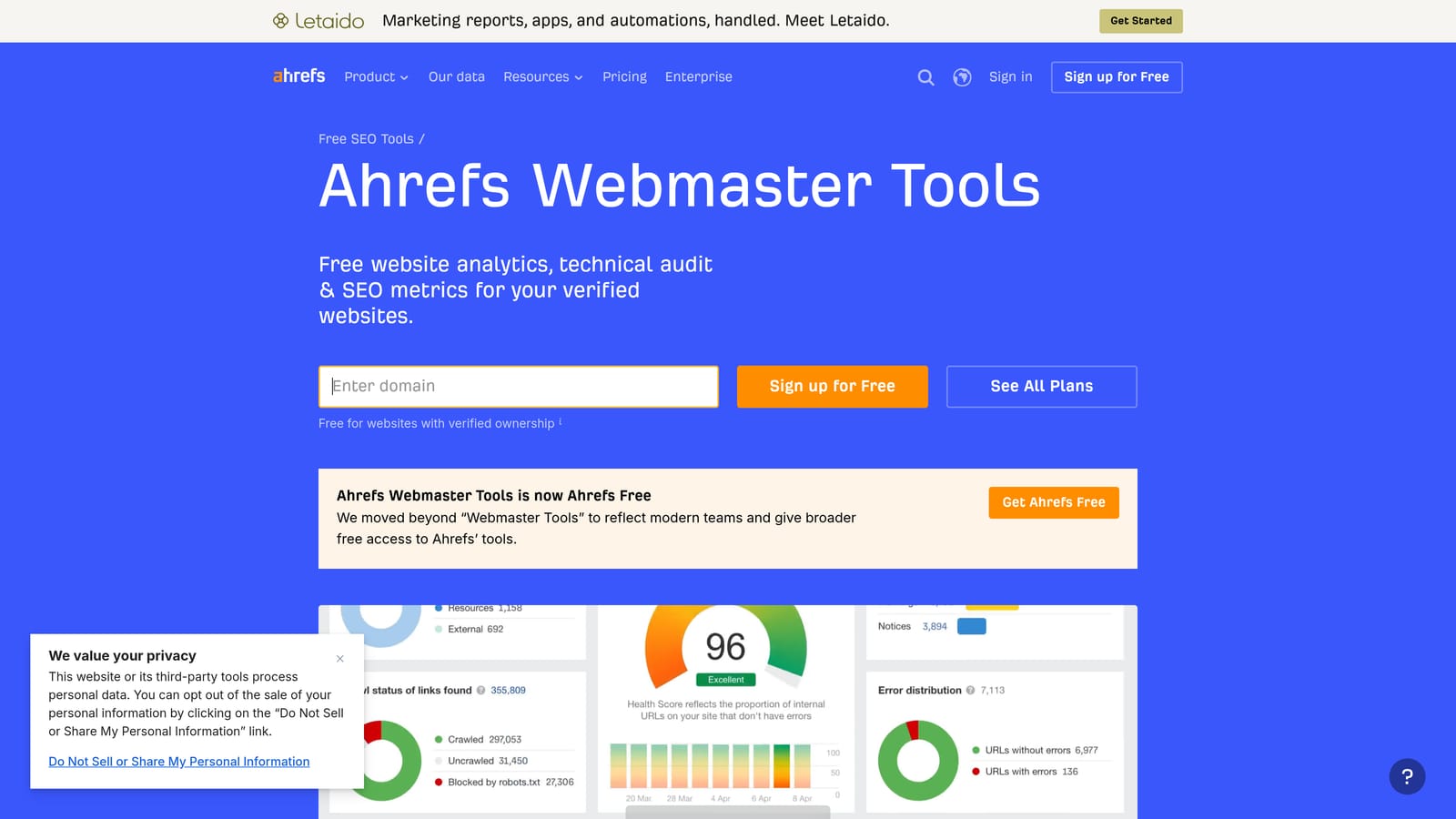
Its distinctive strength is that the data comes from the Ahrefs crawler, one of the larger commercial link indexes, at no cost. No other free option on this list gives you that, and it is considerably more usable than a raw export from a lightweight checker.
- A backlink report for verified sites, so you can see new and lost links without a paid plan.
- Referring domain lists that show where your link equity actually comes from.
- Anchor text breakdowns that reveal over-optimised or irrelevant phrasing.
- A site audit that flags technical issues alongside link data.
- Organic keyword data for your own site, so you can tie links to rankings.
Setup is simple: verify ownership, optionally connect Google Search Console to speed it up, and one person, typically the SEO or site owner, can run it. The main limitation is scope. It only works on sites you can verify, so there is no competitor backlink research, no link gap analysis, and no way to vet an outreach prospect. Agencies can cover client sites they can verify, but not prospects.
Pricing is free for verified sites. As of November 2026, confirm the current scope on the Ahrefs site, since free-tier limits can change.
Best for: Site owners auditing their own link profile at no cost.
2. Google Search Console
The Links report in Google Search Console shows external and internal links pointing at your verified property. Its value is provenance: this is first-party data from Google, so it is the reference point for whether a link was discovered at all.
Third-party tools each crawl their own index, so their counts disagree with each other and with Google. Search Console is where you check before trusting any of them.
What the report gives you
- Top linking sites, to see which domains point to you most.
- Top linked pages, which shows which URLs attract links and which attract none.
- Top linking text, the anchor text others use when linking to you.
- Free exports for spreadsheet analysis or pairing with other data.
- Manual action notices, which warn you if Google has penalised the site.
Where it falls short
It covers your own site only, so competitor research is off the table. There are no quality scores, no spam flags, and no link-by-link context. Export depth is limited, and the report is not designed to show every link Google knows about. Treat it as a sample, not a full census.
It integrates with Google Analytics and Looker Studio, and setup takes minutes through DNS or HTML verification. Anyone with site access can run it. Pricing is free.
Best for: Verifying what Google sees before trusting third-party counts.
3. Ubersuggest
Ubersuggest is Neil Patel's affordable SEO tool, combining a backlink report with keyword research and a site audit. It is built for people who want one inexpensive dashboard rather than a specialist link platform.
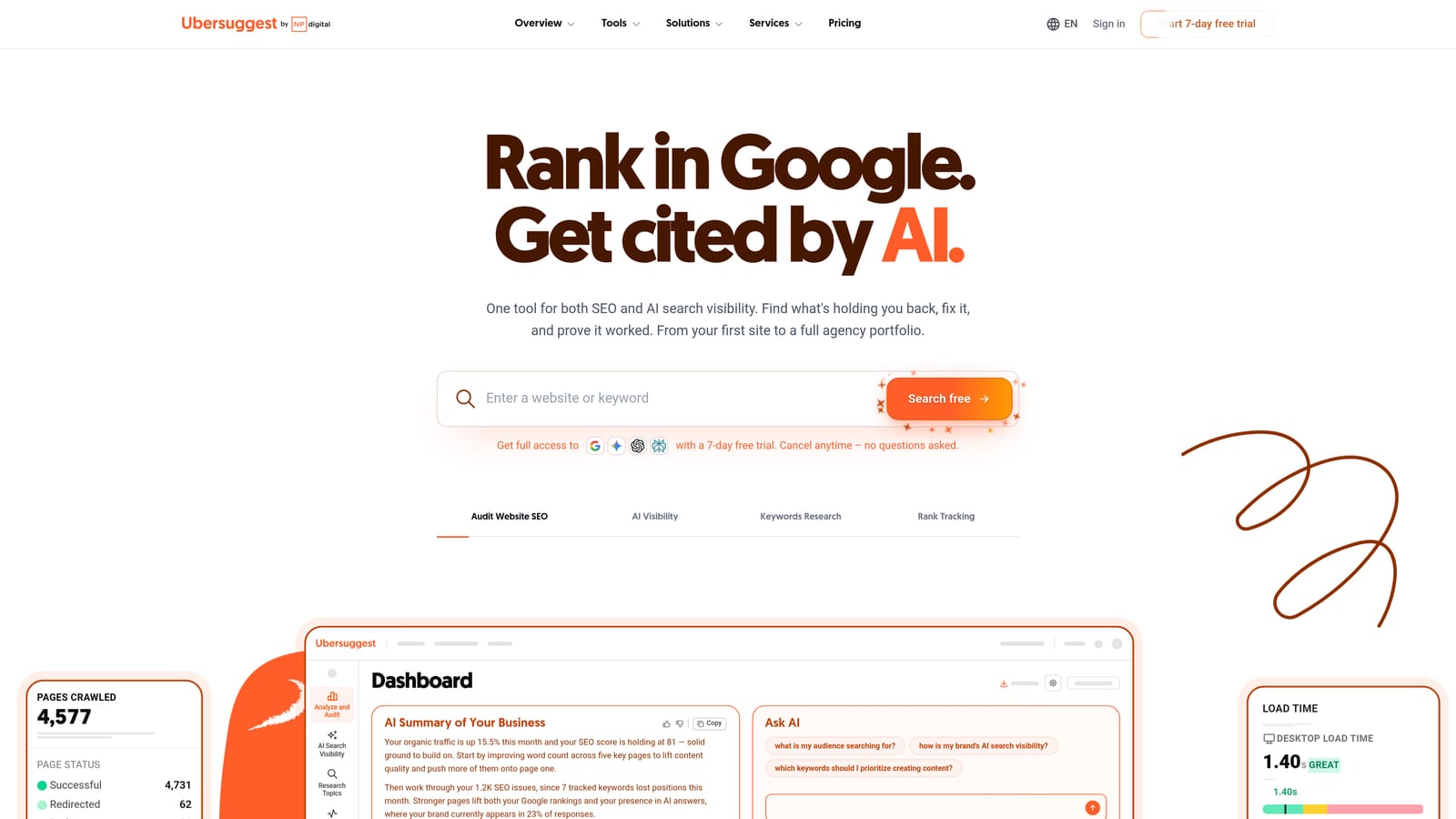
The standout is the pricing model. Alongside monthly plans, it has offered a one-time lifetime licence, which is unusual in SEO software and appeals to anyone who dislikes recurring bills. Confirm that the lifetime option is still available before planning around it.
- Backlink data with a domain score, so you can rank linking sites quickly.
- An anchor text view to spot patterns in how others describe you.
- Competitor backlink opportunities, which surface sites linking to rivals but not to you.
- Keyword research in the same account, so link and content work share one tool.
- A site audit for basic technical checks.
It connects to Google Analytics and Google Search Console, and setup is light: add a domain and read the reports. A solo marketer or small-business owner can run it unaided.
The trade-off is depth. Its link index is smaller than those of the larger platforms and its filters are fewer, so expect to miss links that Ahrefs or Majestic would show. It is not the right choice for agencies doing exhaustive competitor audits or anyone who needs granular link filtering.
Pricing is listed on the website, with monthly plans and the lifetime option. As of November 2026, check current prices and plan limits, which typically govern how many projects and daily searches you get.
Best for: Solo marketers and small businesses wanting low, predictable cost.
4. Moz Link Explorer
Moz Link Explorer is Moz's link analysis tool, best known for Domain Authority (DA) and Spam Score. DA is a third-party prediction of how well a site might rank, not a Google metric, but because it is so widely used, it works as a shared language between agencies and clients.
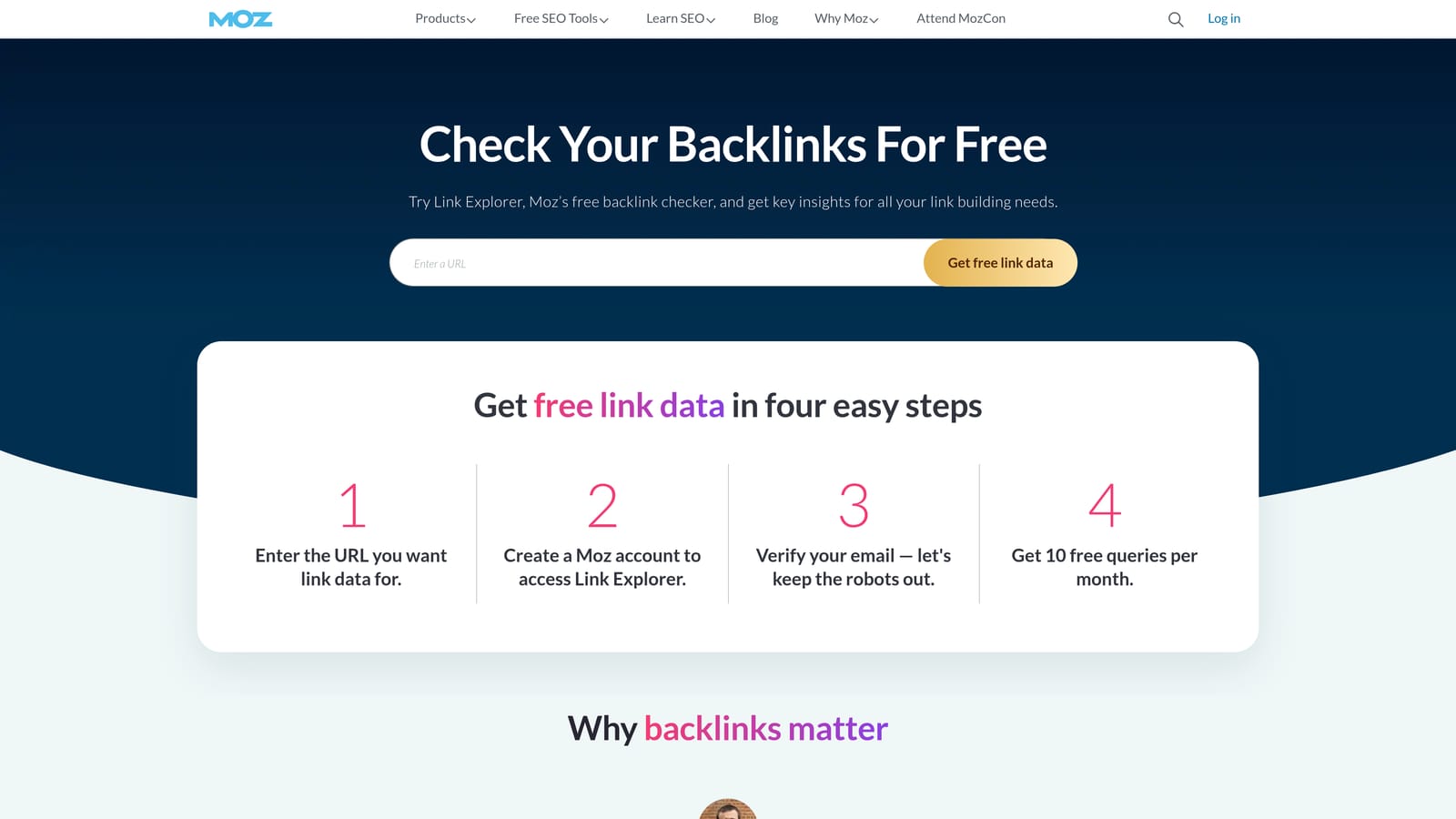
That recognition is its edge. When a client asks whether a prospective link is "a good site," a DA figure gives a quick common reference that other tools' proprietary scores do not.
- Domain Authority, for benchmarking your site against competitors in a format clients know.
- Spam Score, to flag linking sites that look risky.
- Link intersect, which finds sites linking to competitors but not to you.
- Anchor text analysis to check how your link profile reads.
- Discovered and lost links to monitor changes over time.
Setup is a search box, plus a Moz account. It integrates with the Moz API and Google Analytics, so teams that build reports programmatically can pull the data out.
The limits are index size and freshness, which trail the largest competitors, so recently built links may take longer to appear. The free allowance is also small: Moz offers limited free queries, and heavier use pushes you into paid Moz Pro plans. As of November 2026, check the current query limits and plan prices, since both have shifted over time.
It is a poor fit if your priority is the biggest possible link index. It is a good fit if you need credible, familiar numbers for a deck.
Best for: Agencies that need a recognised authority metric for client reports.
5. SEO PowerSuite (SEO SpyGlass)
SEO SpyGlass is the backlink module of SEO PowerSuite, a desktop SEO suite. It analyses your link profile and flags risky links, those often called toxic links: links from spammy, irrelevant, or manipulative sources that may harm a site's standing.
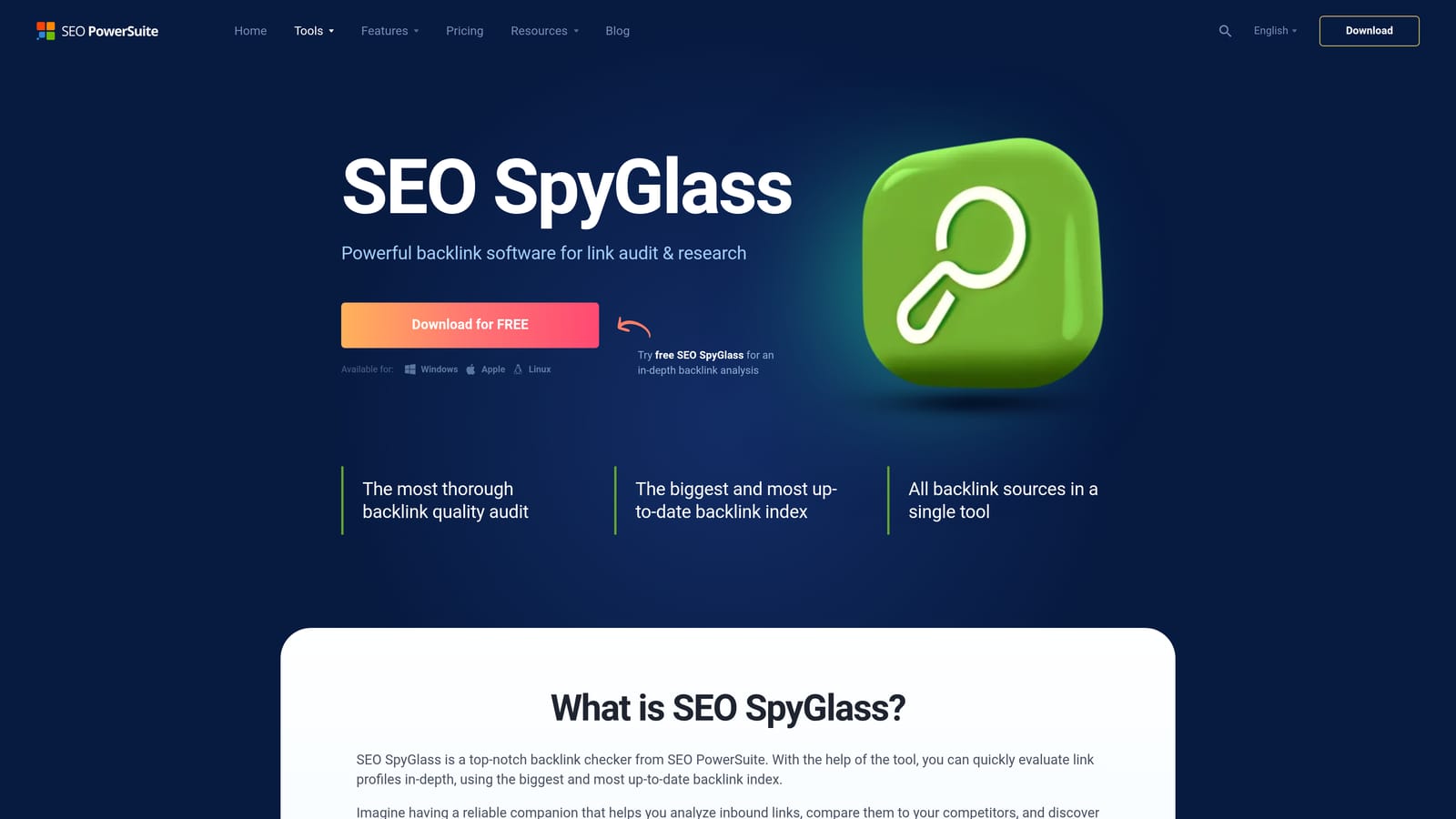
Two things set it apart here. It is sold on a licence model rather than a pure monthly subscription, and it has a built-in penalty risk audit. If you suspect a bad link profile or are cleaning up after an old agency, this is the only tool on the list built around that task.
- Backlink profile analysis that pulls link data into one local project.
- A penalty risk audit that scores links by how risky they look.
- Competitor link comparison to see where rivals are stronger.
- Scheduled reports so monitoring runs without manual effort.
- Multiple link source connections, which combine different indexes for broader coverage.
It connects to Google Search Console and third-party link indexes. The last point matters: depth depends on which data sources you connect, and some of those may carry their own costs.
It is desktop-only, so there is no browser access or easy team sharing, and the interface looks dated. Treat risk scores as prompts for manual review, not verdicts, because no tool can tell you with certainty what Google considers harmful.
A free version exists with limits, and paid licences are priced on the website. As of November 2026, confirm what the free version restricts, such as saving or exporting projects.
Best for: Freelancers who prefer licence pricing and need toxic link audits.
6. Semrush Backlink Analytics
Semrush Backlink Analytics sits inside the Semrush SEO platform, so link research shares an account with keyword, content, and site tools. It is the priciest entry point on this list, which is the main reason to be sure you will use more than the backlink features.
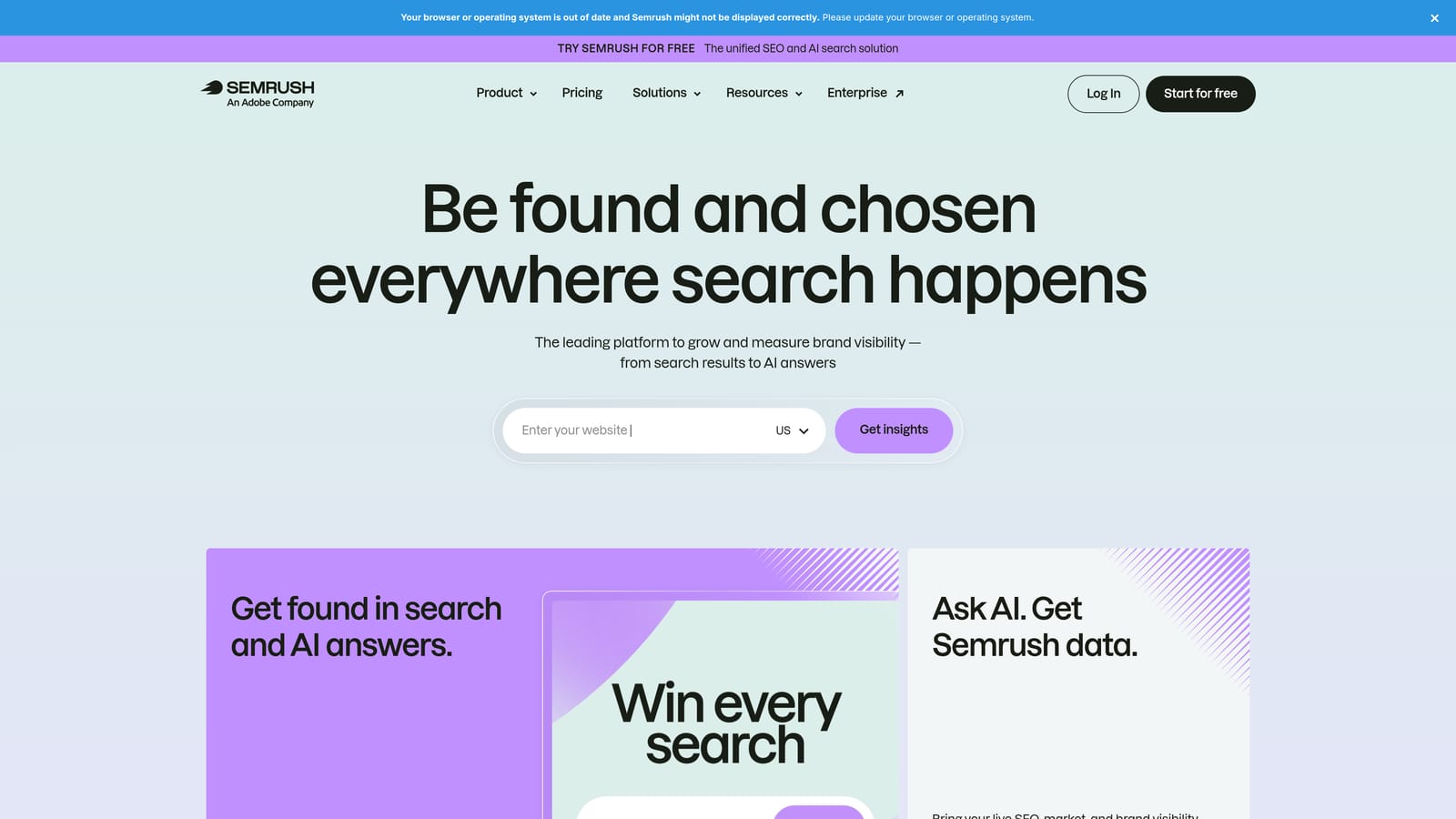
Its distinctive feature is Backlink Gap, a link gap analysis: you enter your domain and several competitors, and it shows sites linking to them but not to you. That turns a pile of competitor data into a prioritised outreach list.
- Backlink Analytics for profile overviews of any domain, including competitors.
- Backlink Audit, which reviews your own links for risk and helps manage disavow files.
- Backlink Gap, which finds the link opportunities your rivals already have.
- Referring domain breakdowns by type, country, and authority.
- A link building tool that organises outreach prospects into a workflow.
It integrates with Google Search Console, Google Analytics, and Looker Studio. Setup takes longer than with single-purpose tools because the platform is large, and it rewards a team member who will learn it properly.
If you only need occasional link checks, this is overkill and the cost will not justify itself. Subscription plans are priced on the website, and limited free usage is available. As of November 2026, check which plan includes the backlink features you need and what project and report limits apply.
Best for: Teams that want link analysis plus keyword and site tools in one platform.
7. SmallSEOTools Backlink Checker
The SmallSEOTools Backlink Checker is a free web-based tool for quick lookups of a domain's links. Type in a domain and get a basic list, with no signup.
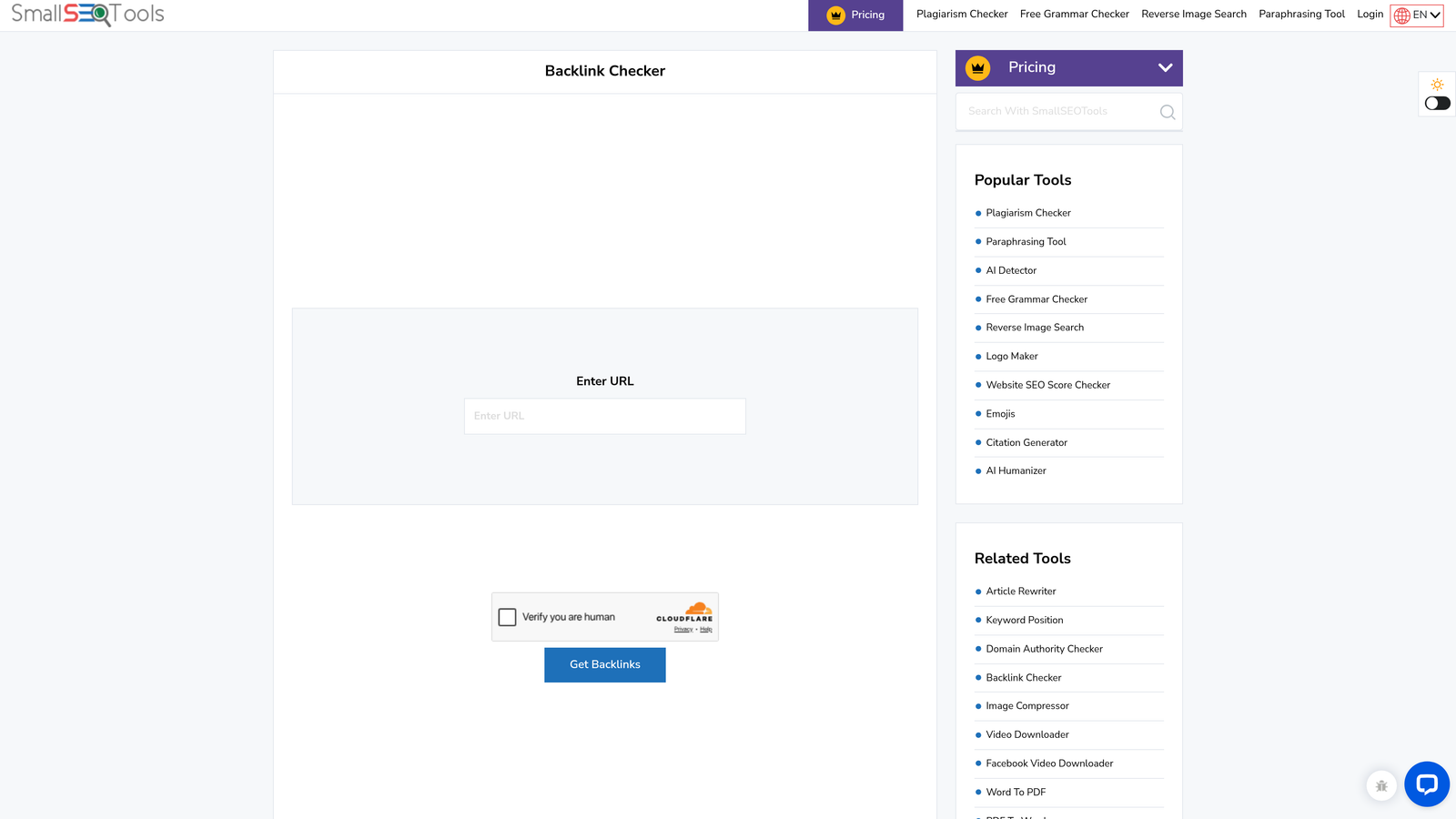
That is the whole pitch, and it is a real one: nothing else here lets you check an arbitrary domain instantly without an account. For a fast look at an outreach prospect before you email them, it is hard to beat on convenience.
- No-signup lookups, so a check takes seconds.
- A basic backlink list to see whether a site has any link activity at all.
- Anchor text display for a rough read on how others link to the domain.
- Free use, so you can check many prospects without cost.
The limitations are plain. Data is shallow and can be inconsistent from one lookup to the next, so do not base decisions on its counts. Expect ads and usage limits. There are no quality metrics, no filtering, no history, and no gap analysis. It is a standalone page with no integrations, and anyone can use it, which also means no team features or saved projects.
Never use it for audits, reporting, or anything you would show a client. If a prospect looks worth pursuing after a quick check, confirm it in Search Console, Moz, or another tool with a stronger index.
Pricing is free, supported by ads and subject to usage limits.
Best for: Quick sanity checks on outreach prospects.
8. Majestic
Majestic is a link-intelligence specialist that maintains its own index and is known for two metrics. Trust Flow estimates link quality based on proximity to trusted seed sites, and Citation Flow estimates link volume or influence. Like DA, these are third-party estimates, not Google signals, but a big gap between the two often points to a link profile padded with low-quality links.
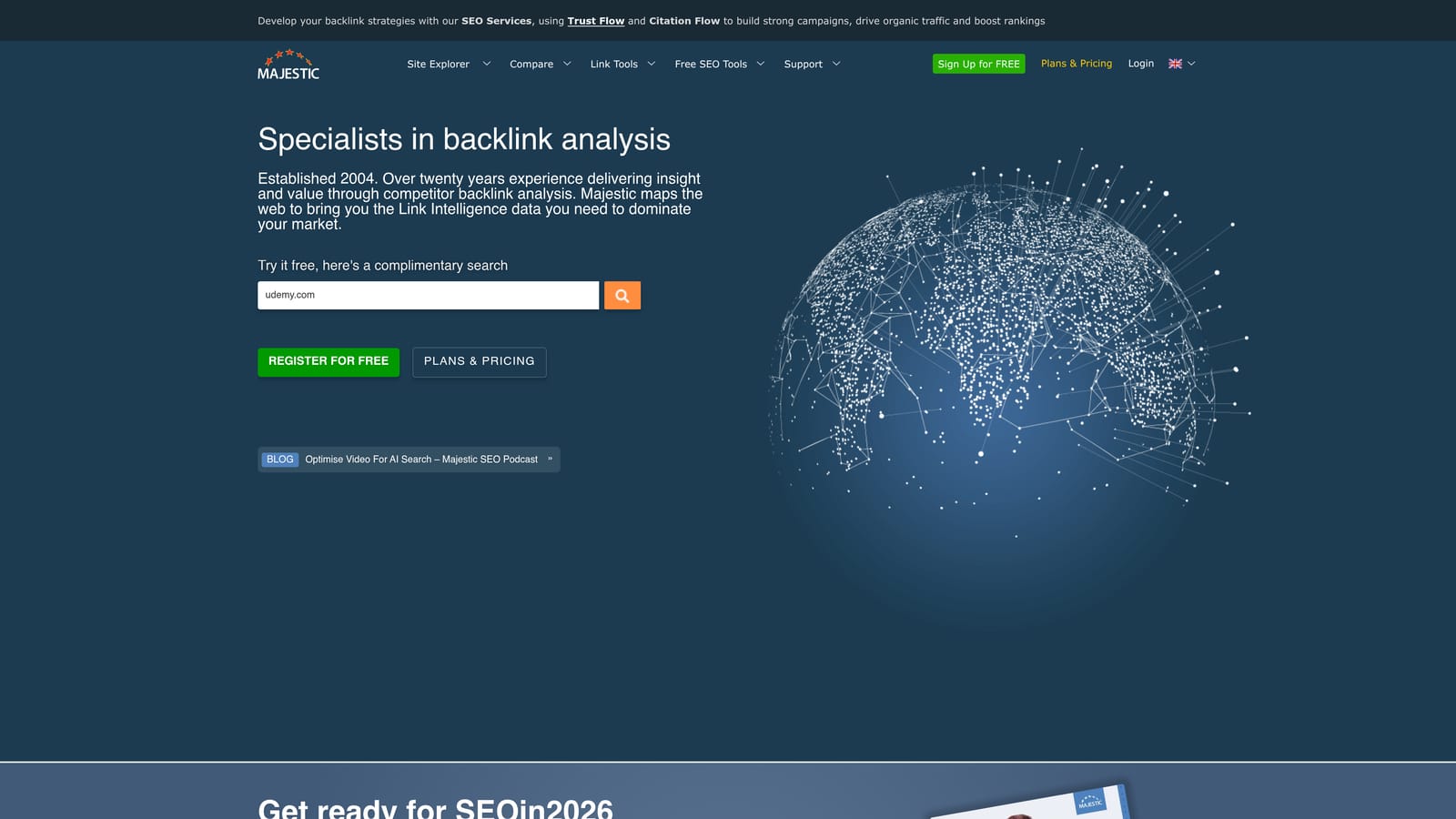
Majestic is the only tool here that is entirely about links. It has no keyword or content features to pay for, and that focus, combined with a long historic index, is its main appeal.
- Trust Flow and Citation Flow, with topical categories showing what subjects a site is trusted for.
- A historic index for studying how a link profile developed over years.
- Link context, which shows where on a page a link sits and what surrounds it.
- Backlink history to see when links were gained and lost.
- A bulk backlink checker for comparing many domains at once.
It offers a Majestic API for custom reporting; beyond that, integrations are limited. Setup is quick, but the reports assume you know what you are looking for, so it suits someone who already understands link analysis rather than a beginner.
The interface is dated, and there is no broader SEO suite, so you will need other tools for keywords, content, and audits. Subscription plans are priced on the website. As of November 2026, check current plan tiers and the limits on lookups and exports, which determine whether it beats a bundled suite for your workload.
Best for: Link-focused researchers who want deep link data without suite pricing.
9. Sight AI
Sight AI is an AI visibility and content platform, and it is not a backlink crawler. It has no backlink index and no referring domain data, so it cannot replace anything above. It earns a place because the same budget-minded teams that need link data increasingly need to know how AI models describe their brand.
Its distinctive job is measurement that backlink tools do not do: how often and in what tone ChatGPT, Claude, and Perplexity mention your brand. Links remain a useful signal for traditional search, but they do not show you what an AI assistant says when someone asks about your category.
- An AI Visibility Score with sentiment analysis, so you can see whether mentions are positive or negative.
- Prompt tracking across ChatGPT, Claude, and Perplexity to monitor the questions your buyers ask.
- An AI Content Writer with 13+ agents that produces SEO and GEO articles such as listicles and guides.
- IndexNow indexing and automated sitemaps to speed up discovery of new pages.
- CMS auto-publishing to move finished content live without manual steps.
It integrates with IndexNow and CMS publishing. Setup involves defining your brand and prompts to track, and a marketer or content lead can run it day to day.
The limitation is the point of this entry: use it alongside a backlink tool, not instead of one. If your only question is who links to you or your competitors, look at the tools above. Pricing is listed on the website. As of November 2026, confirm current plans there.
Best for: Teams with a backlink tool who want to track AI search visibility.
Matching Each Backlink Job to the Right Budget Tool
Counts will differ between tools because each crawls its own index, and authority scores are third-party estimates rather than Google metrics. More links are not automatically better, so pick tools by the job and cross-check where the stakes are high.
- Free own-site audits: Ahrefs Webmaster Tools for the richest data, and Search Console to confirm what Google itself reports.
- Cheapest paid competitor research: Ubersuggest for low, predictable cost, accepting a smaller index.
- Agency benchmarking: Moz Link Explorer, for Domain Authority that clients already recognise.
- Toxic link audits: SEO SpyGlass, with manual review of anything it flags.
- Deep link research and competitor gaps: Majestic for focused link data, or Semrush if you will use the wider suite.
- AI visibility measurement: Sight AI, paired with whichever backlink tool you choose.
Prices and free-tier limits change often, so verify each tool's current plan on its website before you commit.
Stop guessing how AI models like ChatGPT and Claude talk about your brand. Get visibility into every mention, track content opportunities, and automate your path to organic traffic growth. Start tracking your AI visibility today and see exactly where your brand appears across top AI platforms.