Paying for backlink analysis software only makes sense when the index, the metrics, and the workflow match the work you actually do, whether that is a single site or a client roster. The tools below were chosen on link index quality and freshness, depth of analysis (competitor gaps, toxic link detection, anchor text), monitoring and reporting, and pricing transparency. Pick by job, not by brand: research, audit, and monitoring are different purchases.
Quick Comparison of the Backlink Analysis Tools
- Ahrefs: SEO teams doing deep competitor link research; tiered subscriptions, check the site for current pricing; Link Intersect finds domains linking to competitors but not you.
- Semrush: agencies wanting links, keywords, and audits under one login; subscription tiers plus add-ons; Backlink Audit turns toxicity scoring into a ready disavow file.
- Moz Pro: consultants reporting DA and Spam Score; monthly or annual plans; Domain Authority, the metric clients ask for by name.
- Majestic: link builders vetting prospects by topic; monthly usage-tier plans; Topical Trust Flow shows the subject categories a site's links come from.
- SE Ranking: small agencies needing branded reports; plans scale with tracked keywords; white-label reporting bundled with link monitoring at a mid-market price.
- LinkResearchTools: specialists running audits and recovery; premium subscriptions; Link Detox, built for penalty recovery and due diligence.
- Monitor Backlinks: freelancers tracking earned or bought links; plans by tracked domains and links; alerts on link status and attribute changes.
- Serpstat: cost-conscious teams covering several regional markets; tiered subscriptions; low-cost multi-module access with regional keyword tracking.
- Linkody: solo site owners wanting basic link alerts; plans by tracked links or domains; the simplest setup on the list.
Terms That Differ Between Tools
Every score in this category is proprietary. Domain Rating (Ahrefs), Domain Authority (Moz), and Trust Flow (Majestic) are each vendor-built estimates, not Google metrics, and Google does not use them as ranking inputs. Two tools can give the same domain very different numbers without either being wrong.
The same applies to raw counts. Referring domains are the unique sites linking to you, a more useful figure than total links. Anchor text is the clickable wording of a link. Toxic or spammy links are links a tool flags with a heuristic, not a verdict. A disavow file asks Google to ignore specified links, and Google has said most sites do not need one, so check current Google Search Central guidance before using it. Also, more links reported does not mean a better tool: each crawls a different slice of the web, so the same domain shows different link counts everywhere. Prices below are described qualitatively; as of November 2026, confirm current plans on each vendor's site.
1. Ahrefs
Ahrefs is an all-in-one SEO platform known for one of the largest independently crawled link indexes and fast discovery of new links. It is designed for SEO teams that treat competitor link research as a core, recurring activity.
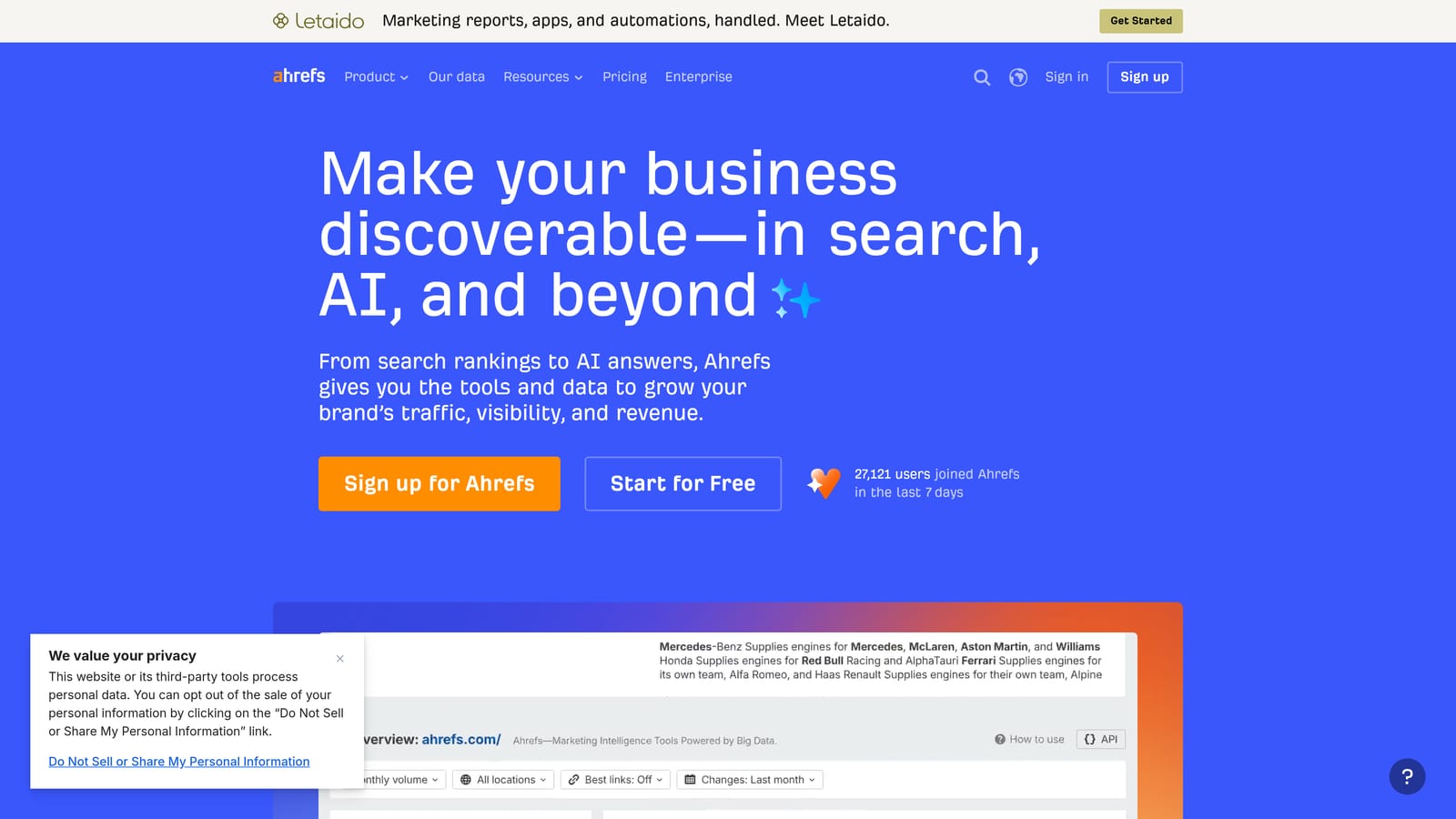
Its distinctive strength on this list is Link Intersect, which shows domains that link to several competitors but not to you. That is a ready-made prospecting list, and no other tool here does it as cleanly.
- Site Explorer shows any site's full backlink profile, so you can size up a competitor in minutes.
- Link Intersect surfaces outreach targets that already link to your rivals.
- New and lost links reports show what changed recently, which helps you spot a competitor's campaign or your own lost links.
- Anchor text and referring domain views reveal over-optimized anchors and concentration risk.
- Domain Rating and URL Rating give a quick strength comparison at domain and page level.
It connects to Google Search Console and Google Analytics and offers API access. Setup is quick, since you can analyze any domain without installing anything, though verifying your own sites in Search Console unlocks more data. Day to day it is typically run by an SEO lead or analyst.
The limitation is cost. Pricing is tiered and climbs with seats and usage, so it is a poor fit for tiny budgets or occasional users. Starting price is listed on the website; verify current plans before buying.
Best for: SEO teams that need deep competitor link research and prospecting.
2. Semrush
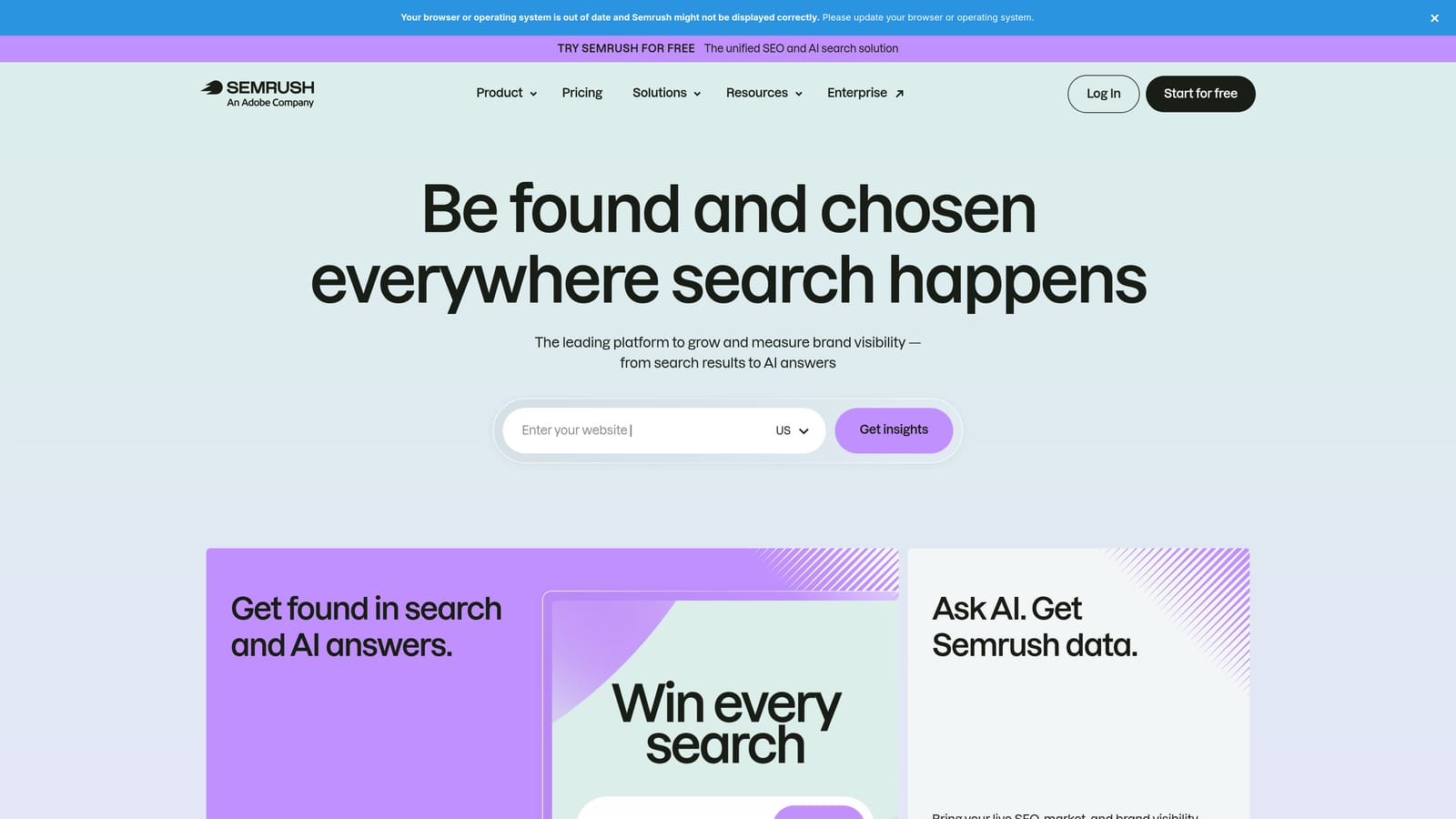
Semrush is a broad SEO and marketing suite in which backlinks are one module among many. Its Backlink Analytics, Backlink Gap, and Backlink Audit tools suit agencies that want one login for links, keywords, and technical work.
What stands out
The Backlink Audit is the differentiator. It scores links for toxicity and exports a disavow file directly, so the path from diagnosis to action is short. Treat the score as a prompt to review links manually, not as a final judgment, and remember that most sites do not need to disavow at all.
- Backlink Analytics profiles any domain's links and referring domains.
- Backlink Gap compares your profile with competitors to reveal missing sources.
- Backlink Audit flags potentially harmful links with toxicity scoring.
- Disavow file export saves you building the file by hand.
- Outreach integration lets you move from a gap list to contacting sites without switching tools.
Setup, fit, and cost
It integrates with Google Search Console, Google Analytics, Looker Studio, and WordPress, and the audit needs a short setup to connect your data. It is usually run by an SEO manager or an agency account team.
The trade-off is that it is overkill and expensive if you only need link data. Pricing is subscription tiers plus add-ons, and the add-ons are where totals grow. Starting price is on the website; verify current pricing.
Best for: Agencies wanting links, keywords, and audits under one login.
3. Moz Pro
Moz Pro is an SEO toolset whose Link Explorer provides Domain Authority and Spam Score, two metrics many clients and vendors already know. Its appeal is communication as much as analysis.
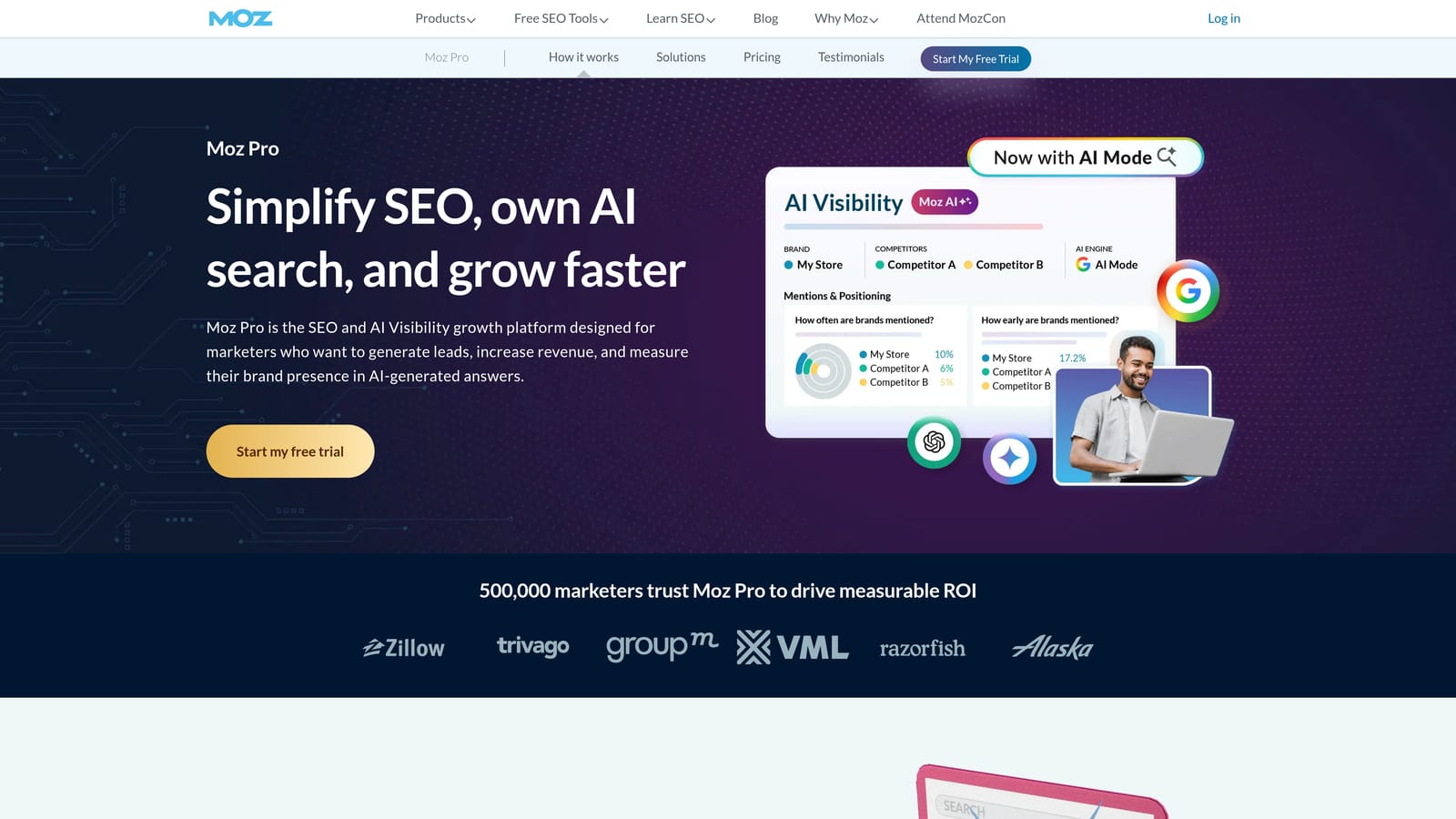
Domain Authority is what sets it apart here: if a client or a link vendor asks for DA by name, this is the source. It remains a Moz estimate, not a Google signal, so use it for comparison and reporting, not as a target in itself.
- Link Explorer shows backlinks, referring domains, and anchor text for any site.
- Domain Authority gives a familiar benchmark for client reports.
- Spam Score highlights sites with characteristics common among penalized ones, as a screening aid.
- Link Intersect finds sites that link to competitors but not to you.
- Link tracking lists let you monitor chosen links and campaigns over time.
It works with Google Analytics and Google Search Console and has API access. Setup is light, and a consultant or account manager can run it alone.
The main limitation is index size: Moz's index is often smaller than Ahrefs or Majestic, so check coverage on your own domain during a trial. Plans are monthly or annual; starting price is on the website, so verify current tiers.
Best for: Consultants who report DA and Spam Score to clients.
4. Majestic
Majestic is a link-intelligence specialist built around its own Trust Flow and Citation Flow metrics and a deep store of historic link data. It does one thing, and its audience is people who live in link data.
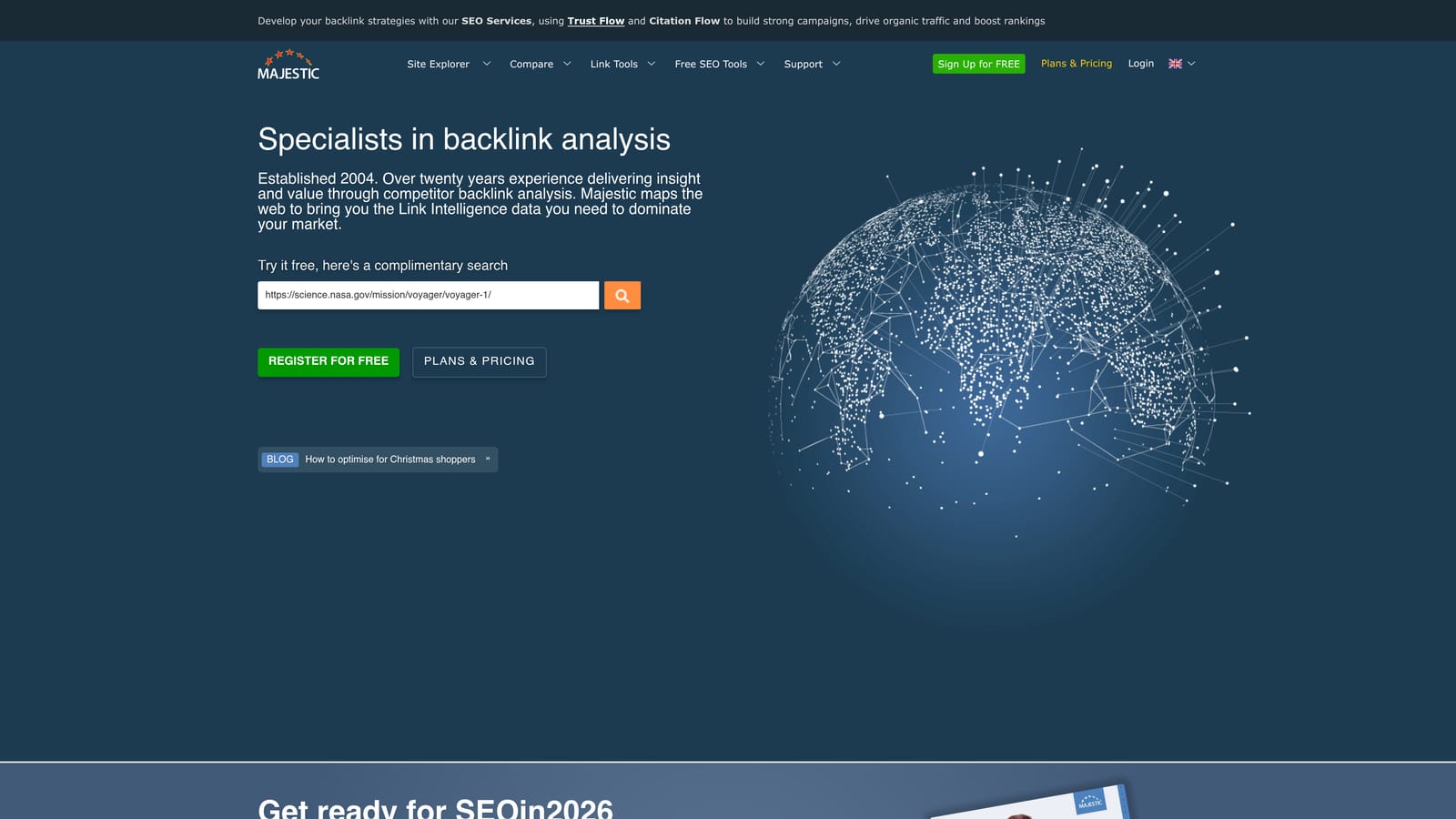
Its signature is Topical Trust Flow, which breaks down the subject categories a site's links come from. For vetting a prospect, that answers a question other tools only hint at: is this site trusted in my topic, or just generally popular?
- Trust Flow and Citation Flow separate link quality from link quantity at a glance.
- Topical Trust Flow shows whether a site's authority matches your niche.
- Historic and fresh indexes let you choose between long-term history and recent discovery.
- Bulk backlink checker screens many prospects or domains in one pass.
- Link context data shows where and how a link appears on the page.
It offers API access and Google Search Console connection. Learning the metrics takes a little time, and it is typically run by a link builder or outreach specialist.
It is a link-only tool with a dated interface, so it will not replace a suite for keywords or audits. Plans are monthly by usage tier; verify current pricing on the website.
Best for: Link builders vetting prospects by topical relevance.
5. SE Ranking
SE Ranking is an affordable all-in-one SEO platform that includes a backlink checker, ongoing monitoring, and white-label reporting. It targets small agencies that need to look professional without enterprise pricing.
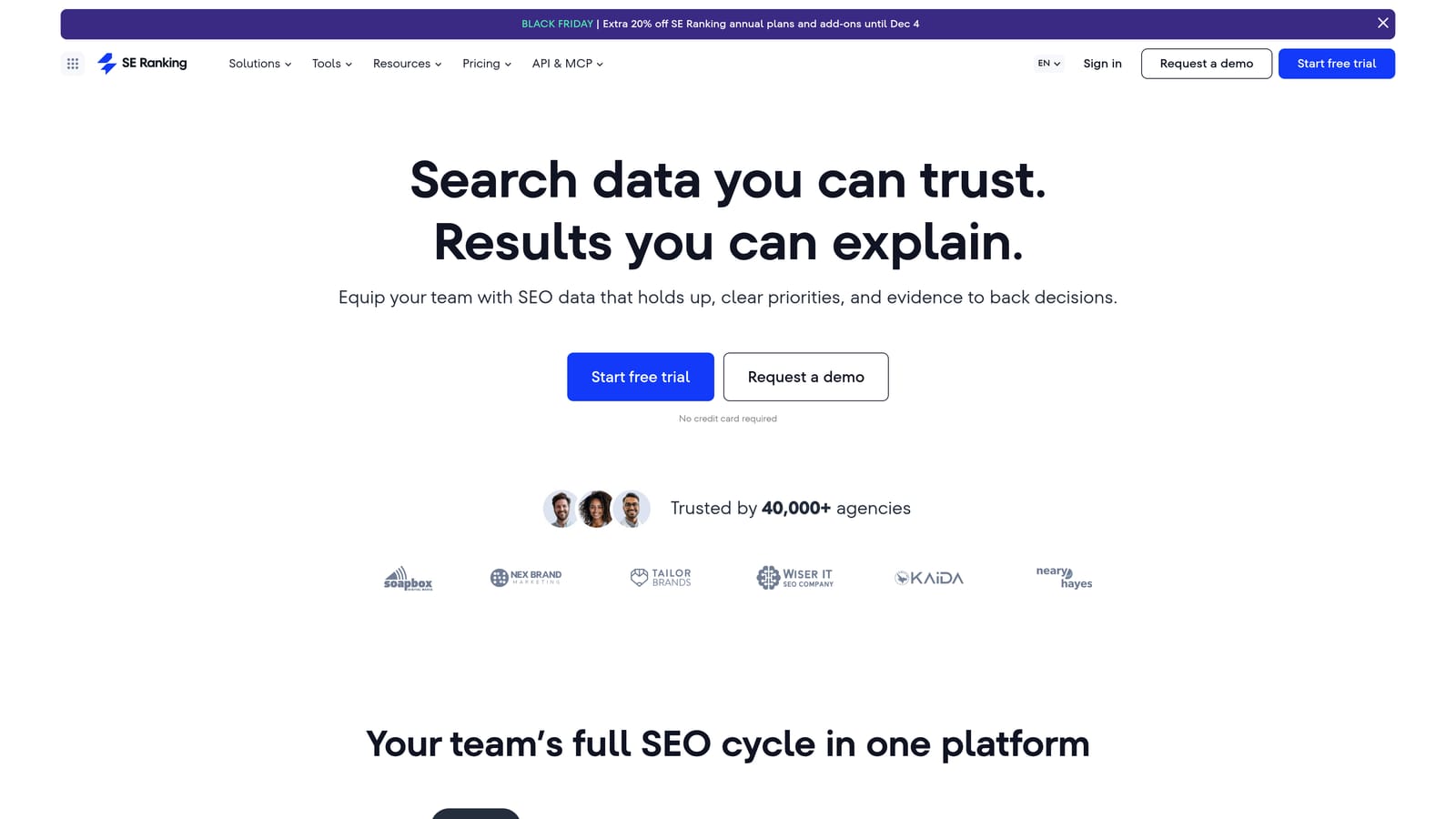
What it does that others here do not is bundle white-label client reports with link monitoring at a mid-market price. You can hand clients branded output without adding a separate reporting tool.
- Backlink Checker gives a quick view of any domain's links and referring domains.
- Backlink Monitoring keeps watch on links you care about and flags changes.
- Toxic score highlights suspect links for manual review.
- Disavow export produces a file when review concludes one is warranted.
- White-label reports present results under your agency's brand.
It integrates with Google Analytics, Google Search Console, and Looker Studio, with API access. Setup is straightforward and a small team can run it without a dedicated analyst.
The limitation is a smaller link database than the dedicated leaders, so expect gaps in prospecting depth. Plans are tiered by tracked keywords, which means your keyword volume, not link usage, drives price. Verify current pricing on the website.
Best for: Small agencies needing branded reports on a budget.
6. LinkResearchTools
LinkResearchTools is an enterprise-grade link audit platform focused on risk assessment, penalty recovery, and due diligence. It is built for specialists, not for casual weekly checks.
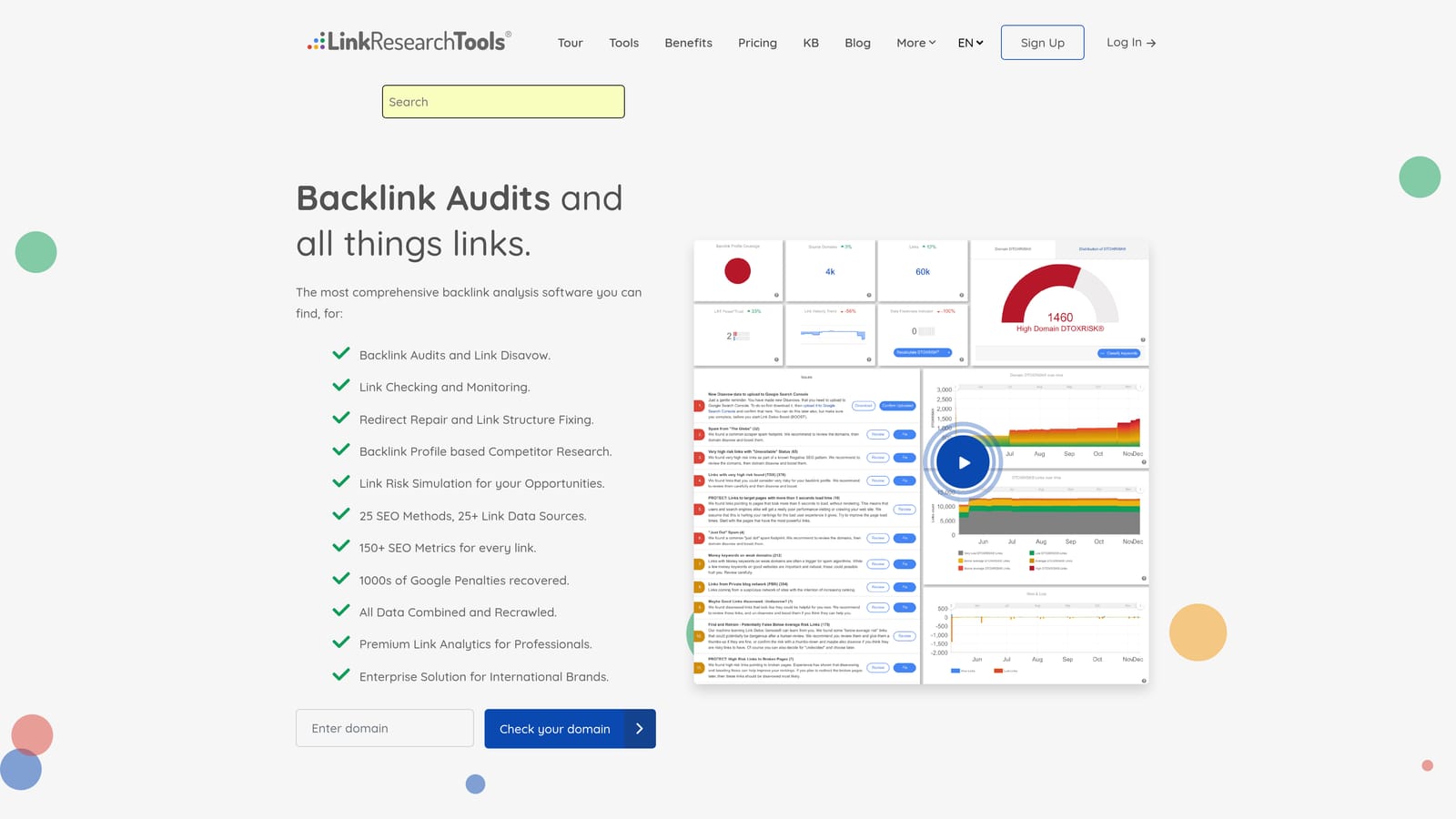
Its standout is Link Detox, an audit engine designed for penalty recovery and for assessing the link profile of a site you plan to acquire. Pulling data from multiple sources helps fill the gaps any single index leaves.
- Link Detox risk analysis evaluates link risk across a profile to guide cleanup decisions.
- Multi-source link data combines indexes for fuller coverage than one crawler provides.
- Competitive Landscape Analyzer benchmarks your link profile against rivals.
- Link Detox Boost speeds up the audit with additional data processing.
- Custom link metrics let you tailor scoring to your own criteria.
It offers API access and Google Search Console connection. Expect real setup and a steep learning curve; it is best run by an experienced link auditor.
That depth is a drawback for routine research: it is expensive and complex for everyday prospecting. Pricing is premium subscription; verify current plans on the website. As with every toxicity tool, its output is a heuristic that needs human review.
Best for: Specialists running link audits and recovery projects.
7. Monitor Backlinks
Monitor Backlinks is a tracking tool that alerts you when links to your site or your competitors' sites are new, lost, or changed. It monitors rather than prospects.
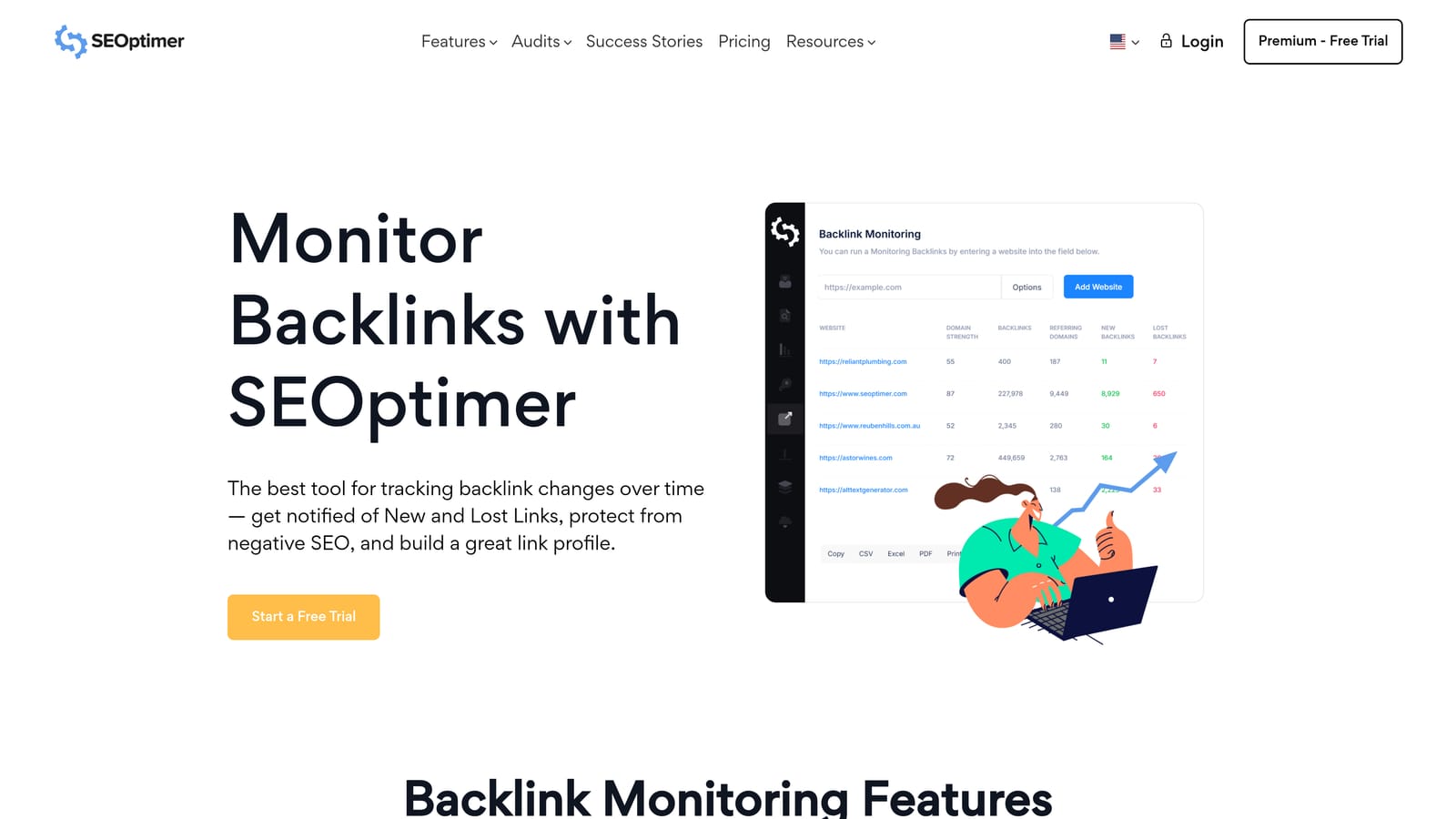
Its distinctive value is alert-driven monitoring of link status and attributes. After an outreach campaign or a paid placement, you learn quickly if a link is removed, switched to nofollow, or becomes non-indexable.
- Link change alerts tell you when links appear, disappear, or change without manual checks.
- Competitor link tracking shows new links your rivals earn.
- Nofollow and indexability checks confirm a link is actually passing value.
- Rank tracking ties link changes to ranking movement.
- Disavow tools help prepare a file if a review calls for one.
It integrates with Google Search Console, Google Analytics, and Slack, so alerts can land where your team already works. Setup is light, and a freelancer or single marketer can manage it.
It is not a deep prospecting index, so pair it with a research tool if you need competitor gap analysis. Plans depend on the number of tracked domains and links; verify current pricing on the website.
Best for: Freelancers tracking links they have earned or bought.
8. Serpstat
Serpstat is a budget-friendly SEO platform that combines backlink analysis with keyword research, rank tracking, and site audits. It suits teams that need several modules without paying for a premium suite.
The differentiator is low-cost multi-module access that includes link data alongside regional keyword tracking. For teams working across several countries or languages, that combination is hard to find cheaply.
- Backlink analysis gives a profile view of any domain's links.
- Referring domain reports show link diversity and concentration.
- New and lost link tracking flags changes over time.
- Site audit catches technical problems in the same workspace.
- Rank tracking monitors positions across regional markets.
It integrates with Google Analytics and Google Search Console and offers API access. Setup is simple, and a marketer or small SEO team can run it day to day.
Its backlink database is smaller than the top specialists', so it is a weaker choice if link prospecting is your main job. Subscriptions are tiered; verify current pricing on the website before committing.
Best for: Cost-conscious teams covering several regional markets.
9. Linkody
Linkody is a simple, low-cost backlink monitoring tool with alerts and an easy dashboard, aimed at small sites. It deliberately avoids being a full SEO suite.
Its edge is the simplest setup on this list. An owner who just wants to know when links appear or vanish can be running in minutes without learning a large platform.
- Backlink monitoring tracks your link profile without manual checks.
- Email alerts notify you of new and lost links.
- Spam Score filtering helps you spot questionable links quickly.
- Disavow file generation builds a file if you decide one is needed.
- Competitor link comparison offers a basic look at rivals' links.
It connects with Google Search Console and Google Analytics and uses Moz data. The site owner typically runs it alone.
Research depth and competitor analysis are limited, so it will not support serious prospecting or audits. Plans are based on tracked links or domains; verify current pricing on the website.
Best for: Solo site owners wanting basic link alerts cheaply.
Matching a Tool to Your Backlink Workload
For a full-suite agency, Semrush or SE Ranking cover links, keywords, and reporting; choose Semrush for depth and SE Ranking for budget and white-label output. For a link-only specialist, Ahrefs leads on competitor prospecting, while Majestic is the pick when topical relevance drives your vetting. For audit and recovery work, LinkResearchTools is purpose-built. For budget monitoring, Monitor Backlinks suits people tracking placements, and for small sites Linkody is the lightest option. Moz Pro fits when DA reporting is a client requirement, and Serpstat suits multi-region teams on tight budgets.
Before you pay, run this checklist:
- Start a free trial or demo and test your own domain, plus two competitors, in every tool you shortlist.
- Compare index coverage: note referring domains and recently discovered links, not just total link counts.
- Treat toxicity scores as prompts for manual review, and check Google's current guidance before disavowing anything.
- Confirm current pricing, seat limits, and usage caps on the vendor's site as of November 2026.
Backlink data explains how search engines see your authority. A separate question is how AI models such as ChatGPT and Claude describe your brand, and that is where link tools stop. Stop guessing how AI models like ChatGPT and Claude talk about your brand: get visibility into every mention, track content opportunities, and automate your path to organic traffic growth. Start tracking your AI visibility today and see exactly where your brand appears across top AI platforms.