Managing content at scale without automation is like trying to fill a swimming pool with a teaspoon—technically possible, but painfully inefficient. Modern marketing teams juggle ideation, creation, optimization, approval chains, publishing, and distribution across multiple channels. Automated content workflow platforms eliminate the manual handoffs and bottlenecks that slow teams down, letting you focus on strategy rather than status updates.
We evaluated dozens of platforms based on automation depth, AI capabilities, integration ecosystems, and real-world scalability. Whether you're a solo marketer or running an agency with dozens of clients, these platforms represent the best options for streamlining your content operations in 2026.
1. Sight AI
Best for: Teams optimizing for both traditional SEO and AI search visibility with automated content generation
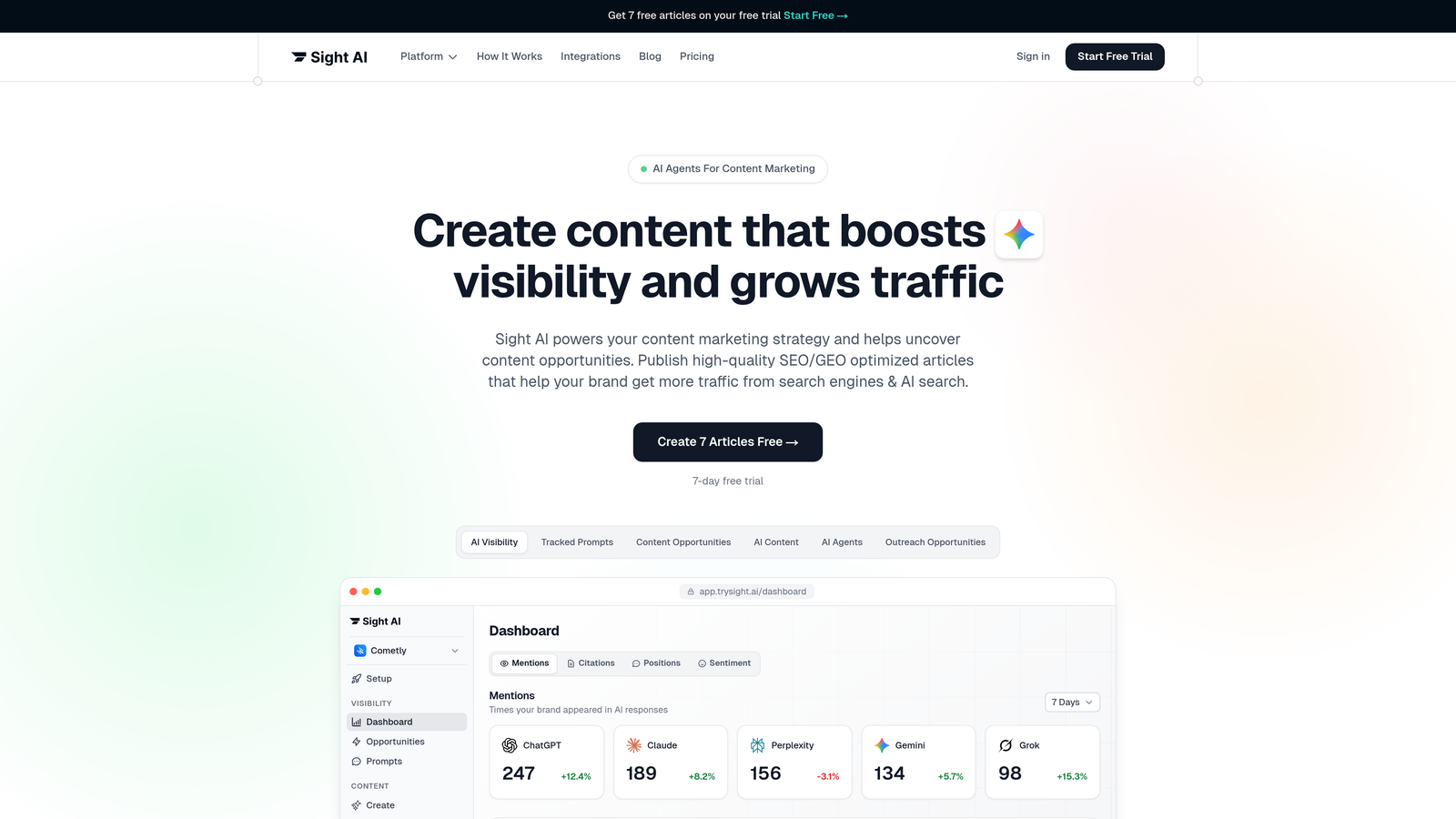
Sight AI is an AI-powered content platform that combines multi-agent content generation with AI visibility tracking and automated publishing workflows.
Where This Tool Shines
What sets Sight AI apart is its dual focus on content creation and AI search optimization. While most workflow platforms help you manage content production, Sight AI actually tracks how AI models like ChatGPT, Claude, and Perplexity mention your brand. This visibility layer helps you understand content gaps and opportunities that traditional SEO tools miss entirely.
The platform's 13+ specialized AI agents handle different content types—listicles, guides, explainers—with Autopilot Mode that can generate and publish content without constant oversight. For teams stretched thin, this hands-off approach to content production is a significant time-saver.
Key Features
Multi-Agent Content Generation: 13+ specialized AI agents trained for specific content formats, from comparison articles to comprehensive guides.
AI Visibility Score: Tracks brand mentions across ChatGPT, Claude, Perplexity, and other AI platforms with sentiment analysis and prompt tracking.
Autopilot Mode: Hands-off content generation that creates, optimizes, and schedules content based on your parameters.
IndexNow Integration: Automatically notifies search engines of new content for faster indexing and discovery.
CMS Auto-Publishing: Direct publishing to WordPress and other platforms, eliminating manual content transfer steps.
Best For
Marketing teams and agencies focused on organic traffic growth who want to optimize for both traditional search engines and AI search platforms. Particularly valuable for brands that need to scale content production while maintaining visibility into how AI models represent them.
Pricing
Contact for pricing; free trial available to test the platform's capabilities.
2. Monday.com
Best for: Visual thinkers who want drag-and-drop workflow building with extensive automation recipes
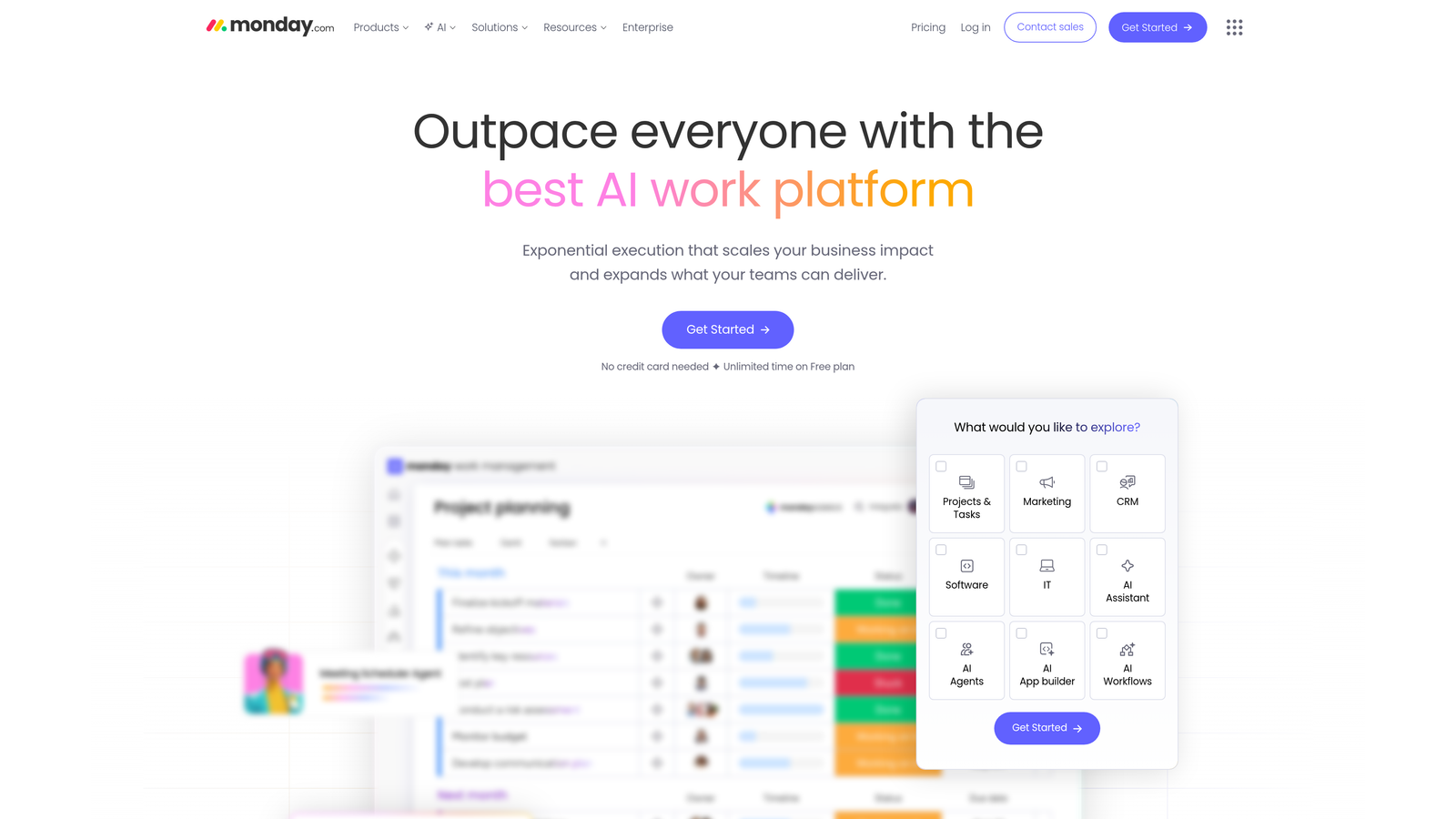
Monday.com is a visual work operating system with customizable content workflow templates and collaborative features built for marketing teams.
Where This Tool Shines
Monday.com excels at making complex workflows visually intuitive. The color-coded boards and status columns create instant clarity about where every piece of content sits in your pipeline. You can see bottlenecks at a glance—if everything's stuck in "Awaiting Approval," you know exactly where to focus your attention.
The automation recipes are pre-built but flexible. Instead of coding logic from scratch, you select from templates like "When status changes to X, notify Y" and customize the variables. This makes powerful automation accessible to non-technical teams.
Key Features
Drag-and-Drop Workflow Builder: Visual board creation with content-specific templates for editorial calendars, campaign tracking, and approval processes.
Automation Recipes: Pre-built automation templates for status changes, notifications, assignments, and deadline reminders.
Workdocs: Collaborative content creation tool that lives inside Monday.com, eliminating the need to switch to external editors.
200+ Integrations: Connects to major CMS platforms, social media tools, analytics services, and communication apps.
Custom Dashboards: Build high-level views of content performance, team capacity, and project timelines.
Best For
Marketing teams that think visually and need to coordinate multiple stakeholders across content projects. Works particularly well for agencies managing client work across separate boards with consistent processes.
Pricing
Free for up to 2 users; paid plans start at $9 per seat per month with increased automation and integration capabilities at higher tiers.
3. Notion
Best for: Teams wanting maximum flexibility to design custom workflows with connected databases
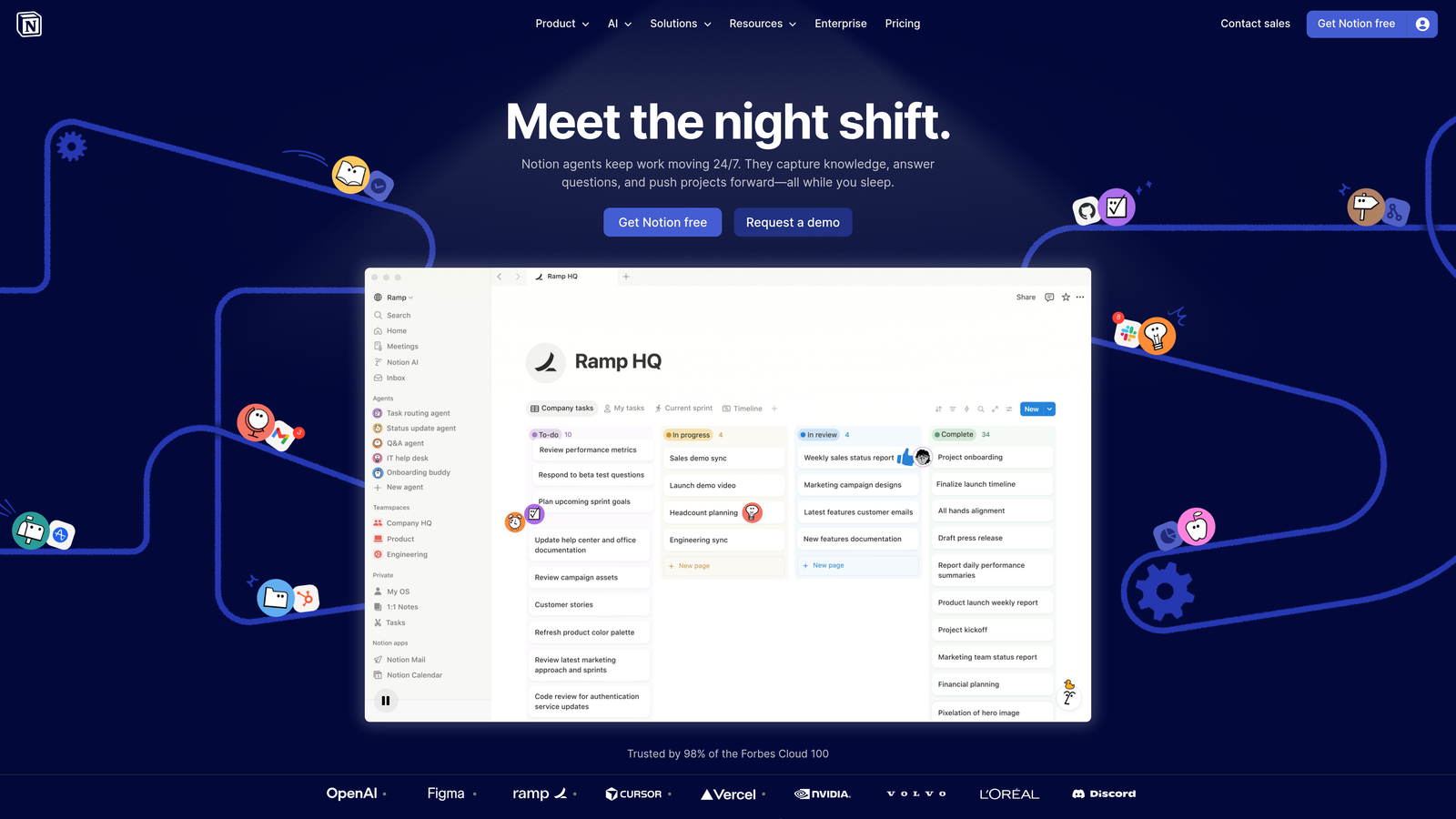
Notion is an all-in-one workspace combining notes, databases, and project management with automation capabilities for flexible content workflow management.
Where This Tool Shines
Notion's database-first approach lets you build exactly the content system you need rather than adapting to someone else's structure. You can create relational databases where content pieces link to authors, topics, campaigns, and distribution channels—then view that information through different lenses depending on what you need to see.
The template system accelerates repetitive processes. Build a content brief template once, then duplicate it for every new project with all your standard sections, questions, and checklists pre-populated. Notion AI adds drafting and editing assistance directly in your workspace.
Key Features
Database-Driven Content Calendars: Create custom properties for status, priority, word count, SEO keywords, and any other metadata you track.
Notion AI: Built-in AI assistance for drafting outlines, expanding bullet points, editing tone, and summarizing research.
Template System: Build reusable templates for content briefs, article structures, meeting notes, and approval processes.
Built-In Automation: Database triggers that update properties, send notifications, or create related entries based on changes.
API Access: Developer-friendly API for custom integrations and workflow extensions beyond native capabilities.
Best For
Content teams that value flexibility over pre-built structure and want a single workspace for planning, documentation, and project management. Best suited for teams willing to invest time in setup to create exactly the system they need.
Pricing
Free for individuals; Plus plan starts at $10 per user per month with unlimited file uploads and version history.
4. Airtable
Best for: Teams needing powerful relational databases with custom interfaces and advanced automation logic
Airtable is a spreadsheet-database hybrid with automation, scripting capabilities, and an interface designer for building custom content operations systems.
Where This Tool Shines
Airtable bridges the gap between spreadsheet simplicity and database power. You can create complex content taxonomies with linked records—connecting articles to authors, topics, campaigns, keywords, and distribution channels—then view and filter that data however makes sense for different team members.
The Interface Designer lets you build custom dashboards for different roles. Writers see their assigned content and deadlines. Editors see everything awaiting review. Leadership sees high-level metrics. Same data, different views, no manual reporting.
Key Features
Relational Databases: Link records across tables to create sophisticated content taxonomies and track relationships between assets, campaigns, and performance.
Conditional Automation: Build multi-step automations with branching logic, custom scripts, and integrations to external services.
Interface Designer: Create custom dashboards and forms for different team roles without writing code.
Extensions Marketplace: Add functionality like chart builders, page designers, Gantt timelines, and external service integrations.
Sync Capabilities: Keep data synchronized across multiple bases and workspaces for enterprise-scale content operations.
Best For
Data-oriented content teams managing complex content libraries with intricate categorization needs. Particularly valuable for organizations producing content across multiple brands, regions, or product lines that need centralized management.
Pricing
Free tier available with limited records and automation; Team plan starts at $20 per user per month with increased limits and advanced features.
5. CoSchedule
Best for: Calendar-centric marketing teams managing content across multiple channels from a unified timeline
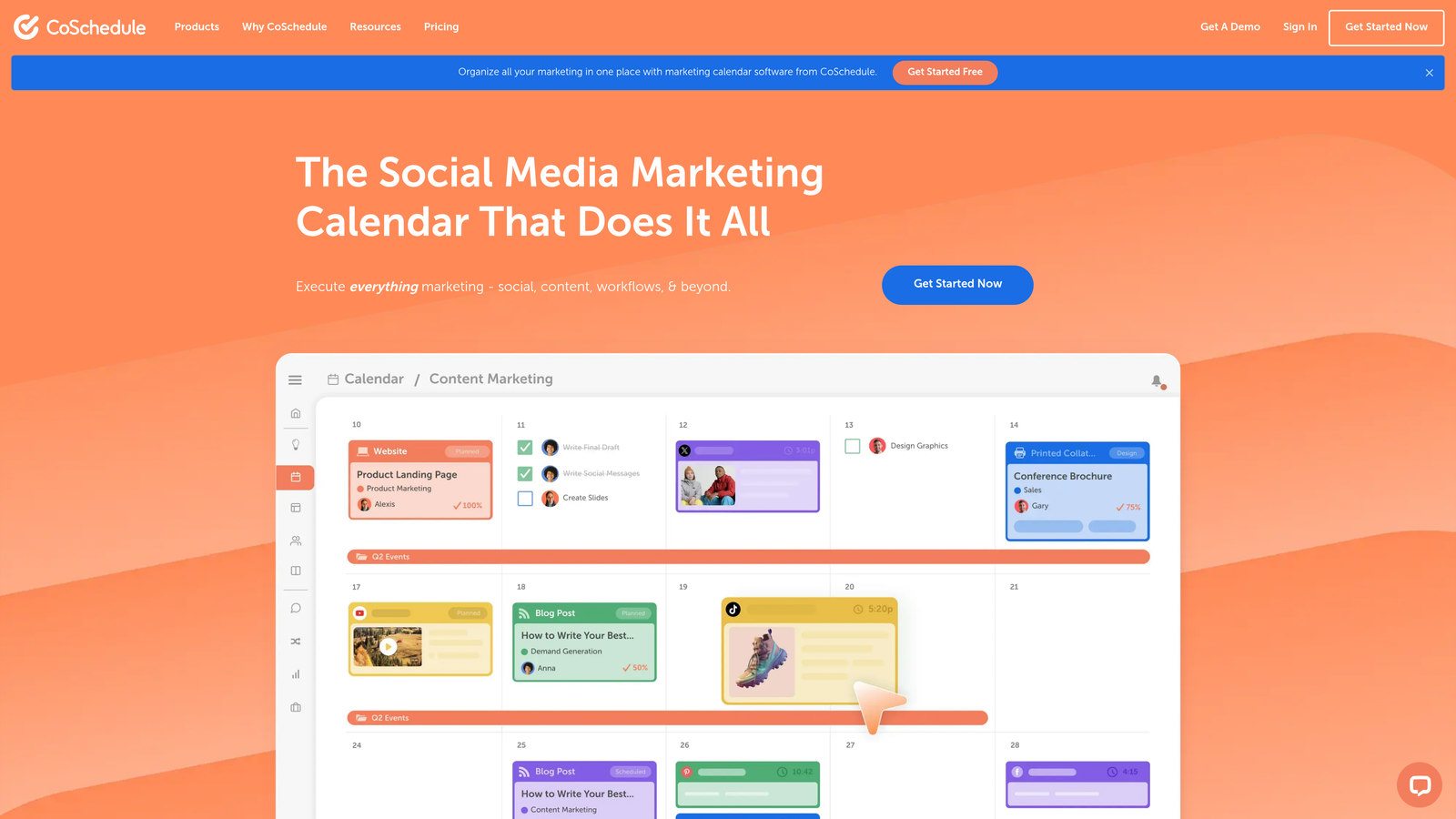
CoSchedule is a marketing calendar platform built specifically for content teams, featuring headline optimization, social automation, and campaign management tools.
Where This Tool Shines
CoSchedule puts the calendar front and center, which matches how most marketing teams actually think about content. Instead of managing tasks in isolation, you see your entire content landscape across channels—blog posts, social media, email campaigns, and events—on a single timeline. This bird's-eye view prevents scheduling conflicts and reveals gaps in your content coverage.
ReQueue intelligently automates social media by recycling your best-performing content at optimal times. The Headline Studio analyzes headline effectiveness with AI-powered suggestions, helping you improve click-through rates before you publish.
Key Features
Unified Marketing Calendar: Drag-and-drop scheduling across all content channels with color-coding for different content types and campaigns.
ReQueue: Intelligent social media automation that recycles evergreen content based on performance data and optimal posting times.
Headline Studio: AI-powered headline analyzer that scores effectiveness and suggests improvements for better engagement.
Task Templates: Pre-built workflow templates for repeatable content processes, from blog posts to webinar promotion.
Asset Organizer: Central library for content assets, brand guidelines, and campaign materials accessible across projects.
Best For
Marketing teams that plan content in calendar format and need to coordinate publishing across multiple channels. Particularly strong for organizations with significant social media presence alongside blog content.
Pricing
Marketing Calendar starts at $29 per user per month; Marketing Suite with advanced features available with custom pricing.
6. Asana
Best for: Enterprise content teams needing advanced workflow automation and portfolio management at scale
Asana is an enterprise work management platform with rules-based automation, portfolio management, and advanced workflow capabilities for large content teams.
Where This Tool Shines
Asana handles enterprise complexity without becoming overwhelming. The rules engine automates task routing—when a writer marks their draft complete, Asana automatically assigns it to the appropriate editor, adds it to the review queue, and notifies relevant stakeholders. No manual handoffs, no forgotten steps.
Portfolio management gives leadership visibility across multiple content initiatives simultaneously. You can see which campaigns are on track, which are behind schedule, and where resources are stretched thin, all without digging through individual projects.
Key Features
Rules Engine: Automate task routing, status updates, notifications, and assignments based on triggers and conditions you define.
Workflow Builder: Visual process designer that maps out content workflows from ideation through publication with automated transitions.
Portfolios: High-level view of multiple content initiatives, campaigns, and projects with status tracking and resource allocation visibility.
Forms: Custom intake forms for content requests that automatically create projects with all necessary tasks and assignments.
Proofing and Approval: Built-in review workflows with commenting, annotation, and approval tracking for content assets.
Best For
Large content organizations managing multiple teams, complex approval chains, and numerous simultaneous campaigns. Best suited for enterprises that need governance, compliance tracking, and detailed reporting.
Pricing
Free for basic use with limited features; Business plan starts at $24.99 per user per month with advanced automation and portfolio management.
7. Zapier
Best for: Connecting existing tools into custom workflows without developer resources or coding knowledge
Zapier is a no-code automation platform connecting thousands of apps, enabling custom content workflows across your entire tool stack.
Where This Tool Shines
Zapier doesn't replace your content tools—it makes them work together. If you write in Google Docs, manage tasks in Trello, publish to WordPress, and promote on social media, Zapier creates the connective tissue that moves information between these systems automatically. When you mark a Google Doc as final, Zapier can create the WordPress draft, add it to your social calendar, and notify your team—no manual copying and pasting.
The platform's strength is breadth. With 7,000+ app integrations, you can connect virtually any tool in your content stack. Multi-step Zaps handle complex workflows, and Paths add conditional logic so different actions trigger based on content type, author, or other variables.
Key Features
7,000+ App Integrations: Connect content creation tools, CMS platforms, social media services, analytics tools, and communication apps.
Multi-Step Zaps: Build complex workflows with multiple actions triggered by a single event, moving data across several tools automatically.
Paths: Add conditional logic to automations so different actions occur based on content type, priority, or other criteria.
Tables: Lightweight database functionality for storing and managing content metadata within Zapier.
Interfaces: Build simple content request forms and dashboards without additional tools.
Best For
Content teams with established tool stacks who need automation between systems rather than replacing existing tools. Particularly valuable for organizations using best-of-breed tools that don't integrate natively.
Pricing
Free tier includes 100 tasks per month; Starter plan begins at $19.99 per month with increased task limits and multi-step Zaps.
8. Contentful
Best for: Organizations publishing content across multiple platforms with developer resources for API-first architecture
Contentful is a headless CMS with composable content architecture, workflow automation, and API-first design for multi-channel publishing.
Where This Tool Shines
Contentful separates content from presentation, letting you create once and publish everywhere. Write a product description in Contentful, and it can appear on your website, mobile app, digital signage, and voice assistant simultaneously—same content, different formats. This composable approach prevents the duplication and version control nightmares that plague teams publishing across multiple channels.
The Workflows app adds approval and publishing automation. Content moves through defined stages—draft, review, approved, scheduled—with role-based permissions ensuring the right people control each transition. Launch enables scheduled multi-entry publishing, so entire campaign content packages go live simultaneously.
Key Features
Composable Content Platform: Create modular content components that can be assembled and reused across different channels and formats.
Workflows App: Automated approval and publishing workflows with role-based permissions and audit trails.
Launch: Scheduled multi-entry publishing that coordinates content releases across multiple pieces and channels.
Powerful APIs: RESTful and GraphQL APIs for custom integrations, headless architecture, and developer-friendly content delivery.
AI Content Type Generator: Automatically generates content models and structures based on your requirements, accelerating initial setup.
Best For
Developer-heavy organizations publishing content across multiple digital properties and platforms. Best suited for companies with technical resources to leverage the API-first architecture and build custom integrations.
Pricing
Free tier available for small projects; Team plan starts at $300 per month with increased content entries and API calls.
9. StoryChief
Best for: Agencies and teams publishing content across numerous outlets with collaborative writing workflows
StoryChief is a content marketing platform focused on multi-channel distribution, collaborative writing, and agency workflow management.
Where This Tool Shines
StoryChief solves the multi-channel publishing problem elegantly. Write your content once in StoryChief's editor, then publish to 1,000+ platforms—your website, Medium, LinkedIn, Facebook, email newsletters—with a single click. Each channel receives properly formatted content optimized for its specific requirements, eliminating the tedious reformatting work that typically accompanies multi-channel distribution.
The collaborative editor supports real-time co-writing, letting multiple team members work on the same piece simultaneously. For agencies, the client workspace management features create separate environments for each client while maintaining consistent processes across accounts.
Key Features
Multi-Channel Publishing: Distribute content to 1,000+ platforms including websites, social media, email services, and content syndication networks from one interface.
Collaborative Editor: Real-time co-writing with commenting, suggestions, and version control for team collaboration.
Content Calendar with Approvals: Visual calendar with built-in approval workflows and stakeholder notification automation.
SEO and Readability Tools: Built-in optimization recommendations for search visibility and content readability before publication.
Agency Features: Client workspace management, white-label options, and multi-client content operations from a single dashboard.
Best For
Agencies managing content for multiple clients and brands that need efficient multi-channel distribution. Also valuable for in-house teams publishing the same content across numerous platforms regularly.
Pricing
Individual plan starts at $40 per month; Team plans begin at $100 per month with increased users and publishing destinations.
Matching Your Workflow to the Right Platform
Choosing the right automated content workflow platform depends on where your biggest bottlenecks live. For teams prioritizing AI search visibility alongside content creation, Sight AI offers a unique combination of multi-agent content generation and visibility tracking that helps you understand how AI models represent your brand. If visual project management is your priority, Monday.com delivers intuitive automation with drag-and-drop simplicity.
Notion and Airtable excel for teams wanting database-driven flexibility to build exactly the system they need. CoSchedule remains the gold standard for calendar-centric marketing teams coordinating cross-channel campaigns, while Asana handles enterprise complexity with advanced portfolio management and governance features.
Zapier works best as connective tissue between existing tools rather than a standalone platform. Contentful serves developer-heavy organizations publishing across multiple digital properties with API-first architecture. StoryChief streamlines multi-channel agency workflows with efficient distribution and client management.
Start by auditing your current process. Identify the manual steps eating your team's time—is it approval chains? Publishing to multiple channels? Tracking content performance? Match those pain points to the platform that automates them best. The right choice eliminates your specific bottlenecks rather than adding features you'll never use.
Stop guessing how AI models like ChatGPT and Claude talk about your brand—get visibility into every mention, track content opportunities, and automate your path to organic traffic growth. Start tracking your AI visibility today and see exactly where your brand appears across top AI platforms.