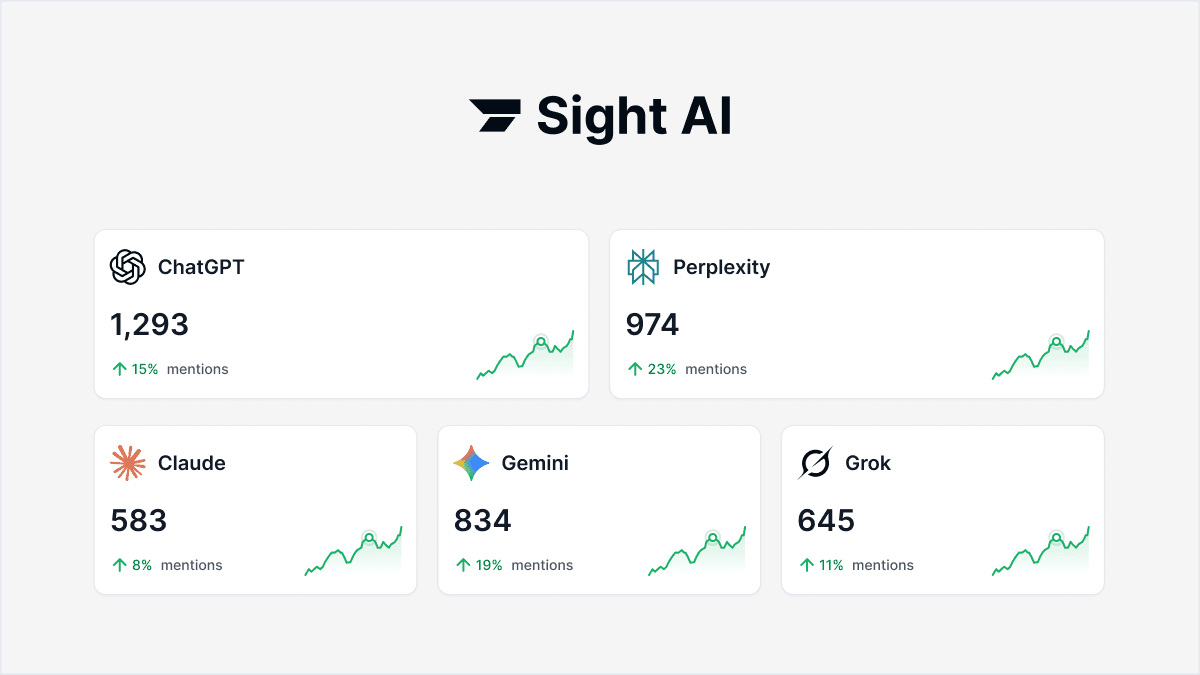
AI SEO software tracks and optimizes how AI models such as ChatGPT, Claude, Perplexity and Google AI Mode mention and cite your brand. Traditional SEO tools track Google rankings, backlinks, keywords and technical health. Most teams should keep a traditional suite for search fundamentals and add an AI visibility platform. You do not need to replace one with the other, because neither category measures what the other one does.
This guide compares nine leading platforms across both categories. It starts with a side-by-side breakdown of what each type measures and what it costs. It then shows where traditional tools still excel and where AI-native platforms cover gaps that traditional software cannot see.
AI SEO software vs traditional SEO tools at a glance
| Dimension | Traditional SEO tools | AI SEO / AI visibility platforms |
|---|---|---|
| Primary unit measured | Keyword position on a SERP | Brand mention, citation and sentiment inside an AI answer |
| Data source | Search engine results, link crawls, clickstream panels | Repeated prompts sent to LLMs and AI search engines |
| Gap analysis | Keywords competitors rank for that you don't | Prompts where competitors are cited and you aren't (citation gaps) |
| Rank tracking | Deterministic, daily position 1–100 | Probabilistic share of voice across many prompt runs |
| Core strengths | Backlinks, technical audits, keyword volume, historical data | AI mention tracking, prompt discovery, GEO content generation |
| Typical entry price | About $99–$140/month (Moz, Ahrefs, Semrush) | From about $15–$170/month for content tools; visibility tracking is usually priced by prompts and platforms monitored |
| Examples | Semrush, Ahrefs, Moz Pro | Sight AI (visibility + content); Surfer, Clearscope, Frase, MarketMuse, Jasper (AI-assisted content) |
Two practical distinctions matter most.
- AI-assisted tools are different from AI-visibility tools. AI-assisted tools such as Surfer or Jasper use AI to help you rank on Google. AI-visibility tools measure whether AI engines recommend you. If you want to understand the optimization discipline behind the second category, read what generative engine optimization (GEO) is.
- AI rank tracking works differently from traditional rank tracking. LLM answers vary from run to run. Credible AI trackers therefore run each prompt several times and report a mention rate, not a single fixed position.
1. Sight AI
Best for: Tracking AI visibility and generating GEO-optimized content for brand mentions across AI platforms
Sight AI covers a gap that traditional SEO tools leave open: how AI models like ChatGPT, Claude and Perplexity talk about your brand.

Where This Tool Shines
You can rank #1 on Google and still be invisible to a growing share of searchers if ChatGPT never mentions your brand when users ask relevant questions. Sight AI tracks your AI Visibility Score across 6+ AI platforms. It shows exactly where and how your brand appears in AI responses.
The platform also generates content through 13+ specialized AI agents that write SEO- and GEO-optimized articles. This lets you act on the monitoring data directly: you see where mentions are missing and create content designed to win them.
Key Features
AI Visibility Score: Tracks brand mentions across ChatGPT, Claude, Perplexity and other AI platforms, with sentiment analysis.
13+ Specialized AI Agents: Generates SEO/GEO-optimized articles, including listicles, guides and explainers, with an Autopilot Mode.
Prompt Tracking: Shows which user queries trigger your brand mentions, which reveals content opportunities.
IndexNow Integration: Submits new content automatically so search engines discover it faster.
CMS Auto-Publishing: Publishes content directly to your website without manual uploads.
Best For
Companies focused on organic traffic growth that want to compete in both traditional search and AI search. It is particularly valuable for brands in competitive industries, where AI visibility is a point of differentiation.
Pricing
A free trial is available, and paid plans are listed on the website. Pricing scales with AI visibility tracking needs and content generation volume.
2. Surfer SEO
Best for: Real-time on-page optimization with AI-powered content scoring and NLP recommendations
Surfer SEO pioneered content optimization scoring. It analyzes top-ranking pages and turns what they have in common into actionable recommendations.

Where This Tool Shines
Surfer's Content Editor shows a live optimization score as you write. You can see at any moment how your draft compares to the pages that currently rank, and the feedback is instant and data-driven.
The platform uses natural language processing to find the semantic keywords and structural patterns that high-ranking pages share. That replaces guesswork with evidence from competitors in your space.
Key Features
Real-Time Content Editor: Live optimization scoring with suggestions for keywords, headings and content length.
SERP Analyzer: Breaks down competitor content structure, word count and keyword usage patterns.
Surfer AI Writing Assistant: Generates drafts optimized for your target keywords, with built-in SEO scoring.
Keyword Research: Clusters keywords by search intent and identifies content opportunities.
Content Audit: Scores existing pages and recommends changes to improve rankings.
Best For
Content teams and agencies producing high volumes of SEO content that need consistent optimization standards. It suits writers who want clear, specific guidance rather than general best practices.
Pricing
The Essential plan starts at $89/month. Higher tiers for teams and agencies add more content audits and AI-generated articles.
3. Semrush
Best for: Comprehensive traditional SEO with extensive keyword research, competitor analysis and backlink auditing
Semrush is the most complete all-in-one traditional SEO platform. It covers everything from keyword research to technical audits in one interface.

Where This Tool Shines
Semrush's database covers 25+ billion keywords across 130+ countries, so you can research almost any market or niche. The Keyword Magic Tool goes beyond search volume: it clusters keywords by intent and surfaces question-based queries.
Its main strength is competitive intelligence. You can see which keywords competitors rank for, analyze their backlink profiles and find content gaps in your own strategy. That makes Semrush a core tool for strategic SEO planning.
Key Features
Keyword Magic Tool: Access to 25+ billion keywords with intent clustering and difficulty scoring.
Backlink Analytics: A large backlink database with toxic link identification and link building opportunities.
Site Audit: A technical SEO crawler that flags issues such as broken links, crawl errors and site speed problems.
Position Tracking: Monitors keyword rankings across devices, locations and search engines, including SERP features.
Competitive Analysis: Reveals competitor keyword strategies, traffic estimates and advertising tactics.
Best For
Marketing teams and agencies that need a complete SEO toolkit for multiple clients or projects. It suits users who want deep competitive analysis and broad market research.
Pricing
The Pro plan starts at $139.95/month. Guru and Business tiers add more projects, historical data and API access for larger teams.
4. Clearscope
Best for: Enterprise content optimization with AI-powered grading and semantic keyword recommendations
Clearscope uses AI to grade content quality against the pages that currently rank for your target query.

Where This Tool Shines
Clearscope's grading goes beyond keyword density. It analyzes semantic relationships, topic coverage and content structure to judge how well your content matches user intent. It flags the concepts and subtopics that top-ranking pages cover, not just the keywords.
Google Docs and WordPress integrations put the recommendations directly in the writer's editor. Writers don't have to switch between tools, which speeds up production noticeably.
Key Features
AI Content Grading: Scores content against top performers with detailed recommendations for improvement.
Semantic Keyword Recommendations: Identifies related terms and concepts using NLP analysis of ranking pages.
Native Integrations: Works directly in Google Docs and WordPress.
Content Inventory Management: Tracks and scores your existing content library to surface optimization opportunities.
Competitive Gap Analysis: Identifies topics and keywords that competitors cover and you don't.
Best For
Enterprise content teams producing in-depth content where semantic relevance matters more than keyword repetition. It works particularly well for B2B companies with complex products or services.
Pricing
The Essentials plan starts at $170/month. Business and Enterprise tiers add more content reports, user seats and advanced features for larger organizations.
5. Ahrefs
Best for: Industry-leading backlink analysis and keyword research backed by a massive web crawl
Ahrefs built its reputation on one of the most comprehensive backlink databases in the industry. It is still the benchmark for link analysis.

Where This Tool Shines
Ahrefs crawls the web continuously and updates its index with billions of pages, so its backlink data is close to current rather than weeks or months old. Site Explorer shows every link pointing to any domain, along with metrics like Domain Rating and URL Rating.
Keywords Explorer covers 10+ search engines, including YouTube, Amazon and Bing as well as Google. That makes Ahrefs useful for multi-platform strategies that need visibility beyond traditional web search.
Key Features
Site Explorer: Backlink analysis with historical data and link growth tracking.
Keywords Explorer: Keyword research across Google, YouTube, Amazon and other platforms, with difficulty scores.
Content Explorer: Finds top-performing content by topic for outreach and content ideation.
Rank Tracker: Monitors keyword positions with SERP feature tracking and competitor comparison.
Site Audit: A technical SEO crawler that identifies issues and prioritizes fixes.
Best For
SEO professionals and agencies that prioritize link building and need highly accurate backlink data. It is essential in competitive industries where link profiles drive strategy.
Pricing
The Lite plan starts at $129/month. Standard, Advanced and Enterprise tiers add more projects, keywords and team features.
6. Frase
Best for: Automated content brief generation with SERP analysis and answer engine optimization
Frase speeds up content research by generating briefs automatically from SERP analysis and question research.

Where This Tool Shines
Frase is built to answer the question "what should I write about?" It analyzes top-ranking pages for your target keyword and extracts their structure, headings and topics. You get a complete outline in minutes instead of hours of manual research.
Its question research pulls from "People Also Ask" boxes and related queries, which helps you cover user intent thoroughly. That makes Frase especially effective for FAQ sections and long-tail queries.
Key Features
Automated Content Briefs: Generates detailed outlines from SERP analysis, with recommended topics and structure.
SERP Analysis: Breaks down competitor content with heading extraction and topic clustering.
AI Writing Assistant: Writes content sections from your brief, with optimization scoring.
Question Research: Identifies common questions from People Also Ask and related searches.
Content Optimization Scoring: Grades your content against top performers, with keyword and topic recommendations.
Best For
Solo creators and small teams that need to produce optimized content quickly without deep SEO experience. Automated briefs cut research time substantially.
Pricing
The Solo plan starts at $15/month. Basic and Team tiers add more documents, more AI-generated words and collaboration features.
7. Moz Pro
Best for: User-friendly traditional SEO with the proprietary Domain Authority metric and accessible fundamentals
Moz Pro is known for making SEO accessible, particularly through its widely used Domain Authority and Page Authority metrics.

Where This Tool Shines
Domain Authority has become a standard metric for evaluating link quality and site strength. It is not a Google ranking factor, but it gives a useful shorthand for comparing sites in your niche.
The interface is more intuitive than most competitors, which suits marketers who need SEO capabilities without becoming technical specialists. Keyword Explorer includes SERP feature tracking and difficulty scoring to help you prioritize.
Key Features
Domain Authority Metric: A proprietary score for evaluating site authority and link quality.
Keyword Explorer: Keyword research with difficulty scoring, SERP analysis and opportunity identification.
Link Explorer: Backlink analysis with spam score detection and link building opportunities.
On-Page Optimization: Page-level recommendations for improving rankings on target keywords.
Custom Reports: White-label reporting for agencies, with branded dashboards and automated delivery.
Best For
Small and mid-sized businesses and agencies that want reliable SEO fundamentals without overwhelming complexity. The learning curve is gentler than enterprise platforms while still covering the essentials.
Pricing
The Standard plan starts at $99/month. Medium, Large and Premium tiers add more campaigns, tracked keywords and user seats.
8. MarketMuse
Best for: AI-driven content strategy with topic modeling and competitive content analysis at scale
MarketMuse approaches content from a strategic planning perspective rather than one page at a time.

Where This Tool Shines
MarketMuse uses AI to analyze your entire content library and find gaps in topic coverage. You get a strategic view of where your content authority is strong and where competitors outperform you.
Its topic modeling clusters related content and shows how thoroughly you cover each subject area. This helps you build topical authority deliberately instead of publishing articles that don't support each other.
Key Features
AI Content Planning: Content calendar recommendations based on topic gaps and opportunities.
Topic Modeling: Clusters related content and maps relationships between topics.
Content Inventory Analysis: Scores your existing library and prioritizes optimization work.
Competitive Gap Identification: Shows where competitors have stronger topical coverage and depth.
Personalized Difficulty Scores: Calculates ranking difficulty from your own site's authority rather than a generic metric.
Best For
Content strategists and enterprise teams managing large content libraries who need to build topical authority systematically. It works well for content hubs and comprehensive resource centers.
Pricing
A free plan covers basic analysis. Paid plans start at $149/month and add more briefs, optimizations and team features.
9. Jasper
Best for: AI content generation with brand voice customization and an extensive template library for SEO content
Jasper focuses on content creation at scale, combining AI writing with team collaboration features.
Where This Tool Shines
Jasper's brand voice feature learns your company's writing style and applies it across all generated content. That addresses a common weakness of AI writing tools: generic output that doesn't sound like your brand.
The platform offers 50+ templates for blog posts, product descriptions and ad copy. Its Surfer SEO integration lets you generate and optimize content for search in one workflow.
Key Features
Brand Voice Customization: Trains the AI on your writing style for a consistent voice across content.
50+ Content Templates: Pre-built formats for blog posts, social media, ads and SEO content.
Team Collaboration: Workflow tools for managing production across multiple team members.
Surfer SEO Integration: Generates optimized content with built-in SEO scoring and recommendations.
AI Art Generation: Creates visuals to accompany written content without separate design tools.
Best For
Marketing teams producing high volumes of content across multiple formats who need a consistent brand voice. It is particularly effective for scaling output without scaling headcount at the same rate.
Pricing
The Creator plan starts at $49/month. Teams and Business tiers add more words, user seats and advanced features such as brand voice training.
Making the Right Choice
The choice between AI SEO software and traditional platforms depends on your primary goals. If you are focused on ranking in conventional search results and need deep backlink analysis or technical audits, traditional tools like Semrush, Ahrefs or Moz remain essential. If your strategy includes getting mentioned by AI models and optimizing for GEO, AI-native platforms like Sight AI offer capabilities that traditional tools don't have.
For most growing companies, a hybrid approach works best. Use a traditional suite for foundational SEO and an AI platform for content generation and AI visibility. To decide where to start, work through these steps:
- Audit your current coverage. List what your existing suite already measures: rankings, links and technical health. Then list what it can't measure, such as mentions in ChatGPT, Perplexity or Google AI Mode.
- Run a manual AI check. Ask 10–20 buyer-intent questions in two or three AI assistants and note whether your brand appears. If competitors appear and you don't, AI visibility is your biggest gap.
- Match the tool to that gap. Choose an AI visibility platform for missing mentions, Surfer, Clearscope or Frase for weak on-page content, and Semrush or Ahrefs for link or technical problems.
- Define success metrics before buying. Track mention rate and citation share for AI search, alongside rankings and clicks. A framework for measuring AI visibility performance makes these numbers comparable month to month.
AI search use is growing. More users turn to ChatGPT, Claude and Perplexity for quick answers instead of clicking through traditional results. If your brand isn't visible in those responses, you are missing opportunities that traditional SEO tools cannot measure.
Consider your content velocity too. Surfer SEO and Frase excel at optimizing individual pieces, while Jasper and MarketMuse help scale production. At one article per week, optimization tools are usually enough. At ten articles per week, generation tools become necessary.
Frequently asked questions
What is AI SEO software?
AI SEO software uses machine learning or LLMs for one of two jobs. The first is optimizing content to rank on Google, which is what Surfer, Clearscope and Jasper do. The second is measuring and improving how AI assistants mention your brand, which is what AI visibility platforms like Sight AI do. The second type tracks prompts, citations and sentiment across ChatGPT, Claude, Perplexity and Google AI Mode. Traditional tools do not collect that data.
Should I replace my traditional SEO tool with an AI SEO platform?
Usually not. Traditional suites remain the best source for backlinks, technical audits, keyword volumes and Google rank history, and AI platforms don't replicate that depth. Add an AI visibility platform alongside your existing suite instead. You might consolidate if you only used the traditional suite for content briefs, because AI content tools now cover that job well.
How much do AI SEO tools cost compared to traditional SEO tools?
Traditional suites start at about $99–$140/month: Moz Pro $99, Ahrefs Lite $129, Semrush Pro $139.95. AI content tools range from about $15/month (Frase Solo) to $170/month (Clearscope Essentials). AI visibility platforms typically price by the number of prompts, AI engines and brands tracked. Running a hybrid stack usually costs $200–$400/month for a small team.
What is the difference between AI citation gap analysis and traditional content gap tools?
Traditional content gap tools compare the keywords you rank for on Google against competitors' keywords. AI citation gap analysis compares which prompts cause AI engines to cite or recommend competitors but not you. It also shows which source pages those engines rely on. The output is a list of questions and sources to target, not a list of keywords.
How do AI-powered rank trackers compare with traditional rank tracking?
Traditional trackers record a fixed SERP position per keyword, location and device. AI trackers run prompts repeatedly because LLM answers vary between runs. They report mention rate, position within the answer, sentiment and cited sources. For more detail on the traditional side, see the comparison table above and our rank checking software comparison.
Start tracking your AI visibility today and see exactly where your brand appears across top AI platforms. Stop guessing how AI models like ChatGPT and Claude talk about your brand. Get visibility into every mention, track content opportunities and automate your path to organic traffic growth.