Organic growth in 2026 looks fundamentally different from what it did just a few years ago. Content strategy, technical SEO, and brand visibility still matter, but a new layer has emerged: how AI models like ChatGPT, Claude, and Perplexity talk about your brand when users ask questions. The tools that drive sustainable traffic now need to work across all three dimensions simultaneously.
This list covers the best AI-powered organic growth tools available today. Each was evaluated on its AI-native feature set, its ability to drive measurable organic results, and how well it fits the workflows of marketers, founders, and agencies. Whether you need to scale content production, monitor your AI visibility, or automate technical indexing, there is a tool here worth your attention.
1. Sight AI
Best for: Teams that want AI visibility tracking, SEO content generation, and indexing in one platform.
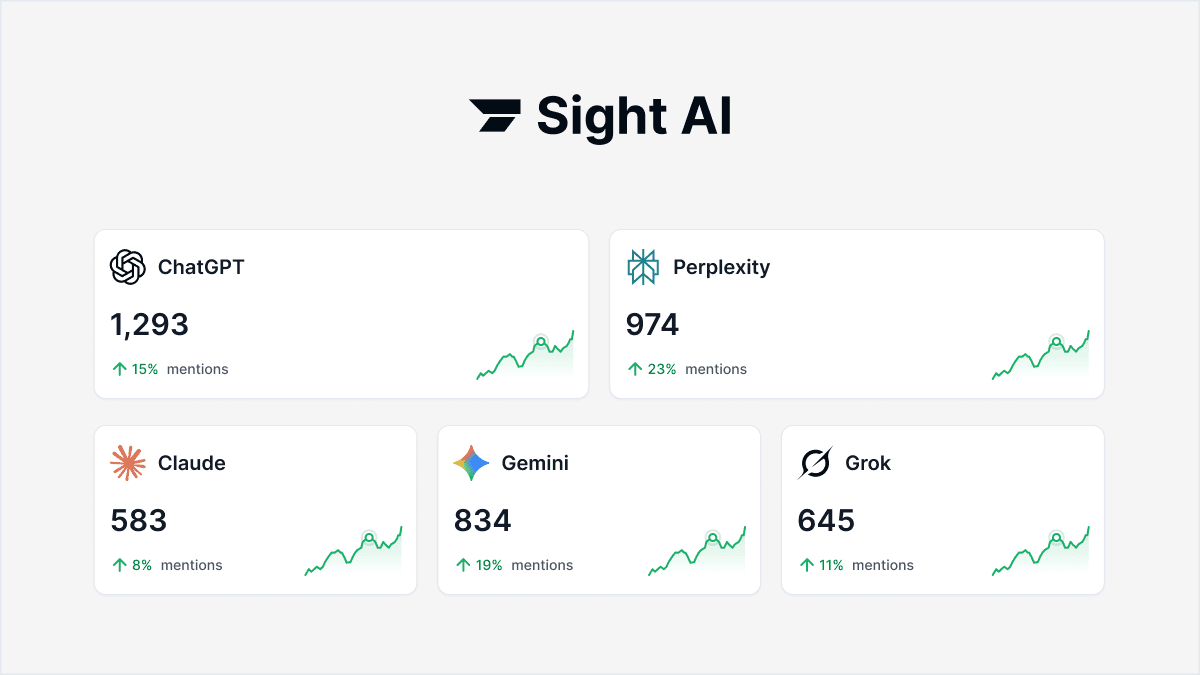
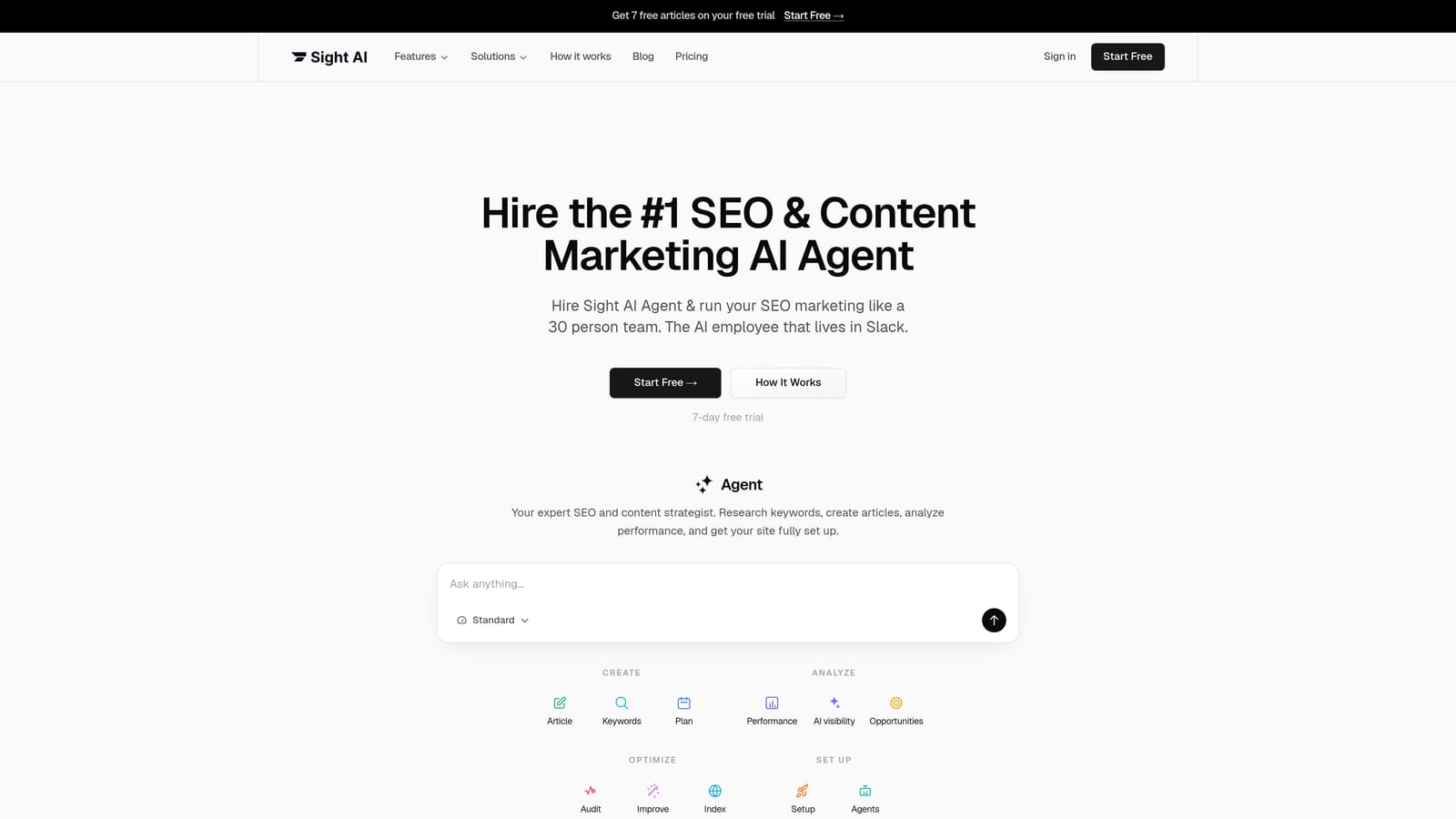
Sight AI is an all-in-one AI-powered organic growth platform that combines brand mention tracking across AI models, a multi-agent content writer, and automated website indexing into a single workflow.
Where This Tool Shines
Most organic growth tools solve one problem well. Sight AI is built around the idea that visibility tracking, content creation, and technical indexing belong in the same platform. You can monitor how AI models describe your brand, identify content gaps, generate optimized articles to fill those gaps, and push them live with automated indexing, all without switching between tools.
The AI Visibility Score is particularly useful for teams entering the GEO space. Rather than manually querying AI platforms to see if your brand appears, Sight AI surfaces this data automatically with sentiment context and prompt-level detail, giving you a clearer picture of where you stand and where competitors are winning attention.
Key Features
AI Visibility Score: Tracks brand mentions across ChatGPT, Claude, Perplexity, and 3+ additional AI platforms with sentiment analysis and prompt-level reporting.
Prompt-Level Monitoring: Identifies exactly which queries surface your brand in AI-generated answers and which surface competitors instead.
13+ Specialized AI Agents: Generates SEO and GEO-optimized content across formats including listicles, guides, and explainers, each agent tuned for a specific content type.
Autopilot Mode: Schedules and produces content hands-off, useful for agencies and founders who need consistent publishing without manual oversight.
IndexNow Integration: Automates sitemap updates and CMS publishing so new pages get discovered by search engines faster, bridging content production and technical discoverability.
Best For
Sight AI is best suited for growth-focused marketers, SaaS founders, and agencies who want a unified platform rather than a stack of point solutions. If you are actively building an AI visibility strategy alongside traditional SEO, the combination of monitoring, content, and indexing in one place saves significant operational overhead.
Pricing
Check trysight.ai for current plan details. Pricing tiers are designed to scale with team size and content volume.
2. Writesonic
Best for: Content teams that need high-volume, SEO-optimized article production with brand voice consistency.
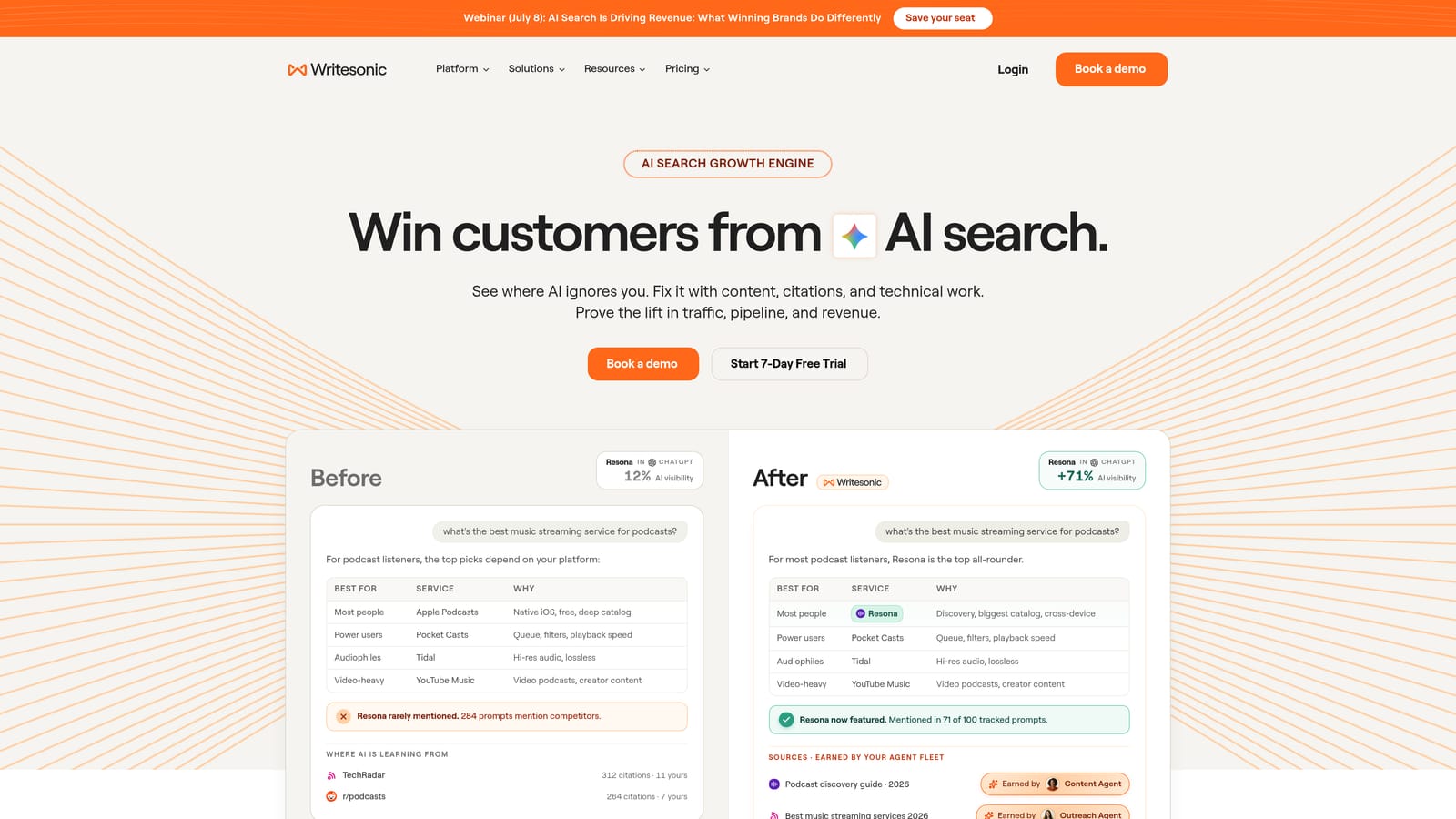
Writesonic is an AI content creation platform designed for teams that need to produce large volumes of search-optimized content while maintaining consistent brand voice across every piece.
Where This Tool Shines
Writesonic takes a turnkey approach to AI content generation. The platform integrates SERP research directly into the writing workflow, so articles are informed by what is already ranking rather than generated in a vacuum. This makes it particularly strong for teams that want to move quickly without sacrificing relevance to search intent.
The brand voice customization layer is a meaningful differentiator for agencies managing multiple clients. You can define tone, style, and terminology at the brand level and have those parameters applied consistently across content types, from long-form guides to product descriptions to landing pages.
Key Features
Long-Form Article Generation: Produces full-length articles with integrated SERP research to align output with what is currently ranking for a given query.
Brand Voice Customization: Allows teams to define and apply consistent tone and style parameters across all content types and campaigns.
Multi-Format Support: Handles blogs, landing pages, product descriptions, and ad copy within the same platform.
CMS Publishing Integrations: Connects to popular content management systems to streamline the path from draft to published page.
Factual Accuracy Controls: Includes features designed to reduce AI hallucination in published content, an important consideration for brands in regulated or technical industries.
Best For
Writesonic works well for in-house content teams and agencies that need to scale article production without building custom AI workflows. It is a strong fit for teams prioritizing publishing velocity and brand consistency over deep technical customization.
Pricing
Writesonic offers a freemium entry point with paid plans that scale by usage. Verify current pricing and credit structures at writesonic.com.
3. AirOps
Best for: Technical growth operators who need fully customizable AI content and SEO automation pipelines.
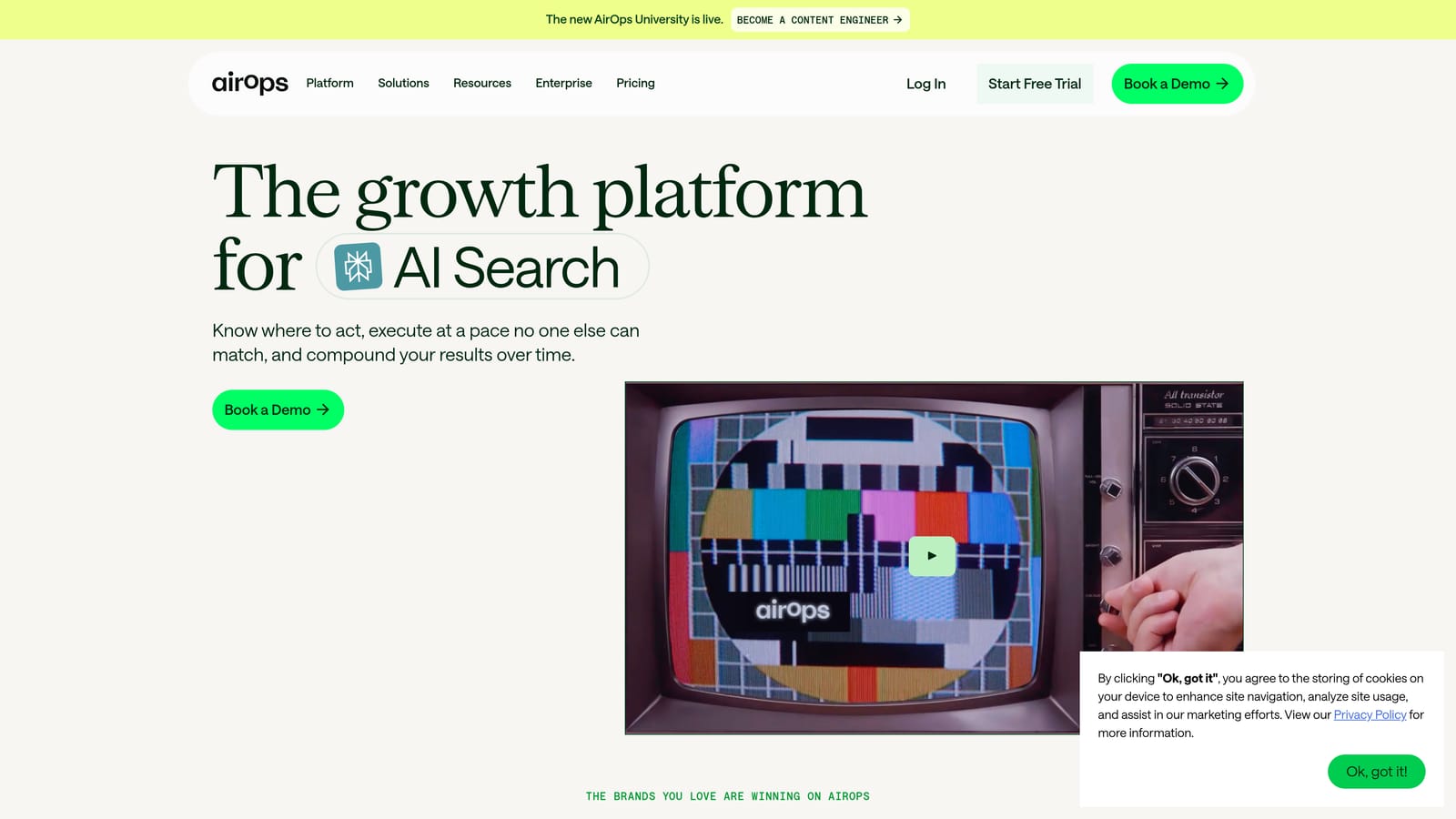
AirOps is a workflow automation platform that lets growth teams build custom AI-powered content pipelines by connecting large language models to SEO data sources, content briefs, and publishing systems.
Where This Tool Shines
AirOps sits at the intersection of AI and growth operations. Rather than offering a fixed set of content templates, it gives technical teams a visual workflow builder to design their own pipelines. You can connect an LLM to keyword research data, competitor analysis, a content brief template, and a CMS in a single automated sequence.
This flexibility makes AirOps particularly powerful for teams with unique or complex content strategies that do not fit neatly into off-the-shelf tools. The tradeoff is that it requires more setup time and a higher level of technical comfort than most content platforms.
Key Features
Visual Workflow Builder: Drag-and-drop interface for designing custom AI content and SEO automation pipelines without writing code.
External Data Connections: Integrates AI models with keyword research tools, competitor data, and other external SEO data sources to inform content generation.
Scalable Content Production: Supports repeatable, high-volume content workflows at the team level without sacrificing customization.
Flexible Templating: Avoids rigid content templates, giving operators full control over how AI is applied at each stage of the workflow.
Team Collaboration: Built for multi-person growth teams that need shared pipelines and consistent output across contributors.
Best For
AirOps is best suited for growth engineers, SEO leads at scaling companies, and agencies that want to build proprietary AI content systems rather than rely on standardized tools. If your content strategy is complex enough to require a custom workflow, AirOps is worth evaluating seriously.
Pricing
AirOps uses usage and seat-based pricing for teams. Verify current plan details at airops.com.
4. Profound
Best for: Enterprise marketing teams that need structured reporting on AI answer engine visibility and competitive positioning.
Profound is an AI answer engine monitoring platform focused on tracking how brands appear inside AI-generated responses, with reporting on share of voice and competitive positioning across major LLM platforms.
Where This Tool Shines
Profound is built for teams that treat AI visibility as a strategic priority at the enterprise level. The platform goes beyond simple mention tracking to provide structured reporting on how a brand is described, recommended, or omitted across AI-generated answers. This gives marketing teams the data they need to make informed decisions about content strategy and brand positioning in the GEO era.
The competitive share-of-voice reporting is a standout capability. Knowing that your brand appears in AI answers is useful; knowing how often it appears relative to competitors across a defined set of relevant prompts is actionable intelligence.
Key Features
AI Answer Engine Monitoring: Tracks brand visibility inside AI-generated responses across major LLM platforms in a structured, reportable format.
Competitive Share-of-Voice Reporting: Measures how frequently your brand appears versus competitors across a defined prompt set.
Prompt-Level Analysis: Identifies which specific queries surface your brand and which do not, enabling targeted content and GEO strategy adjustments.
Sentiment and Context Analysis: Evaluates not just whether a brand appears in AI outputs but how it is described and in what context.
Enterprise-Scale Design: Built to handle the reporting and workflow needs of larger marketing organizations managing AI visibility across multiple products or regions.
Best For
Profound is best suited for enterprise and mid-market marketing teams with dedicated resources for AI visibility strategy. It is a strong fit for brands in competitive categories where understanding AI share of voice relative to competitors is a strategic priority.
Pricing
Profound uses enterprise-oriented pricing. Verify current plan details at profound.ai.
5. Peec
Best for: Agencies and in-house teams that need structured, multi-client AI visibility dashboards for GEO benchmarking.
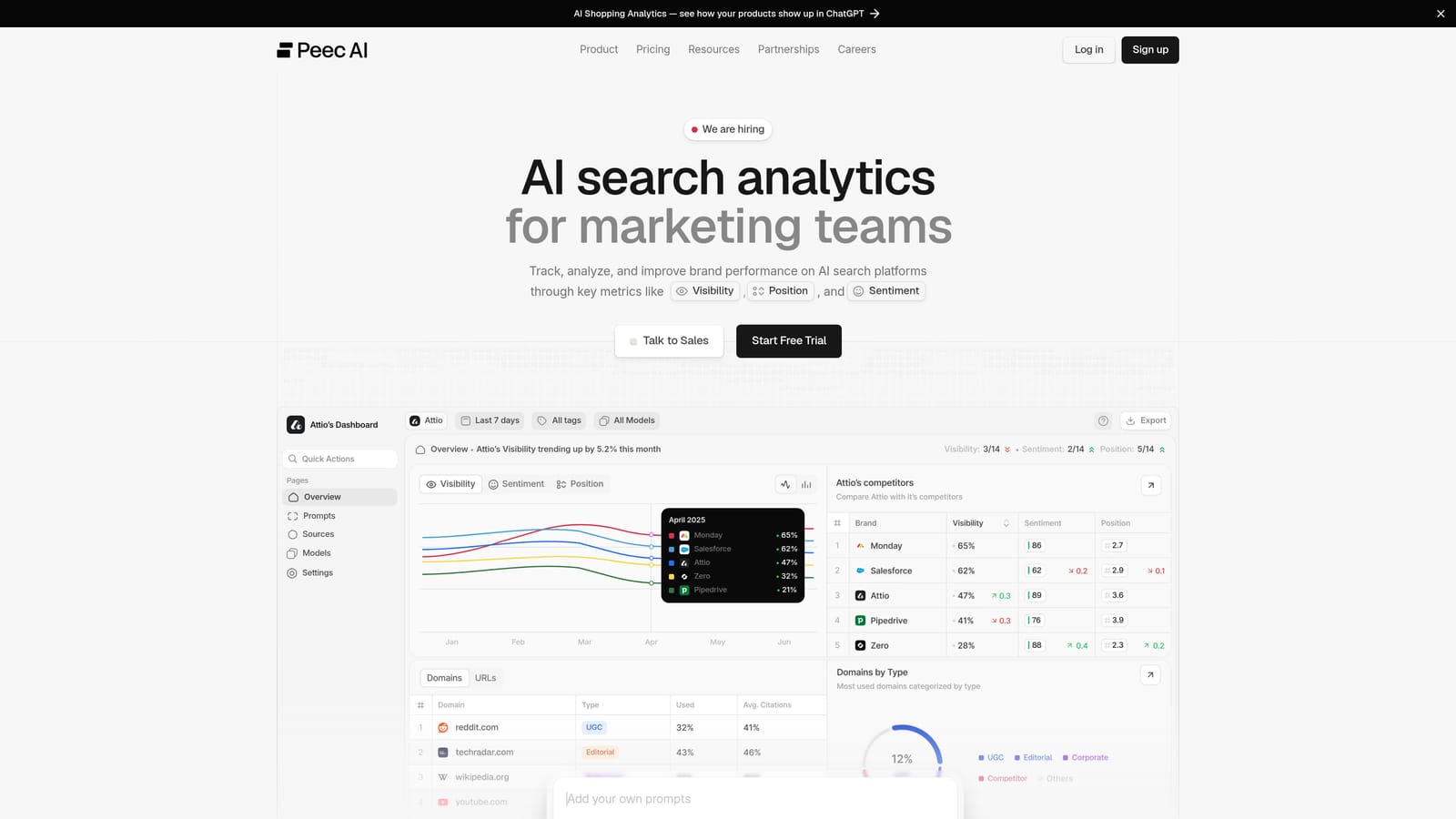
Peec is an AI search visibility analytics tool that tracks brand and competitor mentions inside AI-generated answers, with structured dashboards designed for agencies and teams managing multiple brands or clients.
Where This Tool Shines
Peec takes an analytics-first approach to AI visibility. Where some tools in this space prioritize monitoring depth, Peec focuses on making that data accessible and actionable through clean, structured dashboards. This makes it particularly well-suited for agencies that need to report AI visibility performance to clients in a clear, digestible format.
The competitive benchmarking layer adds meaningful context to the raw mention data. Tracking your own brand's appearance in AI answers is useful, but understanding how that compares to direct competitors across the same prompt set gives teams a clearer sense of where they stand in the GEO landscape.
Key Features
Brand Mention Tracking: Monitors brand appearances inside AI-generated answers across major AI platforms with competitive benchmarking built in.
Share-of-Voice Dashboards: Structured reporting views designed for multi-client or multi-brand management, making it easy to track and present GEO performance.
Trend Monitoring: Tracks how brand descriptions and recommendations inside AI outputs change over time, surfacing shifts in AI model behavior.
Agency-Friendly Structure: Designed to support teams managing AI visibility across multiple client accounts simultaneously.
Actionable GEO Insights: Analytics are oriented toward surfacing opportunities for improvement rather than just reporting current status.
Best For
Peec is a strong fit for digital agencies adding AI visibility to their service offering and for in-house teams that need clean, stakeholder-ready reporting on GEO performance. It works especially well when managing multiple brands or client accounts from a single interface.
Pricing
Verify current pricing at peec.ai.
6. Promptwatch
Best for: SEO strategists and brand managers who need granular, prompt-level control over AI answer engine presence.
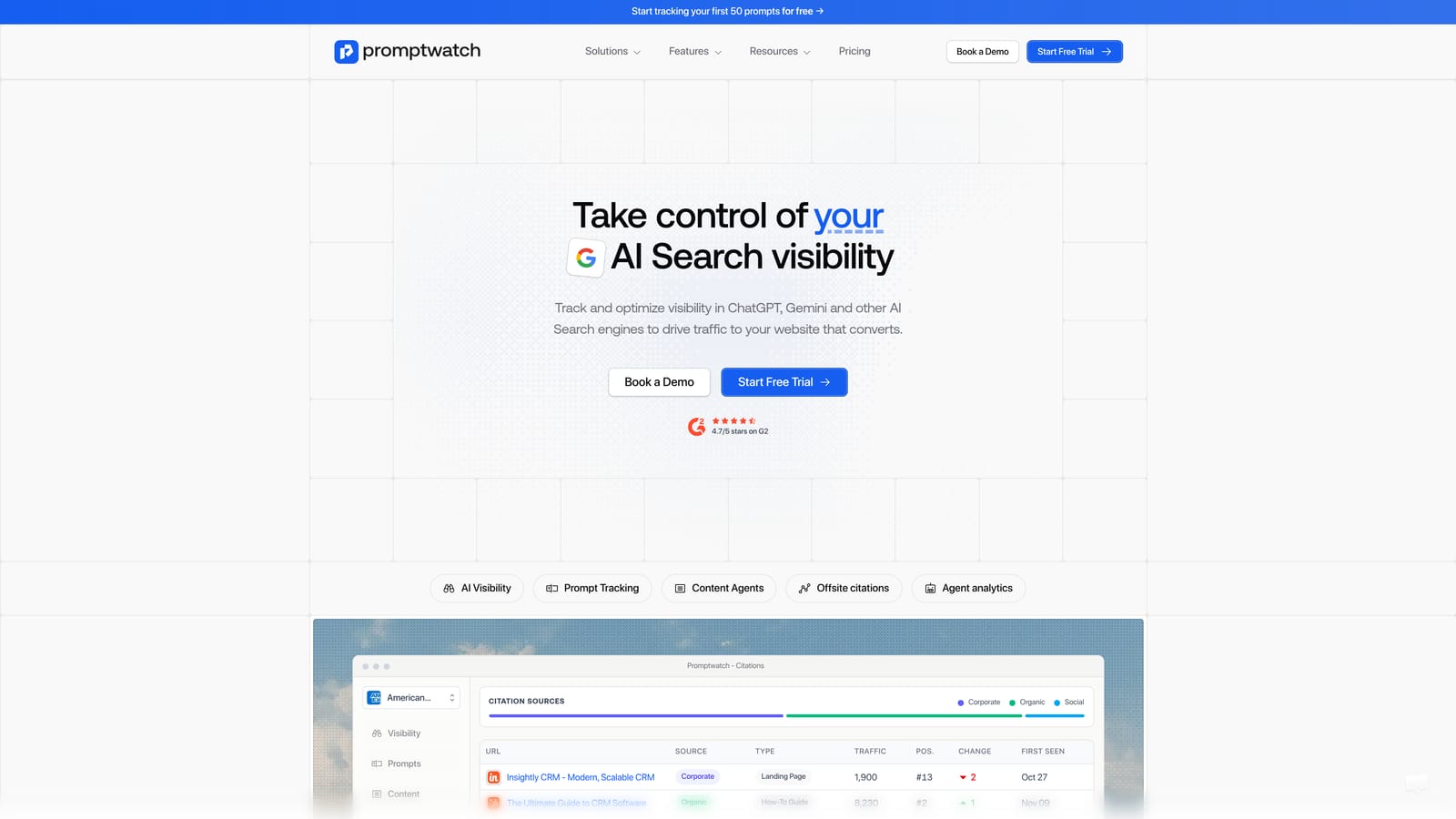
Promptwatch is a prompt-level AI monitoring tool that tracks exactly how AI models respond to brand-relevant queries over time, helping teams optimize their presence in AI-generated answers with precision.
Where This Tool Shines
Promptwatch operates at a more granular level than most AI visibility tools. Rather than reporting on brand mentions in aggregate, it lets you define specific prompts, track exactly how AI models respond to those prompts over time, and identify when and why your brand appears or disappears from the answers. This level of detail is particularly valuable for GEO strategy work where understanding the prompt-to-answer relationship is essential.
The ability to identify which prompts trigger brand mentions versus competitor mentions is a direct input into content strategy. If you know that a specific category of queries consistently surfaces a competitor instead of your brand, you have a clear signal for where to invest in content and entity optimization.
Key Features
Granular Prompt Tracking: Monitors AI model responses to specific brand-relevant queries with detailed, time-series tracking of how those responses change.
Brand vs. Competitor Prompt Analysis: Identifies which prompts trigger your brand mentions and which consistently surface competitors instead.
Response Change Monitoring: Surfaces shifts in how AI models describe and recommend your brand over time, alerting teams to meaningful changes in AI model behavior.
GEO Strategy Support: Provides the prompt-level data needed to identify optimization opportunities and prioritize content investments for AI answer engines.
Brand Manager Focus: Designed for teams that need detailed, query-specific control over how their brand is represented in AI-generated responses.
Best For
Promptwatch is best suited for SEO strategists, brand managers, and growth teams that want granular control over their AI answer engine presence. It is a strong fit for brands in competitive categories where the difference between appearing and not appearing in a specific AI answer matters significantly.
Pricing
Verify current pricing at promptwatch.io.
Which Tool Fits Your Organic Growth Strategy
The right tool depends on where your biggest growth gap is right now. Here is a quick way to think through the decision.
If you need an all-in-one platform: Sight AI covers AI visibility tracking, content generation, and technical indexing in a single workflow. It is the strongest option for teams that want to avoid managing multiple point solutions.
If content volume is your primary challenge: Writesonic is built for teams that need to produce large quantities of SEO-optimized content quickly, with brand voice controls that matter at scale. AirOps is the better fit if your content strategy is complex enough to require custom AI workflows rather than a standardized platform.
If AI visibility monitoring is your focus: Profound, Peec, and Promptwatch each approach the problem from a slightly different angle. Profound is oriented toward enterprise-scale share-of-voice reporting. Peec is well-suited for agencies managing multiple client accounts with clean, reportable dashboards. Promptwatch goes deepest on prompt-level granularity for teams that want precise control over their AI answer engine presence.
The broader point worth noting: AI-powered organic growth in 2026 increasingly requires both traditional SEO and AI visibility strategies working in parallel. Ranking in search results and appearing in AI-generated answers are becoming equally important discovery channels, and the most effective teams are building workflows that address both simultaneously.
If you are looking for a platform that brings those workflows together, Start tracking your AI visibility today and see exactly where your brand appears across the top AI platforms, what content opportunities you are missing, and how to close the gap with content that works for both search engines and AI answer engines.