Organic growth has never been more complex, or more competitive. Between traditional search rankings and the rise of AI-generated answers, brands now need to be visible in two places at once: Google's index and the responses generated by ChatGPT, Claude, and Perplexity. The right organic growth acceleration software helps you close that gap by combining content creation, technical SEO, AI visibility tracking, and faster indexing into a single, manageable workflow.
This list covers the best platforms available in 2026, selected based on their ability to drive measurable organic growth, their support for AI-era search, and their value across different team sizes. Whether you're a solo founder, a growth marketer, or an agency managing multiple clients, at least one of these tools belongs in your stack.
1. Sight AI
Best for: Teams that need AI visibility tracking, SEO content generation, and automated indexing in one platform.
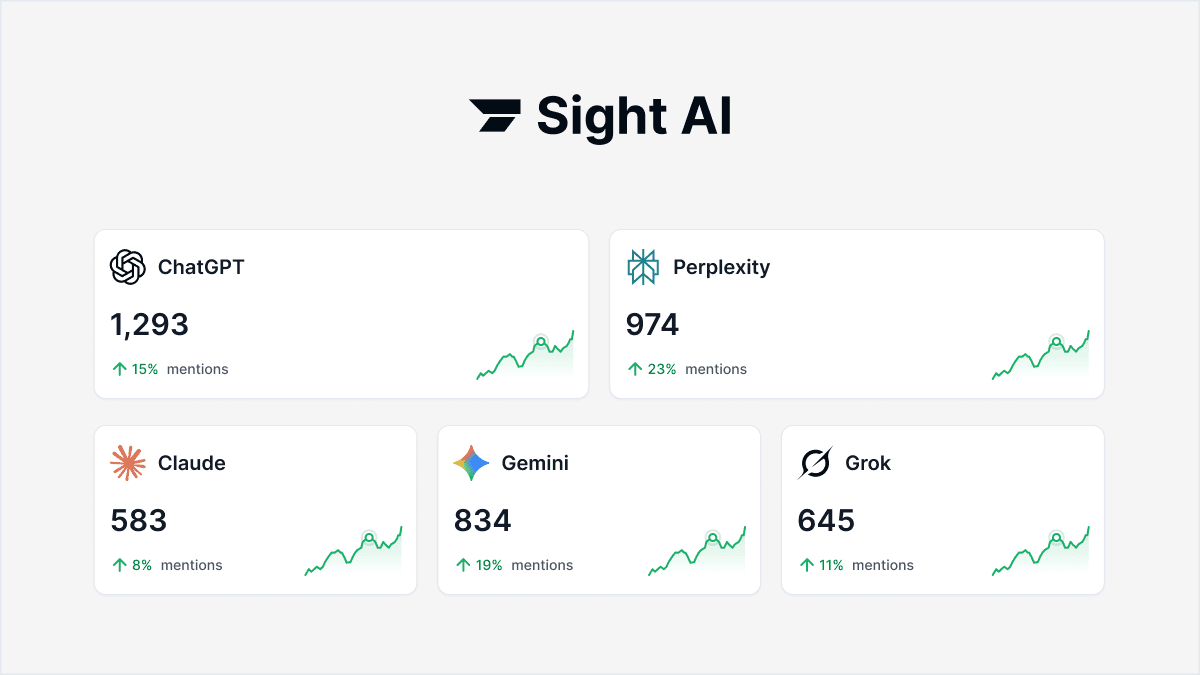
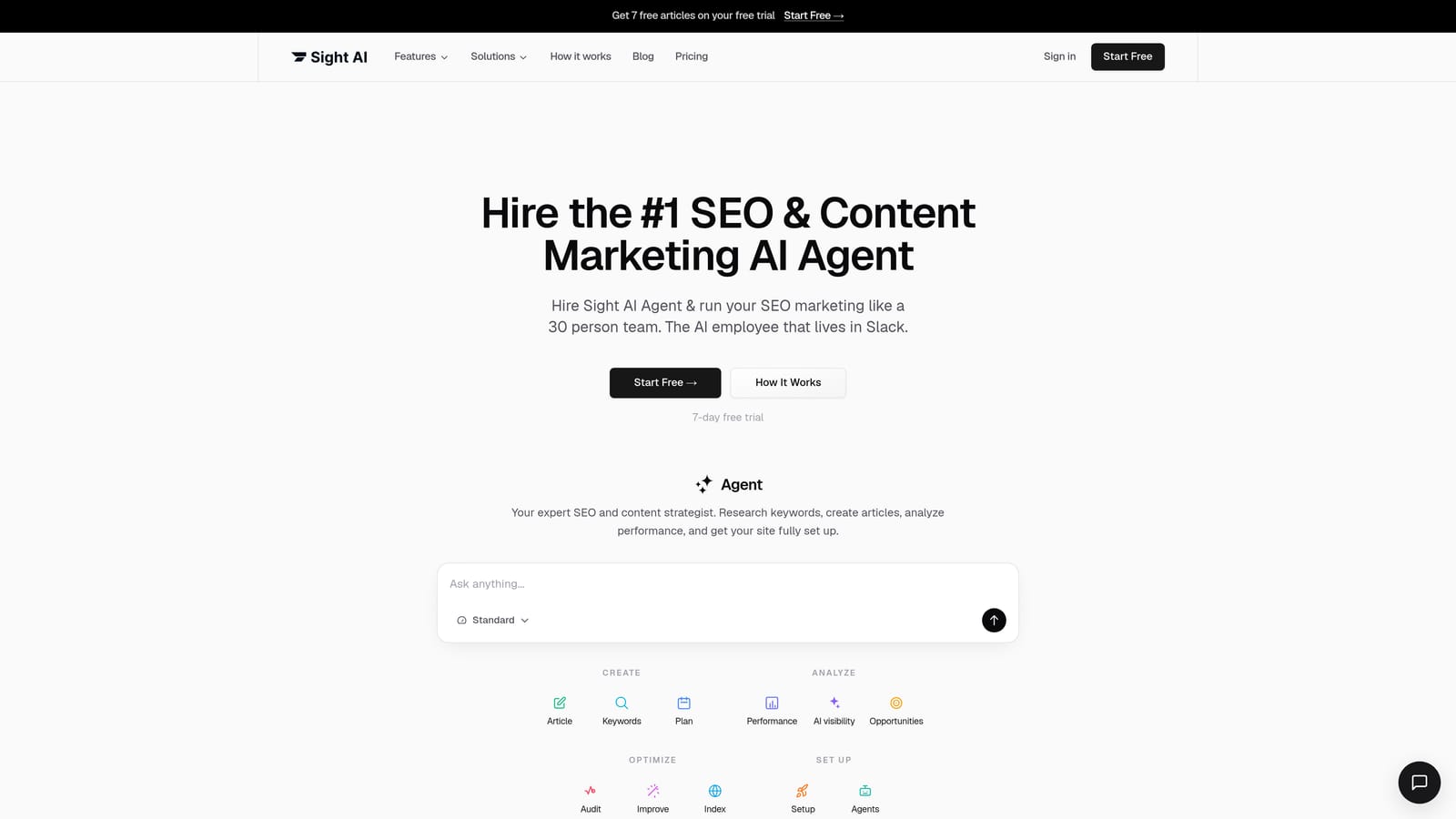
Sight AI is an all-in-one organic growth platform that covers the three pillars modern growth teams need: track where your brand appears in AI-generated answers, create SEO and GEO-optimized content at scale, and ensure that content gets indexed fast.
Where This Tool Shines
What sets Sight AI apart from every other tool on this list is its scope. Most platforms specialize in one area, either content creation or AI monitoring or indexing. Sight AI connects all three into a single workflow, which means you're not stitching together three separate subscriptions and hoping the data talks to each other.
The AI Visibility Score is particularly useful for growth teams entering the GEO space. Rather than guessing whether your brand appears in ChatGPT or Claude responses, you get structured data on mentions, sentiment, and the specific prompts that surface your brand. That feedback loop makes it much easier to prioritize which content to create next.
Key Features
AI Visibility Score: Tracks brand mentions and sentiment across ChatGPT, Claude, Perplexity, and more than six AI platforms, giving you a clear picture of your generative search presence.
13+ Specialized AI Writing Agents: Covers listicles, guides, explainers, and other formats with an Autopilot Mode that can run content production with minimal manual input.
Prompt Tracking: Identifies which specific queries and prompts surface your brand in AI-generated answers, so you can build a targeted GEO content strategy.
IndexNow Integration: Automatically notifies search engines of new content, reducing the time between publishing and discovery.
Automated Sitemap Updates and CMS Auto-Publishing: Removes manual steps from the publishing workflow, compressing time-to-index for every new article.
Best For
Sight AI is best suited for growth marketers, founders, and agencies who want a unified platform rather than a fragmented tool stack. If you're actively trying to build brand presence in both traditional search and AI-generated answers, and you want content creation and indexing to support that goal, this is the most complete option available.
Pricing
Visit trysight.ai for current pricing tiers. Plans are designed to scale across solo users, growing teams, and agency use cases.
2. Writesonic
Best for: Content teams that need to produce high volumes of SEO-optimized articles efficiently.
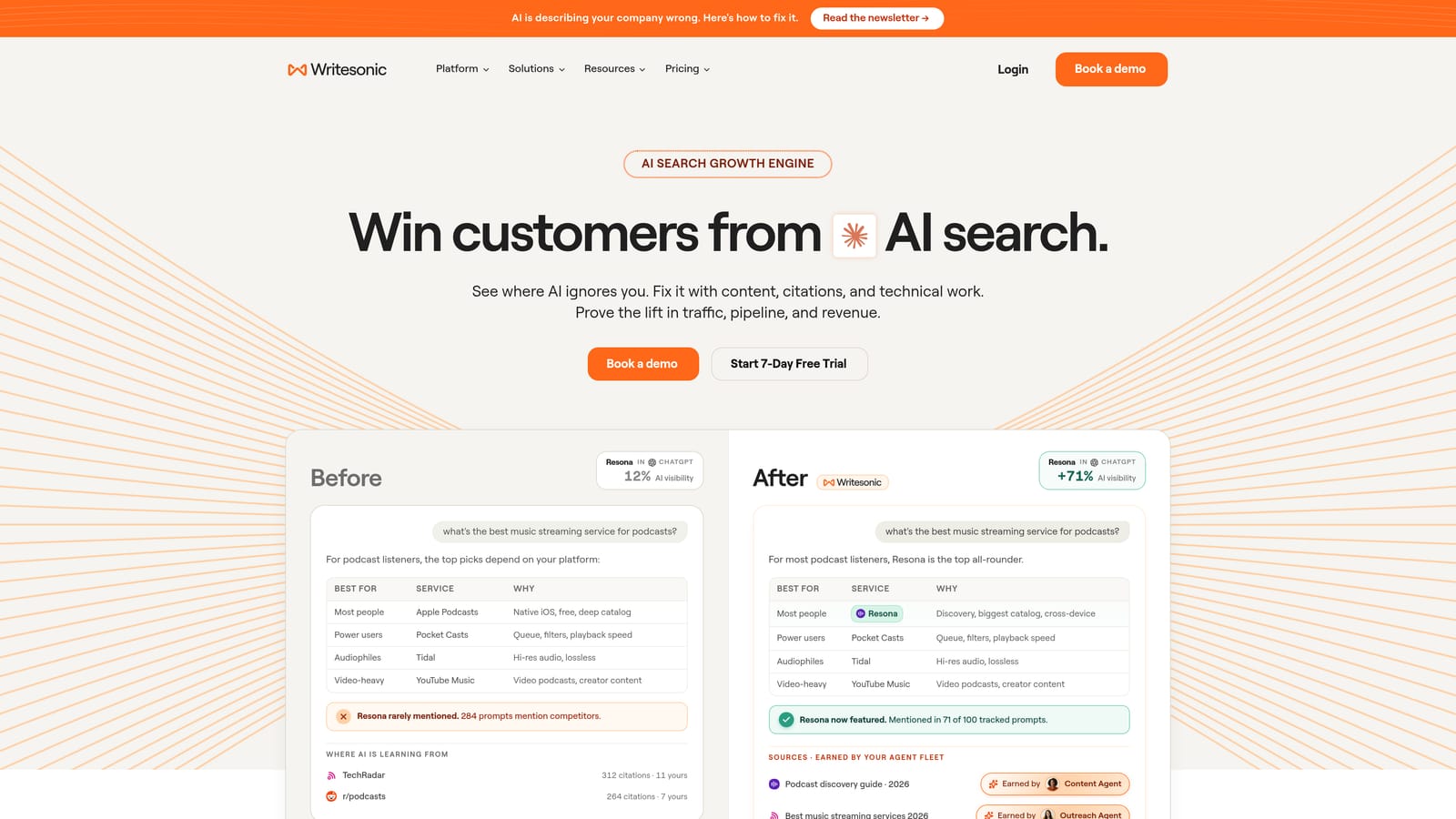
Writesonic is an AI-powered content creation platform built for teams that need to produce SEO-optimized blog posts, long-form articles, and landing page copy at scale.
Where This Tool Shines
Writesonic is a strong choice when your primary bottleneck is content volume. The platform offers long-form article generation with SEO guidance built into the drafting process, including keyword integration and real-time content scoring that helps writers stay on target without switching between tools.
It's worth being clear about what Writesonic is and isn't. It's a capable content production tool, but it doesn't offer AI visibility monitoring or automated indexing. If your team's core need is generating well-structured, keyword-aware content quickly, it delivers on that promise.
Key Features
Long-Form Article Generation: Produces full-length SEO-focused articles with structured outlines, headings, and body content.
Real-Time Content Scoring: Provides SEO feedback during the drafting process to guide keyword usage and content structure.
Content Template Library: Covers blog posts, product descriptions, landing pages, and other common content formats.
SEO Tool Integrations: Connects with popular SEO data platforms to inform content briefs and keyword targeting.
Best For
Content managers and marketing teams that need to maintain a high publishing cadence without expanding headcount. Writesonic works well as a dedicated content production layer, particularly for teams that handle AI visibility monitoring and indexing through separate tools.
Pricing
Check writesonic.com for current pricing. Multiple tiers are available to accommodate individual users and larger teams.
3. AirOps
Best for: Content operations teams that need custom AI workflows without engineering resources.
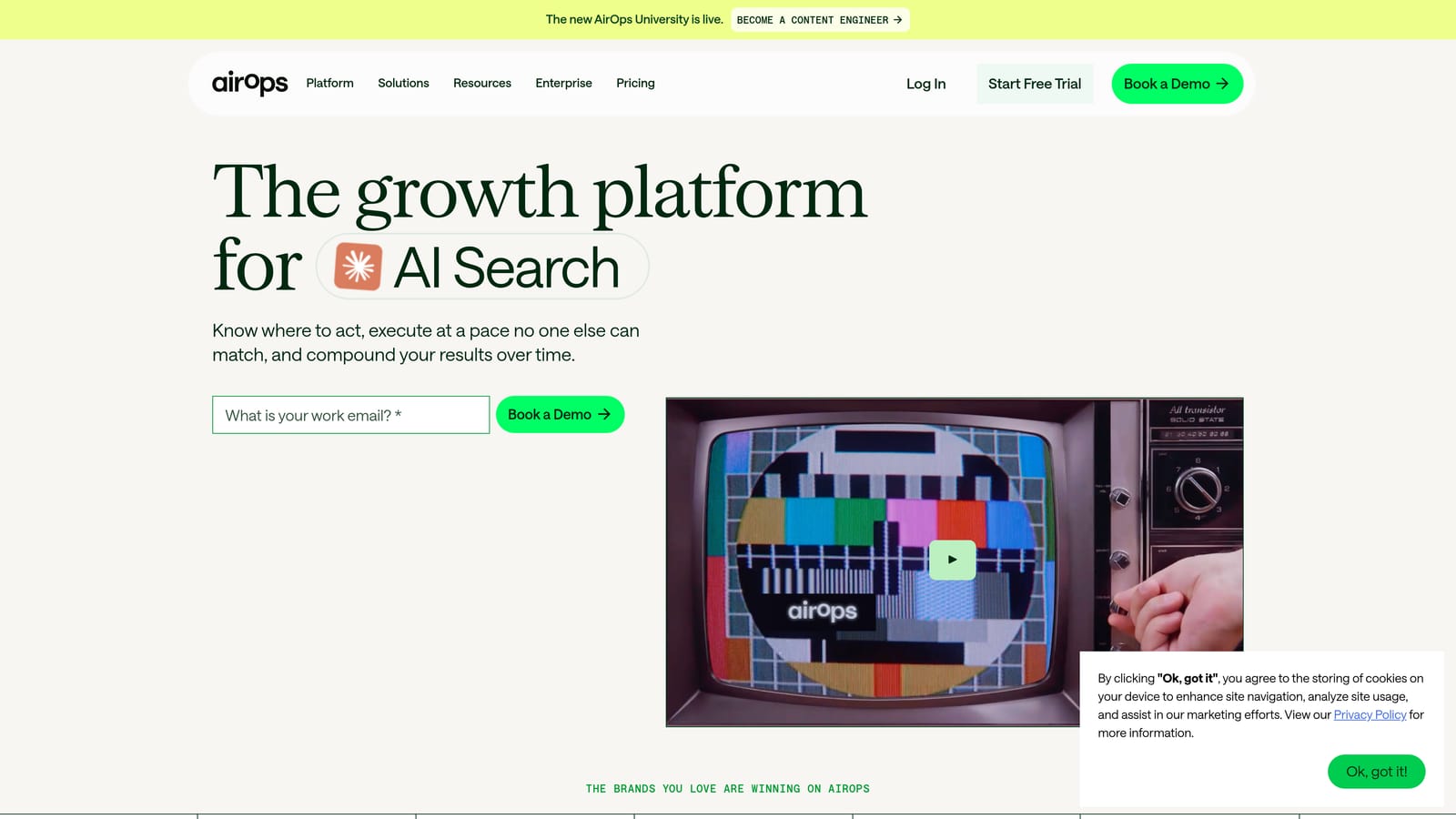
AirOps is a no-code AI workflow automation platform that lets content and growth teams build custom pipelines connecting data sources directly to AI-generated content outputs.
Where This Tool Shines
AirOps occupies a distinct niche: it's less of a content tool and more of a content operations infrastructure layer. Rather than generating content through a fixed interface, you build workflows that take inputs like keyword lists, briefs, or CMS data and route them through AI generation steps to produce structured outputs at scale.
This flexibility makes AirOps particularly valuable for teams with complex, repeatable content processes. If you're producing hundreds of similar content pieces, product pages, or location-based articles, a custom AirOps workflow can systematize that production in ways that rigid templates can't match.
Key Features
No-Code Workflow Builder: Create custom AI content pipelines using a visual interface without writing code.
Data Source Connectivity: Connect keyword data, content briefs, and CMS inputs directly into AI generation steps.
Scalable Content Production: Designed to handle high-volume content operations without requiring engineering support.
Workflow Templates: Pre-built templates for common content operations scenarios to help teams get started quickly.
Best For
Content operations leads and growth teams managing systematic, large-scale content production. AirOps is especially useful when your content process is well-defined and repeatable, and you need AI to execute it consistently at volume rather than assist with one-off drafts.
Pricing
Check airops.com for current pricing options. Enterprise plans are available for teams with high-volume workflow needs.
4. Profound
Best for: Enterprise brand and marketing teams tracking competitive AI search visibility at scale.
Profound is an AI search analytics platform focused on tracking brand presence, share of voice, and competitive positioning within AI-generated answers across major answer engines.
Where This Tool Shines
Profound is built for teams that need to understand not just whether their brand appears in AI responses, but how it compares to competitors. The competitive share-of-voice benchmarking is the standout capability here: it gives marketing and brand teams a structured way to measure relative AI search visibility, which is increasingly important as AI-generated answers influence purchase decisions.
The platform is enterprise-oriented in both its capabilities and its positioning. If you're managing brand visibility for a large organization and need reporting that can be shared across stakeholders, Profound's analytics dashboard is designed with that use case in mind.
Key Features
Brand Visibility Tracking: Monitors how and when your brand appears across major AI answer engines.
Competitive Share-of-Voice Benchmarking: Compares your AI search representation against competitors to identify gaps and opportunities.
Analytics Dashboard: Tracks AI search representation over time with trend data for ongoing monitoring.
Enterprise Reporting: Provides structured reporting outputs suited for brand and marketing teams operating at scale.
Best For
Enterprise marketing and brand teams that need competitive intelligence on AI search visibility. Profound is a strong fit when share-of-voice benchmarking and stakeholder reporting are priorities, and when content creation and indexing are handled through separate tools.
Pricing
Check the official Profound site for current pricing. Given its enterprise positioning, plans are likely tailored to organizational scale and data requirements.
5. Peec
Best for: Marketers building GEO strategies who need prompt-level AI visibility data.
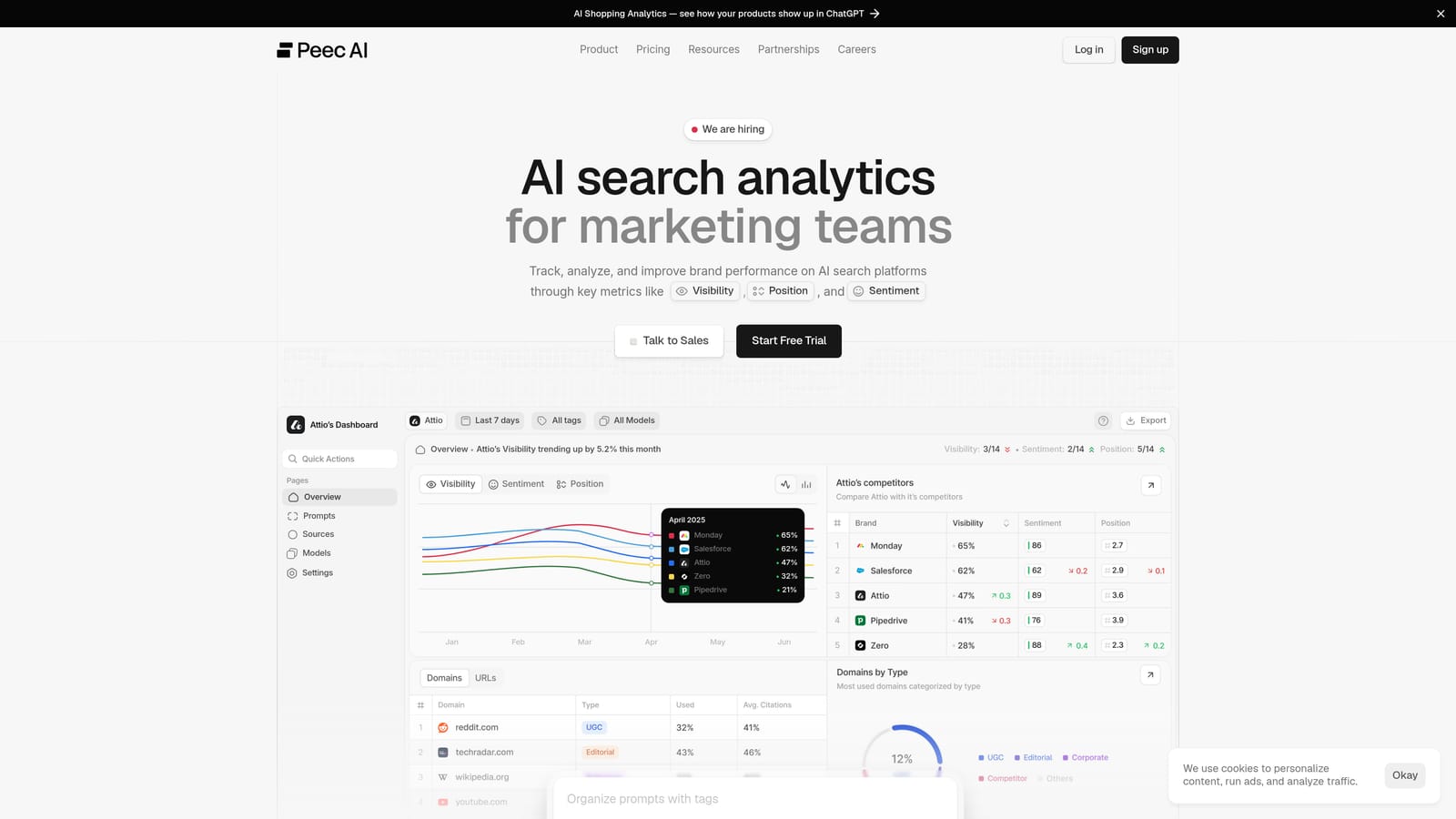
Peec is an AI visibility monitoring tool that provides granular, prompt-level tracking of where and how your brand appears in AI-generated search responses.
Where This Tool Shines
The key differentiator for Peec is the granularity of its tracking. While some AI monitoring tools tell you that your brand appeared in AI responses, Peec tells you which specific prompts and queries triggered those appearances. That distinction matters significantly for GEO strategy: knowing the exact queries that surface your brand helps you understand what content is working and where the gaps are.
The gap analysis feature is particularly actionable. Rather than leaving you to interpret raw monitoring data, Peec surfaces content opportunities based on which prompts are not returning your brand, giving you a concrete starting point for your next content priorities.
Key Features
Prompt-Level Tracking: Shows which specific queries surface your brand in AI-generated answers, not just aggregate visibility data.
Gap Analysis: Identifies content opportunities by highlighting prompts where your brand is absent from AI responses.
Multi-Platform Monitoring: Tracks brand presence across multiple AI search platforms simultaneously.
GEO Strategy Insights: Translates monitoring data into actionable recommendations for improving generative search presence.
Best For
Growth marketers and SEO professionals who are actively building or refining a GEO content strategy. Peec is especially useful when you need precise data on which content is influencing AI responses and which gaps represent the highest-priority opportunities.
Pricing
Check the official Peec site for current pricing tiers. Plans are likely structured around monitoring volume and platform coverage.
6. Promptwatch
Best for: Brand teams that need longitudinal tracking of how AI models represent their brand over time.
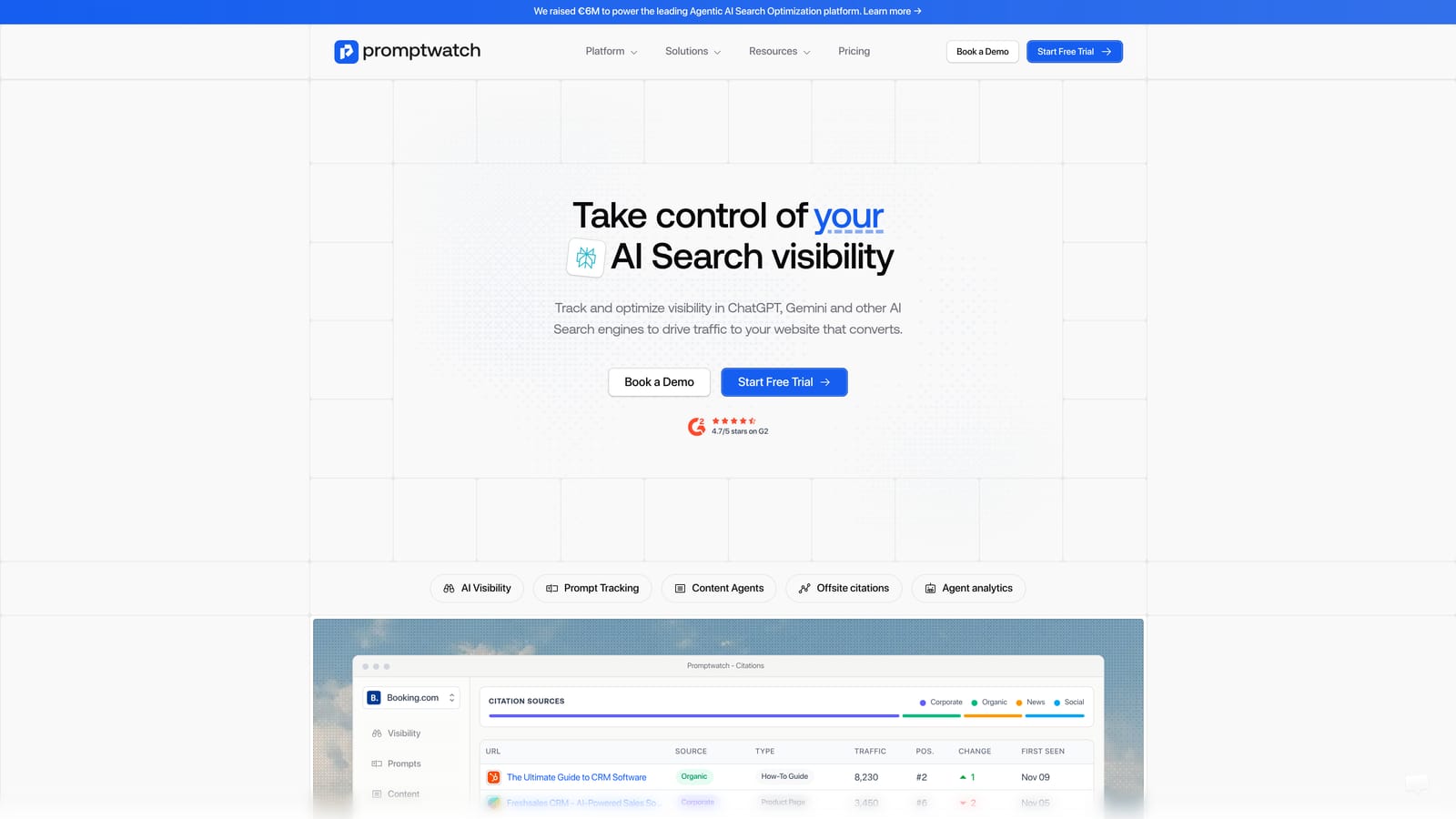
Promptwatch is a brand monitoring tool that tracks how AI language models respond to brand-relevant and category-relevant prompts, with a focus on identifying trends in AI-generated brand representation over time.
Where This Tool Shines
Promptwatch's strength is in its longitudinal view. Most AI visibility tools give you a snapshot of where your brand stands today. Promptwatch is designed to show you how that representation has shifted over weeks and months, which is valuable for understanding whether your content investments are actually moving the needle in AI-generated answers.
The prompt library management feature is a practical advantage for teams running systematic monitoring programs. Rather than ad hoc checks, you can maintain an organized library of brand-relevant and category-relevant prompts and track them consistently over time, making trend analysis more reliable and comparable.
Key Features
Longitudinal Trend Tracking: Monitors how AI model responses to your brand-relevant prompts change over time, revealing the impact of content and PR efforts.
Trend Analysis: Surfaces shifts in AI-generated brand mentions to help teams understand what's driving changes in their AI visibility.
Prompt Library Management: Organizes and maintains a structured set of prompts for consistent, systematic monitoring.
Change Alerts: Notifies teams when significant shifts occur in how AI models represent their brand.
Best For
Brand managers and communications teams that need to track the long-term impact of their content and PR work on AI-generated brand representation. Promptwatch complements content creation tools by providing the feedback loop needed to validate whether your GEO investments are working.
Pricing
Check the official Promptwatch site for current pricing details.
Choosing the Right Tool for Your Growth Strategy
The tools on this list cover different parts of the organic growth equation, and the right choice depends on where your biggest gap currently sits.
If you're looking for an all-in-one platform that handles AI visibility tracking, content generation, and automated indexing without stitching together multiple tools, Sight AI is the clear starting point. It's the only platform here that covers all three pillars in a single workflow, which matters when you're trying to move fast without adding operational complexity.
If content volume is your primary constraint and you already have monitoring and indexing covered, Writesonic and AirOps are both strong options. Writesonic works well for teams that need SEO-optimized articles quickly. AirOps is the better fit when your content process is systematic and repeatable at scale.
If your focus is understanding how your brand appears in AI-generated answers, Profound, Peec, and Promptwatch each bring a different angle. Profound is built for enterprise competitive benchmarking. Peec gives you the prompt-level granularity needed to build a precise GEO content strategy. Promptwatch is the right choice when longitudinal trend data and long-term brand monitoring are the priority.
For most growth teams in 2026, the gap between traditional SEO and AI search visibility is the most urgent problem to solve. Stop guessing how AI models like ChatGPT and Claude talk about your brand: Start tracking your AI visibility today and see exactly where your brand appears across top AI platforms.