Organic growth is the highest-ROI acquisition channel for most SaaS companies, but only when you're executing consistently across content, SEO, and increasingly, AI search. The compounding nature of organic traffic means every article you publish, every backlink you earn, and every AI model mention you secure builds on itself over time. Get the tooling right, and you create a self-reinforcing growth engine. Get it wrong, and you're publishing into the void.
The landscape has also shifted in a meaningful way. Organic growth no longer means just ranking on Google. AI-powered search through ChatGPT, Perplexity, Claude, and Google AI Overviews now shapes how SaaS buyers discover and evaluate products. If you're not tracking your brand's presence across those surfaces, you have a blind spot in your growth strategy. For a deeper look at the mechanics, check out our guide on how to increase organic traffic and our SEO and GEO insights topic page.
We evaluated these tools based on content production capabilities, SEO and GEO optimization features, analytics depth, indexing speed, and how well they fit SaaS-specific growth workflows. Here are the top tools worth your attention in 2026.
1. Sight AI
Best for: SaaS teams that want to track AI visibility, generate SEO/GEO content, and index it fast, all from one platform.
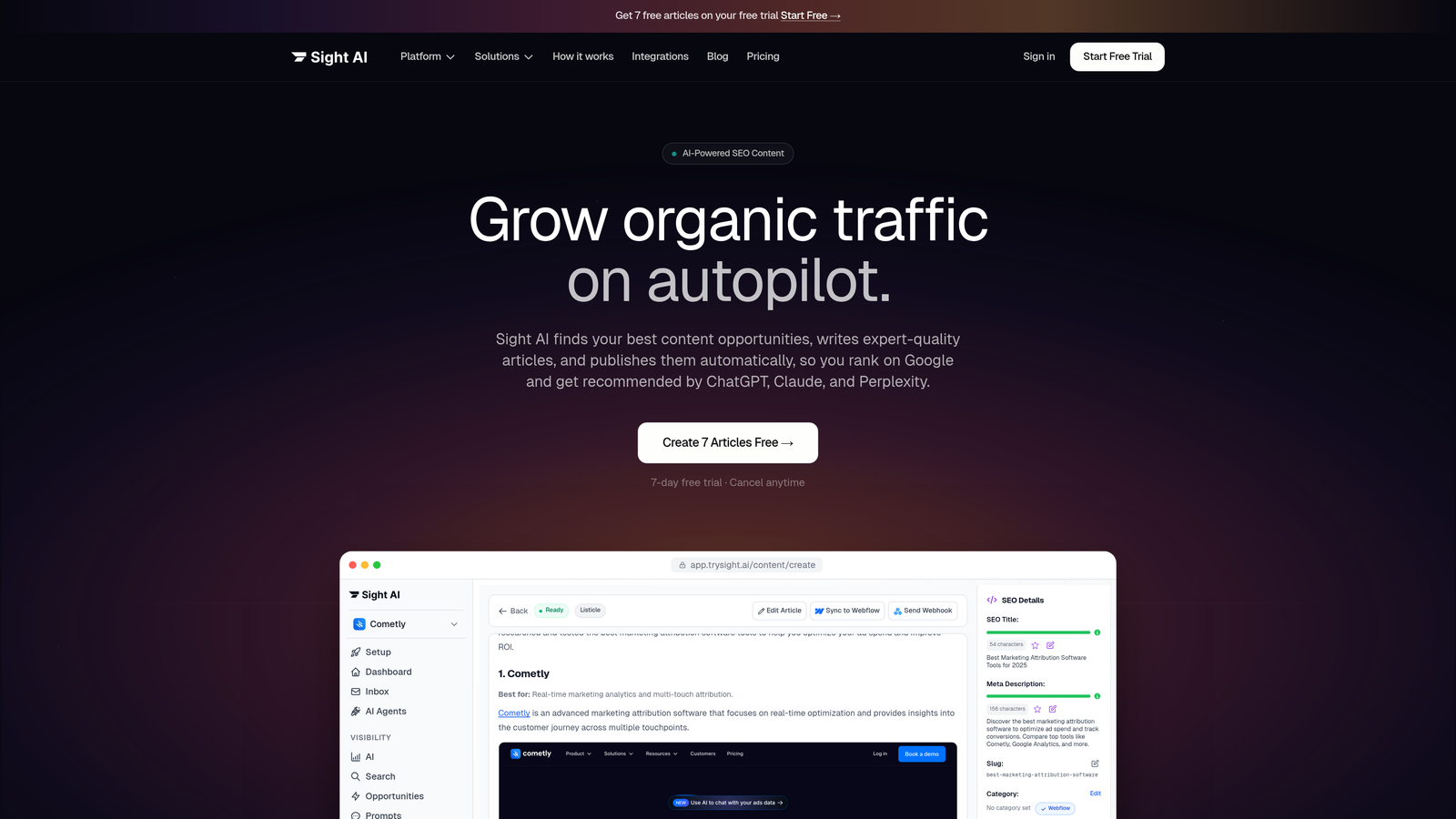
Sight AI is an all-in-one organic growth platform combining AI visibility tracking, SEO/GEO content generation, and automated website indexing for traditional and AI search.
Where This Tool Shines
Most organic growth tools solve one piece of the puzzle. Sight AI is built around the full loop: understand where your brand stands across AI platforms, create content that improves that standing, and get it indexed fast enough to matter. That end-to-end approach is genuinely rare in this category.
The AI Visibility Score is particularly valuable for SaaS brands competing in crowded categories. Knowing how ChatGPT or Perplexity describes your product, what sentiment they attach to it, and which prompts surface your competitors gives you a strategic edge that no traditional SEO tool can provide. Combine that with a content writer built specifically for GEO-optimized output, and you're covering ground that most competitors are ignoring entirely.
Key Features
AI Visibility Score: Tracks brand mentions and sentiment across ChatGPT, Claude, Perplexity, and 6+ AI platforms with prompt-level tracking so you know exactly how AI models perceive your brand.
AI Content Writer: 13+ specialized agents for producing SEO and GEO-optimized articles, including listicles, guides, and explainers, each calibrated for the format's specific ranking requirements.
IndexNow Integration: Automated sitemap updates and IndexNow-powered submission ensure new content gets discovered by search engines faster than manual submission workflows allow.
Autopilot Mode: Hands-off content production and publishing for teams that want to maintain publishing velocity without dedicating manual effort to every article.
CMS Auto-Publishing: Streamlines the content-to-live workflow by pushing finished articles directly to your CMS, cutting the time between creation and indexing.
Best For
Sight AI is best suited for SaaS marketers, founders, and agencies who need to compete across both traditional search and AI-driven discovery. It's especially valuable for teams that don't have the bandwidth to stitch together separate tools for tracking, writing, and indexing, and want a single platform that handles the full organic growth workflow.
Pricing
Visit trysight.ai for current plans and pricing. Pricing may vary based on team size and feature requirements.
2. Ahrefs
Best for: Deep keyword research, backlink analysis, and competitive SEO intelligence.
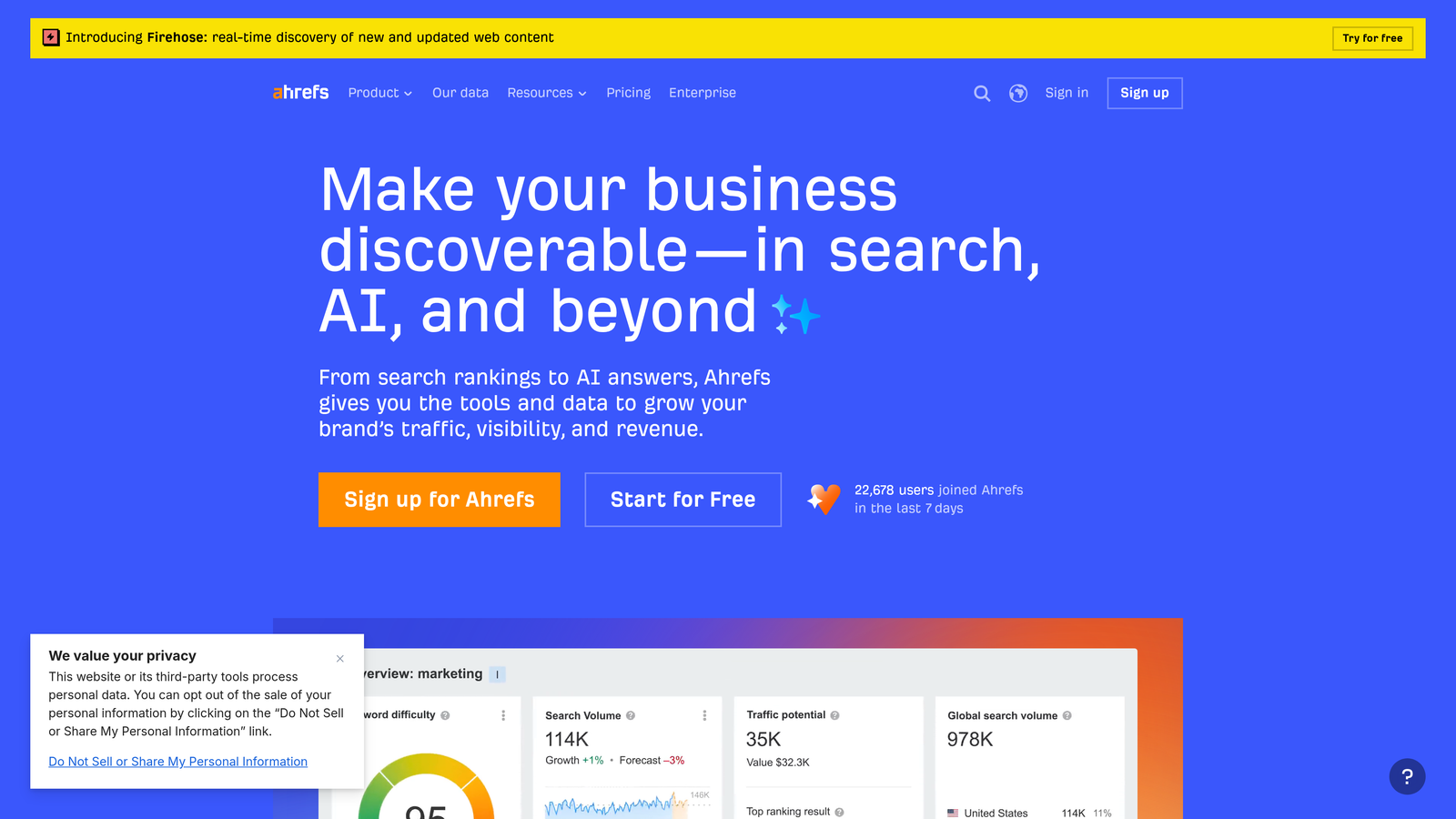
Ahrefs is an industry-leading SEO toolset with one of the largest backlink indexes available, built for teams that take keyword and competitive research seriously.
Where This Tool Shines
Ahrefs has earned its reputation through the sheer depth of its data. The backlink index is comprehensive, the keyword data includes click metrics that most tools don't surface, and the Site Explorer gives you a genuinely useful picture of any competitor's organic footprint. For SaaS teams building a content strategy from the ground up, Keyword Explorer alone can drive months of planning.
Content Explorer is a standout feature for ideation. You can search any topic and surface high-performing content by traffic, backlinks, or social engagement, which helps you understand what the market actually rewards before you commit to writing it.
Key Features
Keyword Explorer: Provides click metrics, keyword difficulty scores, and traffic potential estimates to prioritize which keywords are worth targeting.
Site Explorer: Deep backlink and organic traffic analysis for any domain, including your own and your competitors'.
Content Explorer: Discover high-performing content by topic to inform your editorial strategy with data rather than guesswork.
Rank Tracker: Monitors keyword positions with SERP feature tracking, including featured snippets and AI Overviews.
Site Audit: Crawls your site for technical SEO issues and prioritizes fixes by impact.
Best For
Ahrefs is ideal for SEO-focused SaaS teams and agencies that need reliable keyword data, competitive analysis, and backlink intelligence. It's less suited for teams that also need content creation or AI search visibility in the same platform.
Pricing
Starts at $129/month for the Lite plan. Higher tiers unlock more data rows, users, and advanced features. Pricing should be verified at ahrefs.com before purchasing.
3. Semrush
Best for: All-in-one digital marketing intelligence covering SEO, content, PPC, and competitive research.
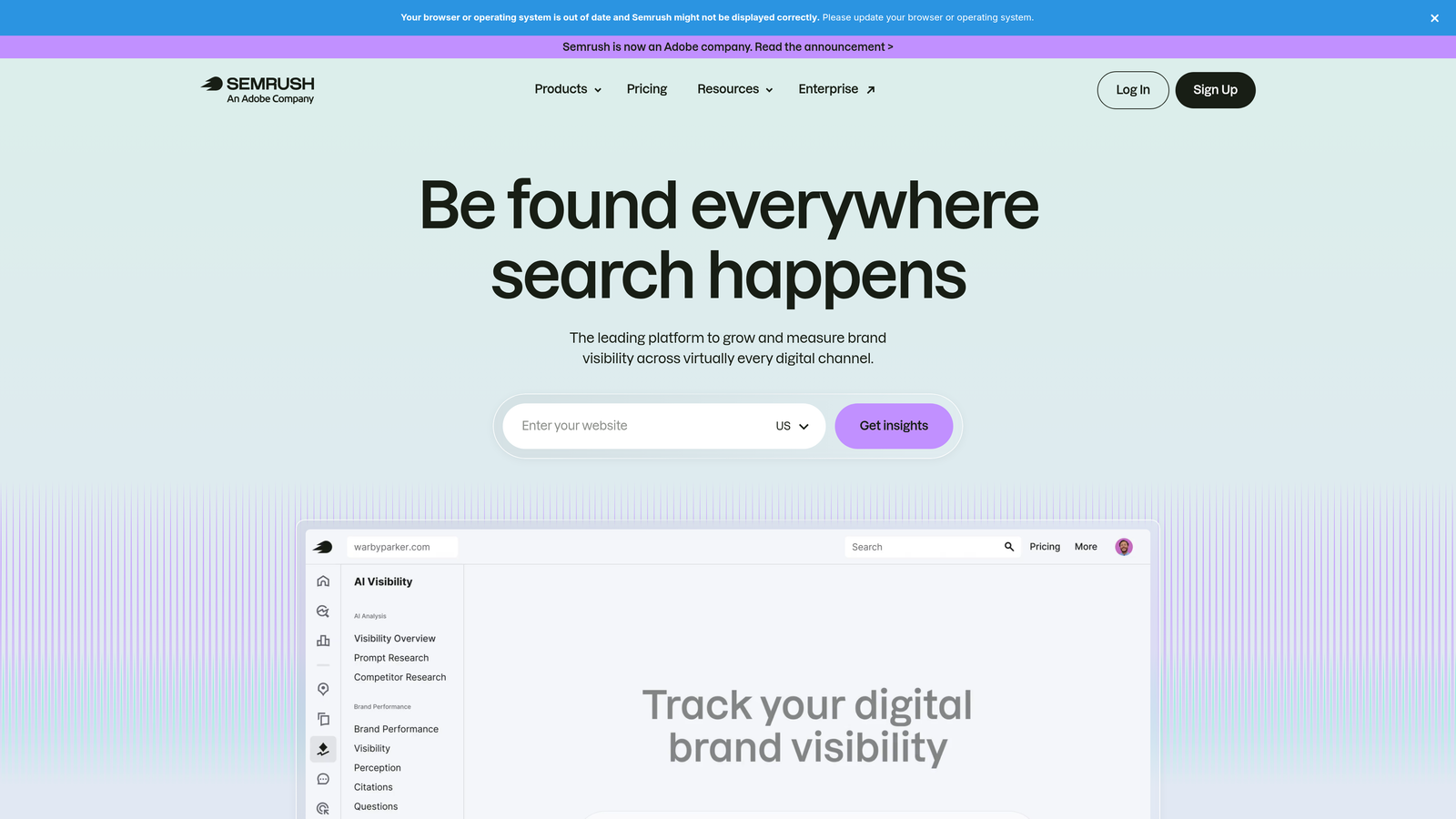
Semrush is a comprehensive platform that brings keyword research, content optimization, competitor analysis, and advertising intelligence under one roof.
Where This Tool Shines
Semrush's breadth is its defining characteristic. Where Ahrefs goes deeper on backlinks and keyword data, Semrush casts a wider net, covering PPC intelligence, social tracking, and content optimization tools alongside its core SEO capabilities. For SaaS teams running multi-channel growth programs, having that consolidated view reduces the number of tools you need to maintain.
The Keyword Gap and Backlink Gap tools are particularly useful for competitive strategy. They let you identify exactly where competitors are winning organic traffic that you're not capturing, which makes it easy to prioritize content investments around real gaps rather than assumptions.
Key Features
Keyword Gap and Backlink Gap: Side-by-side competitive analysis showing exactly where rivals outrank you and which backlinks you're missing.
SEO Content Template and Writing Assistant: Generates optimization recommendations and scores content in real time against top-ranking pages.
Position Tracking: Monitors keyword rankings across local and mobile SERPs with daily updates.
Site Audit: Runs over 140 technical SEO checks and groups issues by severity and category.
Topic Research: Surfaces content ideas and trending subtopics based on a seed keyword or theme.
Best For
Semrush suits SaaS marketing teams that want a single platform for SEO, content strategy, and competitive intelligence without jumping between tools. It's also a strong fit for agencies managing multiple client accounts.
Pricing
Starts at $139.95/month for the Pro plan. Business and agency plans are available at higher price points. Verify current pricing at semrush.com.
4. Surfer SEO
Best for: Real-time on-page content optimization guided by SERP analysis.
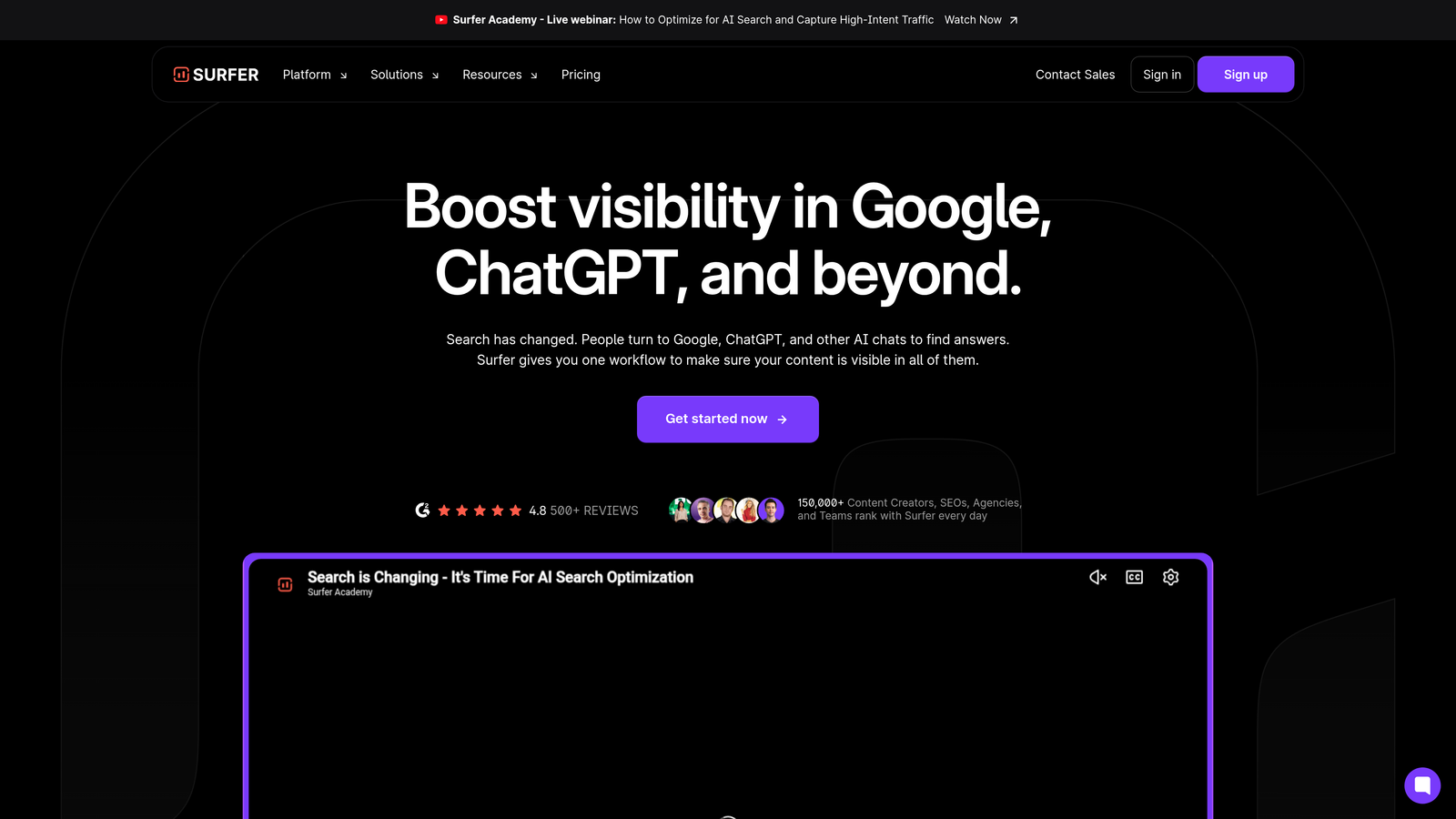
Surfer SEO is a data-driven content optimization platform that analyzes what's ranking and tells you exactly how to match or exceed it.
Where This Tool Shines
Surfer's Content Editor is the product most writers actually use day-to-day. It pulls data from top-ranking pages for your target keyword and translates that analysis into a real-time optimization score as you write. The feedback loop is immediate: add a term, watch your score move, adjust accordingly. For SaaS teams trying to improve content quality consistently, that kind of structured guidance reduces guesswork significantly.
The NLP-powered keyword suggestions go beyond simple keyword stuffing guidance. Surfer identifies semantically related terms that top-ranking content tends to include, which helps you write more comprehensively without padding word count artificially.
Key Features
Content Editor: Real-time optimization scoring based on analysis of top SERP results for your target keyword, updated as you write.
NLP Keyword Suggestions: Identifies semantically related terms and phrases that strengthen topical relevance.
SERP Analyzer: Breaks down ranking factors for any query so you understand what Google is rewarding in a given niche.
Content Audit: Evaluates existing pages against current SERP benchmarks to identify optimization opportunities.
Integrations: Works natively with Google Docs, WordPress, and Jasper for flexible workflow options.
Best For
Surfer SEO is a strong fit for content teams and SEO specialists who want data-backed guidance at the writing stage. It works well alongside keyword research tools like Ahrefs or Semrush rather than as a standalone strategy platform.
Pricing
Starts at $89/month for the Essential plan. Verify current pricing at surferseo.com before committing.
5. Clearscope
Best for: Enterprise editorial teams that need consistent, search-optimized content quality at scale.
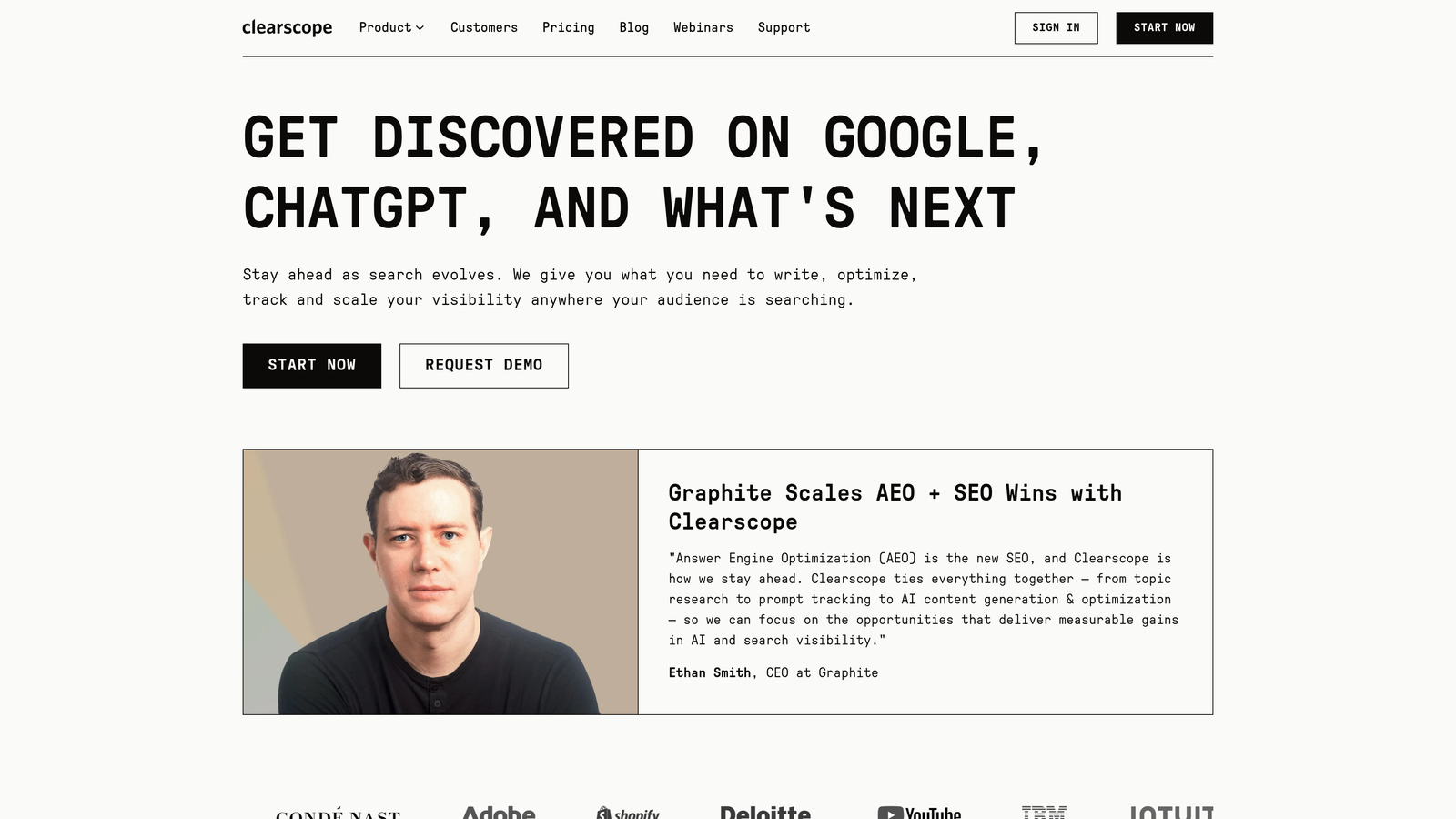
Clearscope is a content optimization platform built for editorial teams that prioritize content quality and keyword relevance without a cluttered interface.
Where This Tool Shines
Clearscope's grading system, which scores content from A++ down to F based on keyword relevance and coverage, gives editorial teams a simple, consistent quality benchmark. Writers know exactly what "good enough" looks like before they hand off a draft, which reduces revision cycles and improves publishing consistency. That kind of standardization matters more as your content team grows.
The interface is intentionally clean. Clearscope strips away the complexity that can overwhelm writers who aren't SEO specialists, making it easier to get adoption across a broader team without extensive training.
Key Features
Content Grading System: Scores content from A++ to F based on keyword relevance and term coverage, giving writers a clear optimization target.
Writer-Friendly Editor: Clean, distraction-free interface designed for non-SEO specialists to use without a learning curve.
Google Docs and WordPress Integrations: Works inside tools your team already uses rather than requiring a separate workflow.
Keyword Discovery: Surfaces related terms with search volume and relevance data to guide content depth.
Content Inventory Monitoring: Tracks existing pages over time so you can identify content that needs refreshing before rankings drop.
Best For
Clearscope is best for larger SaaS content teams and enterprises where editorial consistency and cross-team adoption matter as much as raw optimization capability. Its higher price point is easier to justify when multiple writers are using it daily.
Pricing
Starts at $170/month for the Essentials plan. Verify current pricing at clearscope.io.
6. Jasper
Best for: Marketing teams producing AI-generated content at scale with brand voice consistency.
Jasper is an AI content generation platform designed for marketing teams that need to produce high volumes of content while maintaining a consistent brand voice.
Where This Tool Shines
Jasper's Brand Voice feature is what separates it from generic AI writing tools. You can train it on your company's existing content so that AI-generated drafts sound like your team wrote them, not like a generic language model. For SaaS brands where voice and positioning matter to differentiation, that consistency is worth a lot.
The Knowledge Base functionality lets you upload product documentation, FAQs, and company context so the AI draws on accurate, brand-specific information rather than hallucinating details. That's a meaningful safeguard for SaaS content where accuracy about features and use cases is non-negotiable.
Key Features
Brand Voice: Trains on your existing content to maintain consistent tone and style across all AI-generated output.
Knowledge Base: Upload company-specific context, product details, and facts to ground AI output in accurate information.
Content Templates: Pre-built structures for blog posts, landing pages, social media, and ad copy to accelerate production.
Campaign Workflow: Enables multi-asset content creation for campaigns that span multiple formats and channels.
Team Collaboration: Approval workflows and shared workspaces for teams that need editorial oversight on AI-generated content.
Best For
Jasper suits SaaS marketing teams that need to scale content production quickly and want AI generation with brand guardrails. It's less focused on SEO optimization depth or AI search visibility, so it works best paired with a dedicated SEO or GEO tool.
Pricing
Starts at $49/month for the Creator plan. Team and Business plans are available at higher tiers. Verify current pricing at jasper.ai.
7. Frase
Best for: Fast content brief creation and first-draft generation grounded in SERP research.
Frase is a research-first content tool that builds detailed briefs from live SERP data and pairs them with an AI writing assistant for rapid draft creation.
Where This Tool Shines
Frase compresses the research-to-draft workflow significantly. Instead of manually reviewing top-ranking pages and building a brief from scratch, Frase pulls the key themes, questions, and headings from SERP results automatically. That brief then feeds directly into an AI writing assistant, so you move from keyword to publishable draft faster than most other tools allow.
The answer engine optimization features are worth noting for SaaS teams targeting featured snippets. Frase identifies the questions your target audience is asking and structures content to answer them in the format Google tends to pull for featured results.
Key Features
Automated Content Briefs: Pulls structure, themes, and key questions from top SERP results to build research-backed briefs without manual effort.
AI Writer: Generates first drafts directly from briefs, reducing the time from research to editable copy.
Competitor Content Comparison: Side-by-side SERP analysis showing how your content stacks up against what's already ranking.
Answer Engine Optimization: Identifies featured snippet opportunities and structures content to target them effectively.
Content Analytics: Tracks page performance over time so you can identify which content is gaining or losing traction.
Best For
Frase is an excellent fit for lean SaaS content teams and solo marketers who need to produce well-researched content quickly without a large budget. Its entry price is among the lowest in this category, making it accessible for early-stage teams.
Pricing
Starts at $15/month for the Solo plan, making it one of the most affordable options on this list. Verify current pricing at frase.io.
8. HubSpot Content Hub
Best for: SaaS teams already in the HubSpot ecosystem who need to connect organic content performance to pipeline revenue.
HubSpot Content Hub is a content management and marketing platform natively integrated with HubSpot CRM, enabling direct attribution from organic traffic to deals closed.
Where This Tool Shines
The native CRM integration is what makes HubSpot Content Hub genuinely different from standalone content tools. When a prospect finds your blog post through organic search, converts on a landing page, and eventually becomes a customer, you can trace that entire journey in one system. For SaaS teams trying to justify content investment to leadership, that revenue attribution data is invaluable.
The topic cluster tools help structure your content strategy around pillar pages and supporting content in a way that aligns with how Google evaluates topical authority. Combined with built-in SEO recommendations, it gives content teams a structured framework rather than a blank canvas.
Key Features
Native CRM Integration: Attributes organic traffic directly to leads, opportunities, and closed revenue within the HubSpot CRM.
SEO Recommendations and Topic Clusters: Built-in tools for structuring content strategy around topical authority and pillar pages.
AI Content Generation: Generates blog posts and landing page copy within the HubSpot interface without switching tools.
Smart Content Personalization: Adapts content based on visitor segments, lifecycle stage, or CRM properties for more relevant experiences.
Revenue Attribution Dashboard: Connects content performance metrics to pipeline and revenue data in a single reporting view.
Best For
HubSpot Content Hub is purpose-built for SaaS companies already running their CRM, marketing automation, and sales processes on HubSpot. If you're not in that ecosystem, the value proposition weakens considerably given the price point.
Pricing
A free tier is available with limited features. Professional starts at $450/month. Verify current pricing at hubspot.com.
9. Google Search Console + Looker Studio
Best for: First-party organic search data and custom SEO performance dashboards at zero cost.
Google Search Console is Google's free, first-party tool for monitoring organic search performance, indexing status, and page experience signals, and it becomes even more powerful when connected to Looker Studio for custom reporting.
Where This Tool Shines
No third-party tool can replicate what Search Console provides: direct data from Google itself. Impressions, clicks, average position, and CTR by query and page come straight from the source, without the estimation or sampling that other tools rely on. For understanding what's actually happening in your organic channel, this is your ground truth.
Looker Studio transforms that raw data into custom dashboards that you can share with stakeholders, filter by date range or property, and blend with other data sources. Building a weekly organic growth report that non-technical leadership can actually read takes an afternoon to set up and runs automatically from there.
Key Features
First-Party Search Data: Impression, click, and CTR data pulled directly from Google, covering the queries and pages driving your organic traffic.
Index Coverage Reports: Shows which pages are indexed, which have errors, and which are excluded, so you can diagnose crawling and indexing issues quickly.
Core Web Vitals Monitoring: Tracks page experience signals that influence rankings, broken down by URL and device type.
URL Inspection Tool: Lets you check any individual URL's indexing status and request re-indexing after updates.
Looker Studio Integration: Connects Search Console data to custom dashboards with flexible filtering, blending, and visualization options.
Best For
Every SaaS team running organic search should have Search Console configured, regardless of what other tools they use. It's the non-negotiable baseline for understanding organic performance, and the free price point removes any barrier to entry.
Pricing
Both Google Search Console and Looker Studio are completely free to use.
Choosing the Right Organic Growth Stack
The right combination of tools depends heavily on where you are in your growth journey and what gaps you're trying to close.
If you're an early-stage SaaS team with a lean budget and limited bandwidth, start with Google Search Console for free first-party data, Frase for cost-effective brief creation and drafting, and Sight AI for tracking your AI search visibility from day one. Establishing that AI visibility baseline early matters more than most teams realize, because the brands that show up consistently in AI model responses tend to be the ones that built that presence before their category got crowded.
If you're scaling and need to produce more content with more rigor, layer in Ahrefs or Semrush for keyword strategy and competitive intelligence, Surfer SEO or Clearscope for on-page optimization, and Sight AI's Autopilot Mode to maintain publishing velocity without proportionally scaling headcount.
For enterprise SaaS teams already running on HubSpot, Content Hub's CRM-to-revenue attribution makes it a natural fit alongside the foundational SEO and content tools. The ability to connect organic traffic to closed deals changes how leadership evaluates content investment.
Across all three stages, one thing holds constant: traditional SEO tools don't address AI search visibility, and that gap is growing as more buyers use ChatGPT, Perplexity, and Claude to research software purchases. Sight AI is currently the only platform in this list that covers the full organic growth loop, from tracking how AI models describe your brand, to generating SEO and GEO-optimized content that improves that presence, to indexing it fast enough to compound results over time.
Start tracking your AI visibility today and see exactly where your brand appears across top AI platforms. Stop guessing how AI models like ChatGPT and Claude talk about your brand, and start building the organic growth engine your SaaS deserves.