Agencies face mounting pressure to deliver more content, faster results, and measurable ROI—all while managing multiple client accounts. AI-powered content marketing has emerged as the competitive edge that separates thriving agencies from those struggling to keep pace.
This isn't about replacing human creativity; it's about amplifying your team's capabilities to serve clients better. From automated content generation to AI visibility tracking, these strategies will help your agency scale operations, improve content quality, and demonstrate clear value to clients.
Here are seven battle-tested approaches that forward-thinking agencies are using to transform their content marketing operations.
1. Deploy Multi-Agent AI Systems for Scalable Content Production
The Challenge It Solves
Your agency needs to produce 20 articles this week across five different clients, each requiring unique voice, industry expertise, and optimization. Your writers are maxed out, and hiring more people means slashing already-thin margins. The traditional agency model of linear scaling—more clients equals more headcount—breaks down when content demand explodes.
Sound familiar? You're not alone. Many agencies find themselves trapped between client expectations for volume and the reality of human production capacity.
The Strategy Explained
Multi-agent AI systems work like a specialized content team where each AI agent handles a specific function. One agent researches the topic and gathers data. Another structures the outline based on search intent. A third writes the draft with specific optimization parameters. A fourth edits for tone and readability. A fifth handles SEO optimization and metadata.
Think of it like an assembly line, except it runs 24/7 and can handle multiple projects simultaneously. The key difference from single-AI tools? Each agent is specifically trained for its role, producing higher-quality output than a generalist AI trying to do everything at once.
This approach lets your human team focus on strategy, client relationships, and final quality control—the high-value work that actually differentiates your agency. The AI handles the heavy lifting of research, drafting, and initial optimization. Many agencies are already exploring content marketing automation for agencies to streamline these workflows.
Implementation Steps
1. Map your current content production workflow and identify repetitive tasks that consume the most time—typically research, first drafts, and basic optimization.
2. Set up your multi-agent system with clear handoff points between agents, ensuring each output feeds properly into the next stage without manual intervention.
3. Create client-specific configuration profiles that define brand voice, industry terminology, target keywords, and content structure preferences for consistent output.
4. Run parallel production—have your team create content the traditional way while the AI system handles the same brief, then compare quality and iterate on prompts.
5. Establish quality gates where human editors review AI output at specific checkpoints rather than line-by-line editing, focusing on strategic alignment and brand voice.
Pro Tips
Start with your most standardized content types—like monthly blog posts or social media content—where consistent structure makes AI output more predictable. Once you've refined those workflows, expand to more complex formats. The agencies seeing the best results treat their AI agents like junior team members: they provide detailed briefs, give feedback on output, and continuously refine their instructions based on what works.
2. Track AI Visibility Across Platforms to Uncover Client Opportunities
The Challenge It Solves
Your clients ask how they're performing in search, and you show them Google Analytics. But increasingly, their potential customers aren't starting with Google—they're asking ChatGPT, Claude, or Perplexity for recommendations. When someone asks an AI assistant "what are the best project management tools for remote teams," does your client get mentioned? You have no idea, and neither does your client.
This blind spot represents both a risk and an opportunity. Competitors who understand AI visibility are already positioning themselves as the agencies who "get" the future of discovery.
The Strategy Explained
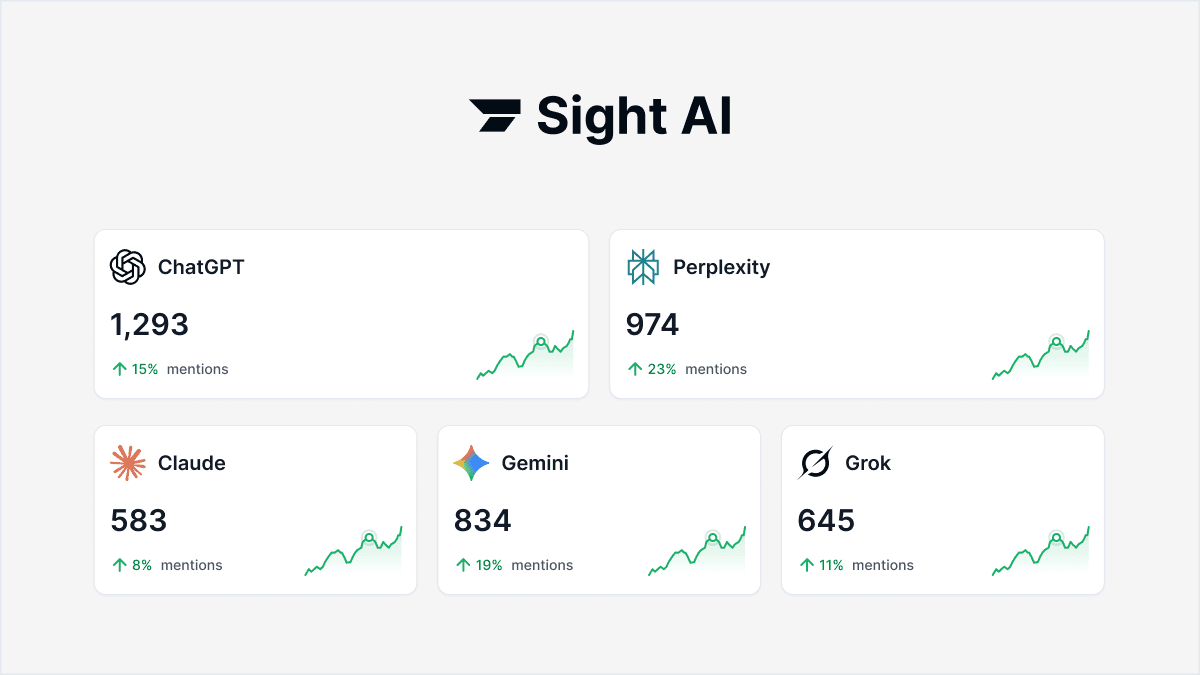
AI visibility tracking monitors how and when client brands appear in responses from major AI assistants. It's like rank tracking for the AI era. Instead of checking keyword positions on search result pages, you're tracking brand mentions, sentiment, and context across AI-generated responses.
The strategic value goes beyond simple monitoring. When you track AI visibility systematically, you uncover content gaps that competitors haven't addressed. You discover the specific topics and contexts where your client should be mentioned but isn't. You identify which competitors are winning AI citations and reverse-engineer their approach.
This creates a new service offering that most agencies can't match: "We don't just optimize for search engines; we optimize for how AI models recommend solutions to your target audience." Understanding ai powered content marketing principles is essential for delivering this value.
Implementation Steps
1. Establish baseline AI visibility by tracking how client brands currently appear across ChatGPT, Claude, Perplexity, and other major AI platforms for key industry topics.
2. Create a prompt library of questions your client's ideal customers would ask AI assistants, organized by funnel stage and product category.
3. Run weekly monitoring cycles where you test these prompts across platforms and document when clients are mentioned, in what context, and with what sentiment.
4. Map competitive AI visibility by tracking which brands consistently appear in AI responses for your client's target topics and analyzing their content strategies.
5. Build content strategies specifically designed to increase AI citations by addressing the topics and contexts where clients are currently invisible to AI models.
Pro Tips
Package AI visibility reports as a premium service add-on. Many agencies find that clients will pay specifically for this insight because it's novel and competitors aren't offering it. Include month-over-month trending, competitive benchmarking, and specific content recommendations based on visibility gaps. This positions your agency as forward-thinking and gives you a concrete differentiator when pitching new business.
3. Implement GEO-Optimized Content Frameworks
The Challenge It Solves
You've mastered SEO. Your content ranks well, follows best practices, and drives organic traffic. But when AI assistants synthesize information to answer user queries, your client's content gets overlooked while competitors with "worse" SEO somehow get cited. Traditional optimization doesn't guarantee AI visibility, and you need frameworks that work for both search engines and AI models.
The rules have changed. Content that performs well in Google doesn't automatically perform well when Claude or ChatGPT decides what to recommend.
The Strategy Explained
Generative Engine Optimization (GEO) structures content for AI citation and recommendation. While SEO focuses on keywords, meta tags, and backlinks, GEO emphasizes clarity, authority signals, and content structure that AI models can easily parse and cite.
Think of it this way: search engines crawl and index; AI models read and synthesize. Your content needs to be quotable, not just findable. This means clear topic sentences, explicit expertise signals, structured data that AI can extract, and authoritative statements that models feel confident citing. Leveraging generative AI for content marketing helps you understand these new optimization principles.
The most effective approach balances both disciplines. You're not abandoning SEO—you're layering GEO principles on top of solid search optimization to maximize visibility across both traditional and AI-powered discovery channels.
Implementation Steps
1. Restructure content with explicit expertise signals by adding author credentials, citing sources prominently, and using clear attribution for claims and statistics.
2. Write topic sentences that can stand alone as complete thoughts, making it easy for AI models to extract and cite key points without additional context.
3. Add structured comparison frameworks when discussing solutions, tools, or approaches—AI models favor content that clearly delineates options with specific criteria.
4. Include explicit "best for" recommendations and use-case scenarios that help AI models match your client's solutions to specific user needs.
5. Create FAQ sections that directly answer common questions in your client's industry using natural language that mirrors how users query AI assistants.
Pro Tips
Test your GEO-optimized content by asking AI assistants questions your target audience would ask, then analyzing whether your content gets cited. Refine based on what works. Many agencies find that content with clear structure, explicit recommendations, and quotable insights performs significantly better in AI citations than longer, more comprehensive pieces that bury key information.
4. Automate Content Indexing for Faster Client Results
The Challenge It Solves
You publish a timely article for a client, perfectly optimized and ready to drive traffic. Then you wait. Days pass while search engines eventually discover and index the content. By the time it's ranking, the moment has passed, and competitors who moved faster captured the opportunity. Manual indexing requests help, but they don't scale when you're publishing dozens of pieces weekly across multiple clients.
Speed matters more than ever. The faster content gets indexed, the faster it can rank, drive traffic, and deliver ROI that keeps clients happy.
The Strategy Explained
Automated indexing systems use protocols like IndexNow to instantly notify search engines when new content publishes. Instead of waiting for crawlers to eventually discover your content, you're proactively pushing updates the moment they go live.
Combined with automated sitemap generation and updates, this creates a seamless pipeline from publication to indexing. Your content management system publishes the article, automatically updates the sitemap, and sends indexing notifications to search engines—all without manual intervention. The right AI-powered content marketing software can handle this entire workflow automatically.
The competitive advantage compounds over time. While other agencies' content sits in the indexing queue, yours is already ranking and driving traffic. This speed advantage is especially critical for trending topics, seasonal content, and competitive keywords where being first matters.
Implementation Steps
1. Integrate IndexNow API keys into your content management systems to enable instant indexing notifications to Bing, Yandex, and other supporting search engines.
2. Set up automated sitemap generation that updates immediately when new content publishes, ensuring search engines always have current site structure information.
3. Configure Google Search Console API integration for automated indexing requests to Google, maximizing coverage across all major search engines.
4. Create monitoring dashboards that track indexing speed and status across all client sites, alerting you to any indexing delays or issues.
5. Build indexing speed into your client reporting to demonstrate how your technical infrastructure delivers faster time-to-traffic than competitors.
Pro Tips
Don't just automate indexing for new content—use it strategically for content updates too. When you refresh an article with new information or optimize existing content, trigger reindexing to ensure search engines recognize the improvements quickly. Many agencies find that updated content with proactive reindexing sees ranking improvements within days rather than weeks.
5. Build AI-Powered Content Calendars with Predictive Topic Analysis
The Challenge It Solves
Your content calendars are reactive. You spot a trending topic, scramble to create content, and publish just as the trend peaks—or worse, after it's already declining. Meanwhile, clients wonder why your agency isn't more proactive about identifying opportunities before competitors. Manual trend monitoring doesn't scale across multiple clients and industries, and by the time you notice patterns, it's too late to capitalize.
What if you could identify trending topics before they explode, giving clients first-mover advantage instead of playing catch-up?
The Strategy Explained
AI-powered content calendars use predictive analysis to identify emerging topics before they reach peak visibility. By analyzing search trends, social signals, industry publications, and AI assistant query patterns, these systems spot topics gaining momentum and automatically populate content calendars with timely recommendations.
The shift from reactive to predictive planning transforms client relationships. Instead of asking "what should we write about this month," you're presenting data-backed content strategies that position clients ahead of industry conversations. An AI-powered content strategy platform can automate much of this predictive analysis.
This approach also solves the blank page problem. Your team never starts from zero because the AI continuously feeds qualified topic ideas based on each client's industry, target audience, and competitive landscape.
Implementation Steps
1. Configure AI monitoring across multiple signal sources including search trend data, social media platforms, industry publications, and AI assistant query patterns specific to each client's niche.
2. Define topic scoring criteria that balance trend momentum, competitive difficulty, client relevance, and alignment with business goals to prioritize calendar recommendations.
3. Set up automated calendar population that suggests topics with optimal publish timing based on predicted trend curves rather than current popularity.
4. Create client-specific topic filters that ensure recommendations align with brand positioning, expertise areas, and strategic content pillars.
5. Build approval workflows where AI suggestions flow to strategists for validation and refinement before client presentation, maintaining quality control while automating discovery.
Pro Tips
Layer seasonal and evergreen content into your AI-powered calendar alongside trending topics. The most effective content strategies balance timely opportunities with foundational content that drives consistent traffic. Use AI to identify when evergreen topics experience seasonal interest spikes, then time publication to maximize impact. Many agencies find that AI-suggested timing for "evergreen" content often reveals unexpected seasonal patterns that manual planning misses.
6. Create White-Label AI Content Workflows for Client Retention
The Challenge It Solves
Clients can access the same AI tools you use. ChatGPT, Claude, and other platforms are publicly available, and savvy clients wonder why they're paying agency fees when they could prompt AI themselves. You need proprietary processes that deliver value beyond what clients could achieve with consumer AI tools—or risk becoming commoditized.
The question isn't whether clients will adopt AI. It's whether they'll need your agency when they do.
The Strategy Explained
White-label AI workflows package your agency's expertise into repeatable, proprietary processes that clients can't easily replicate. This isn't about hiding that you use AI—it's about building systematic approaches that combine AI capabilities with your strategic insight, industry knowledge, and quality control.
Think of it like a restaurant kitchen. Clients could buy the same ingredients, but they're paying for the recipe, technique, and consistency that only your team delivers. Your white-label workflow includes the specific AI tools, prompt sequences, quality gates, optimization steps, and strategic frameworks that turn raw AI output into client-ready content. Exploring the best AI content platforms for agencies helps you build these differentiated workflows.
This approach also enables tiered service offerings. Basic packages might include standard AI-assisted content. Premium tiers add strategic planning, competitive analysis, and advanced optimization. Enterprise packages include custom workflow development tailored to specific client needs.
Implementation Steps
1. Document your current content creation process in granular detail, identifying exactly where AI adds value and where human expertise is irreplaceable.
2. Build standardized workflow templates for common content types with clear decision points, quality criteria, and approval gates that ensure consistent output quality.
3. Create branded process names and documentation that position workflows as proprietary agency methodologies rather than generic AI usage.
4. Develop training materials that show clients the complexity and expertise behind your workflows without revealing every technical detail.
5. Package workflows into service tiers with clear deliverables, turnaround times, and pricing that reflect the strategic value beyond raw content production.
Pro Tips
Position your workflows as "AI-powered" rather than "AI-generated" in client communications. The distinction matters—it emphasizes that AI is a tool your agency wields expertly rather than the source of value itself. Many agencies find that clients happily pay premium rates when they understand the strategic thinking, quality control, and optimization expertise that surrounds the AI component. Make that expertise visible through case studies, process documentation, and results reporting.
7. Measure and Report AI Content Performance with Unified Dashboards
The Challenge It Solves
Your reports show traditional metrics—traffic, rankings, engagement. Clients nod politely, but they're not wowed. They see the same metrics from every agency. Meanwhile, you're investing in AI visibility, GEO optimization, and advanced content strategies, but you can't demonstrate the unique value because your reporting infrastructure hasn't evolved beyond standard analytics.
How do you prove that your AI-powered approach delivers superior results when your dashboards look identical to agencies using traditional methods?
The Strategy Explained
Unified performance dashboards combine traditional content metrics with AI-specific data points to tell a complete story about content performance. You're not replacing traffic and conversion tracking—you're adding layers that demonstrate value beyond what standard analytics reveal.
These dashboards show AI visibility scores tracking brand mentions across platforms. They display GEO performance metrics showing how often content gets cited by AI assistants. They include indexing speed data proving your technical advantage. They present competitive AI visibility comparisons showing how clients stack up against rivals in AI-powered discovery. A scalable content marketing platform can centralize all these metrics in one place.
The strategic power comes from connecting these metrics to business outcomes. You're not just reporting that AI visibility increased—you're showing how improved AI citations correlate with qualified lead growth or how faster indexing shortened time-to-conversion.
Implementation Steps
1. Integrate data sources including traditional analytics, AI visibility tracking, indexing status monitors, and competitive intelligence into a single reporting platform.
2. Define custom metrics that matter to clients such as AI visibility score, citation rate, time-to-index, and GEO performance indicators.
3. Create narrative reporting templates that explain what metrics mean and why they matter, connecting data points to strategic recommendations.
4. Build automated report generation that pulls current data and populates templates on schedule, eliminating manual report creation while maintaining personalization.
5. Design executive summary views that highlight key wins and strategic insights prominently, making it easy for clients to understand performance at a glance.
Pro Tips
Include month-over-month trending for AI metrics alongside traditional analytics to show progress over time. Many agencies find that AI visibility improvements take 60-90 days to materialize, so historical trending helps demonstrate that your strategies are working even before dramatic results appear. Add competitive benchmarking sections that show how client AI visibility compares to top competitors—this contextualizes performance and often reveals that clients are outperforming rivals even when absolute numbers seem modest.
Putting These Strategies Into Action
Start with strategies that address your agency's biggest pain points—whether that's production capacity, differentiation, or client retention. Most agencies find success by first implementing AI content generation (Strategy 1) alongside AI visibility tracking (Strategy 2), then layering in automation and reporting capabilities.
The production-tracking combination creates immediate value. You can scale content output to meet demand while demonstrating unique insight into how that content performs in AI-powered discovery. This one-two punch addresses both capacity constraints and competitive differentiation simultaneously.
From there, add automation (Strategy 4) to accelerate results and predictive planning (Strategy 5) to position yourself as strategically proactive. Once these operational foundations are solid, focus on packaging (Strategy 6) and reporting (Strategy 7) to maximize client retention and premium pricing.
Here's the thing: the agencies winning in 2026 aren't those with the largest teams. They're the ones leveraging AI to multiply their impact while maintaining the strategic thinking and client relationships that machines can't replicate. AI handles the scalable, repeatable work—research, drafting, optimization, monitoring. Your team focuses on strategy, creative direction, client relationships, and the nuanced decision-making that separates good content from great.
The competitive advantage isn't just using AI—it's using it systematically across your entire operation while building proprietary processes that clients can't easily replicate. Start tracking your AI visibility today and see exactly where your brand appears across top AI platforms. Stop guessing how AI models like ChatGPT and Claude talk about your brand—get visibility into every mention, track content opportunities, and automate your path to organic traffic growth.
The agencies that move first on these strategies won't just survive the AI transition—they'll dominate their markets while competitors scramble to catch up. Your clients are already asking about AI. Make sure you're the agency with answers backed by data, strategies, and results.