Your clients are asking questions you weren't prepared to answer six months ago. They want to know why their competitor appears in ChatGPT's recommendations while their brand remains invisible. They're seeing traffic patterns shift as users abandon traditional search for conversational AI queries. They're demanding explanations for why their carefully optimized content ranks well on Google but never gets mentioned when potential customers ask Claude or Perplexity for product recommendations.
The agency landscape has fundamentally shifted. Your clients no longer just ask about Google rankings—they want to know why their competitors appear in ChatGPT responses while they remain invisible. AI content optimization for agencies represents the convergence of traditional SEO expertise with the emerging discipline of Generative Engine Optimization (GEO).
Agencies that master this dual approach are winning more retainers, delivering measurable results across both search paradigms, and positioning themselves as indispensable partners in an AI-first discovery era. This guide delivers seven battle-tested strategies that leading agencies use to optimize client content for both traditional search engines and AI language models, helping you scale these services across your entire client roster.
1. Establish AI Visibility Baselines Before Optimization
The Challenge It Solves
You can't improve what you don't measure. Most agencies dive straight into content optimization without understanding their client's current AI visibility footprint. This creates two critical problems: you lack baseline metrics to demonstrate improvement, and you're optimizing blindly without knowing which brand mentions already exist or what sentiment surrounds them.
Without visibility baselines, you're essentially flying blind. Your client might already appear in certain AI responses with negative context, or competitors might dominate specific query categories entirely. Understanding this landscape before you begin optimization prevents wasted effort and establishes clear success metrics.
The Strategy Explained
AI visibility auditing means systematically testing how major AI platforms respond when users ask about your client's industry, products, or services. This goes beyond simple brand name searches—you need to understand the full context of when and how brands get mentioned across conversational queries.
The audit process involves testing relevant prompts across ChatGPT, Claude, Perplexity, and other platforms where your client's target audience seeks information. Document every mention, the surrounding context, sentiment indicators, and competing brands that appear alongside your client. This creates a comprehensive baseline that informs your entire optimization strategy, which is why understanding content optimization for Perplexity and similar platforms has become essential.
Think of this like conducting a traditional SEO audit, but instead of checking SERP positions, you're documenting brand presence across AI-generated responses. The patterns you discover will reveal content gaps, authority deficiencies, and specific optimization opportunities.
Implementation Steps
1. Create a comprehensive prompt library covering your client's core topics, product categories, comparison queries, and problem-solution scenarios where they should appear as a recommended solution.
2. Test each prompt across multiple AI platforms during the same time period, documenting which brands appear, in what context, with what sentiment, and how frequently your client gets mentioned or overlooked.
3. Organize findings into a visibility map showing strong presence areas, visibility gaps, negative mention contexts, and competitor dominance patterns that inform your optimization priorities.
Pro Tips
Run baseline audits monthly rather than once—AI models update frequently and visibility can shift dramatically. Create standardized prompt templates you can reuse across clients in similar industries to build efficiency. Document the exact prompts used so you can re-test with identical queries to measure improvement accurately over time.
2. Structure Content for AI Model Comprehension
The Challenge It Solves
AI language models don't "read" content the same way humans or traditional search crawlers do. They parse information through pattern recognition, looking for clear entity relationships, authoritative definitions, and extractable facts they can confidently cite. Content optimized purely for keyword density or traditional readability often fails to provide the structural clarity AI models need.
When content lacks clear structure, AI models skip over it in favor of sources that present information in more parseable formats. Your client's expertise becomes invisible not because it doesn't exist, but because it's packaged in ways AI systems can't efficiently extract and cite.
The Strategy Explained
Structuring content for AI comprehension means organizing information with explicit entity relationships, clear definitions, and factual statements that models can extract without ambiguity. This involves using specific formatting patterns that signal authority and extractability to AI systems, which is central to content optimization for AI models.
Start each major topic section with a clear, complete definition or statement of fact. Use structured formats like "X is Y" constructions that create unambiguous relationships. Break complex concepts into discrete, self-contained paragraphs that can be understood independently. Include explicit comparisons, numbered characteristics, and attribute-value pairs that AI models can easily parse.
The goal isn't to write robotically—it's to provide crystal-clear information architecture beneath natural, engaging prose. Think of it as creating content that serves two audiences simultaneously: human readers who want engaging narratives and AI systems that need extractable facts.
Implementation Steps
1. Audit existing client content to identify sections with vague references, unclear entity relationships, or information that requires multiple paragraphs of context to understand a single concept.
2. Restructure content using clear topic sentences, explicit definitions at the start of sections, and factual statements that can stand alone without requiring surrounding context to be comprehensible.
3. Add structured elements like comparison tables (formatted as paragraphs), numbered characteristics, step-by-step processes, and explicit before-after scenarios that create clear extractable patterns.
Pro Tips
Use the "extraction test"—if you pulled a single paragraph from your content, would an AI model understand the complete thought without needing surrounding context? Create content templates for common client topics that build in proper structure from the start. Include explicit entity mentions early in content rather than relying on pronouns or vague references.
3. Build Topical Authority Through Content Clustering
The Challenge It Solves
Isolated content pieces, no matter how well-optimized, struggle to establish the comprehensive topical authority that AI models look for when determining which sources to cite. When AI systems evaluate whether to mention a brand, they consider the breadth and depth of that brand's content coverage across related topics.
Single-article optimization creates scattered expertise signals. AI models prefer sources that demonstrate systematic knowledge across an entire topic domain, with clear relationships between subtopics and comprehensive coverage of user questions within that space.
The Strategy Explained
Content clustering creates interconnected ecosystems of related articles that reinforce your client's expertise across a topic domain. Instead of publishing isolated pieces, you build comprehensive content networks where each article strengthens the authority signals of related content.
This approach involves identifying core topics where your client needs authority, then creating hub-and-spoke content architectures. The hub content provides comprehensive overview coverage, while spoke content dives deep into specific subtopics, use cases, or questions. Strategic internal linking creates clear topical relationships that both traditional search engines and AI models recognize.
The result is a content footprint that signals systematic expertise rather than scattered knowledge. When AI models evaluate sources for a query, they're more likely to cite brands with demonstrated comprehensive coverage than those with single isolated articles. Agencies looking to implement this approach should explore SEO content strategies for digital agencies that emphasize cluster-based architecture.
Implementation Steps
1. Map your client's core expertise areas into topic clusters, identifying 3-5 major domains where they need authoritative presence and the 8-12 subtopics within each domain that comprehensive coverage requires.
2. Create content calendars that systematically build out each cluster rather than jumping between unrelated topics, ensuring you establish depth in one area before expanding to the next.
3. Implement strategic internal linking that creates clear hub-spoke relationships, using descriptive anchor text that signals topical connections and builds contextual authority across the cluster.
Pro Tips
Prioritize clusters based on where competitors have weak coverage—you'll establish authority faster in less saturated topic spaces. Update hub content quarterly to incorporate links to new spoke articles, keeping the cluster architecture current. Use content gap analysis to identify subtopics competitors cover that your client's cluster lacks.
4. Optimize for Conversational Query Intent
The Challenge It Solves
Traditional keyword optimization targets how people type queries into search boxes. But users interact with AI assistants through natural conversation, asking complete questions and expecting comprehensive answers rather than lists of links. Content optimized for keyword matching often fails to satisfy the intent behind conversational queries.
When someone asks ChatGPT "What's the best approach for small businesses struggling with cash flow management?", they're not looking for content that repeats the phrase "cash flow management" fifteen times. They want a complete, actionable answer that addresses their specific situation. Content that doesn't directly satisfy this intent gets bypassed.
The Strategy Explained
Conversational intent optimization means structuring content to directly answer the questions your client's audience asks AI assistants. This requires shifting from keyword-focused writing to intent-satisfying responses that provide complete, actionable information. Understanding content optimization for LLM search is fundamental to this approach.
Start by documenting the actual questions your client's target audience asks about their industry, products, or services. These aren't keyword phrases—they're complete questions like "How do I choose between X and Y?" or "What should I consider before implementing Z?" Your content must provide direct, comprehensive answers to these specific questions.
The format matters as much as the content. Use question-based headings, provide immediate direct answers, then expand with supporting detail. Structure responses so the first paragraph after a question heading could stand alone as a complete answer, with subsequent paragraphs adding depth and context.
Implementation Steps
1. Build a question library by analyzing customer support tickets, sales call transcripts, social media inquiries, and forum discussions to identify the actual questions your client's audience asks about their topics.
2. Structure content using these questions as H2 or H3 headings, immediately followed by direct answer paragraphs that satisfy the query intent before expanding into supporting detail and examples.
3. Test your content by asking AI assistants the questions your content targets—if the AI provides a better answer than your content does, restructure until your content becomes the more complete, actionable response.
Pro Tips
Create content that answers the follow-up questions users typically ask after getting an initial response. Include practical implementation details rather than just conceptual explanations—AI models prefer citing sources that provide actionable guidance. Use conversational transitions that mirror how people naturally discuss topics.
5. Implement Rapid Indexing and Discovery Workflows
The Challenge It Solves
Even perfectly optimized content remains invisible if search engines and AI training processes don't discover it quickly. Traditional indexing can take days or weeks, creating a lag between publication and visibility that costs your clients valuable exposure opportunities.
This delay becomes particularly problematic when you're publishing timely content, responding to industry trends, or trying to establish authority in emerging topic areas. The faster your content gets indexed and discovered, the sooner it can begin building visibility signals across both traditional search and AI platforms.
The Strategy Explained
Rapid indexing workflows use protocols like IndexNow to notify search engines immediately when new content publishes or existing content updates. This dramatically accelerates the discovery process, getting your client's content into indexes within hours rather than days or weeks.
The strategy combines automated sitemap management with IndexNow integration, creating a systematic process that ensures every content publication triggers immediate indexing notifications. Agencies implementing SEO content automation can build these workflows directly into their publishing processes.
Think of this as building an express lane for content discovery. While competitors wait for traditional crawling schedules, your client's content enters indexes immediately, gaining a temporal advantage in building authority signals and visibility.
Implementation Steps
1. Integrate IndexNow protocols into your content management workflows so that every publication or significant update automatically triggers indexing notifications to major search engines.
2. Implement automated sitemap updates that reflect new content immediately rather than waiting for scheduled regeneration, ensuring search engines always have current information about your client's content inventory.
3. Create monitoring systems that verify indexing success within 24-48 hours of publication, flagging any content that hasn't been discovered so you can troubleshoot issues quickly.
Pro Tips
Prioritize IndexNow implementation for clients in fast-moving industries where timeliness creates competitive advantages. Use the speed advantage to publish response content to industry news or trends before competitors, establishing your client as the first authoritative source. Monitor indexing speed as a performance metric—improvements here often correlate with faster visibility gains.
6. Scale Content Production Without Sacrificing Quality
The Challenge It Solves
Building comprehensive topical authority requires consistent content production across multiple topic clusters. But traditional content creation processes—research, writing, editing, optimization—don't scale efficiently when you're managing multiple client accounts with different industries, audiences, and expertise areas.
Agencies face a fundamental tension: clients need more content to build AI visibility, but maintaining quality standards while increasing volume strains resources and budgets. Cutting corners on quality defeats the purpose—poorly researched or generic content won't earn citations from AI models regardless of volume.
The Strategy Explained
Scaling content production means implementing specialized AI writing tools and quality frameworks that maintain standards while increasing output. This isn't about replacing human expertise—it's about augmenting your team's capabilities with systems that handle research, structure, and optimization efficiently.
The approach combines AI-powered content generation with human oversight and refinement. Specialized tools handle initial research, outline creation, and draft generation based on proven optimization frameworks. Your team then refines, adds client-specific expertise, and ensures the content meets quality standards before publication. Exploring AI content generation for agencies can help you identify the right tools for your workflow.
This creates a hybrid workflow where AI handles time-consuming research and structural work, freeing your team to focus on strategic refinement, expertise injection, and quality control. The result is higher volume without the quality degradation that typically accompanies scaling.
Implementation Steps
1. Establish clear quality frameworks that define what acceptable content looks like for each client—topic coverage depth, expertise level, formatting standards, and optimization requirements that every piece must meet.
2. Implement AI writing tools designed specifically for SEO and GEO optimization rather than generic content generators, ensuring outputs already incorporate proper structure, entity relationships, and extractable information patterns.
3. Create efficient review workflows where team members focus on expertise enhancement and quality verification rather than starting from blank pages, using checklists that ensure consistency across all client accounts.
Pro Tips
Build content templates for common client needs—product comparisons, how-to guides, industry explainers—that encode your quality standards and optimization requirements from the start. Use AI content tools designed for agencies with multiple specialized agents rather than single-purpose generators, getting better results for different content types. Measure quality through AI visibility improvements rather than just traditional metrics—if content doesn't earn AI mentions, your quality framework needs adjustment.
7. Track and Report AI Visibility Metrics to Clients
The Challenge It Solves
Traditional SEO reporting focuses on rankings, organic traffic, and conversion metrics. But these reports don't capture AI visibility—whether brands appear in ChatGPT responses, how often they get mentioned across AI platforms, or what sentiment surrounds those mentions.
Without AI visibility reporting, you can't demonstrate the value of your optimization efforts in this emerging channel. Clients need to see concrete evidence that their investment in AI-optimized content produces measurable results across the platforms where their audience increasingly discovers brands and makes decisions.
The Strategy Explained
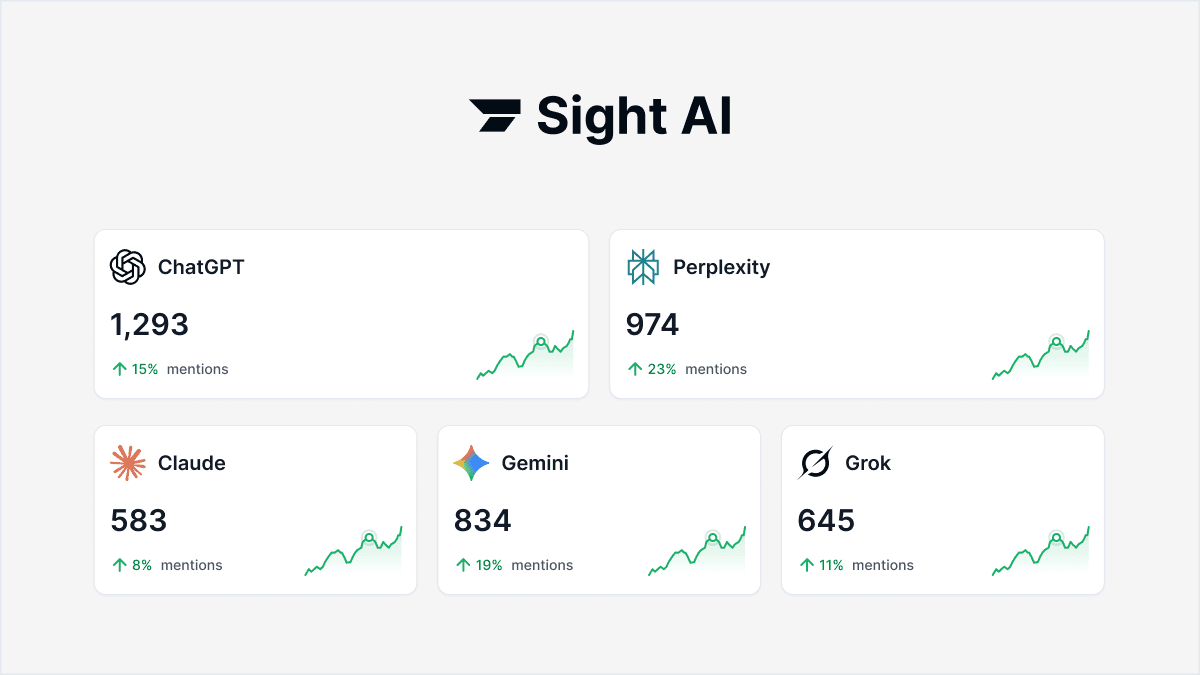
AI visibility reporting creates systematic frameworks for tracking brand mentions across major AI platforms, documenting mention frequency, context, sentiment, and competitive positioning. This transforms AI optimization from a vague initiative into a measurable service with clear performance indicators.
The reporting approach tracks several key dimensions: mention frequency across different query categories, sentiment analysis of how brands are described, competitive share of voice compared to rivals, and trend analysis showing improvement over time. Agencies using AI content optimizer platforms can often automate much of this tracking and reporting process.
Effective reporting doesn't just show numbers—it connects AI visibility improvements to business outcomes. When mention frequency increases in product recommendation queries, that correlates with discovery opportunities. When sentiment improves, that reflects better brand positioning in AI responses.
Implementation Steps
1. Establish baseline AI visibility metrics using the audit process from Strategy 1, creating benchmark data for mention frequency, sentiment, and competitive positioning across relevant query categories.
2. Implement monthly tracking using standardized prompt sets that you test consistently across AI platforms, documenting changes in mention patterns, new query categories where the brand appears, and shifts in competitive dynamics.
3. Create client-facing reports that present AI visibility trends alongside traditional SEO metrics, showing the complete picture of organic discovery across both search paradigms and connecting visibility improvements to your optimization initiatives.
Pro Tips
Segment reporting by query intent categories—product recommendations, educational queries, comparison searches—to show where optimization efforts are working best. Include qualitative examples of improved mentions alongside quantitative metrics, giving clients concrete evidence of better AI positioning. Use trend graphs that show improvement trajectories rather than just point-in-time snapshots, demonstrating consistent progress over time.
Putting These Strategies Into Action
AI content optimization for agencies isn't about replacing your existing SEO services—it's about evolving them for how discovery actually works in 2026. The agencies winning new retainers and expanding existing relationships are those demonstrating measurable results across both traditional search and AI-powered platforms.
Start by establishing visibility baselines for your highest-value clients using Strategy 1. This creates immediate insights you can present in client meetings, showing exactly where visibility gaps exist and building urgency for optimization initiatives. The baseline data also provides the foundation for all future reporting and ROI demonstrations.
Next, systematically implement content structuring and clustering strategies across client accounts. Focus on one topic cluster at a time rather than spreading efforts thin across multiple domains. Build comprehensive authority in specific areas before expanding, using the patterns that work to create repeatable processes you can scale.
Prioritize rapid indexing workflows early in your implementation. The speed advantages compound over time—every piece of content that indexes faster begins building visibility signals sooner. This creates momentum that accelerates all your other optimization efforts.
Build reporting frameworks that demonstrate clear AI visibility improvements alongside traditional metrics. Clients need to see concrete evidence that optimization investments produce measurable results. When you can show increasing mention frequency, improving sentiment, and growing share of voice across AI platforms, you transform AI optimization from an experimental service into a core offering with proven ROI.
The agencies that integrate these seven strategies into their service offerings will capture the growing demand from brands seeking visibility across both traditional search and AI-powered discovery platforms. Start tracking your AI visibility today and see exactly where your brand appears across top AI platforms—because you can't optimize what you can't measure.