Your agency just signed three new clients. Great news, right? Except now your content team is drowning in editorial calendars, your project manager is juggling twelve different approval workflows, and you're spending more time on client reporting than actual strategy. Sound familiar?
This is the scaling paradox agencies face: growth creates operational chaos. Manual content workflows that worked for five clients collapse under fifteen. Quality becomes inconsistent when you're rushing to meet deadlines. And those beautiful content strategies you pitched? They're gathering dust while your team fights fires.
The bottleneck isn't talent or strategy—it's the manual processes that consume your team's bandwidth. Keyword research that takes hours per client. Editorial meetings that eat entire afternoons. First drafts that require multiple rounds of revisions. Client reports built from scratch each month.
Here's what's changed: content marketing automation has evolved far beyond scheduling tools. We're talking intelligent workflows that handle research, generate optimized drafts, manage multi-client operations, and track performance across traditional search and AI platforms. The agencies scaling profitably in 2026 aren't working harder—they're automating the repetitive work that used to require manual effort.
The seven strategies below address specific operational pain points that prevent agencies from growing without proportionally expanding headcount. Each one tackles a distinct bottleneck in your content workflow, from ideation through performance tracking.
1. AI-Powered Content Ideation Pipelines
The Challenge It Solves
Your strategists spend hours each week researching keywords, analyzing competitor content, and identifying topic opportunities for each client. Multiply that across your entire portfolio, and you're looking at days of manual research every month. This research bottleneck prevents your team from focusing on higher-value strategy work and creative execution.
The Strategy Explained
Build automated research pipelines that continuously monitor keyword opportunities, competitor content gaps, and trending topics across your client base. These systems pull data from search trends, competitor analysis tools, and industry signals to surface content opportunities without manual research sessions.
The key is setting up client-specific parameters once, then letting the system run continuously. Instead of starting from scratch each planning cycle, your team reviews curated opportunity lists that update automatically based on real-time search data and competitive intelligence.
Implementation Steps
1. Define content parameters for each client: target keywords, competitor domains, industry topics, and search intent categories they want to dominate.
2. Configure automated monitoring that tracks keyword rankings, identifies content gaps where competitors rank but your client doesn't, and surfaces emerging topics gaining search volume.
3. Set up weekly digests that deliver prioritized content opportunities to your strategy team, pre-filtered by search volume, competition level, and alignment with client goals.
Pro Tips
Focus your automation on the research grunt work, not the strategic decisions. The system should surface opportunities—your team still decides which ones align with client positioning and campaign goals. This keeps the creative strategy human while eliminating hours of manual data gathering.
2. Multi-Client Editorial Calendars with Smart Scheduling
The Challenge It Solves
Managing editorial calendars across multiple clients means constant context switching, missed deadlines, and approval bottlenecks. Your team wastes time manually tracking who needs to review what, when drafts are due, and which clients are waiting on approvals. The coordination overhead grows exponentially with each new client.
The Strategy Explained
Centralize all client content workflows into a single system with automated triggers that move content through your production pipeline. When a brief is approved, the system automatically assigns it to writers. When a draft is submitted, it notifies the right reviewers. When edits are complete, it queues content for publication based on each client's optimal posting schedule.
This isn't just a shared calendar—it's an intelligent workflow engine that understands dependencies, deadlines, and approval hierarchies across your entire agency operation.
Implementation Steps
1. Map your current content production workflow: brief creation, research, drafting, internal review, client approval, optimization, and publication for each client type.
2. Build workflow templates that automate transitions between stages, with automatic notifications to the right team members when their input is needed.
3. Configure client-specific rules for approval processes, publication frequency, and content types so the system handles routine scheduling decisions automatically.
Pro Tips
Build in buffer time for client approvals—many agencies underestimate how long clients take to review content. Set automated reminders that escalate if approvals are pending beyond your timeline, keeping projects moving without manual follow-up from your project managers.
3. AI Writing Agents for First-Draft Generation
The Challenge It Solves
First drafts are time-intensive, especially when you're producing content across diverse industries and formats. Your writers spend hours researching topics, structuring articles, and creating initial drafts that still require significant editing. This limits how much content your team can produce without adding headcount.
The Strategy Explained
Deploy AI writing systems with specialized agents trained for different content types—one for how-to guides, another for listicles, another for thought leadership. These agents generate research-backed first drafts that follow your agency's style guidelines and SEO requirements, giving your writers a solid foundation to refine rather than starting from blank pages.
The efficiency gain isn't about replacing writers—it's about shifting their time from initial research and drafting to strategic editing, adding unique insights, and elevating quality. Your team transforms from draft creators to content architects.
Implementation Steps
1. Identify the content formats you produce most frequently across clients and configure AI agents for each type with format-specific templates and quality standards.
2. Feed each agent with client-specific context: brand voice guidelines, industry terminology, target audience details, and approved messaging frameworks.
3. Establish a review process where writers receive AI-generated drafts, verify accuracy, add proprietary insights, and polish the content to meet your quality bar before client review.
Pro Tips
Treat AI drafts as research assistants, not finished products. Your writers should always verify claims, add original examples, and inject the strategic thinking that differentiates your agency's content. The automation handles structure and initial research—human expertise delivers the value clients pay for.
4. Automated SEO Optimization Before Publication
The Challenge It Solves
Manual SEO optimization is tedious and error-prone. Your team checks keyword placement, adds internal links, optimizes meta descriptions, and implements schema markup for every piece of content. These technical tasks consume hours that could be spent on strategy, and inconsistent execution means some content publishes without full optimization.
The Strategy Explained
Implement pre-publication systems that automatically score content against SEO best practices, suggest internal linking opportunities based on your client's existing content, and flag optimization issues before content goes live. These systems analyze readability, keyword usage, heading structure, and technical SEO elements, ensuring every piece meets optimization standards without manual checklists.
The automation identifies opportunities your team might miss—relevant internal links across hundreds of published articles, schema markup opportunities, or keyword variations that strengthen topical authority.
Implementation Steps
1. Configure SEO scoring systems that evaluate content against your agency's optimization checklist: target keyword usage, heading hierarchy, meta descriptions, image alt text, and readability metrics.
2. Build automated internal linking workflows that scan client content libraries to suggest relevant connections, helping distribute link equity and improve site architecture without manual link audits.
3. Set up schema markup templates for common content types so the system automatically generates appropriate structured data based on content format and topic.
Pro Tips
Use automation to enforce consistency, not to replace strategic SEO thinking. The system should catch technical oversights and suggest optimizations, but your SEO team still makes strategic decisions about keyword targeting, content structure, and how pieces fit into broader topical authority plans.
5. Automated Content Indexing and Distribution
The Challenge It Solves
Content sits in indexing limbo after publication, sometimes taking days or weeks before search engines discover and index it. This delay frustrates clients who want to see quick results and makes it harder to demonstrate the value of your content work. Manual submission processes are time-consuming and often forgotten in busy production schedules.
The Strategy Explained
Integrate IndexNow protocols that instantly notify search engines when new content publishes or existing content updates. The moment an article goes live, automated systems ping Google, Bing, and other search engines, dramatically reducing the time between publication and indexing. This is particularly valuable for time-sensitive content, news-related articles, or when clients need to see rapid performance improvements.
Beyond indexing, extend automation to content distribution workflows that share published content across relevant channels based on predefined rules for each client.
Implementation Steps
1. Implement IndexNow integration that automatically submits URLs to search engines immediately upon publication, with automatic sitemap updates to ensure search engines have current site structure information.
2. Configure automated distribution rules that determine which content gets shared where based on topic, format, and client preferences—some articles go to social channels, others to email newsletters, others to industry platforms.
3. Set up monitoring that tracks indexing status and alerts your team if content isn't indexed within expected timeframes, allowing quick troubleshooting of any technical issues.
Pro Tips
Faster indexing is especially valuable when you're trying to capture trending topics or seasonal opportunities. The quicker your content gets indexed, the sooner it can start ranking and driving results that justify your client's content investment.
6. Client-Facing Performance Dashboards
The Challenge It Solves
Building monthly reports for each client consumes hours of analyst time pulling data from multiple platforms, creating visualizations, and formatting presentations. The manual reporting process is expensive, delays insights, and limits how frequently you can share performance updates with clients. Many agencies spend more time reporting results than analyzing them.
The Strategy Explained
Create automated dashboards that pull real-time performance data across all relevant metrics: organic traffic, keyword rankings, content engagement, conversion attribution, and visibility across both traditional search and AI platforms. Clients access these dashboards anytime to see current performance without waiting for monthly reports.
The key is configuring dashboards that tell the story your clients care about—not just data dumps, but curated views that highlight progress toward their specific goals with context that explains performance trends.
Implementation Steps
1. Identify the core metrics each client type cares about most and build dashboard templates that prioritize those KPIs with clear visualization and trend analysis.
2. Connect data sources automatically so dashboards update in real-time as new performance data becomes available from analytics platforms, ranking trackers, and content management systems.
3. Configure automated insights that flag significant changes—traffic spikes, ranking improvements, or concerning trends—so clients see not just numbers but interpretation of what's happening and why.
Pro Tips
Automated dashboards don't replace strategic reporting—they supplement it. Use them for ongoing performance visibility, freeing your team to focus quarterly business reviews on strategic insights, competitive analysis, and forward-looking recommendations rather than recapping basic metrics.
7. AI Search Visibility Monitoring
The Challenge It Solves
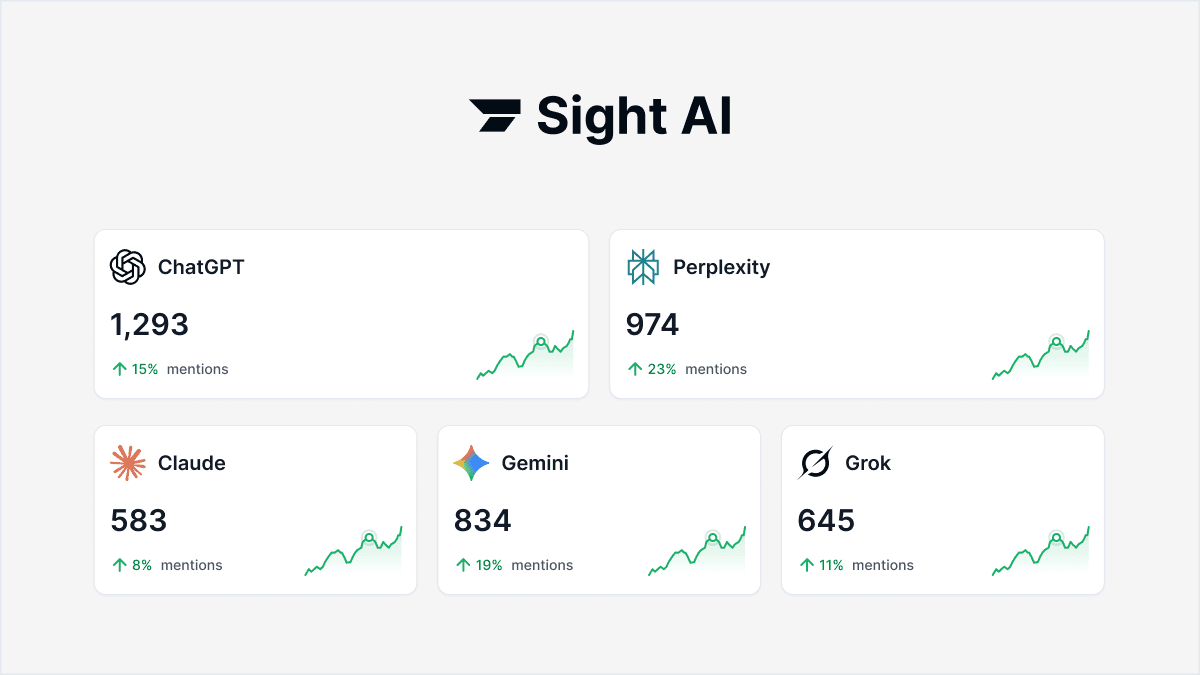
Your clients are asking about their presence in AI-generated responses, but traditional SEO tools don't track how ChatGPT, Claude, or Perplexity talk about their brands. This blind spot becomes a competitive disadvantage as more users shift to AI search for research and recommendations. You need visibility into an entirely new channel that's reshaping how people discover brands.
The Strategy Explained
Implement monitoring systems that track how AI models mention and describe client brands across various prompts and contexts. These tools test hundreds of relevant queries to map where clients appear in AI-generated responses, what context surrounds their mentions, and how their brand positioning compares to competitors in AI search results.
This visibility lets you optimize content specifically to improve AI search presence—a differentiator that positions your agency ahead of competitors still focused exclusively on traditional SEO.
Implementation Steps
1. Define the key topics and queries where each client wants AI visibility—industry terms, problem-solution queries, competitor comparisons, and buying intent searches relevant to their business.
2. Set up automated monitoring that regularly tests these queries across multiple AI platforms, tracking when clients get mentioned, in what context, and with what sentiment.
3. Create content strategies informed by AI visibility gaps—topics where competitors appear but your client doesn't, or areas where your client gets mentioned but with incomplete or inaccurate information.
Pro Tips
AI visibility is becoming a client expectation, not a nice-to-have. Agencies that can demonstrate they're tracking and improving client presence across both traditional search and AI platforms have a compelling competitive advantage. This is especially valuable for B2B clients whose buyers increasingly use AI tools for vendor research.
Your Implementation Roadmap
Start with content ideation automation—it delivers the highest time savings with the lowest implementation complexity. Your team will immediately feel the difference when they stop spending hours on manual keyword research and start reviewing curated opportunity lists instead.
Next, layer in AI writing agents for first-draft generation. This one-two combination of automated research and draft creation can cut content production time significantly, letting you serve more clients without proportionally expanding your writing team.
Add automated indexing third. The quick wins from faster content discovery help demonstrate value to clients while your longer-term content strategy plays out. Clients appreciate seeing their content indexed within hours instead of days.
Build toward full-stack automation by integrating client dashboards and multi-client workflow management. These systems create operational leverage that scales with your client base rather than your headcount.
The differentiator that positions you ahead of competitors? AI search visibility monitoring. Most agencies still lack tools to track how client brands appear in AI-generated responses. Being able to show clients their AI visibility score, track mentions across platforms like ChatGPT and Claude, and optimize content for AI search gives you a strategic capability your competitors can't match.
Evaluate your current workflow bottlenecks honestly. Where does your team spend time on repetitive tasks that could be automated? Which manual processes limit how many clients you can serve effectively? The agencies scaling profitably aren't avoiding automation—they're implementing it strategically to amplify their team's capabilities.
Stop guessing how AI models like ChatGPT and Claude talk about your brand—get visibility into every mention, track content opportunities, and automate your path to organic traffic growth. Start tracking your AI visibility today and see exactly where your brand appears across top AI platforms.