The content marketing landscape has fundamentally shifted. AI models like ChatGPT, Claude, and Perplexity are now primary discovery channels, and brands that don't appear in those answers are increasingly invisible to a growing segment of their audience. Traditional SEO tools weren't built for this reality.
AI-driven content marketing platforms bridge that gap. They help marketers research, create, publish, and track content optimized not just for Google, but for the AI search ecosystem emerging alongside it. The category now splits into three distinct areas: content generation, AI visibility tracking, and workflow automation. The best platforms either excel in one of these areas or, in a few cases, combine all three.
This guide covers the top platforms available in 2026, evaluated on content generation quality, AI visibility capabilities, indexing speed, and overall workflow efficiency. Whether you're a solo founder trying to scale organic traffic or an agency managing multiple clients, there's a platform here built for your use case.
1. Sight AI
Best for: Teams that need AI content creation, AI brand monitoring, and automated indexing in one platform.
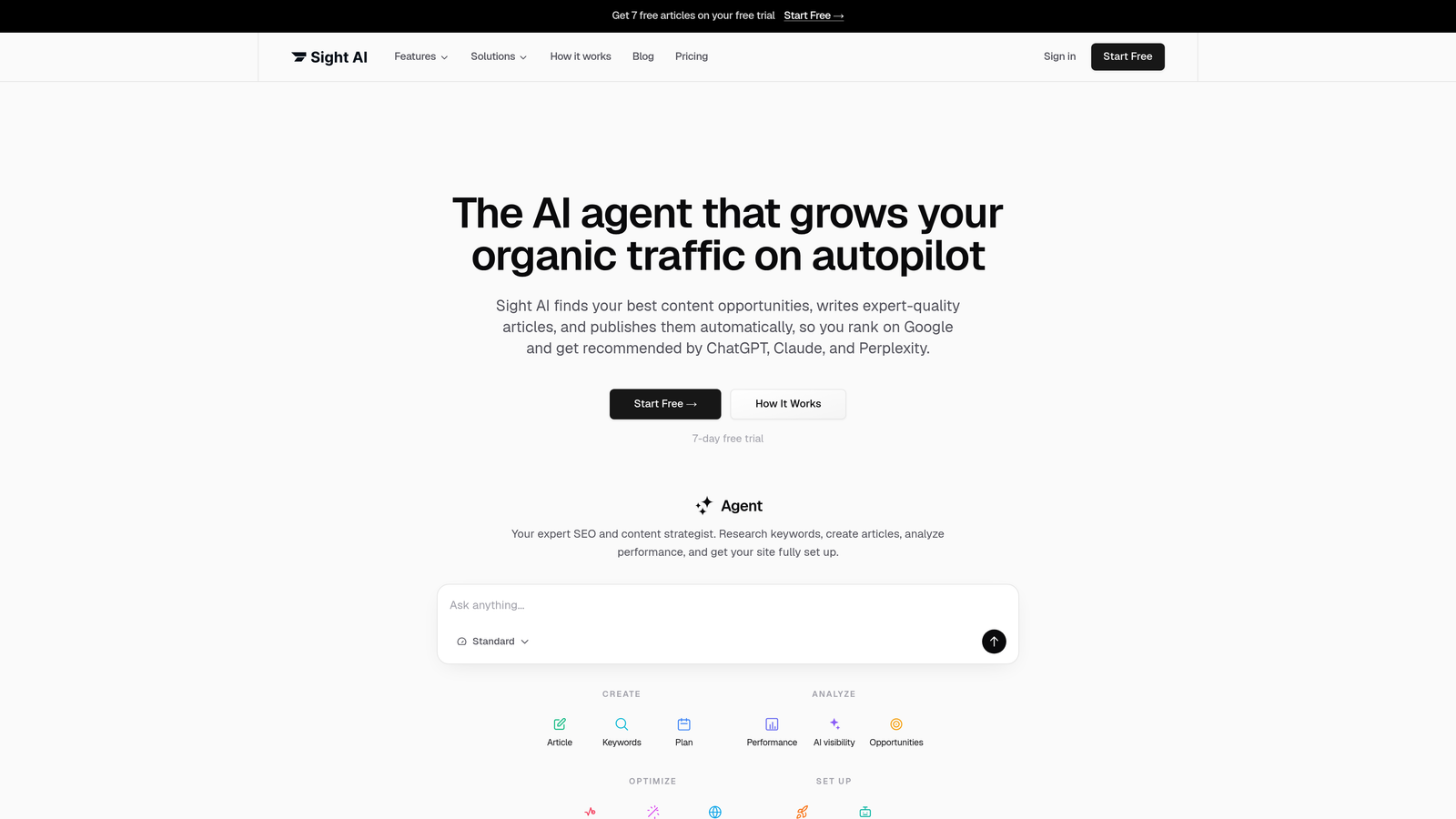
Sight AI is an all-in-one AI-driven content marketing platform combining AI visibility tracking across 6+ AI models, a 13-agent content writer for SEO and GEO-optimized articles, and automated website indexing with IndexNow integration.
Where This Tool Shines
Most platforms in this category do one thing well. Sight AI is the exception. It tracks how AI models like ChatGPT, Claude, and Perplexity talk about your brand, generates the content needed to improve those mentions, and then automatically indexes that content for faster discovery. That closed-loop workflow is genuinely rare.
The AI Visibility Score is a standout feature. Rather than simply flagging whether your brand appears in an AI response, it layers in sentiment analysis and prompt-level tracking so you understand not just if you're being mentioned, but how and in what context. For marketers focused on generative engine optimization, that level of granularity changes the strategy entirely.
Key Features
AI Visibility Score: Tracks brand mentions and sentiment across ChatGPT, Claude, Perplexity, and 3+ additional AI platforms in one unified dashboard.
Prompt Tracking: Reveals exactly which user queries surface your brand in AI-generated responses, enabling precise GEO strategy.
13+ Specialized AI Agents: Dedicated agents for listicles, guides, explainers, and other content formats, each tuned for SEO and GEO optimization.
Autopilot Mode: Handles content creation and publishing with minimal manual input, freeing up team bandwidth for higher-level strategy.
IndexNow Integration: Automatically notifies search engines of new content for faster indexing and quicker organic traffic gains.
CMS Auto-Publishing: Streamlines the final step of content operations by pushing finished content directly to your CMS.
Best For
Sight AI is built for marketers, founders, and agencies who want a single platform to cover content creation, AI brand monitoring, and indexing. It's particularly well-suited for teams that have already recognized AI search as a critical channel and need to act on it systematically rather than reactively.
Pricing
Visit trysight.ai for current pricing details and free trial availability. Plans are designed to scale with team size and content volume.
2. Writesonic
Best for: High-volume content production teams needing broad format coverage with built-in SEO optimization.
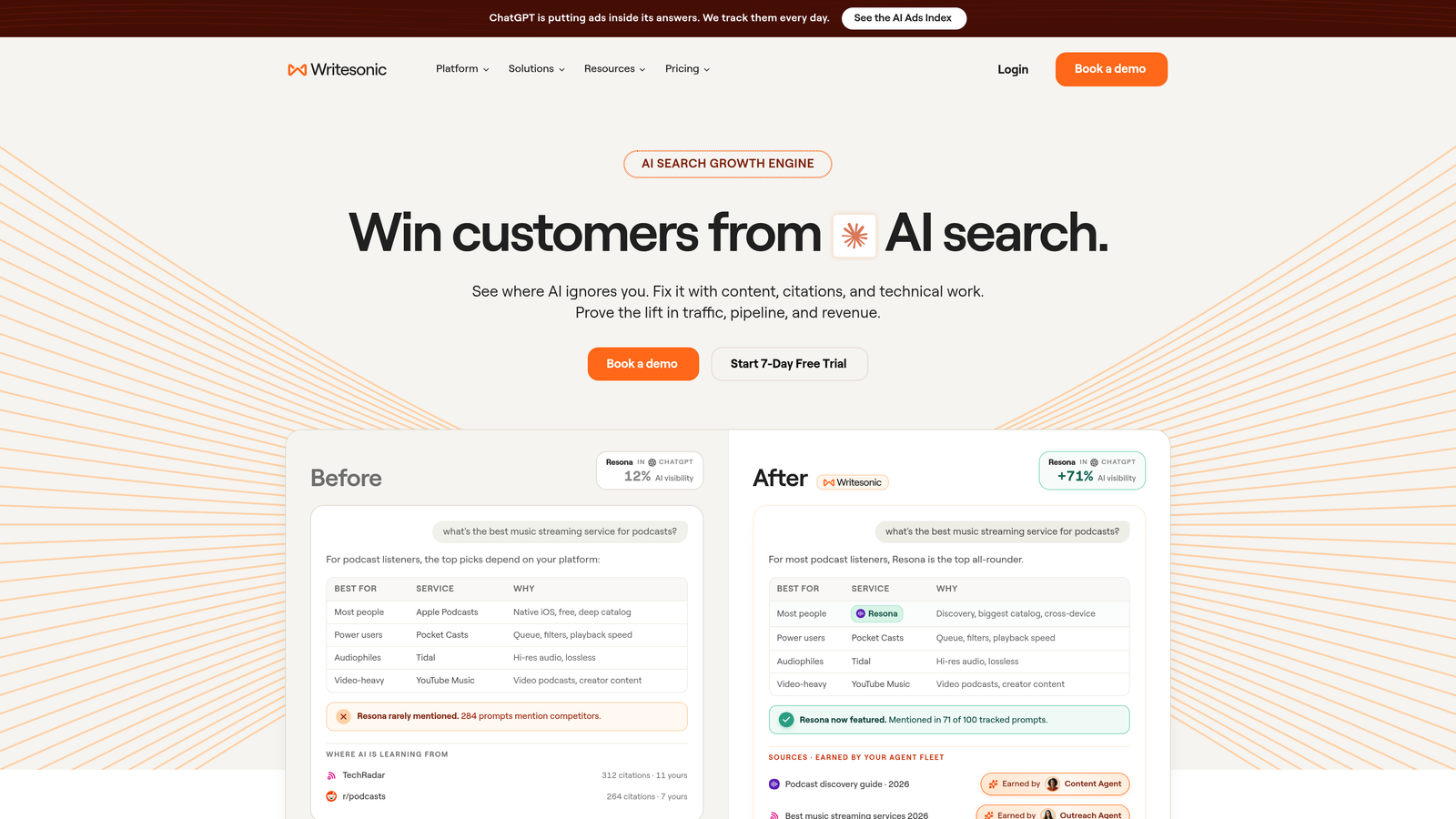
Writesonic is an established AI content generation platform covering blog posts, ads, landing pages, and social copy with keyword-optimized output and real-time web data access.
Where This Tool Shines
Writesonic has built a strong reputation for volume and versatility. Its SEO mode is genuinely useful for teams producing long-form content at scale, helping writers incorporate target keywords without sacrificing readability. The platform covers more content formats than most competitors, making it a practical choice for marketing teams managing multiple channels simultaneously.
Chatsonic, Writesonic's AI assistant with real-time web access, addresses one of the most common frustrations with AI writing tools: outdated information. By pulling current data into outputs, it reduces the manual fact-checking burden that typically slows down high-velocity content operations.
Key Features
AI Article Writer with SEO Mode: Generates long-form, keyword-optimized blog content with built-in SEO guidance throughout the writing process.
Chatsonic: An AI assistant with real-time web access that grounds outputs in current information rather than static training data.
Multi-Format Coverage: Handles blog posts, ads, landing pages, social copy, and product descriptions from a single platform.
Brand Voice Customization: Trains the platform on your specific tone and style for consistent output across all content types.
API Access: Enables custom integrations into existing content workflows and tech stacks.
Best For
Writesonic works well for content teams and agencies focused primarily on written output volume. It's a strong fit for organizations that need to produce a high quantity of formatted, SEO-ready content across multiple channels without building custom AI infrastructure.
Pricing
Writesonic offers tiered plans based on usage and team size. Visit writesonic.com for current pricing, as plans are updated regularly.
3. AirOps
Best for: Content teams and agencies that need custom, repeatable AI workflows connected to their own data sources.
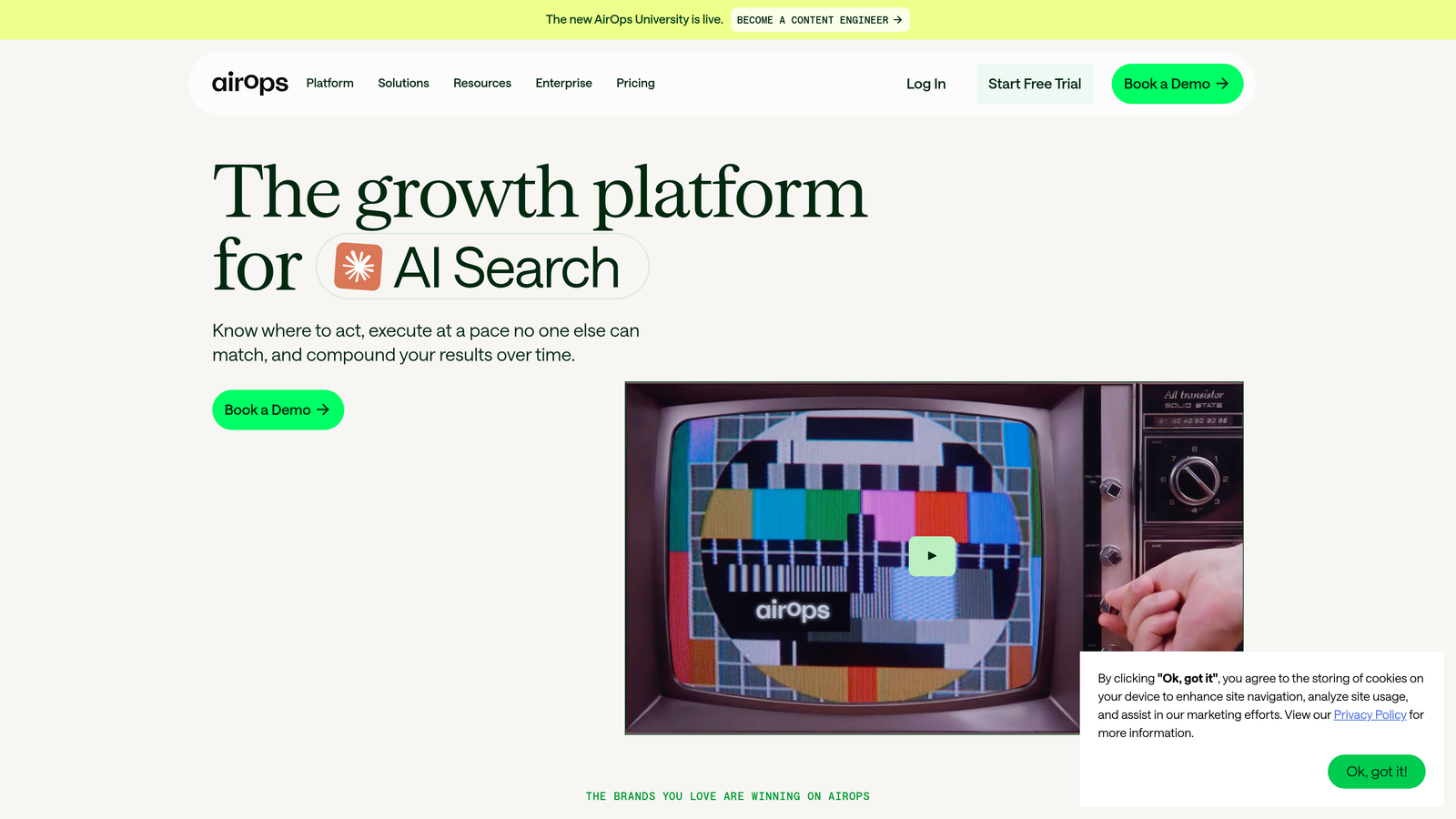
AirOps is an AI workflow automation platform that lets content teams build custom AI pipelines using multiple LLMs, connecting AI capabilities to existing data sources and content processes.
Where This Tool Shines
AirOps takes a fundamentally different approach than most content tools. Rather than offering a fixed set of AI features, it gives teams the infrastructure to build exactly the AI workflows they need. For agencies with complex, repeatable content operations, this flexibility is a significant advantage. You can orchestrate multiple LLMs within a single pipeline, pulling in proprietary data to ground outputs in your specific context.
The platform is particularly powerful for teams that have already defined their content processes and want to automate them intelligently. If your workflow involves multiple steps, multiple data sources, and multiple team members, AirOps provides the connective tissue to make AI a native part of that process rather than a separate tool you switch to manually.
Key Features
Custom AI Workflow Builder: Design and automate repeatable content production pipelines tailored to your team's specific processes.
Multi-LLM Support: Connect and orchestrate different AI models within a single workflow, choosing the best model for each task.
Data Source Integrations: Ground AI outputs in proprietary or real-time data by connecting your existing data infrastructure.
Template Library: Pre-built workflow templates for common content operations use cases to accelerate setup.
Collaboration Features: Team-based workflow management so multiple contributors can build, review, and iterate on AI pipelines together.
Best For
AirOps is best suited for agencies and enterprise content teams with established, complex workflows that need AI automation layered in. It rewards teams willing to invest time in workflow design upfront, delivering significant efficiency gains once pipelines are running.
Pricing
Visit airops.com for current plan details and pricing tiers based on workflow usage and team size.
4. Profound
Best for: Brands that need dedicated analytics for tracking visibility across AI-generated search responses.
Profound is an AI answer engine optimization analytics platform focused on tracking and improving how brands appear in AI-generated search responses across major AI platforms.

Where This Tool Shines
Profound is purpose-built for a problem that traditional analytics tools simply weren't designed to solve: understanding how your brand is represented inside AI-generated answers. As AI search surfaces increasingly influence purchase decisions and brand perception, having dedicated visibility into those responses becomes a strategic priority rather than a nice-to-have.
The platform's content gap identification is particularly useful. By analyzing what AI models say in response to queries relevant to your industry, Profound surfaces the topics and angles your content isn't covering, giving you a clear roadmap for what to create next.
Key Features
AI Answer Engine Monitoring: Tracks brand presence across major LLM-powered search surfaces to give a clear picture of AI visibility.
Brand Visibility Analytics: Analytics built specifically around AI-generated responses rather than traditional SERP metrics.
Content Gap Identification: Surfaces topics and angles your brand is missing based on what AI models are actually saying in relevant queries.
Reporting Dashboards: Tracks AI visibility trends over time so teams can measure the impact of content and optimization efforts.
Competitive Benchmarking: Compares your brand's AI search presence against competitors to identify relative strengths and weaknesses.
Best For
Profound suits marketing teams and agencies that have made AI search visibility a core KPI and need dedicated analytics to track progress. It's a strong fit for brands in competitive categories where AI-generated answers heavily influence consideration.
Pricing
Visit profound.co for current pricing and plan options tailored to team size and monitoring volume.
5. Peec
Best for: Teams focused on competitive share of voice analysis within AI-generated search responses.
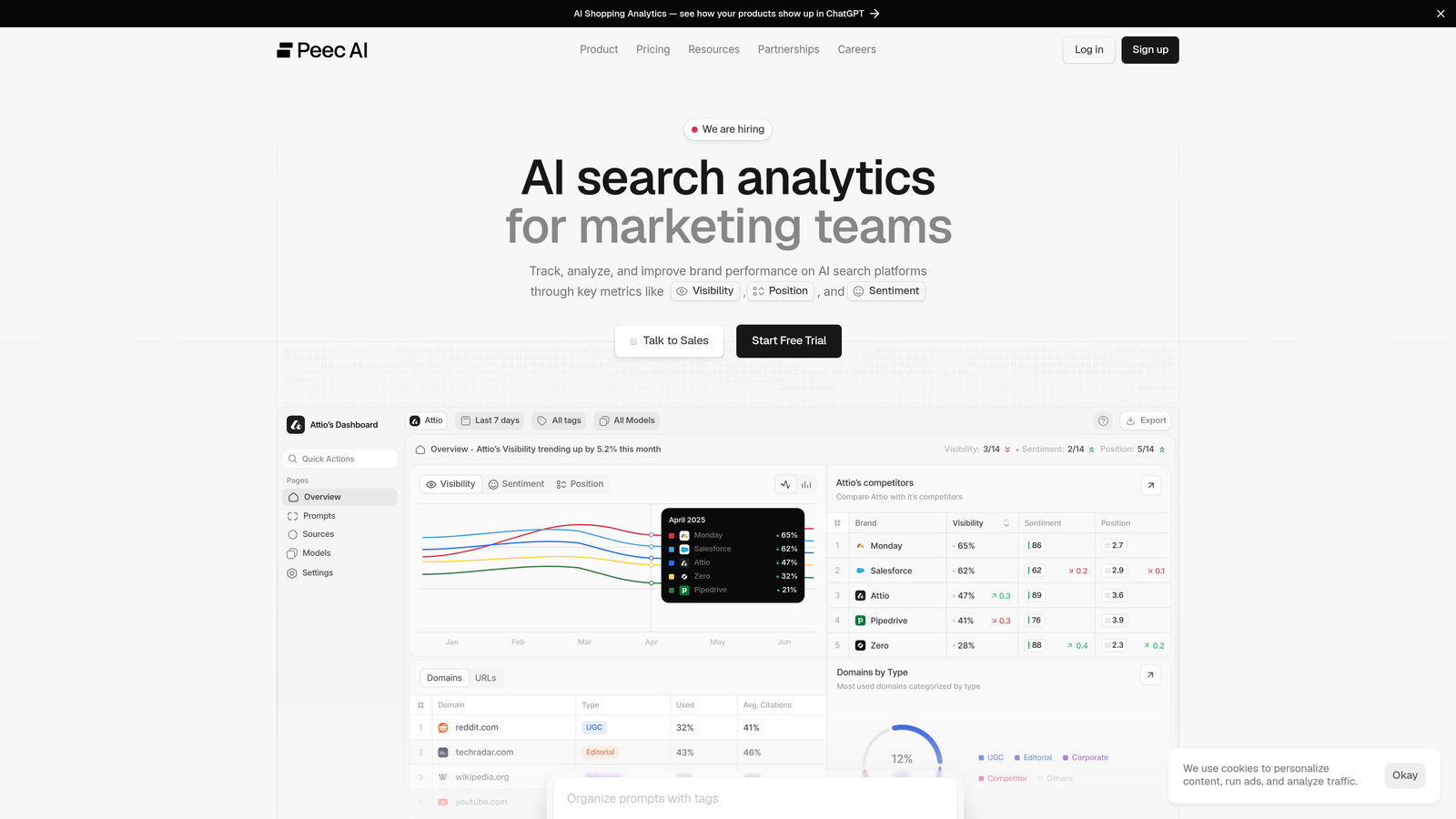
Peec is an AI search visibility and competitive benchmarking tool that monitors brand positioning within AI-generated answers and tracks share of voice against competitors.
Where This Tool Shines
Peec's primary strength is competitive context. While other AI visibility tools focus on your brand's absolute presence in AI responses, Peec frames that data relative to your competitors. Share of voice in AI-generated answers is a genuinely new metric, and understanding how your positioning compares to others in your category provides the kind of strategic clarity that raw visibility numbers alone don't offer.
The trend tracking over time is also valuable. AI models update their training data and response patterns, meaning your visibility in AI answers isn't static. Peec surfaces those shifts so teams can respond quickly when competitive dynamics change.
Key Features
AI Search Brand Monitoring: Tracks brand presence across generative answer engines to give a consistent view of AI search visibility.
Competitive Share of Voice Analysis: Benchmarks your brand's AI search presence against named competitors within the same response context.
Visibility Trend Tracking: Monitors changes in AI search positioning over time across multiple platforms.
Keyword and Topic Tracking: Identifies which topics and queries your brand is winning or losing in AI-generated responses.
Actionable Insights: Translates visibility data into specific recommendations for improving AI search positioning.
Best For
Peec works well for brands in competitive categories where understanding relative AI search positioning matters as much as absolute visibility. It's particularly useful for teams that present competitive intelligence to stakeholders and need clear, visual share of voice data.
Pricing
Visit peec.ai for current pricing details and available plan tiers.
6. Promptwatch
Best for: GEO strategists who need prompt-level precision in understanding which queries surface their brand in AI responses.
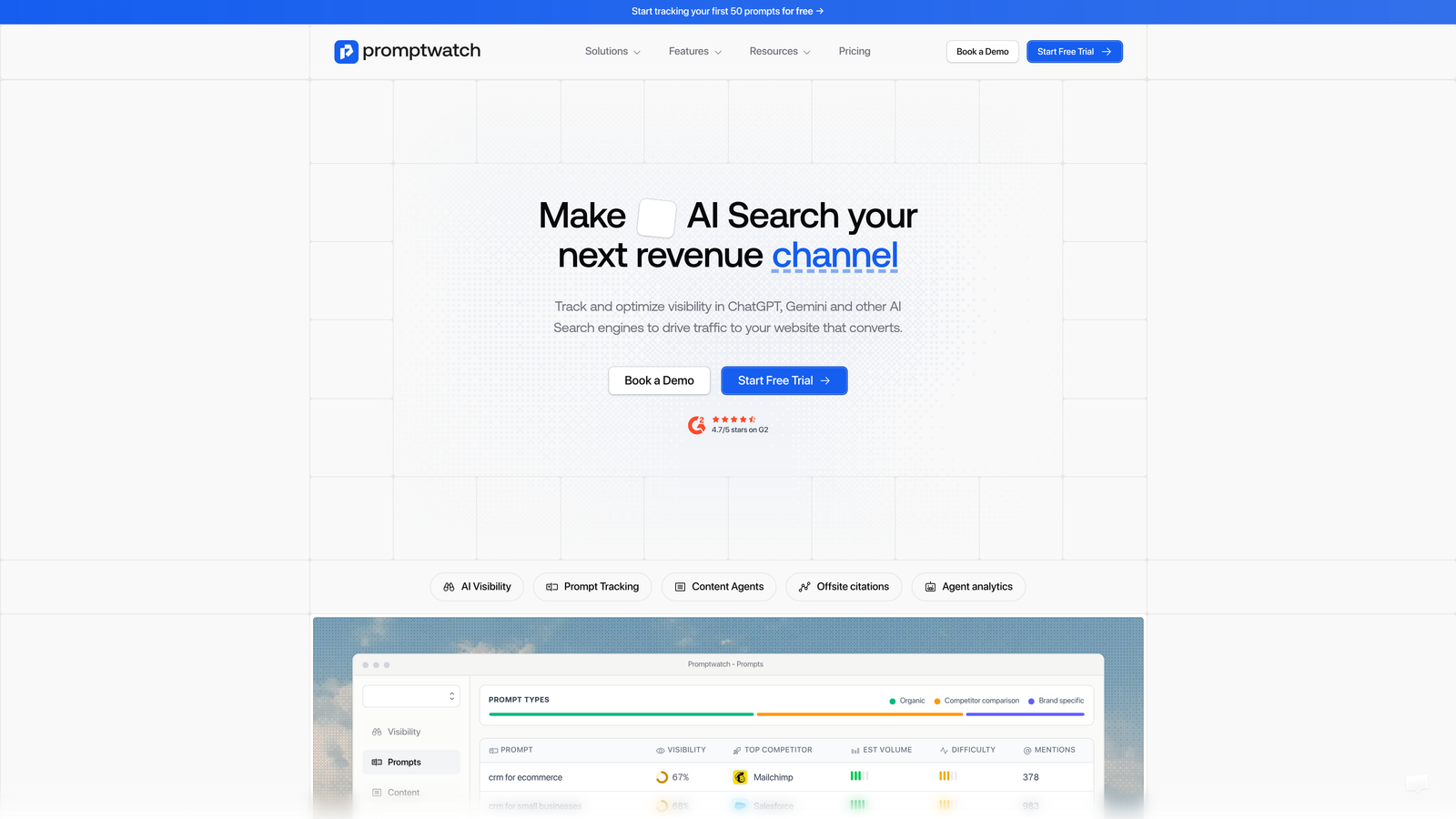
Promptwatch is a prompt-level AI search tracking tool that reveals exactly which queries surface your brand in AI-generated responses, enabling precise generative engine optimization strategy.
Where This Tool Shines
Promptwatch goes deeper than most AI visibility tools by operating at the prompt level. Rather than telling you that your brand appears in AI responses generally, it shows you the specific queries that trigger those mentions. That granularity is the difference between knowing you have AI visibility and knowing how to replicate and expand it.
The response analysis capability adds another layer of value. Understanding not just when your brand is mentioned, but how AI models describe your brand in context, surfaces nuances in brand perception that no other metric captures. For teams building a deliberate GEO strategy, this is foundational data.
Key Features
Prompt-Level Tracking: Identifies the specific user queries that trigger AI mentions of your brand, not just aggregate visibility data.
Response Analysis: Examines how AI models describe your brand in context to surface perception insights and messaging gaps.
GEO Strategy Insights: Translates prompt performance data into actionable recommendations for generative engine optimization.
Multi-Platform Monitoring: Tracks prompt performance across multiple AI platforms and query types for comprehensive coverage.
Change Alerts: Notifies teams when AI models shift how they respond to tracked prompts, enabling rapid strategic response.
Best For
Promptwatch is built for SEO and content strategists who are serious about GEO and want the most granular possible view of how AI search surfaces their brand. It rewards teams willing to act on detailed prompt data rather than high-level visibility summaries.
Pricing
Visit promptwatch.io for current pricing and plan options.
Which Platform Is Right for You
The right platform depends entirely on where your biggest gap is. Here's a quick framework to cut through the decision.
If your primary need is high-volume content production across multiple formats, Writesonic delivers the breadth and SEO tooling to support that workflow efficiently. If you're running complex, repeatable content operations across a large team or multiple clients, AirOps gives you the workflow automation infrastructure to scale without adding headcount.
For teams focused specifically on AI search visibility analytics, Profound, Peec, and Promptwatch each offer specialized capabilities worth evaluating. Profound excels at content gap identification and trend reporting. Peec is the strongest option for competitive share of voice analysis. Promptwatch goes deepest on prompt-level precision for teams building a deliberate GEO strategy.
If you want a single platform that handles all three functions — content creation, AI brand monitoring across 6+ AI models, and automated indexing — Sight AI is the only option in this list built to do all three in one place. For marketers and agencies who don't want to stitch together separate tools for content generation, AI visibility tracking, and search indexing, that consolidation has real operational value.
The AI search ecosystem is still evolving quickly. Brands that build systematic visibility across AI platforms now will have a meaningful head start as those channels continue to grow. The tools in this guide give you the infrastructure to do that, whether you're starting from scratch or adding AI search to an existing content operation.
Start tracking your AI visibility today and see exactly where your brand appears across the top AI platforms, so you can stop guessing and start optimizing with real data.