B2B SaaS companies face a content challenge that most generic AI writing tools weren't designed to solve. You need content that ranks in traditional search, earns citations in AI-generated answers from ChatGPT and Perplexity, and holds up under scrutiny from technically sophisticated buyers — all without a sprawling content team to support it.
This dual requirement, covering both traditional SEO and what's increasingly called GEO (Generative Engine Optimization), is reshaping how SaaS marketers think about their content stack. Buyers are now discovering software through AI-powered answer engines as readily as through Google, which means your content strategy needs to work in both worlds simultaneously.
The tools below were selected specifically for B2B SaaS teams: solo founders, marketing teams, and agencies managing multiple SaaS clients. Each was evaluated on content quality, AI search visibility features, workflow integration, and the ability to handle technical subject matter at scale. Here are the top AI content tools worth considering for your stack.
1. Sight AI
Best for: B2B SaaS teams that want to track AI visibility and create content to improve it, all in one place.
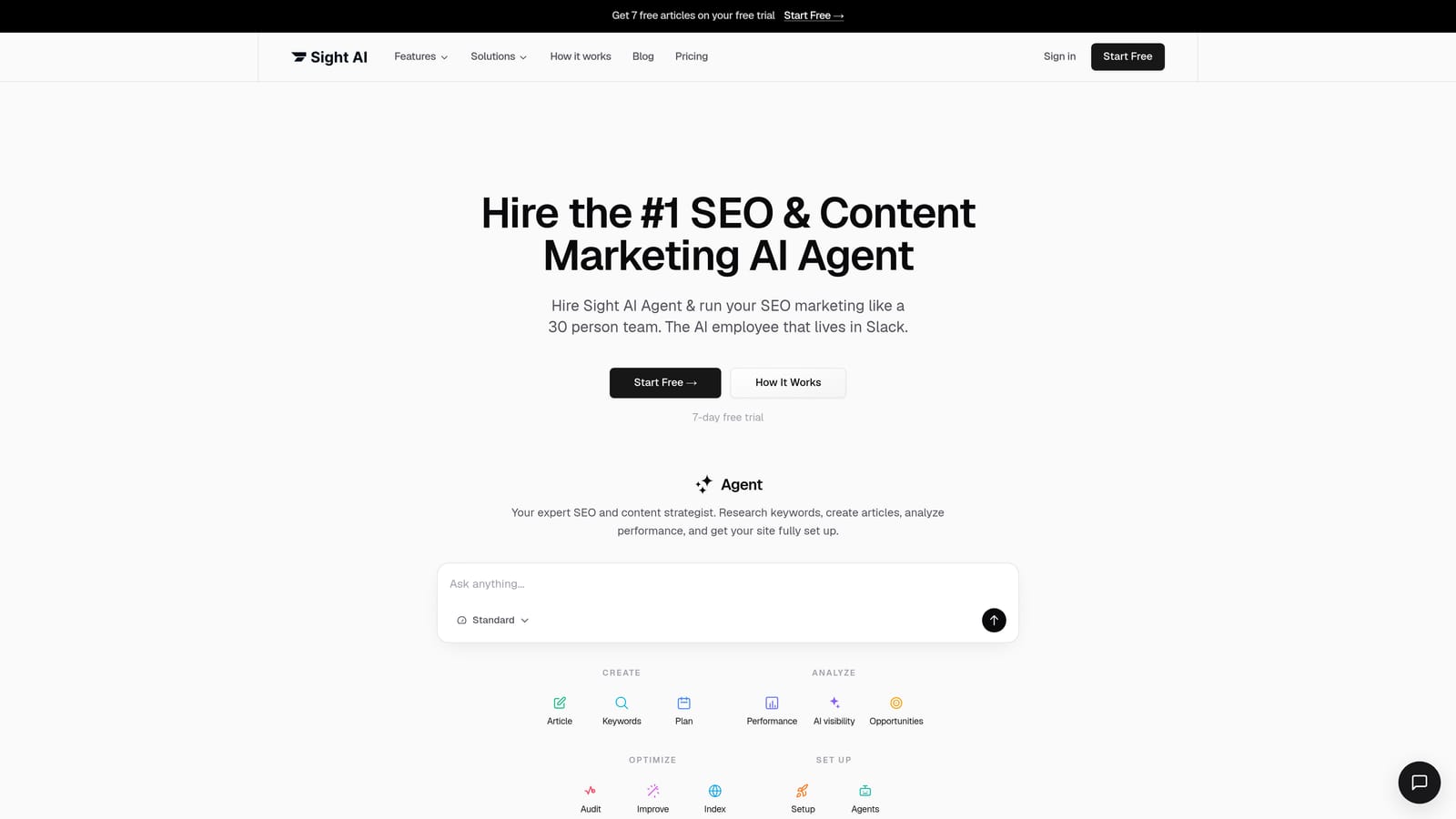
Sight AI is an all-in-one platform combining AI content generation, AI visibility tracking across 6+ AI platforms, and automated website indexing.
Where This Tool Shines
Most AI content tools help you create content. Sight AI helps you understand why you need specific content in the first place. By monitoring how AI models like ChatGPT, Claude, and Perplexity actually talk about your brand, it surfaces the exact gaps your content needs to fill, then gives you the tools to fill them.
This closed-loop approach is particularly valuable for B2B SaaS teams where content decisions need to be tied to measurable outcomes. Rather than publishing and hoping, you can track AI visibility trends over time and see how content investments move the needle on brand mentions and sentiment across AI platforms.
Key Features
AI Visibility Score: Monitors brand mentions across ChatGPT, Claude, Perplexity, and three or more additional AI platforms, with sentiment analysis built in so you understand not just frequency but tone.
Prompt Tracking: Shows which user queries surface your brand in AI-generated answers and, critically, which ones don't, so you know where content gaps exist.
13+ Specialized AI Agents: Purpose-built agents generate SEO/GEO-optimized listicles, how-to guides, and explainers suited to technical B2B audiences, not generic blog filler.
Autopilot Mode: Schedules and publishes content hands-off, useful for teams that need consistent output without constant manual involvement.
IndexNow Integration and CMS Auto-Publishing: Automated sitemap updates and direct CMS publishing reduce the time between content creation and search engine discovery.
Best For
SaaS marketers and founders who want a single platform to understand their AI search presence and act on it. Particularly well-suited to teams that have started asking "what is AI saying about us?" and want both the answer and a direct path to improving it.
Pricing
Visit trysight.ai for current pricing plans, as tiers and features are updated regularly.
2. Writesonic
Best for: High-volume B2B SaaS content programs that need factually grounded, SEO-optimized long-form articles at scale.
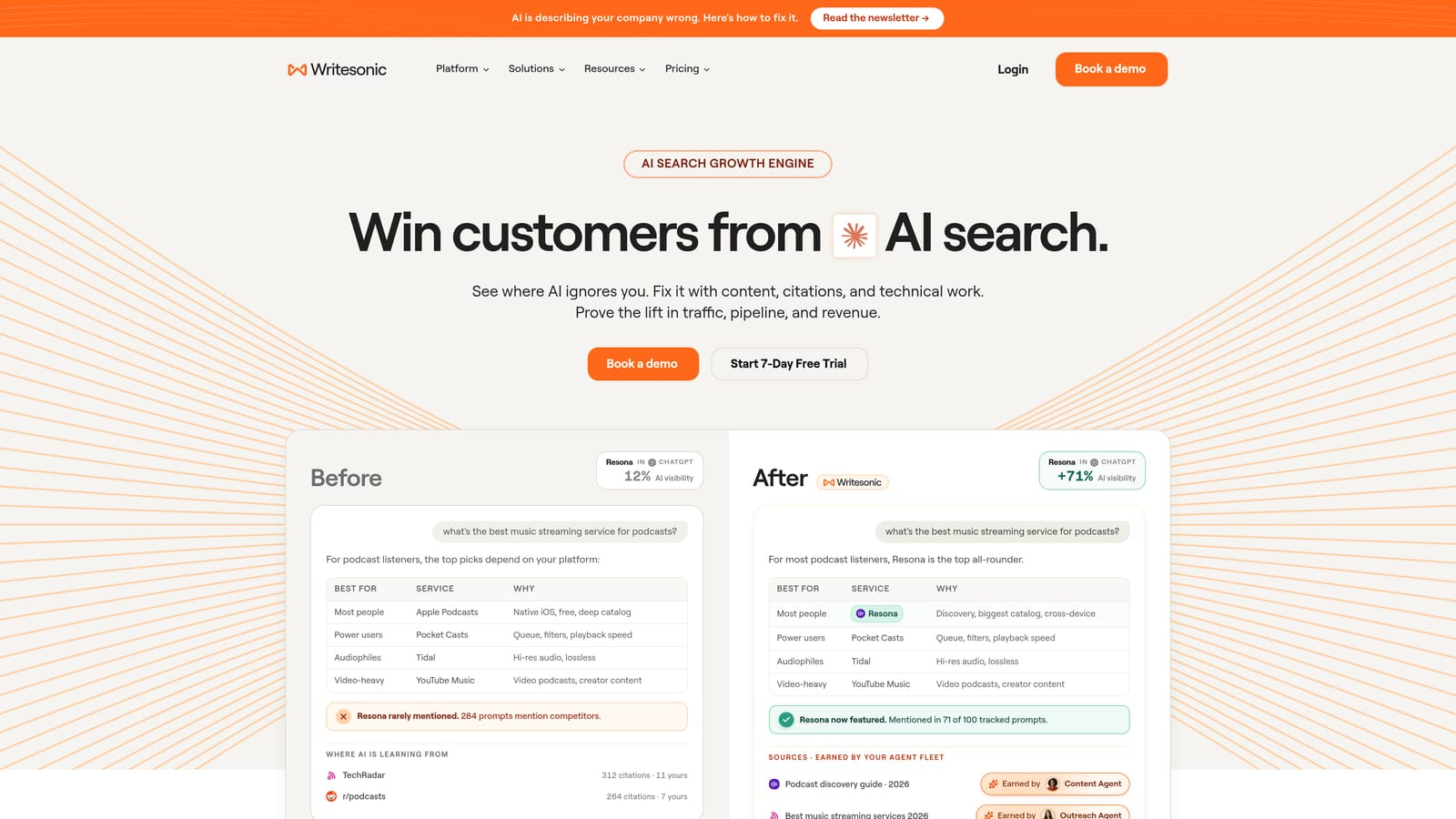
Writesonic is a versatile AI writing platform with real-time web access, SEO optimization features, and team collaboration tools built for content-heavy programs.
Where This Tool Shines
One of the persistent challenges with AI-generated B2B content is factual accuracy. Technical SaaS content requires getting details right, and hallucinated statistics or outdated information can damage credibility fast. Writesonic's Chatsonic feature addresses this by pulling real-time web data during content generation, giving writers a more reliable factual foundation to work from.
For teams running high-volume blog programs, the combination of long-form article generation, keyword targeting, and brand voice customization means you can maintain consistent output without sacrificing the messaging discipline that B2B SaaS brands typically need.
Key Features
Chatsonic with Real-Time Web Access: Reduces the risk of factual errors in technical content by grounding generation in current web data rather than static training data alone.
Long-Form Article Generation with SEO Targeting: Produces structured, keyword-optimized articles suitable for SaaS blogs and resource centers.
Brand Voice Customization: Maintains consistent tone and messaging across content types, important for SaaS brands with defined positioning.
CMS Integrations: Connects to popular publishing platforms to reduce the friction between draft and live content.
Team Workspace: Supports collaboration and review workflows for content teams working across multiple writers or stakeholders.
Best For
B2B SaaS marketing teams that need to sustain a high publishing cadence across blog content, landing pages, and thought leadership without sacrificing factual grounding or brand consistency. Also a solid option for agencies managing multiple SaaS client content programs.
Pricing
A free tier is available. Paid plans are offered at multiple levels. See writesonic.com for current pricing, as plans change frequently.
3. AirOps
Best for: SaaS teams and agencies that need custom AI content pipelines connected to internal data sources, without engineering support.
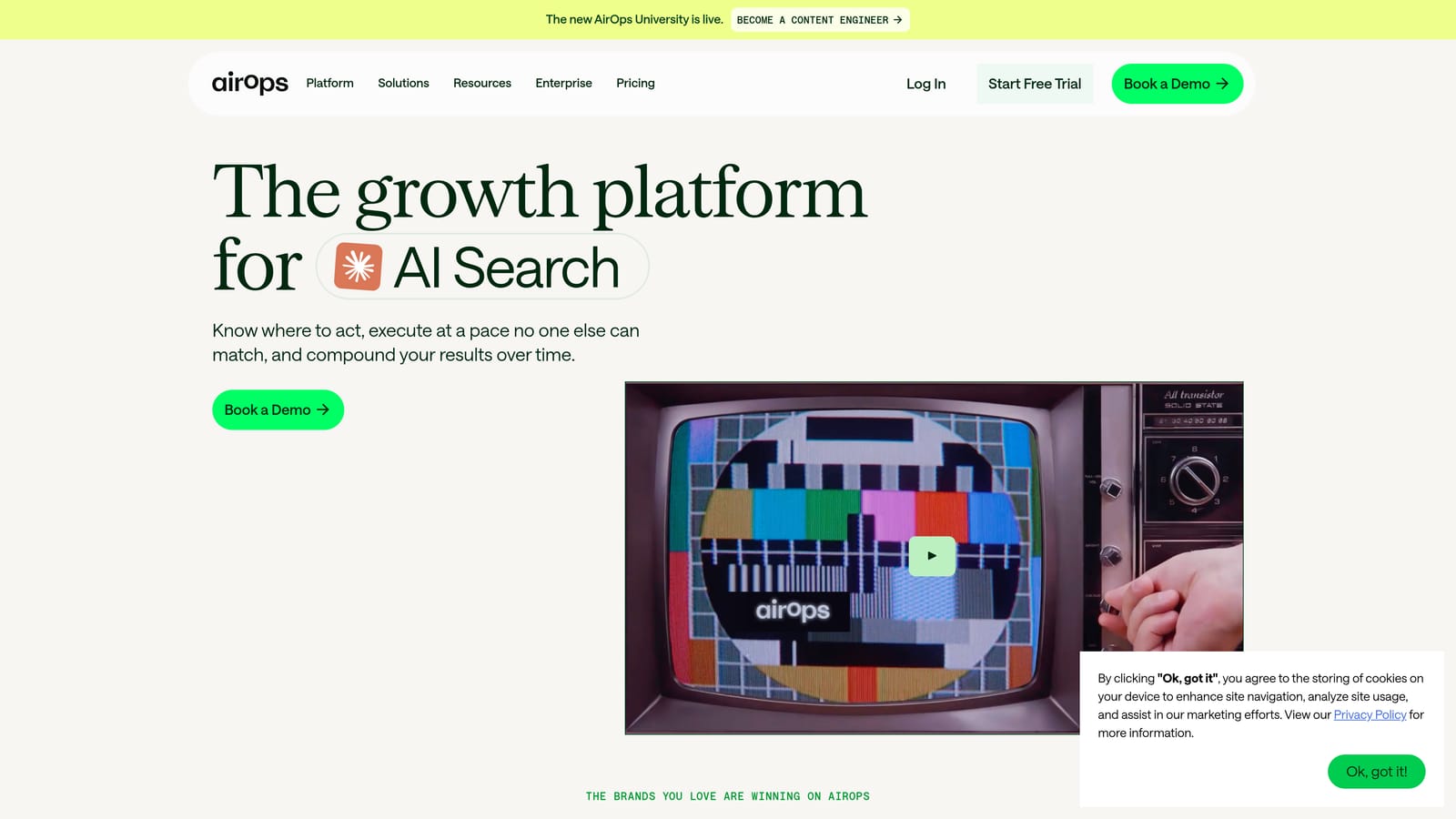
AirOps is a workflow automation platform that lets teams build multi-step AI content pipelines integrated with CRMs, product documentation, and CMS platforms.
Where This Tool Shines
Generic AI tools generate generic content. For B2B SaaS, where product nuance and technical accuracy matter, grounding AI outputs in your actual product data, customer context, and internal documentation makes a significant difference. AirOps enables this by connecting AI workflows directly to your data sources, so the content it helps produce reflects your specific product rather than a generalized description of a category.
The no-code workflow builder is a practical detail worth highlighting. Content teams shouldn't need an engineer to build a research-to-draft-to-publish pipeline. AirOps keeps that capability accessible to marketers, which matters for SaaS teams where engineering resources are typically prioritized elsewhere.
Key Features
Custom Multi-Step AI Workflows: Build complete pipelines from research through drafting, review, and publishing without stitching together separate tools manually.
Data Source Integrations: Connect CRMs, product documentation, and databases to ground AI-generated content in company-specific context rather than generic knowledge.
Broad Integration Ecosystem: Works with Notion, HubSpot, Airtable, Webflow, and other platforms commonly used in SaaS marketing stacks.
No-Code Workflow Builder: Accessible to non-technical marketers, removing the engineering dependency from workflow setup and iteration.
Agency Scalability: Supports teams managing content programs for multiple SaaS clients simultaneously, with workflow reuse across accounts.
Best For
SaaS marketing operations teams and agencies that have outgrown one-off AI writing tools and need structured, repeatable content pipelines tied to internal data. Particularly useful when content quality depends on product-specific accuracy rather than general industry knowledge.
Pricing
Usage-based and team plans are available. See airops.com for current pricing details.
4. Promptwatch
Best for: Content teams running AI workflows at scale who need governance, versioning, and optimization for their prompt libraries.
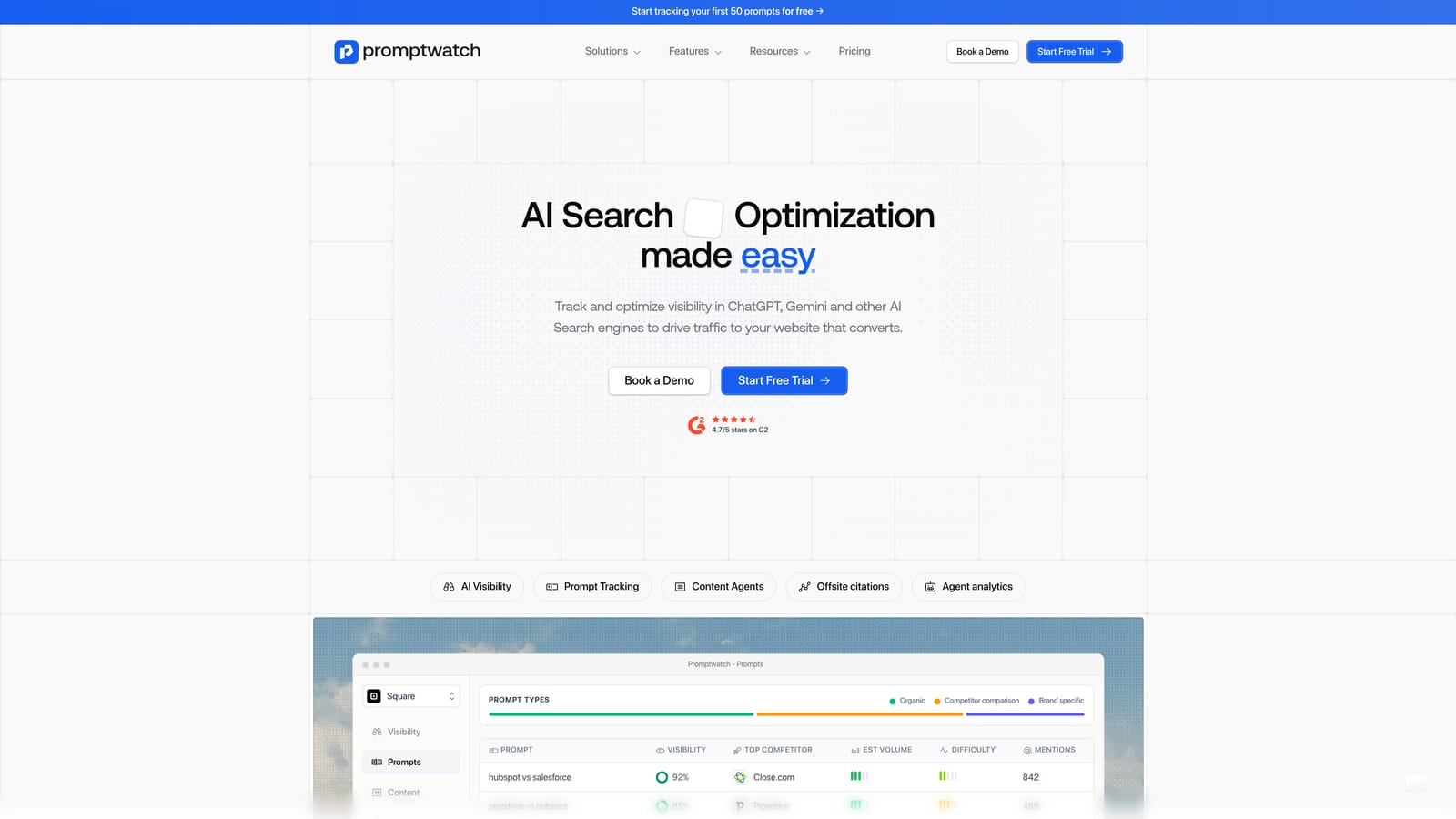
Promptwatch is a prompt management and monitoring platform that helps teams track, test, and improve the AI prompts driving their content workflows.
Where This Tool Shines
As B2B SaaS content teams build more sophisticated AI workflows, they inevitably develop proprietary prompt libraries: carefully crafted instructions for generating product-specific content, handling technical terminology, or maintaining brand voice. Without a system to manage these prompts, quality becomes inconsistent and institutional knowledge lives in someone's Notion doc or, worse, their head.
Promptwatch treats prompts as versioned assets, which is the right mental model. When a prompt stops performing well, you can roll back. When you want to test a new approach, you can run a controlled comparison. For teams where content quality depends on prompt quality, this kind of governance infrastructure pays for itself quickly.
Key Features
Prompt Versioning: Track every change to your prompts and roll back to previous versions when output quality drops.
A/B Testing Framework: Compare prompt variants systematically to identify which versions produce the highest-quality content outputs for specific use cases.
Performance Analytics: Understand which prompts consistently deliver strong results and which need refinement, based on tracked performance data.
Team Sharing and Governance: Manage shared prompt libraries across content teams with appropriate access controls and visibility.
LLM API Integrations: Connects with the major large language model APIs used in content generation pipelines, fitting into existing workflows rather than requiring a rebuild.
Best For
SaaS content teams and agencies that have invested in building AI content workflows and want to professionalize their prompt management. Most valuable when multiple team members are working from shared prompt libraries and consistency across outputs matters.
Pricing
See promptwatch.io for current plans and pricing information.
5. Profound
Best for: Demand gen and SEO teams at growth-stage SaaS companies that need to understand and improve their AI search presence.
Profound is an AI search visibility platform that tracks brand citations in AI-generated answers and surfaces content gaps where competitors are earning mentions instead of you.
Where This Tool Shines
You can't improve what you can't measure. As AI-powered answer engines become a meaningful channel for B2B software discovery, understanding where your brand appears in those answers and where it doesn't becomes a strategic priority. Profound provides that visibility layer, showing SaaS teams not just whether they're being cited but which topics are driving competitor citations that they're missing out on.
The content gap analysis is where this tool earns its place in a SaaS content stack. Rather than guessing which topics to prioritize, teams can make decisions based on actual data about where AI models are sending buyers in their category, and where they're being directed to a competitor instead.
Key Features
Brand Citation Tracking: Monitors where and how your brand appears in AI-generated answers across major AI-powered search and answer engines.
Content Gap Analysis: Identifies specific topics where competitors earn AI citations but your brand does not, giving content teams a prioritized list of opportunities.
Content Investment Recommendations: Surfaces guidance on which content types and topics are most likely to improve AI citation rates based on observed patterns.
Trend Tracking Over Time: Monitors AI visibility changes across reporting periods so teams can assess whether content investments are moving the needle.
Competitive Benchmarking: Provides context on how your AI search presence compares within your category, not just in isolation.
Best For
SEO and demand generation teams at growth-stage SaaS companies that are beginning to take AI search visibility seriously and need data to guide content strategy decisions rather than relying on intuition.
Pricing
See withprofound.com for current pricing. Verify the URL is current before visiting.
6. Peec
Best for: SaaS marketers and agencies focused on competitive AI share-of-voice and category-level positioning across multiple LLM platforms.
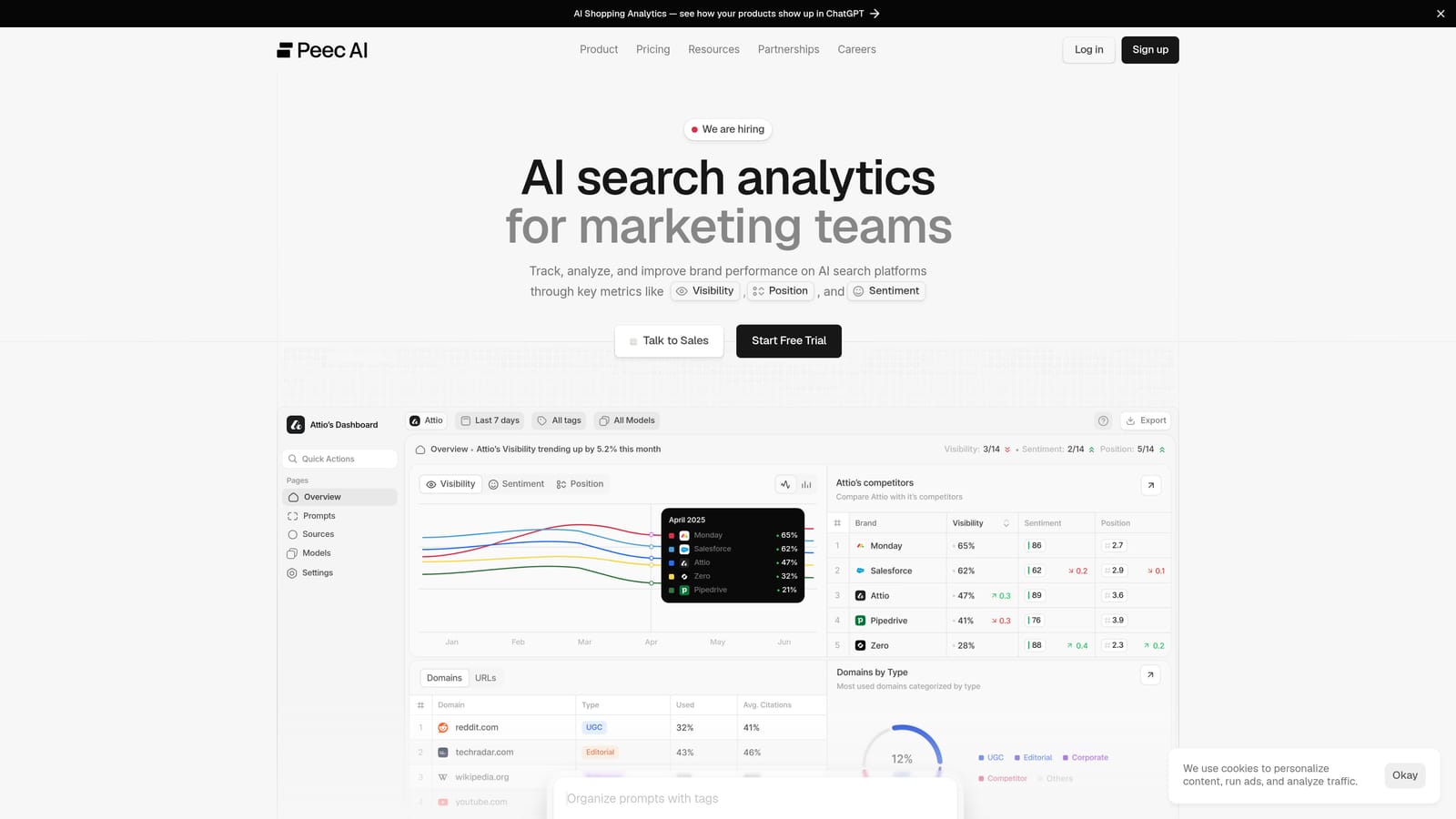
Peec is a competitive intelligence tool that benchmarks your brand's mention frequency in AI search responses against direct competitors across multiple AI platforms.
Where This Tool Shines
Knowing your own AI citation rate is useful. Knowing how it compares to your top three competitors is actionable. Peec focuses on the competitive dimension of AI share-of-voice, which is particularly relevant for SaaS companies operating in crowded categories where buyer decisions are often shaped by which brand gets mentioned first, most, and most favorably in AI-generated comparisons.
For agencies managing multiple SaaS clients, the ability to track category-level AI positioning across different verticals and report on it consistently is a meaningful workflow advantage. It turns AI visibility from an abstract concept into a benchmarkable metric that can be included in regular reporting.
Key Features
AI Share-of-Voice Benchmarking: Compares your brand's mention frequency in AI search responses directly against named competitors, providing a relative measure of AI visibility rather than just an absolute one.
Multi-Platform Tracking: Monitors AI mentions across multiple major LLM-powered search and answer engines, giving a broader picture than single-platform tracking.
Visibility Trend Reporting: Tracks share-of-voice changes over time so teams can identify whether competitive positioning is improving or eroding.
Competitive Gap Identification: Highlights specific areas where competitors hold stronger AI visibility, helping content teams prioritize where to focus next.
Reporting Suitability: Useful for agencies that need to present AI search performance data to SaaS clients in a structured, repeatable format.
Best For
SaaS marketers who care about competitive positioning in AI search, not just their own visibility in isolation. Also well-suited to agencies that need to track and report on AI share-of-voice across multiple client accounts in different SaaS categories.
Which Tool Fits Your Stack?
The right choice depends less on which tool has the most features and more on where your biggest content bottleneck actually sits right now.
If you're looking for a single platform that handles content creation, AI visibility tracking, and indexing in one workflow, Sight AI is the most complete option on this list. It's the only tool here that directly connects the question "what is AI saying about our brand?" to the content needed to change that narrative.
For teams running high-volume blog programs where factual accuracy and SEO performance are the primary concerns, Writesonic handles the production side well. If your challenge is more about workflow architecture than content volume, AirOps gives you the infrastructure to build custom pipelines grounded in your actual product data.
Promptwatch belongs in the stack of any team that has developed meaningful AI content workflows and wants to manage prompt quality as a real asset. And if competitive AI search positioning is a strategic priority, Profound and Peec provide the measurement layer that makes it possible to act on data rather than assumptions.
Before adding any new tool, it's worth auditing your current content stack against AI search requirements. Ask yourself: do you know how AI models currently describe your product? Do you know which topics are sending buyers to competitors? Are your content workflows producing output fast enough to stay competitive in a category that's increasingly shaped by AI-generated answers?
If the answer to any of those questions is no, that's your starting point. Stop guessing how AI models like ChatGPT and Claude talk about your brand and get real visibility into every mention, track content opportunities, and automate your path to organic traffic growth. Start tracking your AI visibility today and see exactly where your brand appears across the top AI platforms.