Your enterprise SEO team just published 47 product pages last quarter. Your competitor published 470. They're not working harder—they're working differently.
Enterprise organizations face a content challenge that defies traditional solutions. You need thousands of optimized pages spanning product lines, regional markets, and multiple languages. Each piece must pass through brand review, legal compliance, and localization workflows. Meanwhile, search algorithms evolve monthly, AI assistants reshape how customers discover solutions, and your competitors are scaling content production at speeds that seem impossible.
The bottleneck isn't ideas or strategy. It's operational capacity. Traditional content workflows—where human writers handle every draft from research to final polish—create natural velocity limits. When you're managing content across dozens of markets or hundreds of product categories, those limits become competitive disadvantages.
AI content generation represents a fundamental shift in how enterprises approach SEO at scale. Not as a replacement for human expertise, but as an operational multiplier that handles the mechanical aspects of content production while your team focuses on strategic decisions, quality control, and brand refinement. This guide breaks down exactly how enterprise organizations are deploying AI content systems to compete effectively in markets where content velocity increasingly determines organic visibility.
Why Enterprise SEO Demands a Different Content Approach
Think about what "scale" actually means in enterprise SEO. You're not optimizing a blog. You're managing content ecosystems spanning thousands of pages across multiple business units, each with distinct audiences, compliance requirements, and performance metrics.
A global software company might need localized product pages in 15 languages. An e-commerce enterprise manages descriptions for tens of thousands of SKUs. A financial services organization publishes regulatory-compliant content across dozens of regional markets. Traditional content workflows—where writers manually research, draft, and optimize each piece—simply cannot operate at these scales without massive teams and budgets.
The coordination problem compounds the challenge. Each piece of content touches multiple stakeholders: product teams provide technical specifications, legal reviews ensure compliance, brand managers verify messaging consistency, SEO specialists optimize for search, and localization teams adapt for regional markets. This necessary oversight creates approval bottlenecks that slow production to a crawl.
Here's where it gets interesting: many enterprises respond by simplifying content to speed approvals. Shorter pages. Less depth. Minimal customization across markets. The irony? This approach undermines the very SEO performance the content was meant to drive. Search algorithms increasingly reward comprehensive, authoritative content that genuinely serves user intent.
AI content generation breaks this trade-off between scale and quality. Modern AI systems can research topics thoroughly, structure information logically, incorporate SEO best practices, and maintain consistent brand voice—all while producing content at speeds that would require hundreds of human writers. The key difference from earlier automation attempts? These systems generate genuinely useful content that serves both search algorithms and human readers.
But the real strategic advantage goes beyond velocity. Enterprise SEO content generation creates consistency that's nearly impossible to achieve with large distributed teams. Brand voice remains uniform whether you're publishing in Tokyo or Toronto. SEO optimization follows the same rigorous standards across all content. Product information stays current because updates can propagate across thousands of pages simultaneously.
This operational shift enables enterprises to compete in the modern search landscape where comprehensive topic coverage, content freshness, and market-specific optimization increasingly determine organic visibility. When your competitors can publish ten times your content volume while maintaining quality standards, traditional workflows become strategic liabilities.
Core Components of Enterprise-Grade AI Content Systems
Not all AI content tools are built for enterprise deployment. Consumer-focused AI writing assistants that generate single articles work fundamentally differently than the systems enterprises need to manage content at scale while maintaining governance and quality standards.
The architecture that works at enterprise scale uses multi-agent systems where specialized AI models handle distinct stages of content production. Picture this like an assembly line where each station performs a specific task with precision.
Research agents analyze search intent, competitive content, and topic requirements to build comprehensive content briefs. These agents identify the questions users ask, the subtopics competitors cover, and the semantic relationships search engines expect.
Writing agents transform those briefs into structured drafts that follow your brand guidelines and content standards. They maintain consistent voice, incorporate required terminology, and structure information for both readability and SEO performance.
Optimization agents refine content for search visibility—analyzing keyword integration, heading structure, internal linking opportunities, and metadata. They ensure each piece meets technical SEO requirements without keyword stuffing or over-optimization.
Editing agents review for clarity, accuracy, and compliance with style guidelines. They catch inconsistencies, improve flow, and flag content that might need human review before publication.
This specialized approach delivers better results than single-model systems because each agent optimizes for specific quality criteria. The research agent isn't trying to also write well—it's focused entirely on gathering comprehensive information. The writing agent isn't worried about keyword density—it's creating clear, engaging content that the optimization agent will then refine.
Brand voice calibration becomes critical when you're producing hundreds or thousands of pieces. Enterprise AI systems need the ability to learn your organization's specific voice, terminology preferences, and messaging frameworks. This goes beyond simple style guides—it's about encoding the subtle distinctions that make content sound authentically "you" versus generically corporate.
Governance controls ensure content meets compliance requirements before publication. For regulated industries like healthcare, finance, or legal services, this means built-in checks for claim substantiation, required disclosures, and industry-specific guidelines. The system should flag content requiring legal review rather than auto-publishing potentially problematic material.
Integration capabilities determine whether an automated SEO content generation platform can actually function within your existing operations. Enterprise-grade solutions connect with your CMS for seamless publishing, integrate with project management tools for workflow coordination, and plug into analytics platforms for performance tracking. Without these integrations, you're creating operational silos that defeat the efficiency gains.
Approval workflows need to match your organizational structure. Some content can auto-publish after AI generation. Other pieces require review by subject matter experts, brand managers, or legal teams. The system should route content appropriately based on type, topic, and risk level—not force everything through the same pipeline.
Version control and audit trails matter when multiple teams are producing content at scale. You need to know who approved what, when changes were made, and why certain content decisions occurred. This becomes essential for compliance documentation and continuous improvement of your content processes.
The difference between basic AI writing tools and enterprise-grade systems comes down to these operational capabilities. Can the system maintain quality at volume? Does it integrate with your existing tech stack? Can it enforce governance while enabling velocity? These questions separate tools that work for individual content creators from platforms that transform enterprise content operations.
Strategic Implementation: From Pilot to Full Deployment
Enterprises that successfully deploy AI content generation don't start by automating everything. They identify high-impact categories where AI delivers immediate value while building organizational confidence in the technology.
Programmatic pages represent the ideal starting point for most enterprises. These are pages that follow consistent templates but require customization for different products, locations, or categories. Product comparison pages, location-specific service pages, and category landing pages all fit this pattern. The structure stays consistent while specific details change—exactly what AI systems handle exceptionally well.
Product descriptions offer another high-value entry point, especially for e-commerce enterprises managing thousands of SKUs. AI can generate unique, optimized descriptions that incorporate product specifications, highlight key features, and address common customer questions—all while maintaining brand voice and avoiding duplicate content issues that plague many product catalogs.
Localized content provides immediate ROI when you're serving multiple markets. Rather than paying for human translation and localization of every piece, AI systems can adapt content for different regions while maintaining SEO optimization and cultural appropriateness. This dramatically reduces the cost and timeline for international content expansion.
The key to successful pilots? Start with content categories where success metrics are clear and volume is high enough to demonstrate impact. If you're generating 50 product pages monthly with AI versus 10 manually, the velocity improvement becomes obvious. If those AI-generated pages match or exceed the organic traffic performance of manually created pages, the quality validation follows.
Building feedback loops ensures your AI content improves over time rather than producing consistent mediocrity at scale. This means establishing clear review processes where human editors evaluate AI output, provide specific feedback, and track quality trends. The best enterprise implementations create structured feedback mechanisms where editors rate content on specific criteria—accuracy, brand voice alignment, SEO optimization, readability—and those ratings inform system improvements.
Human review processes should focus on what humans do best: strategic judgment, creative refinement, and quality assurance. Your editors aren't rewriting every AI-generated piece from scratch—that defeats the efficiency gains. Instead, they're verifying factual accuracy, ensuring brand alignment, and making strategic improvements that the AI can learn from for future content.
Measuring ROI requires tracking both output metrics and business impact. On the output side, monitor content velocity, production costs per page, and time-to-publication. These operational metrics demonstrate efficiency gains. For business impact, track organic traffic growth, keyword ranking improvements, and AI generated content SEO performance versus manually created pages.
Resource reallocation becomes a key benefit as AI handles high-volume content production. Your content team shifts from spending 80% of time on drafting and 20% on strategy to the inverse. They're planning content roadmaps, refining brand voice, analyzing performance data, and creating high-stakes content that requires deep expertise—while AI handles the scalable production work.
Scaling from pilot to full deployment happens when you've validated both quality and operational fit. You've proven AI-generated content performs well in search. Your team understands how to review and refine AI output efficiently. Your stakeholders trust the governance controls. At that point, expansion becomes a matter of identifying the next content categories to automate and replicating your proven processes.
Optimizing AI Content for Search and AI Visibility
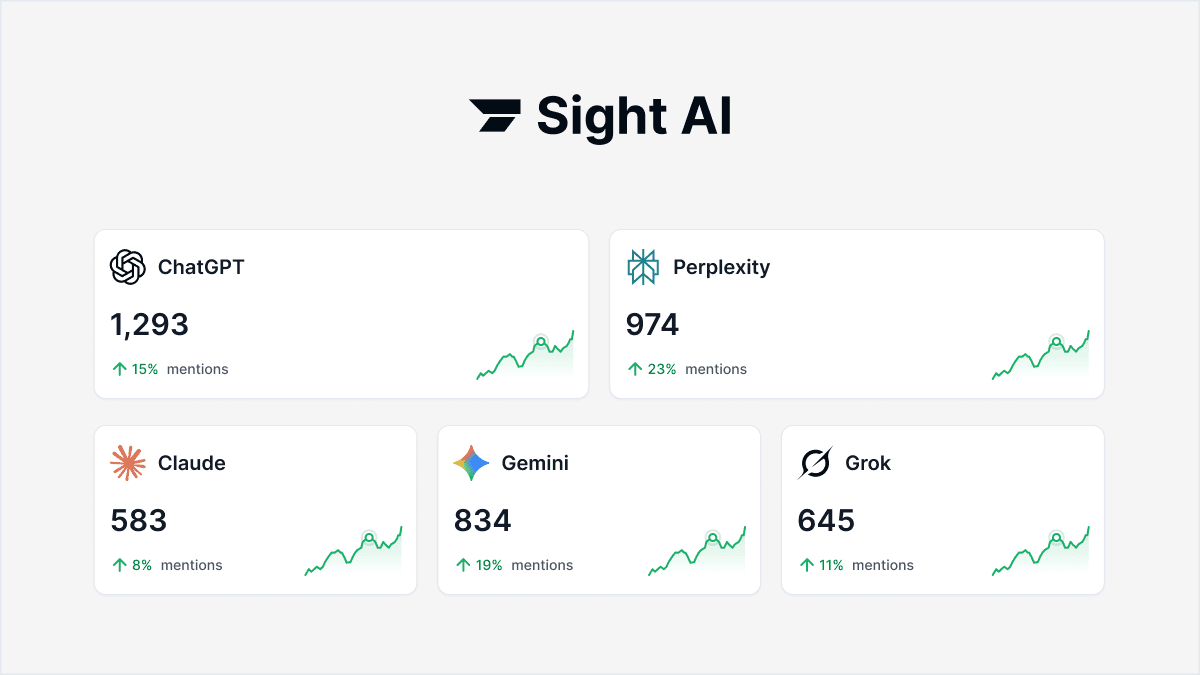
Here's where enterprise content strategy gets interesting: you're no longer just optimizing for Google's crawlers. You're also optimizing for large language models that power ChatGPT, Claude, Perplexity, and other AI assistants that increasingly mediate how customers discover and evaluate solutions.
Traditional SEO focuses on ranking in search results. AI visibility focuses on being accurately mentioned when AI assistants answer questions in your domain. Both matter, but they require somewhat different content approaches.
For search ranking, your content needs comprehensive topic coverage, strategic keyword integration, strong internal linking, and technical optimization. AI content systems excel at these mechanical aspects—ensuring every page includes target keywords naturally, follows proper heading hierarchy, and links to relevant internal pages. The consistency AI brings to these technical elements often improves SEO performance across your entire content ecosystem.
For AI visibility, content must be structured so language models can extract accurate information and attribute it correctly to your brand. This means clear, authoritative statements about your products, services, and expertise. It means providing specific details rather than vague marketing language. It means creating content that AI models recognize as credible sources worth citing.
The dual optimization challenge requires thinking about content through two lenses simultaneously. Will this page rank for target keywords in traditional search? Will AI assistants accurately represent our brand when users ask related questions? Sometimes these goals align perfectly. Other times, you need to balance search optimization with the kind of clear, structured information that AI models prefer.
Structured content approaches help with both objectives. When you organize information logically with clear headings, concise explanations, and specific examples, you're serving both search algorithms and AI models. Lists, tables, and step-by-step instructions work well for both audiences. Vague, flowery marketing copy serves neither.
Topic authority becomes increasingly important as AI models evaluate source credibility. Comprehensive coverage of your domain—not just surface-level content across many topics—signals expertise that both search engines and AI assistants recognize. This is where bulk content generation for SEO becomes strategic: you can cover topics with the depth and breadth that establishes genuine authority.
Indexing acceleration has become a competitive factor in enterprise SEO. When you're publishing hundreds of pages monthly, reducing time-to-indexing directly impacts how quickly that content can start ranking and driving traffic. Modern indexing protocols like IndexNow allow you to notify search engines immediately when new content publishes rather than waiting for traditional crawl cycles.
For enterprises producing content at scale, this matters significantly. If your competitor's new product pages get indexed and start ranking within days while yours take weeks, they capture early traffic and build ranking momentum before you even enter the competition. AI content systems that integrate automated indexing acceleration compress this timeline, turning content publication into immediate SEO opportunity rather than a waiting game.
The strategic implication? AI content generation isn't just about producing more content faster. It's about competing effectively in an evolving search landscape where content velocity, comprehensive topic coverage, and AI visibility increasingly determine organic market share. Enterprises that optimize for this new reality gain compounding advantages as their content ecosystems grow.
Common Enterprise Pitfalls and How to Avoid Them
The biggest mistake enterprises make with AI content generation? Confusing volume with strategy. Just because you can produce 500 pages monthly doesn't mean you should—at least not without clear targeting and purpose for each piece.
The quality-at-scale trap catches organizations that focus purely on content velocity metrics. They celebrate publishing 10x more content than before while ignoring that much of it targets low-value keywords, cannibalizes existing pages, or fails to serve genuine user intent. More content without strategic targeting doesn't improve SEO performance—it dilutes it.
Avoid this by maintaining rigorous content planning even as production scales. Every page should have a clear purpose: targeting a specific keyword opportunity, serving a defined user need, or supporting a strategic business objective. AI makes production fast enough that you don't need to publish weak content just to hit volume targets.
Governance failures create serious risks when content automation lacks proper oversight. In regulated industries, publishing inaccurate claims or missing required disclosures can trigger compliance issues. Even in less regulated sectors, brand safety matters—you don't want AI-generated content making promises your products can't keep or using language that conflicts with brand values.
Build governance into your workflows rather than treating it as an afterthought. Identify content types that require legal review, subject matter expert validation, or brand approval before publication. Configure your SEO content automation for enterprises to route these pieces through appropriate review stages automatically. For lower-risk content, spot-check samples regularly to catch any quality drift before it becomes systemic.
Over-automation represents another common pitfall. Some enterprises try to remove humans entirely from content production, treating AI as a complete replacement rather than a powerful tool requiring strategic direction. This fails because AI still lacks the strategic judgment, creative insight, and domain expertise that humans bring to content strategy.
Where does human expertise remain essential? Strategic planning—deciding which topics to cover and why. Quality assurance—ensuring content meets brand and accuracy standards. Creative refinement—elevating good content to great through nuanced improvements. Relationship building—creating content that genuinely connects with your audience rather than just satisfying algorithms.
The successful model treats AI as handling the scalable, mechanical aspects of content production while humans focus on strategy, quality, and creativity. Your team isn't writing first drafts or manually optimizing meta descriptions—AI handles that efficiently. Instead, they're planning content roadmaps, refining brand voice, analyzing performance patterns, and creating high-stakes content where human expertise delivers clear value.
Technical integration challenges often derail enterprise AI content deployments. Organizations invest in powerful AI content platforms but struggle to connect them with existing CMS systems, approval workflows, and analytics tools. The result? Manual workarounds that eliminate efficiency gains and create new operational friction.
Address integration requirements during platform selection, not after deployment. Confirm the AI content system connects with your CMS for seamless publishing. Verify it integrates with your project management tools for workflow coordination. Ensure it can push data to your analytics platforms for performance tracking. These integrations determine whether AI content generation actually improves your operations or just creates new complexity.
Putting Your AI Content Strategy Into Action
If you're reading this wondering how to actually implement AI content generation at your enterprise, start with an honest assessment of your current content operations. Where are the bottlenecks? Which content types consume disproportionate resources relative to their business impact? What would 10x content velocity enable for your SEO strategy?
The AI readiness assessment should examine several dimensions. Technical infrastructure: Does your CMS support API integrations for automated publishing? Do you have analytics systems that can track content performance at scale? Organizational readiness: Does your team understand AI capabilities and limitations? Are stakeholders open to changing established content workflows? Strategic clarity: Do you have documented content standards, brand guidelines, and SEO strategies that AI systems can follow?
Building the business case requires framing AI content generation as a strategic capability, not just a cost-saving tool. Yes, you'll reduce per-page production costs significantly. But the real value comes from competitive advantages that content velocity enables: comprehensive topic coverage that establishes domain authority, rapid response to market opportunities through timely content, and international expansion through cost-effective localization.
Stakeholder alignment matters because successful AI content deployment touches multiple teams. Your content team needs training on reviewing and refining AI output. Your SEO team needs to understand how to optimize AI content systems for maximum performance. Your legal and compliance teams need confidence in governance controls. Your IT team needs to support technical integrations. Getting these groups aligned early prevents deployment delays and adoption resistance.
Resource planning should account for both technology costs and the human expertise required to deploy AI content effectively. Budget for the AI content platform itself, but also for the content strategists who'll plan what to create, the editors who'll ensure quality, and the technical resources who'll manage integrations and workflow automation. Reviewing SEO content generation platform pricing helps establish realistic budget expectations.
First steps for implementation this quarter? Start small but strategic. Identify one high-volume content category where AI can demonstrate clear value—product pages, location-specific content, or programmatic SEO pages work well. Set up a pilot with clear success metrics around content velocity, quality, and organic performance. Build feedback loops where your team learns to work effectively with AI-generated content.
Document everything during your pilot. What works? What requires human refinement? How does AI-generated content perform compared to manually created pages? These insights inform your scaling strategy and help you refine processes before expanding AI content production across your entire operation.
The goal isn't perfection in your first deployment. It's learning how AI content generation fits your specific organizational needs, building confidence in the technology, and establishing processes that scale effectively. Enterprises that approach AI content strategically—starting focused, measuring rigorously, and scaling based on validated results—position themselves to compete effectively in markets where content velocity increasingly determines organic visibility.
The Path Forward: AI Content as Competitive Advantage
AI content generation represents more than operational efficiency for enterprise SEO. It's a fundamental shift in competitive positioning. Organizations that master this capability can cover topics comprehensively, respond to market opportunities quickly, and expand into new markets cost-effectively—advantages that compound over time as content ecosystems grow.
The enterprises winning in organic search aren't just producing more content. They're producing strategically targeted content at scales that establish genuine domain authority. They're optimizing for both traditional search visibility and the emerging importance of AI assistant mentions. They're compressing time-to-ranking through automated indexing that turns content publication into immediate opportunity.
This isn't about replacing human expertise with automation. It's about amplifying what your team can accomplish by removing the mechanical bottlenecks that limit content velocity. Your strategists focus on planning. Your subject matter experts focus on accuracy and depth. Your editors focus on quality and brand alignment. AI handles the scalable production work that would otherwise require massive teams.
The organizations that delay this transition face growing disadvantages. Content velocity gaps widen. Topic coverage becomes less comprehensive. Competitors establish authority in domains where you lack presence. The compounding nature of SEO performance means these gaps become harder to close over time.
But here's the reality check: producing content at scale only matters if you understand how that content performs—both in traditional search and across AI platforms where customers increasingly discover solutions. Start tracking your AI visibility today and see exactly where your brand appears across top AI platforms. Because the future of enterprise SEO isn't just about creating more content—it's about creating content that establishes your brand as the authoritative answer, whether customers find you through Google or ask ChatGPT.