Your competitor just published 50 AI-generated articles this month. You published 5 carefully crafted pieces. Who's winning the SEO game?
If you're a marketer in 2026, this scenario probably feels uncomfortably familiar. The pressure to adopt AI content at scale is everywhere—in LinkedIn posts, at marketing conferences, in quarterly strategy meetings where someone inevitably asks why your team isn't "leveraging AI more aggressively."
But here's what those conversations rarely address: the massive gap between AI content production velocity and actual SEO performance outcomes.
The reality is more nuanced than the hype suggests. Yes, AI-generated content can rank. Yes, it can drive organic traffic. Yes, it can even convert. But the difference between AI content that performs exceptionally and AI content that languishes on page seven comes down to factors that have nothing to do with the AI itself.
This creates a paradox that's keeping marketing teams up at night. Do you prioritize speed and volume, potentially sacrificing quality and brand voice? Or do you maintain rigorous editorial standards, watching competitors flood the search results while you're still in review cycles?
The uncomfortable truth is that neither extreme works consistently. The teams seeing genuine performance improvements from AI content aren't choosing between quality and quantity—they're implementing systematic approaches that deliver both.
In this guide, we're cutting through the speculation and examining what actually drives AI generated content SEO performance in practice. You'll discover the specific factors that separate high-performing AI content from mediocre results, understand how search engines evaluate AI-generated articles, and learn the optimization strategies that consistently improve rankings and engagement.
We'll explore the performance metrics that actually matter, reveal why AI content performance varies so dramatically across different implementations, and provide actionable strategies you can implement immediately to improve your results. Most importantly, we'll help you avoid the critical mistakes that sabotage AI content performance before it even has a chance to rank.
By the end, you'll have a clear framework for measuring, optimizing, and scaling AI content that delivers measurable SEO results—not just impressive production statistics.
Understanding AI Content Performance Metrics That Actually Matter
When marketing teams evaluate AI content performance, they often focus on the wrong metrics. Production velocity looks impressive in quarterly reports, but it tells you nothing about whether that content is actually driving business results.
The performance gap between high-performing and low-performing ai content for seo becomes immediately apparent when you examine the right metrics. Teams that succeed with AI content track a fundamentally different set of indicators than those who struggle.
First, organic visibility metrics reveal how search engines actually perceive your AI-generated content. This goes beyond simple keyword rankings to include impression share, click-through rates from search results, and featured snippet captures. These metrics tell you whether your content is being surfaced for relevant queries and whether users find it compelling enough to click.
Engagement depth metrics provide insight into content quality that production statistics can't capture. Time on page, scroll depth, internal link clicks, and return visitor rates reveal whether your AI content delivers genuine value or simply fills space on your blog. High-performing AI content consistently shows engagement patterns similar to human-written content, while low-performing pieces show rapid exits and minimal interaction.
Conversion attribution becomes critical when evaluating ROI. AI content that ranks well but doesn't contribute to pipeline or revenue represents a missed opportunity. The best-performing teams track assisted conversions, content-influenced deals, and the specific role AI content plays in customer journeys. This reveals which types of ai generated seo content actually move prospects through your funnel.
Technical performance indicators often get overlooked but significantly impact rankings. Core Web Vitals, mobile usability scores, and page speed metrics affect how search engines evaluate your content regardless of how it was created. AI-generated content that loads slowly or provides poor mobile experiences will underperform even if the writing quality is excellent.
Content freshness and update frequency matter more for AI content than many teams realize. Search engines favor content that stays current and relevant. Teams that implement systematic review and update processes for their AI content see sustained performance, while those who publish and forget watch rankings gradually decline.
Backlink acquisition rates reveal whether your AI content earns genuine authority signals. High-quality AI content attracts natural backlinks at rates comparable to human-written pieces. If your AI content consistently fails to earn links, it's a strong signal that quality or uniqueness issues need addressing.
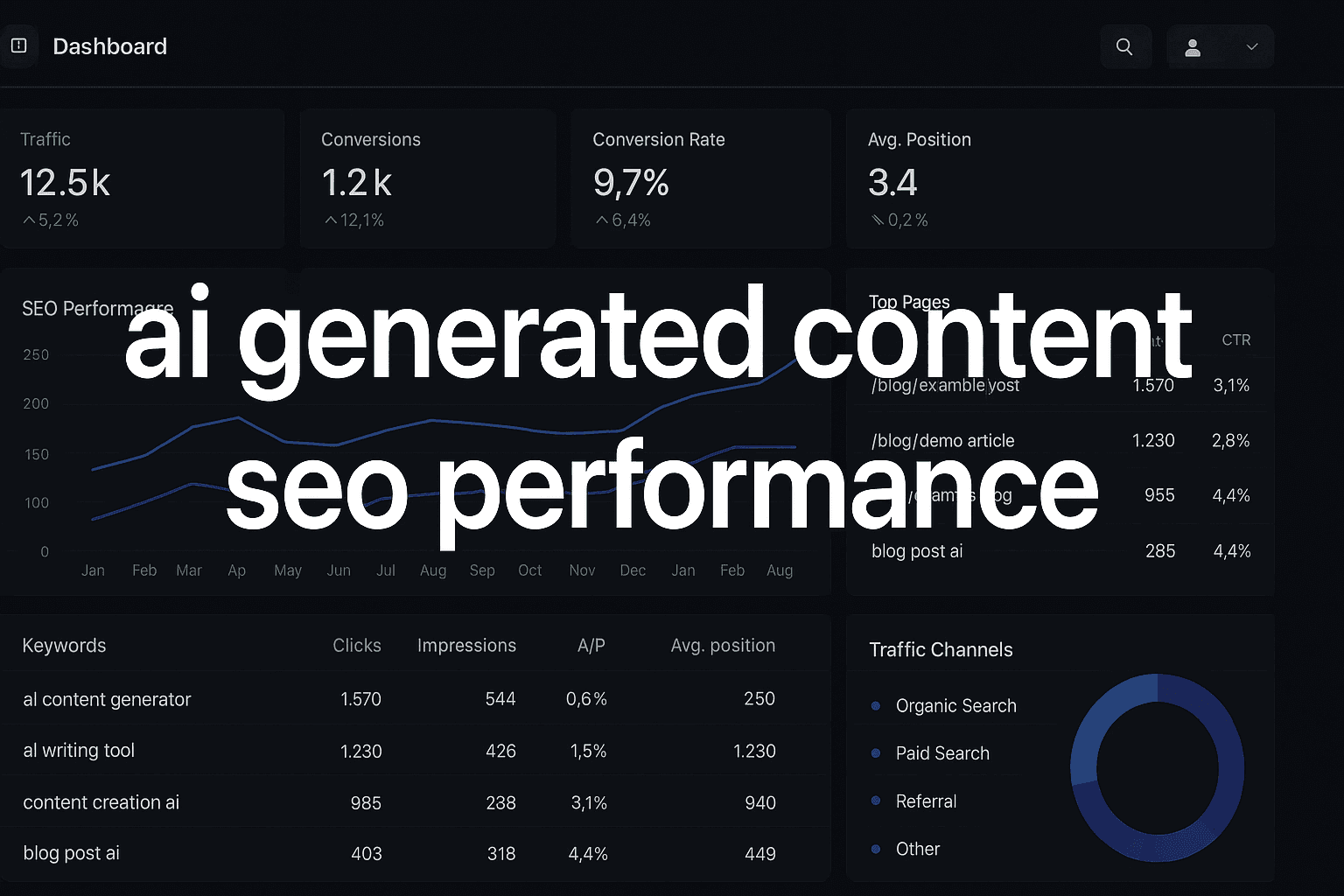
The most successful teams create custom dashboards that combine these metrics into a holistic performance view. They track AI content separately from human-written content initially, looking for performance patterns that inform optimization strategies. Over time, the goal is for AI content to perform indistinguishably from human content across all meaningful metrics.
What separates high performers from the rest isn't just tracking these metrics—it's using them to drive continuous improvement. Every piece of underperforming AI content becomes a learning opportunity, revealing specific optimization needs that improve future output.
The Technical Factors That Determine AI Content Rankings
Search engines don't penalize content simply because AI generated it, but they do evaluate technical factors that often differ between AI and human-written content. Understanding these technical elements is essential for optimizing performance.
Content structure and semantic organization significantly impact how search engines interpret your articles. AI content sometimes lacks the logical flow and hierarchical organization that human writers naturally create. High-performing teams implement structured templates that guide AI output toward clear section hierarchies, logical progression, and semantic relationships that search engines can easily parse.
Entity recognition and knowledge graph integration affect how search engines connect your content to broader topic networks. Effective ai content tools for seo teams ensure proper entity markup, consistent entity references, and connections to established knowledge graph entities. This helps search engines understand your content's topical authority and relevance.
Schema markup implementation becomes even more critical for AI content. Structured data helps search engines understand content type, author information, publication dates, and topical focus. Teams that systematically implement appropriate schema for their AI content see improved rich result eligibility and better search visibility.
Internal linking architecture reveals content relationships that search engines use to assess topical authority. AI content that exists in isolation, without strategic internal links to related content, struggles to build authority signals. High-performing implementations include systematic internal linking strategies that connect AI content to broader topic clusters.
Content uniqueness and originality detection has become more sophisticated. Search engines can identify content that closely resembles existing material, even when it's been paraphrased or restructured. Teams seeing strong performance ensure their AI content provides genuinely unique perspectives, original research, or novel combinations of information rather than simply reformulating existing content.
The technical implementation of automated seo content workflows affects consistency and quality. Teams that build robust quality assurance processes into their technical stack catch issues before publication. This includes automated checks for duplicate content, broken links, missing images, and technical SEO issues that could impact performance.
Mobile optimization and responsive design matter more than ever. AI content that doesn't render properly on mobile devices or creates poor mobile experiences will underperform regardless of content quality. Technical implementations must ensure AI-generated content works seamlessly across all device types and screen sizes.
Page speed and performance optimization directly impact rankings. AI content workflows that generate bloated HTML, include unnecessary scripts, or create slow-loading pages create technical barriers to performance. The most successful teams optimize their technical stack to ensure AI content loads as quickly as manually optimized pages.
Crawl efficiency and indexation management become more complex at scale. Teams publishing large volumes of AI content need sophisticated approaches to crawl budget management, strategic use of noindex tags, and prioritization of high-value content for indexation. Without this, search engines may not even discover your best AI content.
Content Quality Signals That Separate High Performers from Low Performers
The quality gap between high-performing and low-performing AI content isn't always obvious from surface-level reading, but search engines have become remarkably sophisticated at detecting subtle quality signals that predict user satisfaction.
Topical depth and comprehensiveness represent one of the clearest differentiators. AI content that provides superficial coverage of topics consistently underperforms compared to content that explores subjects thoroughly. High-performing teams guide their AI systems toward comprehensive coverage that addresses user questions completely rather than generating thin content that barely scratches the surface.
Original insights and unique perspectives matter more than many teams realize. Search engines increasingly favor content that adds something new to the conversation rather than simply rehashing existing information. The best implementations of ai for seo content incorporate proprietary data, original research, expert interviews, or unique analytical frameworks that differentiate content from competitors.
Factual accuracy and source credibility directly impact performance, especially in YMYL (Your Money Your Life) topics. AI content that includes factual errors, outdated information, or lacks proper citations struggles to build authority signals. Teams seeing strong performance implement rigorous fact-checking processes and ensure all claims are properly sourced and verified.
Writing quality and readability affect both user engagement and search engine evaluation. While AI has improved dramatically, it can still produce awkward phrasing, repetitive structures, or unnatural transitions. High-performing teams invest in editing processes that ensure AI content reads naturally and maintains consistent quality standards.
User intent alignment determines whether content satisfies the actual needs behind search queries. AI content that technically addresses a keyword but misses the underlying user intent will underperform. Successful teams ensure their AI systems understand and address the specific questions, problems, or information needs that drive searches for their target keywords.
E-E-A-T signals (Experience, Expertise, Authoritativeness, Trustworthiness) have become increasingly important. AI content that lacks clear authorship, expert credentials, or trust signals struggles in competitive spaces. Teams that succeed attribute AI content to real experts, include author bios with relevant credentials, and build comprehensive about pages that establish organizational authority.
Content freshness and update frequency signal ongoing relevance. Search engines favor content that stays current with evolving topics. High-performing teams implement systematic review processes that identify when AI content needs updating and ensure information remains accurate and relevant over time.
Multimedia integration and visual quality enhance both user experience and search performance. AI content that consists solely of text often underperforms compared to content that includes relevant images, videos, charts, or interactive elements. The best implementations combine AI-generated text with high-quality visual assets that enhance comprehension and engagement.
The most successful teams recognize that quality isn't a binary state but a spectrum. They continuously analyze performance data to identify which quality factors most strongly correlate with rankings in their specific niche, then optimize their AI content processes to emphasize those factors.
Optimization Strategies That Consistently Improve AI Content Performance
Understanding what drives performance is only valuable if you can systematically optimize for those factors. The teams seeing the best results from AI content have implemented specific optimization strategies that consistently improve rankings and engagement.
Strategic human review and editing processes represent the most impactful optimization lever. High-performing teams don't publish raw AI output—they implement structured review workflows where human editors enhance quality, add unique insights, verify accuracy, and ensure brand voice consistency. This hybrid approach combines AI efficiency with human judgment, consistently producing content that outperforms purely automated output.
Topical authority building through content clustering improves performance across entire topic areas. Rather than publishing isolated AI articles, successful teams create comprehensive topic clusters where pillar content connects to supporting articles through strategic internal linking. This approach, often implemented through seo content generator for startups platforms, helps build topical authority that benefits all related content.
Systematic keyword research and intent mapping ensure AI content targets the right opportunities. Teams that succeed invest time in understanding search intent, competitive landscape, and keyword difficulty before generating content. This strategic approach prevents wasted effort on keywords where AI content is unlikely to compete effectively.
Technical optimization workflows catch and fix issues before they impact performance. Automated checks for broken links, missing alt text, schema errors, and other technical problems ensure AI content meets baseline technical standards. These systematic approaches prevent technical issues from undermining otherwise high-quality content.
Performance monitoring and iterative improvement create continuous optimization cycles. High-performing teams don't just publish and forget—they systematically track performance, identify underperforming content, diagnose specific issues, and implement targeted improvements. This data-driven approach to optimization consistently improves results over time.
Content refreshing and update strategies maintain relevance and rankings. Search engines favor fresh, current content. Teams that implement systematic review schedules, update statistics and examples, and refresh outdated information see sustained performance from their AI content library. Many leverage seo content creation autopilot systems to identify content needing updates.
Strategic link building and promotion amplify AI content performance. Even high-quality AI content benefits from strategic promotion and link acquisition. Successful teams identify their best-performing AI content and invest in targeted outreach, strategic partnerships, and promotion strategies that earn quality backlinks and social signals.
User feedback integration improves content relevance and quality. Teams that systematically collect and analyze user feedback—through comments, surveys, support tickets, or user testing—gain insights that inform content optimization. This user-centric approach ensures AI content evolves to better serve actual audience needs.
A/B testing and experimentation reveal what works in your specific context. High-performing teams test different approaches to headlines, content structure, multimedia integration, and calls-to-action. This experimental mindset helps identify optimization strategies that deliver the best results for their particular audience and niche.
The most sophisticated implementations combine these strategies into comprehensive optimization frameworks. They recognize that sustainable AI content performance requires ongoing attention and improvement, not just initial publication. This commitment to continuous optimization separates teams that achieve lasting success from those who see initial results that gradually decline.
Common Mistakes That Sabotage AI Content Performance
Even teams with good intentions often make critical mistakes that undermine their AI content performance. Understanding these common pitfalls helps you avoid them and implement more effective strategies from the start.
Publishing raw AI output without human review represents the most common and damaging mistake. While AI has improved dramatically, it still produces content with factual errors, awkward phrasing, logical inconsistencies, and missed opportunities for unique insights. Teams that skip human review consistently see lower performance than those who invest in editing and enhancement.
Prioritizing volume over quality creates long-term performance problems. The temptation to publish massive quantities of AI content is strong, but search engines increasingly penalize sites that flood the index with thin, low-quality content. High-performing teams focus on publishing fewer, higher-quality pieces that genuinely serve user needs rather than chasing volume metrics.
Neglecting technical SEO fundamentals undermines even well-written AI content. Missing title tags, poor internal linking, slow page speeds, and other technical issues prevent content from reaching its performance potential. Successful teams ensure their AI content meets the same technical standards as their best human-written content.
Ignoring user intent and search behavior leads to content that technically targets keywords but fails to satisfy searcher needs. AI systems can optimize for keywords without understanding the underlying questions or problems users are trying to solve. Teams that succeed invest time in intent research and ensure their AI content addresses actual user needs.
Failing to establish clear authorship and expertise signals hurts performance, especially in competitive or YMYL topics. AI content without clear attribution to real experts or organizations struggles to build trust signals. High-performing teams attribute content to qualified authors and build comprehensive author profiles that establish credibility.
Overlooking content uniqueness and originality creates problems with duplicate or near-duplicate content. AI systems trained on existing content sometimes produce articles that too closely resemble source material. Teams that don't implement uniqueness checks risk publishing content that search engines view as derivative or low-value.
Neglecting ongoing maintenance and updates allows AI content to become outdated and lose rankings. Information changes, competitors improve their content, and search algorithms evolve. Teams that publish AI content without systematic review and update processes watch their rankings gradually decline as content becomes stale.
Implementing AI content in isolation without integration into broader content strategy creates disconnected content that fails to build topical authority. Successful teams integrate AI content into comprehensive topic clusters, strategic internal linking structures, and cohesive content calendars rather than treating it as a separate initiative.
Focusing solely on rankings while ignoring engagement and conversion metrics leads to content that ranks but doesn't drive business results. High-performing teams track the full funnel impact of their AI content and optimize for business outcomes, not just search visibility.
The teams that avoid these mistakes and implement systematic quality controls, strategic planning, and ongoing optimization consistently see better performance from their AI content investments. Success requires treating AI as a powerful tool that enhances human capabilities rather than a complete replacement for human judgment and expertise.
Measuring ROI and Business Impact of AI Content Investments
Understanding performance metrics is essential, but ultimately, marketing leaders need to justify AI content investments through clear ROI and business impact. The teams that successfully scale AI content have developed sophisticated approaches to measuring and demonstrating value.
Direct revenue attribution connects AI content to actual sales and pipeline. High-performing teams implement tracking that shows which AI-generated articles contribute to conversions, influence deal progression, or assist in customer acquisition. This requires sophisticated attribution modeling that accounts for multi-touch customer journeys and the specific role content plays at different funnel stages.
Cost efficiency metrics compare AI content production costs to traditional content creation. Teams calculate cost per article, cost per ranking keyword, and cost per conversion for AI content versus human-written content. These comparisons reveal where AI delivers the strongest ROI and where human expertise remains more cost-effective.
Time-to-value measurements track how quickly AI content begins driving results. Some AI content ranks and drives traffic within days, while other pieces take months to gain traction. Understanding these patterns helps teams set realistic expectations and optimize their content mix for both quick wins and long-term authority building.
Organic traffic growth attributable to AI content reveals scale impact. Teams that implement programmatic seo content platform approaches track overall organic traffic growth and isolate the contribution from AI-generated content. This demonstrates whether AI content is actually expanding organic reach or simply replacing traffic that would have come from other sources.
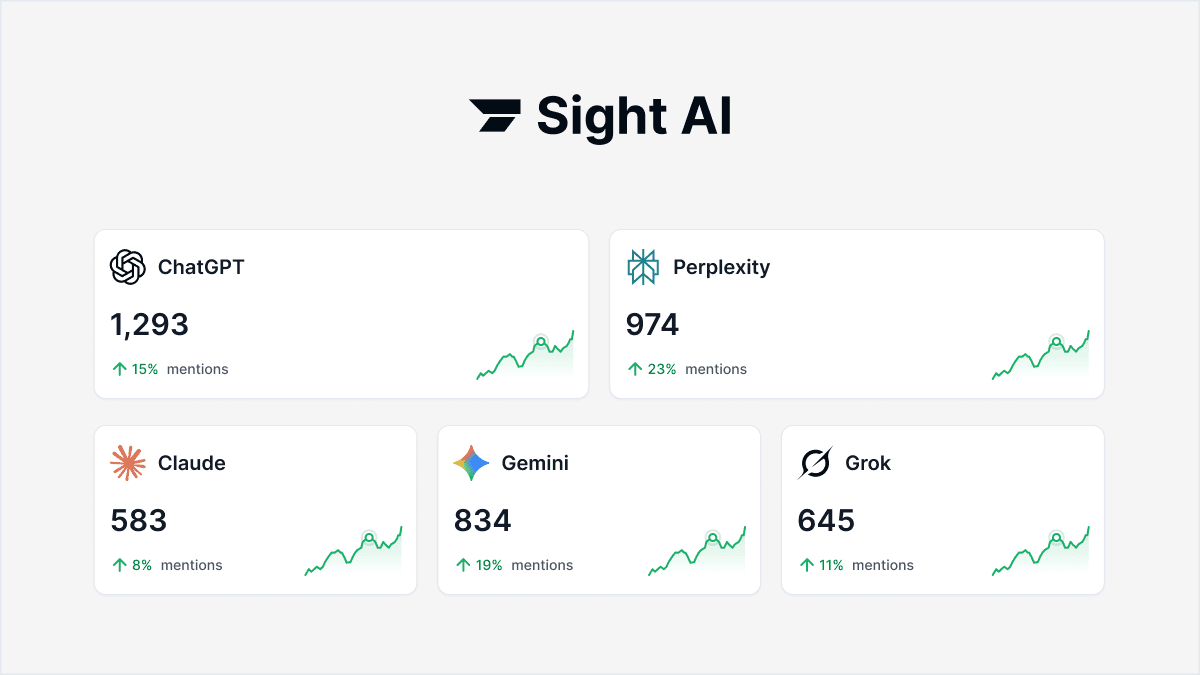
Stop guessing how AI models like ChatGPT and Claude talk about your brand—get visibility into every mention, track content opportunities, and automate your path to organic traffic growth. Start tracking your AI visibility today and see exactly where your brand appears across top AI platforms.