Generative AI has fundamentally changed how people discover brands and content. Instead of scanning a list of blue links, users now ask ChatGPT, Claude, or Perplexity a question and trust the answer they receive. If your brand isn't showing up in those answers, you're invisible to a fast-growing segment of your audience.
Generative AI optimization (GEO) tools help marketers, founders, and agencies close that gap. They track where and how AI models mention your brand, generate content structured for AI citation, and ensure that content gets indexed and published fast enough to matter.
The tools below cover the full GEO workflow: monitoring AI visibility, creating AI-optimized content, and accelerating content discovery. Whether you're building an AI search strategy from scratch or sharpening an existing one, these tools cover the essential ground.
1. Sight AI
Best for: Teams that need a full-stack GEO platform combining AI visibility tracking, content generation, and automated publishing.
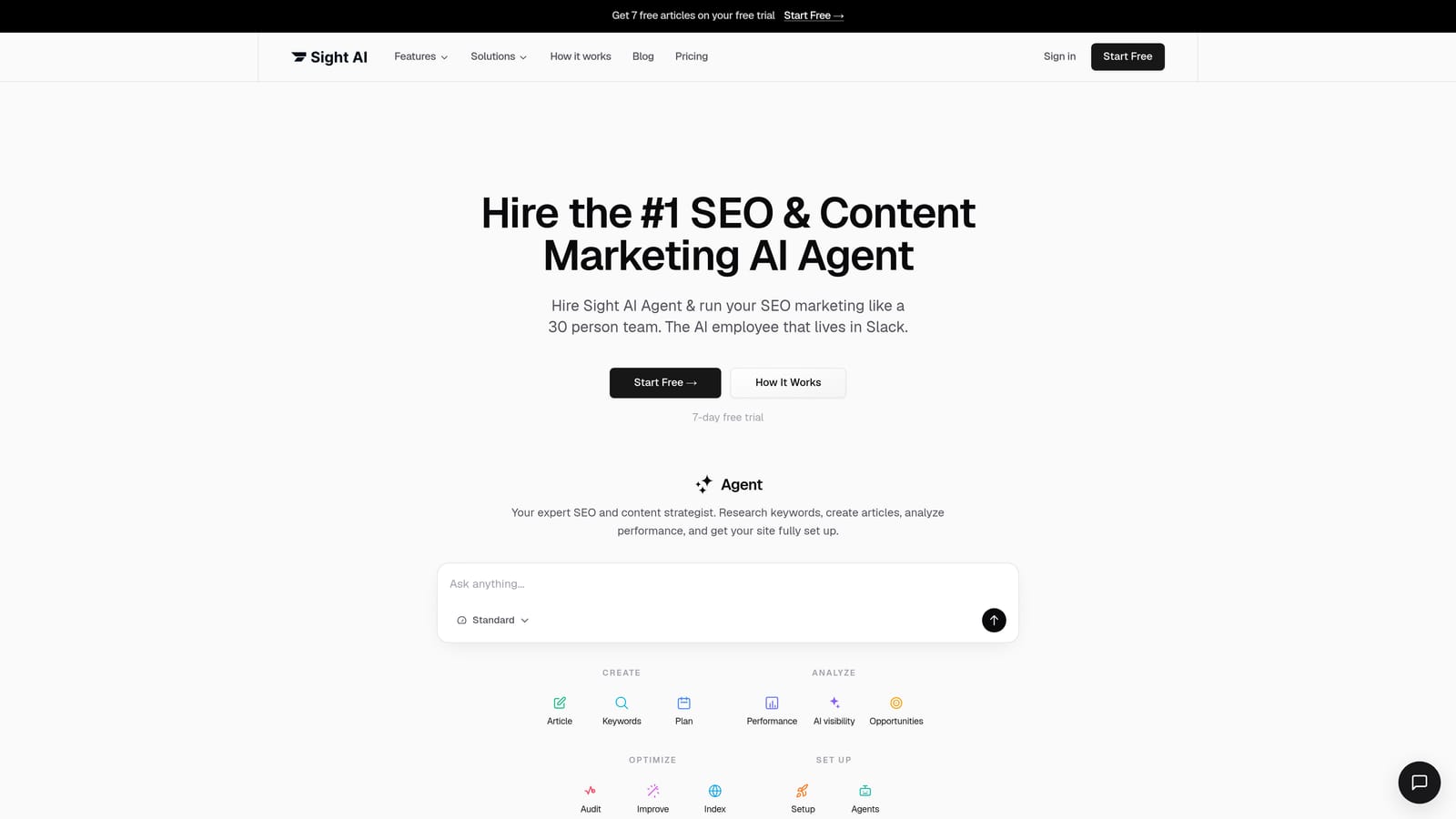
Sight AI is an all-in-one GEO platform that tracks brand mentions across 6+ AI models, generates SEO and GEO-optimized content with 13+ specialized agents, and auto-publishes with IndexNow-powered indexing for faster discovery.
Where This Tool Shines
Most GEO tools solve one piece of the puzzle. Sight AI is built around the idea that monitoring, content creation, and distribution belong in a single workflow. You can see exactly how AI models describe your brand today, identify the content gaps driving that positioning, generate optimized content to address those gaps, and push it live without switching between five different platforms.
The AI Visibility Score goes beyond raw mention counts. It includes sentiment analysis so you understand not just whether your brand appears in AI-generated answers, but whether those appearances are favorable, neutral, or negative. That distinction matters a great deal when you're trying to actively manage how AI models represent you.
Key Features
AI Visibility Score with Sentiment Analysis: Tracks how your brand is described across ChatGPT, Claude, Perplexity, and other major AI platforms, with sentiment layered on top of mention frequency.
Prompt Tracking: Shows which specific queries surface your brand in AI responses, giving your content team actionable signal on where to focus.
13+ Specialized AI Content Agents: Covers listicles, guides, explainers, and other formats built specifically for GEO and SEO, not just generic output.
Autopilot Mode: Runs content generation and publishing workflows with minimal manual intervention, useful for teams managing high content volume.
IndexNow Integration and Automated Sitemap Updates: Newly published content gets flagged for search engine discovery faster than standard crawl schedules allow.
CMS Auto-Publishing: Reduces the gap between content creation and a live page, cutting out manual steps that slow down most content operations.
Best For
Sight AI is best suited for marketing teams, founders, and agencies that want a unified GEO platform rather than a stack of point solutions. It's particularly valuable if you're running ongoing content programs and need monitoring, creation, and indexing to work together without constant manual coordination.
Pricing
Tiered plans are available for different team sizes. Visit trysight.ai for current pricing details.
2. Writesonic
Best for: Content teams that need high-volume, multi-format AI writing with real-time web data and SEO-focused output modes.
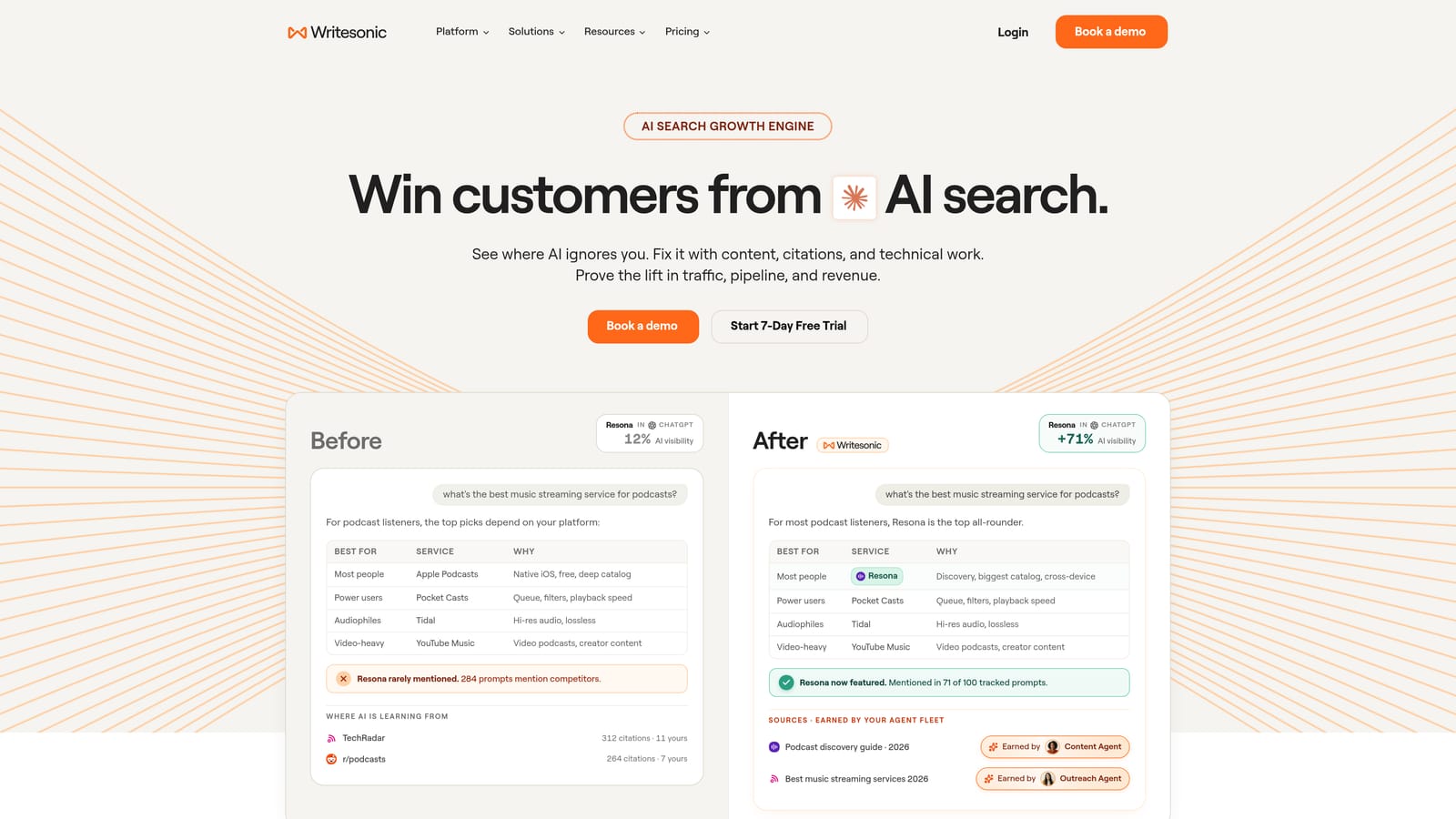
Writesonic is an AI content generation platform with broad format support, real-time web data integration, and SEO-focused writing modes designed for teams with significant content output requirements.
Where This Tool Shines
Writesonic handles a wide range of content formats from a single platform: blog posts, landing pages, ads, and social content. The Chatsonic feature is a practical differentiator, pulling real-time web data into content generation so outputs aren't limited to the model's training cutoff. That's useful when writing about fast-moving topics where recency matters.
The SEO mode helps structure content around target keywords, making it more practical for teams producing content intended to rank. It's worth noting that Writesonic is primarily a content generation tool, not a GEO monitoring platform. If your priority is tracking brand mentions in AI responses, you'd need to pair it with a dedicated monitoring tool.
Key Features
AI Article Writer with SEO Mode: Generates keyword-optimized long-form content with structure designed to support search ranking goals.
Chatsonic with Real-Time Web Data: Integrates live web information into AI-generated content, reducing reliance on static training data.
Multi-Format Content Support: Covers blogs, landing pages, ads, and social posts from a single interface.
Brand Voice Settings: Allows teams to define tone and style guidelines that carry across content outputs.
Bulk Content Generation: Supports high-volume production workflows for teams managing large content calendars.
Best For
Writesonic works well for content teams and agencies that need to produce large volumes of SEO-focused content across multiple formats. It's a strong choice for organizations where content generation is the primary bottleneck, rather than AI visibility monitoring.
Pricing
Tiered plans based on word and credit volume; a free trial is available. Check writesonic.com for current pricing.
3. AirOps
Best for: Agencies and content operations teams that need custom LLM-powered workflows connected to their own data sources.
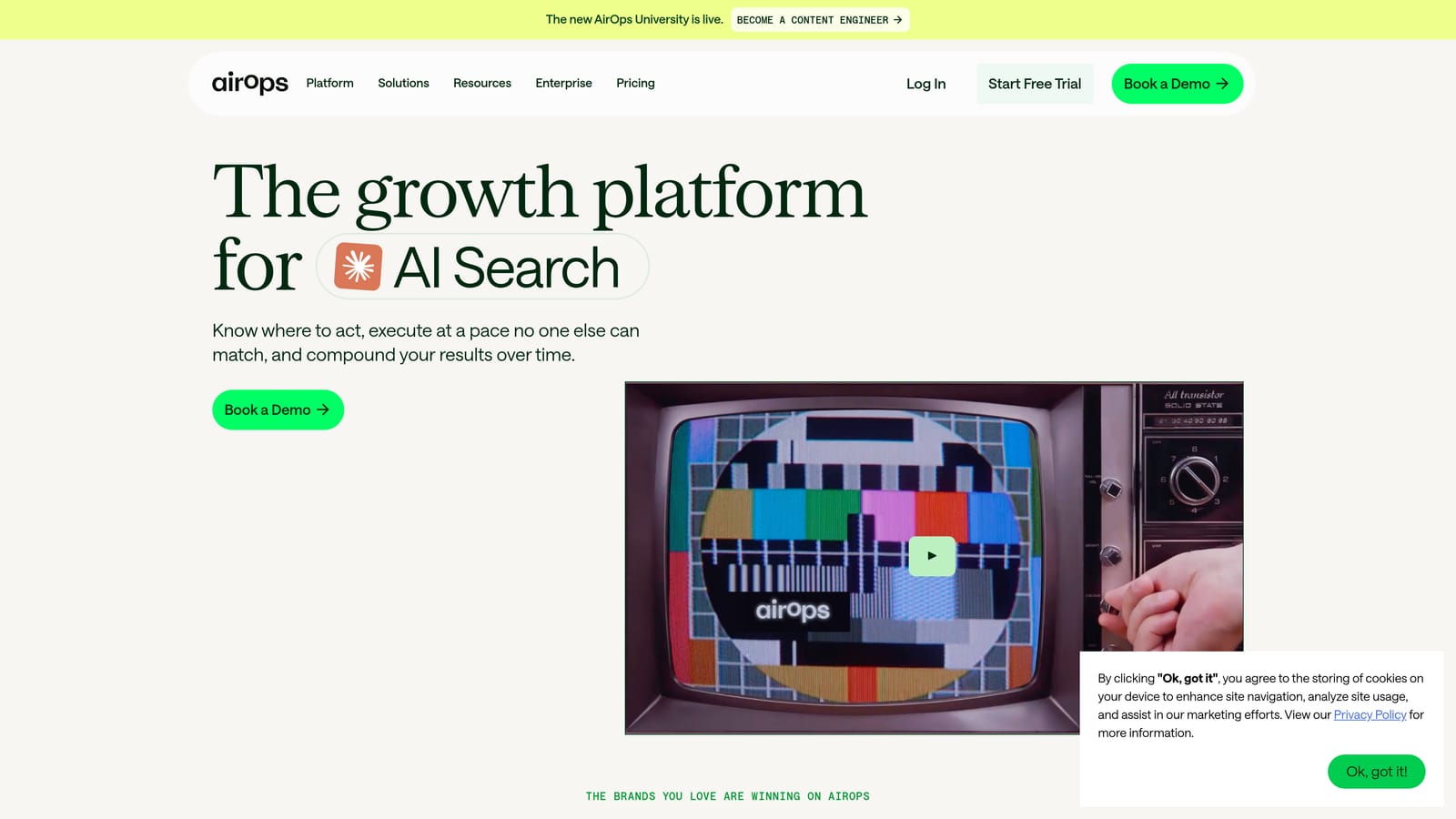
AirOps is a workflow automation platform that lets teams build custom AI content pipelines connected to internal databases, spreadsheets, and APIs, with support for multiple LLMs within a single workflow.
Where This Tool Shines
AirOps is built for teams that need AI content workflows tailored to their specific data and processes, not a generic out-of-the-box tool. The visual workflow builder lets you design pipelines that pull from your own sources, apply LLM processing, and output structured content at scale. This makes it particularly useful for agencies managing content production across multiple clients with different data requirements.
The ability to use multiple AI models within a single workflow gives teams flexibility to optimize different steps with different models. It's a content operations tool at its core. If you need AI visibility monitoring alongside content production, you'd need to integrate a separate monitoring platform.
Key Features
Visual Workflow Builder: Lets teams design custom AI content pipelines without deep technical expertise.
Internal Data Source Connections: Connects LLMs to Google Sheets, databases, and other data sources your team already uses.
Multi-Model Support: Allows different AI models to handle different steps within the same workflow.
Template Library: Provides starting points for common content operations use cases, reducing setup time.
API Access: Enables integration of AI workflows into existing tech stacks and publishing systems.
Best For
AirOps is a strong fit for agencies and enterprise content teams running structured, high-volume content operations where customization and data connectivity are priorities. Less suited for teams looking for a turnkey GEO monitoring or publishing solution.
Pricing
Tiered plans are available. Visit airops.com for current pricing details.
4. Profound
Best for: Enterprise marketing and SEO teams that need structured reporting on brand visibility across AI answer engines.
Profound is an AI answer engine optimization platform focused on tracking brand visibility in LLM-generated responses, with competitive benchmarking and reporting dashboards built for enterprise teams.
Where This Tool Shines
Profound is designed for organizations where AI visibility is a strategic priority and reporting needs to flow into broader marketing dashboards. The platform monitors how AI models respond to industry-relevant queries and tracks where your brand appears, or doesn't appear, relative to competitors. That competitive benchmarking layer is particularly valuable for enterprise teams trying to quantify their AI search presence against named competitors.
The content gap identification feature helps teams understand not just where they're missing but which specific competitor content is filling that space. This gives content strategists a clearer brief for what to create next, rather than guessing at the problem.
Key Features
AI Answer Engine Tracking: Monitors brand mentions across major AI platforms and LLM-generated responses at scale.
Query-Level Monitoring: Tracks how AI models respond to specific industry-relevant queries your audience is likely to ask.
Competitive Benchmarking: Compares your brand's AI visibility against competitors across shared topic areas.
Enterprise Reporting Dashboards: Delivers structured visibility data in formats suited for marketing and SEO team reporting workflows.
Content Gap Identification: Surfaces queries where competitors appear in AI responses but your brand does not.
Best For
Profound is well-suited for enterprise marketing and SEO teams with formal reporting requirements and a need for competitive AI visibility benchmarking. Smaller teams or those primarily focused on content generation may find it more than they need.
Pricing
Enterprise-focused pricing; contact Profound directly through profound.com for details.
5. Peec
Best for: Brand and SEO teams focused on competitive share-of-voice analysis in AI-generated search responses.
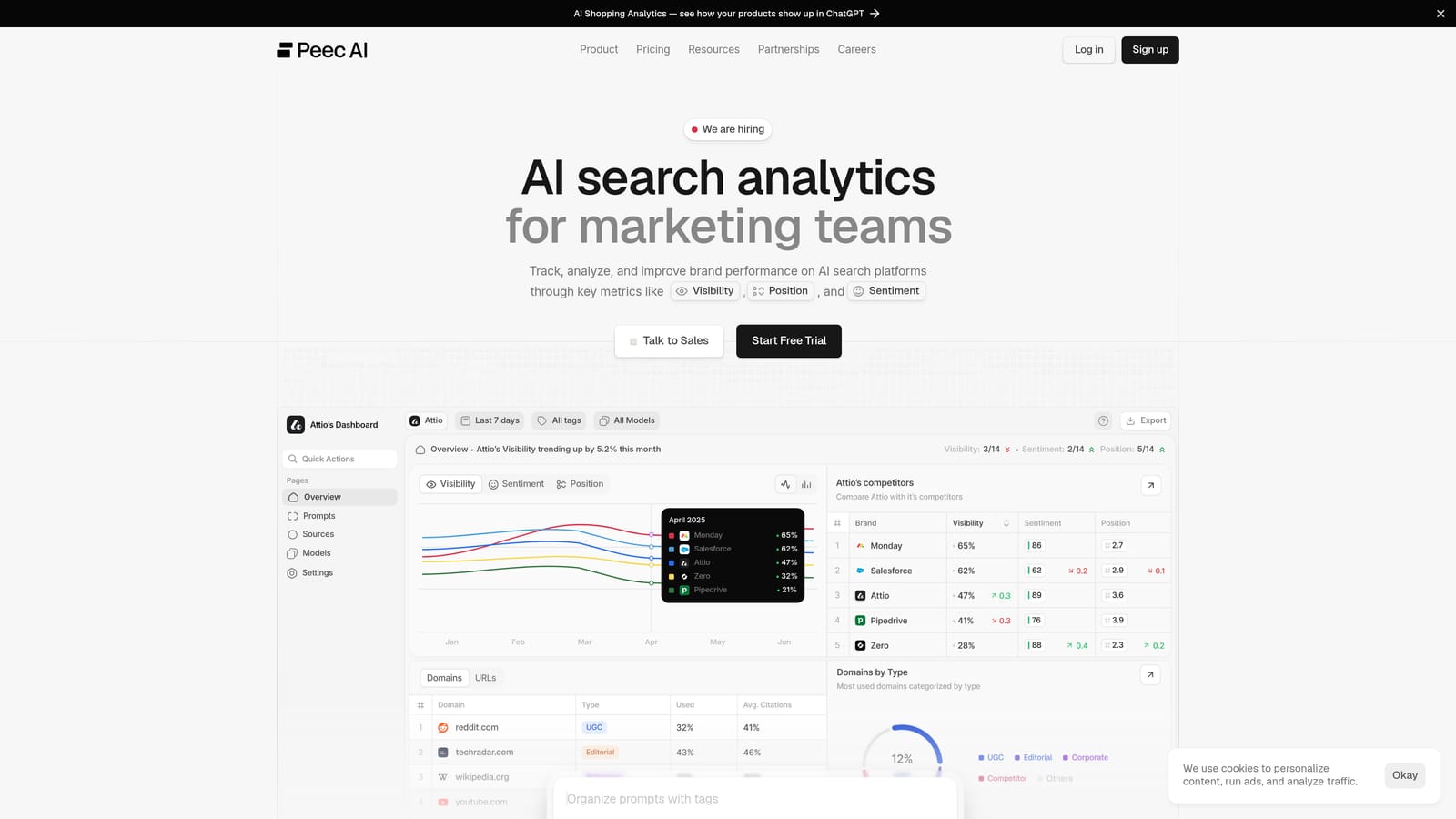
Peec is an AI brand monitoring tool that tracks how often and how favorably your brand and competitors appear in generative AI responses, with a focus on share-of-voice analysis across multiple models.
Where This Tool Shines
Peec's strength is in competitive context. Rather than just telling you whether your brand appears in AI responses, it shows you how your presence compares to specific competitors across the same topic landscape. Share-of-voice data in AI search is still a relatively new metric, and Peec is built around making it legible and actionable for marketing teams.
The sentiment analysis layer adds useful nuance. Knowing that your brand appears frequently in AI responses is less meaningful if those appearances describe you unfavorably. Peec surfaces both dimensions so teams can distinguish between visibility problems and positioning problems.
Key Features
Brand Mention Tracking: Monitors how often your brand appears in AI-generated responses across multiple models.
Competitive Share-of-Voice Analysis: Benchmarks your AI visibility against specific competitors in shared topic areas.
Sentiment Analysis: Evaluates how your brand is described in AI responses, not just whether it appears.
Keyword and Topic Monitoring: Identifies topic areas where AI visibility opportunities exist for your brand.
Trend Reporting: Tracks how your brand's AI presence changes over time, useful for measuring the impact of content efforts.
Best For
Peec is a focused tool best suited for brand managers and SEO strategists who want clear competitive intelligence on AI share-of-voice. It's a monitoring-first platform, so teams that also need content generation or publishing capabilities will need additional tools.
Pricing
Visit peec.ai for current plan details and pricing.
6. Promptwatch
Best for: SEO strategists who need granular, prompt-level data on which queries drive brand mentions in AI responses.
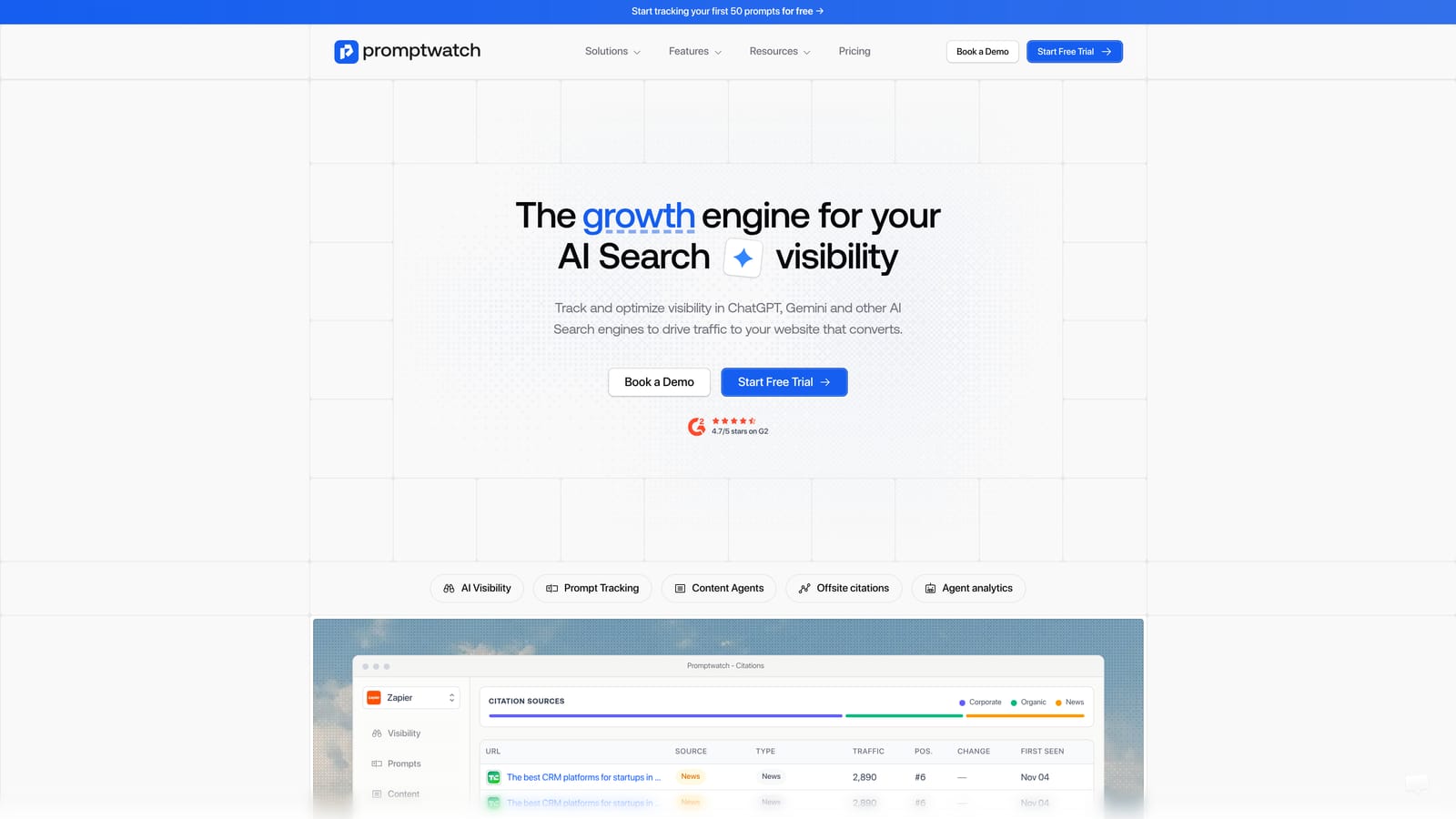
Promptwatch is a prompt-level AI monitoring tool that tracks which specific queries trigger brand mentions across AI models, giving strategists detailed data on the exact prompts that determine AI visibility outcomes.
Where This Tool Shines
Where most monitoring tools tell you whether your brand appears in AI responses, Promptwatch tells you exactly which prompts are responsible. That granularity is meaningful for content strategists who want to map their content program directly to the queries that drive AI citations. Instead of optimizing broadly, you can identify the specific question types where your brand appears, where competitors dominate, and where neither of you shows up yet.
The historical tracking capability adds a temporal dimension that's often missing from AI monitoring tools. Tracking how mention patterns shift over time lets teams measure whether content investments are actually moving the needle on AI visibility, rather than relying on snapshot data.
Key Features
Prompt-Level Tracking: Identifies the specific queries that surface your brand in AI responses, not just aggregate mention counts.
Competitive Prompt Analysis: Shows which prompts favor competitors over your brand, highlighting gaps to address.
Historical Tracking: Monitors how AI mention patterns change over time as content strategies evolve.
Query Categorization: Maps AI visibility data by topic and intent, making it easier to connect to content planning.
Content Strategy Signal: Translates prompt-level data into actionable priorities for content teams targeting high-value AI visibility opportunities.
Best For
Promptwatch is particularly valuable for SEO strategists and content teams that want to build a prompt-informed content strategy. It's a specialized monitoring tool, so teams also needing content generation or automated publishing will need to combine it with other platforms.
Pricing
Visit promptwatch.io for current pricing and plan options.
Which Tool Fits Your GEO Strategy
The right tool depends on where your biggest gap is in the GEO workflow. Here's a quick way to think about it.
If you need a full-stack platform that handles AI visibility monitoring, content generation, and automated publishing in one place, Sight AI is the strongest option on this list. It's built specifically around the GEO workflow end-to-end, which means fewer integrations to manage and a tighter feedback loop between what you're monitoring and what you're publishing.
If content generation is your primary bottleneck and you already have monitoring in place, Writesonic covers high-volume, multi-format production well. If you need custom AI content pipelines connected to your own data, AirOps gives you that flexibility at the workflow level.
For teams focused primarily on monitoring and competitive intelligence, Profound, Peec, and Promptwatch each bring a distinct angle. Profound is best for enterprise teams with formal reporting requirements. Peec is strongest for share-of-voice benchmarking against specific competitors. Promptwatch goes deepest on prompt-level data for strategists who want to map content priorities directly to AI query patterns.
Many teams will find that a monitoring-only or content-only tool gets them part of the way there, but leaves gaps elsewhere. If you're serious about building AI visibility as a sustained channel, a platform that connects those pieces matters.
Stop guessing how AI models like ChatGPT and Claude talk about your brand. Start tracking your AI visibility today and see exactly where your brand appears across top AI platforms, which content opportunities you're missing, and how to automate your path to consistent organic growth.