Getting your pages indexed quickly is one of the most underrated levers in SEO. You can publish the best content on the web, but if search engines haven't crawled and indexed it, it simply doesn't exist in search results. The challenge is that traditional crawl queues can take days or even weeks to process new and updated pages, costing you rankings and traffic you've already earned.
Modern website indexing tools solve this by automating sitemap submissions, integrating with protocols like IndexNow, and notifying search engines the moment content goes live. Whether you're a founder launching a new site, a marketer publishing at scale, or an agency managing dozens of client domains, the right indexing tool can meaningfully accelerate your organic growth.
This guide covers the best website indexing tools for SEO in 2026, evaluated on speed, automation depth, integration options, and overall value. It also includes tools that go beyond traditional indexing to help you generate, optimize, and track the content that gets indexed and cited in AI-powered search.
1. Sight AI
Best for: Marketers and agencies who want a single platform for content generation, automated indexing, and AI visibility tracking.
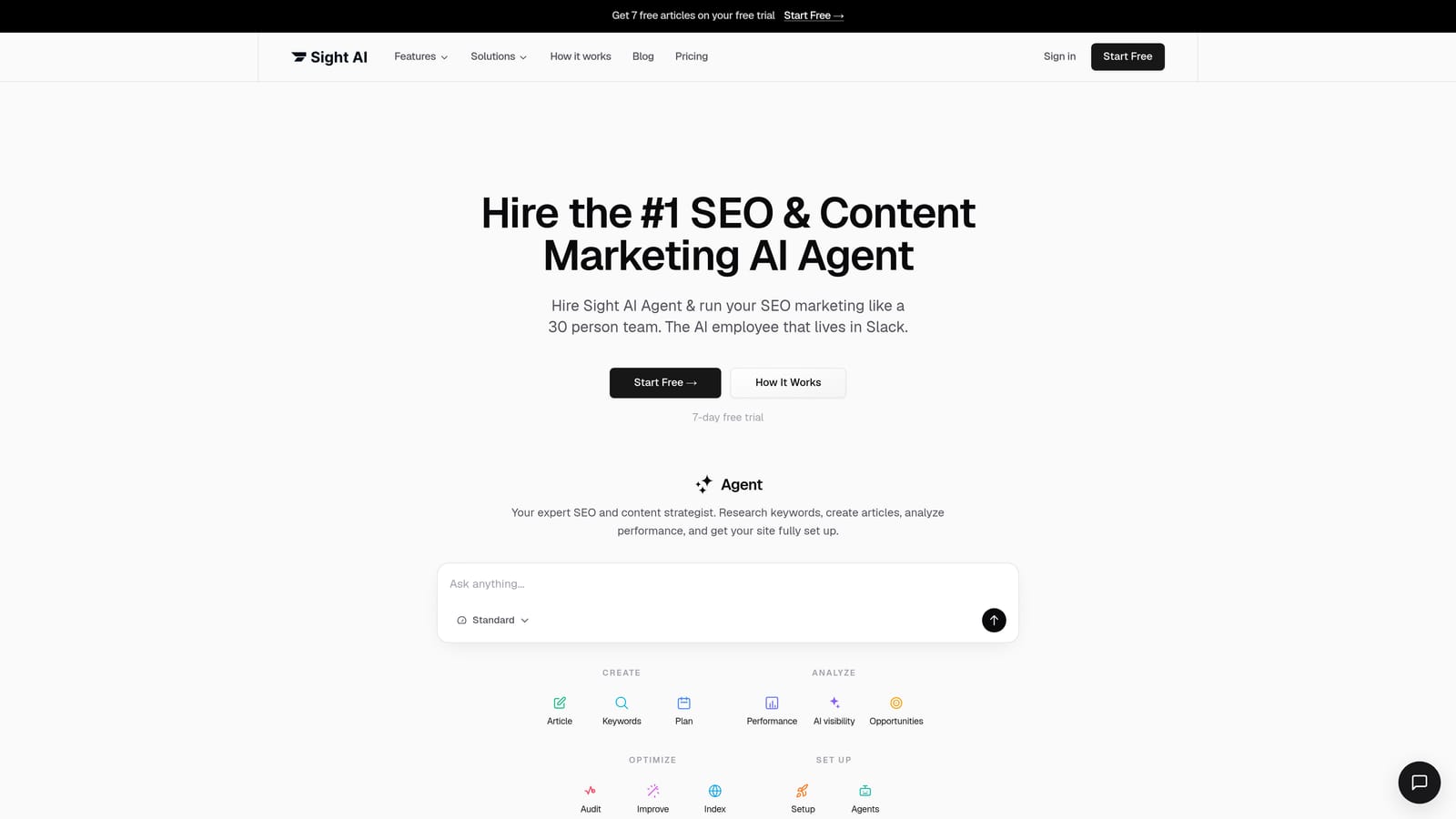
Sight AI is an all-in-one AI-powered SEO platform that combines website indexing automation with AI content generation and brand visibility tracking across major AI models.
Where This Tool Shines
Most SEO teams cobble together separate tools for content creation, CMS publishing, sitemap management, and indexing. Sight AI collapses that stack into a single workflow. When you publish a piece of content, the platform can automatically update your sitemap, submit the URL via IndexNow, and push it to your CMS without manual intervention at each step.
What genuinely sets it apart is the AI visibility layer. Beyond getting pages indexed by traditional search engines, Sight AI tracks how your brand is mentioned across ChatGPT, Claude, Perplexity, and other AI platforms. In 2026, where AI-generated answers increasingly drive discovery, knowing whether your indexed content is being cited by AI models is as important as knowing your Google rankings.
Key Features
IndexNow Integration: Instantly submits new and updated URLs to all supporting search engines, bypassing the standard crawl queue delay.
Automated Sitemap Updates: Triggers sitemap refreshes automatically when new content is published, keeping search engines informed without manual effort.
CMS Auto-Publishing: Reduces the manual steps between content creation and live publication, shortening the path to indexing.
13+ Specialized AI Agents: Generates SEO and GEO-optimized content across formats including listicles, guides, and explainers, with an Autopilot Mode for hands-off production.
AI Visibility Score: Tracks brand mentions and sentiment across 6+ AI platforms, showing you exactly where and how AI models reference your content.
Best For
Sight AI is best suited for growth-focused marketers, founders, and agencies who want to move beyond publishing content and hoping it gets indexed. If you're running content at scale and need indexing, AI visibility, and content generation to work together in one platform, this is the most integrated option on this list.
Pricing
See trysight.ai for current pricing and available plans.
2. Writesonic
Best for: Content teams that need high-volume AI-assisted content creation with SEO considerations built in.
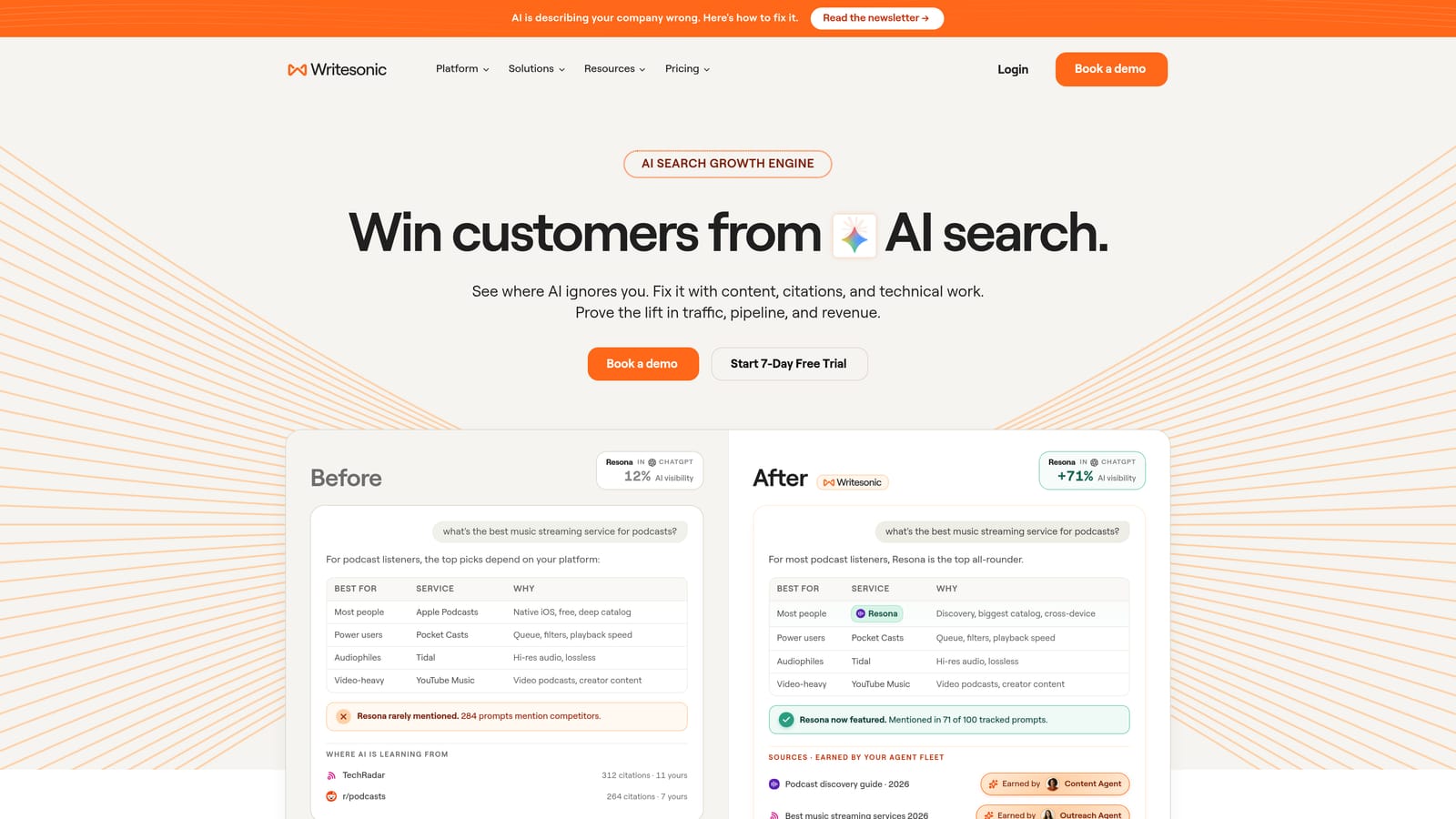
Writesonic is an AI content generation platform with SEO-focused workflows for producing blog posts, landing pages, and other content types designed to perform in search.
Where This Tool Shines
Writesonic is built for teams that need to produce a lot of content quickly without sacrificing SEO fundamentals. The platform includes optimization suggestions during the writing process, so content is structured for search from the start rather than optimized as an afterthought.
It's worth being clear about scope: Writesonic is primarily a content creation tool. It doesn't offer native IndexNow integration or direct indexing automation. Think of it as a strong upstream component in an indexing workflow. You create the content here, then route it through a publishing and indexing pipeline elsewhere.
Key Features
AI Content Creation: Generates blog posts, landing pages, product descriptions, and SEO articles at scale using large language models.
Built-in SEO Optimization: Provides keyword and structure suggestions during content creation to improve search readiness before publication.
High-Volume Workflows: Supports teams that need to produce content consistently across multiple topics, categories, or client accounts.
CMS Integrations: Connects with popular content management platforms to reduce friction between content creation and publishing.
Best For
Writesonic is a strong fit for content teams and agencies that prioritize volume and SEO quality in their writing process. It's most valuable when paired with a separate indexing solution, making it better suited for teams comfortable managing a multi-tool workflow.
Pricing
A free tier is available. See writesonic.com for current plan pricing and limits.
3. AirOps
Best for: Technical SEO and growth teams who need custom, automated pipelines connecting content generation, publishing, and indexing.
AirOps is an LLM-powered workflow automation platform that lets SEO teams build repeatable pipelines for content production, optimization, and distribution.
Where This Tool Shines
AirOps takes a different approach from most tools on this list. Rather than offering a fixed set of SEO features, it gives you a visual workflow builder that you can configure to match your specific content operations. Teams use it to chain together steps like AI content generation, quality checks, CMS publishing, and indexing triggers.
This flexibility is genuinely powerful for teams with complex or non-standard workflows. If your content operation involves multiple data sources, approval stages, or custom integrations, AirOps can handle that complexity in ways that rigid, all-in-one tools cannot.
Key Features
Visual Workflow Builder: Create multi-step automated pipelines for SEO content operations without writing code for every integration.
LLM Integrations: Connect to leading AI models for content generation, summarization, and optimization tasks within your workflows.
CMS and Publishing Connections: Link your workflows to publishing platforms so content moves from generation to live without manual handoffs.
Custom Technical SEO Automation: Build workflows that include indexing steps, URL submission logic, or other technical tasks specific to your setup.
Best For
AirOps is best for technically capable SEO and growth teams that need flexibility above all else. If you have unique workflow requirements and the technical bandwidth to configure a pipeline builder, AirOps offers significant leverage. It's less suited to teams looking for an out-of-the-box solution.
Pricing
See airops.com for current pricing and enterprise options.
4. Profound
Best for: SEO teams who want to understand which of their indexed pages are being cited in AI-generated search answers.
Profound is an AI search visibility platform that tracks how brands appear in AI-generated answers, helping teams connect their indexed content to AI search performance.
Where This Tool Shines
It's worth framing what Profound actually does in the context of this list. It isn't a traditional indexing tool. It doesn't submit URLs or manage sitemaps. What it does is help you understand the downstream outcome of your indexing and content strategy: whether the pages you've gotten indexed are actually being referenced by AI models when users ask relevant questions.
In 2026, this distinction matters. Getting indexed by Google is one goal. Getting cited by ChatGPT or Perplexity when someone asks about your category is another. Profound helps you track the second outcome, which increasingly drives brand discovery and trust.
Key Features
AI Answer Engine Tracking: Monitors how your brand appears across major AI-powered search platforms and answer engines.
Indexed Page Citation Analysis: Identifies which of your indexed pages are being pulled into AI-generated responses, so you know what's actually working.
Content Optimization Insights: Surfaces recommendations for improving content so it's more likely to be cited in AI answers.
Multi-Platform Monitoring: Tracks AI visibility across multiple platforms simultaneously rather than requiring manual spot-checks.
Best For
Profound is best for SEO and content teams that are already publishing and indexing content at a reasonable scale and want to understand their AI search performance. It's a visibility and strategy tool, not an indexing automation tool, so it works best alongside a platform that handles the indexing side.
Pricing
See profound.com for current pricing details.
5. Peec
Best for: SEO teams tracking which indexed pages AI models reference most often, to prioritize content optimization efforts.
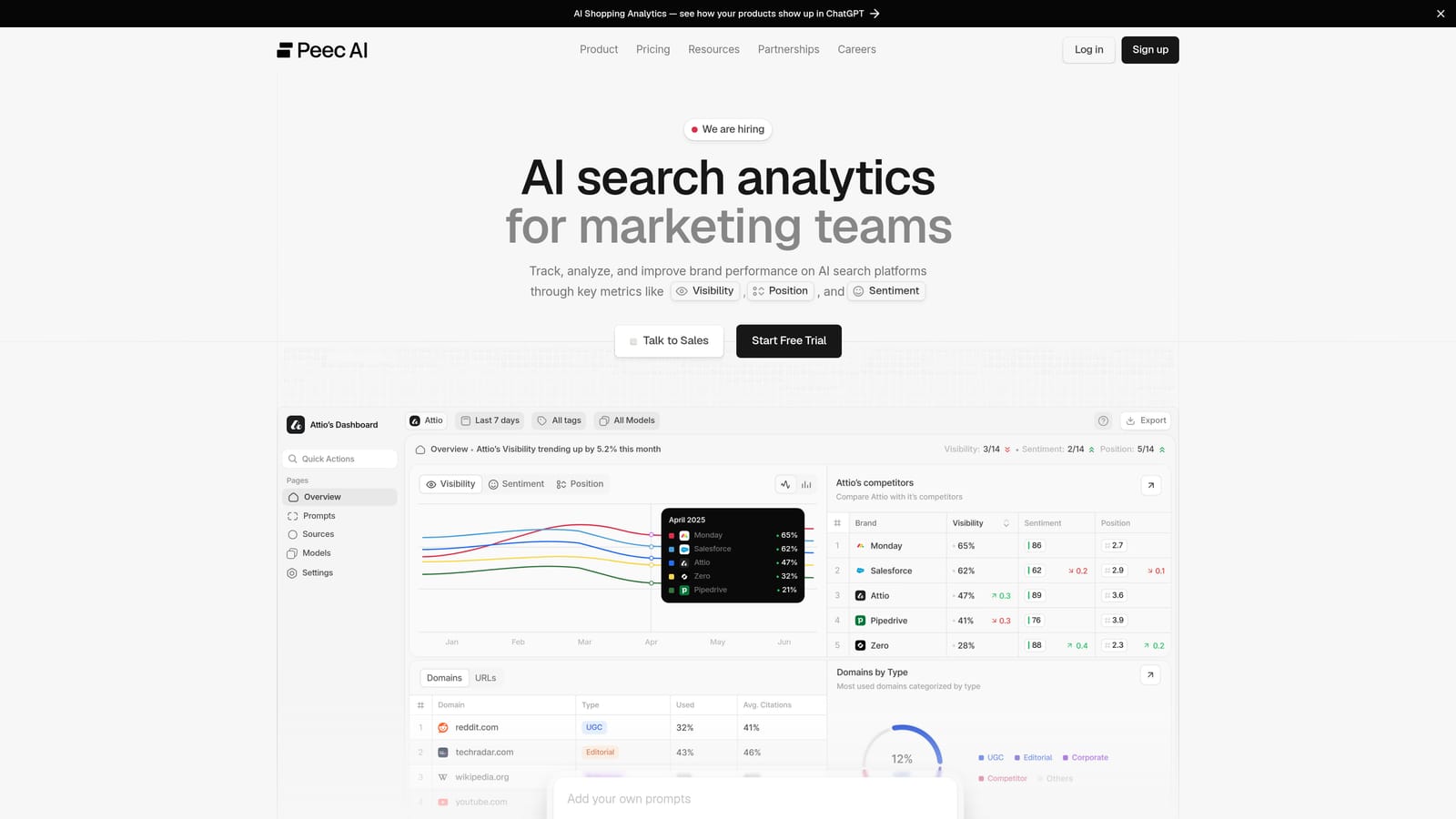
Peec is an AI answer monitoring tool that tracks brand citations in AI-generated search results, helping teams connect indexed content to AI search performance.
Where This Tool Shines
Like Profound, Peec sits in the AI visibility category rather than the traditional indexing automation category. Its core value is showing you the relationship between your indexed content and how often AI models choose to reference it when answering user queries. That relationship is becoming one of the most important signals for content strategy in AI-first search environments.
Where Peec differentiates is in its focus on citation frequency. By identifying which specific pages AI models reach for most often, it gives content teams a clear signal about what's resonating in AI search, separate from traditional ranking metrics.
Key Features
Brand Citation Tracking: Monitors how often and in what context AI-generated results reference your brand and content.
Page-Level Citation Data: Shows which specific indexed pages are being referenced by AI models, not just overall brand mentions.
Content Prioritization Signals: Helps teams decide which pages to update or optimize based on their AI citation performance.
Ongoing Monitoring Dashboard: Provides a persistent view of AI visibility trends over time rather than one-off snapshots.
Best For
Peec is a good fit for SEO teams that are serious about GEO (Generative Engine Optimization) and want data to guide which content gets prioritized for updates. It's a complementary tool that works best when paired with a platform that handles content creation and indexing automation.
Pricing
See peec.ai for current pricing information.
6. Promptwatch
Best for: Teams building GEO strategies who want to track how AI models respond to specific brand and industry prompts over time.
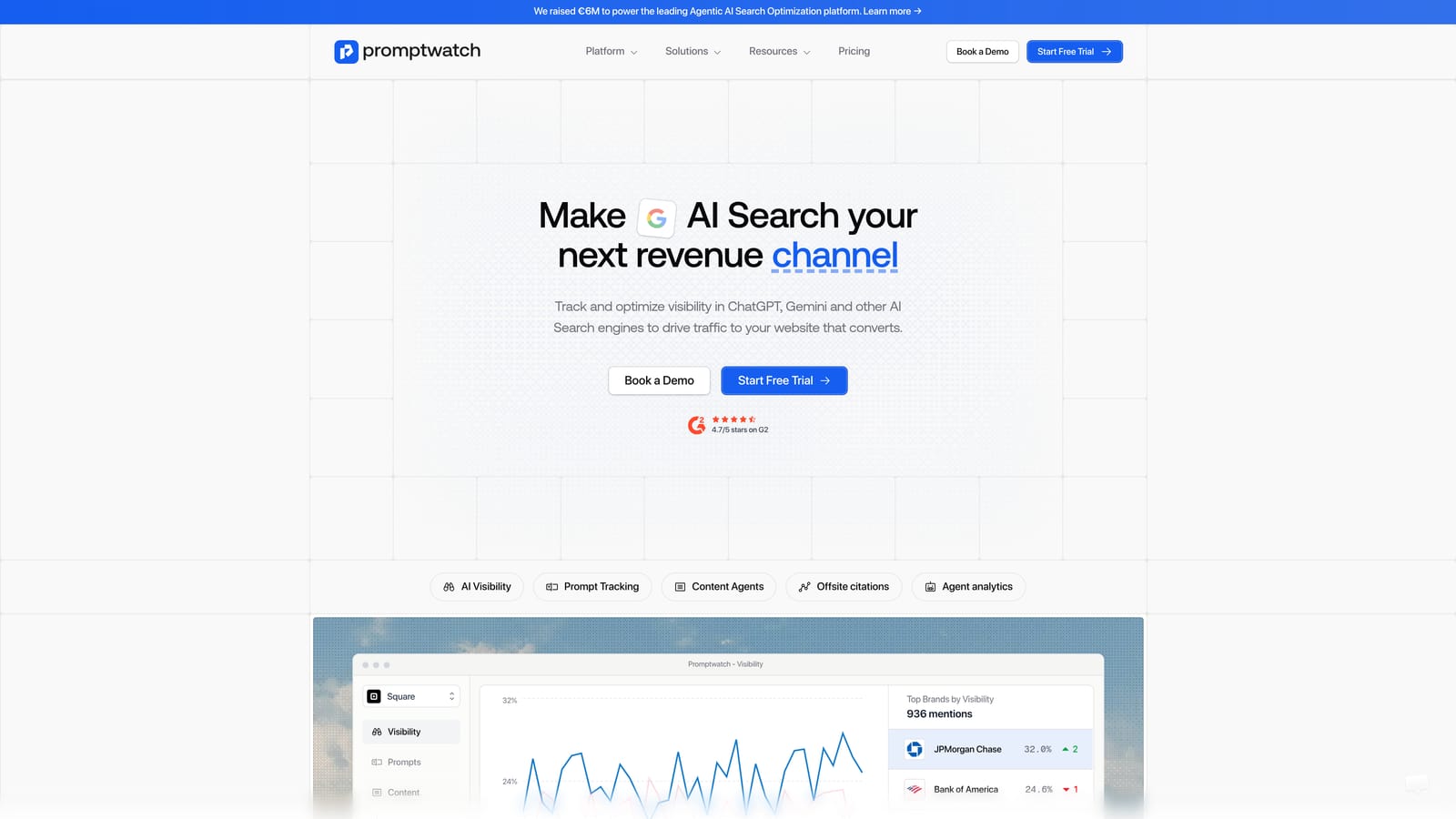
Promptwatch is a prompt monitoring tool that tracks how AI models respond to brand and industry-related queries, revealing which indexed content is being surfaced in AI answers.
Where This Tool Shines
Promptwatch takes a prompt-centric approach to AI visibility. Rather than tracking brand mentions broadly, it lets you define specific prompts that are relevant to your brand or industry, then monitors how AI models respond to those prompts over time. This is particularly useful for understanding how your content is being interpreted and cited in context.
For teams developing GEO strategies, this granularity is valuable. You can see not just whether your brand appears in AI answers, but in response to which questions, in what framing, and how that changes as you publish and index new content.
Key Features
Prompt-Level Monitoring: Tracks AI model responses to specific prompts you define, rather than relying on broad brand mention sweeps.
Indexed Content Citation Visibility: Reveals which of your pages AI models are referencing when generating answers to your tracked prompts.
GEO Strategy Support: Provides the data needed to develop and refine a Generative Engine Optimization content strategy.
Prompt History and Trend Tracking: Monitors how AI responses to your prompts evolve over time, giving you a longitudinal view of your AI search presence.
Best For
Promptwatch is best for SEO strategists and content teams who want a detailed, prompt-specific view of their AI search visibility. It's a research and strategy tool more than an execution tool, making it most effective when paired with platforms that handle content production and indexing.
Pricing
See promptwatch.io for current pricing details.
Which Tool Is Right for Your Team
The tools on this list span two distinct but increasingly connected categories: indexing automation and AI visibility. Understanding which category you need most will help you make the right choice.
For most marketers, founders, and agencies who want a single platform to generate content, automate indexing, and track AI visibility, Sight AI is the most integrated option available. Its IndexNow integration, automated sitemap updates, CMS auto-publishing, and AI Visibility Score address the full workflow in one place, from content creation to search engine discovery to AI citation tracking.
If you need high-volume AI content creation with SEO structure built in, Writesonic is a solid upstream choice, though you'll need to pair it with an indexing solution. Teams with complex, custom content operations will find AirOps worth exploring for its workflow flexibility.
For teams focused specifically on understanding how their indexed content performs in AI-generated answers, Profound, Peec, and Promptwatch each offer a distinct angle. Profound gives you broad AI search presence data. Peec focuses on page-level citation frequency. Promptwatch lets you track responses to specific prompts over time. Any of these can complement an indexing platform to give you a more complete picture of your SEO performance in 2026.
The bottom line: getting content indexed faster is table stakes. What separates high-performing SEO programs now is knowing whether that indexed content is being discovered by AI models and acting on that data. Start tracking your AI visibility today and see exactly where your brand appears across the AI platforms your audience is already using.