Every day your new content sits unindexed is a day competitors capture traffic you should own. Search engines don't crawl on your schedule, and with the sheer volume of content published across the web continuing to grow, freshly published pages can wait days or even weeks before a crawler discovers them organically.
The right indexing speed tools change that equation. Whether you're running a high-velocity content operation, managing thousands of product pages, or scaling a SaaS blog, getting your pages into search indexes faster is one of the highest-leverage moves available to any SEO team.
This guide covers the top website indexing speed tools available in 2026, evaluated on submission speed, automation depth, multi-engine support, and how well they integrate with modern content workflows. You'll find tools ranging from dedicated indexing platforms to broader suites with strong indexing capabilities, so you can find the right fit regardless of team size or technical resources.
1. Sight AI
Best for: Teams that want automated indexing, AI content generation, and AI visibility tracking in one platform.
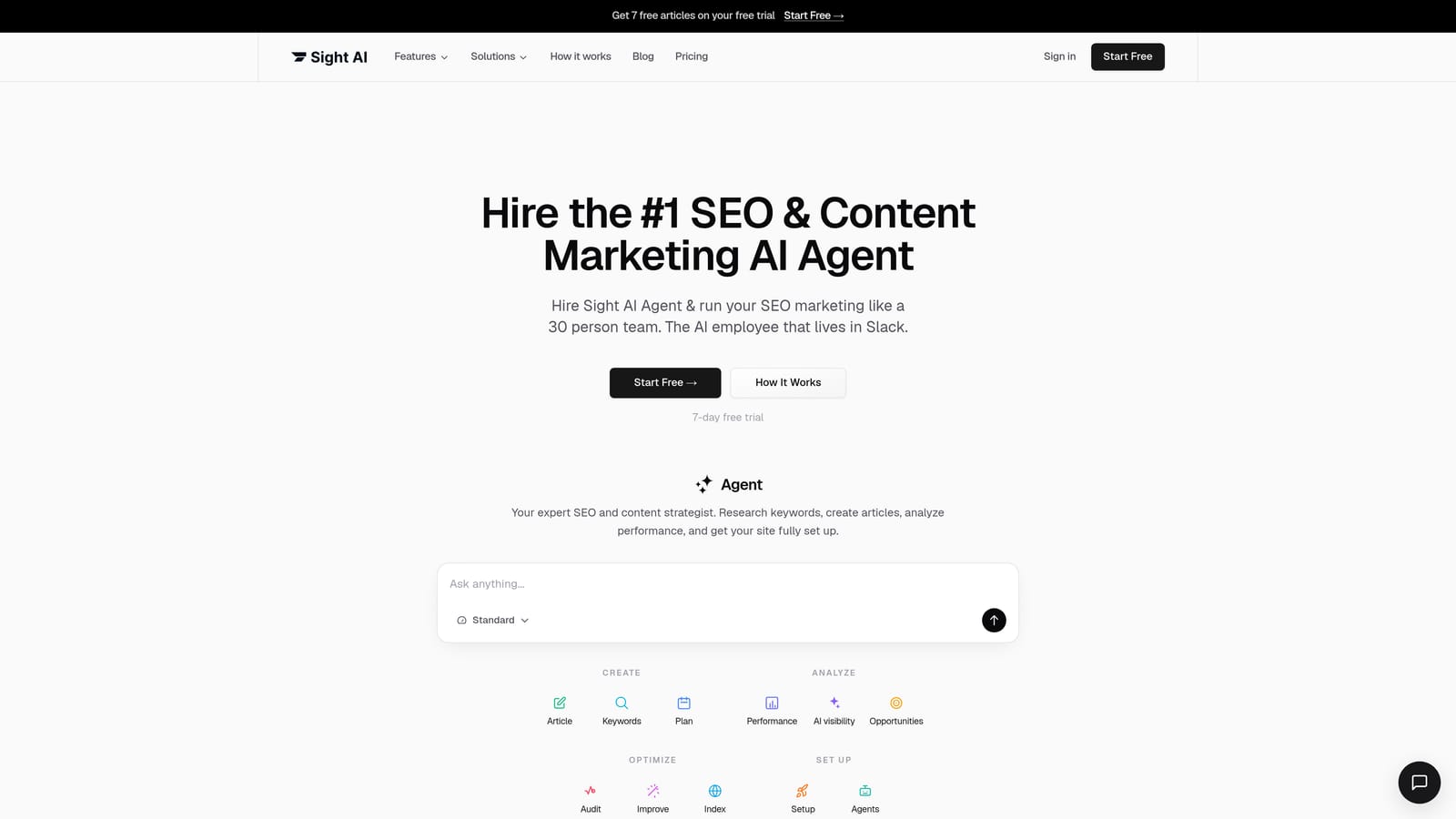
Sight AI is an all-in-one platform that combines automated website indexing via IndexNow, AI-powered content generation, CMS auto-publishing, sitemap management, and brand visibility tracking across major AI platforms.
Where This Tool Shines
Sight AI's indexing capability is built around the IndexNow protocol, which allows new URLs to be submitted to participating search engines at the moment of publication rather than waiting for a crawler to discover them passively. This is particularly valuable for high-output content teams where every hour of indexing delay translates to lost traffic opportunity.
What sets Sight AI apart from standalone indexing tools is how tightly the indexing workflow connects to content creation. When content is generated and published through the platform, the indexing trigger fires automatically. You're not managing a separate submission tool alongside your CMS. The whole pipeline, from writing to publishing to indexing, runs in one place.
Key Features
IndexNow Integration: Automatically submits new and updated URLs to participating search engines (including Bing and Yandex) at the moment of publication, eliminating passive crawl wait times.
Automated Sitemap Updates: Keeps your XML sitemap current without manual intervention, ensuring search engines always have an accurate map of your content.
CMS Auto-Publishing: Connects content creation directly to publishing and indexing workflows, reducing the gap between "content written" and "content discoverable."
13+ Specialized AI Agents: Generates SEO and GEO-optimized content across formats including listicles, guides, and explainers, with an Autopilot Mode for teams that want to run content operations without manual triggers.
AI Visibility Score: Tracks brand mentions across 6+ AI platforms including ChatGPT, Claude, and Perplexity, with sentiment analysis and prompt-level tracking so you understand how AI models are representing your brand.
Best For
Sight AI is best suited for marketers, founders, and agencies who want a unified platform rather than a collection of point solutions. If your team is simultaneously trying to publish content faster, index it faster, and understand how it performs in AI search, this platform addresses all three without requiring separate tool subscriptions.
Pricing
Contact Sight AI directly for current pricing. Plans are available for individual marketers, founders, and agency teams at various scales.
2. Writesonic
Best for: Content teams that need AI-powered writing with built-in SEO metadata and CMS publishing workflows.
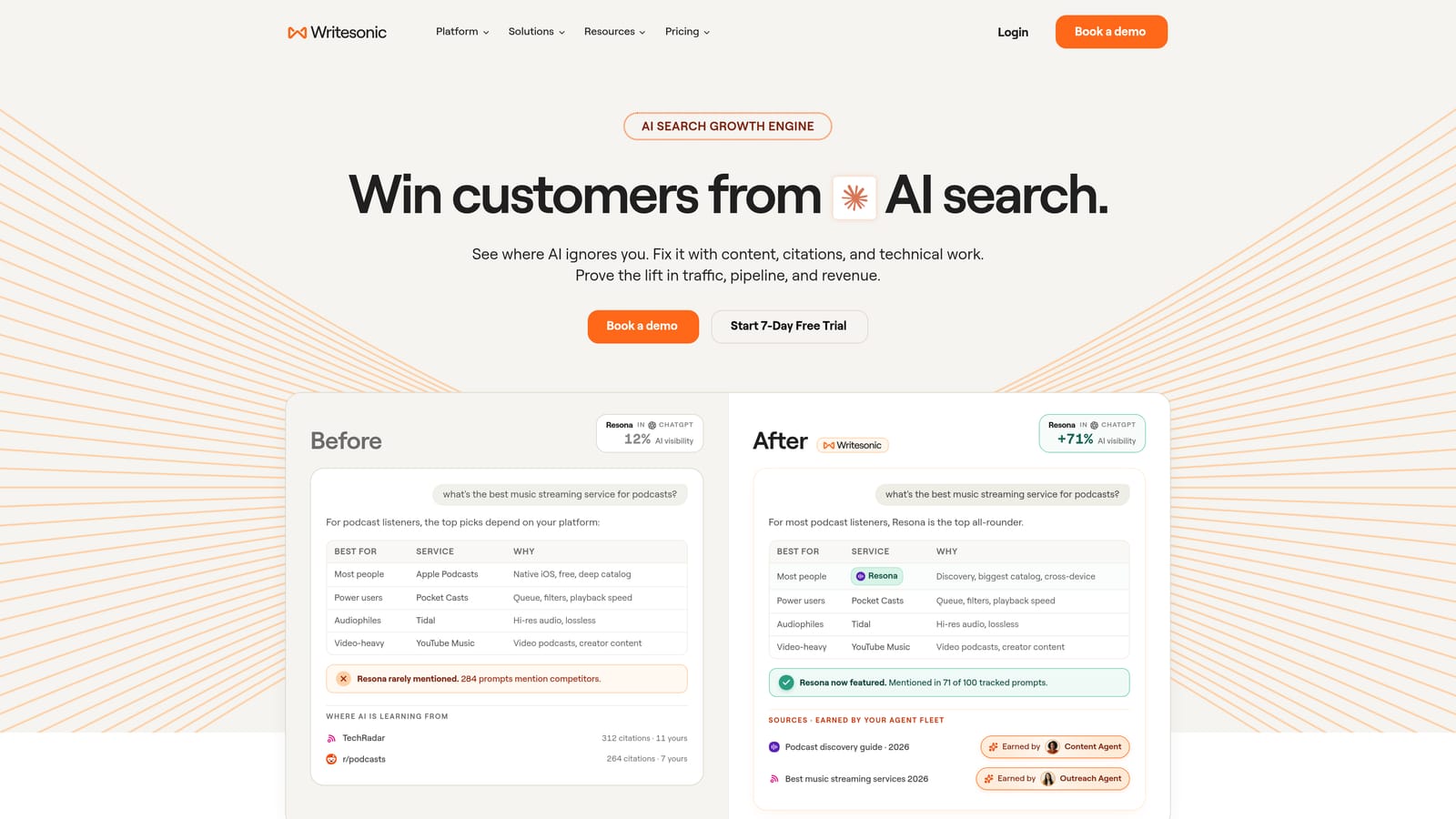
Writesonic is an AI content generation platform with SEO-focused writing tools, CMS integrations, and publishing workflows designed to help teams produce and distribute content efficiently.
Where This Tool Shines
Writesonic's strength is in the content creation layer. It generates blog posts, landing pages, and other content types with SEO metadata baked in, which means the content coming out of the platform is structured for discoverability from the start. For teams that struggle with the volume and consistency of content production, this is a meaningful accelerator.
Its CMS integrations allow content to move from generation to publishing with less friction, which indirectly supports faster indexing by reducing the manual steps between "content ready" and "content live." It's worth noting that Writesonic is primarily a content generation tool rather than a dedicated indexing submission platform, so teams with specific indexing automation needs may want to pair it with a dedicated indexing solution.
Key Features
AI Blog and Landing Page Generation: Produces long-form content with SEO metadata, including title tags, meta descriptions, and structured headings.
CMS Integrations: Connects to content management systems to streamline the path from content creation to live publication.
SEO Optimization Suggestions: Provides recommendations within the content creation workflow to improve search relevance before publishing.
Brand Voice Customization: Allows teams to define and maintain a consistent brand tone across all generated content.
Best For
Writesonic works well for content marketing teams that need to scale output without scaling headcount. It's particularly useful for organizations where the bottleneck is content production volume rather than the technical indexing layer itself.
Pricing
A free plan is available. Paid plans start at approximately $16/month, though you should verify current pricing directly on the Writesonic website as plans and tiers change regularly.
3. AirOps
Best for: Growth and content operations teams building scalable, automated AI-powered content pipelines.
AirOps is a workflow automation platform that enables teams to build AI-powered pipelines for content creation, enrichment, and publishing at scale.
Where This Tool Shines
AirOps operates at the operations layer. Rather than being a content tool or an indexing tool specifically, it's a platform for building automated workflows that connect those functions together. Think of it as the connective tissue between your AI writing tools, your CMS, and your publishing triggers.
For teams managing high-volume content operations, this kind of automation infrastructure can be genuinely valuable. When content generation, review, publishing, and indexing notification all happen through a configured pipeline, the manual overhead drops significantly. The trade-off is that AirOps requires more setup investment upfront compared to tools with out-of-the-box indexing capabilities.
Key Features
Visual Workflow Builder: Lets teams design and automate content operations end-to-end without requiring deep engineering resources.
AI-Powered Data Enrichment: Enables content generation and enrichment steps to be embedded directly within automated workflows.
CMS and Publishing Integrations: Connects to existing publishing tools so content can move through the pipeline to publication automatically.
Scalable Pipelines: Designed to handle high-volume content operations where manual management would create bottlenecks.
Best For
AirOps is best suited for growth teams and content operations leads who have the technical appetite to configure custom workflows and want flexibility over a more opinionated, all-in-one solution. It's less plug-and-play than some alternatives but more customizable.
Pricing
Pricing varies by plan and usage volume. Check the AirOps website directly for current tier details, as plans are subject to change.
4. Profound
Best for: SEO and content teams that need to understand how their brand surfaces in AI-generated search answers.
Profound is an AI search visibility platform that tracks how brands appear in AI-generated answers, helping teams understand which content is surfacing in AI search and what to prioritize for optimization.

Where This Tool Shines
It's important to frame Profound accurately: it's not a URL submission or crawl acceleration tool. Its connection to indexing speed is more strategic than technical. By showing you which of your pages are actually surfacing in AI-generated answers and which are invisible, Profound helps you understand where to direct your indexing and content optimization efforts.
This kind of visibility intelligence is increasingly important as AI answer engines become a meaningful traffic source. If your pages are being indexed but not appearing in AI search results, that's a different problem than slow indexing, and Profound helps you diagnose it.
Key Features
AI Answer Tracking: Monitors how and where your brand appears in AI-generated search responses across major platforms.
Multi-Platform Visibility: Tracks presence across AI answer engines so you get a complete picture rather than a single-platform view.
Content Performance Insights: Surfaces which content is performing in AI search, guiding decisions about what to update, expand, or create next.
Competitive Benchmarking: Shows how your AI search visibility compares to competitors, helping prioritize where to close gaps.
Best For
Profound is best for enterprise SEO teams and content strategists who are actively working to optimize for AI search visibility alongside traditional search. It complements indexing tools rather than replacing them.
Pricing
Profound offers enterprise-focused plans. Check the Profound website directly for current pricing, as details are not publicly listed at a fixed rate.
5. Peec
Best for: Brands looking to monitor and improve how their content appears in AI-driven search results.
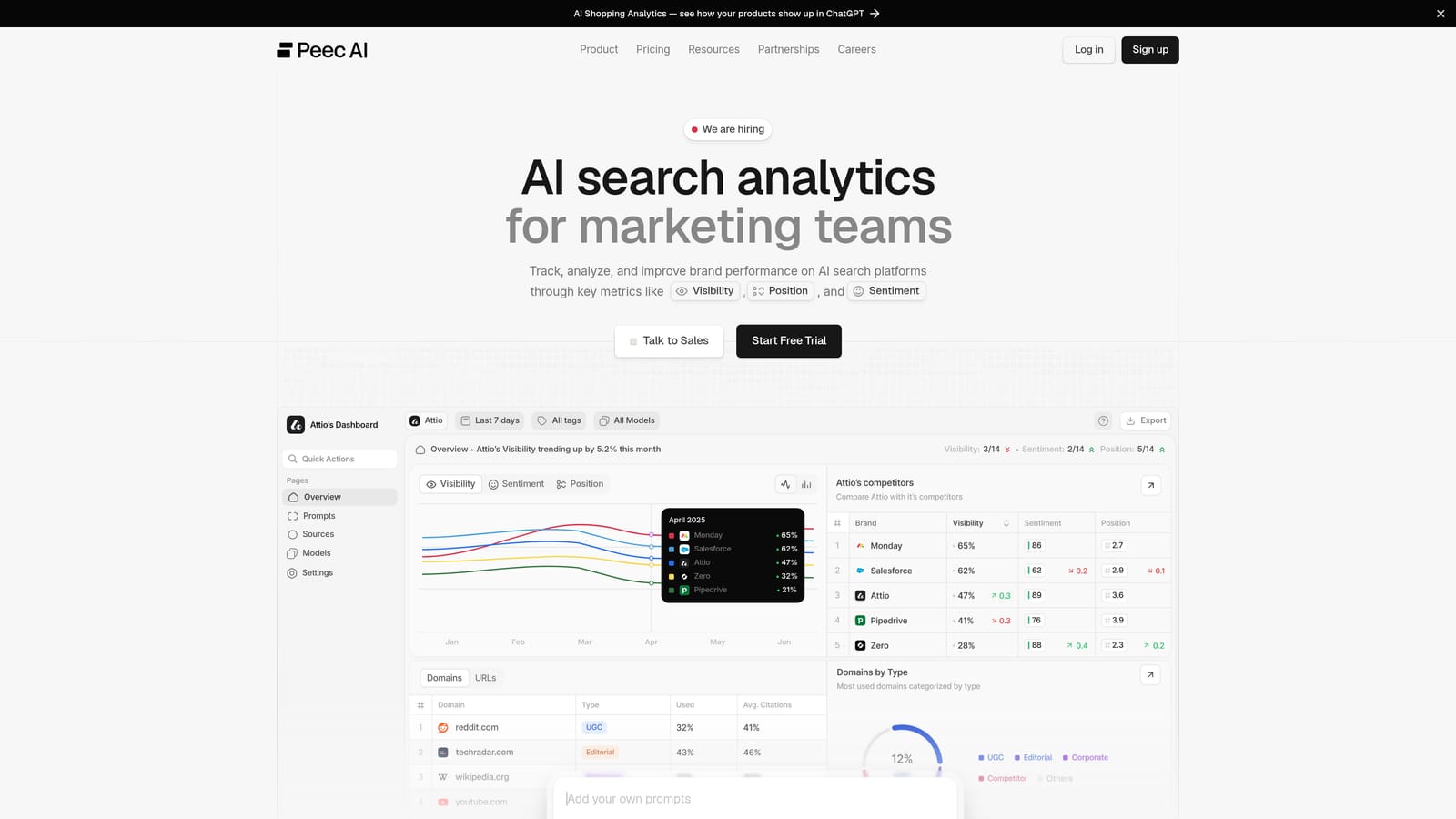
Peec is an AI answer engine optimization tool that helps brands track and improve how their content surfaces in AI-driven search results across platforms.
Where This Tool Shines
Like Profound, Peec sits in the AI visibility monitoring category rather than the direct indexing submission category. Its value is in helping teams identify content gaps and optimization opportunities in AI search, which informs what to publish and prioritize for indexing.
Where Peec differentiates is in its focus on answer engine optimization recommendations. It doesn't just show you where you're missing, it provides guidance on what changes might improve your content's chances of being cited in AI-generated answers. For teams building a GEO (Generative Engine Optimization) strategy alongside traditional SEO, this kind of actionable insight is useful.
Key Features
AI Search Result Monitoring: Tracks brand and keyword visibility within AI-generated search results across multiple platforms.
Optimization Recommendations: Provides actionable suggestions for improving content visibility in AI answer engines.
Multi-Platform Tracking: Monitors across multiple AI search environments rather than a single engine.
Content Gap Identification: Highlights areas where your brand lacks coverage in AI search, pointing to content creation opportunities.
Best For
Peec works well for SEO teams and digital marketers who are actively building a GEO strategy and want structured data on where their content is and isn't appearing in AI search. It pairs naturally with a dedicated indexing tool to close the loop between discovery and visibility.
Pricing
Check the Peec website directly for current pricing details, as plans and tiers are updated periodically.
6. Promptwatch
Best for: Brand and marketing teams that want prompt-level visibility into how AI models reference their brand.
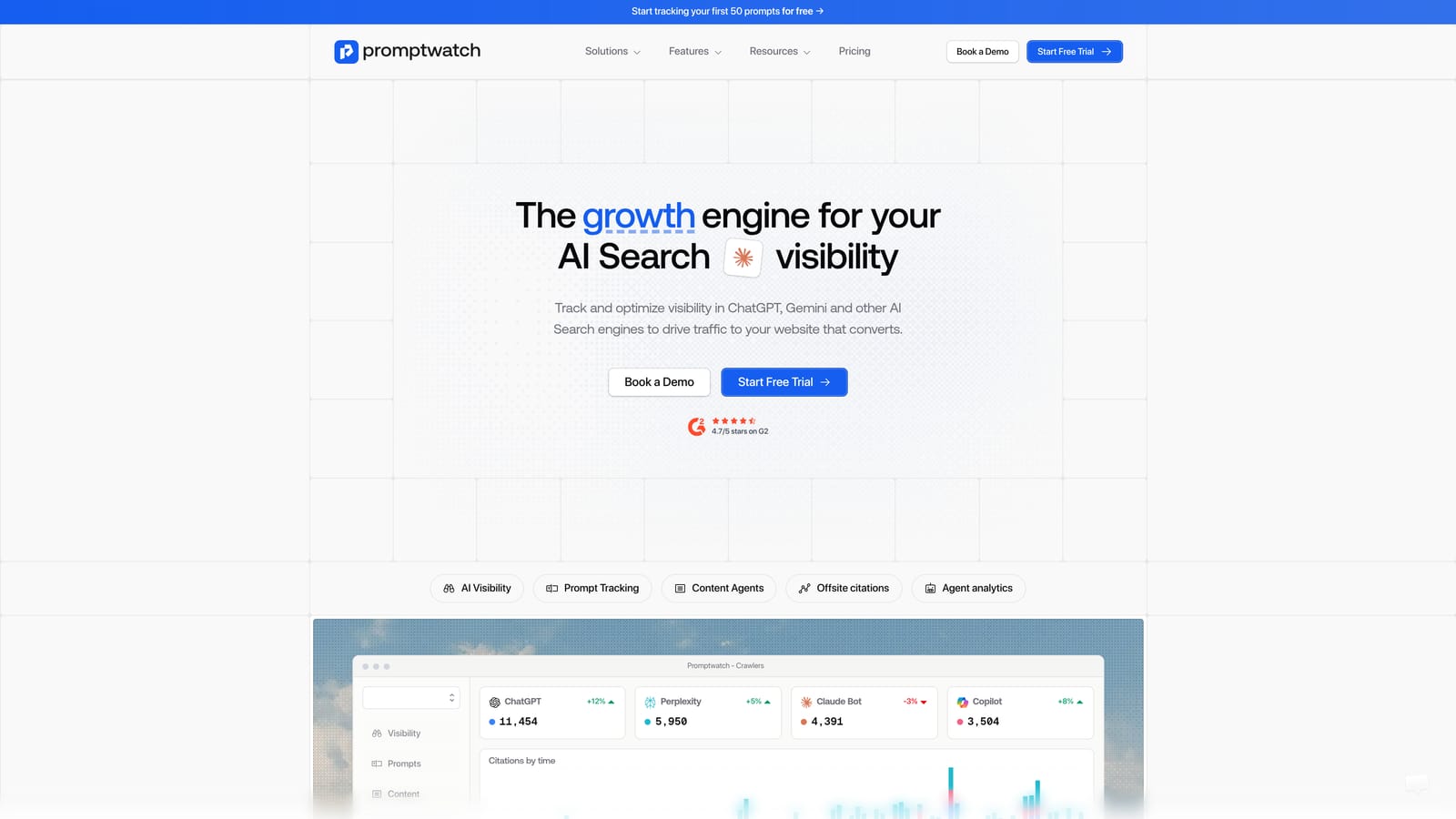
Promptwatch is a brand monitoring tool focused on tracking how often and in what context a brand appears in AI model responses, providing prompt-level visibility analytics.
Where This Tool Shines
Promptwatch takes a more granular approach than broader AI visibility platforms. Rather than just tracking whether your brand appears in AI search results, it monitors the specific prompts and contexts in which AI models mention your brand. This gives marketing teams a nuanced view of how AI models are characterizing their products, services, and messaging.
Again, it's worth being direct: Promptwatch is a monitoring and intelligence tool, not an indexing submission tool. Its relevance to the indexing speed conversation is that understanding how AI models currently represent your brand helps you identify which content needs to be created, updated, and indexed to shift that narrative over time.
Key Features
Prompt-Level Brand Tracking: Monitors specific AI model prompts and responses to identify where and how your brand is being mentioned.
Frequency and Sentiment Analysis: Tracks how often your brand appears in AI responses and whether the context is positive, neutral, or negative.
Multi-Platform Monitoring: Covers multiple AI models so you're not blind to how different platforms represent your brand differently.
Change Alerts: Notifies teams when brand mention patterns shift in AI responses, enabling faster response to narrative changes.
Best For
Promptwatch is a strong fit for brand managers and marketing teams at companies where AI-generated brand perception is a strategic concern. It's particularly useful for organizations in competitive categories where how AI models describe you versus competitors matters to purchase decisions.
Pricing
Check the Promptwatch website for current pricing and plan details.
Which Tool Is Right for Your Situation
The honest answer is that these tools serve meaningfully different purposes, and the right choice depends on where your biggest gap actually is.
If you're looking for a true all-in-one platform that handles content generation, automated indexing via IndexNow, sitemap management, CMS publishing, and AI visibility tracking under one roof, Sight AI is the strongest fit. It's built specifically for teams that want the entire pipeline from content creation to discoverability automated and connected.
If your primary bottleneck is content production volume and you need an AI writing tool with solid CMS publishing workflows, Writesonic addresses that layer well. For teams that want to build custom, scalable automation pipelines connecting content tools to publishing and indexing triggers, AirOps provides the flexible infrastructure to do that.
For teams working to understand and improve their presence in AI-generated search results, Profound, Peec, and Promptwatch each offer useful visibility into different dimensions of AI search performance. They work best as intelligence and strategy tools that inform what content to prioritize, rather than as replacements for dedicated indexing submission tools.
The most effective setups typically combine a dedicated indexing and content platform with an AI visibility monitoring layer. That combination closes the loop: you're accelerating how fast content enters search indexes while simultaneously tracking how it performs in the AI search environment that's increasingly shaping organic discovery.
If you're ready to stop guessing how AI models like ChatGPT and Claude are talking about your brand, Start tracking your AI visibility today and see exactly where your brand appears across top AI platforms, while automating the indexing workflows that get your content found faster.