AI sentiment tracking measures whether ChatGPT, Claude, Perplexity, Gemini and Google AI Overviews describe your brand positively, neutrally or negatively when users ask about your category. The most reliable approach is to run a fixed set of buyer-intent prompts on a schedule, classify the sentiment of each answer, and alert on shifts. Dedicated AI visibility platforms such as Sight AI do this natively. Social listening tools like Brand24 or Brandwatch are better suited to sentiment on the open web and social media.
The distinction matters. AI answers are generated, not published, so a classic listening tool cannot see what a model tells one user in a private chat. AI sentiment tools work differently. They query the models directly and analyze the responses. Listening tools analyze public posts that may later shape what the models say. Below is a comparison of both categories, followed by a practical AI sentiment audit you can run yourself.
AI sentiment tools at a glance
| Tool | Category | Monitors AI answers directly | Starting price |
|---|---|---|---|
| Sight AI | AI visibility platform | Yes (ChatGPT, Claude, Perplexity and more) | Custom, free trial |
| Brand24 | Social listening | Partial / emerging | $79/month |
| Brandwatch | Consumer intelligence | No (web and social) | Enterprise |
| Mention | Media monitoring | No | $41/month |
| Sprout Social | Social management | No | $199/seat/month |
| Talkwalker | Consumer intelligence | No | Enterprise |
| Awario | Social listening | No | $29/month |
| Meltwater | Media intelligence | No | Enterprise |
| Synthesio | Social intelligence | No | Enterprise |
Prices are entry-level list prices and change frequently. Verify them on each vendor's site before you buy.
1. Sight AI
Best for: Dedicated AI visibility tracking with sentiment analysis across major AI platforms
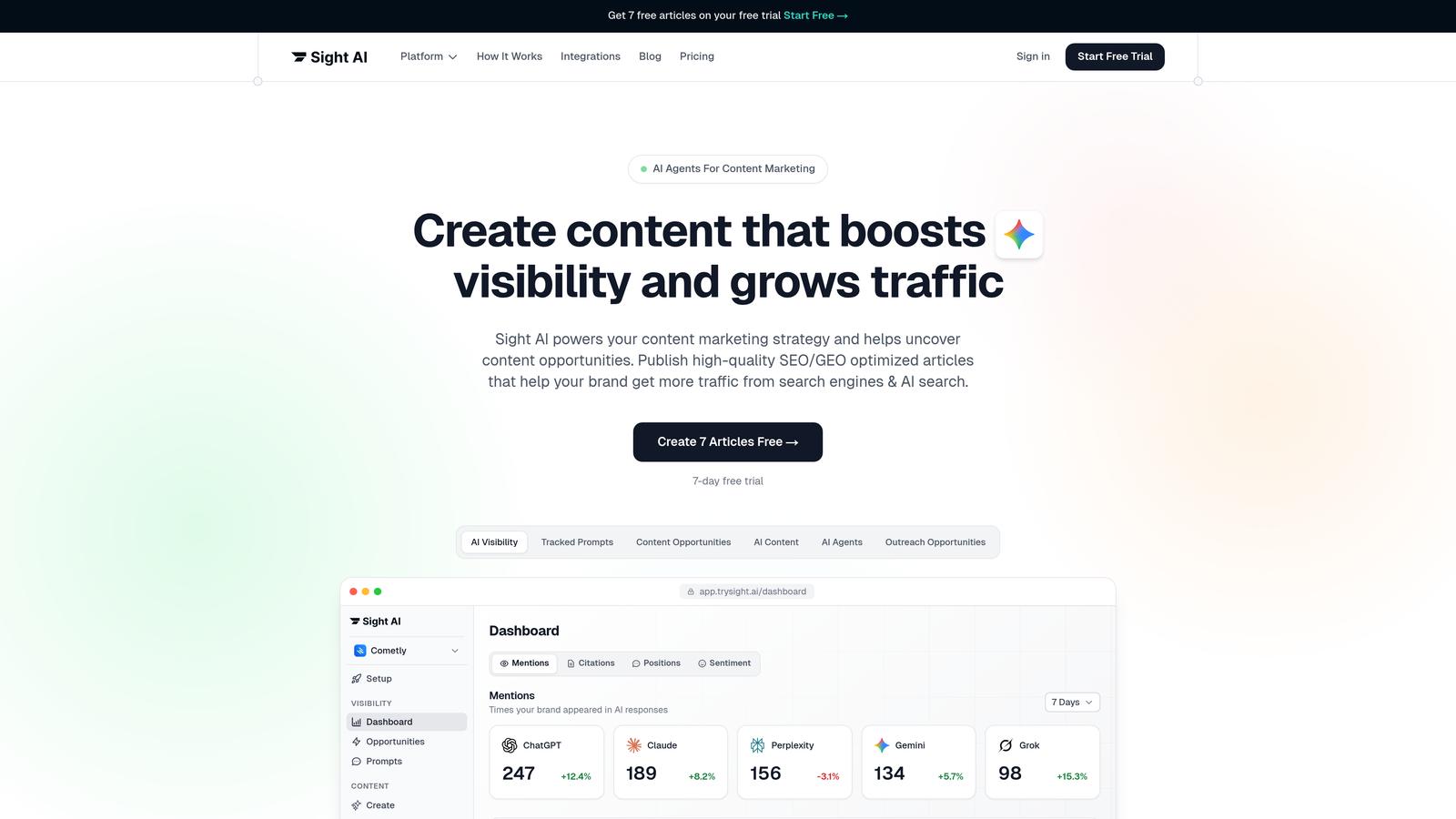
Sight AI is a purpose-built platform for tracking brand mentions and sentiment across ChatGPT, Claude, Perplexity and other major AI models.
Where This Tool Shines
Most social listening tools were retrofitted for AI monitoring. Sight AI was built from the ground up to track sentiment on AI platforms. It monitors how different AI models respond to prompts about your brand, so you can see the exact context and sentiment of each mention. Its AI brand sentiment tracking classifies each answer and shows how sentiment trends over time for every model.
The AI Visibility Score combines mention frequency, sentiment quality and competitive positioning into a single metric. This makes it easy to track progress over time and to see which content strategies improve how AI models talk about your brand.
Key Features
AI Visibility Score: A proprietary score that combines sentiment analysis with mention frequency and competitive context.
Multi-Platform Monitoring: Tracks mentions across ChatGPT, Claude, Perplexity and 6+ other AI platforms from a single dashboard.
Prompt Tracking: Shows which specific queries trigger brand mentions, so you understand the context behind sentiment patterns.
Competitive Sentiment Comparison: Benchmarks your sentiment against competitors to reveal positioning opportunities.
Content Optimization Integration: Connects sentiment insights directly to content recommendations for improving AI visibility.
Best For
Marketers and founders who need dedicated AI platform monitoring rather than general social listening. It is particularly valuable for B2B SaaS companies and agencies, where AI-driven research influences buying decisions. It works best when you are actively creating content to improve how AI models perceive your brand.
Pricing
Custom pricing based on monitoring needs. A free trial is available to test sentiment tracking across your target AI platforms.
2. Brand24
Best for: Real-time sentiment alerts across web, social and emerging AI channels
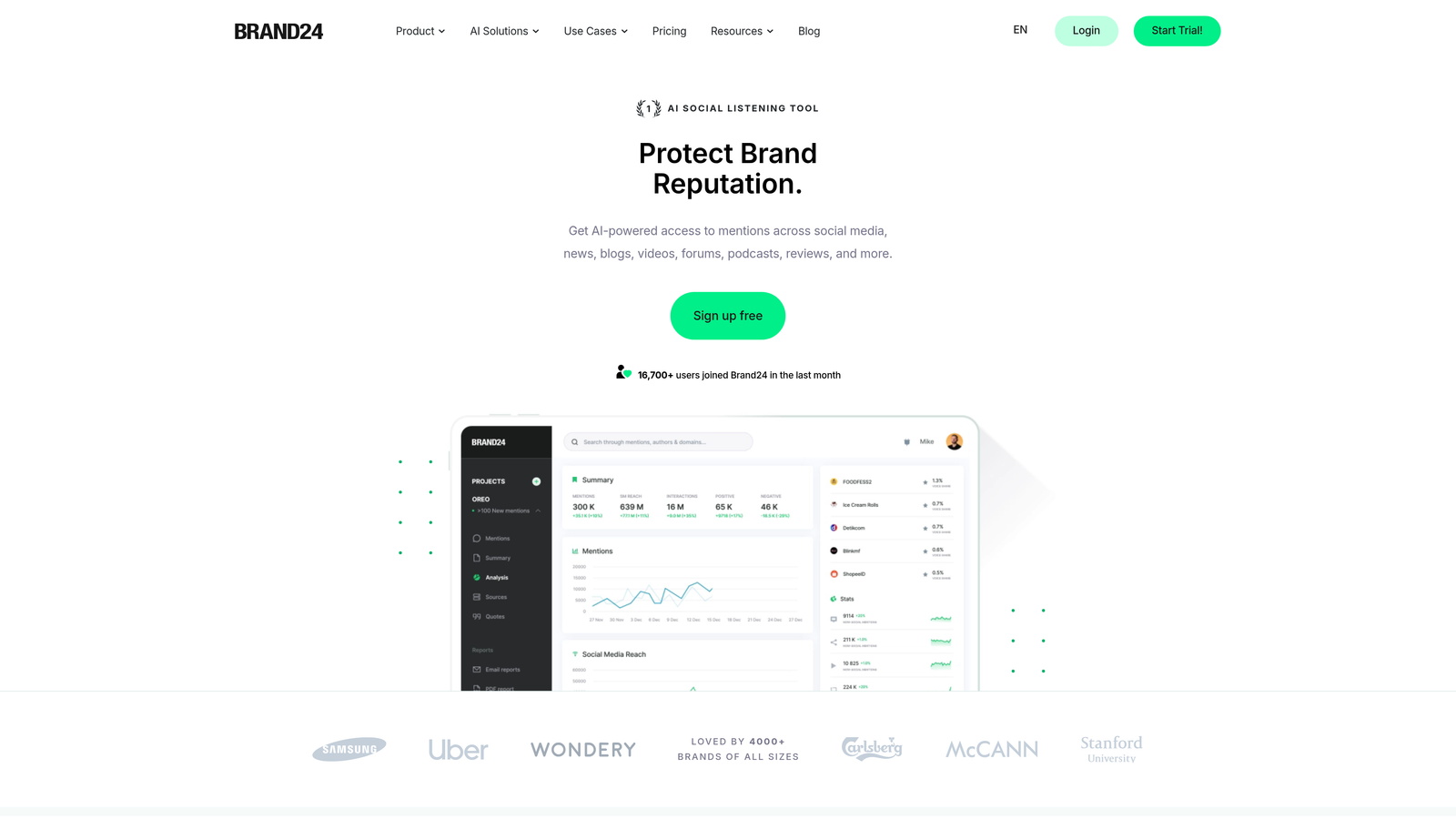
Brand24 is a social listening platform that has added AI mention tracking with real-time sentiment analysis.
Where This Tool Shines
Brand24 excels at speed. It delivers sentiment alerts within minutes of mentions appearing across monitored channels. This makes it valuable for crisis management and other situations where sentiment shifts need immediate attention.
Influence scoring adds useful context by identifying which mentions carry the most weight. A negative mention from a high-influence source is flagged differently from casual commentary, which helps you prioritize responses.
Key Features
Real-Time Sentiment Alerts: Instant notifications when sentiment patterns change or negative mentions appear.
AI-Powered Classification: Machine learning models automatically categorize mentions as positive, neutral or negative.
Influence Scoring: Ranks mentions by source authority to show which sentiment shifts matter most.
Customizable Reports: Sentiment dashboards tailored to specific campaigns, products or time periods.
Mention Volume Tracking: Shows how sentiment correlates with overall mention frequency over time.
Best For
PR teams and social media managers who need fast sentiment alerts across multiple channels. It works well for brands with an active social presence, where rapid response to sentiment changes is critical.
Pricing
Starts at $79/month for basic monitoring. Higher tiers include more mentions, more keywords and advanced sentiment features.
3. Brandwatch
Best for: Enterprise-grade sentiment analysis with deep learning models and historical trending
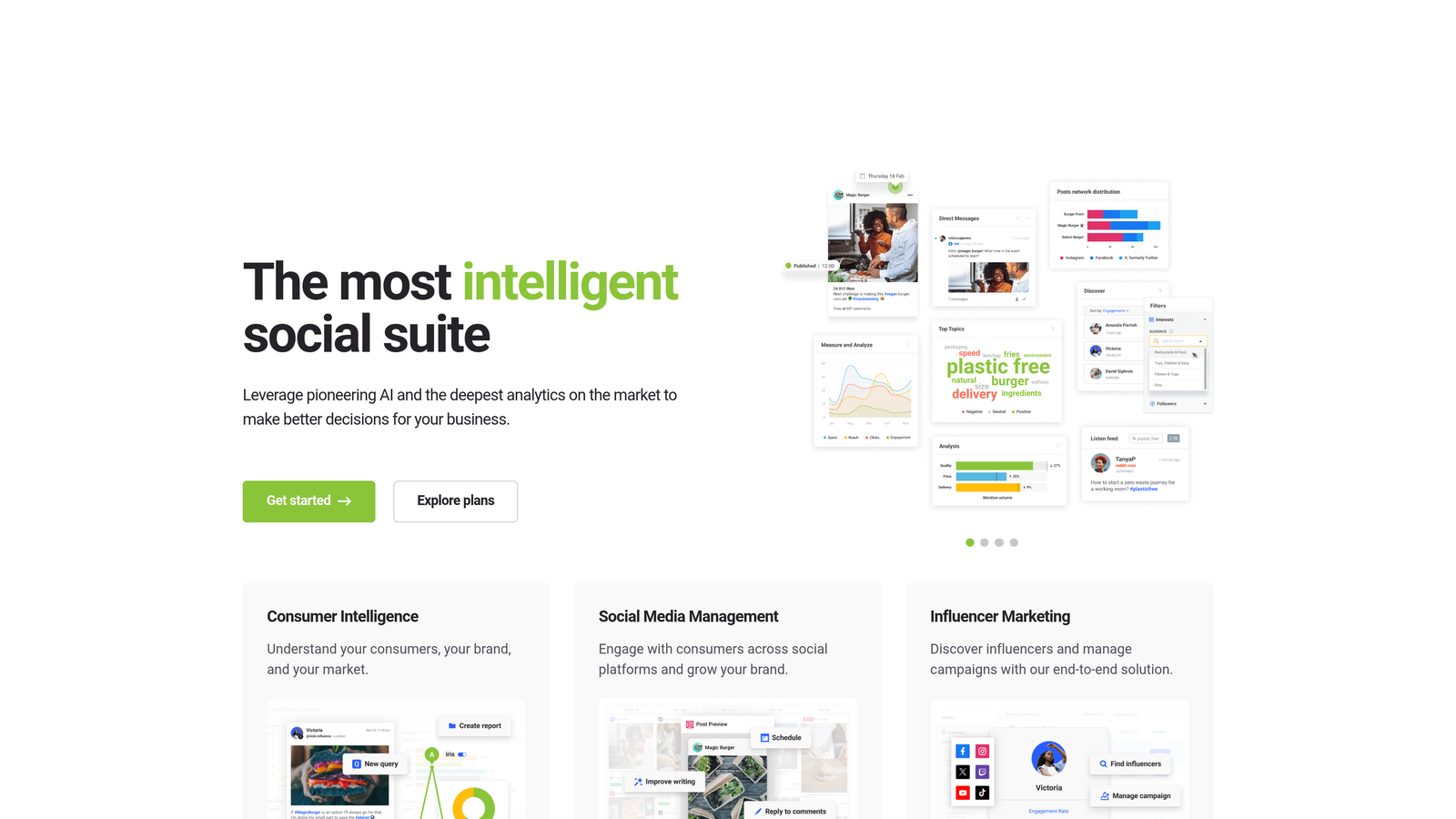
Brandwatch is a consumer intelligence platform offering advanced, machine-learning-powered sentiment analysis across digital channels.
Where This Tool Shines
Brandwatch brings enterprise-level sophistication to sentiment analysis. Its deep learning models are trained on massive datasets, so classification goes beyond basic positive/negative/neutral categories. It can catch sarcasm, context-dependent sentiment and subtle emotional tones that simpler tools miss.
Historical sentiment trending is particularly powerful. You can analyze how sentiment evolved over months or years and correlate shifts with specific campaigns, product launches or market events.
Key Features
Deep Learning Sentiment Models: AI that understands context, sarcasm and complex emotional nuance.
Historical Sentiment Analysis: Tracks sentiment patterns across extended time periods to surface trends and inflection points.
Custom Sentiment Categories: Brand-specific classifications beyond standard positive/negative/neutral.
API Access: Sends sentiment data into your own dashboards, CRM or analytics platforms.
Multi-Language Support: Language-specific models for analyzing sentiment in global markets.
Best For
Enterprise marketing teams and global brands that need sophisticated sentiment analysis at scale, especially those with a dedicated consumer intelligence team.
Pricing
Custom enterprise pricing based on data volume, features and team size. It typically requires an annual contract.
4. Mention
Best for: Streamlined media monitoring with competitive sentiment benchmarking
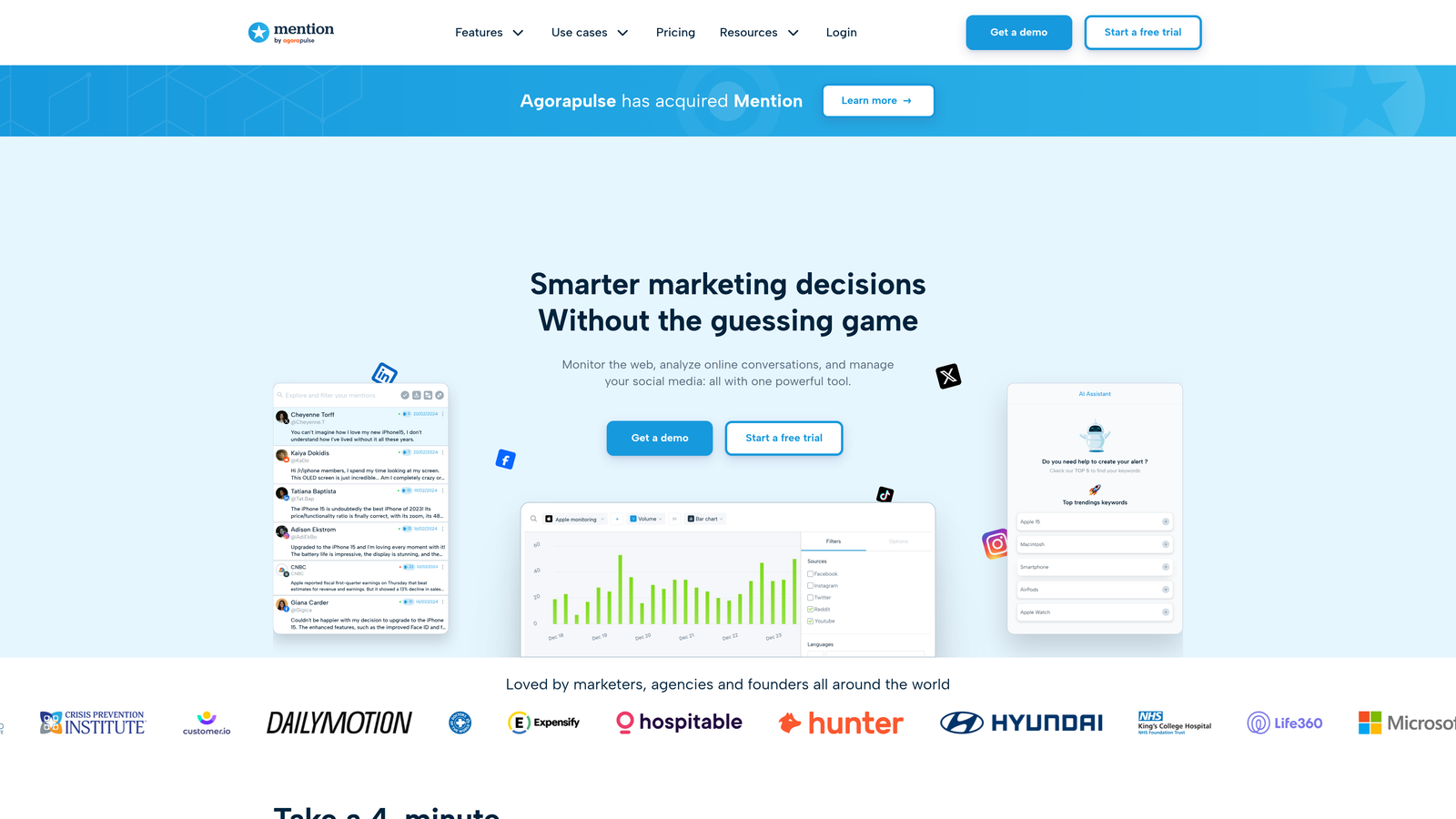
Mention is a real-time media monitoring tool with sentiment analysis across web, social and emerging digital channels.
Where This Tool Shines
Mention keeps things simple without sacrificing functionality. Color-coded sentiment indicators and clean visualizations let you assess brand health in seconds.
Competitive benchmarking shows how your sentiment compares to competitors over time. This helps you separate industry-wide shifts from brand-specific issues.
Key Features
Real-Time Mention Tracking: Monitors web, social media, forums and news, with immediate sentiment classification.
Sentiment Trend Analysis: Visual dashboards showing how sentiment evolves over custom time periods.
Competitive Benchmarking: Compares your sentiment against up to 10 competitors at once.
Team Collaboration Tools: Assign mentions to team members and track response workflows.
Integration Options: Sends alerts to Slack, email and other communication tools.
Best For
Small to mid-size marketing teams that need straightforward sentiment tracking without enterprise complexity.
Pricing
Starts at $41/month. Professional tiers with more mentions and advanced features cost more.
5. Sprout Social
Best for: Social media teams needing integrated sentiment analysis within their workflow
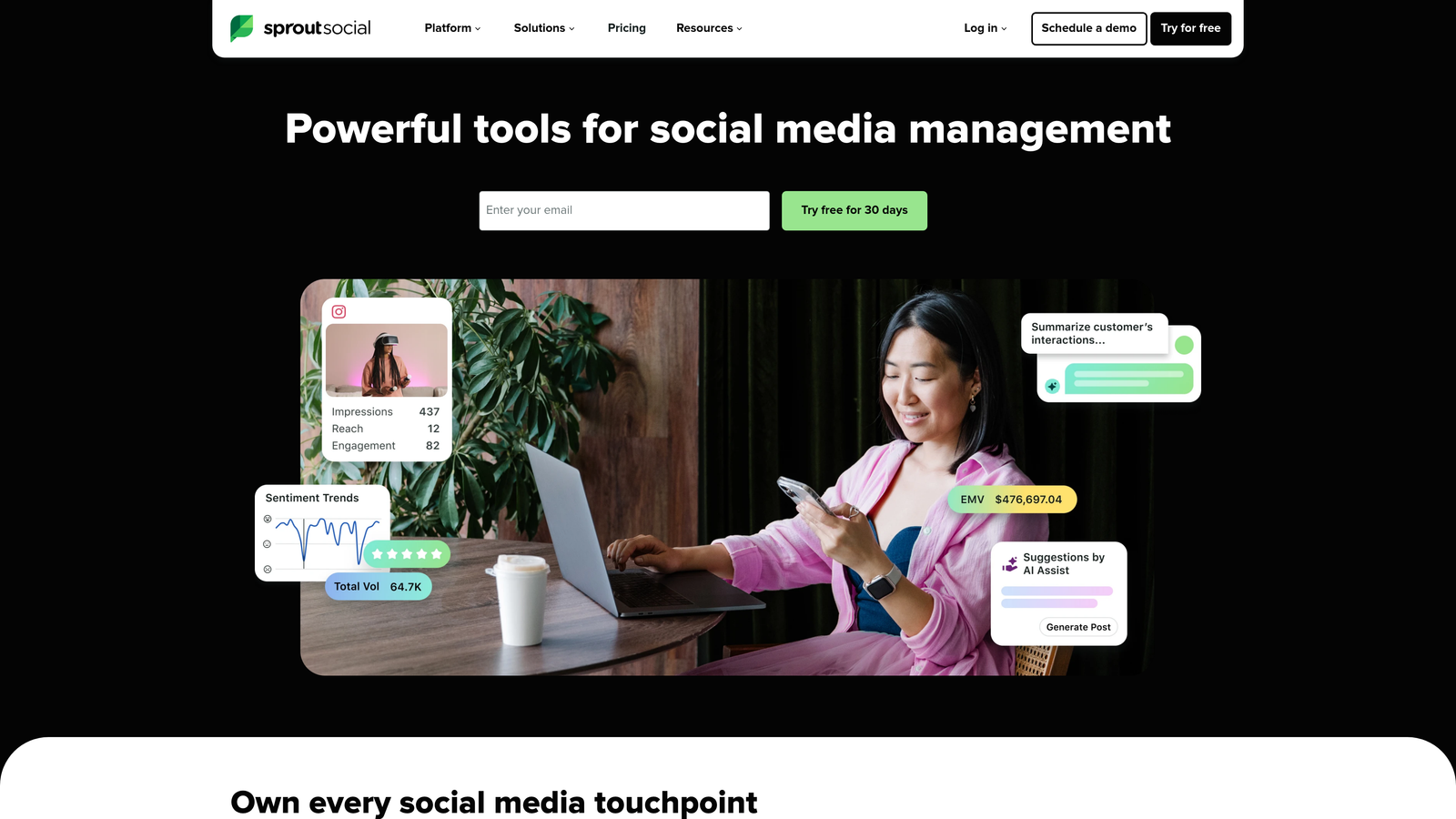
Sprout Social is a social media management platform with built-in sentiment analysis for tracking brand perception in social conversations.
Where This Tool Shines
Sprout Social builds sentiment analysis into your social media workflow. You manage posts, engage with audiences and track sentiment from one platform.
Sentiment tagging works inside the unified inbox, so team members can categorize mentions while they respond. Customer service interactions then feed into overall sentiment data.
Key Features
Unified Inbox Sentiment Tagging: Apply sentiment labels to messages as you respond to them.
Automated Sentiment Reports: Scheduled breakdowns by platform, time period and message type.
Social Listening Dashboards: Visual sentiment tracking across all connected channels.
Team Collaboration Features: Coordinate responses to sentiment shifts.
Keyword and Hashtag Tracking: Monitor sentiment around campaigns, launches or topics, not just brand mentions.
Best For
Social media managers and customer service teams handling high engagement volume.
Pricing
Starts at $199/month per seat. Sentiment analysis is available in the Professional and Advanced tiers.
6. Talkwalker
Best for: Visual sentiment analysis including images and video content
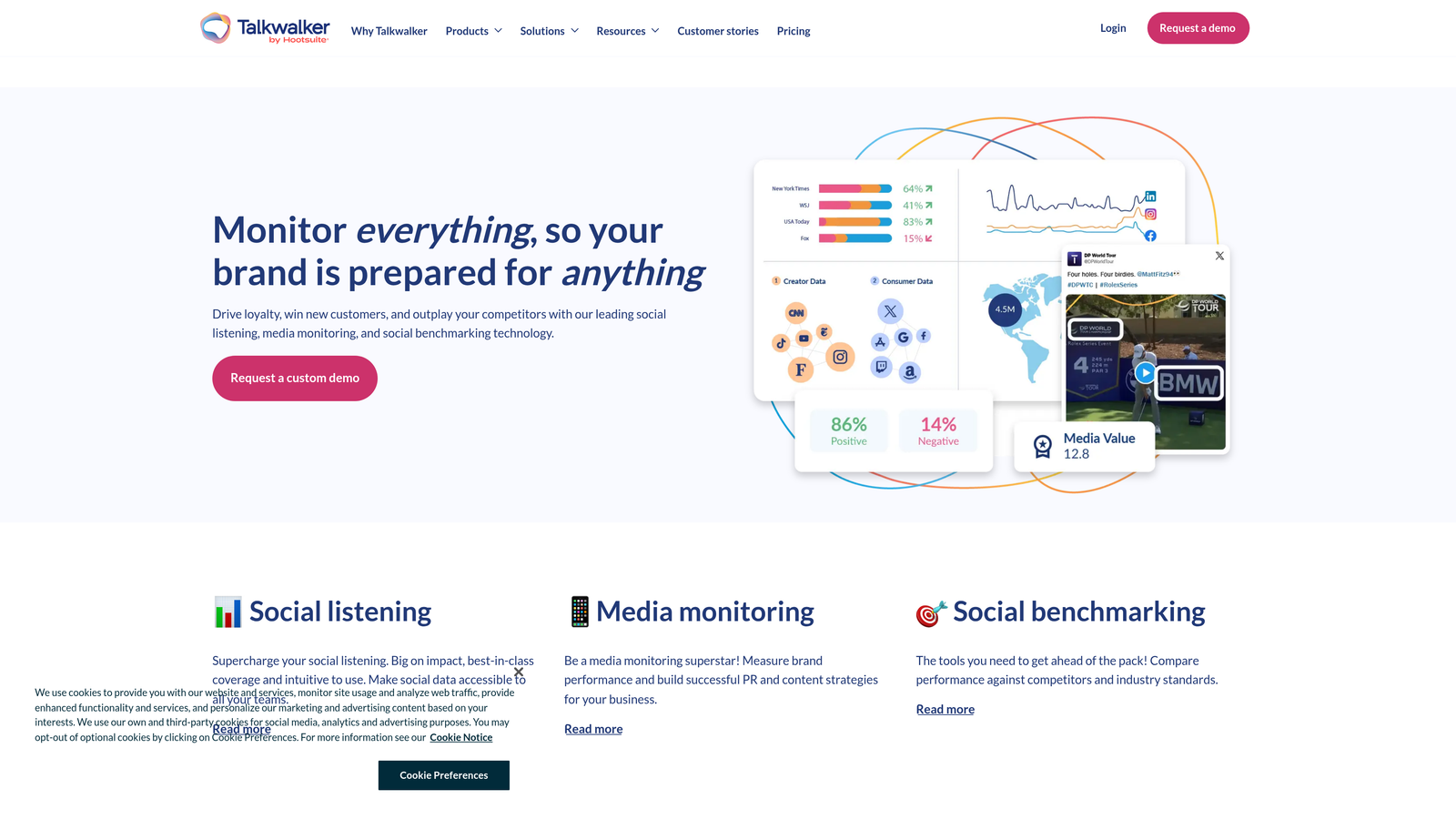
Talkwalker is a consumer intelligence platform that combines text and visual sentiment analysis across global media.
Where This Tool Shines
Talkwalker uses computer vision to identify your logo, products or brand elements in images and video. It then applies sentiment analysis to the surrounding context.
Blue Silk AI identifies emerging sentiment trends before they peak, giving you early warning of potential crises or opportunities.
Key Features
Image and Video Sentiment Analysis: Detects brand elements in visual content and analyzes the associated sentiment.
Blue Silk AI: A predictive engine that spots emerging sentiment trends.
Crisis Detection Alerts: Automated warnings when sentiment patterns signal a reputation threat.
Customizable Dashboards: Views by market, product or campaign.
Influencer Impact Tracking: Measures how influencer mentions affect overall sentiment.
Best For
Consumer goods, fashion and retail brands where visual content dominates the conversation.
Pricing
Custom pricing, typically structured as an annual enterprise contract.
7. Awario
Best for: Budget-conscious startups and small teams needing core sentiment tracking
Awario is an affordable social listening tool with sentiment analysis, aimed at startups and small teams.
Where This Tool Shines
Awario focuses on core capabilities at a low price: tracking mentions, classifying sentiment and alerting you to changes.
Boolean search lets you build precise queries that filter out noise, so small teams spend their time on mentions that matter.
Key Features
Boolean Search Capabilities: Build sophisticated queries and filter out irrelevant mentions.
Sentiment Breakdown by Source: Compare sentiment across social platforms, forums, blogs and news sites.
Leads and Sales Monitoring: Spot conversations that signal purchase intent.
White-Label Reports: Branded reports for clients or stakeholders.
Historical Data Access: Review long-term sentiment trends.
Best For
Startups, freelancers, small teams and agencies managing multiple client brands.
Pricing
Starts at $29/month with limited mentions. Professional plans cost more.
8. Meltwater
Best for: PR teams tracking sentiment across news, social and broadcast media
Meltwater is a media intelligence platform offering sentiment analysis across news, social and broadcast media.
Where This Tool Shines
Meltwater tracks sentiment across news outlets, broadcast and social media at the same time, giving PR teams a unified view.
Its global media database covers regional sources in many languages, so you can see how perception varies by geography.
Key Features
Global Media Database: Sentiment across news, broadcast and online publications worldwide.
AI-Powered Sentiment Scoring: Context-aware classification of media mentions.
Influencer Identification: Finds the journalists and influencers who move sentiment.
PR Impact Measurement: Tracks how press releases and outreach affect sentiment.
Competitive Media Analysis: Measures share of voice and perception gaps against competitors.
Best For
Corporate PR and communications teams working across multiple regions.
Pricing
Custom enterprise pricing, typically with an annual contract.
9. Synthesio
Best for: Global brands needing multilingual sentiment analysis across regions
Synthesio is a global social intelligence platform specializing in multilingual sentiment analysis.
Where This Tool Shines
Synthesio analyzes sentiment in over 190 languages using language-specific models that account for cultural context and regional expressions.
Regional comparison shows the markets where perception is strong and those where it needs work.
Key Features
190+ Language Support: Culturally aware classification models.
AI-Driven Topic Clustering: Groups mentions into themes to reveal what drives sentiment.
Regional Sentiment Comparison: Compare perception by country, region or city.
Custom Audience Segmentation: Sentiment by demographic, customer segment or persona.
Trend Forecasting: Flags emerging sentiment patterns early.
Best For
Multinational brands operating across diverse language markets.
Pricing
Custom enterprise pricing on annual contracts with dedicated support.
How to run an AI sentiment audit
Whichever tool you choose, an AI sentiment audit follows the same core steps. You can run a first pass manually in an afternoon before committing to a platform.
- Build a prompt set. Write 20–50 prompts that real buyers ask, such as "best [category] tools", "[brand] vs [competitor]", "is [brand] worth it" and "[brand] alternatives". Include prompts organized by topic, product line and region if those matter to you.
- Run each prompt on every model. Cover ChatGPT, Claude, Perplexity, Gemini and Google AI Overviews. Answers vary between runs, so repeat each prompt at least 3 times and record all the results.
- Score sentiment. Label every brand mention as positive, neutral or negative. Note whether you are recommended, merely listed or warned against. A simple net sentiment score is the share of positive mentions minus the share of negative mentions.
- Capture the narrative. Record the recurring claims, such as "expensive", "hard to set up" or "best for enterprise", and the sources the model cites. These recurring themes are what you can actually change.
- Benchmark competitors. Run the same scoring for 3–5 competitors. Negative framing that appears across the whole category is a different problem from framing aimed only at your brand.
- Set a baseline and alerts. Re-run the audit on a weekly or monthly schedule. Alert when net sentiment moves more than a set threshold, for example 10 points, on any model or topic.
For a fuller methodology covering mention rate, share of voice and citation tracking, see our six-step framework for measuring AI visibility performance.
Making the Right Choice
The right sentiment tracking tool depends on where your brand conversations happen and what you plan to do with the insights.
If AI platforms like ChatGPT and Claude significantly influence how your audience discovers and evaluates your brand, Sight AI provides tracking built specifically for that use case. It monitors sentiment across major AI models and connects those insights to content optimization.
For budget-conscious teams, Brand24 and Awario deliver solid sentiment tracking without enterprise prices. Brand24 excels at real-time alerts, while Awario offers the cheapest entry point and flexible Boolean search.
Enterprise brands with complex needs should consider Brandwatch for sophisticated deep learning models, Meltwater for comprehensive media monitoring, or Synthesio for global multilingual coverage.
Many teams combine the two categories. An AI visibility platform shows what models say, and a listening tool tracks the public conversations that shape it.
Frequently asked questions
What is AI sentiment analysis?
AI sentiment analysis uses language models to classify text as positive, neutral or negative. In brand monitoring, the term now also covers analyzing the answers that AI assistants generate about your company. That second use is what AI visibility tools measure. Classic sentiment analysis tools score social posts, reviews and articles. AI search sentiment tools score responses from ChatGPT, Claude, Perplexity and Gemini to buyer prompts.
Can I get alerts when AI sentiment suddenly shifts?
Yes. AI visibility and GEO platforms such as Sight AI re-run your tracked prompts on a schedule and can flag drops in sentiment or mention rate for each model. Social listening tools like Brand24, Mention and Talkwalker send real-time alerts for web and social sentiment. Set thresholds you can act on, such as a 10-point net sentiment drop, rather than alerting on every single negative answer.
What is an AI sentiment score?
An AI sentiment score summarizes how favorably AI models describe your brand across a prompt set. A common calculation is the percentage of positive mentions minus the percentage of negative mentions, tracked for each model over time. Sight AI folds sentiment into its AI Visibility Score alongside mention frequency and competitive position. The audit section above explains how to calculate a score yourself.
Is there an API for tracking brand sentiment in AI-generated content?
Enterprise listening platforms such as Brandwatch offer APIs for web and social sentiment data. For sentiment in AI answers specifically, you can either query model APIs yourself and classify the responses, or use an AI visibility platform that handles prompt scheduling, repeated runs and scoring for you. Building it yourself is cheaper at first but requires ongoing maintenance as models change.
How do I compare AI search sentiment across platforms?
Use the same prompts, run counts and scoring rules on every model, then compare net sentiment and the recurring narratives for each platform. Differences are common because models draw on different sources and training data. Perplexity cites live web pages, for example, while ChatGPT may rely more on training data unless browsing is triggered.
Stop guessing how AI models like ChatGPT and Claude talk about your brand. Get visibility into every mention, track content opportunities and automate your path to organic traffic growth. Start tracking your AI visibility today and see exactly where your brand appears across top AI platforms.