AI-powered search has fundamentally changed how users discover brands. When someone asks ChatGPT for the best project management tool or asks Perplexity to recommend a CRM, the brands that appear in those responses are winning discovery that never shows up in a Google Search Console report. Your traditional SEO dashboard won't tell you any of this.
Tracking your brand across LLM platforms requires a different approach entirely: querying AI models at scale, analyzing response patterns over time, and understanding not just whether you're mentioned, but how and in what context. The tools below were selected based on platform coverage, tracking depth, actionability of insights, and overall value for marketers, founders, and agencies building organic growth strategies in an AI-first world.
Whether you're just getting started with AI visibility monitoring or scaling an established brand program, here are the top tools worth your attention in 2026.
1. Sight AI
Best for: Teams that want end-to-end AI visibility: tracking, content action, and automated publishing in one platform.
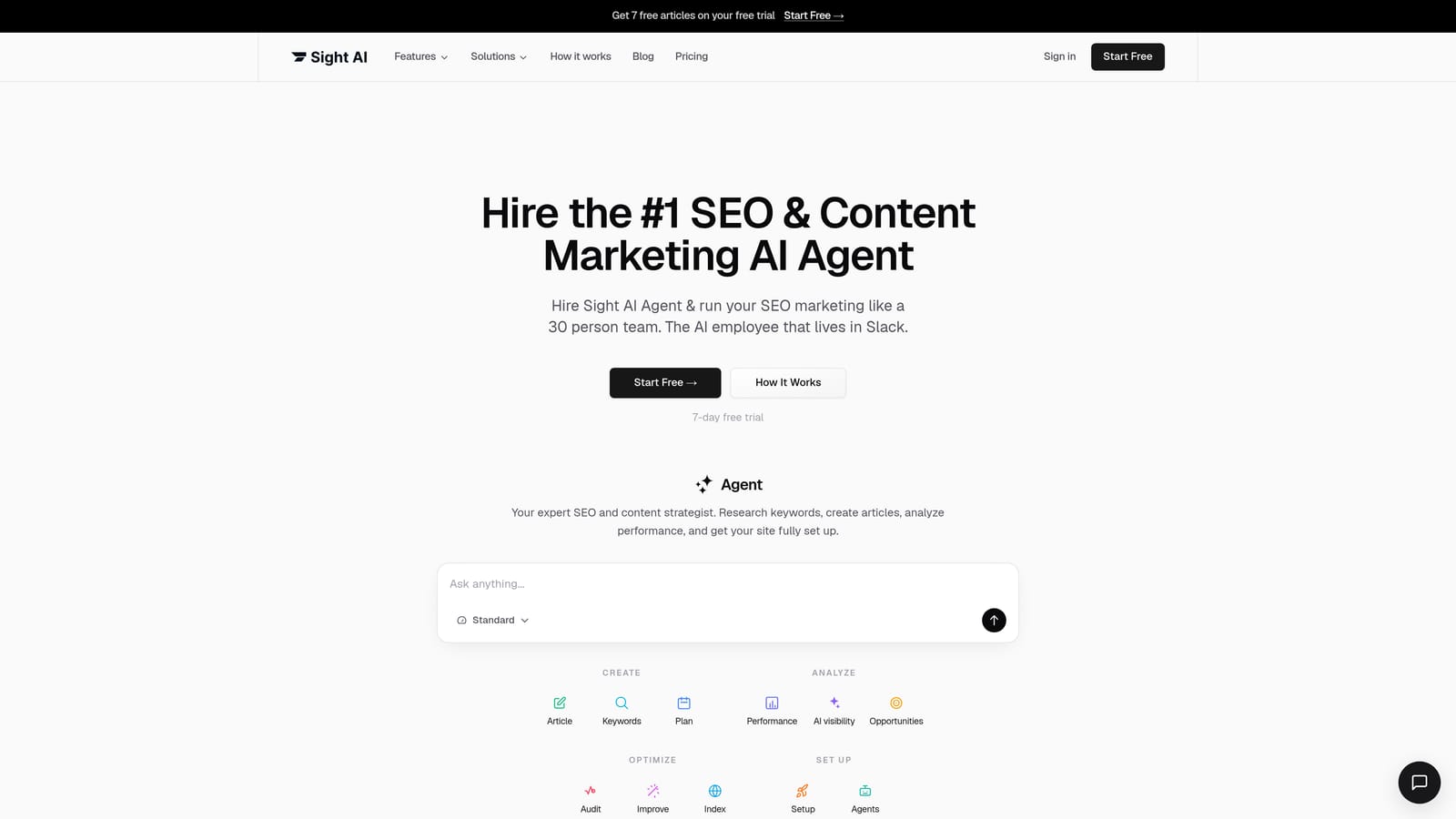
Sight AI is an all-in-one AI visibility platform that tracks brand mentions across 6+ LLM platforms, generates SEO/GEO-optimized content to improve those mentions, and automates website indexing — combining monitoring, content strategy, and publishing in a single connected workflow.
Where This Tool Shines
Most LLM monitoring tools stop at the data. They tell you where you're mentioned, maybe how often, and leave the rest to you. Sight AI's differentiator is that it closes the loop: once you know how AI models talk about your brand, you can act on it immediately using the platform's built-in content generation and indexing capabilities.
This matters because improving your AI visibility isn't passive. It requires publishing content that AI models can reference, getting that content indexed quickly, and iterating based on how mentions shift over time. Sight AI is currently the only tool in this list designed to handle that entire cycle without stitching together separate tools.
Key Features
Multi-Platform Brand Tracking: Monitors brand mentions across ChatGPT, Claude, Perplexity, and three or more additional AI platforms, giving you a consolidated view of your LLM presence.
AI Visibility Score: A proprietary scoring system that combines mention frequency, sentiment analysis, and prompt-level tracking so you understand not just if you're mentioned, but how favorably and in what contexts.
13+ Specialized AI Agents: Purpose-built agents for generating SEO and GEO-optimized content formats including listicles, guides, and explainers — the exact content types that tend to earn citations in AI-generated responses.
Autopilot Mode: Hands-off content generation and CMS auto-publishing, so your content pipeline keeps moving without requiring manual intervention at every step.
IndexNow Integration: Automated sitemap updates and IndexNow integration push newly published content to search engines faster, reducing the lag between publishing and discoverability.
Best For
Sight AI is best suited for marketers, founders, and agencies who want more than a monitoring dashboard. If your goal is to actively improve how AI models represent your brand — not just observe it — this platform provides the infrastructure to do that at scale. It's particularly valuable for teams that are already producing content and want to align that output with AI visibility data.
Pricing
Check current plans and pricing at trysight.ai. Plans are structured to serve teams at different stages of AI visibility maturity.
2. Promptwatch
Best for: Teams that want granular, prompt-level tracking of brand mentions across major LLMs.
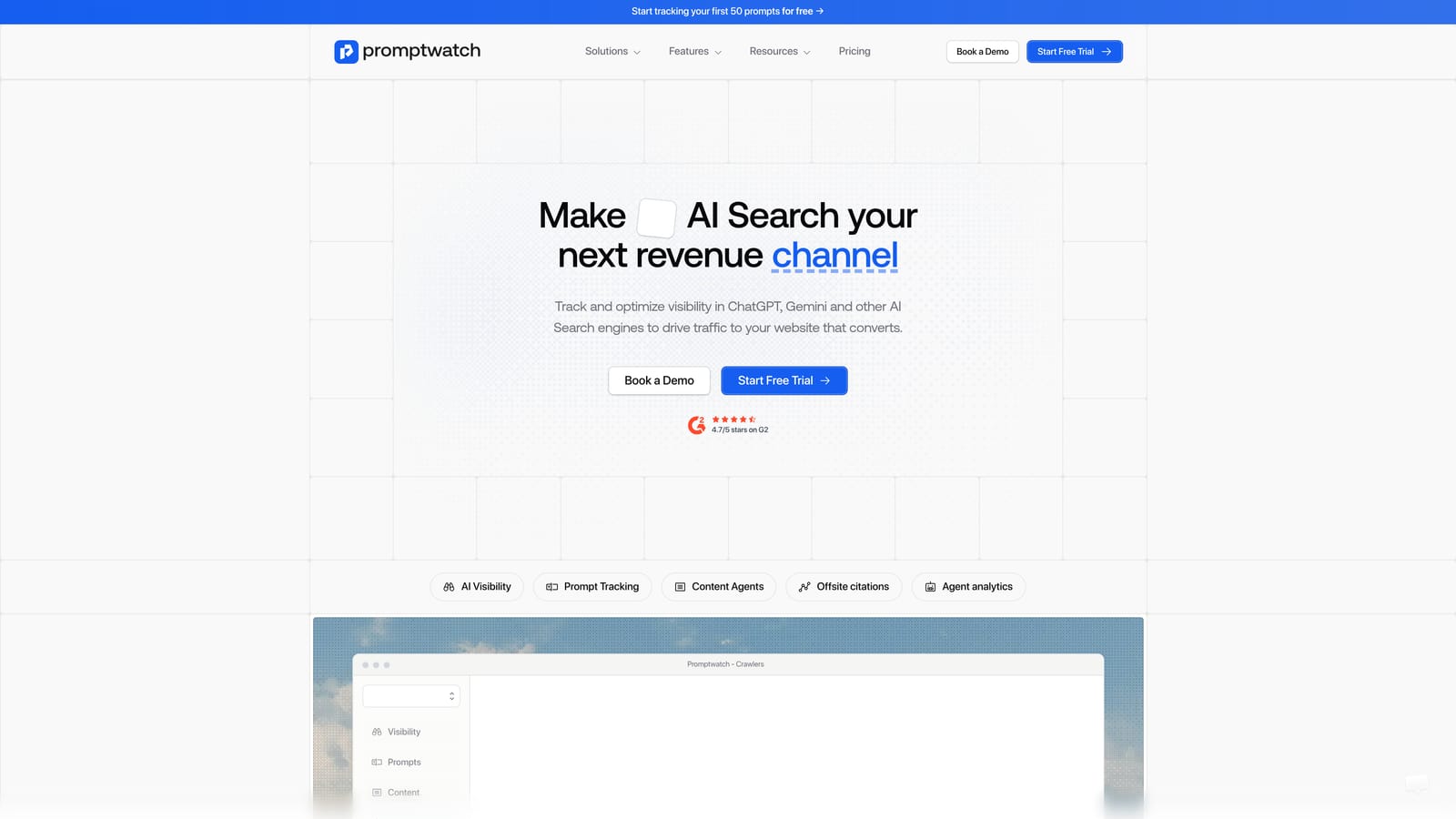
Promptwatch is a prompt-level LLM monitoring tool that tracks how specific queries return brand mentions across AI models, giving teams detailed visibility into AI response patterns at the query level.
Where This Tool Shines
Where many monitoring tools give you a broad view of brand presence, Promptwatch goes deeper on specific prompts. If you want to know exactly how AI models respond when someone asks a particular question in your category, this tool is built for that kind of analysis. It's useful for teams that have already identified the high-value prompts in their space and want to track those specifically over time.
The historical monitoring capability is also notable. Being able to identify shifts in how AI models respond to tracked prompts over time helps teams understand whether their content efforts are moving the needle on specific queries — or whether a competitor is gaining ground on a prompt that matters to them.
Key Features
Prompt-Specific Tracking: Monitor how individual prompts and question types return brand mentions across major LLMs, rather than relying on broad brand-level monitoring alone.
Historical Response Monitoring: Track how AI responses to specific prompts change over time, making it easier to detect shifts in brand representation.
Change Alerts: Get notified when AI models begin responding differently to prompts you're tracking, so you can respond quickly to changes in your AI visibility.
Query-Level Interface: A focused interface built specifically for prompt-level brand monitoring, without the overhead of broader platform features.
Best For
Promptwatch suits teams with a clear understanding of the prompts that matter most to their brand and category. It's a strong fit for SEO practitioners and content strategists who want to connect specific content efforts to changes in how AI models respond to particular queries.
Pricing
Verify current pricing at promptwatch.io.
3. Profound
Best for: Enterprise brands and agencies managing complex, multi-brand AI visibility programs.
Profound is an enterprise-oriented AI answer monitoring platform that provides deep analytics on how brands appear in LLM-generated responses, designed for larger organizations with sophisticated reporting needs.
Where This Tool Shines
Profound is built for scale. If you're managing brand visibility across a large organization with multiple product lines, or if you're an agency overseeing AI monitoring for a portfolio of clients, the platform's analytics and reporting infrastructure is designed to handle that complexity. It goes beyond simple mention tracking to provide context around how and where brands appear in AI-generated answers.
The reporting tooling is particularly relevant for enterprise stakeholders who need to communicate AI visibility data to leadership or clients. Rather than raw monitoring data, Profound structures insights in a format suited to business reporting and strategic decision-making at larger organizations.
Key Features
Enterprise-Grade Brand Monitoring: Tracks how brands appear across AI answer engines at a scale and depth suited to large organizations with complex monitoring requirements.
Analytics Dashboard: Provides visibility into brand appearance frequency and the context surrounding those mentions, going beyond simple mention counts.
Multi-Brand and Portfolio Tracking: Supports monitoring across multiple brands simultaneously, making it practical for agencies managing several clients or enterprises with diverse product portfolios.
Stakeholder Reporting Tools: Reporting capabilities structured for enterprise communication needs, not just operational monitoring dashboards.
Best For
Profound is best suited for enterprise marketing teams and agencies that need robust analytics and reporting alongside monitoring. If your primary requirement is demonstrating AI visibility performance to senior stakeholders or clients, the platform's reporting orientation is a meaningful advantage over more operationally focused tools.
Pricing
Profound operates at enterprise pricing tiers. Contact their team directly for current pricing at profound.io.
4. Peec
Best for: Brands focused on competitive benchmarking and share-of-voice analysis in AI-generated responses.
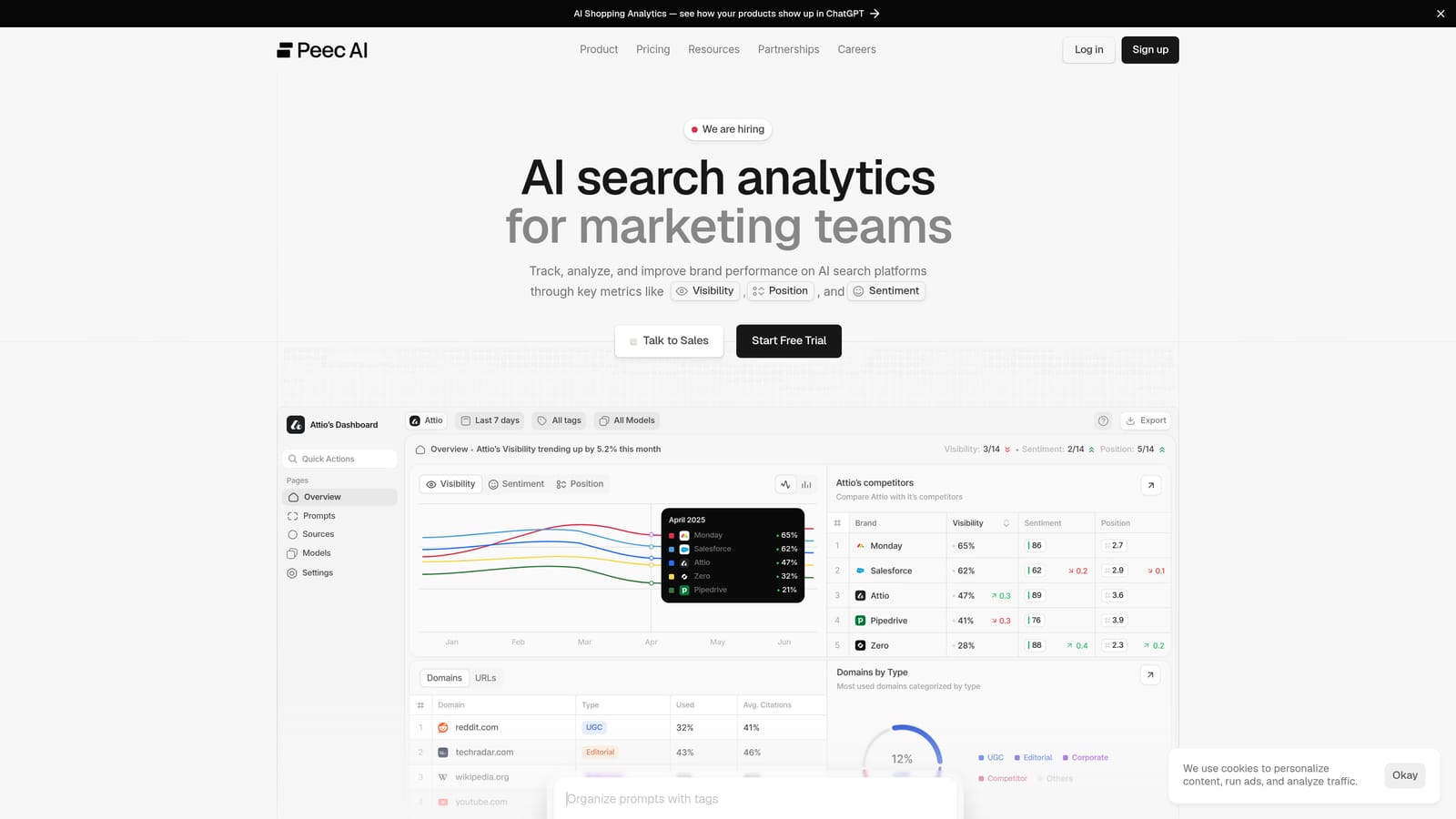
Peec is a competitive AI brand tracking tool that lets you monitor your brand's presence in LLM responses side-by-side with competitors, making it particularly useful for benchmarking and share-of-voice analysis across AI platforms.
Where This Tool Shines
Understanding your own AI visibility is valuable. Understanding it relative to your competitors is often more actionable. Peec is built around this competitive framing, letting teams see not just how often their brand appears in AI responses, but how that compares to the other brands competing for the same mentions. That framing shifts the conversation from "are we visible?" to "are we winning?"
For brands in competitive categories where multiple players are actively investing in AI visibility, this kind of side-by-side comparison can surface opportunities and threats that single-brand monitoring would miss entirely. If a competitor is gaining significant ground on a key category prompt, you want to know that before it compounds.
Key Features
Competitive Brand Visibility Tracking: Monitors your brand's AI presence alongside competitor brands across major LLM platforms in a unified view.
Side-by-Side Comparison: Directly compares your brand's LLM mentions against selected competitors, making competitive gaps immediately visible.
Share-of-Voice Analysis: Quantifies your brand's proportion of AI-generated mentions within your category relative to competing brands.
Competitive Positioning Benchmarks: Tracks how your competitive position in AI responses changes over time, giving you a longitudinal view of market dynamics.
Best For
Peec is a strong choice for brands in competitive markets where understanding relative AI visibility matters as much as absolute visibility. It's particularly useful for growth marketers and brand strategists who need to frame AI visibility performance in competitive terms for internal reporting or client communication.
Pricing
Verify current pricing at peec.ai.
5. AirOps
Best for: Ops-heavy marketing teams building custom AI workflows that incorporate LLM monitoring and content operations.
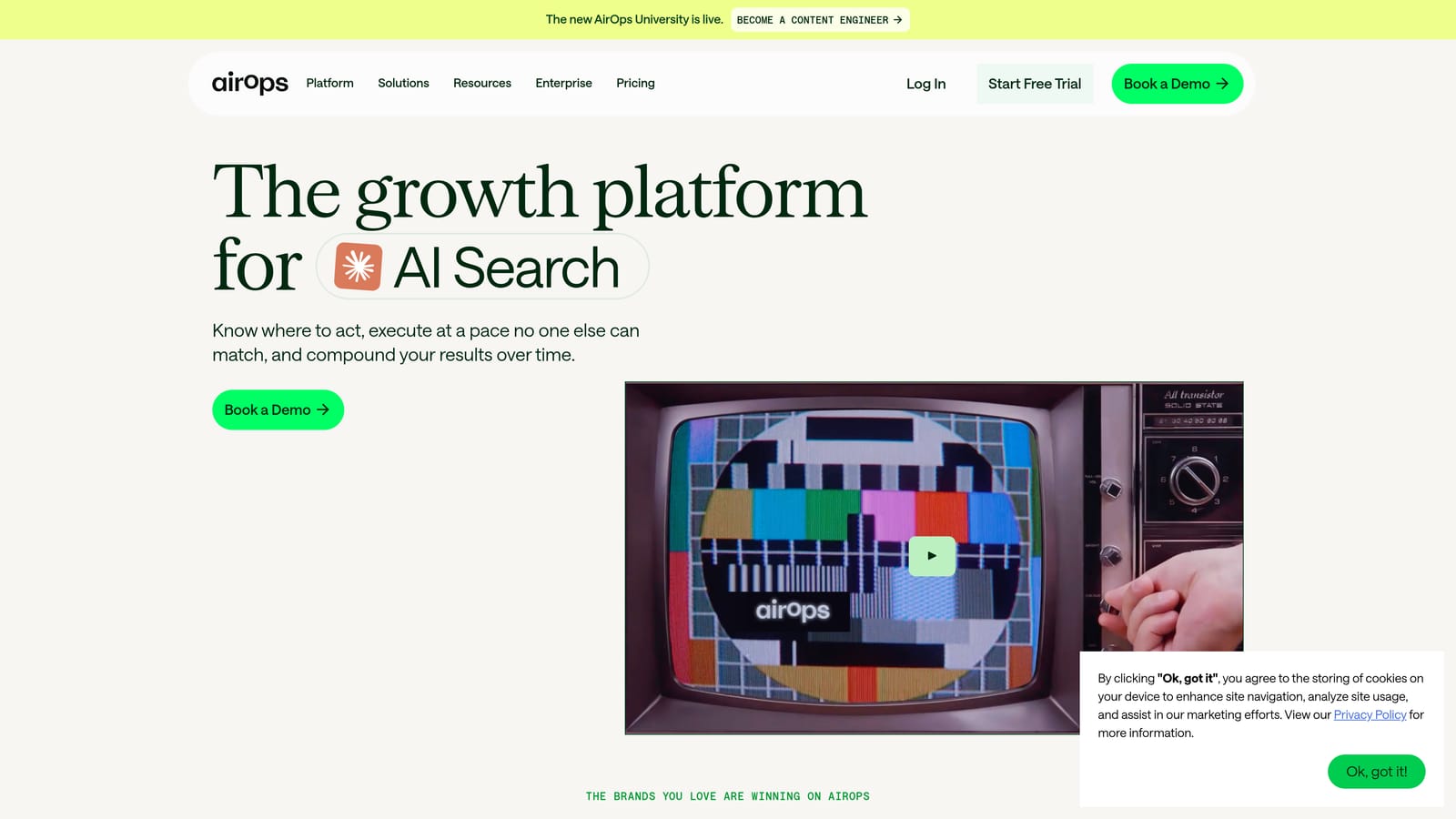
AirOps is an AI workflow automation platform that can be configured for LLM monitoring and content operations, best suited to teams with the technical capacity to build custom workflows around AI visibility data.
Where This Tool Shines
AirOps isn't a purpose-built LLM brand tracking tool in the way others on this list are. Its value lies in flexibility. Teams that want to build custom pipelines incorporating LLM monitoring alongside other content and data operations will find AirOps a capable foundation. Think of it less as a monitoring dashboard and more as an automation infrastructure layer that you configure for your specific workflow needs.
This makes it particularly relevant for marketing operations teams and agencies that already have strong technical resources and want fine-grained control over how their AI visibility data flows into broader content and reporting systems. The tradeoff is that it requires more setup and maintenance than a dedicated monitoring platform.
Key Features
AI Workflow Automation: Build and automate multi-step workflows that can incorporate LLM monitoring tasks alongside content generation and data operations.
Configurable Pipelines: Design custom pipelines tailored to your team's specific AI visibility and content workflow requirements.
Tool and Data Integrations: Connect with a range of data sources and content tools, making it easier to incorporate LLM monitoring data into existing systems.
Flexible Automation Builder: A visual workflow builder that gives ops-oriented teams significant control over how their AI-powered processes are structured.
Best For
AirOps suits marketing operations teams and technically capable agencies that want to build bespoke AI workflows rather than use an off-the-shelf monitoring solution. If your needs are highly specific and you have the resources to configure and maintain custom pipelines, AirOps provides meaningful flexibility. Teams looking for a ready-to-use brand tracking dashboard will likely find dedicated monitoring tools a faster path to value.
Pricing
Verify current pricing at airops.com.
6. Writesonic
Best for: Teams focused on producing brand-consistent, AI search-optimized content at high volume.
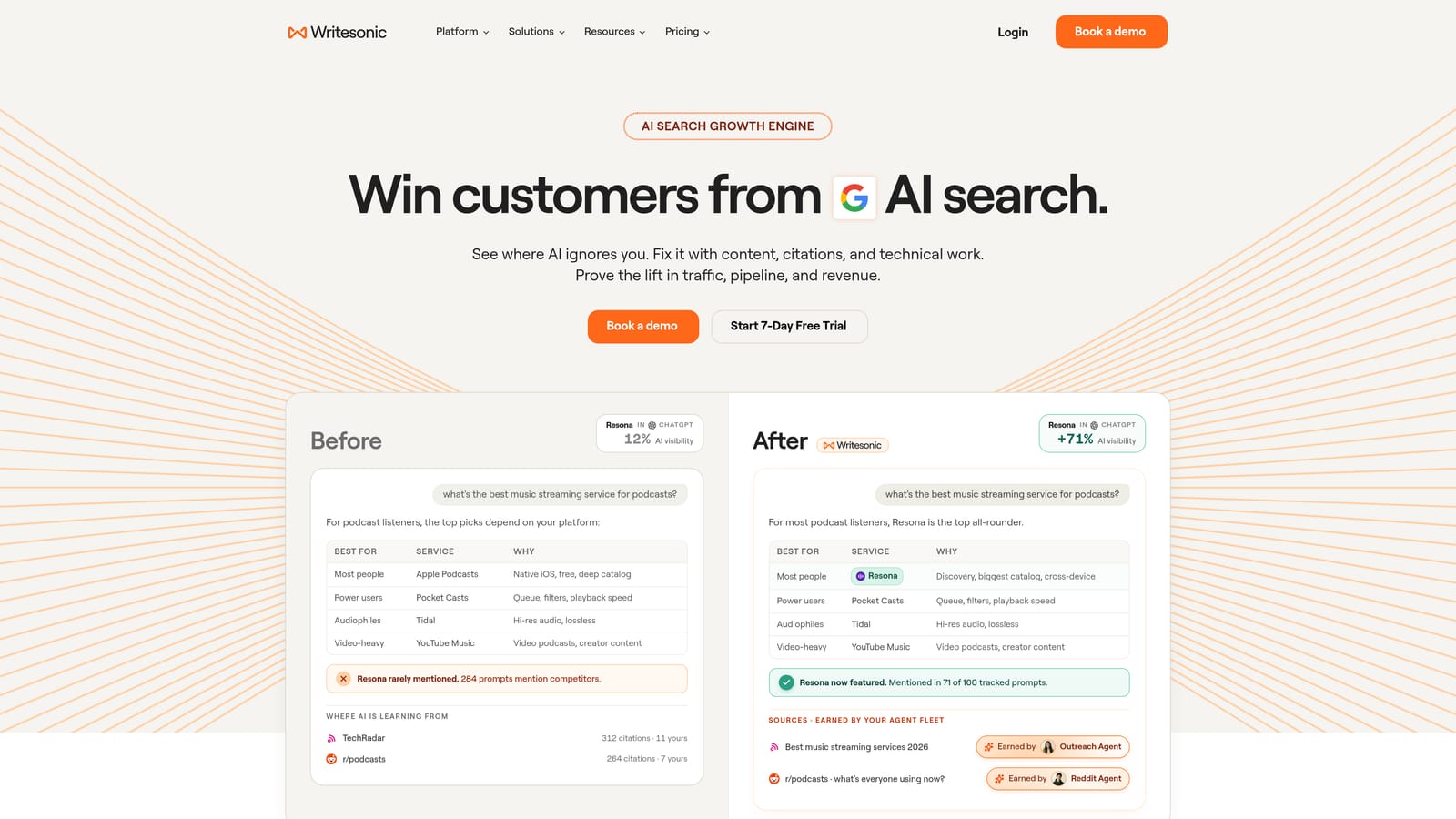
Writesonic is an AI content generation platform with brand voice controls and emerging AI search optimization features, primarily valuable for teams that need to produce content at scale with consistent brand representation.
Where This Tool Shines
Writesonic's core strength is content production. If your primary challenge is generating enough high-quality, brand-consistent content to maintain visibility across AI search and traditional search channels, the platform's output capabilities and brand voice controls make it a practical option. The AI search optimization features are a newer addition to what has historically been a content generation product.
For teams that have already established their AI visibility monitoring setup and need to accelerate content production to support that strategy, Writesonic can serve as a capable content engine. It's worth noting that it sits more on the content generation side of this landscape than the monitoring side, so teams looking primarily for LLM tracking capabilities will need to pair it with a dedicated monitoring tool.
Key Features
AI-Powered Content Generation: Produces content across multiple formats at scale, supporting high-volume content programs across blog posts, landing pages, and other formats.
Brand Voice Customization: Controls for maintaining consistent brand voice and tone across AI-generated content, reducing the editing overhead associated with large-scale content production.
AI Search Optimization Features: Emerging capabilities designed to improve content discoverability in AI search environments, adding a GEO layer to traditional content generation.
High-Volume Production Capabilities: Infrastructure suited to teams that need to produce content at a pace that manual writing or lighter AI tools can't sustain.
Best For
Writesonic is best suited for content teams and agencies that prioritize volume and brand consistency in their content output. It's a natural fit for teams that have a clear content strategy and need a capable tool to execute it at scale. Teams whose primary need is LLM brand monitoring should look at other tools on this list first, then consider Writesonic as a complementary content production layer.
Pricing
Writesonic offers a free plan for getting started. Paid plans with expanded capabilities are available; verify current pricing at writesonic.com.
Which Tool Is Right for Your Team?
The right choice depends on what you're trying to accomplish. Here's a quick decision guide to help you match your needs to the right platform.
For end-to-end AI visibility management: Sight AI is the clear starting point. It's the only tool here that combines LLM brand tracking, sentiment analysis, content generation, and automated indexing in a single workflow. If you want to monitor AI mentions and act on that data without stitching together multiple tools, it's built for exactly that.
For prompt-level granularity: Promptwatch is worth exploring if you have a clear set of high-value queries you want to monitor at a detailed level and want to track how AI responses to those specific prompts shift over time.
For enterprise reporting and multi-brand programs: Profound is designed for the complexity and stakeholder reporting requirements that come with large organizations and agency portfolios.
For competitive benchmarking: Peec fills a specific gap if your primary focus is understanding your AI visibility relative to competitors and tracking share-of-voice in LLM-generated responses.
For custom workflow automation: AirOps suits technically capable teams that want to build bespoke pipelines rather than use an out-of-the-box monitoring solution.
For high-volume content production: Writesonic works well as a content engine for teams that already have their monitoring strategy in place and need to scale output.
The AI visibility landscape is still maturing, and the gap between brands that monitor their LLM presence and those that actively optimize for it is growing. Stop guessing how AI models like ChatGPT and Claude talk about your brand. Start tracking your AI visibility today and see exactly where your brand appears across top AI platforms — then use that data to drive the content strategy that improves those mentions over time.