Running SEO as a founder means making every hour count. You don't have a dedicated marketing team, a six-figure agency retainer, or the luxury of spending weeks learning complex tools. You need to know what moves the needle, execute quickly, and move on.
There's also a new dimension to consider. Modern SEO no longer stops at Google rankings. As more users discover products through AI-generated answers in ChatGPT, Claude, and Perplexity, your brand's visibility in those responses has become just as important as your position on page one. If AI models aren't mentioning you when someone asks about your category, you're leaving organic discovery on the table.
The tools below were selected based on four criteria: ease of use for non-specialists, automation capabilities that reduce manual work, founder-friendly pricing, and the ability to deliver results without a full team behind you. Whether you're looking to understand what AI SEO actually means for your growth strategy or want to explore how GEO compares to traditional SEO, this list covers the full stack.
1. Sight AI
Best for: Founders who want to rank in both Google and AI-generated answers from a single platform.
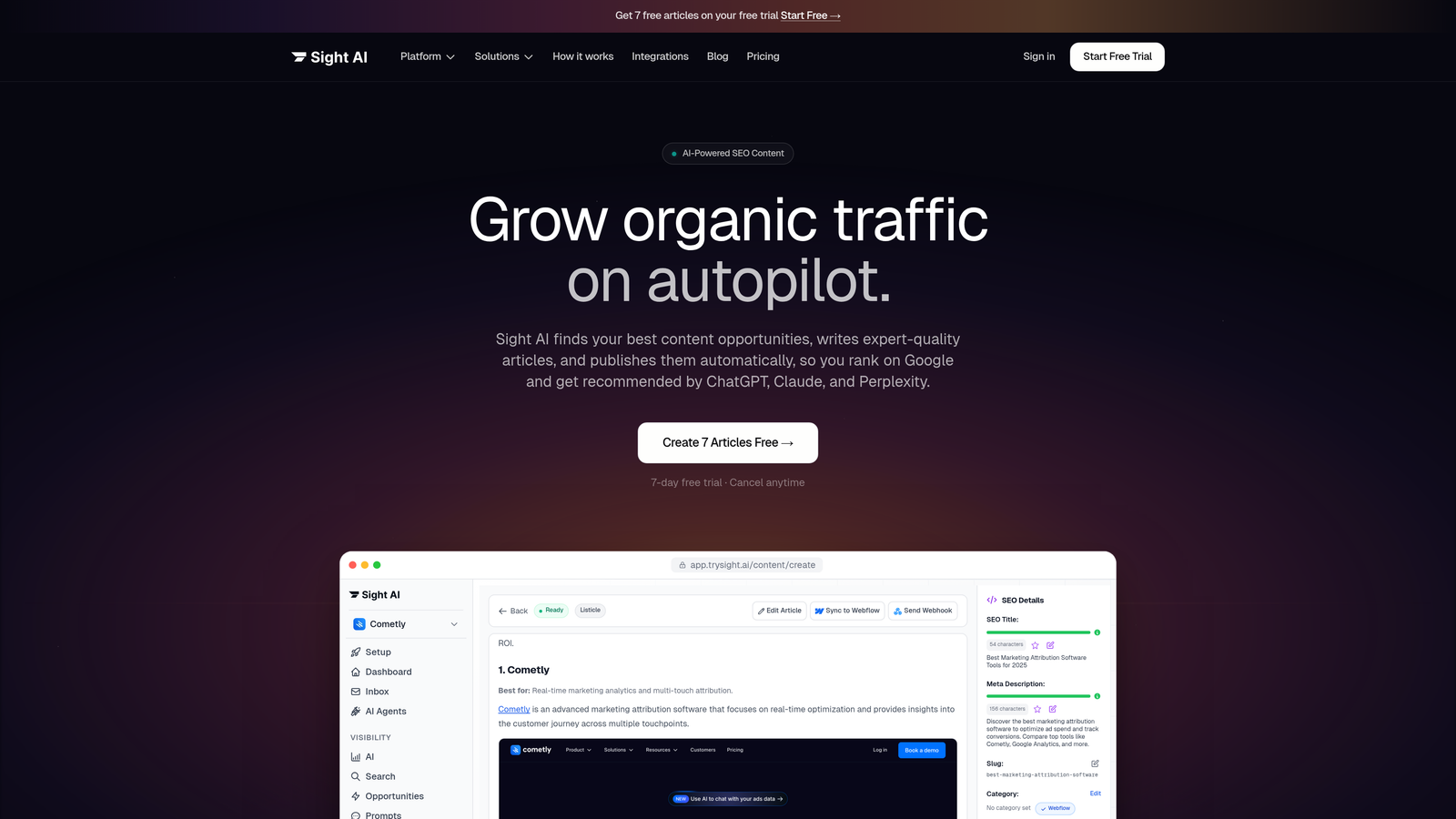
Sight AI is an all-in-one platform combining AI visibility tracking, SEO/GEO content generation, and automated website indexing built specifically for founders and growing teams.
Where This Tool Shines
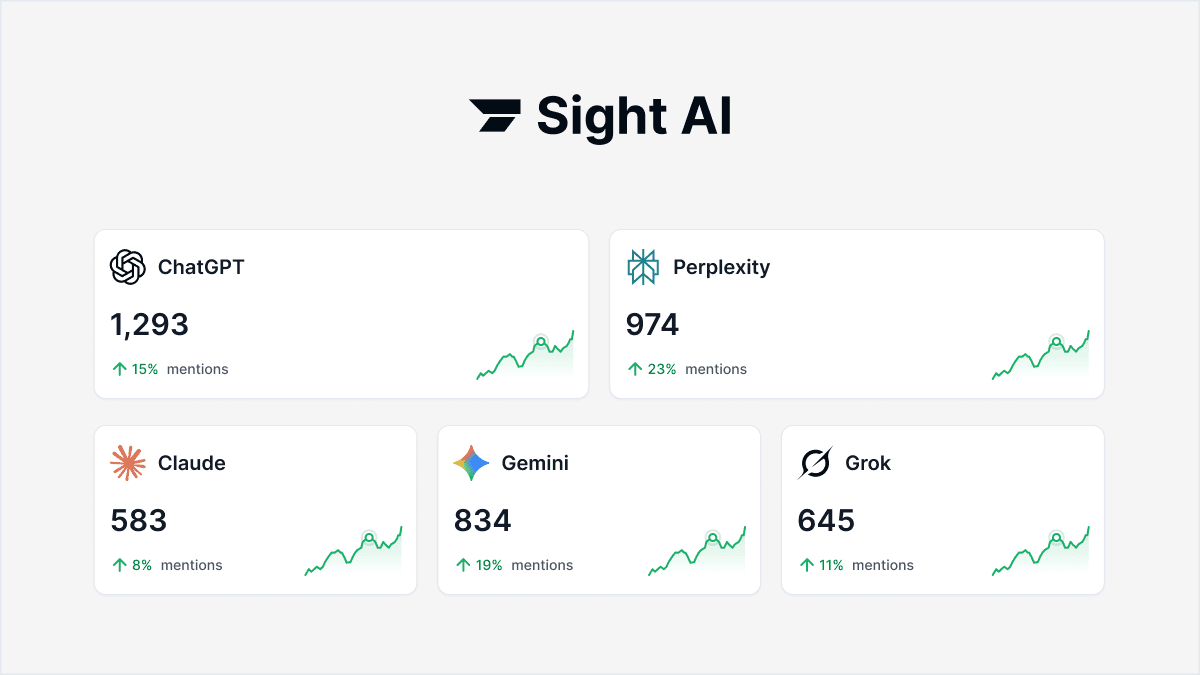
Most SEO tools were built for traditional search. Sight AI was built for the current reality: a world where your potential customers are asking ChatGPT which tools to use, querying Perplexity for product recommendations, and getting answers from Claude before they ever open a search results page. Sight AI tells you exactly how those AI models are talking about your brand right now.
Beyond tracking, it closes the loop on content. Its AI Content Writer uses 13+ specialized agents to generate SEO and GEO-optimized articles, from listicles to explainers, and can publish them directly to your CMS on autopilot. Pair that with IndexNow integration that pushes new content to search engines instantly, and you have a system that handles the full lifecycle from ideation to indexed page.
Key Features
AI Visibility Score: Tracks how your brand appears across ChatGPT, Claude, Perplexity, and 6+ AI platforms, with sentiment analysis to show whether mentions are positive, neutral, or negative.
Prompt Tracking: Reveals exactly which queries trigger AI mentions of your brand so you can optimize content around those specific prompts.
AI Content Writer: 13+ specialized agents generate SEO/GEO-optimized articles in formats like listicles, guides, and explainers, with an Autopilot Mode for hands-off publishing.
IndexNow Integration: Automatically notifies search engines of new content the moment it goes live, eliminating indexing delays that slow organic traffic growth.
CMS Auto-Publishing: Connects content generation directly to your website, reducing the manual steps between writing and a live, indexed page.
Best For
Founders and startup marketing teams who want to compete in both traditional search and AI-driven discovery without managing separate tools for each. Particularly valuable for SaaS founders, agency operators, and anyone building a content-led growth strategy who needs to move fast without sacrificing quality.
Pricing
Visit trysight.ai for current plans. Pricing is designed with founder and startup budgets in mind, making it accessible without an enterprise contract.
2. Ahrefs
Best for: Deep competitor research, backlink analysis, and keyword discovery at scale.
Ahrefs is an industry-leading SEO toolset known for its massive backlink index and comprehensive competitor analysis capabilities.
Where This Tool Shines
When you need to understand why a competitor is outranking you, Ahrefs is the first place to look. Its Site Explorer gives you a detailed breakdown of any domain's organic traffic, top pages, and backlink profile, so you can reverse-engineer what's working and build a strategy around proven opportunities rather than guesswork.
The Keywords Explorer is equally strong, offering click metrics alongside search volume so you understand the actual traffic potential of a keyword, not just how many people search for it. For founders who want to prioritize content investments intelligently, that distinction matters.
Key Features
Site Explorer: Deep-dive competitor analysis showing backlink profiles, organic traffic estimates, and top-performing pages.
Keywords Explorer: Keyword research with click-through data, keyword difficulty scores, and SERP analysis.
Content Explorer: Discover top-performing content in any niche to identify link-worthy topics and content gaps.
Site Audit: Automated technical SEO checks that surface crawl errors, broken links, and on-page issues.
Rank Tracker: Daily position monitoring with SERP feature tracking to see how your rankings evolve over time.
Best For
Founders with some SEO experience who want the most comprehensive data available for competitive research and link building. Also a strong choice for teams that produce content regularly and need to prioritize topics based on real traffic potential.
Pricing
Starts at $129/month for the Lite plan. Free Ahrefs Webmaster Tools is available for site owners and covers basic crawling and backlink data at no cost.
3. Semrush
Best for: Founders who want SEO, PPC, content, and competitive intelligence in one platform.
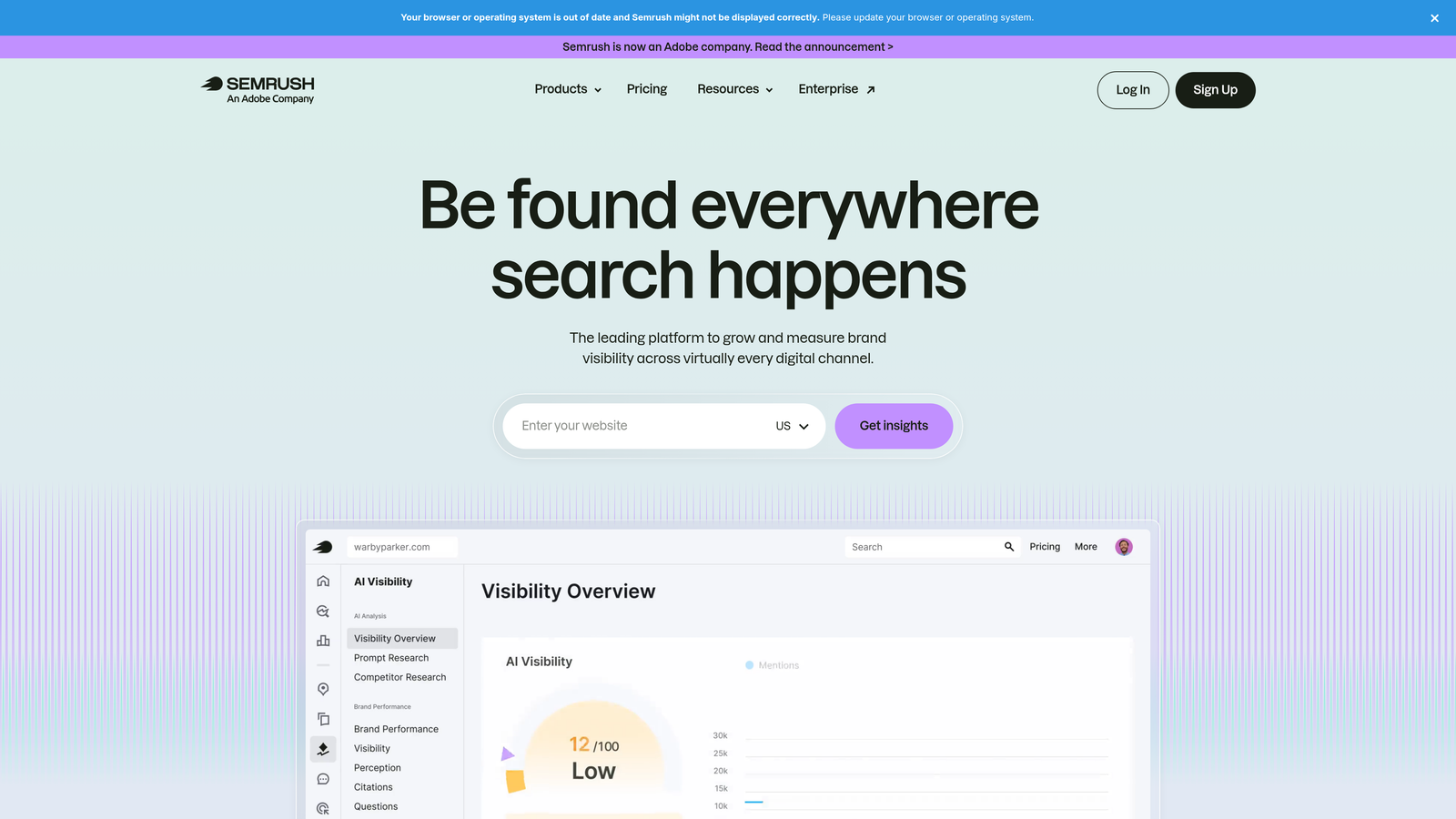
Semrush is a comprehensive digital marketing suite that covers SEO, paid search, content marketing, and competitive research under one roof.
Where This Tool Shines
Semrush earns its place in a founder's stack through sheer breadth. If you're running multiple channels simultaneously and want a single source of truth for competitive intelligence, it's hard to beat. The Domain Overview feature gives you an instant snapshot of any competitor's digital footprint in seconds, which is useful when you're doing quick market research before a sales call or investor meeting.
The SEO Writing Assistant is a practical feature for content-focused founders. It analyzes your draft in real time against top-ranking pages for your target keyword, flagging readability issues, missing semantically related terms, and tone inconsistencies before you publish.
Key Features
Keyword Magic Tool: Extensive keyword database with grouping and filtering to build targeted content clusters efficiently.
Domain Overview: Instant competitive snapshot showing organic traffic, paid traffic, backlinks, and top keywords for any domain.
SEO Writing Assistant: Real-time content optimization scoring based on top-ranking pages for your target keyword.
Position Tracking: Daily rank tracking with local and mobile data segmentation for granular performance monitoring.
Site Audit: Over 140 technical SEO checks covering crawlability, site speed, internal linking, and more.
Best For
Founders running lean teams who need one platform to cover multiple marketing channels. Well-suited for those who run both SEO and paid campaigns and want unified competitive data across both.
Pricing
Starts at $139.95/month for the Pro plan. A 7-day free trial is available, making it easy to evaluate before committing.
4. Ubersuggest
Best for: Budget-conscious founders who need solid keyword research and site audits without a large monthly commitment.
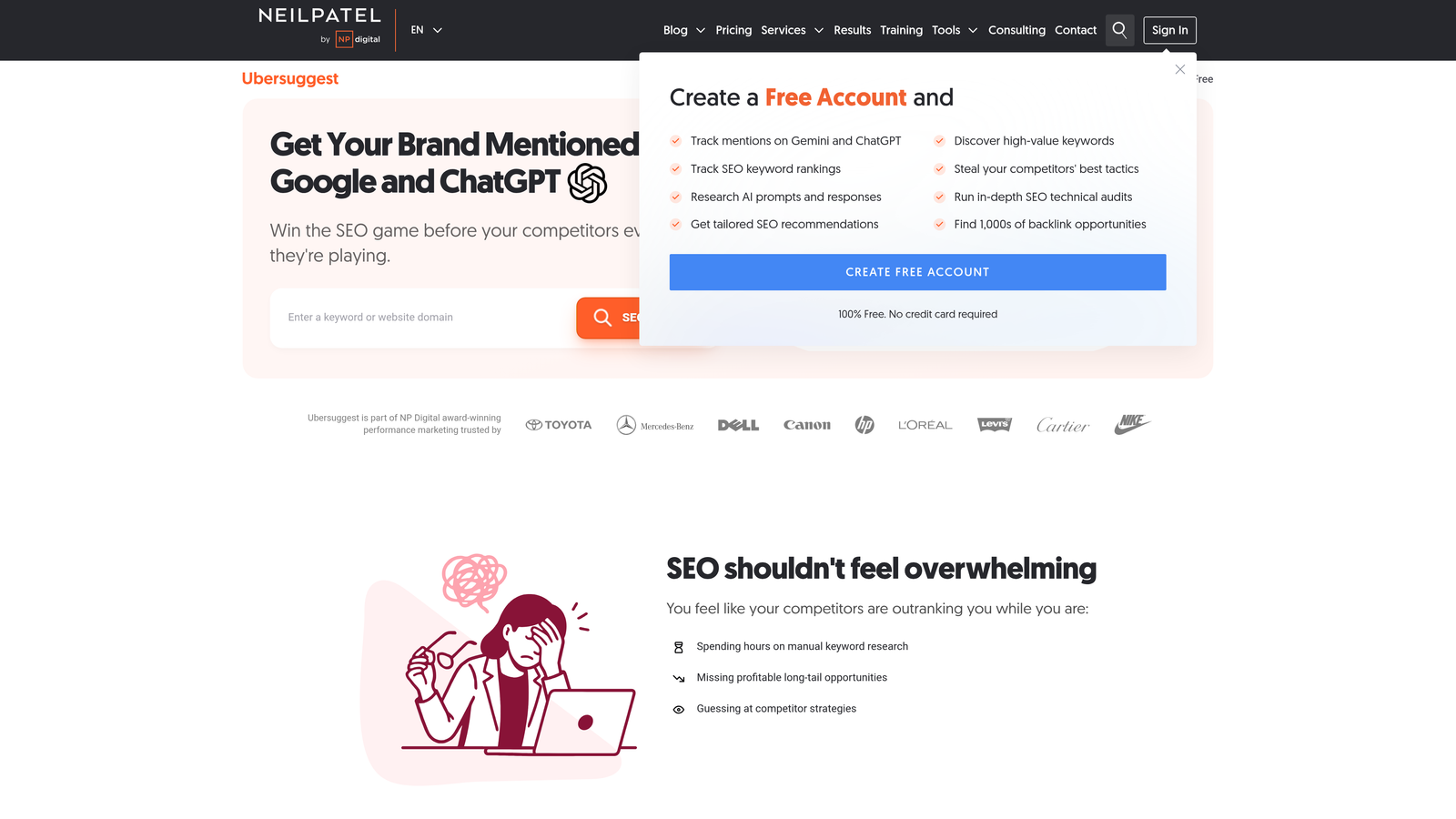
Ubersuggest is a budget-friendly SEO tool offering keyword research, site audits, and competitor analysis with a focus on simplicity and affordability.
Where This Tool Shines
Ubersuggest occupies a practical middle ground: it's more capable than free tools but far more accessible than enterprise suites. For a founder in the early stages who needs to understand keyword opportunities and fix basic site issues without spending hundreds per month, it delivers solid value without overwhelming you with data.
The lifetime plan option is particularly appealing for bootstrapped founders. Instead of an ongoing subscription, a one-time payment gives you permanent access, which makes budgeting simpler and removes the pressure of monthly billing cycles.
Key Features
Keyword Suggestions: Search volume, CPC, and competition data to identify keywords worth targeting across organic and paid channels.
Site Audit: Prioritized fix recommendations so you know which technical issues to address first for maximum impact.
Competitor Traffic Analysis: See which pages drive the most traffic for competitors and identify content gap opportunities.
Chrome Extension: On-the-go keyword data directly in your browser while you research or browse competitor sites.
Lifetime Plan: One-time payment option that eliminates recurring subscription costs, rare in the SEO tool market.
Best For
Early-stage founders and solopreneurs who want a capable SEO tool without a significant monthly expense. The lifetime plan makes it especially attractive for bootstrapped businesses watching cash flow carefully.
Pricing
Monthly plans start at $12/month for the Individual plan. Lifetime plans are available from $120, making it one of the most cost-effective options in the market.
5. Surfer SEO
Best for: Founders focused on content production who want data-driven guidance on exactly what to write.
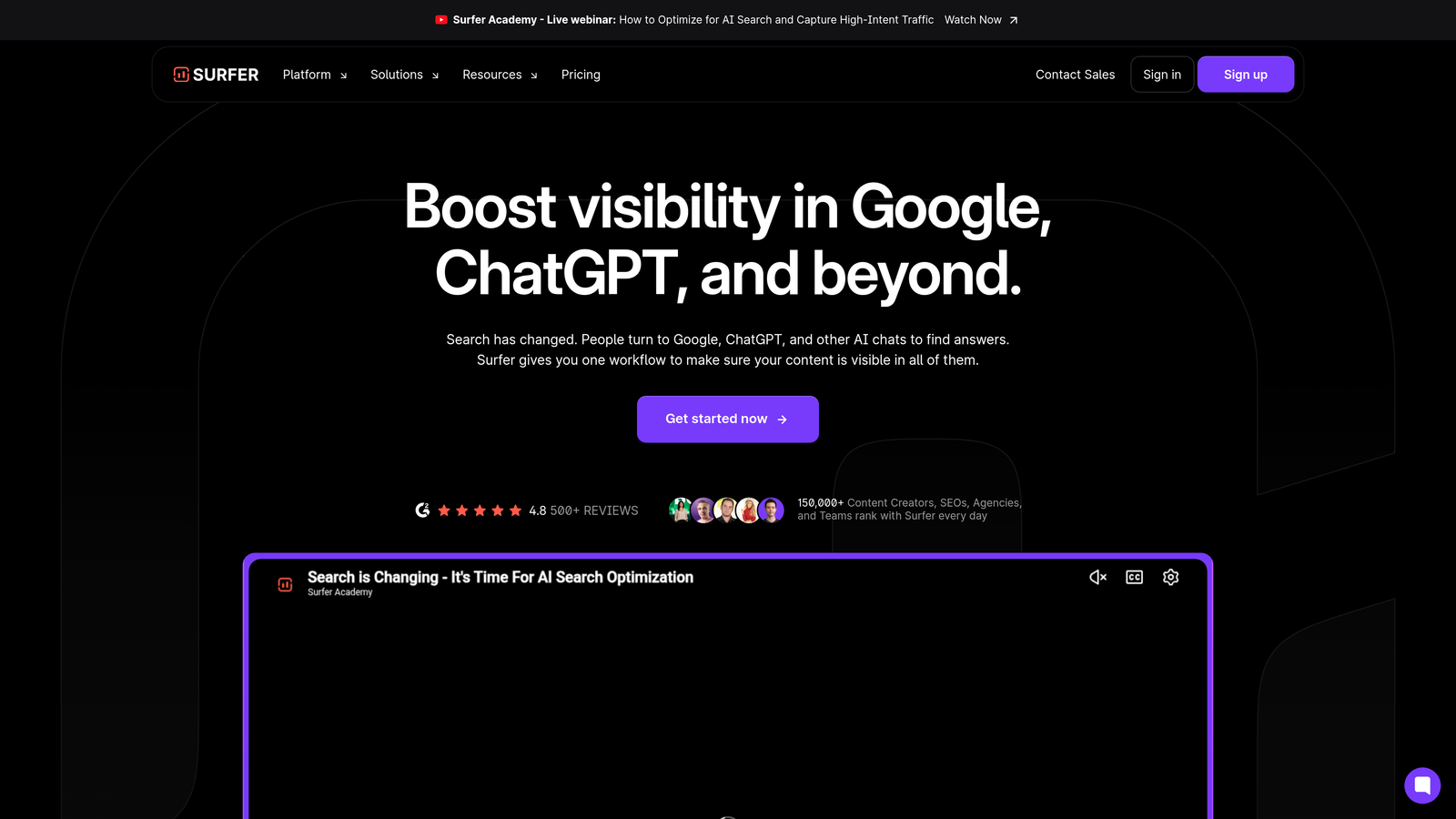
Surfer SEO is a content optimization platform that uses NLP and SERP analysis to help you create pages that match search intent and outperform competitors.
Where This Tool Shines
Surfer SEO removes the guesswork from content creation. Rather than writing an article and hoping it ranks, you open the Content Editor, enter your target keyword, and get a real-time optimization score based on what's already ranking on page one. It tells you which terms to include, how long your content should be, and how to structure headings, all derived from live SERP data.
For founders who write their own content or brief freelancers, this is a significant time-saver. The content briefs feature generates structured outlines with suggested headings, keywords, and word counts so you can hand a writer a brief that's already optimized before a single word is written.
Key Features
Content Editor: Real-time optimization score that guides you toward content aligned with what's ranking for your target keyword.
SERP Analyzer: Breaks down the ranking factors for any keyword so you understand what Google is rewarding in your niche.
Content Briefs: Automatically generated outlines with suggested headings, keywords, and structure ready to hand to writers.
Audit Tool: Diagnoses existing underperforming pages and recommends specific optimizations to improve rankings.
Google Docs and WordPress Integrations: Brings the optimization score directly into the tools you already use for writing and publishing.
Best For
Founders running content-led growth strategies who want to maximize the ranking potential of every article they publish. Especially useful for those who work with freelance writers and need to provide structured, optimization-ready briefs.
Pricing
Starts at $89/month for the Essential plan. No free tier, but the focus on content ROI makes it easy to justify against the cost of creating content that doesn't rank.
6. Google Search Console
Best for: Every founder with a website, full stop. This is non-negotiable.
Google Search Console is Google's free tool providing direct search performance data, indexing status, and technical health insights for any website.
Where This Tool Shines
No third-party tool gives you data more authoritative than what comes directly from Google. Search Console shows you exactly which queries your pages appear for, how often they're clicked, and where they rank, drawn from Google's own index rather than estimated from a sample. For a founder trying to understand what's actually working in organic search, this is ground truth.
The Index Coverage report is particularly valuable. It shows you which pages Google has successfully indexed and which ones it's struggling with, along with the reason why. Catching indexing issues early prevents you from publishing content that never gets discovered.
Key Features
Search Performance Reports: Impressions, clicks, CTR, and average position data segmented by query, page, country, and device.
Index Coverage: Shows which pages are indexed, which are excluded, and why, so you can fix discovery issues quickly.
Core Web Vitals: Page experience signals measured directly by Google, showing which pages need performance improvements.
URL Inspection Tool: Debug individual pages to check their indexing status, last crawl date, and any detected issues.
Manual Action and Security Alerts: Immediate notification if Google penalizes your site or detects a security problem.
Best For
Every founder who has a website and wants organic traffic. There is no scenario where Google Search Console shouldn't be set up. It's free, it's authoritative, and it's the baseline data layer that makes every other SEO tool more useful.
Pricing
Completely free. No paid tiers, no feature limits based on plan. Set it up on day one and never remove it.
7. Screaming Frog SEO Spider
Best for: Technical SEO audits that go deeper than any cloud-based tool can reach.
Screaming Frog SEO Spider is a desktop-based website crawler that performs deep technical SEO audits by simulating how search engines crawl and interpret your site.
Where This Tool Shines
When you need to understand exactly what a search engine sees when it crawls your site, Screaming Frog delivers a level of detail that cloud-based tools often can't match. It crawls every URL on your site and surfaces broken links, redirect chains, duplicate content, missing meta data, and structural issues in a format that's easy to filter and export.
It's particularly useful when you've inherited a site with unknown technical debt, are migrating to a new domain, or want to validate that a site rebuild didn't introduce new SEO issues. The JavaScript rendering capability also makes it one of the few tools that accurately audits modern single-page applications and JS-heavy sites.
Key Features
Full Site Crawl: Identifies broken links, redirect chains, duplicate content, and missing metadata across every URL on your site.
Meta Data Analysis: Reviews title tags, meta descriptions, and heading structure at scale with exportable reports.
XML Sitemap Generation: Creates accurate sitemaps based on actual crawl results rather than manual configuration.
JavaScript Rendering: Accurately audits JS-heavy sites and single-page applications that other crawlers often misread.
Google Analytics and Search Console Integration: Enriches crawl data with real traffic and performance metrics for prioritization.
Best For
Founders with technical sites, large content libraries, or recent site migrations who need a thorough technical audit. Less suited for daily use, but invaluable as a quarterly health check or pre-launch validation tool.
Pricing
The free version crawls up to 500 URLs, which is enough for small sites. The paid license is £199/year and removes all crawl limits, making it one of the best value technical SEO investments available.
8. Mangools (KWFinder)
Best for: Founders who need accurate keyword difficulty scores and an interface that doesn't require an SEO background to navigate.
Mangools is a lightweight SEO toolset centered around its KWFinder keyword research tool, known for its intuitive keyword difficulty scoring and clean user experience.
Where This Tool Shines
Mangools is the tool you recommend to a founder who finds Ahrefs or Semrush overwhelming. The interface is genuinely clean, the data is presented without unnecessary complexity, and the keyword difficulty scores are consistently reliable for identifying low-competition opportunities that a new or growing site can realistically target.
The full Mangools suite includes rank tracking, SERP analysis, and backlink tools, all maintaining the same approachable design. For founders who want a complete SEO toolkit without a steep learning curve, it's one of the most accessible options at its price point.
Key Features
KWFinder: Accurate keyword difficulty scores with search volume and trend data, designed for quick prioritization of winnable keywords.
SERPChecker: Analyzes SERP features and competitor authority metrics for any keyword to assess ranking difficulty in context.
SERPWatcher: Daily rank tracking with a performance index that summarizes your overall ranking trajectory in a single number.
LinkMiner: Backlink analysis and link prospecting tool for identifying outreach targets and monitoring your link profile.
Beginner-Friendly Interface: Consistent, clean design across all tools that reduces the learning curve significantly compared to enterprise alternatives.
Best For
Founders who are newer to SEO and want a tool that guides them toward good decisions without requiring deep expertise. Also a strong fit for small teams where multiple people need to access SEO data without formal training.
Pricing
Starts at $29.90/month for the Mangools Basic plan. A 10-day free trial is available with no credit card required, giving you a genuine window to evaluate the full toolset.
9. Rank Math
Best for: WordPress founders who want powerful on-page SEO and schema markup without paying for a separate tool.
Rank Math is a feature-rich WordPress SEO plugin offering on-page optimization, schema markup, redirections, and content analysis with a generous free tier.
Where This Tool Shines
If your site runs on WordPress, Rank Math is one of the highest-value installs you can make. The free version includes features that competing plugins charge for, including advanced schema markup, redirect management, and Google Search Console integration directly inside your WordPress dashboard. For founders who want to manage technical and on-page SEO without leaving their CMS, it significantly reduces context-switching.
The on-page analysis scores each post or page against a set of SEO criteria and provides specific, actionable recommendations. It's not a replacement for a full keyword research tool, but it ensures that every piece of content you publish is technically sound before it goes live.
Key Features
On-Page SEO Analysis: Actionable scoring for each post and page with specific recommendations to improve optimization before publishing.
Schema Markup Generator: Built-in support for 20+ schema types including FAQ, HowTo, Product, and Review, with no coding required.
Redirect Manager: Automatic and manual redirect management to preserve link equity during content updates and URL changes.
Search Console Integration: Brings Google Search Console data directly into your WordPress dashboard for performance monitoring without switching tabs.
Content AI (Pro): Keyword suggestions and optimization tips powered by AI to guide content creation from within the editor.
Best For
Any founder running a WordPress site who wants robust on-page SEO and schema capabilities without adding significant cost. The free tier is genuinely capable, and the Pro plan is priced well below most standalone SEO tools.
Pricing
The free version includes a comprehensive feature set that covers most founder needs. Pro plans start at $6.99/month, making it one of the most affordable upgrades in this list.
How to Build Your Founder SEO Stack
The right SEO stack depends on where you are in your journey. There's no single combination that works for everyone, but there are sensible patterns based on stage and budget.
If you're just getting started, the non-negotiable foundation is Google Search Console paired with Rank Math if you're on WordPress. Both are free, both are authoritative, and together they give you real performance data and on-page optimization in one lean setup. Add Mangools or Ubersuggest when you're ready to invest in keyword research, and you have a capable early-stage stack for under $30/month.
As you scale content production, Surfer SEO becomes worth the investment. It turns every article into a data-driven effort rather than a creative guess, which matters when your time and content budget are finite. Ahrefs or Semrush makes sense when competitive intelligence becomes a priority, particularly if you're operating in a market where understanding your competitors' traffic and backlink strategies directly informs your own.
The dimension most founders overlook is AI visibility. Traditional SEO gets you found on Google. But as more of your potential customers start their product discovery in ChatGPT, Perplexity, or Claude, your presence in those AI-generated answers becomes a separate and increasingly important growth channel. That's the gap Sight AI was built to close: tracking where and how AI models mention your brand, identifying which prompts trigger those mentions, and generating the SEO and GEO-optimized content that earns more of them.
The most effective founder SEO stacks in 2026 combine traditional search optimization with AI visibility strategy. Start tracking your AI visibility today and see exactly where your brand appears across top AI platforms. Stop guessing how ChatGPT and Claude talk about your brand, and start building a presence in both the search results and the AI answers your customers are already relying on.