AI has fundamentally changed how brands win organic visibility. Traditional SEO tools were built for Google's ten blue links, but today's marketers also need to rank in ChatGPT, Claude, Perplexity, and other generative AI engines that millions of users query daily.
The best AI SEO platforms now combine classic search optimization with Generative Engine Optimization (GEO): tracking brand mentions inside AI responses, generating content tuned for both crawlers and language models, and indexing pages fast enough to stay ahead of competitors. This guide covers six platforms purpose-built for that dual mandate, evaluated on AI visibility capabilities, content generation quality, indexing speed, reporting depth, and value for marketers, founders, and agencies focused on sustainable organic growth.
1. Sight AI
Best for: Marketers who want AI visibility tracking, GEO content generation, and fast indexing in one platform.
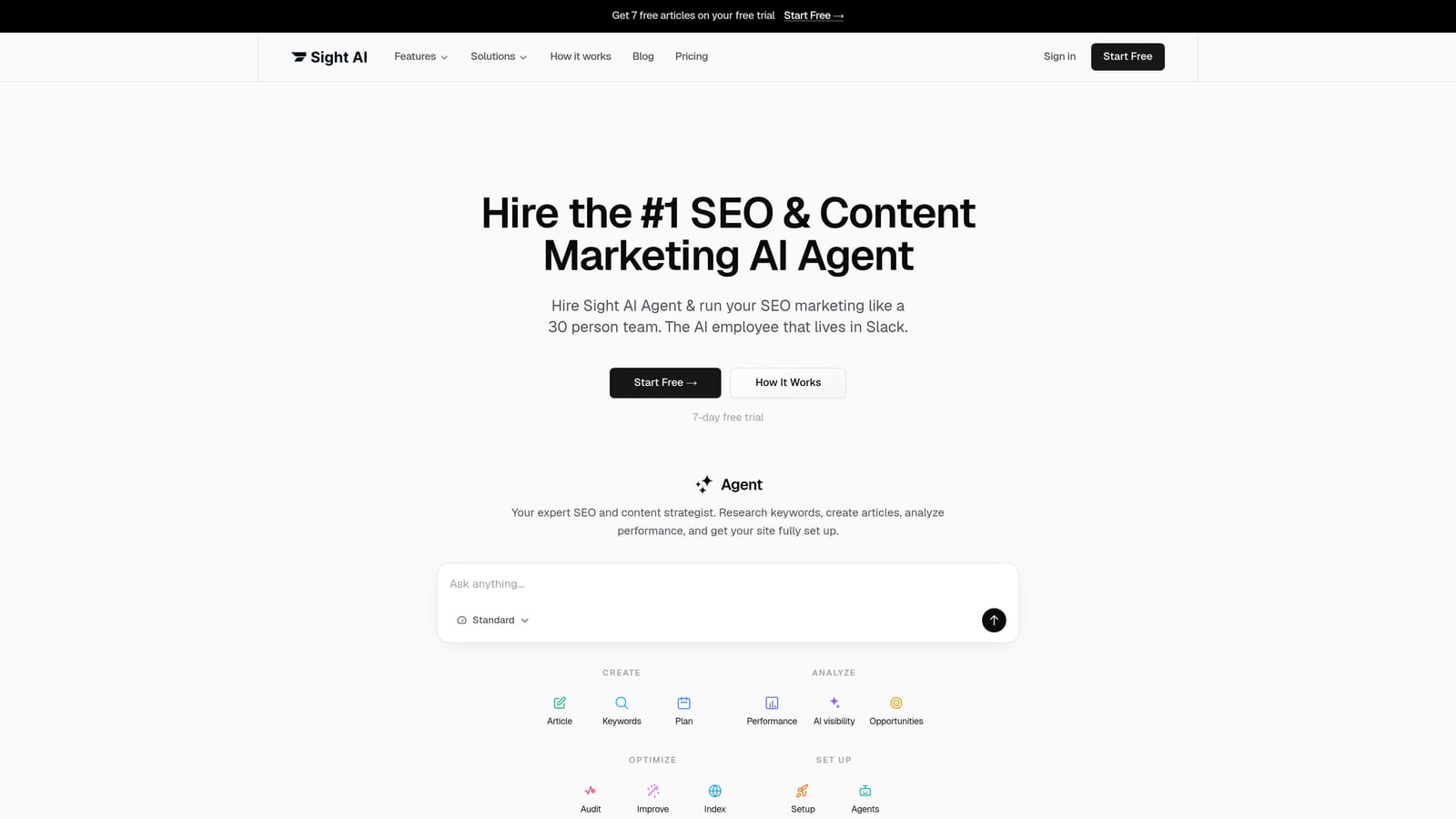
Sight AI is an all-in-one AI SEO platform that tracks brand mentions across 6+ AI models, generates SEO/GEO-optimized content with 13+ specialized agents, and automates page indexing with IndexNow integration.
Where This Tool Shines
Most platforms in this space do one thing well: they either monitor AI citations or generate content. Sight AI is built around the idea that these two functions belong together. You can track exactly how ChatGPT, Claude, and Perplexity talk about your brand, then immediately act on those gaps by generating content designed to close them.
The Autopilot Mode takes this further by handling content generation and CMS publishing with minimal manual input. For agencies managing multiple clients or founders running lean teams, that hands-off pipeline is a meaningful operational advantage.
Key Features
AI Visibility Score: Tracks brand mentions with sentiment analysis across ChatGPT, Claude, Perplexity, and three or more additional AI platforms, giving you a consolidated view of your generative engine presence.
Prompt Tracking: Identifies which specific queries surface your brand in AI responses, so you know exactly where you're winning and where you're invisible.
13+ Specialized AI Content Agents: Generates listicles, guides, explainers, and other content formats optimized for both traditional search crawlers and generative engine indexing.
Autopilot Mode: Automates the content generation and CMS publishing workflow for teams that need consistent output without constant manual oversight.
IndexNow Integration: Pushes new and updated pages to search engines immediately, with automated sitemap updates to accelerate discovery by both traditional crawlers and AI indexers.
Best For
Sight AI is best suited for growth-focused marketers, SaaS founders, and digital agencies who need a single platform covering the full AI SEO stack. If you're currently stitching together separate tools for monitoring, content, and indexing, this platform is designed to consolidate that workflow.
Pricing
Pricing plans are available directly at trysight.ai. The platform is structured to serve both individual marketers and larger agency teams.
2. Writesonic
Best for: High-volume content production with built-in SEO optimization and keyword workflows.
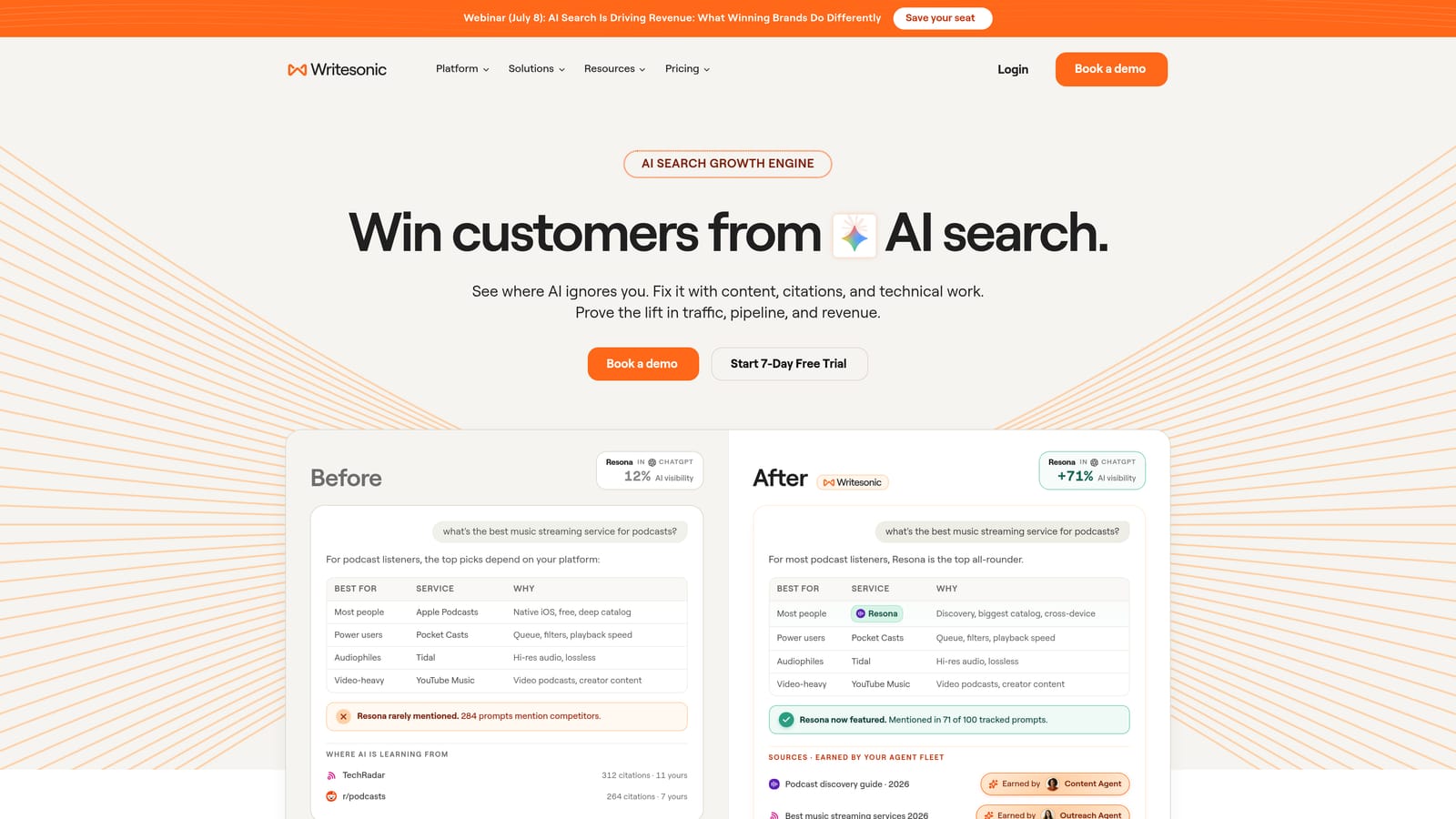
Writesonic is an AI content generation platform designed for teams that need to produce large quantities of SEO-optimized content without sacrificing consistency or quality.
Where This Tool Shines
Writesonic has built a reputation for making high-volume content production practical. The article writer integrates SEO scoring directly into the editing workflow, which means writers can optimize as they draft rather than treating SEO as a separate audit step. That integration reduces friction for content teams operating under tight turnaround requirements.
The platform also covers formats beyond long-form articles. Landing pages, ad copy, and product descriptions are all supported through a broad template library, making it a versatile option for marketing teams with diverse content needs.
Key Features
AI Article Writer: Produces long-form content with integrated SEO scoring and keyword placement guidance built into the drafting interface.
Content Templates: Spans blog posts, landing pages, and ad copy formats, supporting teams with varied content production requirements.
Brand Voice Customization: Allows teams to define tone and style parameters so AI-generated content stays consistent with established brand guidelines.
SEO Optimization Suggestions: Surfaces keyword and structure recommendations inline during the writing process rather than as a post-draft layer.
Best For
Writesonic is well-suited to content marketing teams, SEO agencies, and solo marketers who prioritize content output volume. It works best when the primary goal is generating and optimizing written content rather than monitoring AI citation behavior.
Pricing
A free tier is available for new users. Paid plans scale with usage volume. Verify current pricing and plan details at writesonic.com.
3. AirOps
Best for: Content operations teams building scalable AI workflows connected to CMS platforms and external data sources.
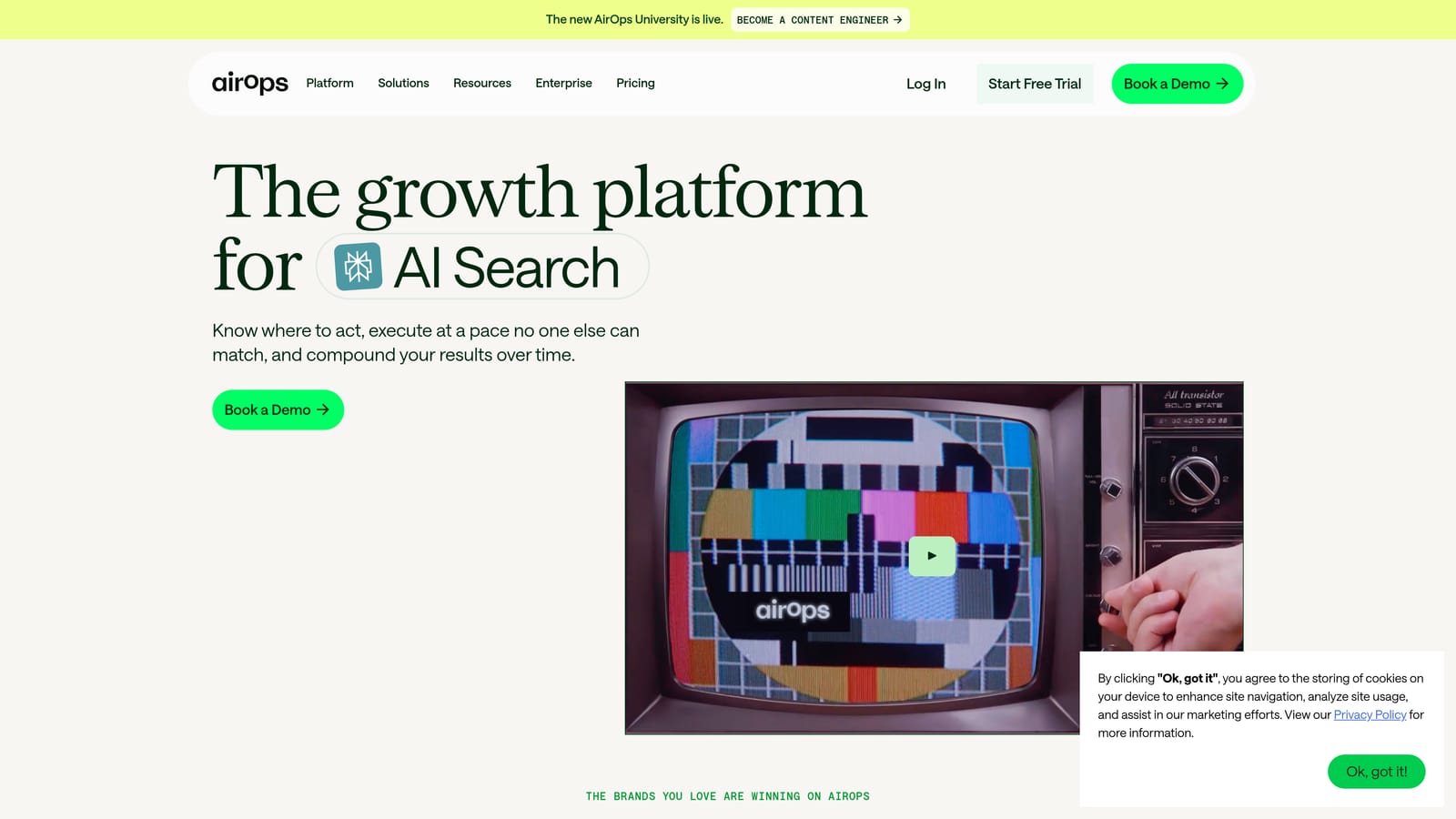
AirOps is a workflow automation platform purpose-built for AI content operations, enabling teams to design and run content pipelines that connect AI generation to databases, APIs, and publishing systems.
Where This Tool Shines
AirOps occupies a distinct position in the AI SEO landscape: it's less a writing tool and more an operations layer. Think of it as the infrastructure that connects your AI content generation to the rest of your marketing stack. Teams can build custom workflows that pull structured data from a database, generate content at scale, and push it directly to a CMS without manual handoffs.
This makes AirOps particularly strong for programmatic SEO use cases. If your strategy involves generating thousands of location pages, product descriptions, or comparison articles from structured data, AirOps provides the workflow architecture to make that scalable and repeatable.
Key Features
Custom AI Workflow Builder: Connects content generation steps to external data sources, APIs, and internal databases through a visual workflow interface.
Programmatic SEO Support: Designed to handle large-scale content generation from structured data, supporting use cases that would be impractical to execute manually.
CMS and API Integrations: Enables automated content publishing to major CMS platforms, reducing the manual steps between generation and live pages.
Team Collaboration Features: Built to support content operations at agency or enterprise scale, with workflow sharing and team management capabilities.
Best For
AirOps is best suited to growth engineering teams, content operations leads, and agencies running programmatic SEO campaigns. It rewards teams with technical resources who want to build sophisticated, automated content pipelines rather than a straightforward writing interface.
Pricing
Plans are typically usage and seat-based. Verify current pricing and plan details at airops.com.
4. Profound
Best for: Enterprise and mid-market brands monitoring how AI models cite their brand across major LLM platforms.
Profound is an AI answer engine monitoring platform focused on tracking how brands are cited, or overlooked, within AI-generated responses across major large language model platforms.

Where This Tool Shines
Profound approaches the AI visibility problem from a brand intelligence angle. Rather than centering on content generation, the platform is built around the question: when someone asks an AI model about your category, does your brand appear in the answer? The analytics dashboard maps which prompts surface your brand and which surface competitors, giving marketing teams a clear picture of their generative engine share of voice.
The GEO recommendations layer is useful for teams that want to act on that data. Rather than leaving users to interpret citation gaps on their own, Profound surfaces optimization suggestions grounded in actual AI response patterns.
Key Features
Brand Citation Tracking: Monitors how often and in what context your brand appears within AI-generated answers across major LLM platforms.
Competitive Analytics: Shows which prompts surface your brand versus named competitors, enabling direct share-of-voice comparisons in generative search.
GEO Recommendations: Provides optimization suggestions based on actual citation data, helping teams understand what content changes may improve AI visibility.
Enterprise Reporting Tools: Designed for brand and marketing teams that need structured reporting on AI visibility performance over time.
Best For
Profound is well-suited to enterprise marketing teams and mid-market brands with dedicated SEO or brand strategy resources. It's particularly valuable for organizations that need to report on AI visibility to stakeholders and want data-backed recommendations for improving generative engine presence.
Pricing
Contact Profound directly for pricing details at profound.co. Pricing is likely structured for enterprise and mid-market buyers.
5. Peec
Best for: SEO managers and agencies benchmarking brand AI visibility against competitors across generative search engines.
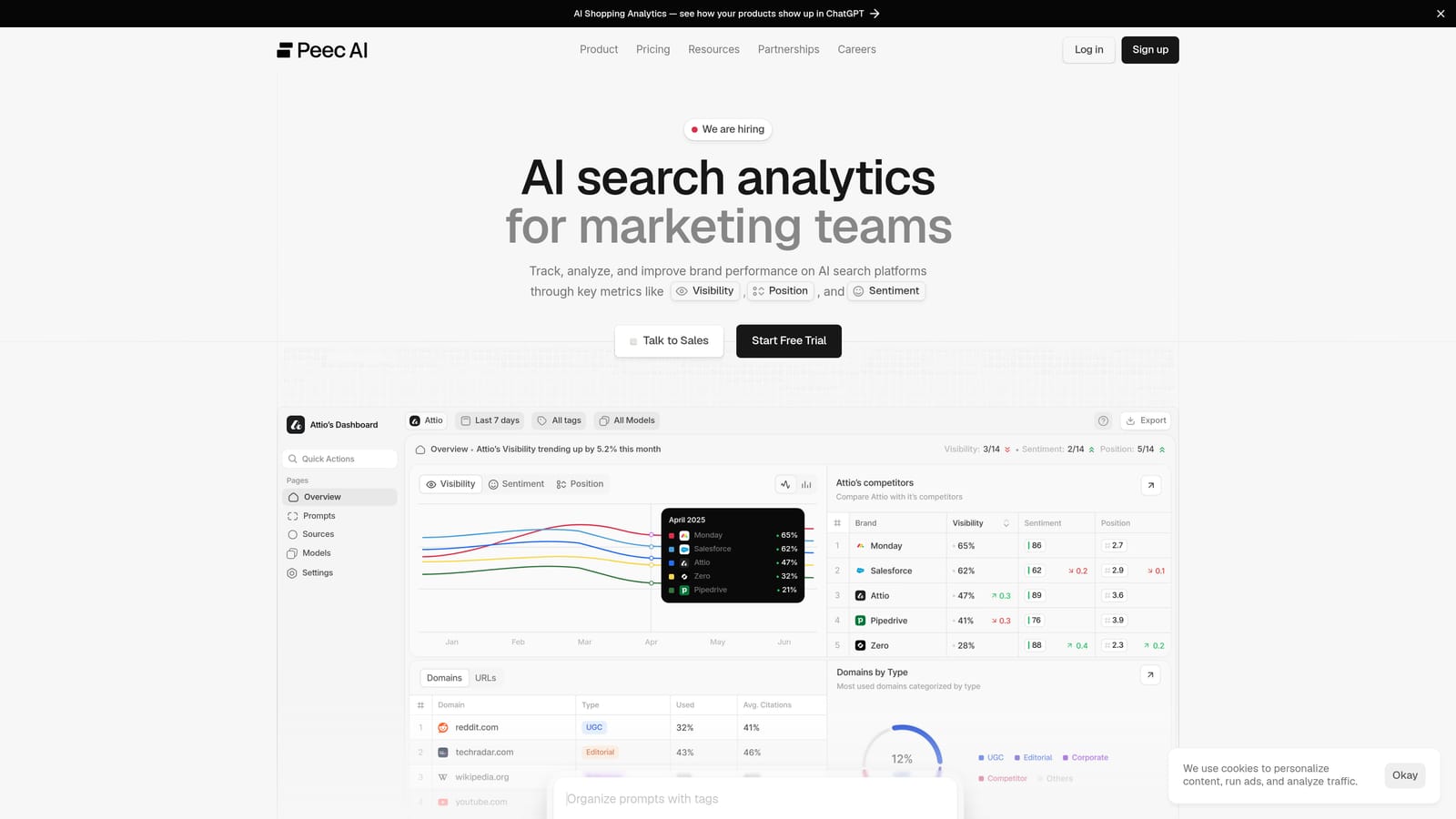
Peec is an AI search visibility tool that measures brand share of voice in AI-generated responses and benchmarks performance against competitors across generative search platforms.
Where This Tool Shines
Peec's competitive benchmarking angle sets it apart from tools that only track your own brand's AI visibility. The platform is built to answer a question that's increasingly common in SEO reporting: not just "does our brand appear in AI answers?" but "how does our AI visibility compare to the three competitors we care about most?" That framing makes it immediately useful for client-facing reporting and internal strategy reviews.
The trend tracking functionality adds a time dimension to that competitive picture. Visibility shifts in AI responses can happen quickly as models update and new content gets indexed, so having historical data to reference helps teams distinguish signal from noise.
Key Features
Brand Share-of-Voice Measurement: Quantifies how frequently your brand appears in AI-generated answers relative to the total conversation in your category.
Competitive Benchmarking: Compares your AI visibility directly against named competitors, providing relative performance data rather than just absolute counts.
Trend Tracking: Monitors AI visibility changes over time so teams can identify shifts driven by content updates, model changes, or competitor activity.
Agency-Ready Reporting: Dashboard and reporting formats designed for SEO managers who need to present AI visibility data alongside traditional ranking metrics.
Best For
Peec is a strong fit for SEO managers at brands with active competitors in AI-generated answers, and for agencies that need to include AI visibility metrics in client reporting. The competitive benchmarking focus makes it most valuable when you have specific rivals you want to track.
Pricing
Pricing details are available at peec.ai.
6. Promptwatch
Best for: Brands wanting granular, prompt-level tracking of how AI models respond to specific queries over time.
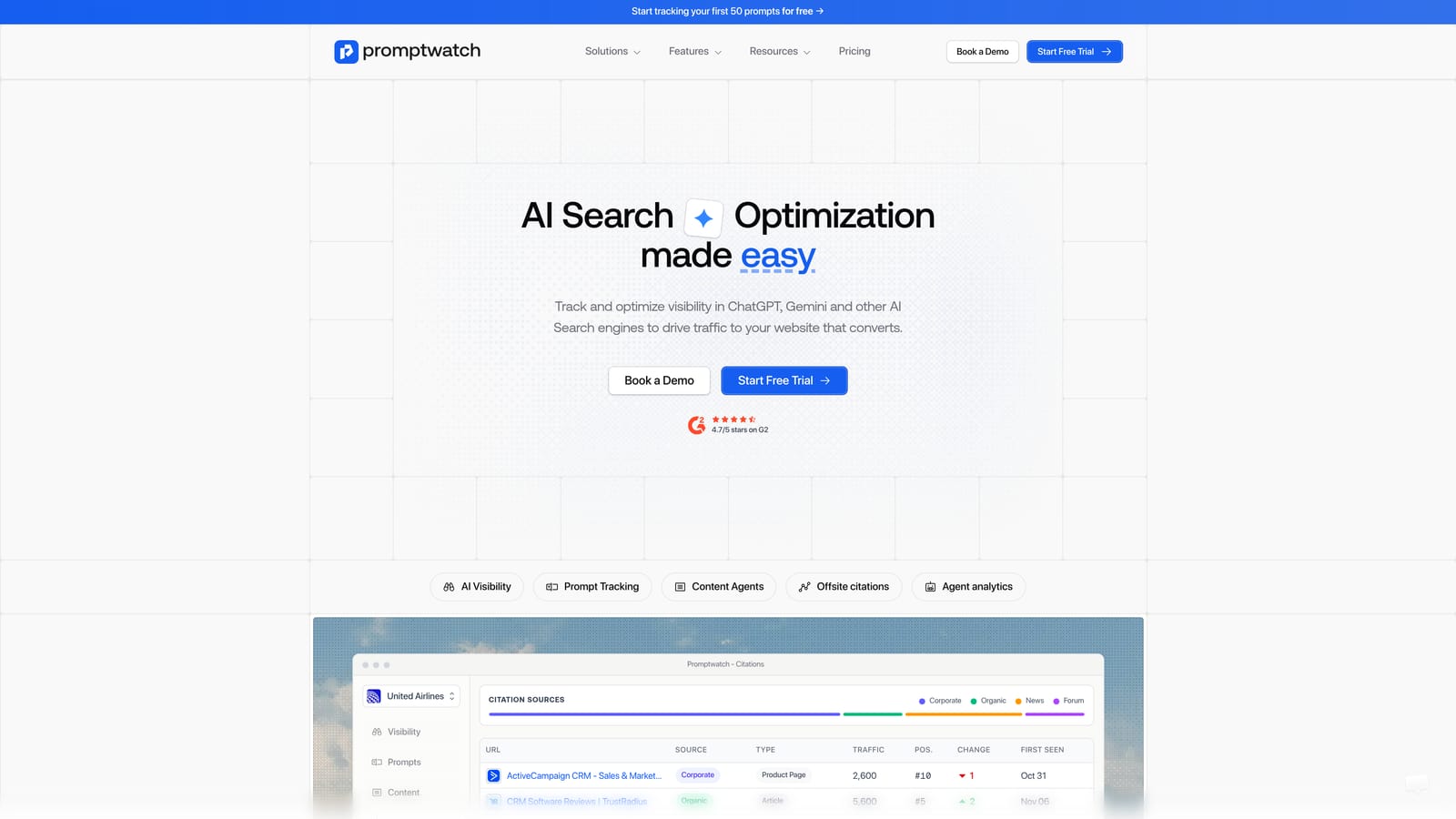
Promptwatch is a prompt-level monitoring tool that tracks how AI models respond to specific queries over time, helping brands understand exactly which prompts generate brand citations and which do not.
Where This Tool Shines
Promptwatch takes a more surgical approach to AI visibility monitoring than most platforms in this category. Instead of reporting on broad brand mentions, it lets you define a specific library of prompts and then tracks how AI model responses to those exact prompts evolve over time. That granularity is valuable when you want to understand the mechanics of your AI visibility rather than just the summary metrics.
The historical response comparison feature is particularly useful for teams running content experiments. If you publish a new guide targeting a specific AI query and want to know whether it shifted how an AI model responds to that prompt, Promptwatch gives you the before-and-after data to make that assessment.
Key Features
Prompt-by-Prompt Tracking: Monitors how individual AI model responses to specific queries change over time, going deeper than aggregate brand mention counts.
Brand Mention Detection: Identifies when and how your brand appears within responses to tracked prompts at the individual query level.
Historical Response Comparison: Stores response history so teams can identify shifts in AI model behavior following content updates or model version changes.
Custom Prompt Library: Allows users to define and organize the specific queries most relevant to their brand, category, and competitive landscape.
Best For
Promptwatch is best suited to technically-oriented SEO professionals, content strategists running GEO experiments, and brands that need detailed, query-level evidence of AI visibility changes. It's the most granular option in this list and rewards users who want to go deep on specific prompts rather than monitor broad brand presence.
Pricing
Pricing details are available at promptwatch.io.
Choosing the Right Platform for Your Situation
The six platforms in this list cover the AI SEO landscape well, but they're built for different priorities. Here's a practical way to think about which one fits your situation.
If you need a single platform that handles AI visibility monitoring, GEO-optimized content generation, and fast indexing together, Sight AI is the clearest choice. It's purpose-built for marketers who don't want to manage three separate tools to accomplish what one platform can do. The Autopilot Mode and IndexNow integration make it especially practical for lean teams that need consistent output without constant manual work.
If your primary need is high-volume content production with SEO scoring built in, Writesonic covers that ground efficiently. For teams building programmatic SEO pipelines that connect AI generation to CMS platforms and external data, AirOps provides the workflow infrastructure to make that scalable.
On the monitoring side, Profound is well-matched to enterprise teams that need structured GEO analytics and stakeholder-ready reporting. Peec is the stronger choice when competitive benchmarking is the priority, particularly for agencies reporting on AI share of voice for clients. Promptwatch is the right fit when you need the most granular, prompt-level visibility data available.
The underlying shift driving demand for all of these tools is real: generative AI engines have become a meaningful discovery channel, and brands that don't track or optimize for that channel are leaving visibility on the table. The question isn't whether to invest in AI SEO tooling, it's which combination of capabilities matches your current growth stage and team structure.
Stop guessing how AI models like ChatGPT and Claude talk about your brand. Start tracking your AI visibility today and see exactly where your brand appears across top AI platforms, uncover the content gaps worth closing, and automate your path to sustainable organic growth.