Metadata is still one of the highest-leverage, lowest-effort SEO wins available — yet most teams either skip it, rush it, or write it inconsistently at scale. Title tags and meta descriptions directly influence click-through rates in search results, and with AI-powered search engines now pulling structured metadata to populate answers, getting this right matters more than ever.
This list covers the best SEO metadata generation tools available in 2026, selected based on AI-generation quality, bulk-processing capability, GEO optimization support, workflow integrations, and pricing transparency. Whether you're managing a 10-page site or a 100,000-page e-commerce catalog, there's a tool here that fits your scale and stack.
We've featured Sight AI first because its content pipeline goes beyond standalone metadata generation — it connects generation directly to indexing and AI visibility tracking, which no other tool on this list does. The rest are ranked by their fit for specific use cases and team types.
1. Sight AI
Best for: Teams who want metadata generation connected to AI visibility tracking and automatic indexing.
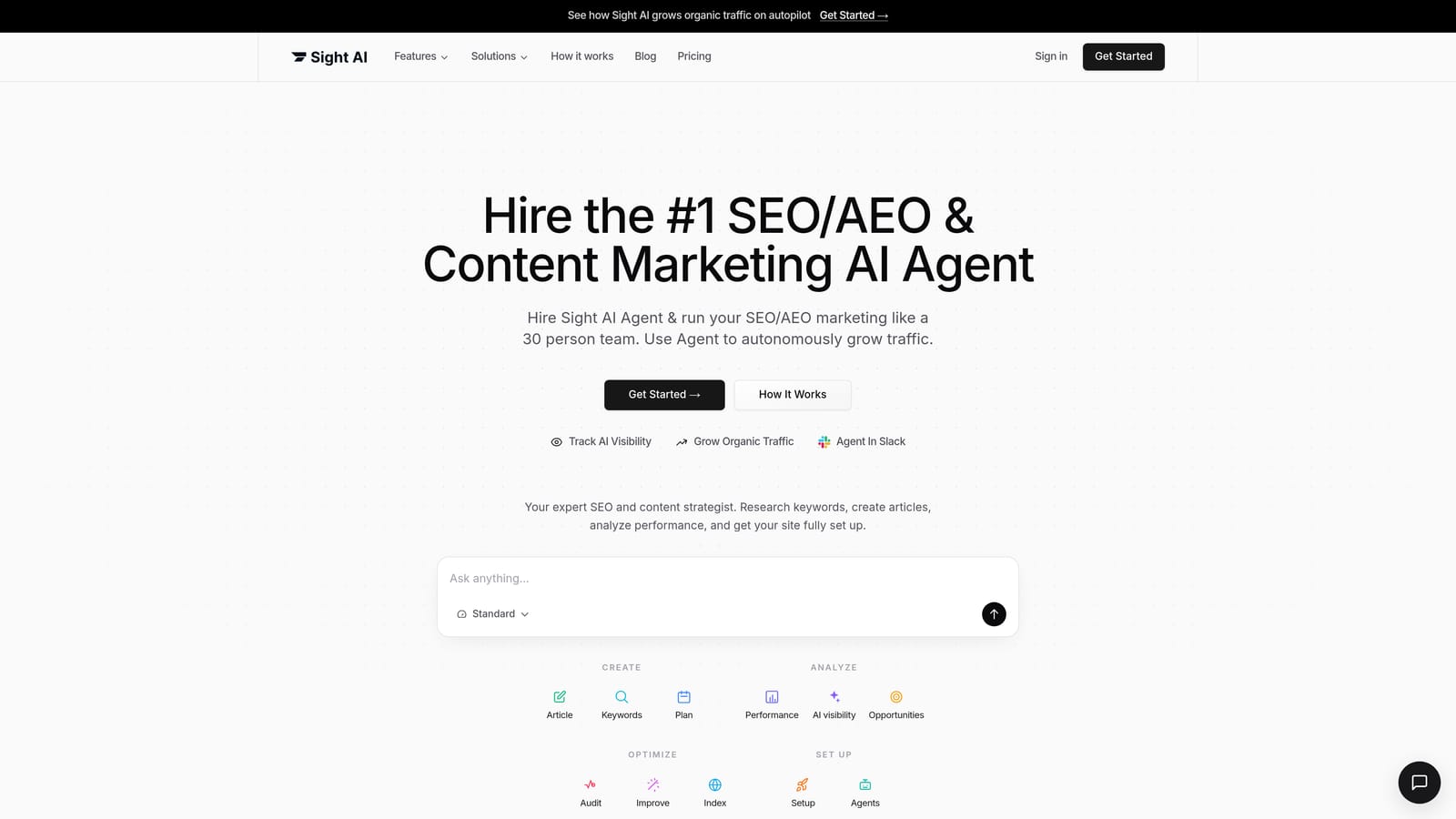
Sight AI is an all-in-one AI content and SEO platform that generates SEO/GEO-optimized content using 13+ specialized AI agents, tracks brand mentions across AI models like ChatGPT and Perplexity, and auto-indexes published content via IndexNow integration.
Where This Tool Shines
Most metadata tools stop at generation. Sight AI treats metadata as one piece of a larger content and discoverability workflow. When you publish content through the platform, metadata is generated as part of the article output, then automatically pushed for indexing via IndexNow, and the resulting AI mentions can be tracked across platforms like ChatGPT, Claude, and Perplexity.
That end-to-end loop is genuinely rare. For teams focused on GEO — getting their brand cited in AI-generated answers, not just ranked in blue links — Sight AI is the only tool here that closes the feedback loop between what you publish and how AI models respond to it.
Key Features
AI Content Writer with 13+ Agents: Generates SEO/GEO-optimized articles including title tags and meta descriptions as part of every content output, covering listicles, guides, and explainers.
AI Visibility Score: Tracks brand mentions across ChatGPT, Claude, Perplexity, and three or more additional AI platforms, with sentiment analysis and prompt tracking built in.
Automatic IndexNow Integration: Pushes newly published content to search engines immediately after publishing, reducing the lag between going live and being discovered.
CMS Auto-Publishing: Publishes content directly to your CMS with automated sitemap updates, keeping metadata aligned with your live site structure.
Autopilot Mode: Runs content and metadata generation hands-off at scale, useful for teams managing high content volumes without a dedicated editor on every piece.
Best For
Marketers, founders, and agencies who want metadata generation embedded inside a full AI content workflow — not as a standalone task. Particularly strong for teams investing in GEO alongside traditional SEO, where tracking AI mentions is as important as tracking search rankings.
Pricing
Subscription-based. Visit trysight.ai for current plan pricing, as tiers are updated regularly.
2. Surfer SEO
Best for: Content teams who want metadata suggestions grounded in real SERP data and NLP analysis.
Surfer SEO is a data-driven content optimization platform that provides metadata suggestions built on live SERP analysis and NLP keyword clustering.

Where This Tool Shines
Surfer's strength is that its metadata recommendations aren't generated in a vacuum. They're informed by what's actually ranking for your target keyword right now, which means title tag and meta description suggestions reflect real competitive context rather than generic best practices.
The Content Editor experience is smooth for writers who are already optimizing body content — metadata scoring sits alongside content scoring, so you're not context-switching between tools to handle both.
Key Features
Content Editor with Metadata Scoring: Real-time scoring for title tags and meta descriptions tied directly to SERP data for your target keyword.
NLP Keyword Suggestions: Surfaces semantically relevant terms to weave into titles and descriptions for stronger topical relevance.
Competitor Metadata Benchmarking: Shows how top-ranking pages handle their metadata so you can calibrate positioning and length.
Google Docs and WordPress Integration: Works inside tools your team already uses, reducing friction in the writing workflow.
Best For
Content teams already using Surfer for on-page optimization who want metadata guidance integrated into the same workflow. Less suited as a standalone metadata-only tool, but excellent when used as part of a full content optimization process.
Pricing
Paid plans from approximately $89/month. Verify current pricing at surferseo.com before purchasing.
3. Semrush Writing Assistant
Best for: Teams already in the Semrush ecosystem who want metadata recommendations backed by real keyword data.
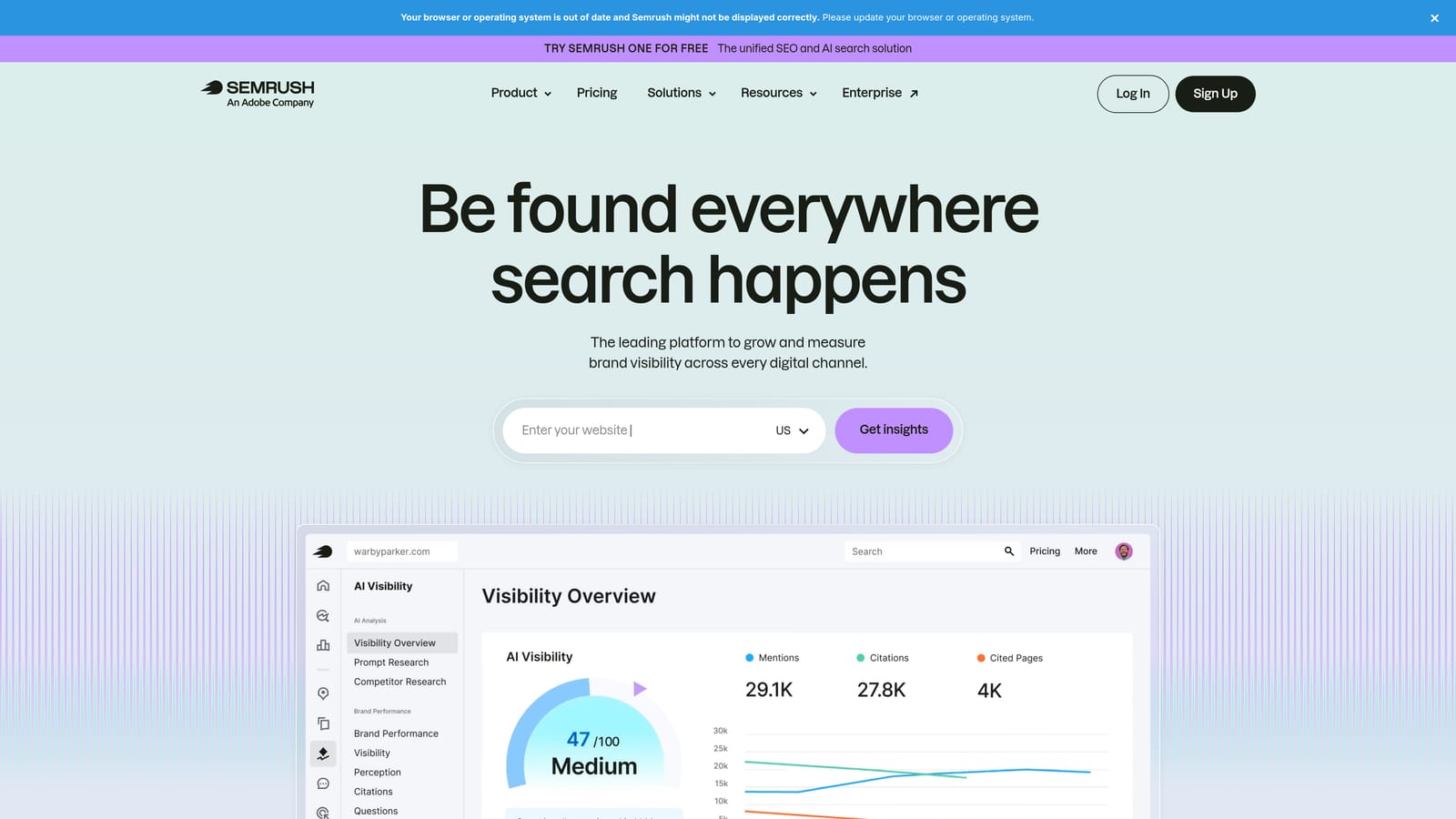
Semrush Writing Assistant is an AI writing and optimization tool embedded in the Semrush platform, providing metadata recommendations powered by Semrush's extensive keyword and SERP database.
Where This Tool Shines
The Writing Assistant's biggest advantage is its data source. Semrush has one of the largest keyword databases in the industry, and the metadata suggestions it surfaces are grounded in actual search volume and intent signals — not just pattern-matching from training data.
For teams already paying for Semrush to run keyword research, competitive analysis, and rank tracking, the Writing Assistant adds metadata optimization without requiring a separate tool purchase or subscription.
Key Features
Real-Time SEO Scoring: Scores title tags and meta descriptions against keyword targets as you write, with live feedback on relevance and length.
Keyword Recommendations: Pulls directly from Semrush's keyword database to suggest terms that improve metadata discoverability.
Readability Analysis: Evaluates metadata alongside body content for reading level and clarity, useful for brands with specific audience tone requirements.
Google Docs and WordPress Integrations: Available as an add-on for both platforms, keeping optimization inside familiar writing environments.
Best For
SEO professionals and content teams with active Semrush subscriptions. The Writing Assistant adds meaningful metadata functionality without adding cost for existing users, making it a logical first stop before evaluating standalone tools.
Pricing
Included in Semrush paid plans from approximately $139.95/month. Verify current pricing at semrush.com.
4. Ahrefs AI Meta Tag Generator
Best for: Anyone who needs fast, free metadata generation with no account or commitment required.
Ahrefs AI Meta Tag Generator is a free, standalone tool that generates title tags and meta descriptions from a URL or topic input in seconds, with no login required.
Where This Tool Shines
There's a lot to like about a tool that simply works without friction. Paste in a URL or describe your topic, and Ahrefs returns a title tag and meta description that reflects solid search intent understanding — because Ahrefs has spent years analyzing what actually performs in search results.
It's not a replacement for a full content platform, but for quick generation on a handful of pages, client pitches, or testing different angles on a title, it's genuinely useful and costs nothing.
Key Features
Completely Free, No Account Required: Accessible immediately without signing up, making it the lowest-friction option on this list.
URL or Topic Input: Accepts either a live URL (which it analyzes) or a plain-text topic description to generate relevant metadata.
Search Intent Awareness: Outputs reflect Ahrefs' deep understanding of keyword intent, not just surface-level keyword stuffing.
Character Count Guidance: Built-in length awareness keeps generated metadata within recommended display limits for Google's search results.
Best For
Solo marketers, freelancers, or anyone needing quick metadata generation for a small number of pages. Also useful as a sanity-check tool alongside more comprehensive platforms. Not designed for bulk generation or workflow integration.
Pricing
Free. No subscription, no account required. Access directly at ahrefs.com.
5. RankMath SEO
Best for: WordPress users who want AI-powered metadata generation and bulk optimization without leaving the editor.
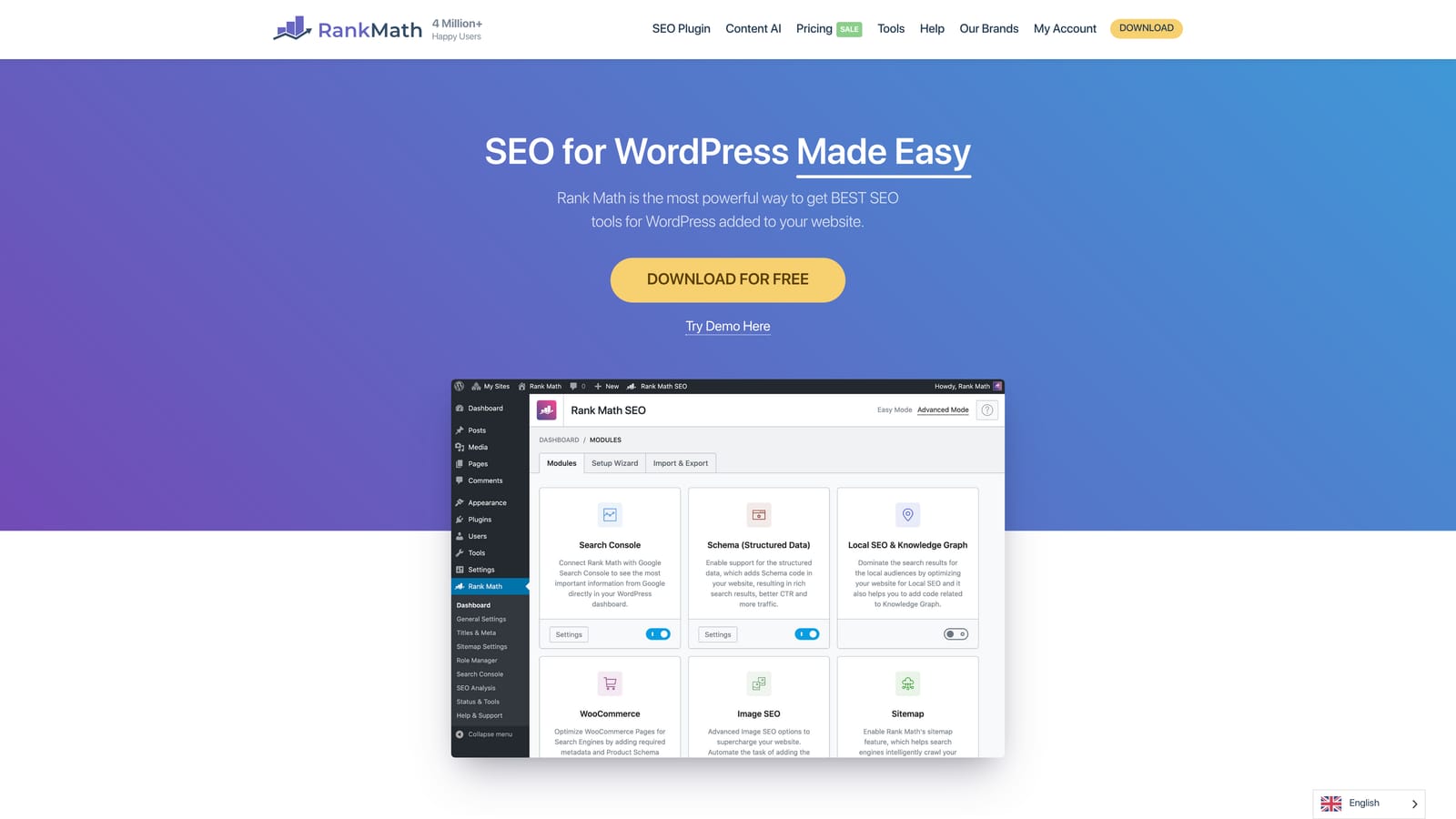
RankMath SEO is a WordPress SEO plugin with a built-in AI assistant for generating and bulk-optimizing metadata directly inside the WordPress editor, with full schema markup support included.
Where This Tool Shines
RankMath's metadata generation lives exactly where WordPress users need it: inside the post and page editor. There's no tab-switching or copy-pasting — you generate, review, and publish metadata in one place. The bulk generation feature is particularly valuable for sites with large existing content libraries that need metadata updates at scale.
The schema markup support also means RankMath handles structured data alongside basic metadata, which matters increasingly for AI search engines that parse structured signals to surface brands in answers.
Key Features
In-Editor AI Generation: Generates title tags and meta descriptions directly inside the WordPress post editor, powered by OpenAI.
Bulk Metadata Generation: Applies AI-generated metadata across existing posts and pages in batch, saving significant manual effort on older content.
Schema Markup Support: Handles structured data and JSON-LD alongside standard metadata, extending optimization beyond title and description fields.
WooCommerce Optimization: Extends metadata generation to product pages, making it useful for e-commerce sites running on WordPress.
Best For
WordPress site owners and developers managing content at scale, especially those with existing libraries of posts that lack optimized metadata. The free tier provides solid functionality; Pro is worth considering for bulk generation and advanced schema features.
Pricing
Free plugin available; RankMath Pro from approximately $6.99/month. Verify current pricing at rankmath.com.
6. Jasper AI
Best for: Agencies and enterprise content teams managing metadata across multiple brands or clients at volume.
Jasper AI is an enterprise-grade AI writing platform with dedicated SEO meta tag templates and brand voice training, built for teams producing metadata at high volume with consistent tone requirements.

Where This Tool Shines
Jasper's differentiator in the metadata space is brand voice training. Most AI generators produce technically correct metadata that could belong to any brand. Jasper can be trained on your brand's tone, terminology, and messaging so that generated title tags and meta descriptions actually sound like you — consistently, across thousands of pages.
The Surfer SEO integration also means Jasper-generated metadata can be cross-referenced against SERP data, combining brand-consistent copy with competitive keyword grounding.
Key Features
Dedicated Meta Tag Templates: Pre-built templates specifically for SEO title tags and meta descriptions, reducing setup time for metadata-focused workflows.
Brand Voice Training: Trains on your brand's existing content to produce metadata that matches established tone and messaging guidelines.
Surfer SEO Integration: Combines Jasper's generation capabilities with Surfer's SERP data for metadata that's both on-brand and keyword-grounded.
Multi-Brand and Multi-Language Support: Manages multiple brand voices and languages simultaneously, useful for agencies with diverse client portfolios.
Best For
Marketing agencies managing SEO for multiple clients, and enterprise teams where brand consistency in metadata is a non-negotiable requirement. Less suited for small teams or solo marketers who don't need the brand training infrastructure.
Pricing
Paid plans — verify current pricing at jasper.ai, as plans and features are updated regularly.
7. Writesonic
Best for: SMBs and solo marketers who need affordable, template-driven metadata generation with minimal setup.
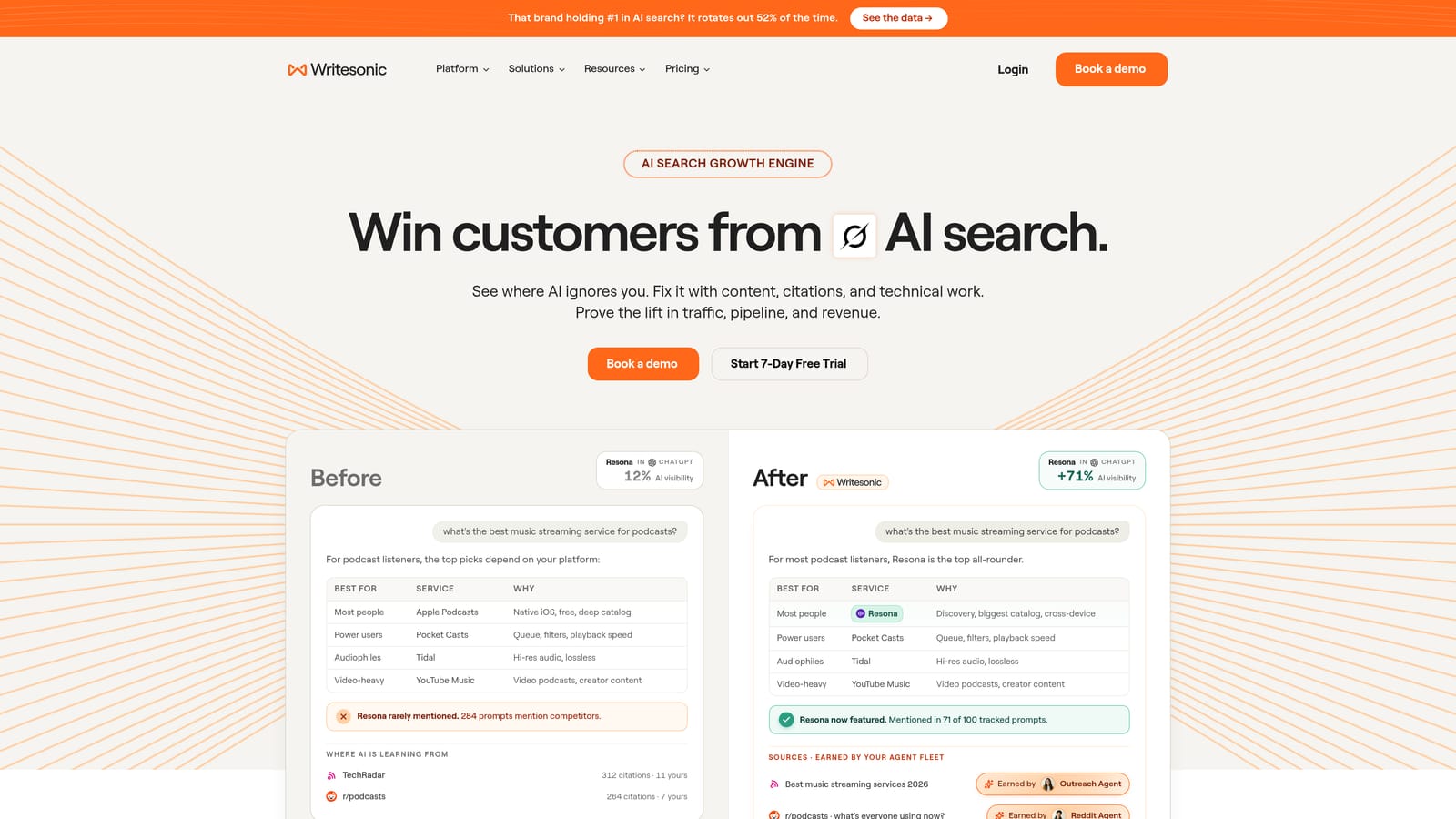
Writesonic is an affordable AI writing tool with specific SEO meta tag templates, character count guidance, and keyword input fields designed for speed and simplicity.
Where This Tool Shines
Writesonic keeps metadata generation straightforward. You enter your keyword, add some context about the page, and get multiple title and description variations to choose from. The character count enforcement during generation is a small but genuinely useful detail — it removes the manual trimming step that trips up a lot of AI-generated metadata.
The free tier makes it accessible for marketers who need occasional metadata generation without committing to a monthly subscription, and the paid plans are among the most affordable on this list for what they offer.
Key Features
Dedicated Meta Tag Templates: Purpose-built templates for SEO title tags and meta descriptions, separate from general copywriting workflows.
Keyword Input Fields: Accepts target keywords directly, ensuring generated metadata reflects the terms you're actually trying to rank for.
Character Count Enforcement: Keeps generated output within recommended display limits during generation, not as an afterthought.
Free Tier Available: Provides limited monthly generation credits without requiring a paid subscription, suitable for low-volume use cases.
Best For
Freelancers, small business owners, and early-stage marketing teams who need reliable metadata generation at a price point that makes sense for their budget. Not designed for enterprise-scale bulk generation or complex multi-brand workflows.
Pricing
Free tier available; paid plans from approximately $16/month. Verify current pricing at writesonic.com.
8. Yoast SEO Premium
Best for: Non-technical WordPress and Shopify users who want guided metadata optimization with AI assistance.
Yoast SEO Premium is a long-established WordPress and Shopify SEO plugin that added AI-powered metadata generation alongside its signature traffic-light readability and SEO scoring system.
Where This Tool Shines
Yoast has been the default SEO plugin for WordPress users for years, and the AI metadata generation it added in recent versions fits naturally into its existing guided workflow. The traffic-light scoring system makes it immediately clear whether your title tag and meta description are optimized — no SEO expertise required to interpret the feedback.
The Shopify support extends Yoast's reach beyond WordPress, making it a practical option for e-commerce teams on either platform who want a familiar, low-learning-curve tool for metadata management.
Key Features
AI-Assisted Generation: Generates title tags and meta descriptions inside the WordPress or Shopify editor with one click, using page content as context.
Traffic-Light Scoring: Provides immediate visual feedback on SEO and readability quality for all metadata fields, accessible to non-technical users.
Open Graph and Twitter Card Management: Handles social metadata alongside search metadata, ensuring consistent presentation across platforms.
Guided Optimization Workflow: Walks users through metadata improvement with clear suggestions, reducing the guesswork for teams without dedicated SEO staff.
Best For
Small to mid-sized businesses running WordPress or Shopify who want a trusted, beginner-friendly metadata tool with AI assistance. The guided workflow makes it particularly well-suited for teams where content is managed by non-SEO specialists.
Pricing
Approximately $99/year per site. Verify current pricing at yoast.com.
9. SEOmatic (Craft CMS)
Best for: Developers and agencies building on Craft CMS who need dynamic, template-level metadata automation.
SEOmatic is a powerful Craft CMS plugin that dynamically generates metadata from content fields, supports structured data, JSON-LD, Open Graph, and XML sitemaps — the specialist choice for custom CMS builds.
Where This Tool Shines
SEOmatic operates at a different level than most tools on this list. Rather than generating metadata for individual pages through a UI, it creates metadata templates that pull dynamically from your Craft CMS content fields. Set it up once correctly, and every new entry automatically gets properly structured metadata without any manual intervention.
For agencies building custom sites on Craft, this is the kind of infrastructure-level metadata solution that makes client handoffs clean and metadata quality consistent regardless of who's adding content.
Key Features
Dynamic Field-Based Generation: Pulls title tags and meta descriptions directly from Craft CMS content fields, automating metadata at the template level rather than the page level.
JSON-LD and Schema Markup: Generates structured data out of the box, supporting entity-rich metadata that AI search engines parse when determining what to surface in answers.
Open Graph and Twitter Card Automation: Manages social metadata alongside search metadata from the same configuration, keeping all metadata consistent.
XML Sitemap Integration: Generates and maintains XML sitemaps alongside metadata management, handling both discoverability signals in one plugin.
Best For
Developers and digital agencies building on Craft CMS who need scalable, automated metadata at the infrastructure level. Not relevant for teams on WordPress, Shopify, or other CMS platforms — but for Craft builds, it's the definitive choice.
Pricing
Free plugin for Craft CMS. Available via the Craft Plugin Store at no cost.
Which Tool Is Right for Your Setup?
The right metadata tool depends almost entirely on where you work and what you're trying to achieve at scale. Here's a quick way to think through the decision.
If you want metadata generation embedded in a complete AI content and visibility workflow, Sight AI is the strongest all-in-one choice. It's the only tool here that connects what you publish to how AI models respond to it, which matters if GEO is part of your strategy alongside traditional SEO.
For WordPress-first teams, RankMath and Yoast SEO Premium both handle metadata natively inside the editor. RankMath is stronger for bulk generation and schema; Yoast is better for non-technical teams who need guided optimization with minimal setup.
Surfer SEO and Semrush Writing Assistant suit teams already using those platforms for broader SEO research. If you're paying for either platform, using their metadata features before evaluating standalone tools is the logical starting point.
For fast, free, no-commitment metadata generation on a handful of pages, Ahrefs' free tool is hard to beat. Jasper and Writesonic serve volume-focused content operations that need brand-consistent copy at scale, with Jasper better suited for agencies managing multiple client voices and Writesonic better for budget-conscious smaller teams.
SEOmatic is the specialist pick for Craft CMS builds — irrelevant if you're not on Craft, essential if you are.
The common thread across all top performers: they remove manual guesswork and enforce character limits, keyword alignment, and intent matching automatically. As AI search engines increasingly use structured metadata to surface brands in answers, the quality of your title tags and descriptions has compounding value beyond traditional click-through rates.
Pair any tool on this list with a solid indexing strategy to make sure your metadata is actually discovered and processed quickly. And if you want to understand not just whether your metadata is indexed, but whether it's helping AI models mention your brand in answers, Start tracking your AI visibility today and see exactly where your brand appears across top AI platforms.