Getting your content indexed quickly is half the battle in SEO. Even the best-written article is invisible to search engines, and increasingly to AI models, until it's properly crawled and indexed. The challenge? Most teams don't know which indexing tools are worth the investment, or how their pricing stacks up against what they actually deliver.
Here's something worth understanding before diving in: modern SEO indexing strategy isn't just about pinging sitemaps anymore. The full pipeline looks like this: content creation, publishing, technical indexing, and AI visibility. As AI-powered answer engines like ChatGPT, Perplexity, and Claude become primary discovery surfaces, your content needs to be indexed and represented accurately in AI-generated responses. These are two different problems that increasingly require coordinated solutions.
This guide covers the best SEO indexing tools available in 2026, with transparent pricing breakdowns and honest assessments of what each tool does best. Whether you're a solo founder pushing out content weekly, a marketer managing dozens of URLs, or an agency handling multiple client sites, there's a tool on this list built for your workflow.
1. Sight AI
Best for: Teams who want indexing, AI visibility tracking, and content generation in one platform.
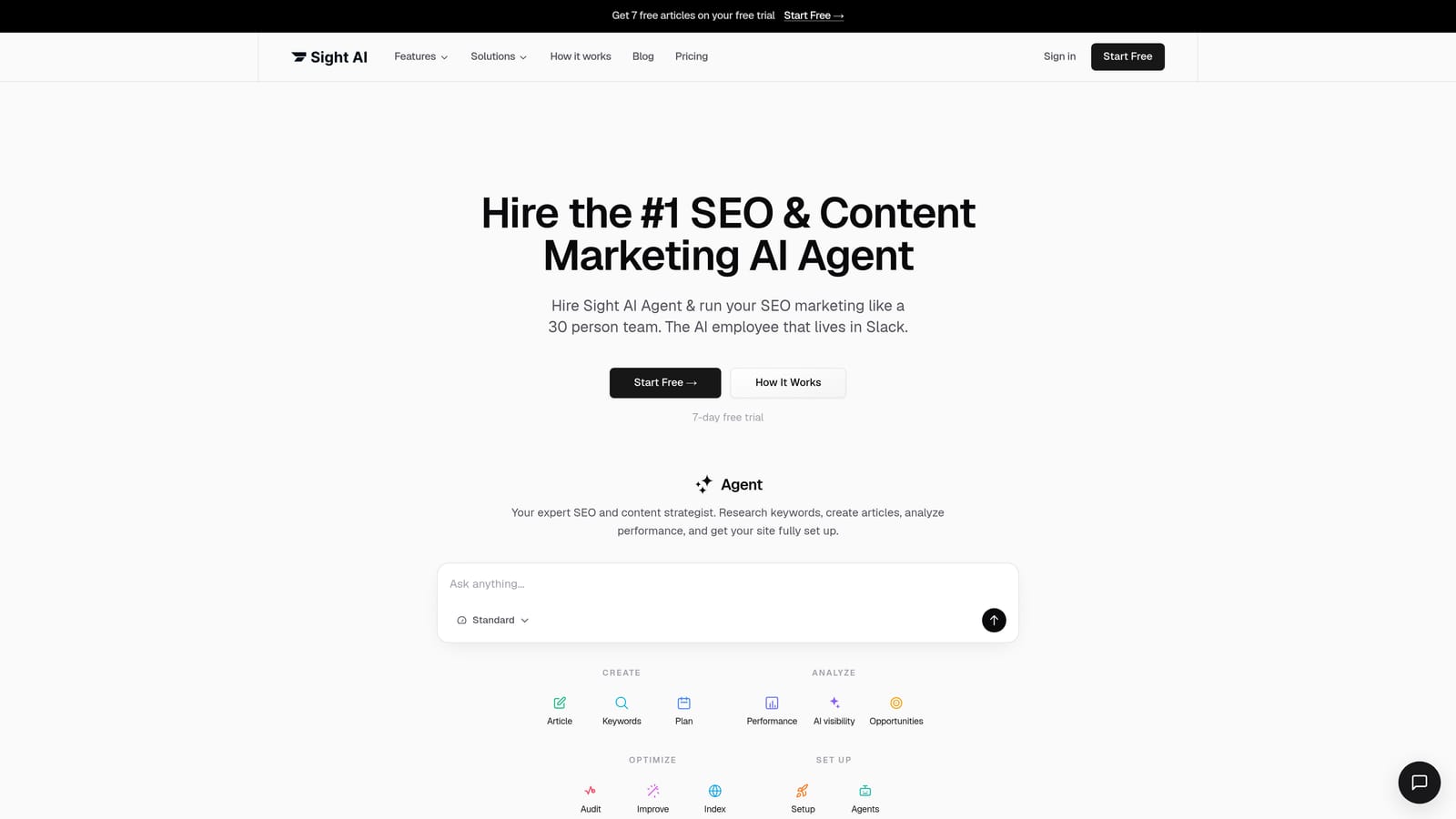
Sight AI is an all-in-one AI-powered SEO and content platform that handles technical indexing, AI visibility monitoring, and content creation under a single roof.
Where This Tool Shines
Most indexing tools stop at getting your URLs in front of search engines. Sight AI goes further by also tracking how your brand is being represented across AI platforms like ChatGPT, Claude, and Perplexity. That combination is genuinely rare: you're not just submitting URLs, you're closing the loop between publishing and AI-driven discovery.
The Autopilot Mode is worth highlighting for teams with limited bandwidth. It connects content generation, CMS publishing, and indexing submission into a single automated workflow, reducing the manual steps that typically slow down the content-to-index pipeline.
Key Features
IndexNow Integration: Instantly notifies multiple search engines simultaneously when new content is published, eliminating the lag of waiting for Googlebot to discover URLs organically.
Automated Sitemap Updates: New URLs are automatically added to your sitemap upon publication, ensuring crawlers always have an accurate map of your content.
CMS Auto-Publishing: Connects your content creation workflow directly to your CMS, reducing friction between writing and live publication.
AI Visibility Score: Tracks how your brand is mentioned, cited, and represented across 6+ AI platforms, with sentiment analysis and prompt tracking built in.
13+ Specialized AI Agents: Generates SEO and GEO-optimized content including listicles, guides, and explainers designed to surface in both traditional search and AI-generated answers.
Autopilot Mode: Runs content generation, publishing, and indexing workflows hands-off, ideal for teams scaling content without scaling headcount.
Best For
Sight AI is best suited for marketers, founders, and agencies who want to manage their entire organic growth stack in one place. If you're already thinking about both traditional SEO indexing and AI visibility as connected problems, this platform is built for exactly that mindset.
Pricing
Visit trysight.ai for current plan pricing. Given the breadth of features across indexing, AI visibility, and content generation, it's worth evaluating against the cost of subscribing to three separate point solutions.
2. Writesonic
Best for: Content teams who need high-volume AI writing with SEO keyword targeting built in.
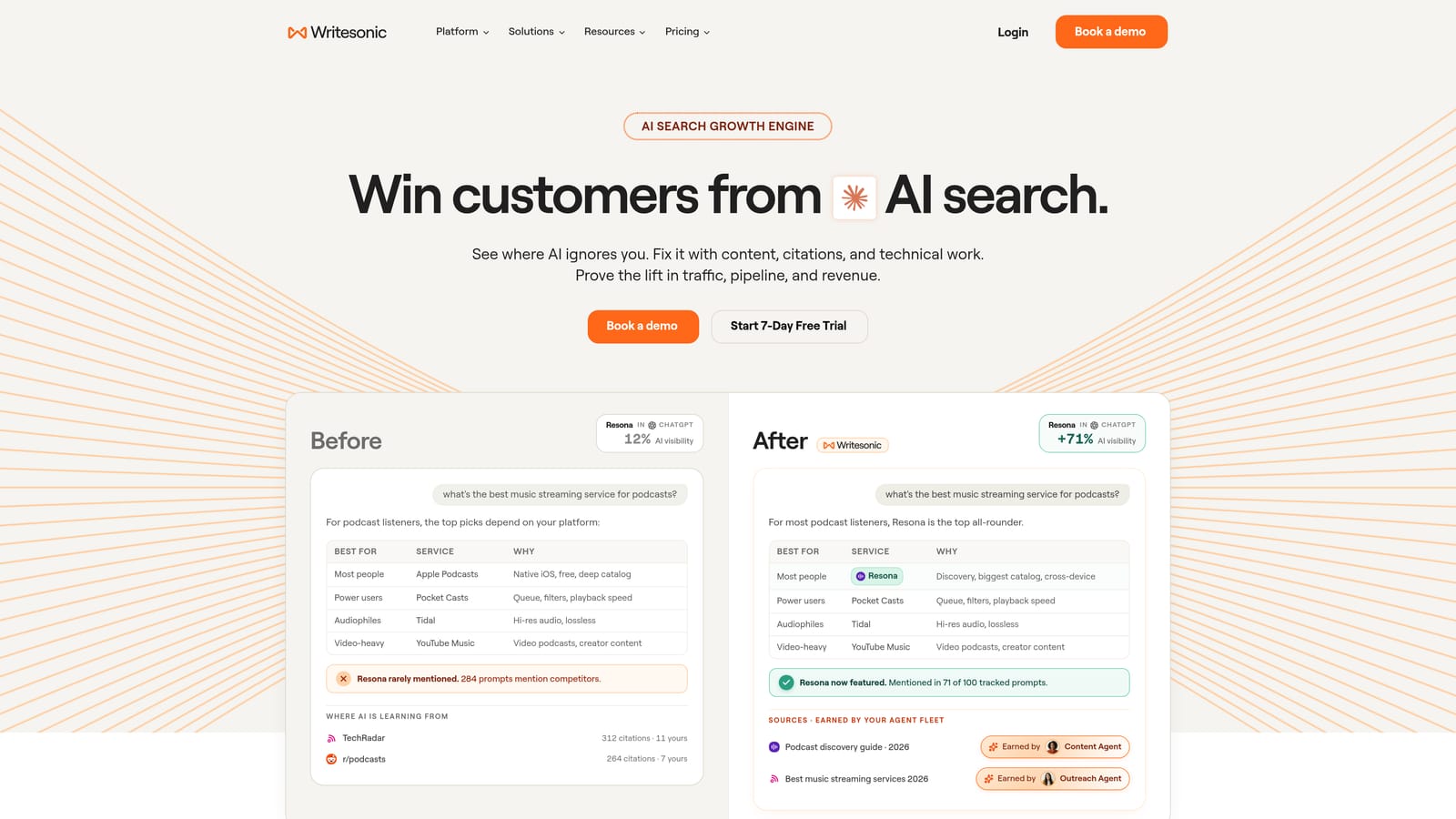
Writesonic is an AI content generation platform with article writing, SEO optimization modes, and publishing integrations that accelerate the content side of your indexing pipeline.
Where This Tool Shines
It's worth being upfront: Writesonic is not a technical indexing tool. It doesn't submit URLs to search engines or ping sitemaps. What it does well is help teams produce indexable content faster, and publishing velocity directly influences how frequently crawlers visit your site.
The SEO-focused article writer is particularly useful for teams targeting specific keywords at scale. Chatsonic, its AI assistant, supports research and ideation workflows that can feed into a broader publishing pipeline.
Key Features
AI Article Writer with SEO Mode: Generates long-form content with keyword targeting built into the output, reducing post-editing time for SEO alignment.
Chatsonic: An AI assistant designed for research, brainstorming, and content ideation with real-time web access.
Bulk Content Generation: Allows teams to produce multiple pieces simultaneously, useful for content calendars that need consistent publishing cadence.
Publishing Workflow Integrations: Connects to CMS platforms to reduce the gap between draft and live publication.
Best For
Content marketers and agencies managing high-volume publishing schedules who need AI writing assistance with SEO keyword integration. Less relevant for teams whose primary bottleneck is technical indexing rather than content production.
Pricing
Writesonic offers a free plan with usage limits. Paid plans scale with usage volume. See writesonic.com/pricing for current rates, as these are updated regularly.
3. AirOps
Best for: Ops-minded teams building automated AI content pipelines connected to CMS publishing.
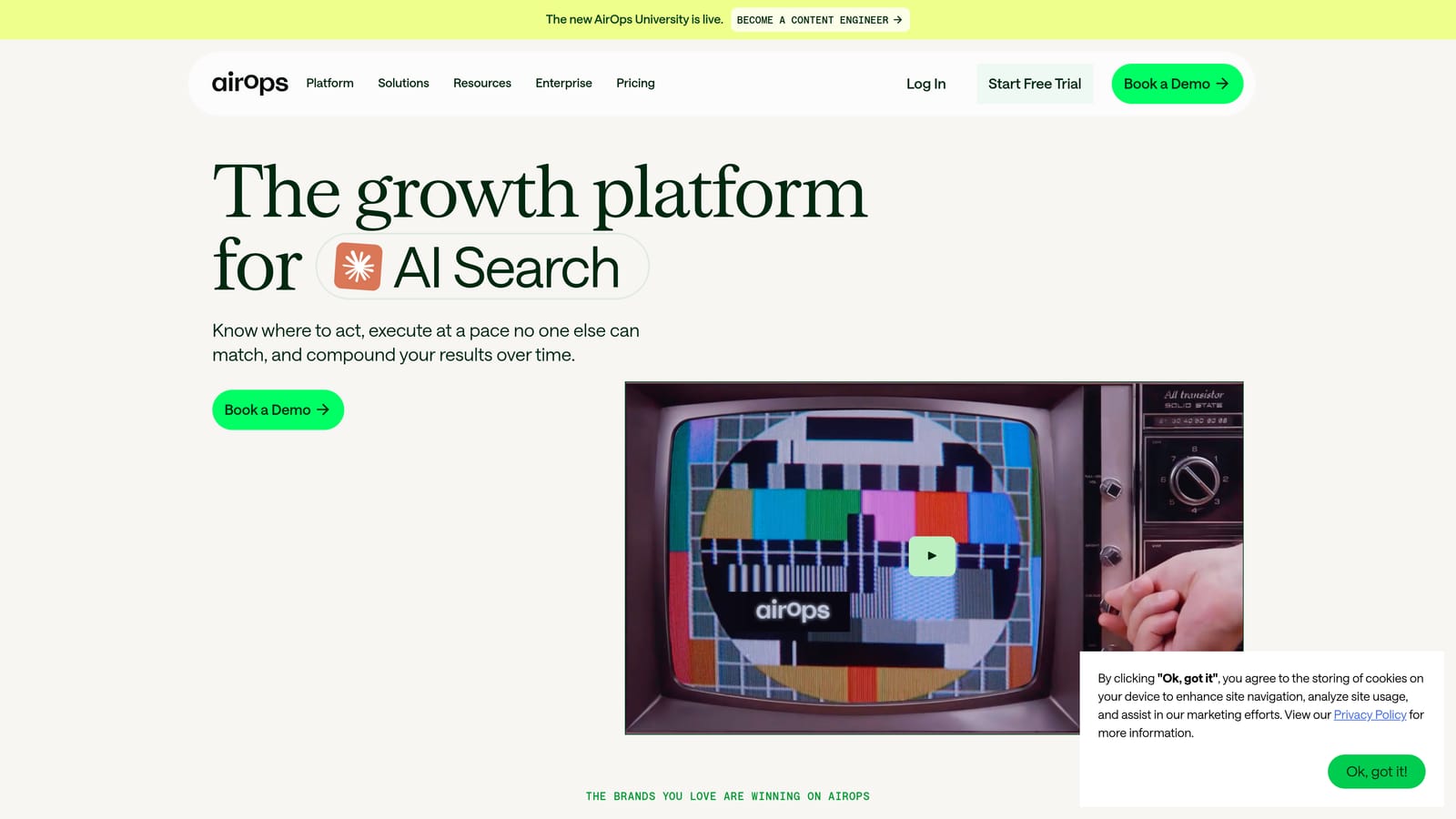
AirOps is a workflow automation platform that lets teams build AI-powered content pipelines, connecting generation, editing, and CMS publishing in a single automated flow.
Where This Tool Shines
Like Writesonic, AirOps isn't a direct indexing tool in the technical sense. Its value is in the consistency and velocity it brings to publishing, which has a real downstream effect on how frequently search engines crawl your site. Consistent publishing signals to crawlers that a site is actively maintained, which can improve crawl frequency over time.
Where AirOps stands out is in its flexibility. The visual workflow builder lets non-technical teams connect data sources, AI models, and CMS platforms without engineering support. For agencies managing multiple client content pipelines, that flexibility is genuinely valuable.
Key Features
Visual Workflow Builder: Drag-and-drop interface for building AI content automation pipelines without writing code.
CMS and API Integrations: Connects to major CMS platforms, spreadsheets, and external APIs to power end-to-end publishing workflows.
Data-Driven Content Generation: Pulls from structured data sources to generate content at scale, useful for programmatic SEO use cases.
Team Collaboration Tools: Shared workflow management and version control for content operations teams working across multiple projects.
Best For
Growth teams, content operations managers, and agencies who need to build scalable, automated content workflows. Particularly strong for programmatic SEO use cases where data-driven content generation is the primary lever.
Pricing
AirOps offers a free tier. Paid plans scale with workflow runs and seats. Check airops.com/pricing for current plan details.
4. Profound
Best for: Enterprise brands monitoring their citation presence in AI-generated search answers.
Profound is an AI search visibility monitoring platform that tracks how brands are cited and represented in AI-generated answers across major AI answer engines.

Where This Tool Shines
Profound addresses a problem that traditional SEO indexing tools don't touch: understanding whether your indexed content is actually being cited by AI models when users ask relevant questions. There's a meaningful gap between being indexed and being cited, and Profound is designed to measure that gap.
The competitive benchmarking capability is particularly useful for enterprise teams. Knowing how your AI search presence compares to competitors across AI answer engines gives content and SEO teams a clearer brief for what to create and optimize next.
Key Features
Brand Citation Tracking: Monitors how often and in what context your brand is cited across AI answer engines like ChatGPT, Perplexity, and others.
Competitive Visibility Benchmarking: Compares your AI search presence against competitors to identify where you're winning and where you're losing ground.
Content Gap Identification: Surfaces topics and queries where competitors are cited but your brand is absent, informing content strategy.
Analytics and Reporting: Structured reporting for AI-driven discovery metrics, useful for stakeholder reporting and strategy reviews.
Best For
Enterprise marketing teams and large agencies with established content programs who need structured visibility into their AI search presence and competitive positioning. Less suited to solo founders or small teams given its enterprise orientation.
Pricing
Profound is enterprise-oriented. Contact their team directly for current pricing at profound.co.
5. Peec
Best for: Teams tracking brand mentions across AI-powered search and chat platforms over time.
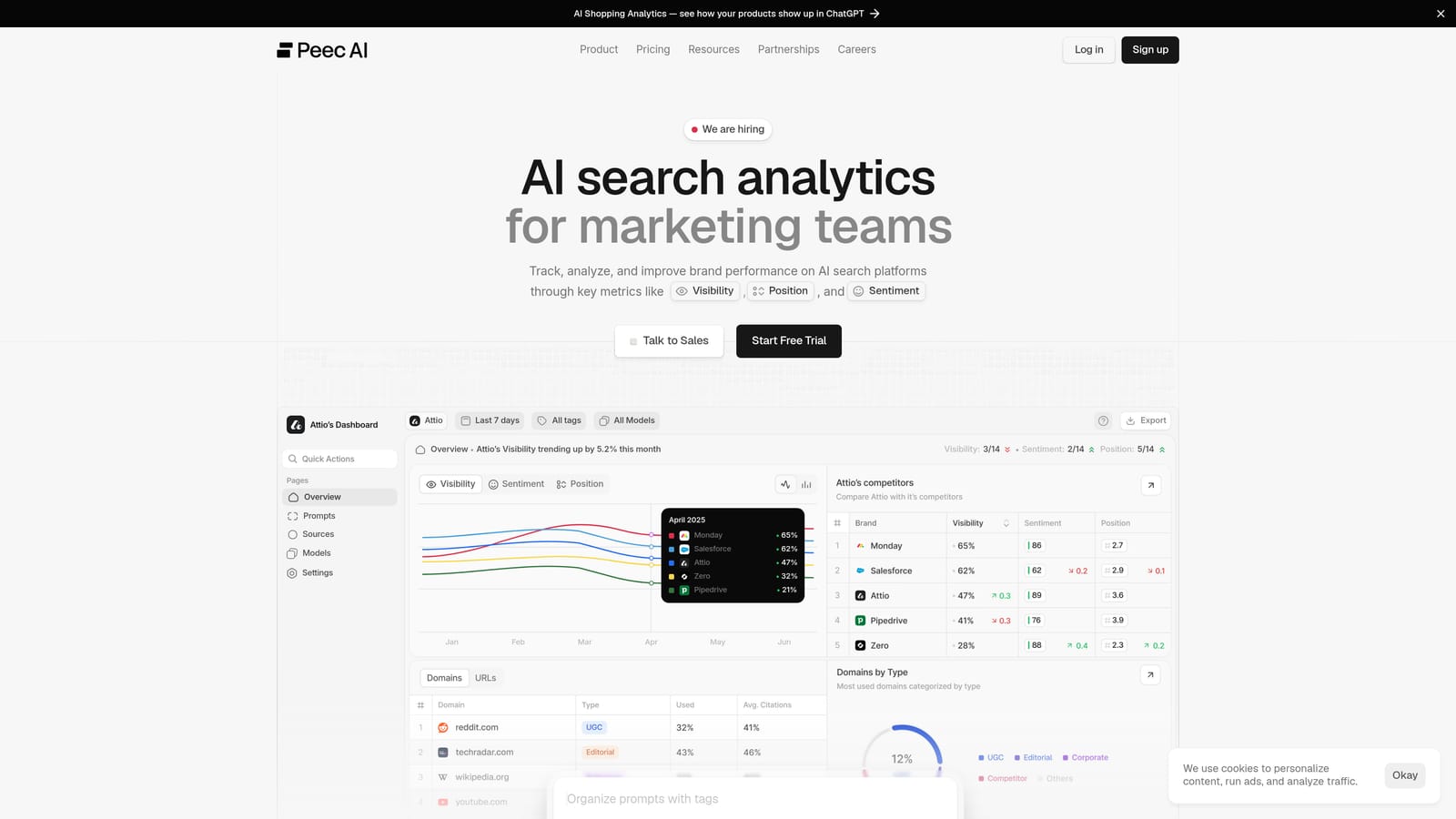
Peec is an AI visibility tracking tool that monitors how brands are mentioned and surfaced across AI-powered search and chat platforms, helping teams understand their AI search footprint.
Where This Tool Shines
Peec focuses on trend tracking over time, which is valuable for teams trying to measure whether their content and optimization efforts are actually moving the needle in AI-generated responses. Visibility at a single point in time is interesting; visibility trends over weeks and months are actionable.
The competitor comparison feature adds strategic context. Knowing that your brand appears in AI responses for certain query types, but competitors appear more frequently for adjacent queries, gives content teams a clear direction for their next publishing cycle.
Key Features
Brand Mention Monitoring: Tracks how and where your brand is mentioned across AI-powered search and chat platforms.
Visibility Trend Tracking: Measures changes in AI mention frequency over time, making it easier to attribute shifts to specific content or optimization actions.
Competitor Comparison: Benchmarks your AI search visibility against named competitors across different query categories.
Mention Change Alerts: Notifies teams when significant changes in brand mention patterns are detected, enabling faster response to visibility shifts.
Best For
Marketing teams and SEO professionals who want ongoing visibility into their brand's AI search presence and need trend data to inform content strategy decisions over time.
Pricing
See peec.ai for current plan details and pricing tiers.
6. Promptwatch
Best for: Content and GEO strategists who want to understand exactly how AI models respond to brand-relevant prompts.
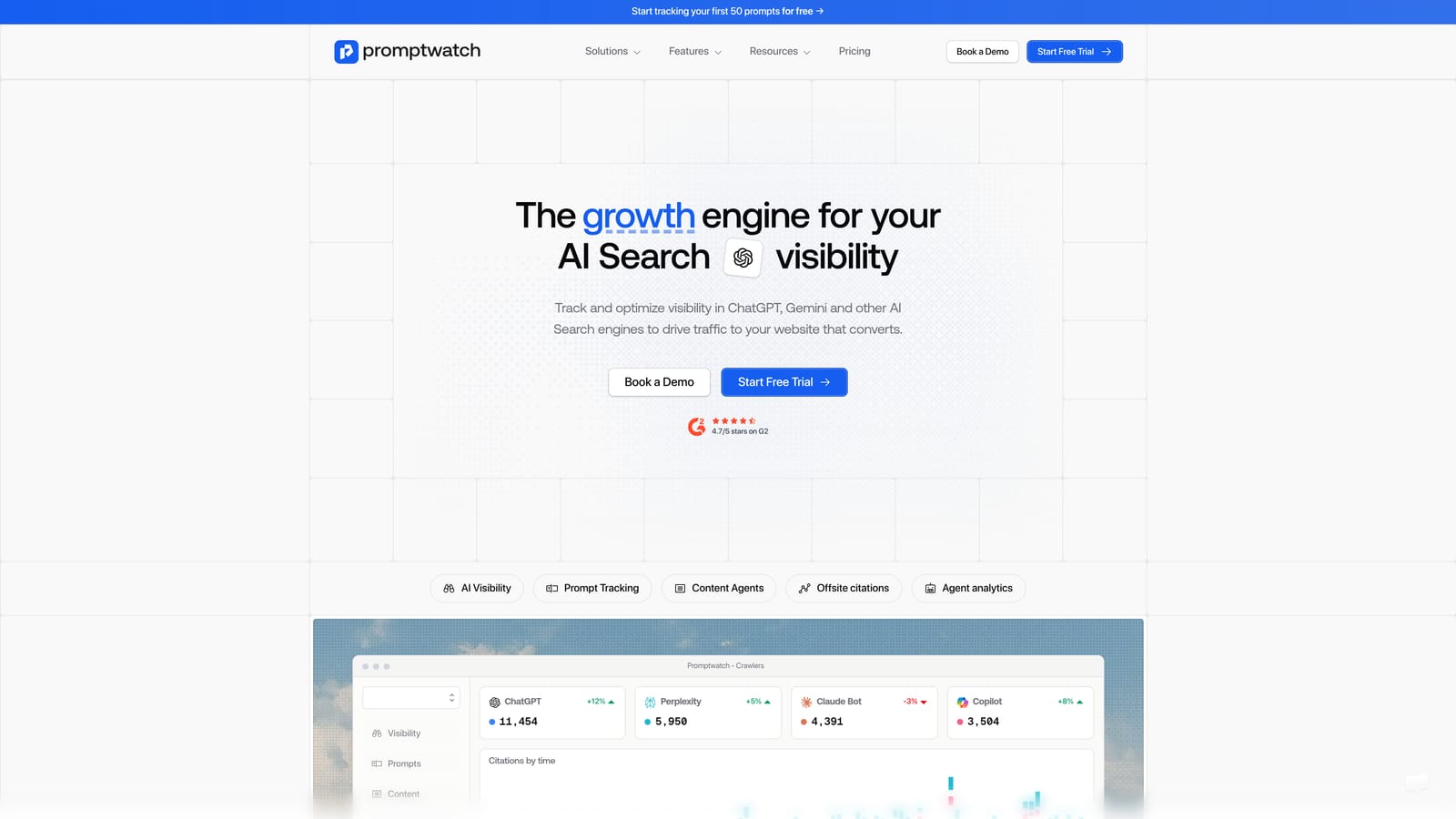
Promptwatch is a prompt and AI response monitoring tool that tracks how AI models answer queries related to your brand, product, or industry, helping teams optimize content for generative engine visibility.
Where This Tool Shines
Where most AI visibility tools show you whether your brand is mentioned, Promptwatch shows you how your brand is described. That distinction matters. A brand can be mentioned frequently in AI responses but described inaccurately, incompletely, or in a context that doesn't serve business goals. Promptwatch surfaces those nuances.
The historical response tracking is a standout feature for teams running GEO optimization experiments. If you publish new content designed to shift how an AI model describes your product, Promptwatch gives you the before-and-after data to evaluate whether it worked.
Key Features
Prompt Monitoring Across AI Models: Tracks responses to specific prompts across major AI platforms, giving a detailed view of brand representation in generative outputs.
Brand Representation Analysis: Goes beyond mention counting to analyze the sentiment, accuracy, and context of how your brand appears in AI responses.
Historical Response Tracking: Logs AI responses over time, enabling before-and-after analysis of content optimization efforts.
GEO Content Strategy Insights: Identifies which content changes correlate with improved brand representation in AI-generated answers, informing future content decisions.
Best For
SEO professionals, content strategists, and GEO practitioners who want granular insight into how AI models describe their brand and need data to guide generative engine optimization efforts.
Pricing
See promptwatch.io for current pricing tiers.
Which Tool Is Right for Your Workflow?
The tools on this list serve different parts of what modern SEO indexing actually involves: creating content, publishing it consistently, submitting it to search engines, and ensuring it's represented accurately in AI-generated responses. No single tool on this list is the right fit for every team, but a few patterns emerge.
If you want one platform to handle indexing, AI visibility, and content generation: Sight AI is the most complete option. Its IndexNow integration handles technical submission, Autopilot Mode manages publishing consistency, and the AI Visibility Score closes the loop by showing how your indexed content performs across AI platforms. It's the only tool on this list that treats all three problems as connected.
If your primary bottleneck is content production volume: Writesonic or AirOps can accelerate your publishing pipeline. Writesonic works well for teams that need SEO-targeted articles at scale. AirOps suits teams that want to build custom automated workflows connecting AI generation to CMS publishing.
If you're an enterprise team focused specifically on AI search monitoring: Profound offers the structured benchmarking and reporting that larger organizations typically need. Peec is a strong alternative for teams that prioritize trend tracking over time. Promptwatch adds depth for teams running active GEO optimization experiments who need to see exactly how AI models describe their brand.
The broader takeaway is that indexing strategy in 2026 doesn't end at sitemap submission. The teams seeing the strongest organic growth are the ones managing the full pipeline: consistent publishing, fast technical indexing, and active monitoring of how their content surfaces in AI-generated answers.
Stop guessing how AI models like ChatGPT and Claude talk about your brand. Start tracking your AI visibility today and see exactly where your brand appears across top AI platforms, while automating the indexing and content workflows that drive consistent organic growth.