The best generative AI SEO tools in 2026 fall into three groups: AI visibility trackers that show how ChatGPT, Claude, Perplexity and Google AI Overviews mention your brand (Sight AI), semantic content optimizers that make pages citation-worthy (Surfer SEO, Clearscope, MarketMuse, Frase, NeuronWriter), and technical or quality tools that keep content crawlable and credible (Alli AI, Originality.ai). Most teams need one tool from each layer, or a platform that covers several layers at once.
This discipline, often called Generative Engine Optimization (GEO), extends traditional SEO. It adds tracking of AI mentions, content structured for AI comprehension, and monitoring of how AI-generated answers describe your brand. We evaluated each platform on AI visibility tracking, content optimization depth, ease of integration and pricing transparency.
Quick comparison: generative AI SEO software at a glance
| Tool | Layer | Tracks AI mentions? | Starting price |
|---|---|---|---|
| Sight AI | Visibility + content + indexing | Yes (6+ AI platforms) | Contact for pricing |
| Surfer SEO | Content optimization | No | $89/month |
| Clearscope | Content optimization | No | $170/month |
| MarketMuse | Content strategy | No | Free tier; $149/month |
| Frase | Question research and briefs | No | $15/month |
| Semrush ContentShake AI | AI drafting + keyword data | No | $60/month |
| Originality.ai | Content quality | No | $0.01/credit |
| NeuronWriter | Budget content optimization | No | $19/month |
| Alli AI | Technical SEO automation | No | $249/month |
Prices are entry tiers at the time of writing. Check each vendor's pricing page before you buy.
1. Sight AI
Best for: Complete AI visibility tracking and GEO-optimized content generation in one platform
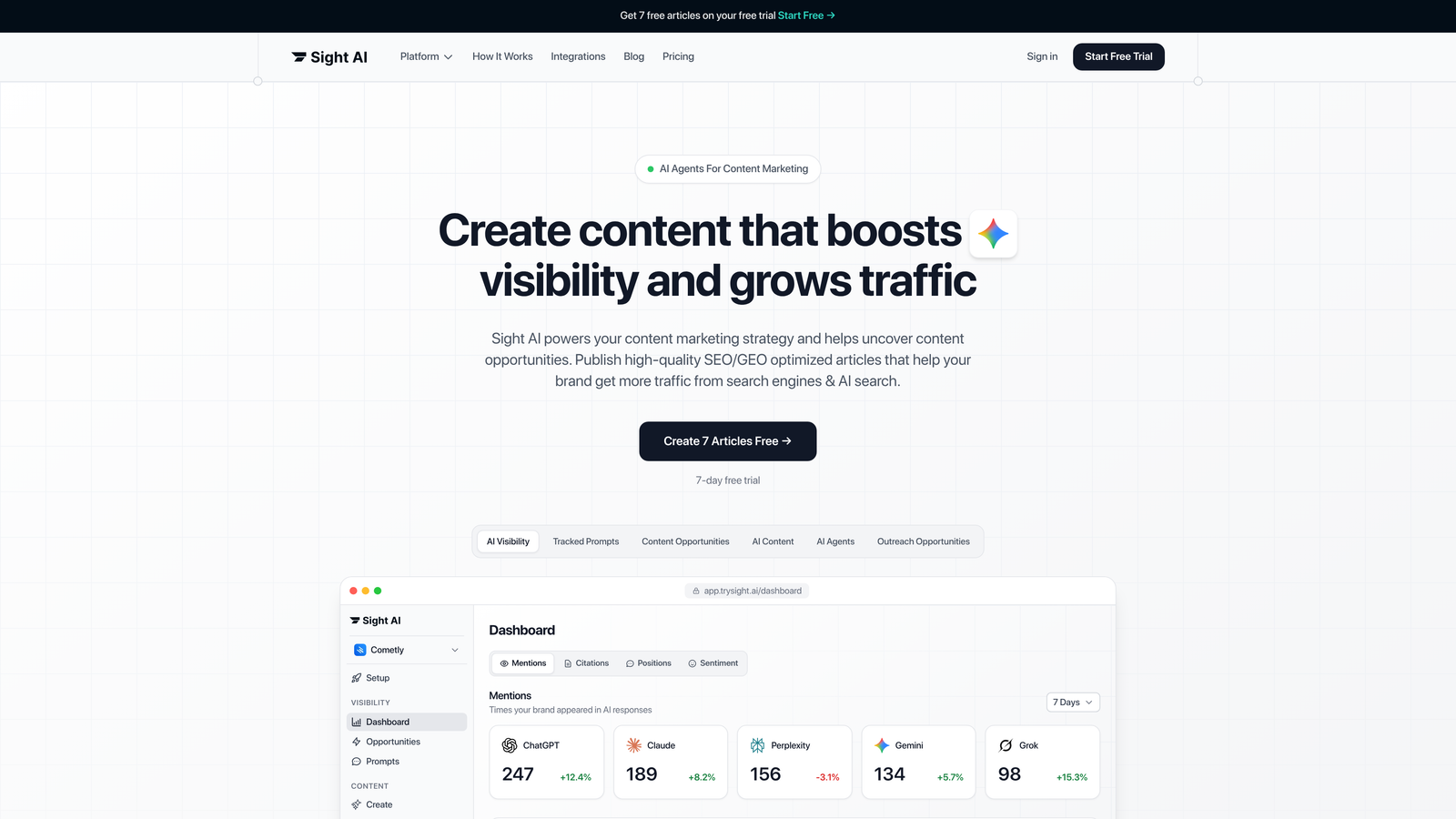
Sight AI combines three capabilities: tracking how AI models mention your brand, creating content optimized for AI citations, and automating the indexing process.
Where This Tool Shines
Sight AI monitors your brand mentions across ChatGPT, Claude, Perplexity and three other major AI platforms. It gives you an AI Visibility Score with sentiment analysis. You see exactly which prompts trigger mentions of your brand and how AI models describe you.
The platform's 13+ specialized AI agents generate SEO and GEO-optimized content, including listicles, guides and explainers, structured for AI comprehension. Autopilot mode handles the full workflow from content creation to publishing and indexing.
Key Features
AI Visibility Score: Track the sentiment and frequency of brand mentions across 6+ AI platforms, with detailed prompt analysis.
13+ Specialized AI Agents: Generate content optimized for both search engines and AI model citations, using automated workflows.
Prompt Tracking: See the exact queries that trigger your brand mentions and identify content gaps.
IndexNow Integration: Submit new content automatically for faster discovery by search engines and AI crawlers.
CMS Auto-Publishing: Push GEO-optimized content directly to your website with minimal manual work.
Best For
Marketing teams and founders who need visibility into how AI models discuss their brand and also want to create content designed to increase those mentions. It is particularly valuable for companies building a comprehensive GEO strategy.
Pricing
Contact for pricing. Tiered plans scale with team size and content volume.
2. Surfer SEO
Best for: Real-time content optimization with NLP-driven semantic recommendations
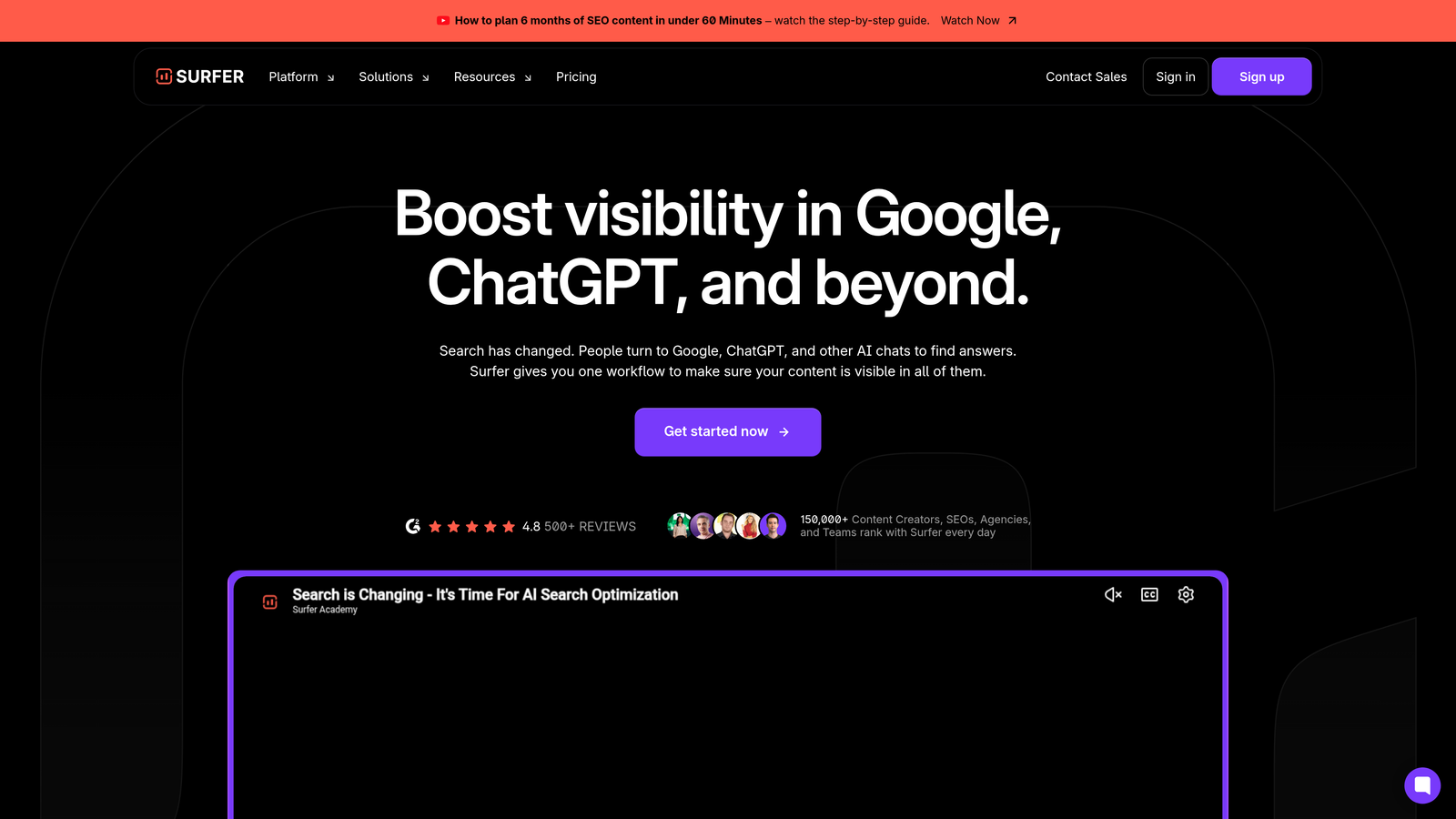
Surfer SEO analyzes top-ranking pages and recommends semantic improvements that AI models recognize as comprehensive coverage.
Where This Tool Shines
Surfer's Content Editor scores your content in real time as you write. It highlights missing semantic terms and entities that signal topic authority. The platform identifies keywords and also the conceptual relationships that make content citation-worthy.
The SERP Analyzer breaks down what makes top-ranking content successful, from heading structure to entity coverage. This competitive intelligence shows which signals search engines and AI models value.
Key Features
Content Editor: Real-time optimization scoring with NLP-based term recommendations as you write.
SERP Analyzer: Deep competitive analysis of top-ranking pages, including structure and semantic coverage.
Entity Recommendations: Identifies important concepts and entities to include for comprehensive topic coverage.
Content Audit: Evaluates existing pages for optimization opportunities and content gaps.
CMS Integrations: Works directly inside Google Docs and WordPress.
Best For
Content teams focused on semantic optimization who want data-driven guidance while writing. It is especially useful for creating comprehensive content that AI models treat as an authoritative source.
Pricing
Starts at $89/month for the Essential plan, which includes basic optimization features.
3. Clearscope
Best for: Enterprise content optimization with comprehensive topic coverage analysis
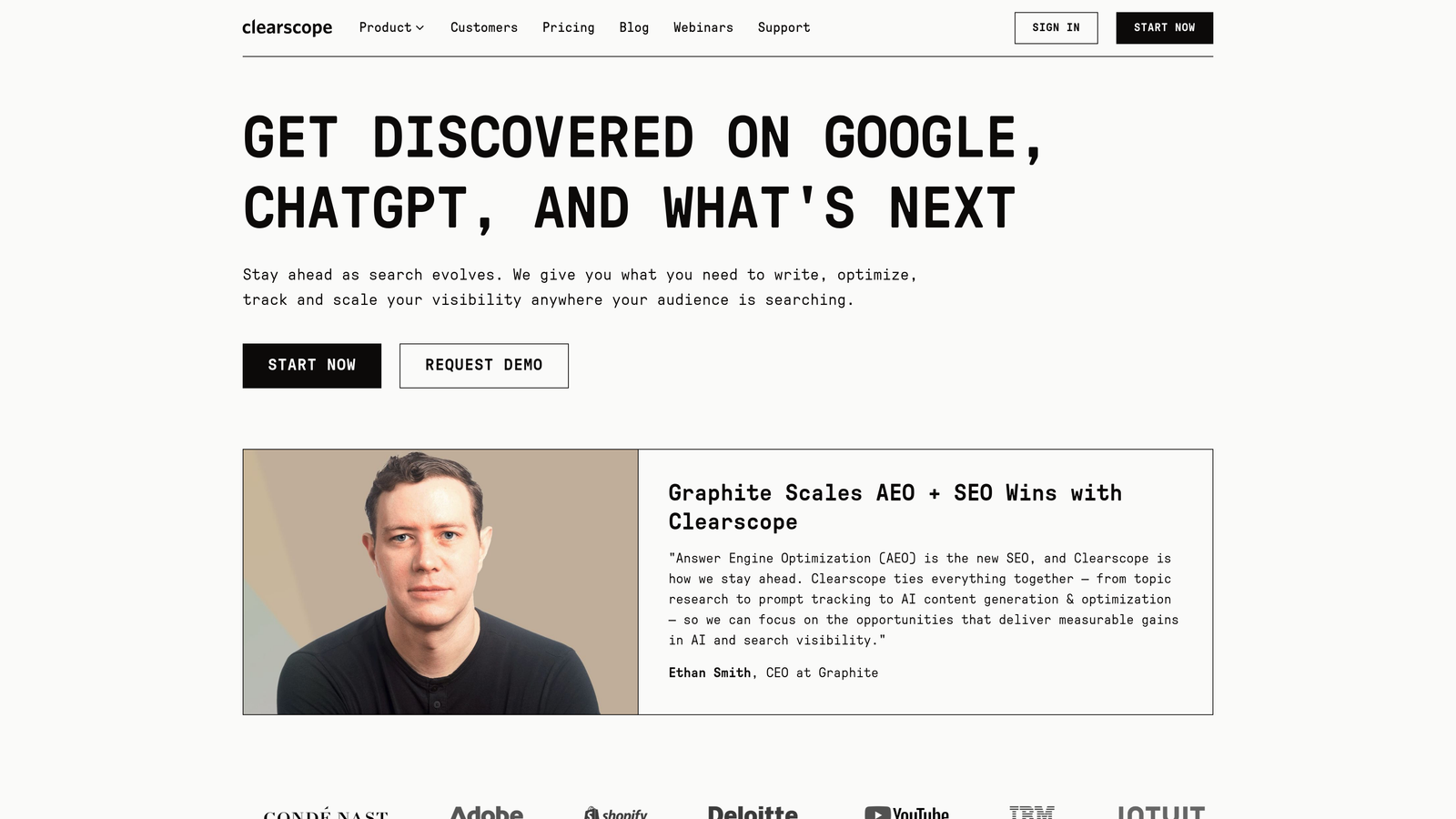
Clearscope uses AI to check that your content covers topics with the depth and breadth AI models recognize as authoritative.
Where This Tool Shines
Clearscope's grading system evaluates how comprehensive your content is, using the kinds of signals AI models look for in citation-worthy sources. The platform identifies missing keywords and also the conceptual gaps that weaken topic authority.
The tool is strong on team collaboration, so multiple writers and editors can work within one optimization framework. Content briefs keep large content operations consistent.
Key Features
AI-Powered Grading: Scores topic coverage and content depth.
Term Recommendations: Identifies important terms and concepts that strengthen topic authority.
Readability Analysis: Checks that content structure supports both human readers and AI comprehension.
Team Collaboration: Share briefs and optimization guidelines across content teams.
Platform Integrations: Works with Google Docs and WordPress.
Best For
Enterprise content teams producing high volumes of authoritative content who need consistent optimization standards across many writers and editors.
Pricing
Starts at $170/month for Essentials. Higher tiers are available for larger teams.
4. MarketMuse
Best for: Content intelligence and topic authority building through gap analysis
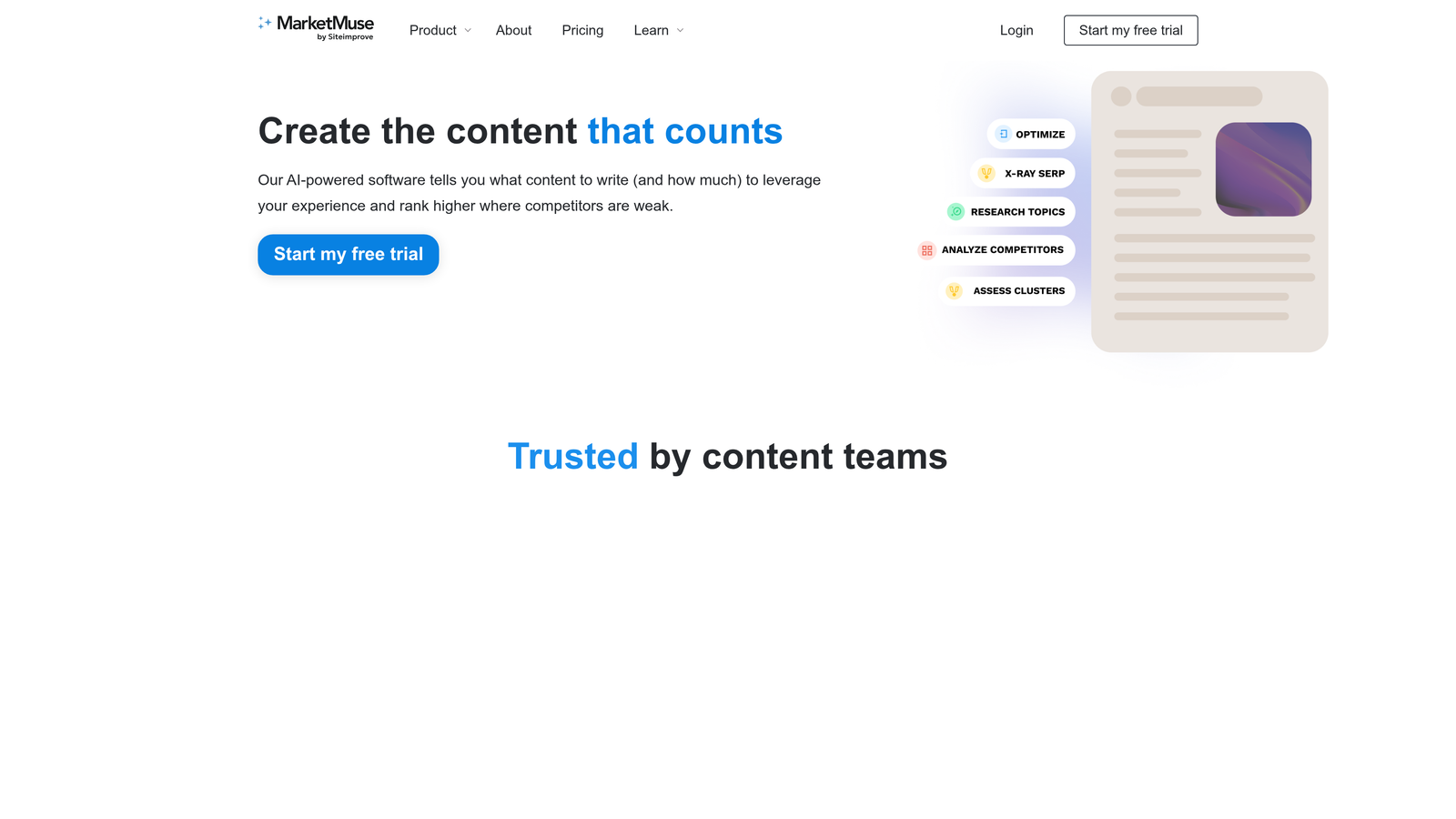
MarketMuse identifies content gaps and builds topic authority, both of which affect whether AI models cite your content.
Where This Tool Shines
MarketMuse's content inventory analyzes your entire site to find authority gaps that block AI citations. It shows where competitors have stronger topic coverage and what content you need to close those gaps.
Topic authority scoring helps you prioritize. It shows which topics you are positioned to own and where you still need foundational work, so you avoid spending effort on content unlikely to earn AI citations.
Key Features
Content Inventory: Site-wide analysis that identifies authority gaps and optimization opportunities.
Topic Authority Scoring: Quantifies your competitive position on topics relevant to your business.
AI-Generated Briefs: Creates detailed content briefs based on competitive analysis and topic requirements.
Competitive Analysis: Shows where competitors have stronger content and topic coverage.
Topic Cluster Planning: Maps content relationships to build comprehensive topic authority.
Best For
Content strategists building long-term topic authority who need to understand competitive positioning and prioritize content investments.
Pricing
A free tier covers basic analysis. Paid plans start at $149/month.
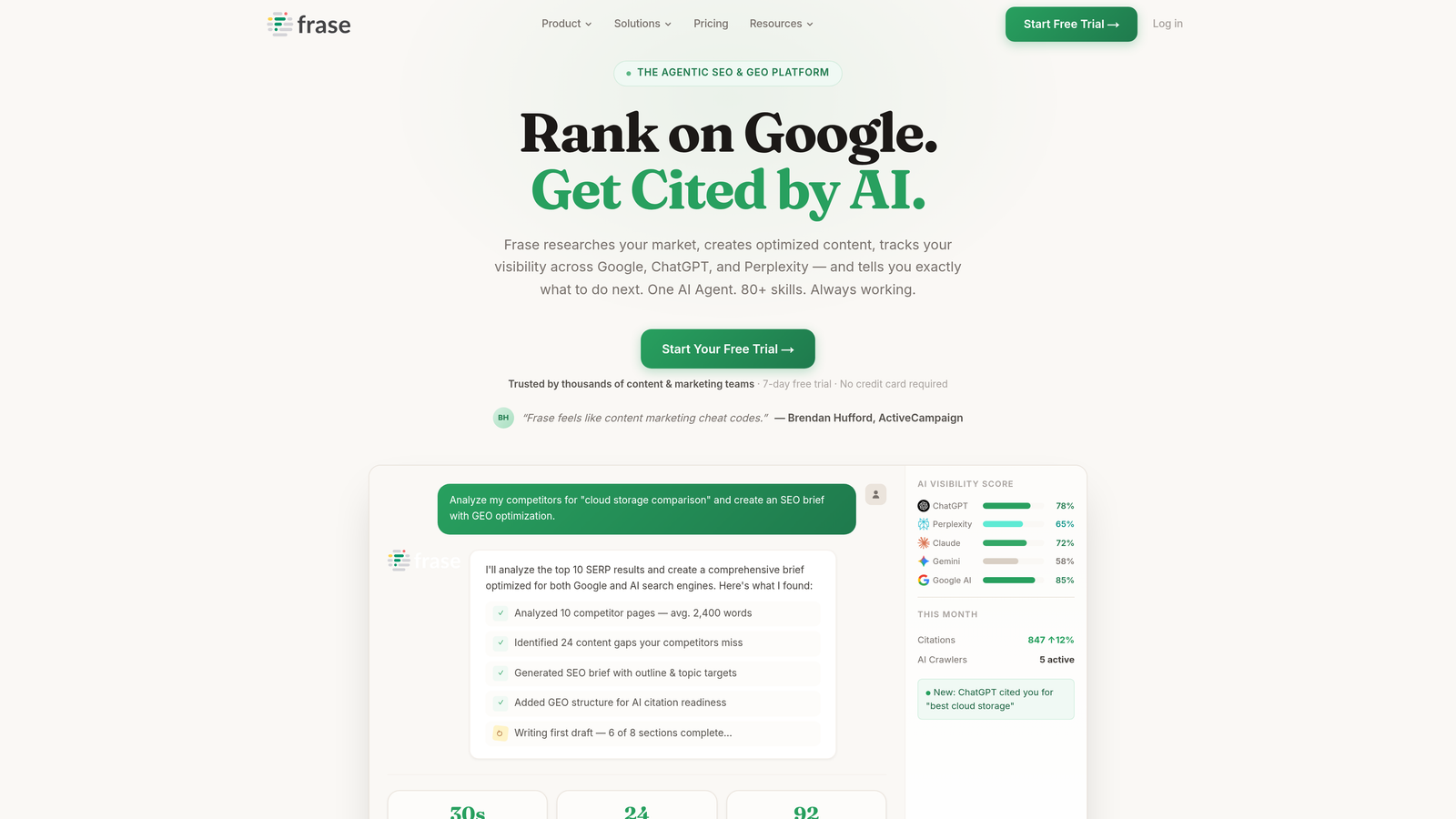
5. Frase
Best for: Question-optimized content that AI models frequently cite in responses
Frase focuses on research and brief generation. It helps teams build content around the questions AI models answer.
Where This Tool Shines
Frase identifies the questions users ask and the answers top-ranking content provides. This question-first approach matches how AI models build responses, since they synthesize answers to specific queries.
The platform pulls in People Also Ask data and generates briefs that cover every relevant question. That thoroughness signals to AI models that your content is worth citing.
Key Features
AI-Generated Briefs: Creates detailed outlines based on SERP analysis and question research.
Question Research: Identifies the questions users ask about your topics.
People Also Ask Integration: Brings Google's PAA data into content planning.
Content Optimization: Scores content against top-ranking pages and recommends topic coverage improvements.
AI Writing Assistant: Helps draft sections based on research and optimization guidelines.
Best For
Content creators focused on answering user questions thoroughly, which is the format AI models prefer when choosing content to cite.
Pricing
Starts at $15/month for the Solo plan, which includes basic features.
6. Semrush ContentShake AI
Best for: AI-assisted content creation integrated with comprehensive keyword research
Semrush ContentShake AI combines Semrush's keyword database with AI-powered content generation for end-to-end SEO workflows.
Where This Tool Shines
ContentShake AI uses Semrush's keyword database to suggest content ideas backed by search volume and competition data. It identifies what to write about and which topics offer the best visibility opportunity.
One-click drafting creates structured content you can refine instead of starting from scratch. Because it connects to the rest of the Semrush toolkit, you can move from keyword research to content creation to performance tracking in one place.
Key Features
AI Content Idea Generation: Suggests topics based on keyword opportunity and competitive analysis.
One-Click Drafting: Creates structured outlines and first drafts from keyword data.
SEO Optimization: Gives real-time recommendations for improving search performance.
Direct WordPress Publishing: Push optimized content to your site without leaving the platform.
Semrush Integration: Use Semrush's full keyword research and competitive data inside the content workflow.
Best For
Marketers already using Semrush who want to extend keyword research into AI-assisted content creation without switching platforms.
Pricing
Included with a Semrush subscription. Standalone plans start at $60/month.
7. Originality.ai
Best for: Maintaining content authenticity signals that AI models assess for quality
Originality.ai helps your content keep its authenticity signals. These matter more as AI models evaluate content quality before citing it.
Where This Tool Shines
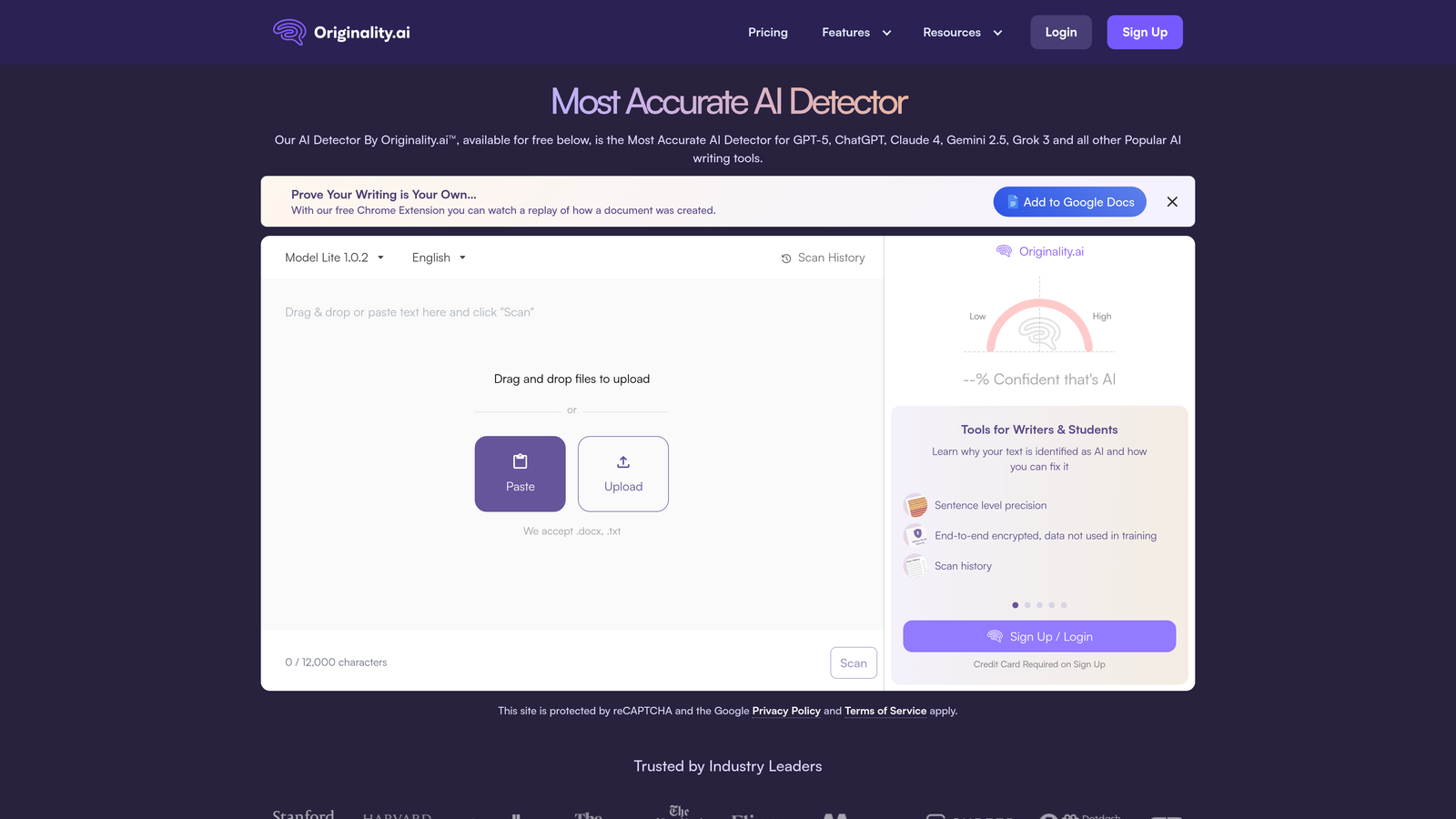
As AI-generated content spreads across the web, AI models are getting better at judging authenticity and quality. Originality.ai detects AI-generated text and gives a confidence score, which helps you preserve the human expertise signals that earn citations.
The platform combines AI detection with plagiarism checking and readability analysis. Together these give a full view of the quality factors that affect both search rankings and AI citations.
Key Features
AI Content Detection: Identifies AI-generated text with detailed confidence scoring.
Plagiarism Checking: Confirms content is original across the web.
Readability Analysis: Evaluates clarity and accessibility for both humans and AI.
Team Management: Track scan history and manage quality control across content teams.
API Access: Build quality checks directly into your content workflows.
Best For
Content teams using AI writing tools who need to maintain the authenticity signals and quality standards that AI models reward with citations.
Pricing
Pay-as-you-go starts at $0.01 per credit. Subscription plans are available for higher volumes.
8. NeuronWriter
Best for: Budget-friendly semantic optimization with NLP-based recommendations
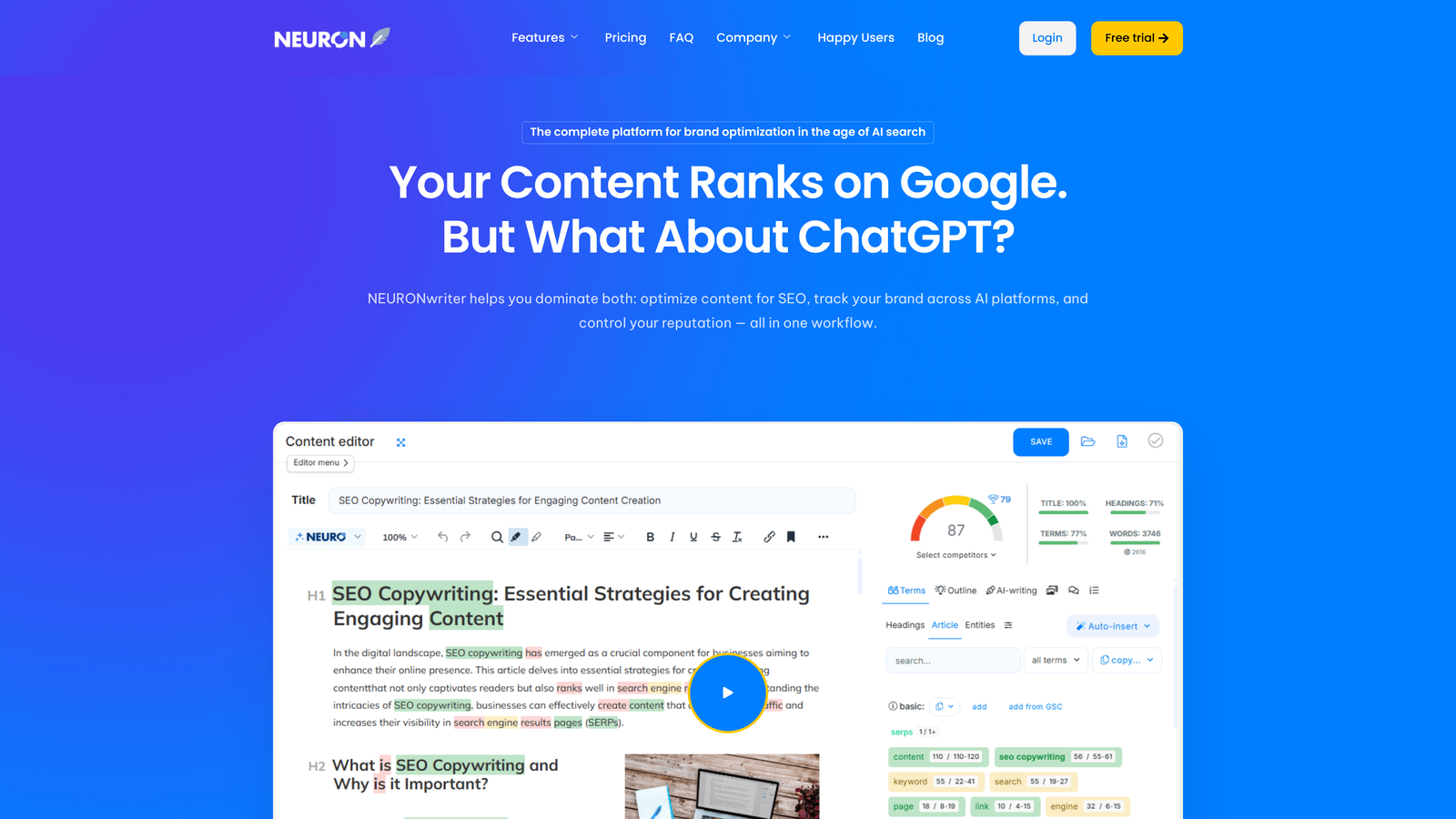
NeuronWriter gives semantic content recommendations based on analysis of top-performing content, at a fraction of enterprise tool costs.
Where This Tool Shines
NeuronWriter offers many of the NLP-based optimization features found in premium tools, at prices small teams and individual creators can afford. It analyzes SERP competitors and recommends semantic terms that signal topic authority.
A Chrome extension lets you run on-page analysis directly in your CMS. Content planning features help you organize and track optimization projects across many pages.
Key Features
NLP-Based Recommendations: Semantic term suggestions based on analysis of top-performing content.
SERP Competitor Analysis: Breaks down what makes top-ranking content successful.
Content Planning: Organize and track optimization projects across your content portfolio.
AI Writing Assistance: Helps draft sections based on optimization guidelines.
Chrome Extension: Analyze and optimize content inside your CMS.
Best For
Small content teams and individual creators who need professional-grade semantic optimization without enterprise pricing.
Pricing
Starts at $19/month for the Bronze plan, which includes core optimization features.
9. Alli AI
Best for: Automated technical SEO optimization that supports AI visibility at scale
Alli AI automates technical on-page optimization. This foundational work helps AI crawlers access and understand your content.
Where This Tool Shines
Alli AI automates technical SEO work that many teams neglect but that directly affects AI visibility. It can optimize titles, meta descriptions and schema markup across hundreds of pages at once, keeping the signals AI models rely on consistent.
A/B testing lets you try different optimization approaches and measure their impact on search rankings and AI citations. The platform works with any CMS, regardless of your technical stack.
Key Features
Automated On-Page SEO: Bulk optimization of technical elements across your entire site.
Title and Meta Optimization: Improves titles and descriptions automatically at scale.
Schema Markup Automation: Adds structured data that helps AI models understand content context.
SEO A/B Testing: Test optimization approaches and measure their impact.
CMS Agnostic: Works with any content management system or site builder.
Best For
Agencies and enterprises managing SEO for multiple sites or large content portfolios who need to automate technical optimization at scale.
Pricing
Starts at $249/month for the Consultant plan, which covers multiple sites.
Putting It All Together: Choosing Your GEO Stack
The tools in this space solve different problems. Some track where you appear in AI responses. Others optimize content structure for AI comprehension. Still others handle the technical foundation that AI visibility depends on.
Think of your GEO stack in three layers.
Layer 1: visibility tracking. This shows your current state: where AI models mention your brand, what they say, and which prompts trigger those mentions. Without this baseline, you are optimizing blind. Our guide to measuring AI visibility performance walks through setting baselines and KPIs.
Layer 2: content optimization. These tools help you create material structured for AI citation. They find semantic gaps, check topic coverage, and organize content around the questions AI models answer. Optimization works best during creation, not as an afterthought.
Layer 3: technical optimization. This makes sure AI crawlers can access and understand your content. Schema markup, proper indexing and clean technical signals matter as much for AI visibility as they do for search rankings.
Most teams need capabilities from all three layers. A platform like Sight AI combines visibility tracking with content generation and automated indexing, covering the full workflow in one place. Alternatively, you might pair a specialized visibility tracker with a semantic optimizer like Surfer SEO or Clearscope, then add technical automation through Alli AI.
A practical evaluation checklist
- Platform coverage: Confirm which AI engines are tracked. At minimum, look for ChatGPT, Perplexity, Claude, Gemini and Google AI Overviews.
- Prompt control: Check whether you can define your own prompts that mirror real buyer questions, rather than relying only on generic keyword lists.
- Citation data: Check whether the tool shows which URLs AI answers cite, so you can see which pages to strengthen or create.
- Competitor benchmarking: Share of voice against named competitors makes the data actionable.
- Workflow fit: Look for integrations with your CMS, Google Docs or existing SEO suite.
- Pricing model: Find out whether you pay per prompt, per seat or per site, and estimate the cost at your expected tracking volume.
Budget matters. Enterprise tools like Clearscope and MarketMuse offer sophisticated features but require significant investment. NeuronWriter and Frase deliver strong optimization at accessible prices, with fewer advanced features. Startups usually get the most value from one visibility tracker plus one low-cost optimizer before adding enterprise tools.
Your industry and content volume also shape the choice. High-volume publishers benefit from automation and bulk optimization. Niche B2B companies may prioritize deep topic authority over scale.
The GEO landscape is changing quickly, and AI platforms keep getting more sophisticated in how they evaluate and cite content. Tools that show exactly how AI models discuss your brand let you optimize from data instead of guesswork.
Frequently asked questions
What are generative AI SEO tools?
Generative AI SEO tools help your content appear in AI-generated answers as well as in traditional search results. They fall into three groups. Visibility trackers monitor brand mentions in ChatGPT, Perplexity and AI Overviews. Semantic optimizers improve topic coverage. Technical tools handle schema, indexing and crawlability. The comparison table and three-layer stack section above explain which tools fit each role.
Is generative AI SEO different from traditional SEO?
It builds on traditional SEO rather than replacing it. Rankings, crawlability and authority still matter, because AI engines often retrieve content from search indexes. GEO adds new goals: being cited or mentioned inside synthesized answers, tracking prompts instead of only keywords, and structuring content as clear, quotable answers. Most successful teams run both disciplines from a shared content strategy.
Are there free generative AI monitoring tools for SEO?
Fully free AI visibility trackers are rare and usually limited. A practical starting point is to manually run your key buyer prompts in ChatGPT, Perplexity and Gemini each month and log the results in a spreadsheet. Free tiers such as MarketMuse's help with content gaps. Dedicated tracking platforms become worthwhile once you monitor dozens of prompts or competitors.
How should I compare GEO platforms like Profound, Similarweb or BlueFish?
Apply the same criteria to every platform: which AI engines it covers, custom prompt tracking, citation and source URL data, competitor share of voice, sentiment analysis, and pricing per prompt or seat. Request a trial using your own buyer prompts. The evaluation checklist above gives a vendor-neutral scorecard for comparing any GEO platform directly.
Start tracking your AI visibility today and see exactly where your brand appears across top AI platforms. Stop guessing how AI models like ChatGPT and Claude talk about your brand. Get visibility into every mention, track content opportunities, and automate your path to organic traffic growth.