The content marketing landscape has shifted dramatically. Traditional writing workflows—built around manual research, creative drafting, and post-production SEO optimization—now compete with AI-powered platforms that promise faster output, built-in optimization, and visibility tracking across emerging AI search engines. The question isn't whether AI tools work, but which approach delivers better results for your specific content goals. Some teams swear by traditional methods for maintaining brand voice and creative control. Others have embraced AI-first workflows that optimize for both Google and AI platforms like ChatGPT and Perplexity. Here are the top solutions spanning both approaches, helping you decide which path fits your content strategy, team size, and performance goals.
1. Sight AI
Best for: Teams prioritizing AI visibility alongside traditional SEO performance
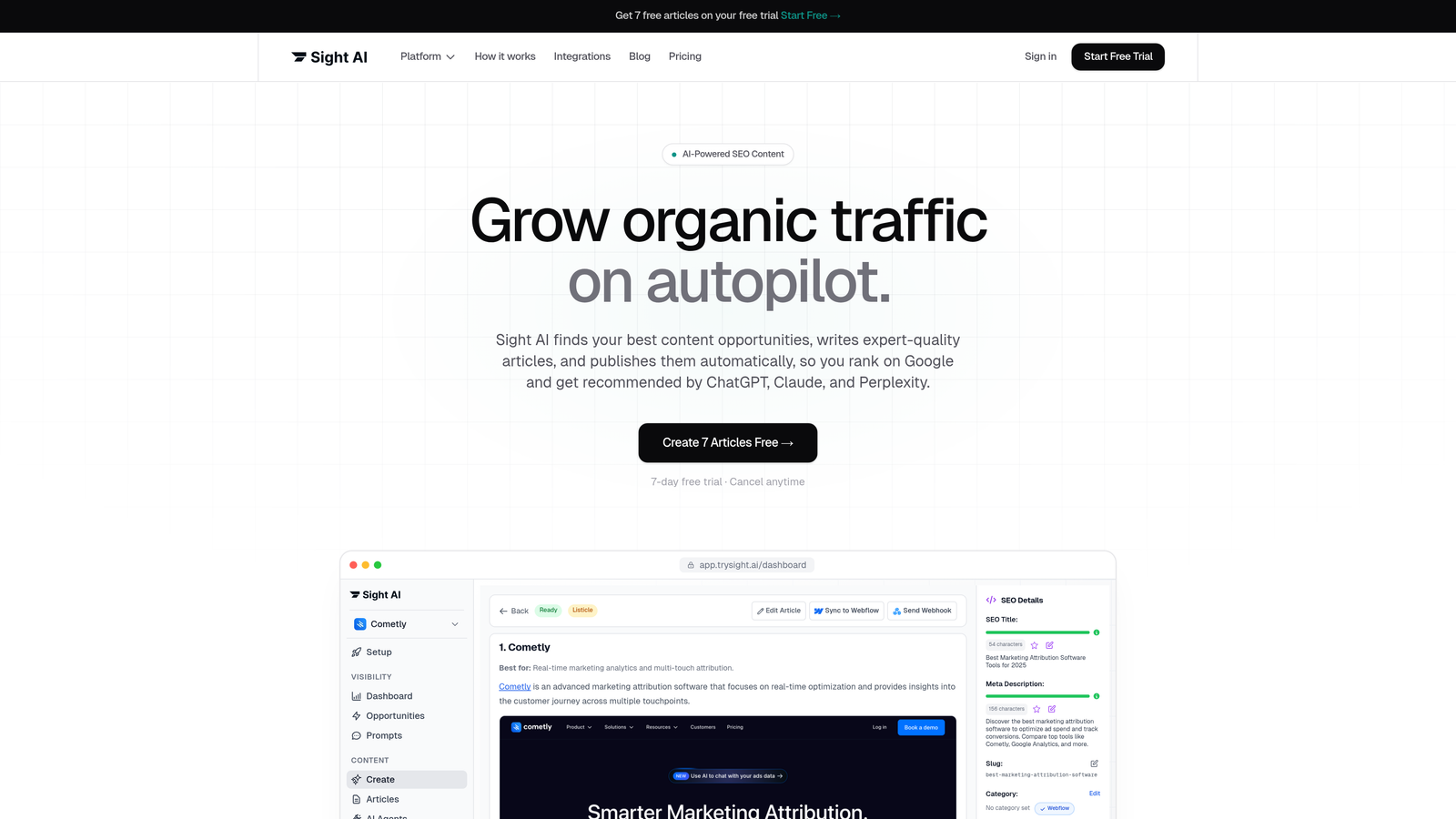
Sight AI combines AI-powered content generation with visibility tracking across major AI platforms—monitoring how ChatGPT, Claude, and Perplexity mention your brand.
Where This Tool Shines
Unlike traditional SEO tools that only optimize for Google, Sight AI addresses the emerging challenge of Generative Engine Optimization (GEO). As more users turn to AI chatbots for research and recommendations, brands need visibility in AI-generated responses—not just traditional search results.
The platform's 13+ specialized AI agents handle different content types with distinct optimization strategies. The listicle agent understands comparison structure differently than the explainer agent, producing content tailored to specific formats rather than generic AI writing.
Key Features
AI Visibility Score: Tracks brand mentions across 6+ AI platforms with sentiment analysis and prompt tracking to understand how AI models discuss your company.
Specialized Content Agents: 13+ agents optimized for listicles, guides, explainers, and other formats with built-in SEO/GEO optimization.
Autopilot Mode: Automated content workflows that generate, optimize, and schedule publishing without manual intervention.
IndexNow Integration: Automatically notifies search engines of new content for faster discovery and indexing.
CMS Auto-Publishing: Direct publishing to major platforms eliminates manual content transfer steps.
Best For
Marketing teams and agencies managing multiple brands who need both content production and AI visibility monitoring in one platform. Particularly valuable for SaaS companies and B2B brands where AI chatbots increasingly influence purchase decisions.
Pricing
Contact for pricing. The platform targets teams serious about AI visibility alongside traditional organic growth.
2. Clearscope
Best for: Enterprise content teams optimizing existing editorial workflows
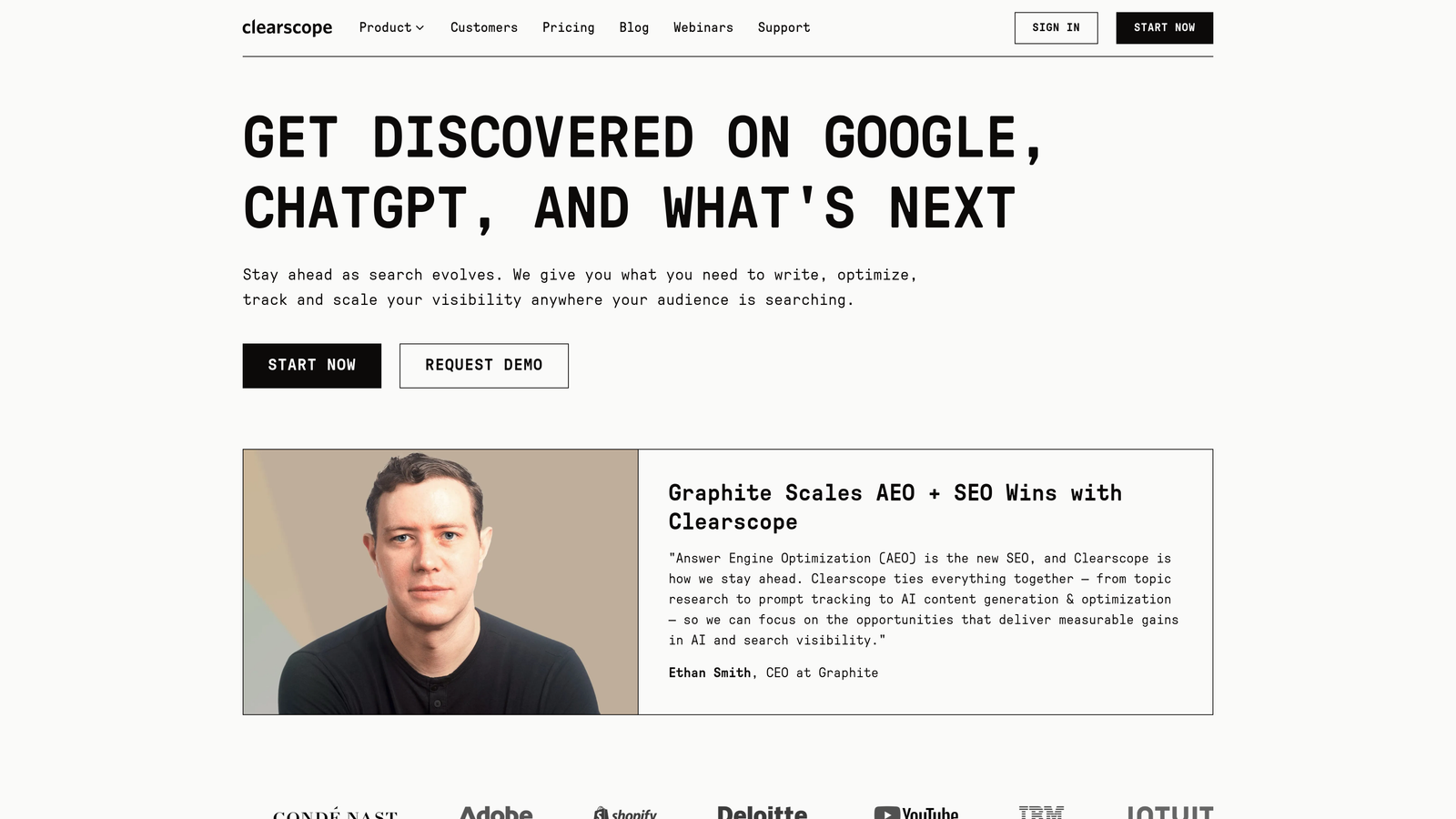
Clearscope provides real-time content grading and keyword recommendations within your existing writing environment.
Where This Tool Shines
Clearscope doesn't replace your writers—it makes them more effective. The platform analyzes top-ranking content for your target keywords and provides specific term recommendations that improve topical coverage without sacrificing readability.
The A++ grading system gives writers immediate feedback on content quality. As you add recommended terms naturally into your draft, the score improves in real-time. This approach preserves creative control while ensuring SEO fundamentals are covered.
Key Features
Content Grading System: Real-time A++ scoring based on keyword usage, readability, and topical comprehensiveness.
Keyword Recommendations: AI-powered term suggestions based on top-ranking competitor content analysis.
Google Docs Integration: Edit and optimize directly in Google Docs without switching platforms.
Competitor Analysis: Automatic identification of content gaps and opportunities based on SERP leaders.
WordPress Plugin: Optimize content directly in your CMS before publishing.
Best For
Established content teams with experienced writers who want SEO guidance without full AI automation. Works well for brands prioritizing editorial quality and voice consistency.
Pricing
Starts at $170/month. The enterprise pricing reflects its positioning as a professional optimization tool rather than a budget solution.
3. Surfer SEO
Best for: Data-driven content optimization with detailed SERP analysis
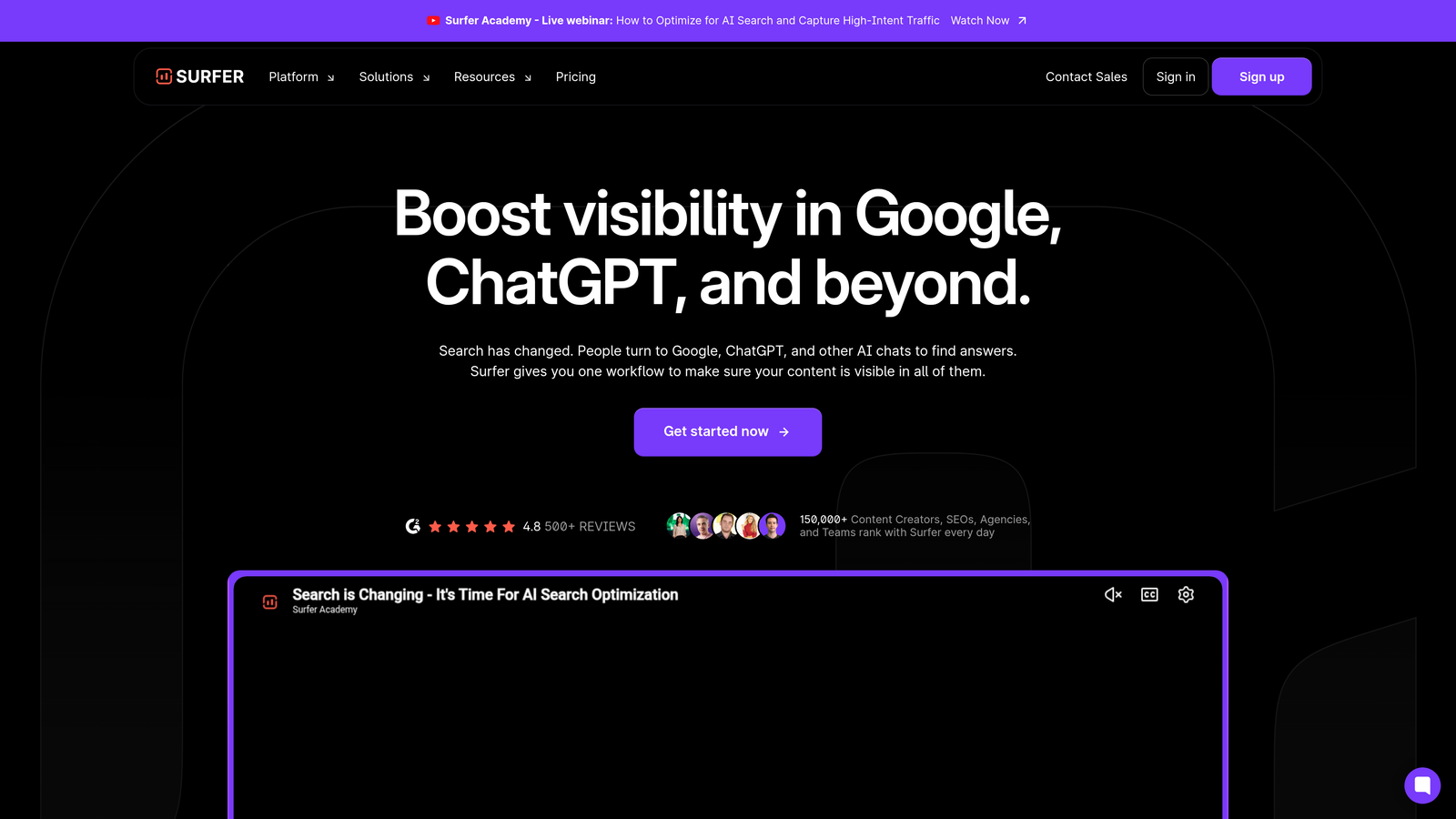
Surfer SEO uses NLP analysis to identify optimization opportunities based on top-ranking pages.
Where This Tool Shines
Surfer's Content Editor provides specific, actionable recommendations: add these exact terms, aim for this word count, include this many headings. The specificity removes guesswork from optimization.
The SERP Analyzer breaks down exactly why top-ranking pages perform well—from heading structure to image usage to content depth. This competitive intelligence helps writers understand not just what to write, but how to structure it for maximum impact.
Key Features
Content Editor: Real-time optimization suggestions with NLP-powered term recommendations and content structure guidance.
SERP Analyzer: Detailed competitive analysis showing why top pages rank and where opportunities exist.
Content Audit: Automated analysis of existing content identifying optimization opportunities and content decay.
AI Outline Generator: Creates content briefs based on top-ranking page analysis.
Chrome Extension: Optimize content in any text editor with the browser extension.
Best For
SEO specialists and content marketers who want granular control over optimization. Ideal for teams comfortable with data-driven content decisions.
Pricing
Starts at $89/month with different tiers based on monthly content volume and team size.
4. MarketMuse
Best for: Strategic content planning with topic authority modeling
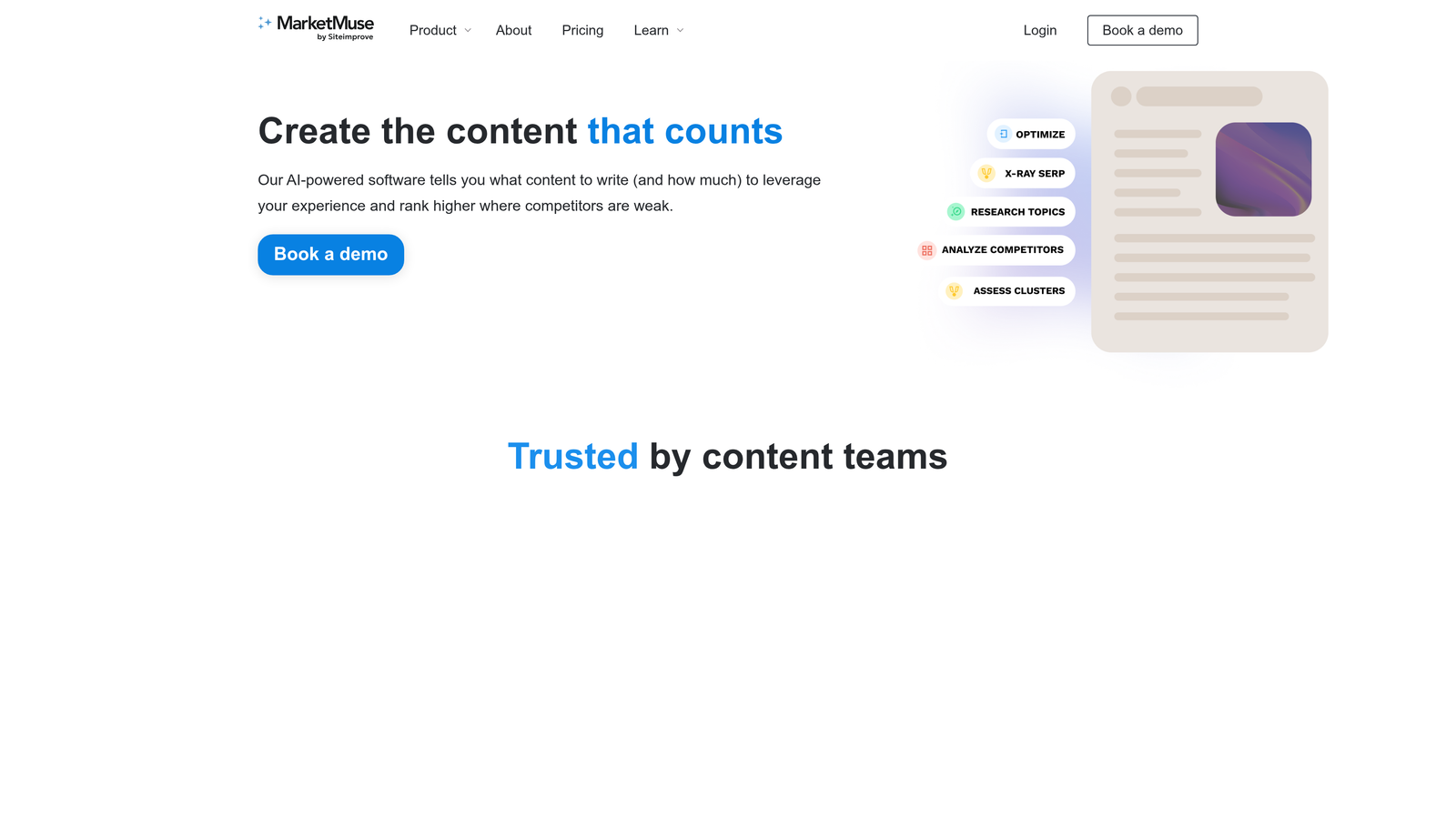
MarketMuse uses AI to analyze your entire content inventory and identify strategic opportunities.
Where This Tool Shines
MarketMuse thinks strategically about content planning, not just individual article optimization. The platform analyzes your site's topical authority across different subject areas, identifying where you're strong and where competitors dominate.
The personalized difficulty scores account for your existing content authority. A topic might be highly competitive overall but achievable for your site because you've already built authority in adjacent areas. This strategic view helps prioritize content investments.
Key Features
Content Briefs: AI-generated outlines with topic modeling and question identification based on search intent analysis.
Topic Authority Scoring: Measures your site's expertise across different topics relative to competitors.
Content Gap Analysis: Identifies missing topics and underdeveloped content areas across your site.
Personalized Difficulty: Topic difficulty scores customized to your site's existing authority and content strength.
Inventory Analysis: Full-site content audit identifying optimization opportunities and content refresh priorities.
Best For
Content strategists and marketing directors planning quarterly content roadmaps. Most valuable for sites with substantial existing content looking to identify strategic gaps.
Pricing
Free tier available for limited use. Paid plans start at $149/month with enterprise options for larger teams.
5. Frase
Best for: Research-to-draft workflows combining SERP analysis with AI writing
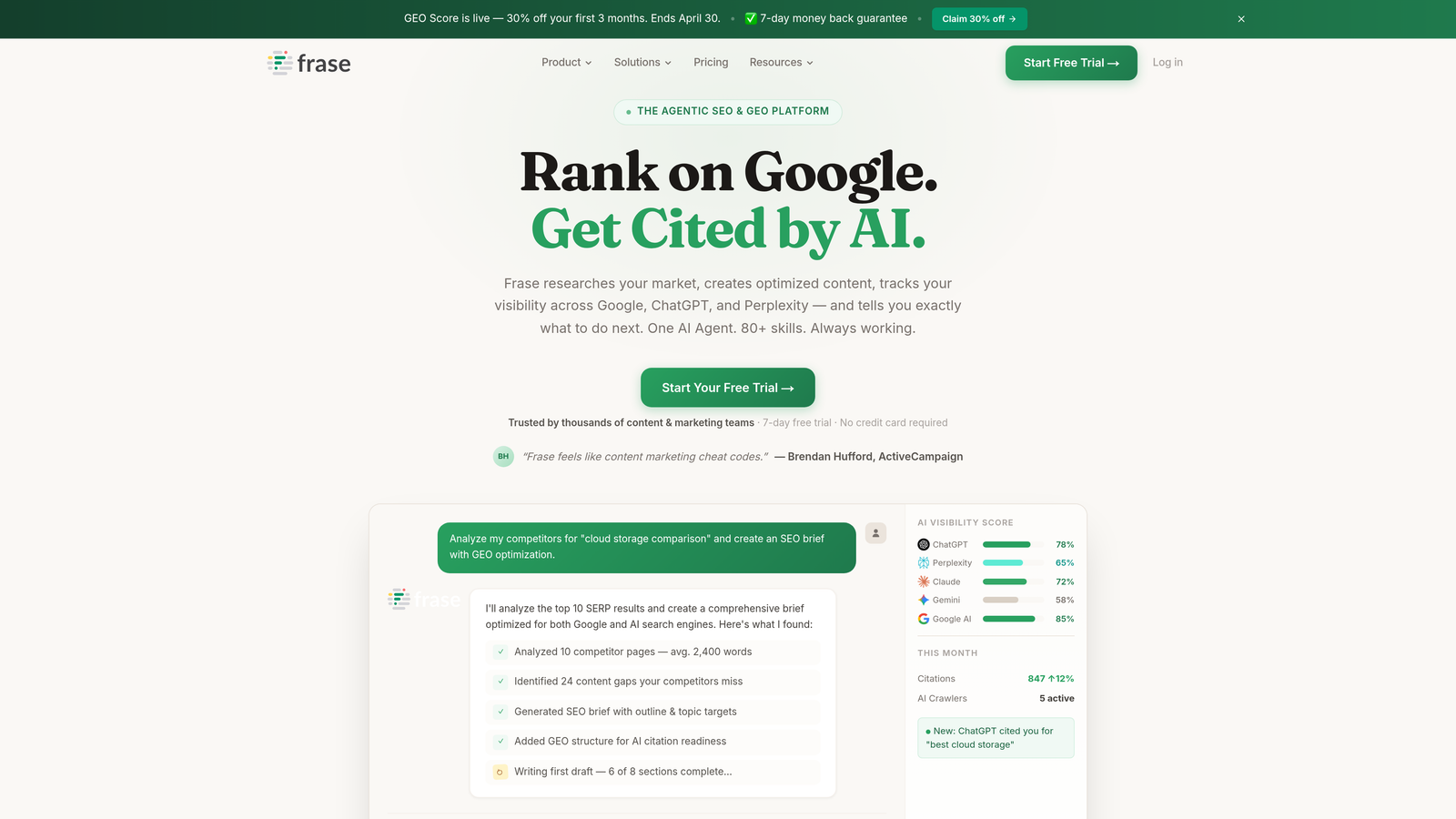
Frase streamlines the entire content creation process from research through final draft.
Where This Tool Shines
Frase excels at the research phase that traditional writing makes time-consuming. Enter your target keyword, and the platform analyzes top-ranking content, extracts common questions, identifies key topics, and generates a content brief—all in minutes.
The AI writing assistant then helps draft content based on that research. Unlike generic AI writing tools, Frase's suggestions are grounded in actual SERP analysis, making the output more relevant to search intent.
Key Features
SERP Analysis: Automated research extracting topics, questions, and statistics from top-ranking content.
Content Briefs: AI-generated outlines with heading suggestions and topic coverage recommendations.
AI Writing Assistant: Draft generation based on SERP research rather than generic AI training data.
Answer Engine Optimization: Identifies and formats content for featured snippets and AI-generated answers.
Team Collaboration: Shared briefs and content review workflows for team-based production.
Best For
Content teams looking to speed up research without sacrificing quality. Works well for agencies managing multiple clients with varied content needs.
Pricing
Starts at $15/month for basic plans. Professional and team tiers available with increased content limits and collaboration features.
6. Hemingway Editor
Best for: Readability-focused writing without SEO considerations
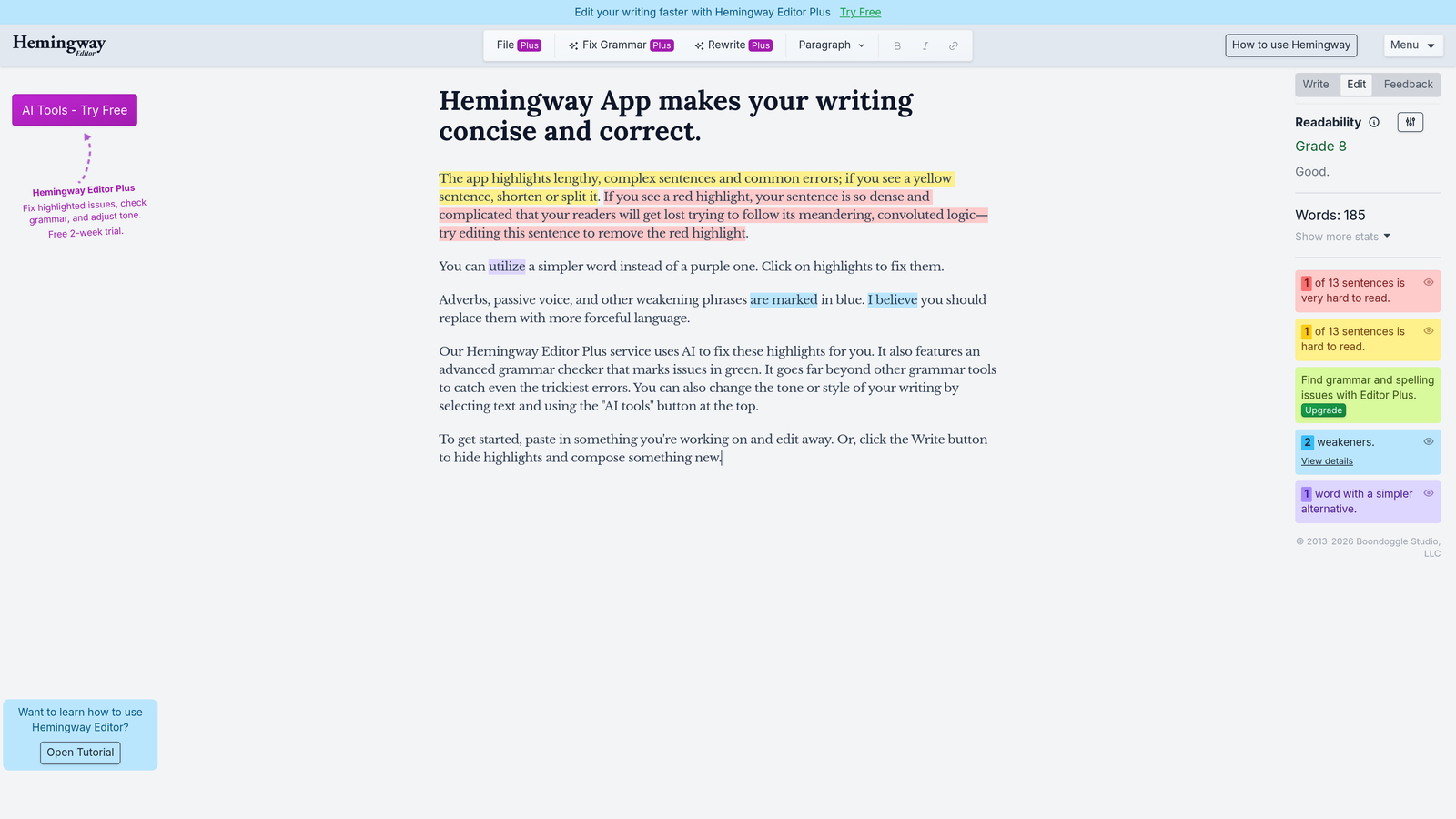
Hemingway Editor strips away SEO complexity to focus purely on clear, readable writing.
Where This Tool Shines
Hemingway represents the traditional writing philosophy: clarity first, optimization later. The tool highlights complex sentences, passive voice, and unnecessary adverbs—all elements that reduce readability regardless of SEO value.
For thought leadership content, brand storytelling, and creative pieces where search rankings aren't the primary goal, Hemingway keeps writing human. No keyword density targets. No term recommendations. Just clear communication.
Key Features
Readability Grading: Assigns grade level scores based on sentence complexity and word choice.
Passive Voice Detection: Highlights passive constructions that weaken writing impact.
Sentence Complexity: Color-codes sentences by difficulty level, flagging those that confuse readers.
Adverb Highlighting: Identifies overused adverbs that dilute writing strength.
Desktop and Web Versions: Work online or offline with the standalone desktop application.
Best For
Writers prioritizing clarity and voice over search optimization. Ideal for executive communications, brand narratives, and creative content where readability matters more than rankings.
Pricing
Free web version with full functionality. Desktop app available for $19.99 one-time purchase with offline access.
7. Google Docs + Grammarly Stack
Best for: Collaborative traditional writing with grammar and style checking
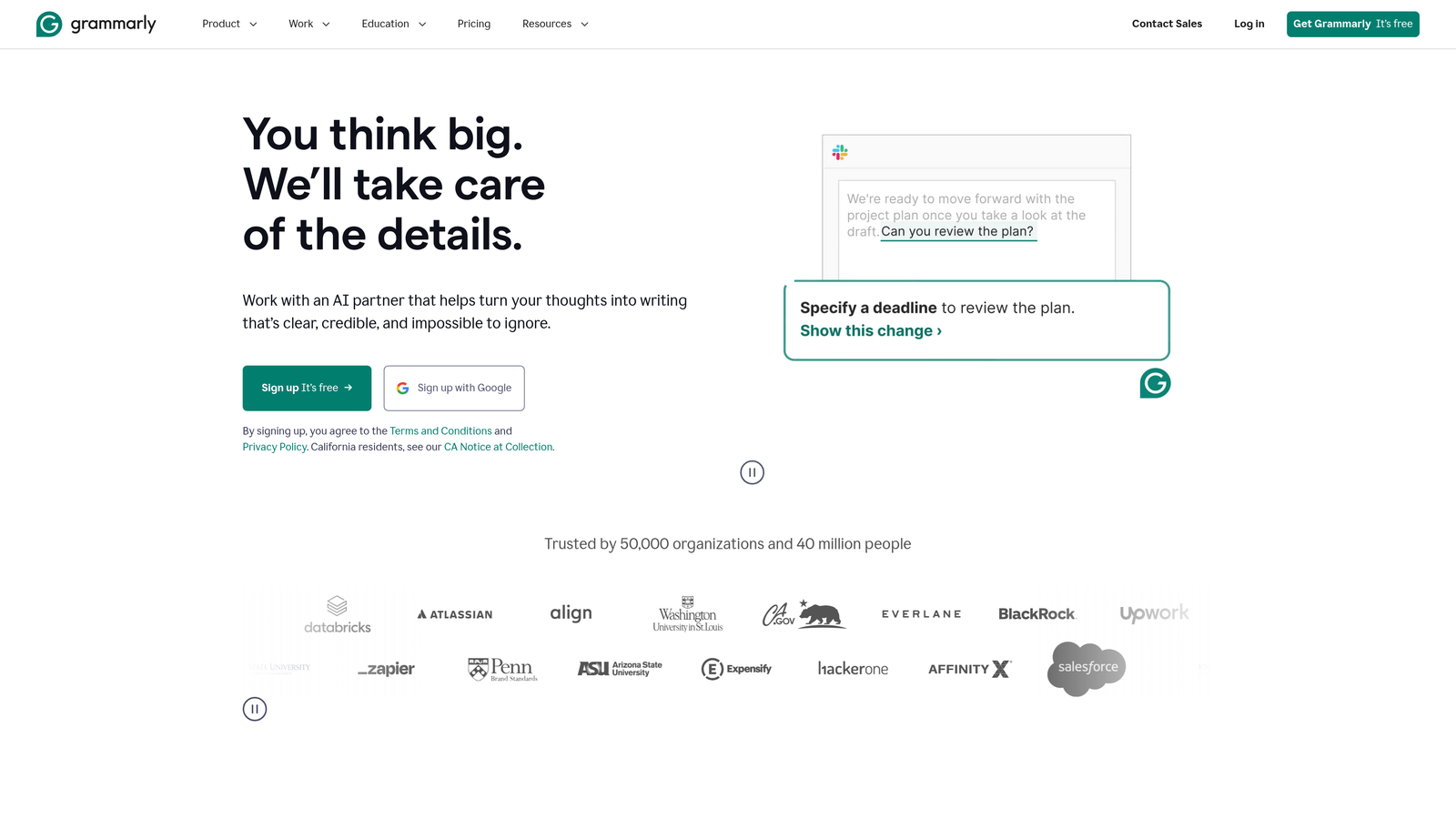
Grammarly integrated with Google Docs creates a traditional editorial workflow with real-time collaboration.
Where This Tool Shines
This combination represents the modern traditional approach. Google Docs handles collaboration—multiple writers, editors, and stakeholders can work simultaneously with comment threads and version history. Grammarly adds professional editing without replacing human judgment.
The workflow mirrors traditional publishing: draft in Docs, refine with Grammarly, review with team members, then optimize for SEO as a separate step. This separation preserves creative control while ensuring technical quality.
Key Features
Real-Time Collaboration: Multiple users editing simultaneously with comment threads and suggestion mode.
Grammar and Punctuation: Automated detection of technical writing errors with context-aware suggestions.
Tone and Style: Analysis of writing tone with suggestions for consistency and audience appropriateness.
Plagiarism Detection: Premium feature checking content against billions of web pages.
Browser Extension: Grammarly works across platforms beyond Google Docs for consistent editing everywhere.
Best For
Editorial teams with established workflows who want to improve writing quality without adopting AI-first content generation. Works for organizations where multiple stakeholders review content before publication.
Pricing
Google Docs is free. Grammarly offers a free tier with basic checking. Premium starts at $12/month with advanced features and plagiarism detection.
8. Scrivener
Best for: Long-form content with complex research organization
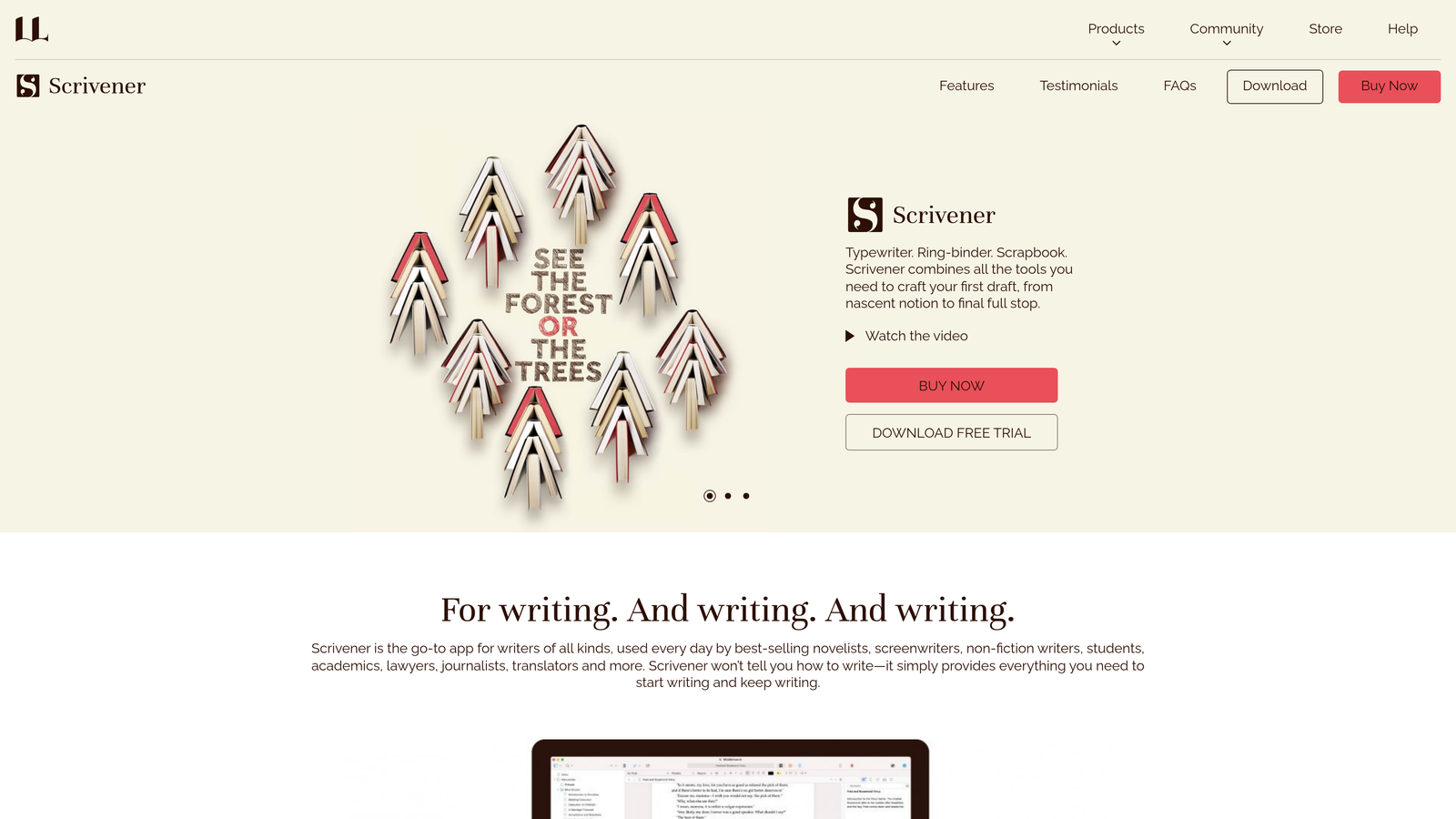
Scrivener provides professional writing software designed for managing extensive research and multi-chapter projects.
Where This Tool Shines
Scrivener excels where web-based tools struggle: managing the research, notes, and drafts for comprehensive guides, whitepapers, and book-length content. The binder organizes everything in one place—research documents, interview notes, draft sections, and reference materials.
The corkboard view lets you outline visually, moving sections around until the structure works. This organizational power makes Scrivener invaluable for content that requires deep research and careful structure before drafting begins.
Key Features
Binder Organization: Hierarchical structure for managing research materials, drafts, and reference documents in one project file.
Corkboard View: Visual outlining with index cards you can rearrange before committing to draft structure.
Compile Feature: Export to multiple formats (PDF, Word, EPUB) with customizable formatting for each output type.
Distraction-Free Mode: Full-screen writing environment eliminating interface elements and notifications.
Snapshot Versioning: Save snapshots of sections before major revisions for easy rollback if needed.
Best For
Content creators working on comprehensive guides, research reports, ebooks, and other long-form projects requiring extensive research organization. Not designed for quick blog posts or social content.
Pricing
$49 one-time purchase for Mac or Windows. Educational discounts available. No subscription model.
9. Jasper
Best for: AI content generation with brand voice customization
Jasper offers template-driven AI writing with tools for maintaining consistent brand voice across generated content.
Where This Tool Shines
Jasper addresses a common AI writing complaint: everything sounds generic. The brand voice training feature analyzes your existing content and learns your specific style, tone, and terminology. Generated content then matches your established voice rather than sounding like generic AI output.
The 50+ templates cover specific content types—from blog posts to product descriptions to ad copy. Each template is optimized for its format, producing more relevant first drafts than general-purpose AI writing.
Key Features
Brand Voice Training: Analyzes existing content to learn and replicate your specific writing style and terminology.
Content Templates: 50+ specialized templates for different content types, each optimized for format-specific requirements.
Chrome Extension: Generate and refine content directly in your browser without switching to a separate platform.
Team Collaboration: Shared brand voice profiles and content workflows for consistent output across team members.
SEO Mode: Optimization suggestions integrated into the writing interface for search-friendly content.
Best For
Marketing teams producing high volumes of content who need AI assistance without sacrificing brand consistency. Works well for agencies managing multiple client brands.
Pricing
Starts at $39/month for individual plans. Team and business tiers available with increased usage limits and collaboration features.
Making the Right Choice
The SEO tools versus traditional writing debate misses the real question: what are you optimizing for? If your primary goal is organic traffic growth and visibility in AI-generated responses, platforms like Sight AI deliver the most comprehensive solution—combining content generation with visibility tracking across ChatGPT, Claude, and other AI platforms that increasingly influence purchase decisions.
Optimization tools like Clearscope and Surfer SEO bridge the gap effectively. They preserve your editorial process and creative control while ensuring content meets SEO fundamentals. This middle ground works well for brands with established editorial teams who want data-driven guidance without full automation.
Traditional tools maintain their place for specific content types. Hemingway and Scrivener excel where search optimization isn't the primary goal—thought leadership pieces, brand storytelling, comprehensive research reports. These tools prioritize clarity and organization over keyword density and SERP analysis.
Most successful content teams in 2026 run hybrid strategies. AI-powered platforms handle SEO-driven content that needs to rank and generate traffic. Traditional methods preserve brand voice for executive communications and creative pieces. The key is matching tool to content purpose rather than forcing one approach across all content types.
The emerging factor that changes this calculation: AI visibility. As more users turn to ChatGPT and Perplexity for research and recommendations, brands need visibility in AI-generated responses alongside traditional search rankings. This shift makes platforms that optimize for both—like Sight AI's GEO-focused approach—increasingly valuable for teams serious about comprehensive organic growth.
Stop guessing how AI models like ChatGPT and Claude talk about your brand—get visibility into every mention, track content opportunities, and automate your path to organic traffic growth. Start tracking your AI visibility today and see exactly where your brand appears across top AI platforms.