AI-powered content generation has fundamentally changed how marketers approach organic growth. The challenge is no longer producing content — it's producing content that ranks in traditional search AND gets cited by AI models like ChatGPT, Claude, and Perplexity.
The tools in this list were selected based on their ability to generate SEO-optimized content at scale, support GEO (Generative Engine Optimization) requirements, and integrate into real marketing workflows. Whether you're a solo founder building topical authority or an agency managing dozens of client content pipelines, the right SEO content generator can compress months of work into days.
We evaluated each tool on content quality, AI optimization capabilities, workflow automation, and pricing transparency. Sight AI's own content writer leads the list given its unique combination of SEO and GEO optimization — but every tool here earns its place on merit.
1. Sight AI
Best for: Marketers who need SEO and GEO-optimized content generation with built-in AI visibility tracking.
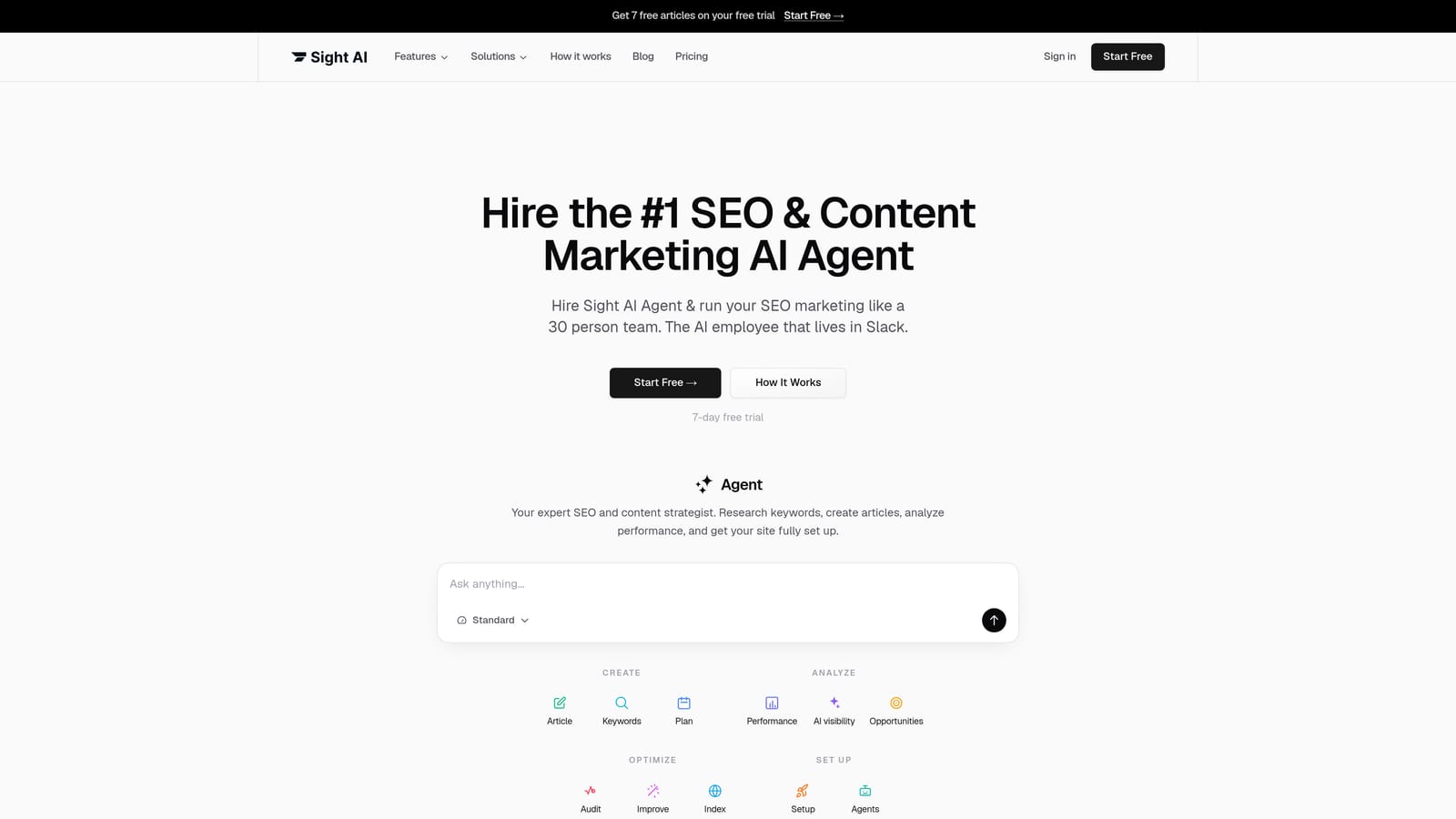
Sight AI is an all-in-one platform combining 13+ specialized AI content agents, AI Visibility tracking across 6+ AI models, and automated indexing — purpose-built for marketers who need content that ranks in search and gets cited by AI.
Where This Tool Shines
Most content tools solve one problem: writing. Sight AI solves three simultaneously. You get content generation, AI citation monitoring, and technical indexing infrastructure in a single platform. That combination is rare and genuinely useful for marketers who are tired of stitching together separate tools for each function.
The 13+ specialized AI agents are a meaningful differentiator. Rather than running every content format through a single generic model, Sight AI uses agents optimized for specific types: listicles, how-to guides, explainers, and more. The result is content that's structurally appropriate for its format, not just a wall of text that happens to include a few keywords.
Key Features
13+ Specialized AI Agents: Purpose-built agents for listicles, guides, explainers, and other formats ensure content structure matches intent — not just keyword density.
Autopilot Mode: Hands-off content scheduling with CMS auto-publishing removes the manual upload step entirely, keeping your publishing cadence consistent without constant oversight.
AI Visibility Score: Tracks how often and how positively your brand is mentioned across ChatGPT, Claude, Perplexity, and three or more additional AI platforms, giving you a clear picture of your AI search presence.
Sentiment Analysis and Prompt Tracking: Goes beyond raw mention counts to show you whether AI models are describing your brand positively, and which prompt types are triggering those mentions.
IndexNow Integration: Newly published content is submitted to search engines immediately, with automated sitemap updates keeping your crawl infrastructure current without manual intervention.
Best For
Founders and marketing teams who want to grow organic traffic through both traditional search and AI-driven discovery channels. Particularly strong for teams that currently use separate tools for content writing, AI monitoring, and indexing and want to consolidate into one workflow.
Pricing
Check trysight.ai for current plans and free trial options. Pricing details are updated directly on the site.
2. Writesonic
Best for: Content teams that need high-volume output across multiple formats with flexible template coverage.
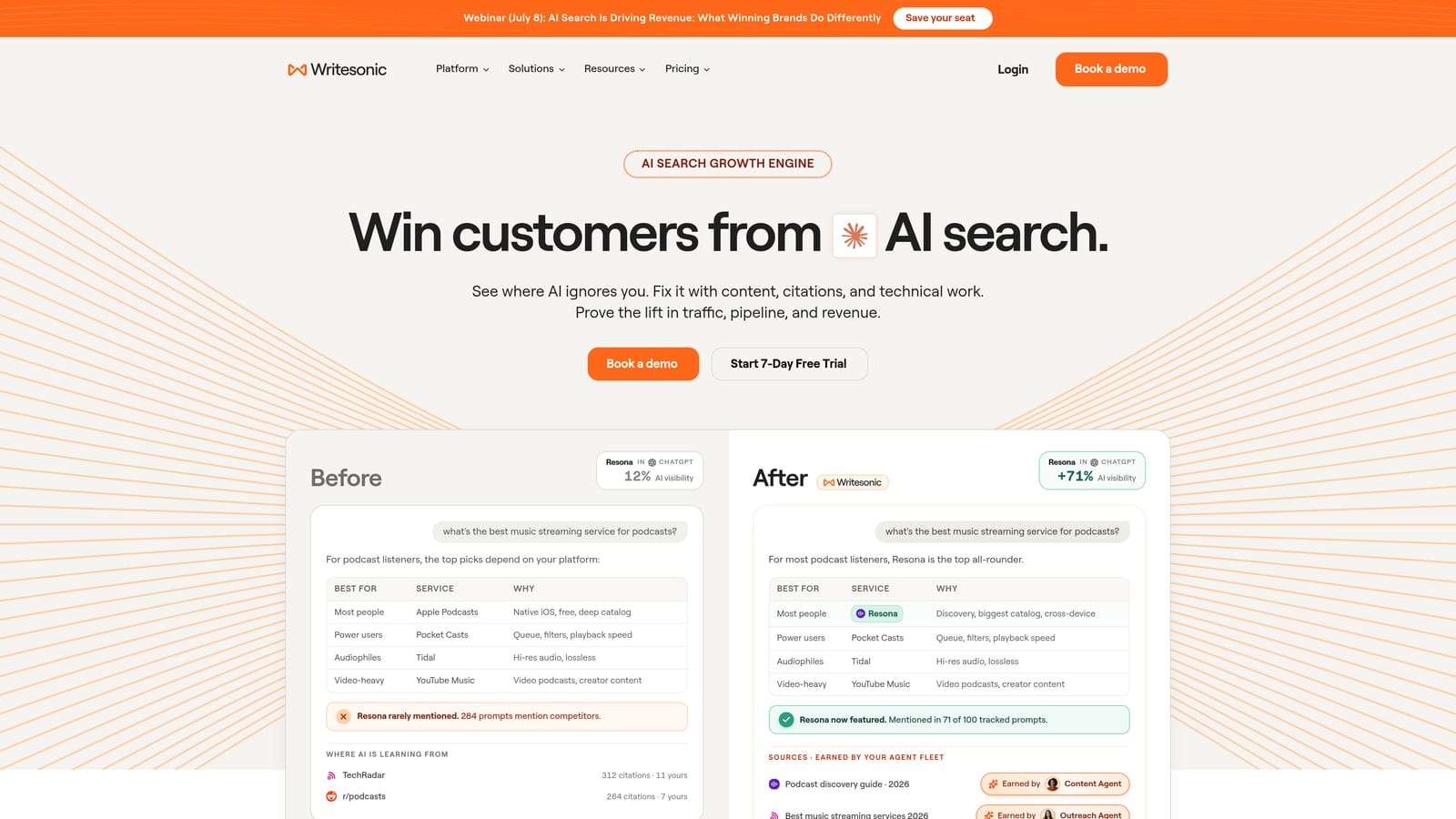
Writesonic is a versatile AI writing platform with a broad template library covering long-form articles, ads, landing pages, and product copy.
Where This Tool Shines
Writesonic's strength is breadth. If your content operation spans blog posts, paid ad copy, product descriptions, and landing pages, having all of those formats available in one tool reduces context-switching and keeps your brand voice consistent across channels.
The platform's SEO mode integrates keyword targeting with its article writer, which is useful for teams producing high volumes of search-optimized content. Chatsonic, its conversational AI layer, also works well for research and ideation phases before you move into drafting.
Key Features
Long-Form AI Article Writer: Supports SEO keyword targeting and structured article generation for blog content and guides.
Wide Template Library: Covers ads, landing pages, product descriptions, and blog posts — useful for teams managing multiple content formats simultaneously.
Brand Voice Customization: Allows teams to define a consistent tone and style that carries across all generated content.
Chatsonic: A conversational AI interface for research, ideation, and quick content drafts without switching to a separate tool.
Team Collaboration Features: Built-in review and workflow features for content teams that need multiple stakeholders involved in the approval process.
Best For
Content teams and agencies that prioritize output volume and format variety. Writesonic is a practical choice when you need a reliable workhorse for producing large quantities of content across different asset types, and where GEO optimization is a secondary rather than primary concern.
Pricing
Tiered plans available with a free trial offered. Check writesonic.com for current pricing details.
3. AirOps
Best for: Ops-minded marketing teams that want to build structured, repeatable AI content pipelines at scale.
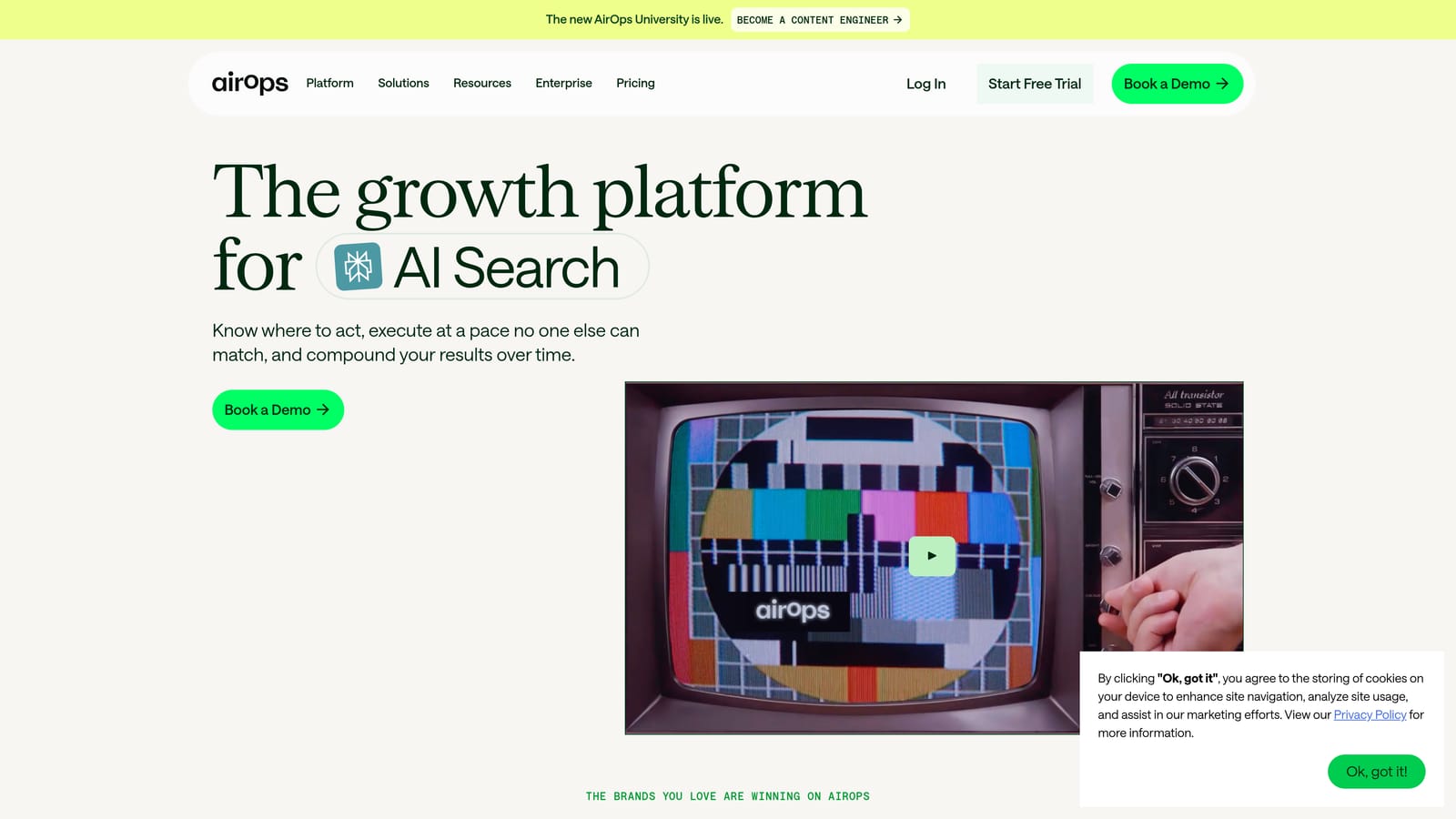
AirOps is an AI workflow platform that lets teams build structured content pipelines by chaining AI tasks and connecting to internal data sources and publishing systems.
Where This Tool Shines
AirOps isn't a "write this article for me" tool. It's a "build a system that writes articles for me" tool. That distinction matters. If your team produces content at a scale where manual task management becomes the bottleneck, AirOps lets you design workflows that chain AI tasks together, pull from internal data sources, and push outputs to your publishing stack automatically.
The visual workflow builder makes it accessible to marketers without deep technical backgrounds, while still offering the flexibility that more technical teams expect. The tradeoff is setup time: AirOps rewards the teams willing to invest in configuration upfront with scalable, auditable pipelines that don't require constant supervision.
Key Features
Visual Workflow Builder: Drag-and-drop interface for chaining AI content tasks without writing code, making complex pipelines manageable for non-technical users.
Internal Data Source Connections: Pulls from your own data to generate personalized or context-specific content, rather than relying solely on generic AI outputs.
CRM and Publishing Integrations: Connects to GTM platforms, CRMs, and publishing systems so content flows from generation to distribution without manual handoffs.
Auditable Content Pipelines: Every workflow step is trackable, which matters for agencies and enterprise teams that need to demonstrate process consistency to clients or stakeholders.
Multi-Client Scalability: Particularly useful for agencies managing separate content systems for multiple clients under one platform.
Best For
Marketing operations teams, agencies with complex content workflows, and enterprise teams that need repeatable, scalable content systems rather than a simple article generator. Requires more initial setup than point-and-publish tools, but the payoff is a content infrastructure that runs with minimal ongoing oversight.
Pricing
Enterprise-oriented pricing structure. Check airops.com for current plans and details.
4. Profound
Best for: Marketers who want to understand and improve their brand's presence in AI-generated search answers.
Profound is an AI search visibility platform that monitors how brands appear in AI-generated answers and surfaces content recommendations to improve AI citation frequency.
Where This Tool Shines
Profound sits at the intersection of traditional SEO analytics and AI search performance. If you've ever wondered why a competitor keeps getting cited in ChatGPT or Perplexity responses while your brand doesn't, Profound is designed to answer that question with data rather than guesswork.
The content gap analysis feature is particularly actionable. Rather than just telling you that your AI visibility is low, it identifies specific areas where AI answer coverage is missing and surfaces recommendations for where to focus content investment. That bridges the gap between monitoring and strategy.
Key Features
AI Answer Monitoring: Tracks how and when your brand appears in AI-generated search responses across major platforms.
Content Gap Analysis: Identifies topics and queries where your brand is absent from AI answers, creating a prioritized content roadmap.
Competitive Benchmarking: Measures your AI search share of voice against competitors, showing you where rivals are winning citation frequency.
Strategic Recommendations: Translates monitoring data into actionable suggestions for improving AI citation rates through content changes.
Analytics Dashboard: Tracks AI channel performance trends over time, making it easier to measure the impact of content investments on AI visibility.
Best For
SEO strategists and brand managers who want a data-driven approach to AI search visibility. Profound is more analytics and strategy-oriented than pure content generation, so it pairs well with a dedicated content writing tool for teams that need both signals and execution in their workflow.
Pricing
Check getprofound.com for current pricing and plan options.
5. Peec
Best for: Brand managers who want a focused view of AI-driven share of voice against key competitors.
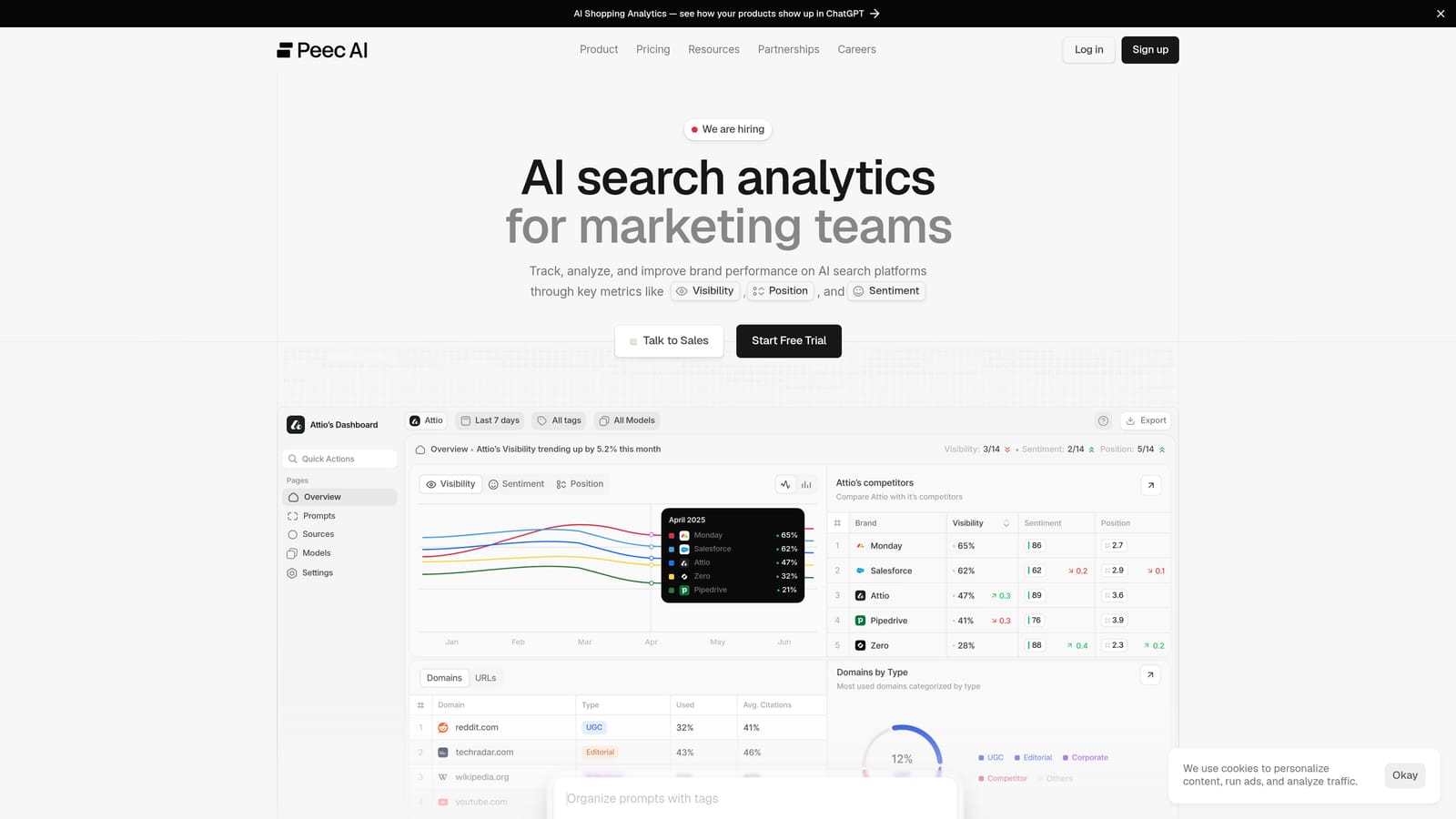
Peec is a focused AI mention tracking tool that shows marketers how often their brand appears in AI model responses, with competitive benchmarking to measure AI-driven share of voice.
Where This Tool Shines
Peec keeps its scope intentionally narrow, and that's a feature rather than a limitation for certain use cases. If your primary question is "how often does my brand show up in AI responses compared to my competitors," Peec gives you a clean, direct answer without requiring you to navigate a complex analytics platform.
The competitive benchmarking view is where Peec earns its place in a marketing stack. Seeing your brand's AI mention frequency plotted against rivals over time creates a clear performance signal that's easy to communicate to leadership without extensive data interpretation.
Key Features
Brand Mention Tracking: Monitors how frequently your brand appears across major AI model responses, providing a consistent baseline for measurement.
Competitor Benchmarking: Compares your AI share of voice against key rivals, making competitive positioning in AI search channels visible and trackable.
Monitoring and Reporting Dashboard: Clean reporting interface designed for brand managers who need quick visibility without deep technical configuration.
Trend Tracking: Monitors changes in AI mention frequency over time, helping teams identify whether content investments are moving the needle.
Lightweight Setup: Focused on monitoring rather than content generation, which means faster time-to-value for teams that already have a content workflow in place.
Best For
Brand managers and marketing directors who want a straightforward AI share of voice metric without the overhead of a full analytics platform. Works best as a monitoring layer alongside a content generation tool rather than as a standalone solution for teams that also need to act on what they find.
Pricing
Check peec.ai for current pricing details.
6. Promptwatch
Best for: Technical SEOs and AI search specialists who need prompt-level intelligence on brand citation triggers.
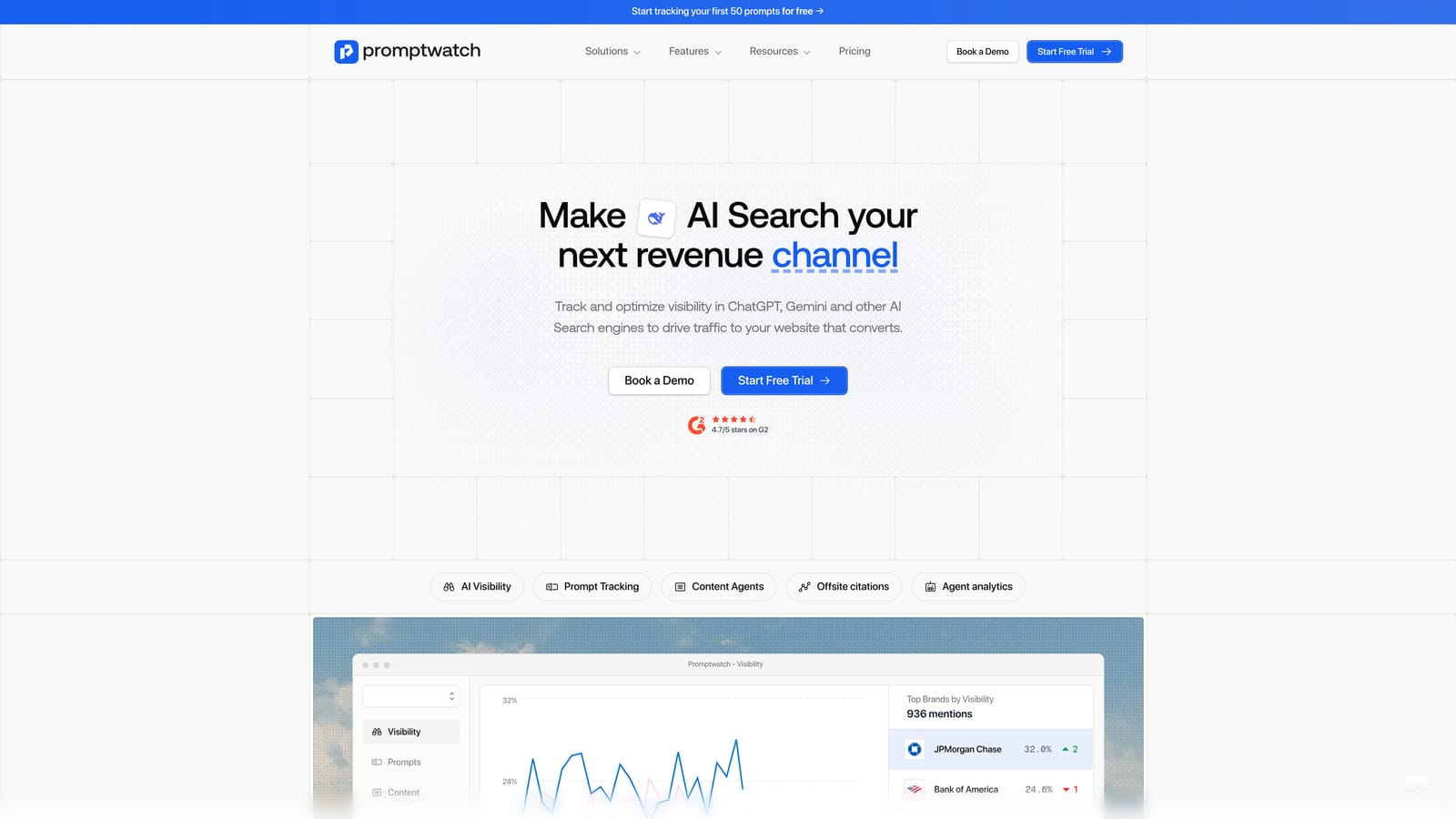
Promptwatch is a prompt-level AI monitoring tool that tracks which specific queries and prompts trigger brand mentions across AI platforms, giving specialists granular intelligence on where to focus content efforts.
Where This Tool Shines
Most AI visibility tools tell you that your brand is or isn't being mentioned. Promptwatch tells you exactly which prompts and query types are triggering those mentions. That's a fundamentally different and more actionable level of data for teams that want to do serious AI search optimization rather than just monitor brand presence.
Think of it as keyword research for AI search. Just as understanding which search queries drive organic traffic informs your content strategy, understanding which prompts surface your brand in AI responses tells you what to write next. That intelligence layer is what makes Promptwatch a useful complement to any content generation tool in this list.
Key Features
Prompt-Specific Tracking: Monitors which exact query types and prompt structures trigger brand mentions across multiple AI platforms, not just aggregate mention counts.
Query Type Identification: Surfaces patterns in which categories of questions surface your brand, enabling more targeted content topic selection.
Granular Prioritization Data: Gives content teams concrete signal on which topics to write about to increase AI citation frequency, replacing guesswork with data.
Competitive Prompt Analysis: Identifies which prompts are surfacing competitors instead of your brand, revealing citation gaps worth closing.
Intelligence Layer Integration: Designed to pair with content generation tools, providing the "what to write" signal that drives more effective content investment decisions.
Best For
Technical SEOs, AI search specialists, and content strategists who want to go beyond surface-level brand monitoring and understand the mechanics of how AI models decide to cite their brand. Most effective when paired with a content generation tool that can act on the insights Promptwatch surfaces.
Pricing
Check promptwatch.io for current pricing details.
Which Tool Is Right for Your Marketing Workflow
The right choice here depends less on which tool is "best" in the abstract and more on where your current workflow has the biggest gap. Here's a practical breakdown by marketer type.
Solo founders and early-stage teams: Sight AI is the strongest starting point. The combination of content generation, AI visibility tracking, and automated indexing means you're not managing three separate tools on a lean budget. Autopilot Mode and CMS auto-publishing are particularly valuable when you're wearing multiple hats and need your content pipeline to run without constant supervision.
Content teams focused on volume and format variety: Writesonic earns its place for teams that need to produce high quantities of content across multiple formats — blog posts, ads, landing pages — with a consistent brand voice. It's a reliable production tool even if GEO optimization isn't its primary focus.
Marketing ops and agencies building scalable systems: AirOps is worth the setup investment if you're managing complex, multi-client content pipelines. The visual workflow builder and internal data source connections let you build infrastructure that scales without proportionally scaling headcount.
SEO strategists focused on AI search performance: Profound and Peec both address AI visibility monitoring, with Profound offering deeper content gap analysis and strategic recommendations, and Peec providing a cleaner competitive share of voice view. Both pair well with a content generation tool rather than replacing one.
Technical SEOs and AI search specialists: Promptwatch fills a specific and valuable niche. If you want to understand exactly which prompts are triggering brand citations across AI platforms, the prompt-level intelligence it provides is genuinely difficult to replicate with other tools in this list.
Before committing to any tool, audit your current content workflow honestly. Are you struggling with content production volume? AI visibility monitoring? Technical indexing delays? The clearer your diagnosis, the easier the tool selection becomes.
If you're looking for a single platform that covers content generation, AI citation tracking, and indexing without tool sprawl, Start tracking your AI visibility today and see exactly where your brand appears across top AI platforms — and what content moves you need to make to show up more.