SEO autopilot tools have shifted from novelty to necessity. Between content production, indexing, AI visibility, and keyword tracking, the manual workload of modern SEO is simply unsustainable at scale. The right autopilot stack lets marketers, founders, and agencies automate the repetitive heavy lifting: publishing optimized content, submitting pages for indexing, tracking brand mentions across AI models, and monitoring rankings, without sacrificing quality or strategic control.
This list covers the best SEO autopilot tools available in 2026, selected based on automation depth, AI integration, ease of use, and real impact on organic growth. We've also included tools that address the newer frontier of GEO (Generative Engine Optimization), because ranking in AI-generated answers is quickly becoming as important as ranking in traditional search.
1. Sight AI
Best for: All-in-one SEO autopilot covering content generation, indexing automation, and AI visibility tracking.
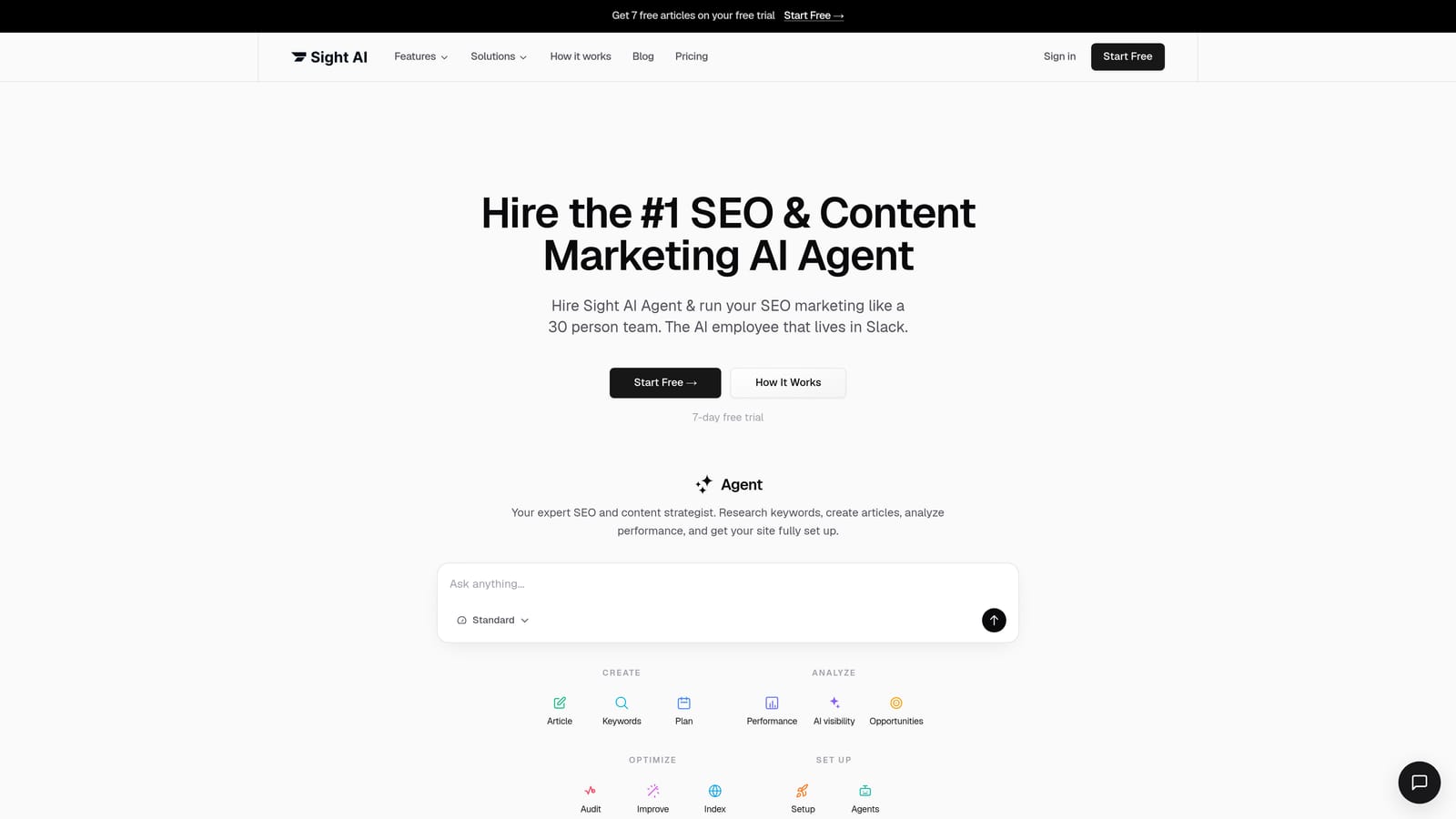
Sight AI is an all-in-one SEO autopilot platform combining AI content generation, automated website indexing, and AI visibility tracking across 6+ AI models including ChatGPT, Claude, and Perplexity.
Where This Tool Shines
Most SEO autopilot tools solve one piece of the puzzle. Sight AI is notable for solving three at once: content creation, technical indexing, and AI visibility monitoring. That's a meaningful difference for teams tired of stitching together separate tools and managing the integration overhead that comes with them.
The Autopilot Mode is the standout feature. With 13+ specialized AI agents, it can generate SEO and GEO-optimized articles across formats like listicles, guides, and explainers, then publish them directly to your CMS without manual steps. Pair that with automated indexing and AI visibility tracking, and you have a genuinely end-to-end autopilot workflow.
Key Features
13+ Specialized AI Agents: Purpose-built agents for different content formats produce SEO and GEO-optimized articles at scale, from listicles to long-form guides, with Autopilot Mode handling the full pipeline.
AI Visibility Score: Tracks how your brand is mentioned across 6+ AI platforms with sentiment analysis and prompt-level tracking, giving you a clear picture of your GEO presence over time.
IndexNow Integration: Automatically submits newly published pages to search engines for faster discovery, cutting the lag between publishing and indexing that most teams accept as unavoidable.
Automated Sitemap Updates: Keeps your sitemap current without manual intervention, ensuring complete crawl coverage as your content library grows.
CMS Auto-Publishing: Connects content generation directly to live site deployment, removing the final manual step from your content workflow.
Best For
Solo founders and lean marketing teams who need to compete with larger content operations, as well as agencies managing multiple client sites that want a single platform covering content, indexing, and AI visibility without managing multiple vendor relationships.
Pricing
Pricing is available at trysight.ai. Plans scale for individual marketers, teams, and agencies based on content volume and feature access.
2. Writesonic
Best for: High-volume AI content generation with SEO workflows built into the process.
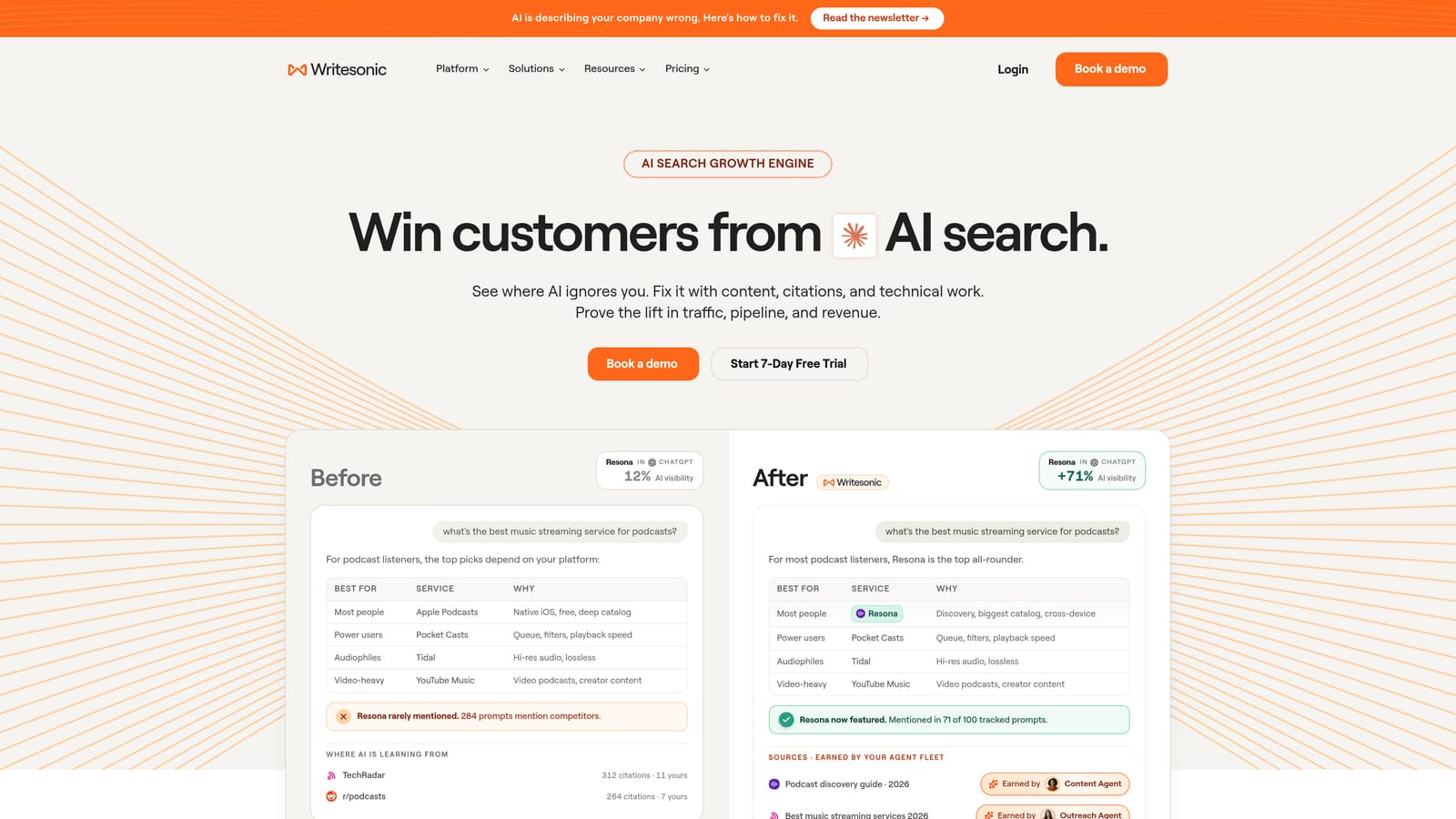
Writesonic is an AI content generation platform designed for producing optimized long-form content including blog posts, landing pages, and product copy at scale.
Where This Tool Shines
Writesonic has built its reputation on making high-volume content production accessible without a large writing team. Its SEO-focused workflows allow teams to feed in keyword inputs and produce structured, optimized long-form content quickly. For content-heavy operations where the primary bottleneck is drafting, it removes significant friction.
The brand voice customization is a practical differentiator. Rather than producing generic AI output, Writesonic can be trained to match your established tone, which matters when publishing at volume across a consistent brand identity.
Key Features
Long-Form Content Generation: Produces full blog posts and articles with SEO optimization integrated into the workflow, not bolted on afterward.
Brand Voice Customization: Allows teams to define and maintain a consistent tone across all generated content, reducing the editing burden significantly.
Factual Grounding Features: Built-in mechanisms to reduce AI hallucinations in published content, a meaningful quality control layer for teams publishing at scale.
Multi-Format Support: Handles blogs, ads, product descriptions, landing pages, and more from a single platform, making it versatile across different content needs.
Best For
Content teams and agencies with high publishing volume requirements who need reliable, brand-consistent long-form drafts. Writesonic works best as a content production layer; teams needing indexing automation or AI visibility monitoring will need to pair it with other tools.
Pricing
A free tier is available. Paid plans scale with usage and team size. See writesonic.com for current pricing details.
3. AirOps
Best for: Teams building custom AI content automation pipelines without engineering resources.
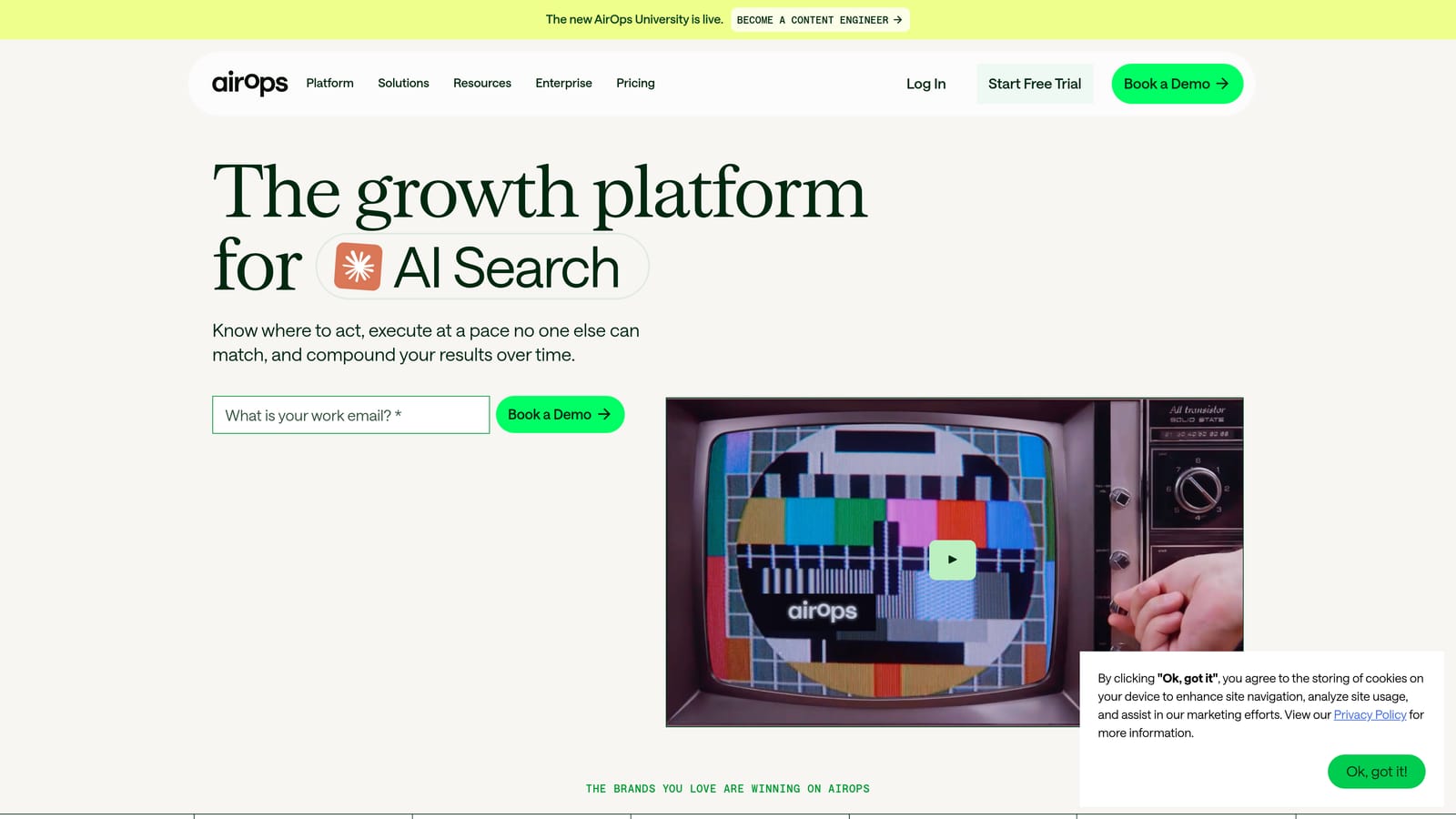
AirOps is a no-code AI workflow builder that connects large language models to content operations pipelines, enabling teams to automate briefs, drafts, metadata, and content refresh workflows at scale.
Where This Tool Shines
Think of AirOps as the connective tissue between your data sources and your content output. Rather than offering a fixed content generation experience, it lets you design your own AI-powered workflows using a visual builder. That flexibility makes it particularly powerful for teams with specific, non-standard content operations requirements.
The ability to pull from data sources like Google Sheets and Airtable and push outputs to CMS platforms means AirOps can slot into existing workflows rather than requiring teams to rebuild around a new tool. It supports multiple AI models within a single workflow, so you're not locked into one provider's output quality.
Key Features
Visual No-Code Workflow Builder: Design custom AI content automation pipelines without writing code, making it accessible to marketing and content teams without engineering support.
Data Source Integrations: Connects to Google Sheets, Airtable, and major CMS platforms, allowing workflows to pull from real data inputs rather than operating in isolation.
Multi-Model Support: Run GPT-4, Claude, and other AI models within a single workflow, enabling teams to route different tasks to the model best suited for them.
Scalable for High Volume: Built for operations that need to process large batches of content tasks without proportional increases in manual effort.
Best For
Content operations teams and agencies that have outgrown off-the-shelf content tools and need custom automation logic. AirOps requires some upfront configuration; it rewards teams willing to invest setup time with significant long-term automation leverage.
Pricing
Tiered pricing based on workflow volume and team size. See airops.com for current plan details.
4. Profound
Best for: Enterprise and mid-market brands tracking GEO presence and brand representation in AI-generated answers.
Profound is an AI answer engine optimization platform that tracks how brands appear in AI-generated responses across major LLM platforms, providing dedicated GEO analytics and reporting.
Where This Tool Shines
Profound is built specifically for the GEO layer of modern search: understanding how your brand is represented when AI models generate answers rather than just list links. For brand and marketing teams at larger organizations, that level of visibility into AI-generated narratives is increasingly strategic.
The competitive benchmarking capability is particularly useful. Knowing that your brand appears in AI answers isn't enough; knowing how your presence compares to direct competitors in the same answer contexts is what drives actionable strategy.
Key Features
Brand Mention Tracking: Monitors how your brand appears across AI answer engines and major LLM platforms, providing a structured view of your AI-generated presence.
GEO Analytics Over Time: Shows how brand representation in AI-generated answers shifts over time, enabling teams to measure the impact of content and optimization efforts.
Competitive Benchmarking: Compares your brand's AI visibility against competitors appearing in the same answer contexts, turning monitoring data into competitive intelligence.
Enterprise Reporting: Reporting workflows designed for brand teams and stakeholders at mid-market and enterprise scale.
Best For
Mid-market and enterprise brand teams with dedicated GEO strategy resources who need structured reporting on AI-generated brand presence. Profound does not handle content generation or indexing, so it works best alongside content production tools.
Pricing
Enterprise-focused pricing. Contact Profound directly through profound.com for current plan information.
5. Peec
Best for: Identifying GEO gaps and competitive blind spots in AI search visibility.
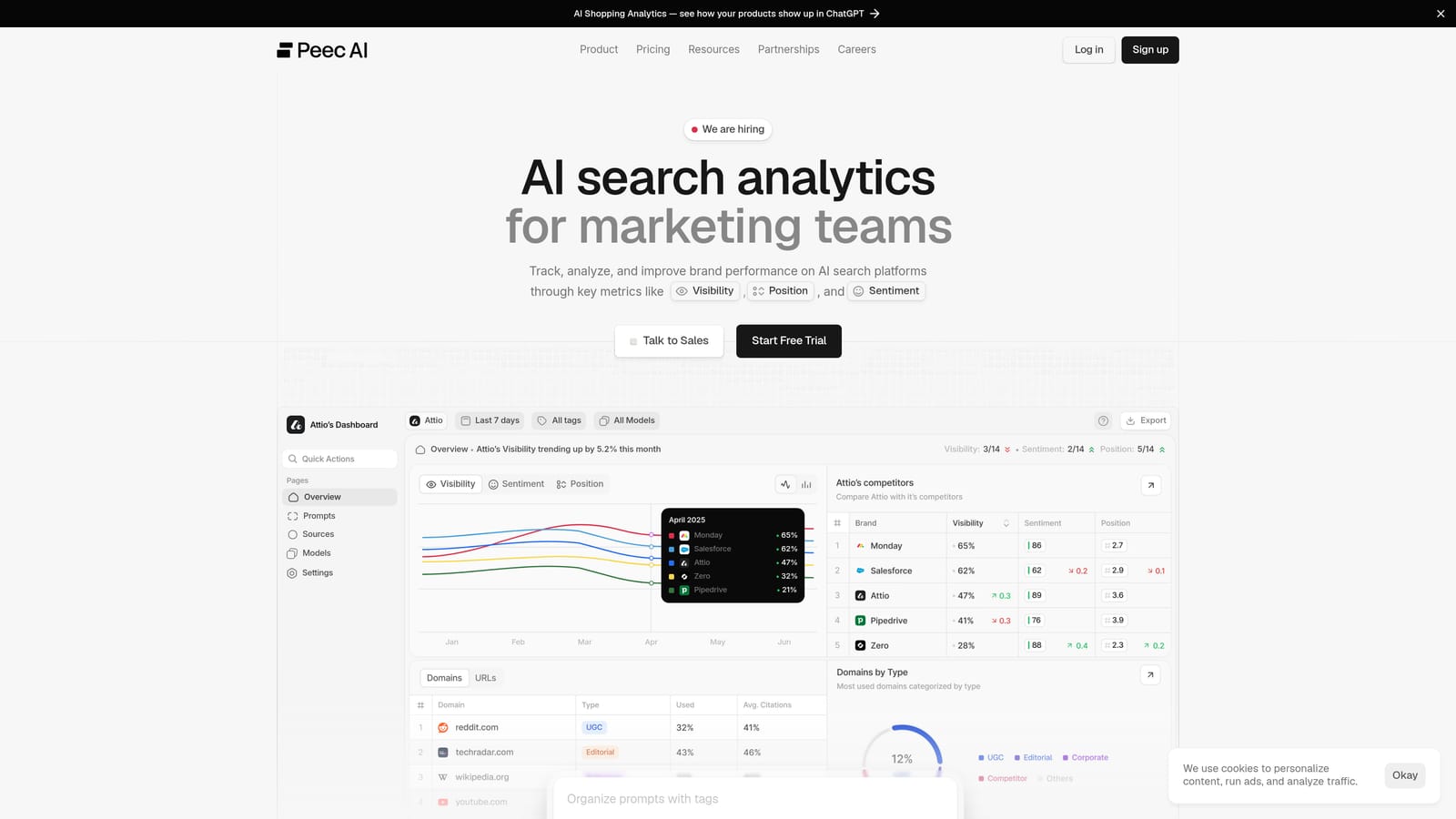
Peec is an AI search visibility monitoring tool that tracks brand and competitor mentions in AI-generated answers, helping teams identify GEO gaps and competitive intelligence opportunities.
Where This Tool Shines
Peec's strength is in competitive intelligence at the GEO layer. The gap analysis functionality is where it earns its place in a modern SEO stack: it surfaces instances where competitors are being mentioned in AI-generated answers but your brand is not. That's actionable data you can feed directly into content strategy.
For teams just beginning to build a GEO practice, Peec provides a relatively accessible entry point into AI visibility monitoring without requiring significant technical setup or enterprise-level investment.
Key Features
Real-Time Brand Mention Tracking: Monitors brand appearances in AI-generated search responses as they happen, keeping visibility data current rather than relying on periodic snapshots.
Competitor Visibility Monitoring: Benchmarks your AI search presence against specific competitors, showing relative share of voice in AI-generated answers.
GEO Gap Analysis: Identifies query contexts where competitors are mentioned in AI answers but your brand is absent, directly informing content prioritization.
Content Strategy Data: Translates monitoring insights into inputs for improving AI answer engine presence through targeted content creation.
Best For
Marketing teams and agencies actively building a GEO strategy who need competitive intelligence on AI search visibility. Peec focuses on monitoring rather than content production or indexing, so it fits best as part of a broader autopilot stack.
Pricing
See peec.ai for current pricing and plan options.
6. Promptwatch
Best for: GEO strategists who need granular, prompt-level data on how AI models respond to brand-relevant queries.
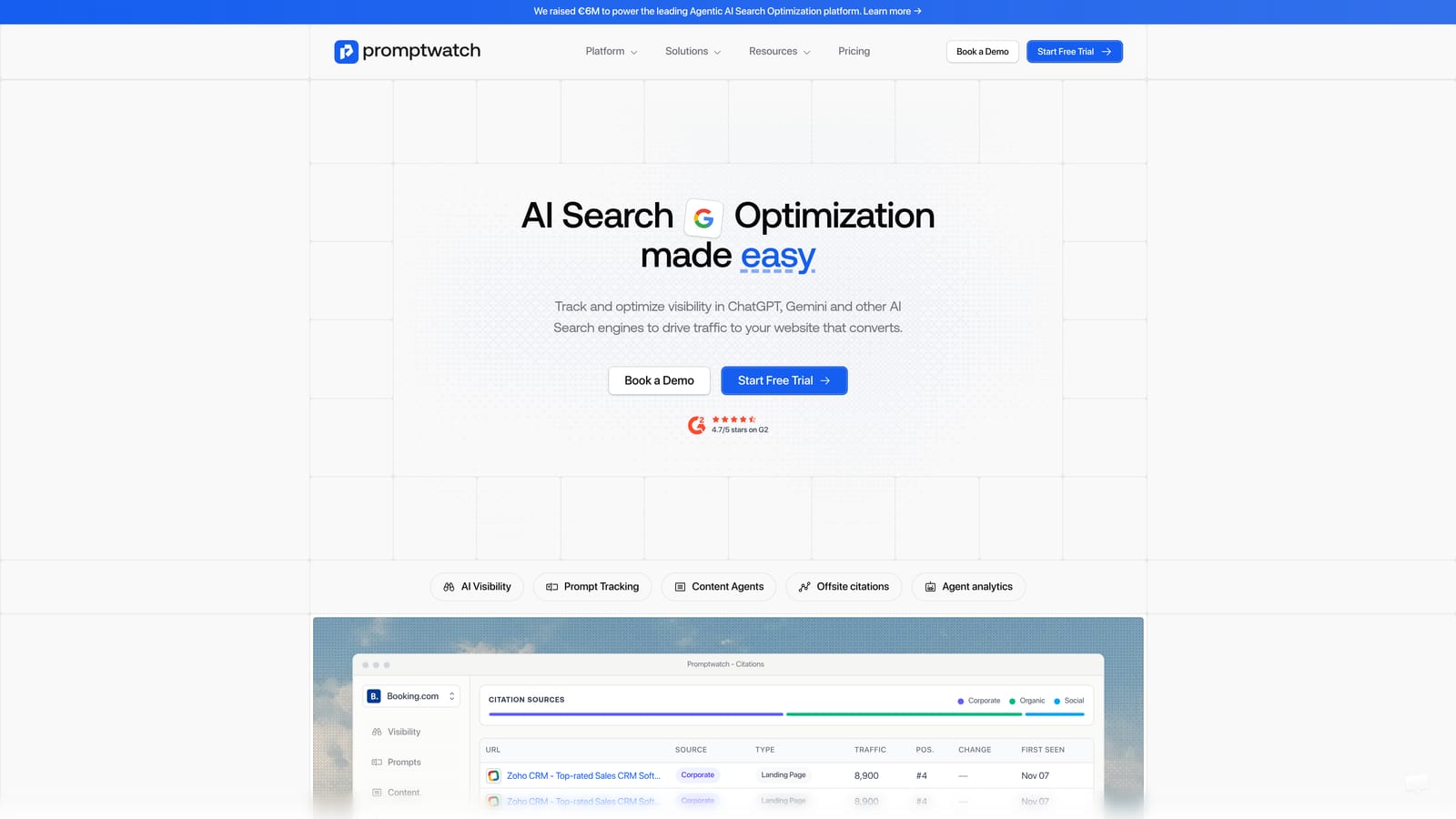
Promptwatch is a granular prompt-level monitoring tool that tracks how AI models respond to specific brand-relevant queries, giving GEO strategists detailed data on which prompts surface their brand versus competitors.
Where This Tool Shines
Where most AI visibility tools show you whether your brand appears in AI answers, Promptwatch goes a level deeper: it shows you which specific prompt patterns reliably surface your brand and which ones don't. That granularity is what separates reactive GEO monitoring from proactive GEO strategy.
For teams serious about optimizing content to appear in AI-generated answers for specific query types, Promptwatch provides the diagnostic layer needed to understand the relationship between prompt structure and brand visibility outcomes.
Key Features
Prompt-Level Tracking: Monitors AI model responses at the individual query level, revealing exactly which prompts surface your brand in AI-generated answers.
Query Pattern Identification: Identifies the prompt structures and query patterns that consistently drive brand mentions, enabling targeted content optimization.
Competitive Prompt Analysis: Analyzes which prompts surface competitor brands, giving you a detailed map of rival visibility patterns in AI search.
GEO Content Intelligence: Turns response-level data into actionable inputs for content creation and optimization strategies aimed at improving AI answer engine presence.
Best For
GEO strategists, SEO leads, and agencies with an analytical approach to AI visibility who want to go beyond surface-level brand monitoring and understand the prompt-level mechanics driving AI answer appearances. Promptwatch is the most technically detailed tool on this list and rewards teams that know how to act on granular data.
Pricing
See promptwatch.io for current pricing details.
Which Tool Belongs in Your Stack?
The right SEO autopilot setup depends on where your biggest bottlenecks actually are. Here's a quick-reference guide to help you match tools to use cases.
If you need an all-in-one autopilot platform: Sight AI is the only tool on this list that covers content generation, technical indexing automation, and AI visibility monitoring in a single platform. It's the natural starting point for teams that want to reduce integration complexity while addressing both traditional SEO and GEO in one workflow.
If content production volume is your primary constraint: Writesonic handles high-volume long-form content generation with SEO workflows built in. Pair it with an indexing and visibility tool for a more complete stack.
If you need custom AI content pipelines: AirOps gives technically-minded content operations teams the flexibility to build exactly the automation logic they need, pulling from existing data sources and pushing to existing CMS platforms.
If GEO monitoring is your focus: Profound, Peec, and Promptwatch each approach AI visibility from a slightly different angle. Profound offers enterprise-grade reporting and competitive benchmarking. Peec excels at gap analysis and competitive intelligence. Promptwatch goes deepest on prompt-level data for teams building a rigorous GEO strategy.
The broader trend is clear: SEO autopilot increasingly means managing both traditional search and AI-generated answers. Tools that address only one layer will require more integration work as GEO becomes a standard part of the organic growth playbook.
Stop guessing how AI models like ChatGPT and Claude talk about your brand. Start tracking your AI visibility today and see exactly where your brand appears across top AI platforms, alongside the content generation and indexing automation to act on what you find.