Organic traffic growth has never been more complex. Between traditional search rankings, AI-generated answers, and constantly shifting algorithms, marketers and founders need tools that do more than schedule posts or suggest keywords. They need platforms that automate the entire pipeline: from content creation to indexing to AI visibility.
This guide covers the best organic traffic automation tools available in 2026, selected for their ability to reduce manual work, scale content output, and help brands surface in both traditional search and AI-powered discovery. Whether you're a solo founder trying to compete with enterprise teams or an agency managing dozens of clients, these tools address the full spectrum of organic growth.
The tools below span three distinct categories: AI visibility and monitoring, AI content generation, and content operations workflow automation. Some cover all three. Others are purpose-built for one. Here are the top organic traffic automation tools worth your attention this year.
1. Sight AI
Best for: Teams that want content generation, AI visibility tracking, and indexing in a single platform.
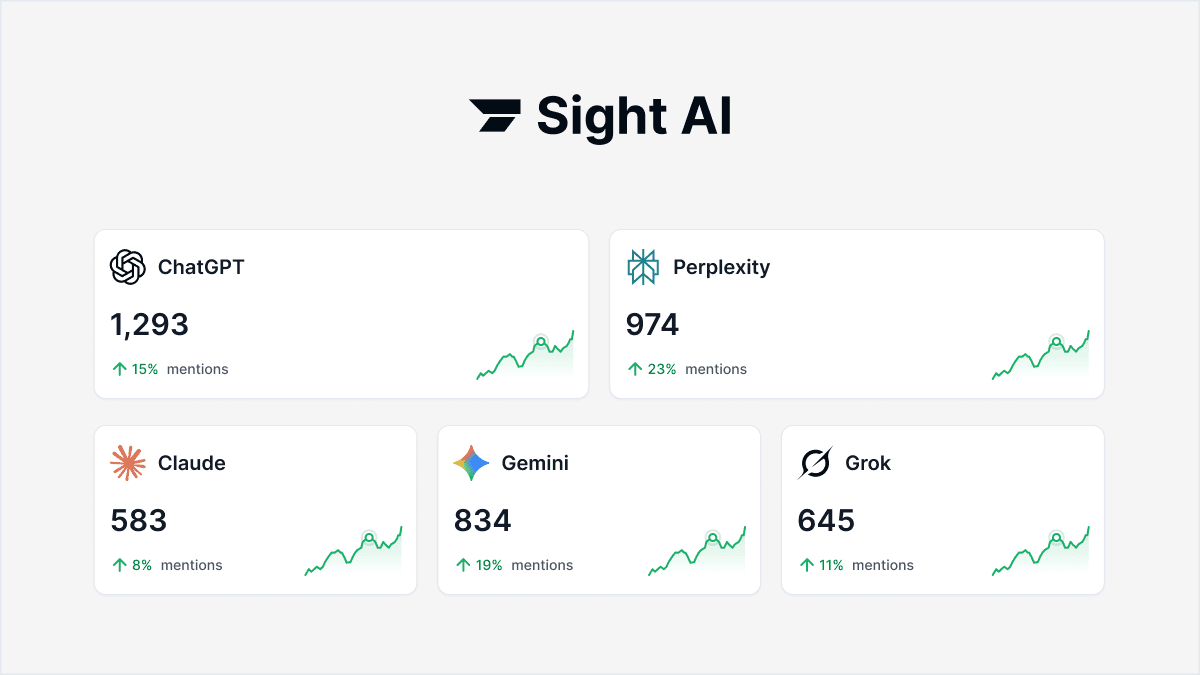
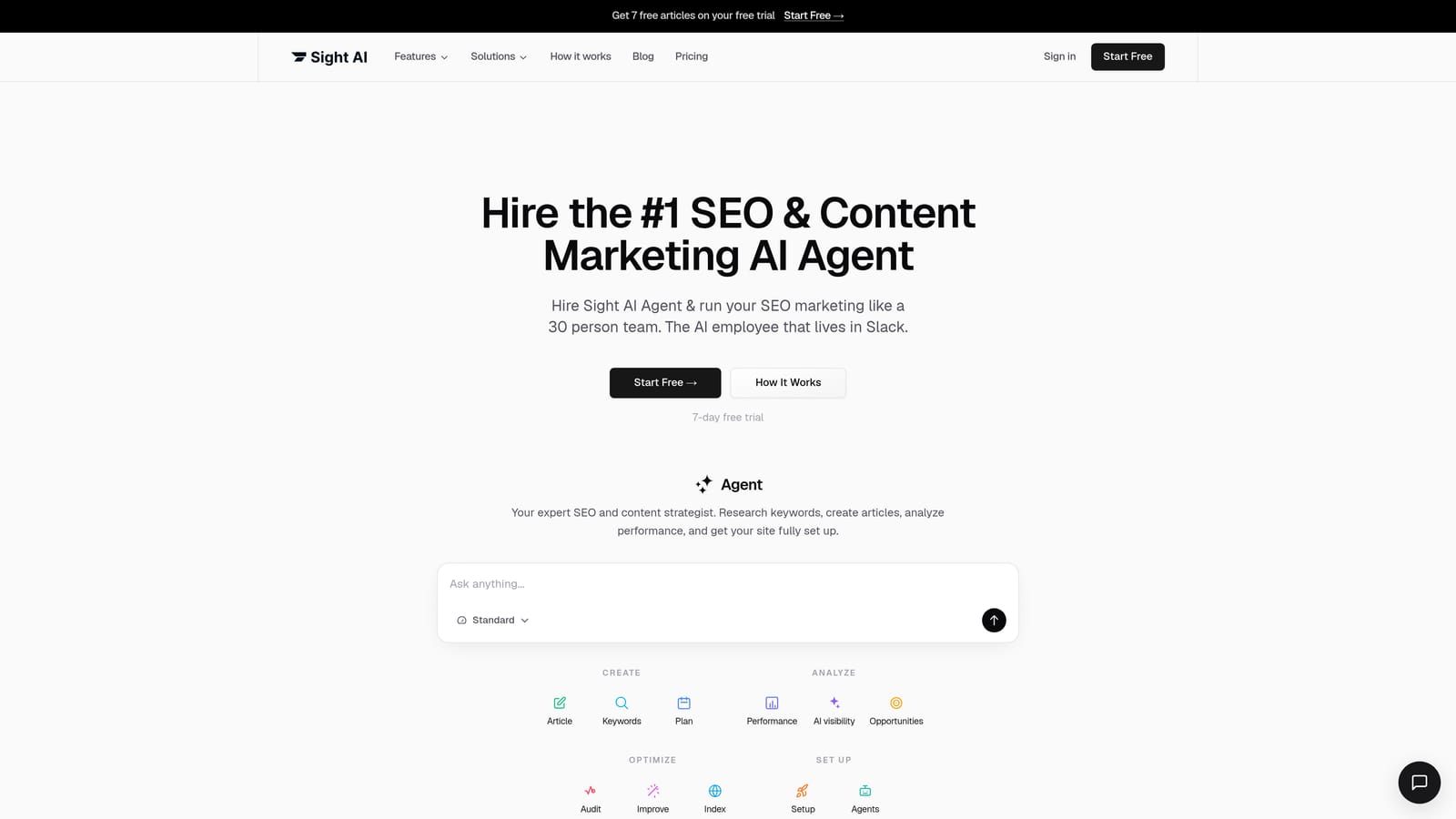
Sight AI is an all-in-one organic traffic automation platform combining AI brand visibility tracking, a 13+ agent AI content writer, and IndexNow-powered auto-indexing in a single workflow.
Where This Tool Shines
Most organic traffic tools solve one part of the problem. Sight AI addresses all three: knowing how AI models talk about your brand, creating content that improves that presence, and getting that content indexed fast. That combination matters because publishing great content that sits unindexed for weeks is a real and common problem.
The AI Visibility Score is particularly useful for brands entering the AI search era. Rather than guessing whether ChatGPT or Perplexity mentions your brand favorably, Sight AI surfaces exactly what those models say, with sentiment analysis attached. This gives content teams a direct feedback loop between what they publish and how AI models represent them.
Key Features
AI Visibility Score: Tracks brand mentions across ChatGPT, Claude, Perplexity, and 6+ AI platforms, with sentiment analysis to show whether mentions are positive, neutral, or negative.
13+ Specialized AI Agents: Generates SEO and GEO-optimized articles, listicles, and guides at scale, with each agent designed for a specific content format or task.
Autopilot Mode: Runs continuous, hands-off content production so your publishing pipeline keeps moving without constant manual input.
IndexNow Integration: Automatically submits new content to search engines and updates sitemaps, reducing the lag between publishing and discovery.
CMS Auto-Publishing: Pushes finished content directly to your CMS, removing the manual handoff step that slows most content operations teams.
Best For
Marketers, founders, and agencies who want a single platform to handle AI visibility monitoring, content production, and indexing. Especially valuable for teams that currently use separate tools for each of these functions and are looking to consolidate without sacrificing capability.
Pricing
Visit trysight.ai for current pricing plans. Plans are designed for different team sizes and content volumes.
2. Writesonic
Best for: Content teams that need to produce SEO-optimized articles at scale with brand voice consistency.
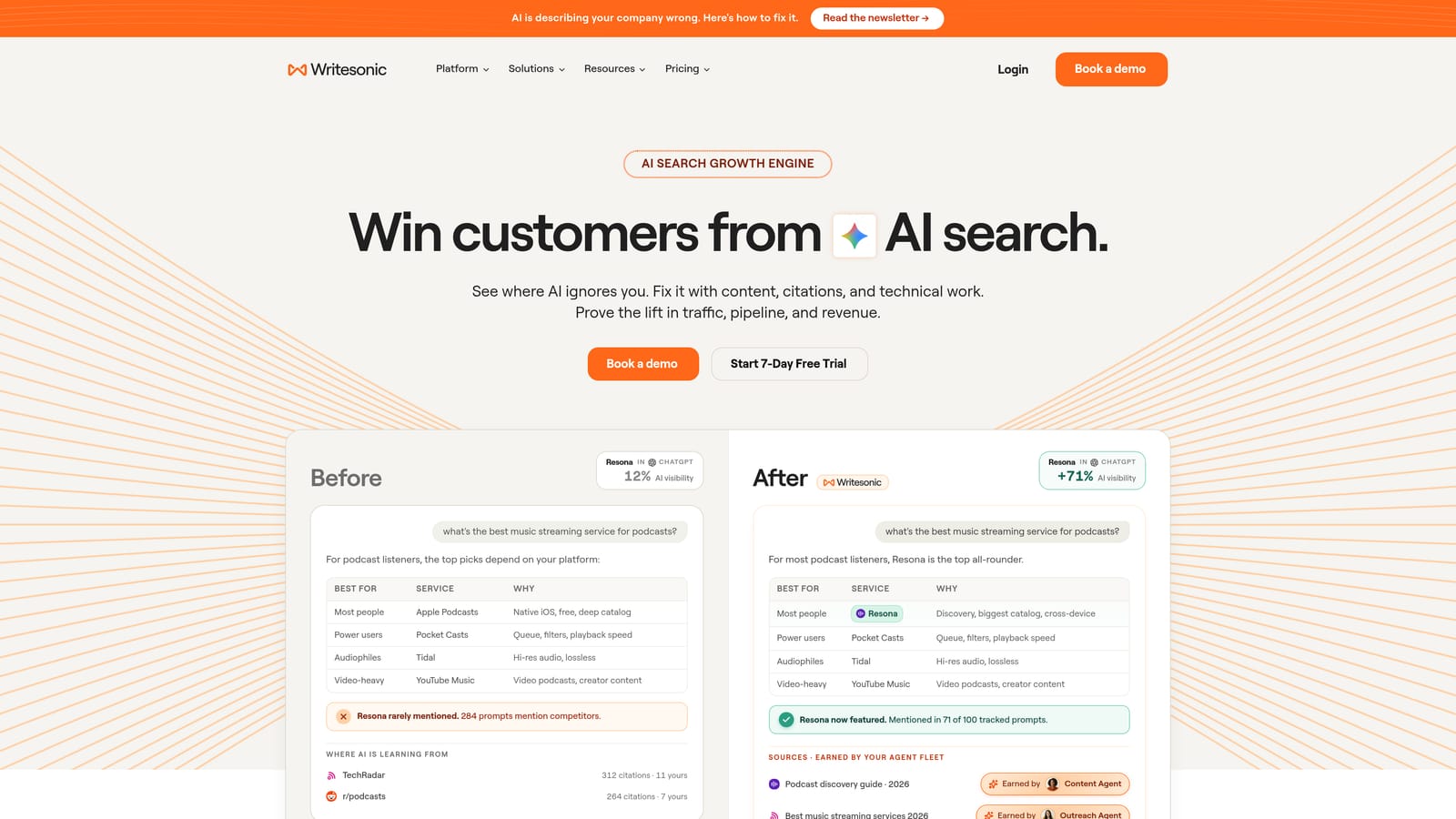
Writesonic is an established AI writing platform with a broad template library, long-form article generation, and SEO guidance built into its workflow.
Where This Tool Shines
Writesonic has matured into a reliable content production engine for teams that already have their monitoring and distribution workflows sorted. Its template library covers a wide range of content formats, and the brand voice customization helps larger teams maintain consistency across writers and outputs.
Where it differentiates from newer entrants is depth of SEO integration within the writing experience itself. Teams can generate content with SEO guidance applied during drafting rather than as a post-production step, which speeds up the editorial process considerably.
Key Features
SEO-Focused Template Library: A large collection of content templates designed to align with search intent across different formats and industries.
Brand Voice Customization: Allows teams to define and apply consistent tone and style settings across all generated content.
Long-Form Article Generation: Produces full-length articles with integrated SEO guidance, reducing the back-and-forth between writing and optimization.
CMS and Marketing Platform Integrations: Connects with popular publishing and marketing tools to streamline content handoff.
Best For
Content teams and agencies that need reliable, scalable writing output and already have separate solutions for AI visibility monitoring and content indexing. Works well as a dedicated content production layer within a broader tool stack.
Pricing
Writesonic offers tiered, usage-based plans. Check writesonic.com for current pricing and plan details.
3. AirOps
Best for: Content operations teams that need custom AI pipelines connecting language models to existing CMS and data sources.
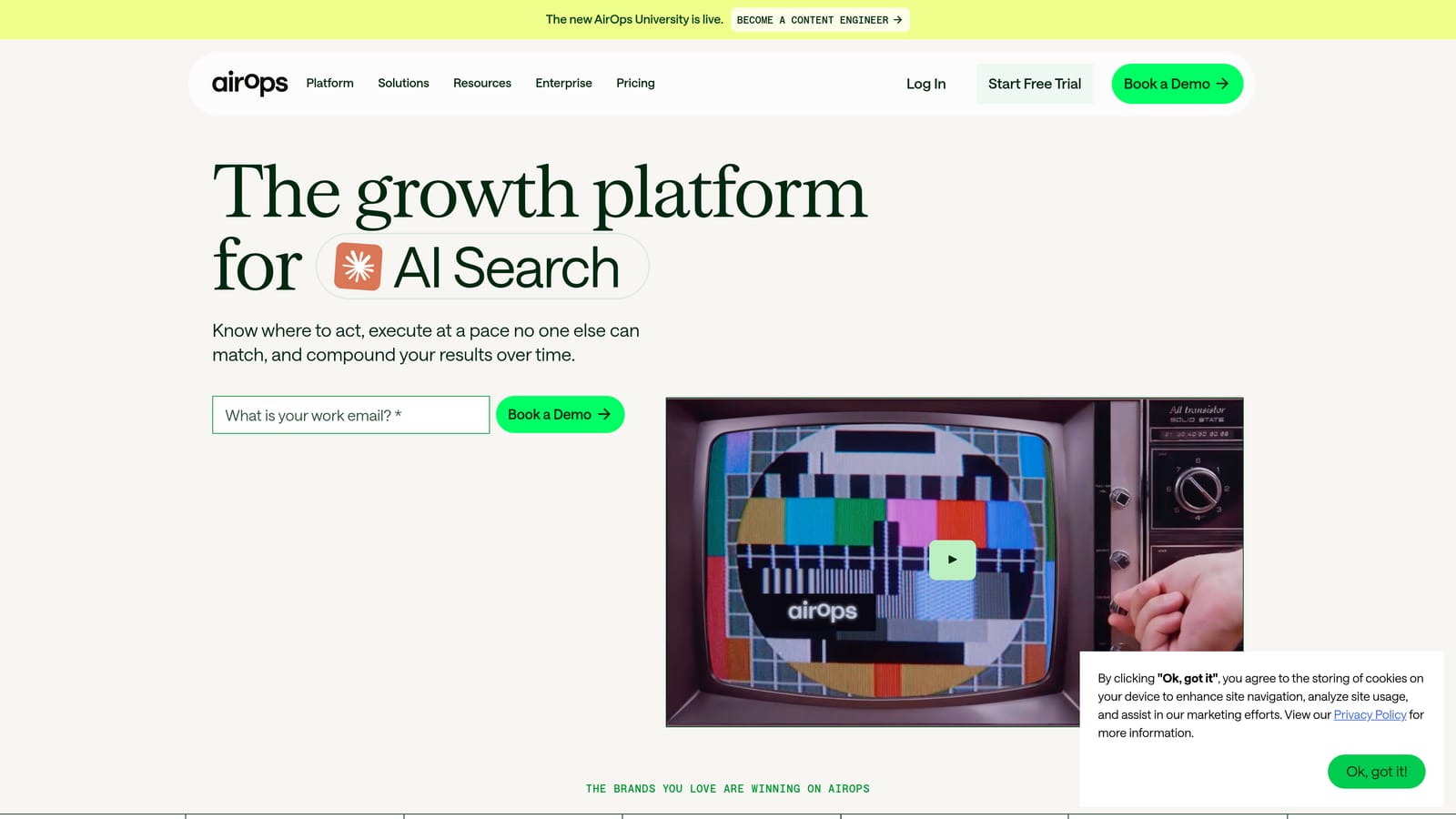
AirOps is a workflow automation platform that lets teams build custom AI-powered content pipelines without requiring custom engineering work.
Where This Tool Shines
AirOps occupies a different layer of the stack than most tools on this list. Rather than being a plug-and-play content generator, it functions as an infrastructure layer: letting teams wire together AI models, data sources, CMS platforms, and APIs into repeatable automated workflows. For agencies managing multiple clients with different tech stacks, this flexibility is genuinely valuable.
The visual workflow builder lowers the technical barrier enough that content operations managers can build and modify pipelines without engineering support. That said, AirOps does require more initial setup than out-of-the-box tools, so it rewards teams willing to invest time upfront for long-term automation gains.
Key Features
Visual Workflow Builder: A no-code interface for constructing custom AI content pipelines, connecting inputs, models, and outputs in a visual environment.
Multi-Model and Data Source Connectivity: Connects to multiple AI models and external data sources, enabling pipelines that pull in real-time context.
CMS and API Integrations: Automates publishing by connecting directly to CMS platforms and third-party APIs, reducing manual handoff steps.
Agency-Scale Workflow Management: Designed to handle multiple client workflows simultaneously, making it well-suited for agencies with varied client needs.
Best For
Agencies and content operations teams that need custom automation pipelines and have the willingness to invest in setup. Less suited to solo operators or small teams looking for a ready-to-run solution without configuration.
Pricing
Check airops.com for current pricing plans and available tiers.
4. Profound
Best for: Brands that want dedicated analytics and share-of-voice measurement in AI-generated search results.
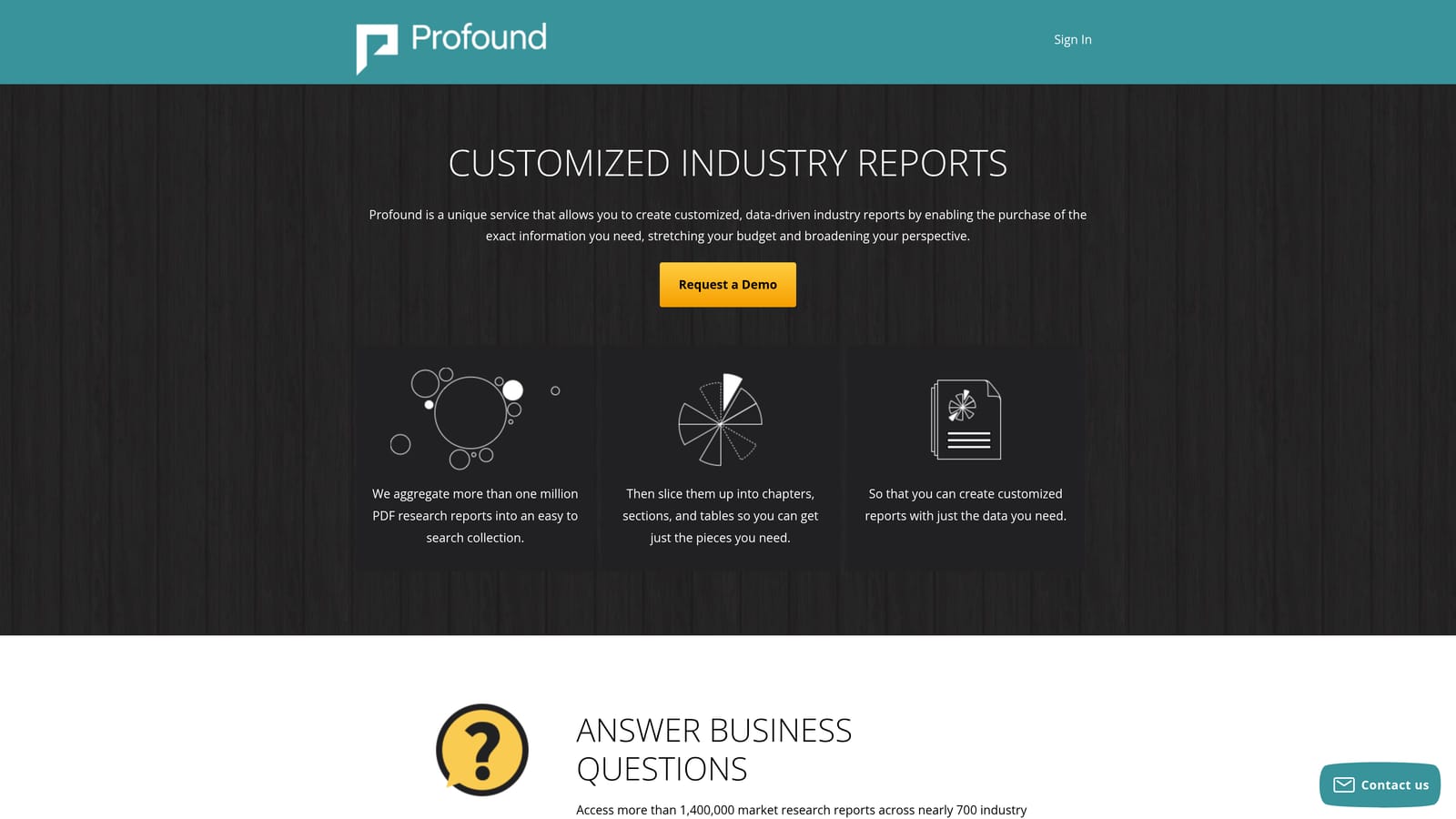
Profound is an AI search analytics platform focused on helping brands understand and improve their presence across AI-generated answers, with competitive benchmarking built in.
Where This Tool Shines
Profound approaches the AI visibility problem from a pure analytics angle. Where some tools give you a visibility score alongside content generation features, Profound goes deep on the measurement side: tracking share of voice across AI platforms, benchmarking your presence against competitors, and surfacing actionable insights for improving how AI models represent your brand.
For teams that prioritize data-driven decision making and already have content production handled elsewhere, Profound provides a focused analytics layer that's specifically designed for the AI search era rather than adapted from traditional SEO tooling.
Key Features
AI Search Visibility Analytics: Tracks brand presence in AI-generated answers across major AI platforms, giving a clear picture of where and how often your brand appears.
Share-of-Voice Measurement: Quantifies how your brand's presence in AI responses compares to the overall conversation in your category.
Competitive Benchmarking: Measures your AI visibility against competitors to identify where you're winning and where there are gaps to address.
Actionable Improvement Insights: Translates visibility data into specific recommendations for improving your brand's representation in AI-generated content.
Best For
Marketing and SEO teams that want a dedicated analytics solution for AI search visibility, particularly those who need competitive benchmarking data to inform strategy and report on AI-era performance metrics.
Pricing
Check the official Profound website for current pricing details and available plans.
5. Peec
Best for: Teams focused on competitive intelligence and monitoring brand mentions in AI model responses.
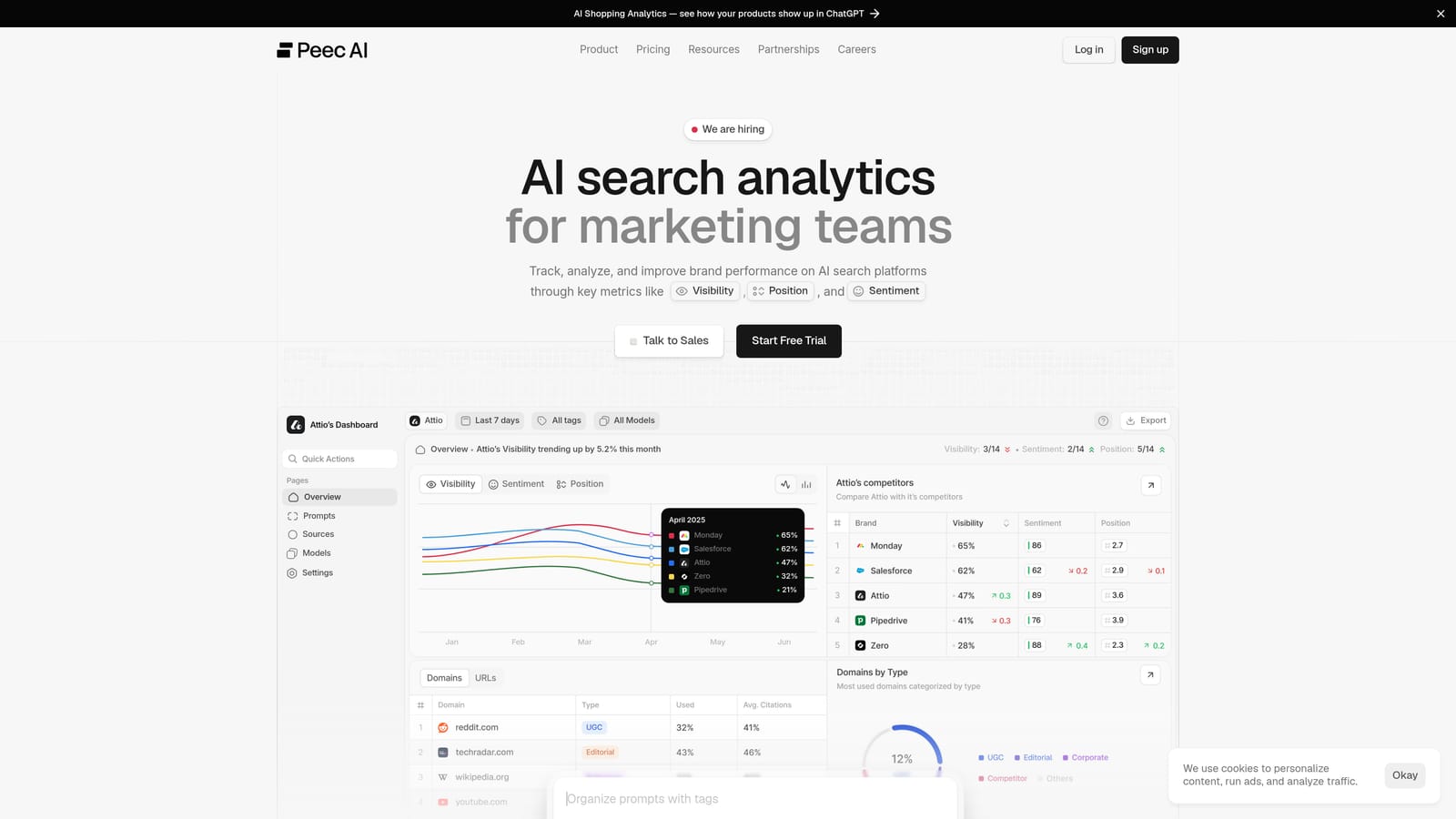
Peec is an AI mention monitoring tool with a competitive intelligence focus, tracking how brands and competitors appear across AI model responses.
Where This Tool Shines
Peec takes a narrower but highly focused approach to AI visibility. Its core strength is competitive positioning: not just tracking your own brand mentions in AI responses, but monitoring how competitors appear in the same context. For brands in competitive categories where AI models frequently recommend specific products or services, this kind of comparative tracking can directly inform content and positioning strategy.
The monitoring alerts feature is particularly practical for teams that need to stay on top of changes in real time rather than pulling reports manually. When an AI model starts mentioning a competitor more frequently, or drops your brand from a common response, Peec surfaces that shift.
Key Features
Brand and Competitor Mention Tracking: Monitors how your brand and named competitors appear in AI model responses across platforms.
Competitive Positioning Insights: Surfaces patterns in how AI models compare or rank brands in your category.
Monitoring Alerts: Notifies teams when brand mention patterns change, enabling faster response to shifts in AI visibility.
AI-Era Brand Visibility Reporting: Delivers focused reports on brand presence in AI responses, designed for the specific needs of AI search monitoring.
Best For
Brands in competitive categories where AI model recommendations have meaningful impact on discovery. Works well as a dedicated competitive monitoring layer alongside a content generation tool or an all-in-one platform.
Pricing
Check the official Peec website at peec.ai for current pricing and plan details.
6. Promptwatch
Best for: SEO teams that need granular prompt-level tracking of AI model responses to identify content gaps and opportunities.
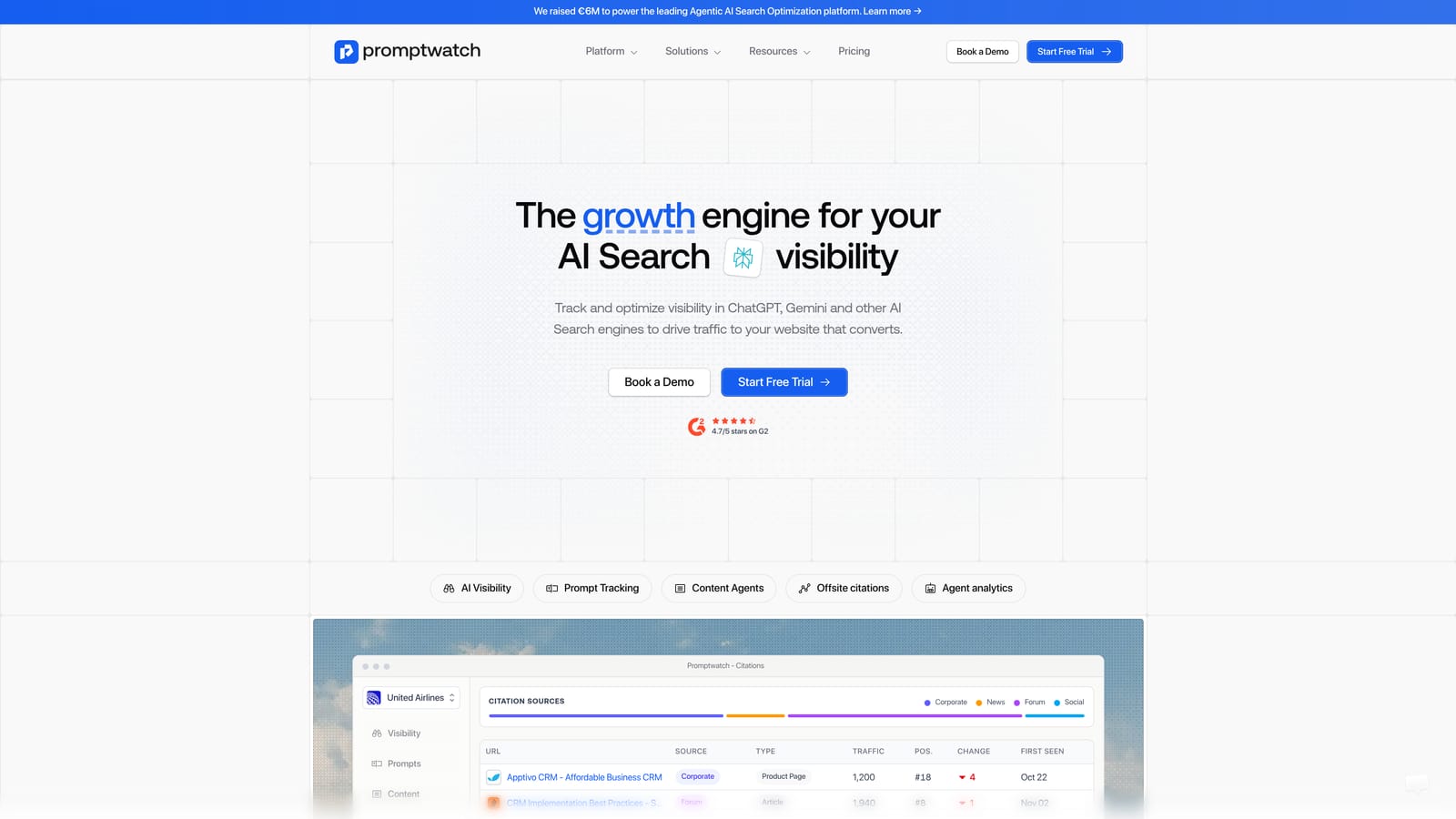
Promptwatch is a prompt-level tracking tool that monitors how AI models respond to specific queries in a brand's niche, helping SEO teams identify where they appear and where they're missing.
Where This Tool Shines
Promptwatch operates at a more granular level than most AI visibility tools. Rather than just tracking whether your brand gets mentioned, it tracks the specific prompts and queries where AI models give particular responses. This makes it especially useful for content strategy: if you can see exactly what an AI model says when someone asks a category question in your space, you can build content that directly addresses those gaps.
The historical tracking capability adds another dimension. AI models update their responses over time as they're retrained or updated, and Promptwatch captures those changes. For SEO teams, understanding how AI-generated answers evolve is increasingly important intelligence.
Key Features
Granular Prompt Tracking: Monitors AI model responses to specific branded and category queries, giving a detailed view of how your brand appears in context.
Branded and Category Query Monitoring: Tracks both direct brand mentions and the broader category responses where your brand could or should appear.
Content Gap Identification: Surfaces queries where your brand is absent from AI responses, pointing to specific content opportunities.
Historical Response Tracking: Records how AI model responses change over time, helping teams understand trends and respond to shifts in AI-generated answers.
Best For
SEO strategists and content teams that want to build their editorial calendar around actual AI visibility gaps. Particularly useful for teams that already have a content production workflow and need better intelligence on where to direct it.
Pricing
Check the official Promptwatch website at promptwatch.io for current pricing and plan details.
Which Tool Is Right for Your Organic Growth Stack?
The right choice depends on where your biggest gap currently sits: content production, AI visibility monitoring, workflow automation, or all three.
If you're looking for a single platform that handles content generation, AI brand tracking, and fast indexing without stitching together multiple tools, Sight AI is the strongest all-in-one option. Its combination of AI Visibility Score tracking, 13+ content agents, Autopilot Mode, and IndexNow integration covers the full organic traffic pipeline in one place. That's especially valuable for lean teams and agencies that can't afford to manage a complex multi-tool stack.
For teams with specific, defined needs, the point solutions each have genuine strengths. Writesonic is a reliable choice if content production at scale is your primary need and monitoring is already handled. AirOps suits operations teams that want to build custom AI workflows around their existing infrastructure. Profound and Peec are strong picks for brands that need deep AI visibility analytics and competitive benchmarking. Promptwatch fills a distinct niche for SEO teams that want prompt-level intelligence to drive content strategy.
The broader shift is clear: organic traffic in 2026 means optimizing for AI-generated discovery, not just traditional search rankings. The tools that help you do both will compound in value as AI search continues to grow.
Stop guessing how AI models like ChatGPT and Claude talk about your brand. Start tracking your AI visibility today and see exactly where your brand appears across top AI platforms, what it takes to improve those mentions, and how to automate the content pipeline that gets you there.