Most content teams wait 3-6 months to see meaningful organic traffic from new pages. That timeline feels painfully slow when you're trying to prove ROI, test new markets, or simply keep up with competitors who seem to rank overnight.
The gap between publishing and traffic isn't just frustrating—it's expensive. Every day your content sits unindexed or buried on page five, you're losing potential customers to competitors who've cracked the speed code.
Here's the reality: the delay between hitting "publish" and seeing your first visitor from search isn't mysterious. It's a series of technical, strategic, and tactical bottlenecks that most teams never identify, let alone fix.
This guide walks you through six concrete steps to compress that timeline dramatically. You'll learn how to get content indexed within hours instead of weeks, target opportunities where you can actually compete immediately, and build momentum that compounds over time.
Whether you're a startup founder trying to validate content marketing, a marketing team under pressure to show results, or an agency managing client expectations, these steps give you a repeatable system for faster organic wins. Let's get started.
Step 1: Audit Your Current Indexing Speed and Identify Bottlenecks
Before you can accelerate anything, you need to know where you're starting. Think of this like checking your website's "metabolism" for search engines.
Open Google Search Console and navigate to the Page Indexing report. This shows you exactly which pages are indexed, which are blocked, and crucially, how long the process typically takes for your site.
Look at your most recently published content. Use the URL Inspection tool to check individual pages and note the "Discovery" and "Crawl" timestamps. The gap between these dates reveals your baseline indexing speed.
Many teams discover their content sits in a queue for weeks simply because search engines don't know it exists. This happens when new pages are orphaned with no internal links pointing to them, or when your sitemap isn't updating automatically after each publish. Understanding why content isn't getting traffic fast enough starts with this fundamental audit.
Check your robots.txt file next. A misconfigured robots.txt can accidentally block search engines from entire sections of your site. It's surprisingly common and devastatingly effective at killing your traffic potential.
Now look at crawl budget issues. If you're publishing frequently but have a relatively new domain, search engines might not be checking your site often enough to discover new content quickly. The Page Indexing report will show you if pages are "Discovered but not currently crawled."
Document everything you find. Create a simple spreadsheet with columns for URL, publish date, discovery date, crawl date, and indexed date. Calculate the average time between each stage.
This baseline is your starting point. If your average time from publish to first impression is 30 days, you now have a concrete number to beat. Most teams skip this step and wonder why their optimization efforts feel like shooting in the dark.
The audit also reveals patterns. You might notice that blog posts get indexed faster than product pages, or that content published on Mondays moves through the queue quicker than Friday publications. These insights become strategic advantages.
Step 2: Implement Rapid Indexing Infrastructure
Once you know your baseline, it's time to build the technical foundation that eliminates indexing delays. This is where you stop waiting for search engines to find you and start telling them exactly when new content goes live.
The IndexNow protocol is your first priority. This technology, supported by Microsoft Bing and Yandex, allows you to notify search engines the instant you publish or update content. Instead of waiting days or weeks for a crawler to eventually discover your new page, you're essentially sending a direct message: "Hey, new content here."
Setting up IndexNow typically involves generating an API key and configuring your CMS to send notifications automatically on publish. Many modern platforms offer plugins or integrations that handle this with minimal technical knowledge required. Implementing a real-time indexing solution can dramatically cut your discovery timeline.
Next, tackle your sitemap infrastructure. Your XML sitemap should update automatically every time you publish new content. Static sitemaps that require manual updates create unnecessary delays.
Configure your CMS to regenerate and resubmit your sitemap to Google Search Console immediately after publishing. This creates a two-pronged notification system: IndexNow for compatible search engines, and sitemap updates for Google.
Now address internal linking workflows. New content that launches with zero internal links is effectively invisible to search engine crawlers. They might eventually find it, but you've added unnecessary friction to the discovery process.
Create a checklist that ensures every new page launches with at least three internal links from existing content. Better yet, build this into your publishing workflow so it's impossible to skip. Link from related blog posts, relevant product pages, or your main navigation if appropriate.
Test your entire setup before relying on it. Publish a test page and track exactly how long it takes to appear in Google Search Console's URL Inspection tool. If you've implemented everything correctly, you should see discovery within hours instead of days.
Monitor the "last crawled" dates in Search Console for your most important pages. If high-priority content isn't being crawled frequently, you may need to boost its visibility through additional internal links or by featuring it more prominently in your site architecture.
This infrastructure work feels technical and unglamorous, but it's the foundation everything else builds on. You can write the world's best content, but if search engines don't know it exists, you're starting the race with a massive handicap.
Step 3: Target Low-Competition Keywords with Existing Search Demand
Even with perfect technical infrastructure, you can't rank quickly for keywords where established sites with years of authority dominate the first page. The solution isn't to avoid competitive topics entirely, but to find the gaps where you can compete immediately.
Start by analyzing keyword difficulty scores alongside search volume. Many keyword research tools provide a difficulty metric that estimates how hard it will be to rank. Look for keywords with decent monthly searches but difficulty scores below 30.
Long-tail queries are your secret weapon here. Instead of targeting "content marketing," go after "content marketing for B2B SaaS startups with small teams." The search volume is lower, but so is the competition, and the intent is often more specific and valuable.
Use SERP analysis to identify weak spots in the current rankings. Search your target keyword and examine the first page results. If you see forum threads, outdated content from 2019, or thin pages that barely answer the query, you've found an opportunity.
Look for keywords where the ranking pages have low domain authority. If sites with similar or weaker authority than yours are ranking on page one, you can realistically compete. Tools like Ahrefs or Moz can show you the domain rating of ranking pages.
Build a separate "quick win" keyword list distinct from your long-term content strategy. These are keywords you can target now to generate traffic within weeks, not months. They build momentum and prove the value of your content efforts while you work on more competitive terms. Teams struggling with slow organic traffic acquisition often overlook this tactical approach.
Pay attention to question-based keywords. Queries that start with "how to," "what is," or "why does" often have lower competition because they require more comprehensive answers. If you can provide that depth, you can rank faster than sites offering surface-level coverage.
Consider seasonal or trending topics in your niche. New trends often have high search demand but limited competition simply because not many people have created content yet. If you can move quickly, you can establish authority before the topic becomes saturated.
The goal isn't to avoid competitive keywords forever. It's to generate early wins that build your domain authority and prove your content system works. As you accumulate rankings and backlinks from these initial targets, you'll be better positioned to compete for harder keywords later.
Step 4: Optimize Content for AI Search Visibility
Traditional SEO optimization focuses on Google's algorithm, but there's a new player changing how people discover content: AI search platforms. ChatGPT, Claude, Perplexity, and similar tools are increasingly becoming the first stop for information seekers.
These platforms don't just crawl and rank content like traditional search engines. They synthesize information and cite sources in their responses. If your content isn't structured for AI comprehension, you're missing a growing channel for organic discovery.
Start by making your content easily quotable. AI models tend to surface clear, definitive answers to specific questions. Structure your content with explicit question-and-answer patterns where appropriate.
For example, instead of burying an answer in a paragraph, use clear formatting: "What is the best approach to X? The most effective method is Y because Z." This makes it easy for AI models to extract and attribute the information to your brand. Developing an AI-first SEO strategy is becoming essential for modern content teams.
Include structured data wherever possible. While primarily designed for traditional search engines, schema markup also helps AI models understand the context and relationships within your content. Mark up FAQs, how-to steps, and product information explicitly.
Monitor how AI platforms are currently referencing your brand and content. Tools that track AI visibility can show you which of your pages are being cited in AI responses and for what queries. This feedback loop is crucial for understanding what's working.
Adapt your content format based on what AI models are surfacing to users. If you notice AI platforms consistently cite list-based content over long-form narratives, adjust your content mix accordingly. The goal is to match the format that AI models find most useful.
Create content that answers the "why" and "how" behind topics, not just the "what." AI models excel at providing basic definitions, so your competitive advantage lies in depth, nuance, and practical application that goes beyond surface-level information.
Think about citation-worthiness. Would an AI model confidently reference your content as a source? If your article is full of vague claims or lacks clear attribution for data points, AI platforms are less likely to cite it. Understanding organic traffic growth through AI channels requires this mindset shift.
This doesn't mean abandoning traditional SEO. It means expanding your optimization to cover both traditional search engines and the AI-powered search experiences that are rapidly gaining adoption. The teams that optimize for both will capture traffic from multiple channels simultaneously.
Step 5: Amplify New Content Through Strategic Distribution
Getting indexed quickly is only half the battle. You also need to generate early engagement signals that tell search engines your content is valuable and relevant.
The moment your content is confirmed as indexed in Search Console, activate your distribution channels. Don't wait days or weeks to promote content. Early engagement creates momentum that compounds over time.
Start with owned channels where you have direct access to your audience. Email your list with a compelling reason to click through. The initial traffic and engagement signals from your existing audience help search engines understand that people find your content valuable.
Leverage communities where your target audience already gathers. This might be Reddit, LinkedIn groups, Slack communities, or industry-specific forums. Share your content where it genuinely adds value to ongoing conversations, not as spam.
Create platform-specific snippets optimized for each channel's algorithm. A LinkedIn post should highlight professional insights and tag relevant connections. A Twitter thread might break down your main points into digestible tweets. Don't just drop the same link everywhere.
Look for early backlink opportunities. Reach out to sites you've mentioned or cited in your content. Many are willing to link back, especially if you've positioned their work favorably. These early links pass authority to your new page and help it rank faster. Using organic traffic acceleration methods like strategic outreach can significantly boost your results.
Consider partnerships with complementary brands or creators. A quick mention or link from an established site in your niche can dramatically accelerate your content's visibility. These relationships take time to build, but they're worth the investment.
Build initial engagement through your team's personal networks. Have team members share the content from their personal accounts. Authentic engagement from real people carries more weight than automated posting from brand accounts.
The goal isn't to go viral. It's to create enough early signals that search engines recognize your content as relevant and valuable. Even modest initial traffic can make the difference between ranking on page three versus page one for low-competition keywords.
Step 6: Measure, Learn, and Accelerate Your Next Publish Cycle
The real power in reducing time to first traffic comes from building a feedback loop that makes each publish cycle faster than the last. You're not just optimizing individual pieces of content—you're optimizing your entire content system.
Track time-to-first-click for every piece of content you publish. Create a dashboard that shows the number of days between publish date and the first organic click from search. This single metric tells you whether your optimizations are working.
Identify patterns in which content types reach traffic fastest. You might discover that how-to guides rank within two weeks while thought leadership pieces take two months. Use these insights to adjust your content mix when you need quick wins.
Analyze which topics in your niche have the shortest path to traffic. Some subject areas naturally have less competition or higher search urgency. Double down on these topics when you're building momentum. Learning how to improve content discovery time becomes easier when you track these patterns consistently.
Document what worked and what didn't for each piece of content. Did the internal linking strategy help? Did distribution through a particular channel drive early engagement? Build a playbook based on real results, not assumptions.
Set benchmarks for continuous improvement. If your current average time to first traffic is 25 days, aim to reduce it to 20 days over the next quarter. Small, consistent improvements compound into dramatic results over time.
Review your indexing infrastructure monthly. Technology and best practices evolve. What worked six months ago might not be optimal today. Stay current with changes to search engine protocols and AI platform behaviors.
Create a pre-publish checklist based on your learnings. Before hitting publish, confirm that your indexing infrastructure is active, your target keyword has realistic competition, your content is structured for both traditional and AI search, and your distribution plan is ready to execute.
The teams that consistently reduce time to first traffic aren't lucky—they've built systems that eliminate friction between publishing and ranking. They've turned content creation from a guessing game into a repeatable process with predictable outcomes.
Your Action Plan for Faster Organic Results
Reducing time to first traffic isn't about finding a single magic trick. It's about systematically eliminating the bottlenecks that delay your content's journey from publish to ranking.
Start with Step 1 this week: audit your current indexing speed and establish your baseline. Open Google Search Console and track how long your recent content took to get indexed. You can't improve what you don't measure.
Then tackle your technical infrastructure. Set up IndexNow, automate your sitemap updates, and build internal linking into your publishing workflow. These changes might take a few hours to implement, but they'll save you weeks on every future publish.
Shift your keyword targeting strategy to include quick-win opportunities alongside your long-term competitive targets. Build a separate list of low-competition keywords you can rank for immediately while you work on harder terms.
Optimize your content for the new reality of AI-powered search. Structure information so it's easily quotable, monitor how AI platforms reference your brand, and adapt your format based on what's working.
Don't let your content sit idle after publishing. Activate your distribution channels immediately, build early engagement signals, and leverage every owned channel and relationship you have to generate initial momentum.
Finally, build the measurement and learning system that makes each publish cycle faster than the last. Track your time-to-first-click metric religiously and use those insights to continuously refine your approach.
The difference between teams that wait months for traffic and teams that see results in weeks isn't talent or budget. It's having a systematic approach to eliminating delays at every stage of the content lifecycle.
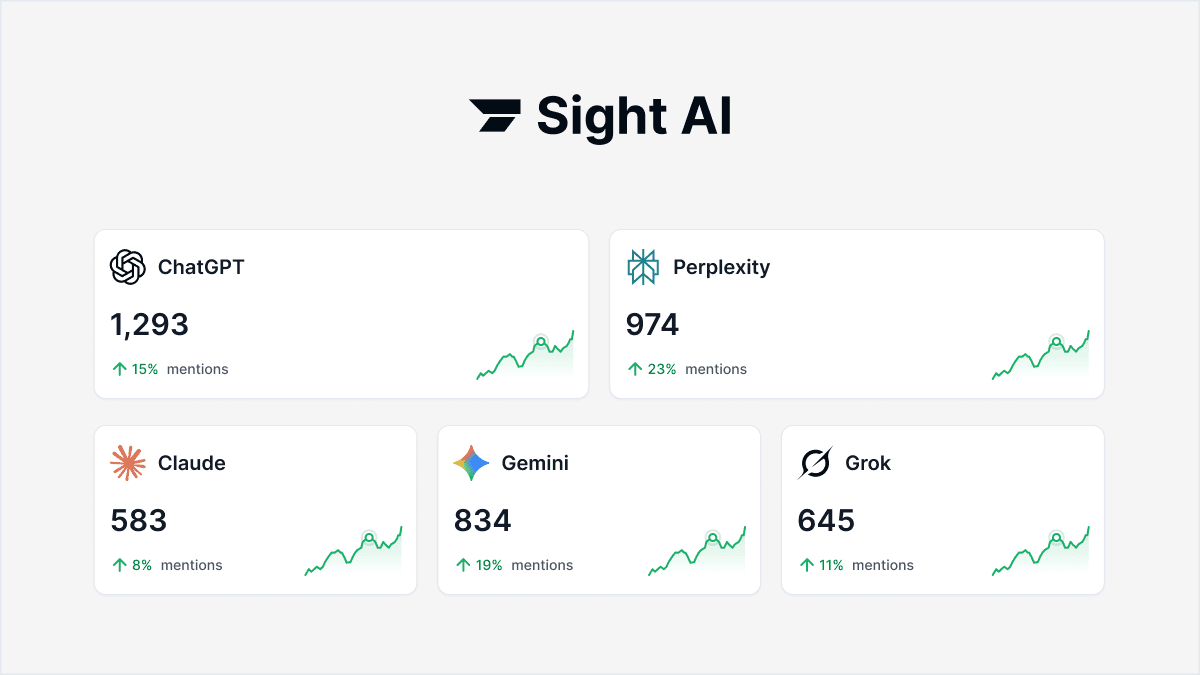
Stop guessing how AI models like ChatGPT and Claude talk about your brand—get visibility into every mention, track content opportunities, and automate your path to organic traffic growth. Start tracking your AI visibility today and see exactly where your brand appears across top AI platforms.