Scaling content production used to mean hiring an army of writers or settling for thin, repetitive pages that Google would eventually penalize. Today's programmatic SEO software changes that equation—combining template automation with AI-powered content generation to create thousands of unique, valuable pages that actually rank. The challenge isn't whether to adopt programmatic approaches, but which tools can deliver quality at scale while maintaining editorial control. We evaluated these platforms based on automation capabilities, template flexibility, integration options, and pricing transparency. Here are the top programmatic SEO software tools worth your investment in 2026.
1. Sight AI
Best for: Teams prioritizing AI visibility alongside traditional SEO performance tracking
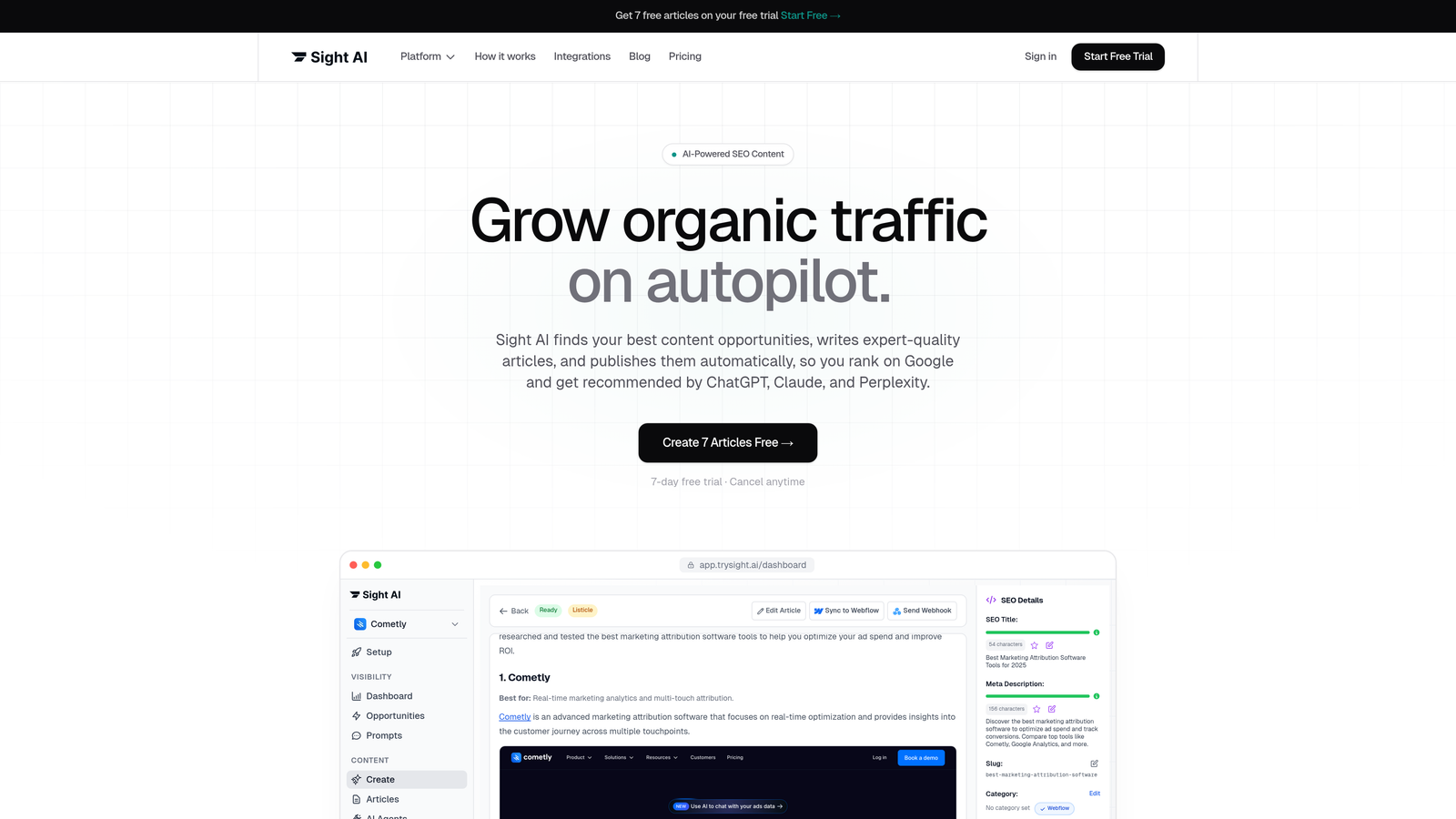
Sight AI combines programmatic article generation with AI visibility tracking across ChatGPT, Claude, and Perplexity.
Where This Tool Shines
Most programmatic SEO tools focus exclusively on traditional search rankings, but Sight AI recognizes that AI models are becoming primary research tools for your target audience. The platform tracks how AI models mention your brand across six platforms while simultaneously generating the content that earns those mentions.
The Autopilot mode handles end-to-end content production—from research to publishing—making it genuinely hands-off for teams drowning in content backlogs. The IndexNow integration means your programmatic pages get discovered faster than platforms relying solely on traditional crawling.
Key Features
13+ Specialized AI Agents: Different agents handle listicles, guides, explainers, and other content types with format-specific optimization.
AI Visibility Score: Tracks brand mentions across ChatGPT, Claude, Perplexity, and other AI models with sentiment analysis.
IndexNow Integration: Automatically notifies search engines of new content for faster indexing than sitemap-only approaches.
Autopilot Mode: Fully automated content generation workflow from keyword to published article.
CMS Auto-Publishing: Direct publishing to your website without manual content transfer steps.
Best For
Marketing teams and agencies focused on AI-first content strategies who need visibility into how AI models represent their brand. Particularly valuable for companies in competitive niches where AI search visibility directly impacts lead generation.
Pricing
Contact for pricing based on content volume and feature requirements.
2. Webflow + Whalesync
Best for: Design agencies creating visually sophisticated programmatic pages from database content
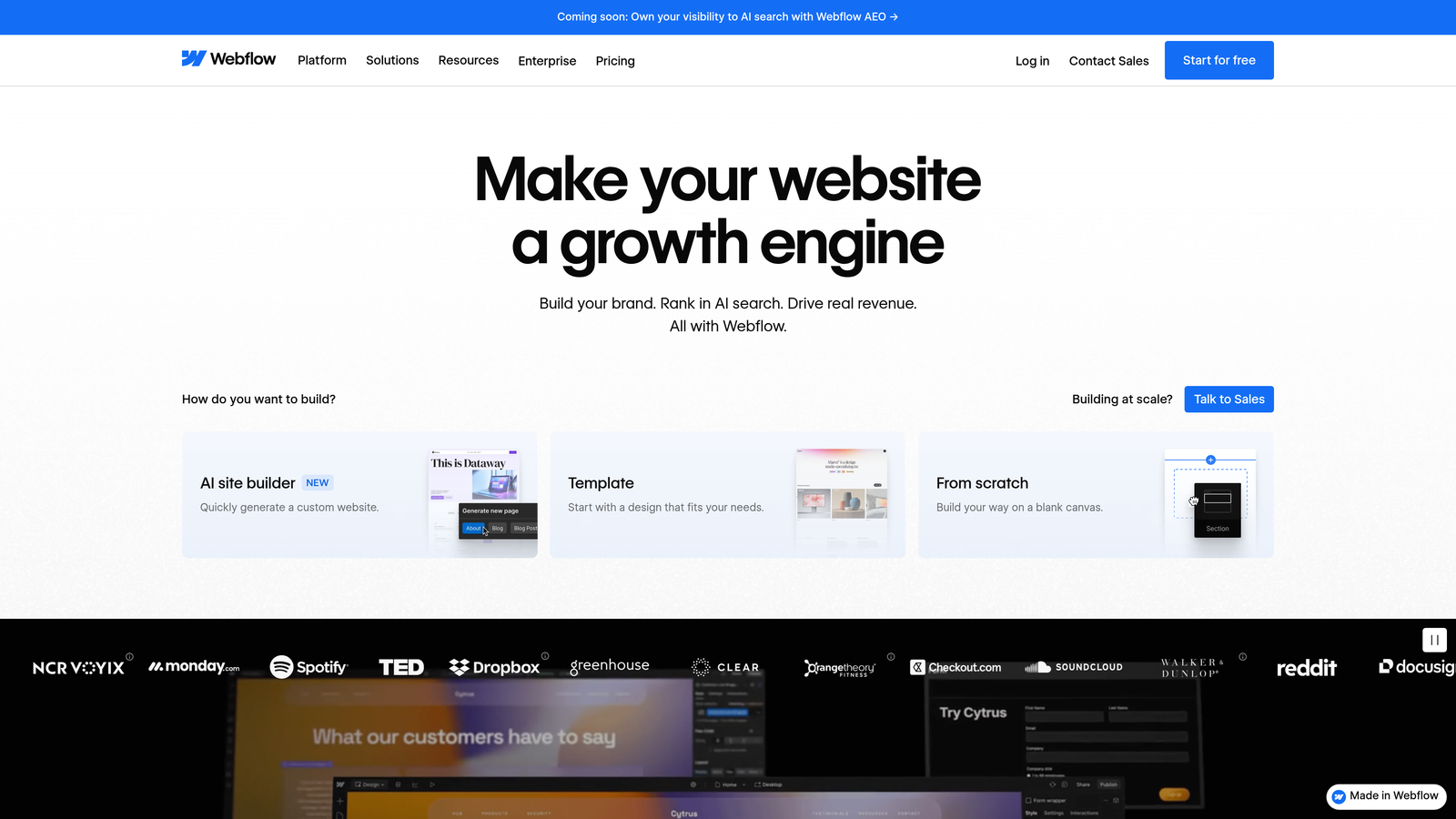
Webflow paired with Whalesync turns Airtable or Notion databases into beautifully designed programmatic websites.
Where This Tool Shines
If your programmatic pages need to look nothing like templates, this combination delivers. Webflow's visual designer gives you pixel-perfect control over layout and interactions, while Whalesync handles the database synchronization that powers programmatic content.
The two-way sync means updates in Airtable automatically flow to your website, and form submissions on your site populate back into your database. This creates genuine dynamic functionality without writing backend code.
Key Features
Visual No-Code Design: Build custom layouts without touching code while maintaining full design control.
Two-Way Database Sync: Automatic synchronization between Airtable/Notion and Webflow CMS collections.
CMS Collections: Template-based page generation with custom fields and relationships.
Custom Animations: Add interactions and animations that make programmatic pages feel hand-crafted.
Built-In Hosting: Integrated CDN hosting eliminates separate infrastructure management.
Best For
Design-focused teams and agencies building directories, marketplaces, or location-based pages where visual presentation differentiates from competitors. Ideal when brand consistency across thousands of pages matters as much as SEO performance.
Pricing
Webflow starts at $14/month for basic sites, Whalesync from $49/month. Total cost scales with CMS item limits and sync frequency needs.
3. Letterdrop
Best for: B2B content teams needing SEO workflow automation with sales enablement integration
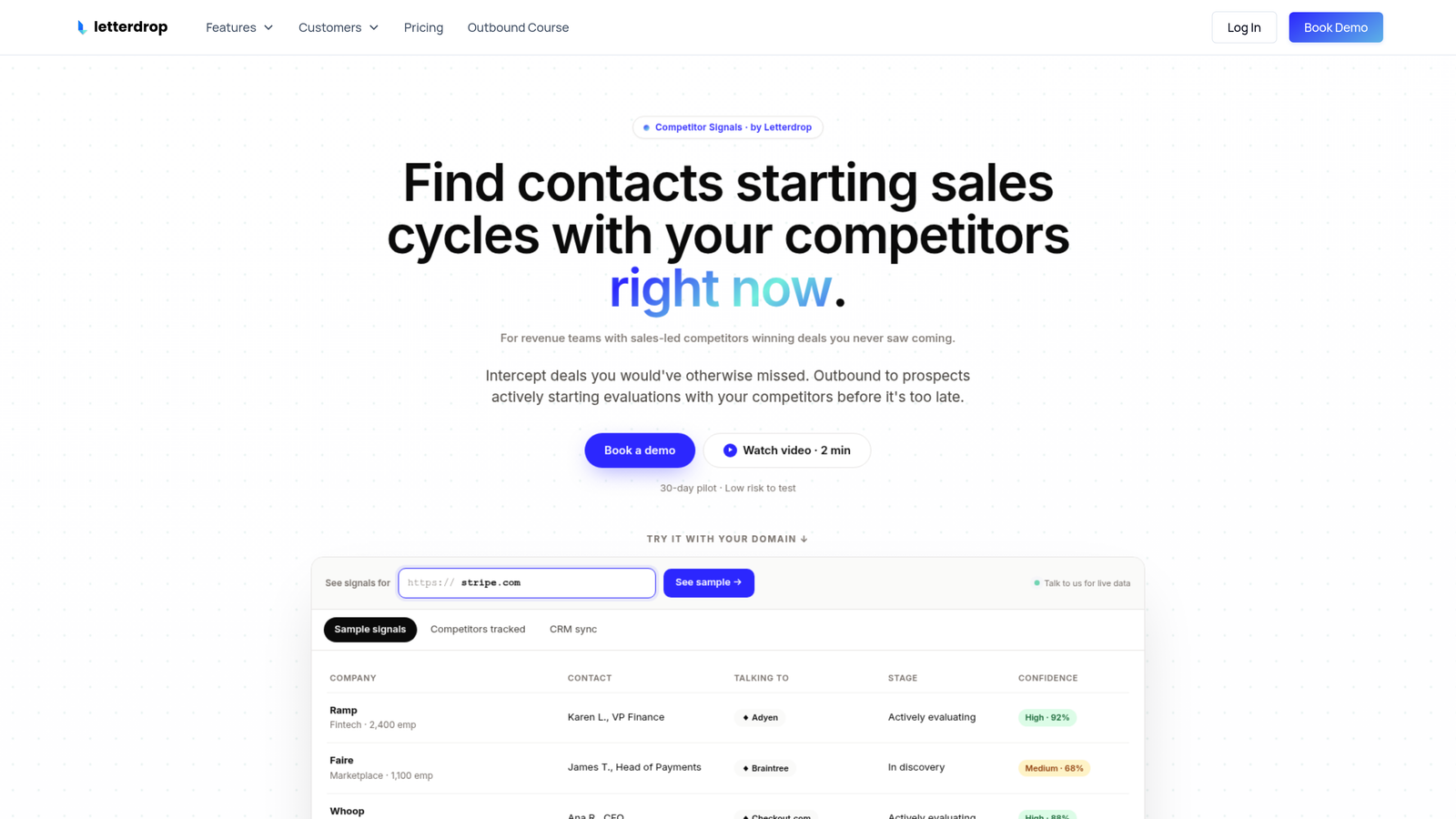
Letterdrop combines content operations automation with programmatic publishing for B2B marketing workflows.
Where This Tool Shines
Letterdrop treats programmatic SEO as part of a broader content operations system. The platform generates content briefs from keyword research, then tracks that content through creation, optimization, and multi-channel distribution. The sales enablement integrations mean your programmatic content automatically becomes available for sales teams to share.
The performance analytics connect content directly to pipeline metrics, answering the question most programmatic SEO tools ignore: which pages actually drive business results beyond traffic numbers?
Key Features
Content Brief Generation: Automatically creates detailed outlines from target keywords with competitive analysis.
SEO Optimization Suggestions: Real-time recommendations for improving content relevance and structure.
Multi-Channel Publishing: Distribute content to website, LinkedIn, newsletter, and other channels simultaneously.
Sales Enablement Integration: Make content searchable and shareable for sales teams within their workflows.
Performance Analytics: Track content impact on pipeline and revenue, not just traffic metrics.
Best For
B2B marketing teams at companies where content serves both SEO and sales enablement purposes. Most valuable when you need to justify content investment with pipeline attribution, not just organic traffic growth.
Pricing
Starts at $500/month, positioning it as an enterprise content operations platform rather than a basic programmatic tool.
4. Byword
Best for: Bulk article generation from keyword lists or structured data sources
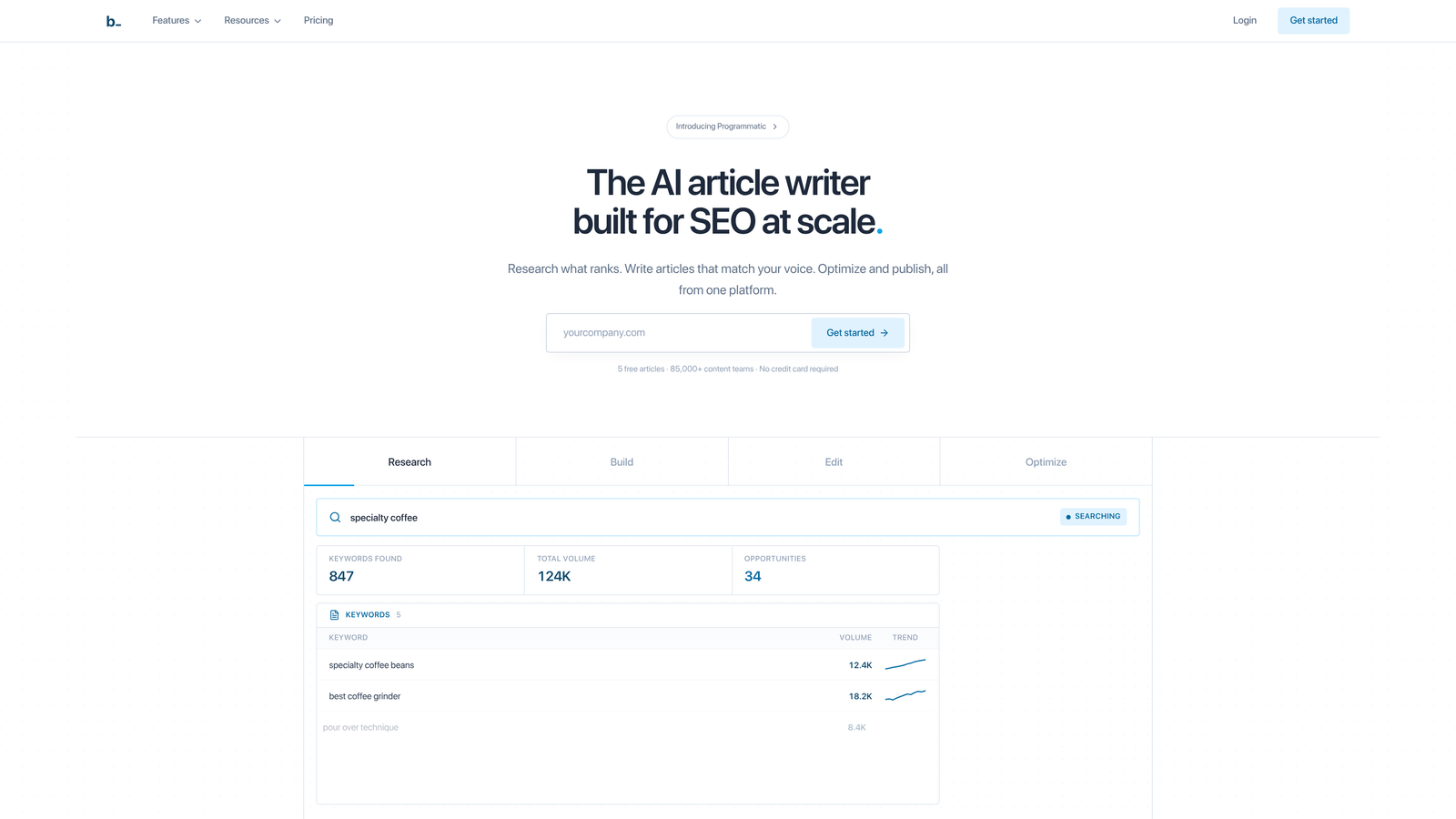
Byword focuses specifically on generating large volumes of articles from keyword lists or CSV data uploads.
Where This Tool Shines
Byword strips away complexity to do one thing exceptionally well: turn keyword lists into published articles at scale. Upload a CSV with keywords and data points, and the platform generates unique articles optimized for each term. The multi-language support handles international SEO campaigns without requiring separate tools or workflows.
The direct WordPress publishing eliminates the export-import dance that slows down other platforms. Articles go from generation to live on your site without manual intervention.
Key Features
Bulk Article Generation: Create hundreds of articles from keyword lists in a single batch operation.
CSV Upload Support: Import structured data to generate data-driven content with custom variables.
Multiple Language Support: Generate content in various languages for international SEO campaigns.
Custom Tone Settings: Adjust writing style and voice to match brand guidelines.
Direct WordPress Publishing: Publish articles to WordPress sites without manual content transfer.
Best For
Content teams focused purely on volume and speed who have clear keyword targets and data structures. Works best when you need straightforward article generation without complex workflow requirements or additional marketing tool integrations.
Pricing
Starts at $99/month for 25 articles, with volume-based pricing tiers for larger content operations.
5. PageFactory
Best for: WordPress users wanting native programmatic page generation without external platforms
PageFactory operates as a WordPress plugin for generating template-based pages directly within your existing site.
Where This Tool Shines
If you're committed to WordPress, PageFactory eliminates the need for external content generation platforms. The plugin integrates directly with WordPress custom fields, letting you map database information to page templates without learning new systems. Bulk page generation happens within your WordPress admin, keeping your entire content workflow in one place.
The template variables and conditional logic create genuinely unique pages from your data, not just find-and-replace operations that produce thin content.
Key Features
WordPress Plugin Integration: Works natively within WordPress without requiring external platforms or services.
Custom Field Mapping: Connect any data source to WordPress custom fields for dynamic content population.
Bulk Page Generation: Create thousands of pages from templates in single operations.
Template Variables and Logic: Use conditional logic to create unique variations based on data attributes.
SEO Meta Automation: Automatically generate meta titles and descriptions from template variables.
Best For
WordPress-centric teams who prefer keeping their entire content stack within the WordPress ecosystem. Ideal for agencies managing multiple WordPress client sites who need programmatic capabilities without platform switching.
Pricing
Starts at $49/month with pricing tiers based on the number of sites and page generation volume.
6. Typemat
Best for: Small teams using Google Sheets as their content database
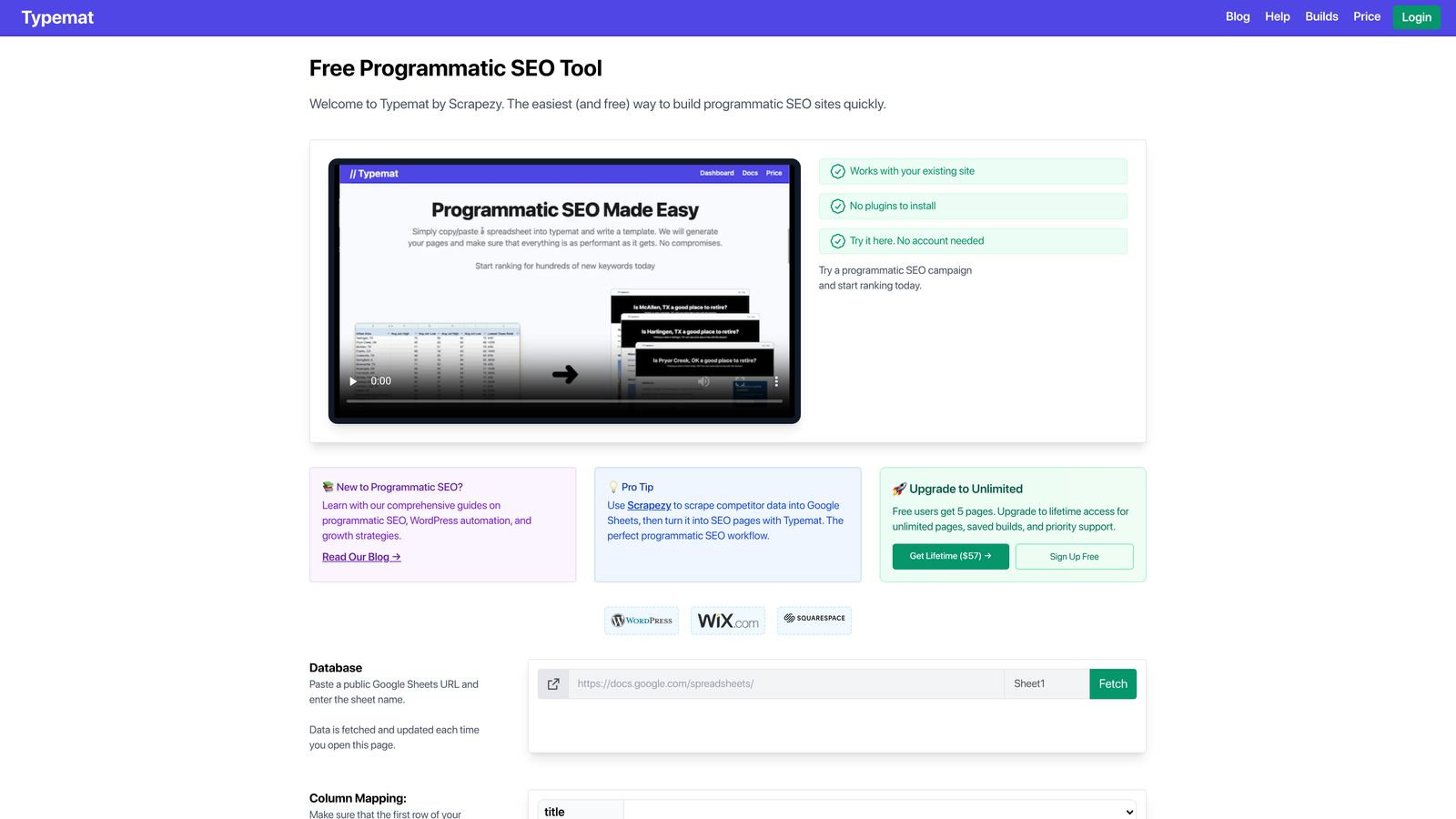
Typemat transforms Google Sheets data into SEO-optimized programmatic pages with built-in hosting.
Where This Tool Shines
Typemat embraces the reality that many teams already manage their data in Google Sheets. Instead of forcing a platform migration, it turns your spreadsheet directly into a website. Update your sheet, and your pages update automatically—no complex sync configurations or API integrations required.
The built-in hosting means you don't need separate infrastructure. Create your sheet, design your template, and you have a live website. This simplicity makes it accessible for non-technical teams who find traditional programmatic SEO tools overwhelming.
Key Features
Google Sheets as CMS: Use familiar spreadsheet interfaces as your content management system.
Automatic Page Generation: New rows in your sheet automatically become new pages on your site.
Built-In Hosting: Integrated hosting eliminates need for separate infrastructure or domain configuration.
Location Page Templates: Pre-built templates optimized for local SEO and location-based pages.
Product Listing Support: Templates designed for e-commerce and product catalog use cases.
Best For
Solo founders and small teams who already organize data in Google Sheets and want the simplest possible path to programmatic pages. Perfect for location-based businesses, directories, or product catalogs where data structure is straightforward.
Pricing
Starts at $19/month, making it one of the most affordable programmatic SEO options for small-scale operations.
7. Bardeen + Webflow Stack
Best for: Teams building custom programmatic workflows with web scraping and data automation
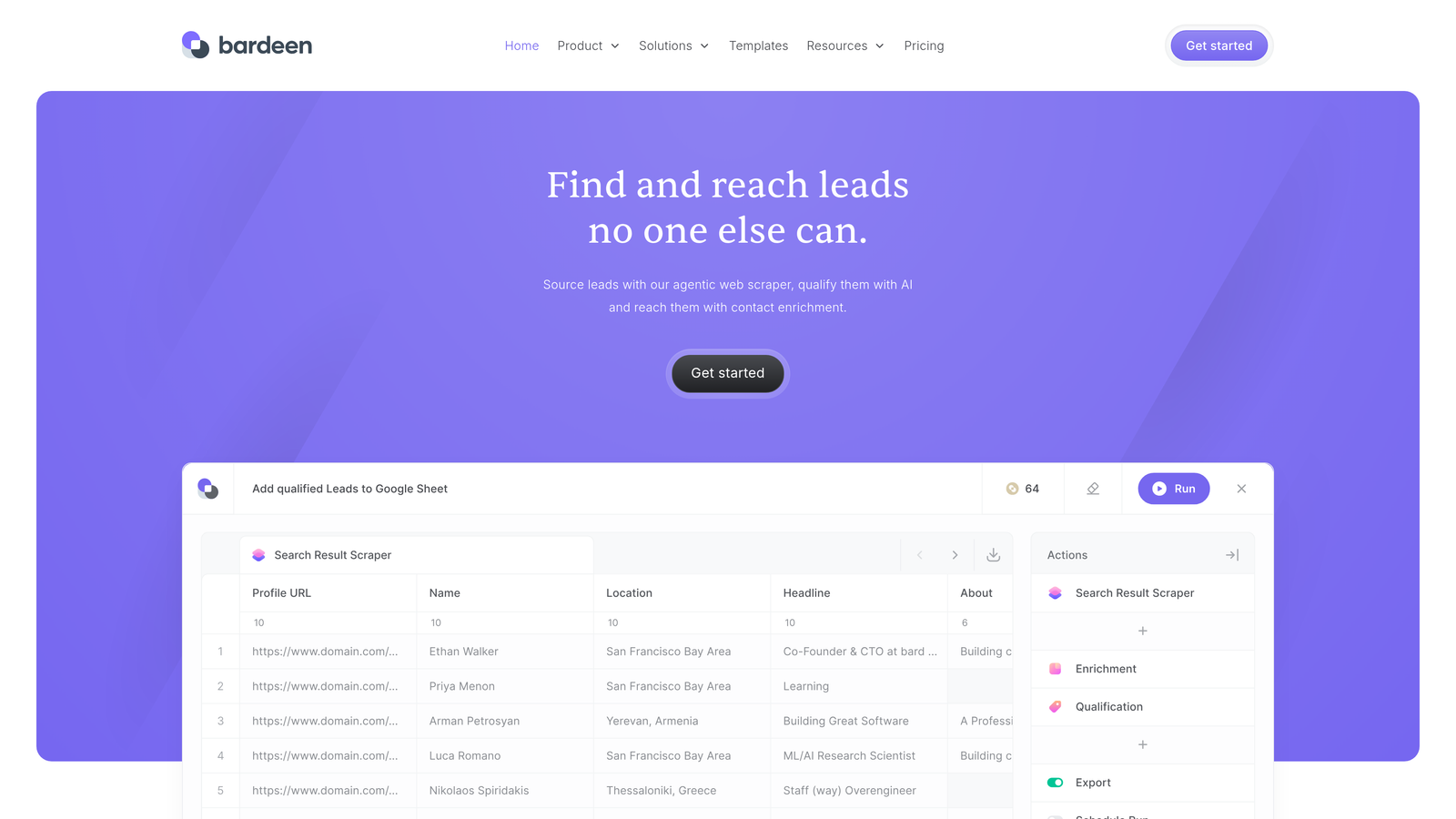
Bardeen combined with Webflow enables custom automation workflows including data collection, transformation, and publishing.
Where This Tool Shines
When pre-built programmatic tools can't handle your specific data sources or workflow requirements, Bardeen provides the automation layer to build custom solutions. The platform scrapes data from websites, transforms it through custom logic, and pushes it to Webflow or other publishing platforms—all without writing code.
The scheduled automation runs mean your programmatic content updates automatically as source data changes. This creates dynamic, always-current pages that reflect real-time information without manual updates.
Key Features
Web Scraping Automation: Extract data from websites to populate programmatic content without APIs.
Data Transformation Workflows: Clean, format, and enrich scraped data before publishing.
Multi-App Integrations: Connect dozens of tools in custom automation sequences.
Scheduled Automation Runs: Set workflows to run automatically on defined schedules.
Custom Triggers and Actions: Build complex conditional logic for sophisticated automation workflows.
Best For
Technical marketing teams comfortable with no-code automation who need custom data collection and publishing workflows. Best when your programmatic content requires unique data sources that standard tools don't support natively.
Pricing
Bardeen offers a free tier for basic automation, with Pro plans starting at $10/month. Webflow costs are additional based on your hosting and CMS needs.
8. Airtable + Softr
Best for: Building membership sites, directories, and marketplaces with user authentication
Softr turns Airtable databases into functional websites with user accounts, dynamic filtering, and membership features.
Where This Tool Shines
Softr excels when your programmatic pages need user interaction beyond passive content consumption. The platform creates member directories, gated resources, or marketplace listings where users can filter, search, and interact with your database. User authentication means you can build freemium models or member-only sections without custom development.
The pre-built templates accelerate launch timelines significantly. Instead of designing from scratch, customize proven directory and marketplace layouts that already handle common use cases.
Key Features
Airtable Backend Integration: Use Airtable's powerful database as your content and user management system.
Pre-Built Directory Templates: Start with proven layouts for directories, marketplaces, and listing sites.
User Authentication: Built-in login and signup flows without custom development work.
Dynamic Filtering and Search: Let users filter and search your database with real-time results.
Membership Gating: Control content access based on user roles or subscription status.
Best For
Teams building interactive programmatic sites where users need to search, filter, or access gated content. Ideal for membership communities, business directories, or resource libraries requiring user accounts and permissions.
Pricing
Softr starts at $49/month with Airtable adding $20 per seat monthly. Combined cost scales with user limits and feature requirements.
9. Contentbase
Best for: Generating documentation, help centers, and support content programmatically
Contentbase specializes in creating technical documentation and support content at scale.
Where This Tool Shines
Documentation and help content follow predictable patterns that make them perfect for programmatic generation. Contentbase understands these patterns and creates comprehensive documentation from structured inputs. The multi-language support generates translated versions simultaneously, solving the international documentation challenge that typically requires separate translation workflows.
The API documentation tools automatically generate reference pages from your API specifications, keeping documentation synchronized with your actual product functionality. This eliminates the documentation drift that plagues manually maintained technical content.
Key Features
Documentation Generation: Create comprehensive help content from structured inputs and templates.
Multi-Language Support: Generate translated versions of documentation simultaneously across languages.
Knowledge Base Templates: Pre-built structures for common documentation types and help center layouts.
API Documentation Tools: Auto-generate reference documentation from API specifications.
Built-In Search: Integrated search functionality optimized for technical content discovery.
Best For
Product teams and SaaS companies needing to maintain extensive documentation across multiple products or languages. Most valuable when your documentation follows consistent patterns that benefit from template-based generation.
Pricing
Contact for pricing based on documentation volume and language requirements.
Finding Your Perfect Match
Your ideal programmatic SEO tool depends heavily on your existing tech stack and content goals. AI-first content teams prioritizing visibility across both traditional and AI search will find Sight AI's dual tracking capabilities uniquely valuable. Design agencies building visually sophisticated pages should explore the Webflow + Whalesync combination for maximum creative control.
WordPress users benefit from staying within their ecosystem with PageFactory, while teams already organizing data in Google Sheets can launch fastest with Typemat. No-code builders creating interactive directories or marketplaces will appreciate Airtable + Softr's user authentication features.
The programmatic SEO landscape has matured beyond simple template tools. Today's platforms combine automation with genuine content quality controls, recognizing that scaling content production only creates value when those pages actually serve user intent. Evaluate tools based on how they handle your specific data sources, integrate with your publishing workflow, and maintain quality standards at scale.
As AI models become primary research tools for your audience, tracking traditional search rankings tells only part of the story. Start tracking your AI visibility today and see exactly where your brand appears across top AI platforms—because the content you're generating programmatically should earn mentions in both traditional search results and AI-powered answers.