Content distribution used to mean scheduling a blog post and sharing it on LinkedIn. In 2026, that's table stakes. Your audience is now finding answers through ChatGPT, Perplexity, Claude, and other AI engines before they ever open a search results page. If your content isn't reaching those surfaces, you're invisible to a growing segment of buyers.
The tools in this list were selected specifically for teams navigating this new reality: marketers, founders, and agencies who need to distribute content across traditional search and AI search simultaneously. Each one addresses a distinct piece of the distribution puzzle, from generating SEO and GEO-optimized content at scale to tracking exactly how AI models talk about your brand. Here are the top tools worth knowing.
1. Sight AI
Best for: Teams that want AI visibility tracking, content generation, and automated publishing in one platform.
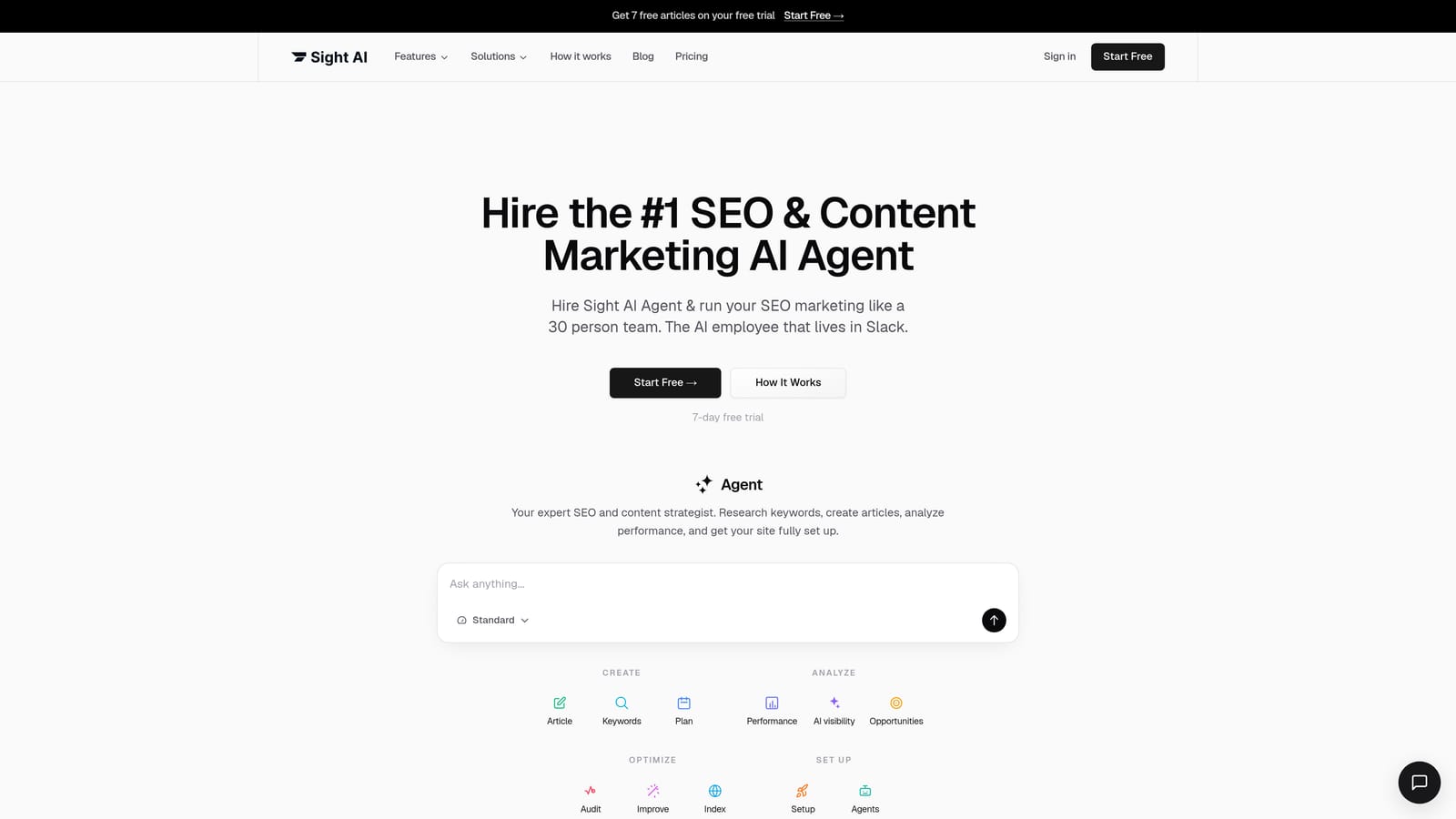
Sight AI is an all-in-one platform built for brands that need to distribute content across both traditional search and AI answer engines, without stitching together five separate tools.
Where This Tool Shines
Most content tools focus on either creation or distribution. Sight AI connects the full loop: it monitors how AI models like ChatGPT, Claude, and Perplexity currently talk about your brand, identifies the content gaps that explain why competitors get mentioned instead of you, and then helps you create and publish the content to close those gaps.
The Autopilot Mode is particularly useful for agencies and growth teams. Once configured, it handles content generation and publishing without requiring manual intervention at every step, making it practical for teams managing content at scale rather than one article at a time.
Key Features
AI Visibility Score: Tracks brand mentions across ChatGPT, Claude, Perplexity, and three or more additional AI platforms with sentiment analysis baked in.
Prompt-Level Tracking: Shows exactly which user queries trigger your brand's appearance in AI-generated responses, so you know where you're winning and where you're absent.
13+ Specialized AI Writing Agents: Purpose-built agents for listicles, guides, explainers, and other content formats, each optimized for both SEO and GEO discoverability.
IndexNow Integration: Submits new content to search engines near-instantly, paired with automated sitemap updates so nothing slips through the cracks.
CMS Auto-Publishing: Distributes finished content directly to your CMS without manual upload steps, removing a common bottleneck in high-volume content operations.
Best For
Sight AI is the strongest fit for marketers, founders, and agencies who are actively trying to grow organic traffic across both traditional and AI search. If you're running content at volume and want a single platform that tracks AI visibility, generates optimized content, and handles distribution automatically, this is the tool built for that exact workflow.
Pricing
A free trial is available. Verify current plan details and pricing tiers at trysight.ai, as options may have been updated.
2. Writesonic
Best for: Content teams needing high-volume, multi-format AI content generation across blogs, ads, and social.
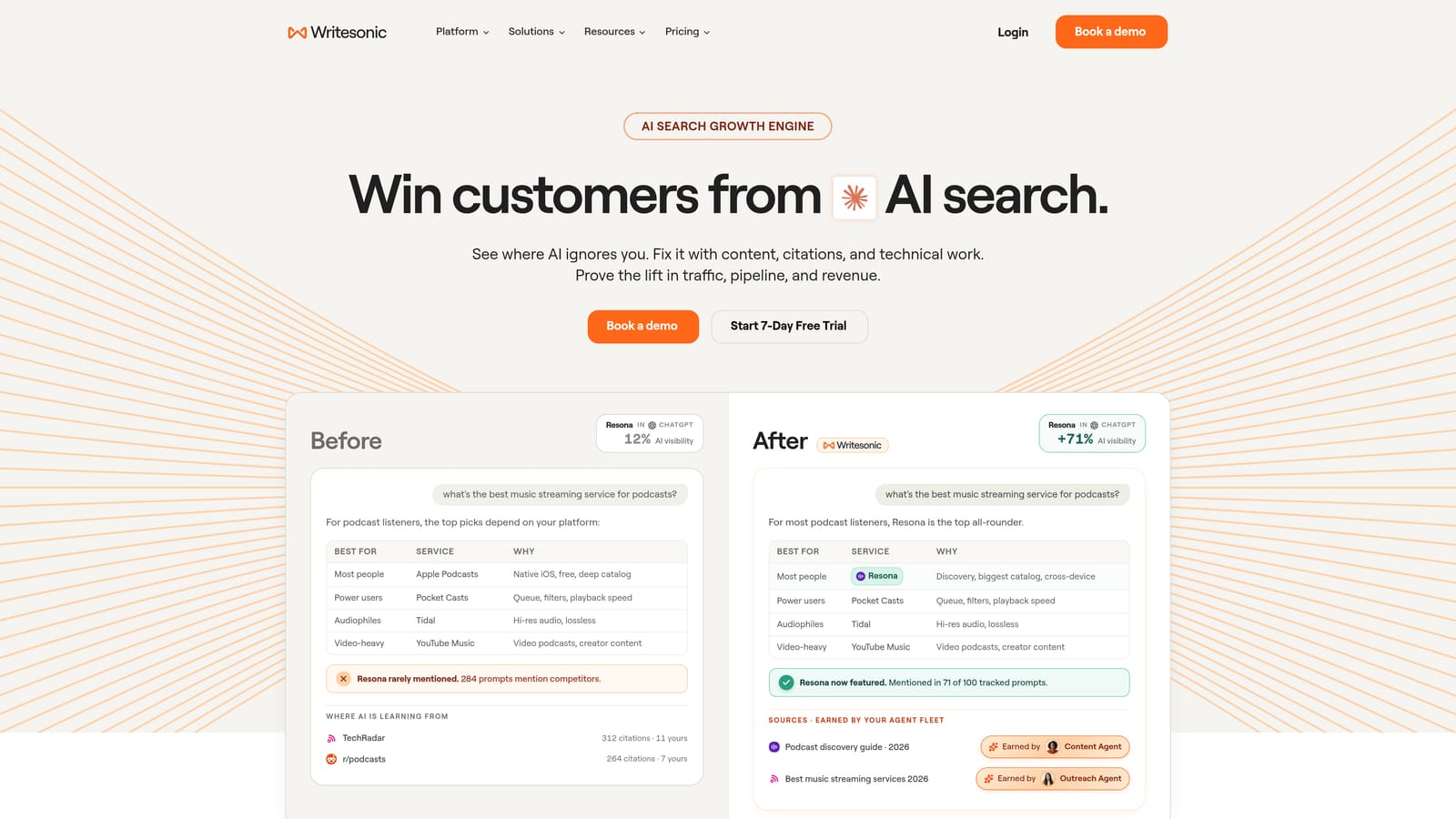
Writesonic is an AI content generation platform designed to produce large volumes of content across multiple formats without sacrificing consistency.
Where This Tool Shines
Writesonic's strength is breadth. It handles blog posts, landing pages, ad copy, and social media content within a single interface, which reduces the tool-switching that slows down content teams working across multiple channels. The SEO-aware writing modes help ensure output is structured for search visibility, not just readable prose.
For agencies managing multiple client accounts, the brand voice customization feature is genuinely useful. You can configure distinct tones and style guidelines per client, which keeps output consistent even when multiple team members are generating content simultaneously.
Key Features
Multi-Format Content Generation: Produces blogs, landing pages, social posts, and ad copy from a single platform.
SEO-Aware Writing Modes: Structures output for search engine visibility with keyword and heading guidance built into the generation process.
Chatsonic: A conversational AI assistant for research, ideation, and drafting within a chat-based interface.
Brand Voice Customization: Configurable tone and style settings to maintain consistency across different clients or content types.
Bulk Content Generation: Scales output for teams that need to produce many pieces simultaneously rather than one at a time.
Best For
Writesonic suits content marketers and agencies that prioritize output volume and format variety. It's a strong choice when your primary bottleneck is content creation speed rather than AI search visibility tracking or distribution automation.
Pricing
A free tier is available. Paid plans vary by usage and features. Verify current pricing at writesonic.com.
3. AirOps
Best for: Growth and content operations teams that need custom, repeatable AI-powered distribution workflows.
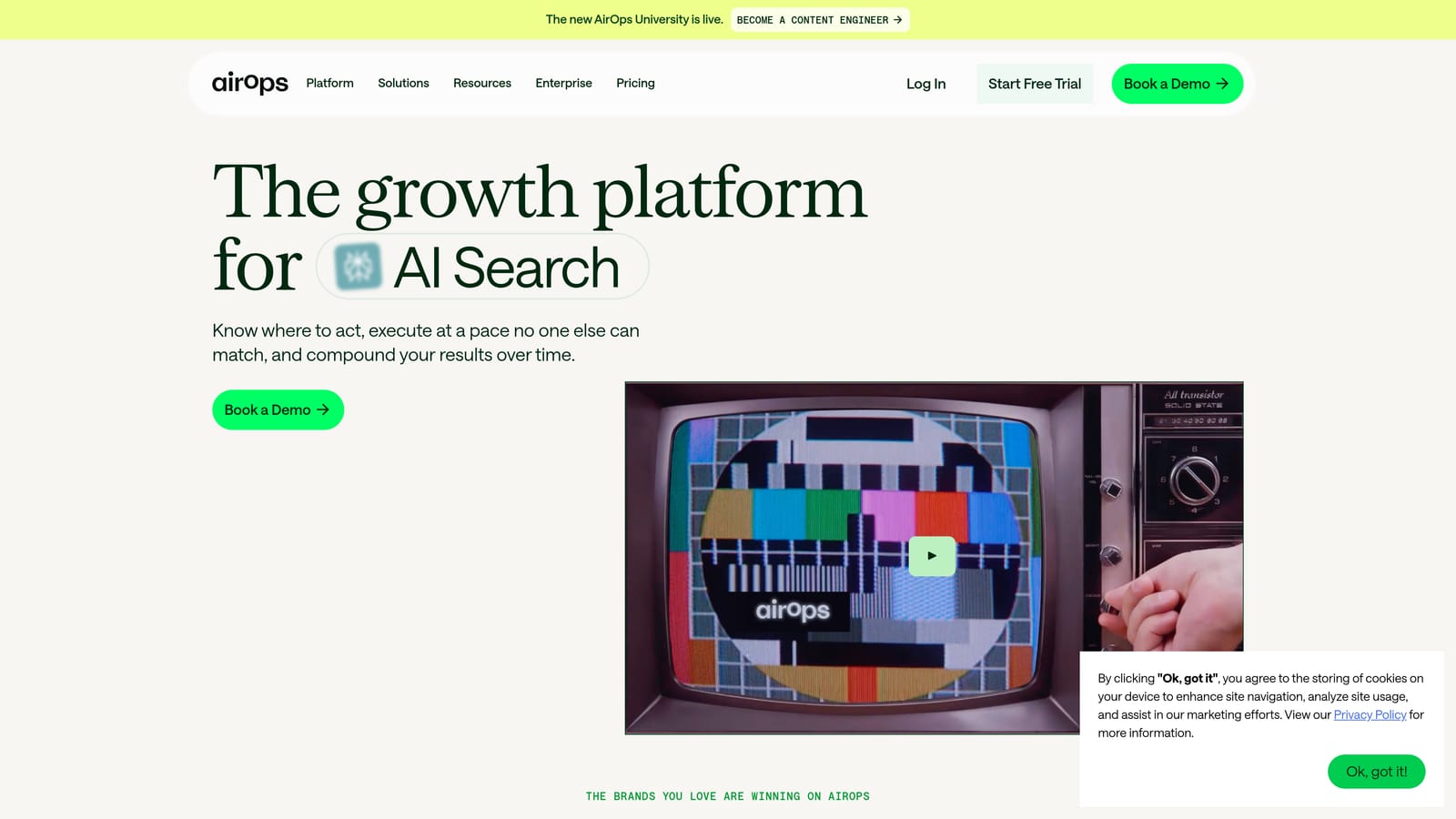
AirOps is a workflow automation platform that lets teams build AI-powered pipelines connecting content generation, editing, and distribution into structured, repeatable processes.
Where This Tool Shines
AirOps occupies a different part of the stack than most content tools. Rather than generating content directly, it provides the infrastructure to chain AI steps together into custom workflows. Think of it as the connective tissue between your content generation tools and your publishing destinations.
For operations-minded teams, this flexibility is significant. You can build a workflow that pulls structured data, passes it through an AI generation step, applies an editing or formatting layer, and pushes the result to a publishing endpoint, all without manual handoffs at each stage.
Key Features
Custom AI Workflow Builder: Visual pipeline builder for designing multi-step content operations without writing custom code for every process.
Generation-to-Distribution Connections: Links AI content creation steps directly to publishing and distribution actions in a single automated flow.
Structured Data Inputs: Supports data-driven content workflows where inputs like product information or keyword lists feed directly into generation steps.
External Tool Integrations: Connects with third-party data sources and platforms to extend workflow capabilities beyond native features.
Agency and Enterprise Scalability: Designed for teams managing repeatable content processes across multiple clients or business units.
Best For
AirOps is best suited for content operations teams and agencies that have already defined their content workflows and want to automate them. It's particularly valuable when your bottleneck is the handoff between generation and distribution rather than the creation step itself.
Pricing
Verify current pricing and plan details at airops.com, as tiers may have changed.
4. Profound
Best for: Enterprise marketing teams tracking brand share-of-voice inside AI-generated search results.
Profound is an AI search visibility platform focused on monitoring how brands appear within AI-generated answers across major AI platforms.

Where This Tool Shines
Profound is built for enterprise brand teams that need structured, reportable data on their AI search presence. It goes beyond simply confirming whether your brand appears in AI answers; it provides share-of-voice data that lets you compare your AI visibility against competitors over time.
The competitive benchmarking capability is where Profound earns its enterprise positioning. Marketing leaders can use it to understand not just their own AI search footprint, but how that footprint compares to category competitors, which informs content investment decisions with actual data rather than assumptions.
Key Features
Brand Visibility Monitoring: Tracks how and when your brand appears inside AI-generated responses across major AI platforms.
Share-of-Voice Tracking: Measures your brand's proportional presence in AI answer results relative to competitors in your category.
Competitive Benchmarking: Compares your AI search performance against named competitors to identify gaps and opportunities.
AI Model Behavior Tracking: Monitors how AI model responses to relevant queries evolve over time, surfacing shifts in brand representation.
Enterprise Reporting: Structured reporting designed for brand and marketing teams that need to present AI visibility data to stakeholders.
Best For
Profound is the right fit for enterprise marketing and brand management teams with dedicated resources for AI search strategy. It's less suited for solo founders or small teams looking for a lightweight monitoring solution.
Pricing
Verify current pricing at profound.co, as plans are tailored to enterprise needs and may require direct contact.
5. Peec
Best for: SEO agencies monitoring brand and competitor mentions across AI answer engines for multiple clients.
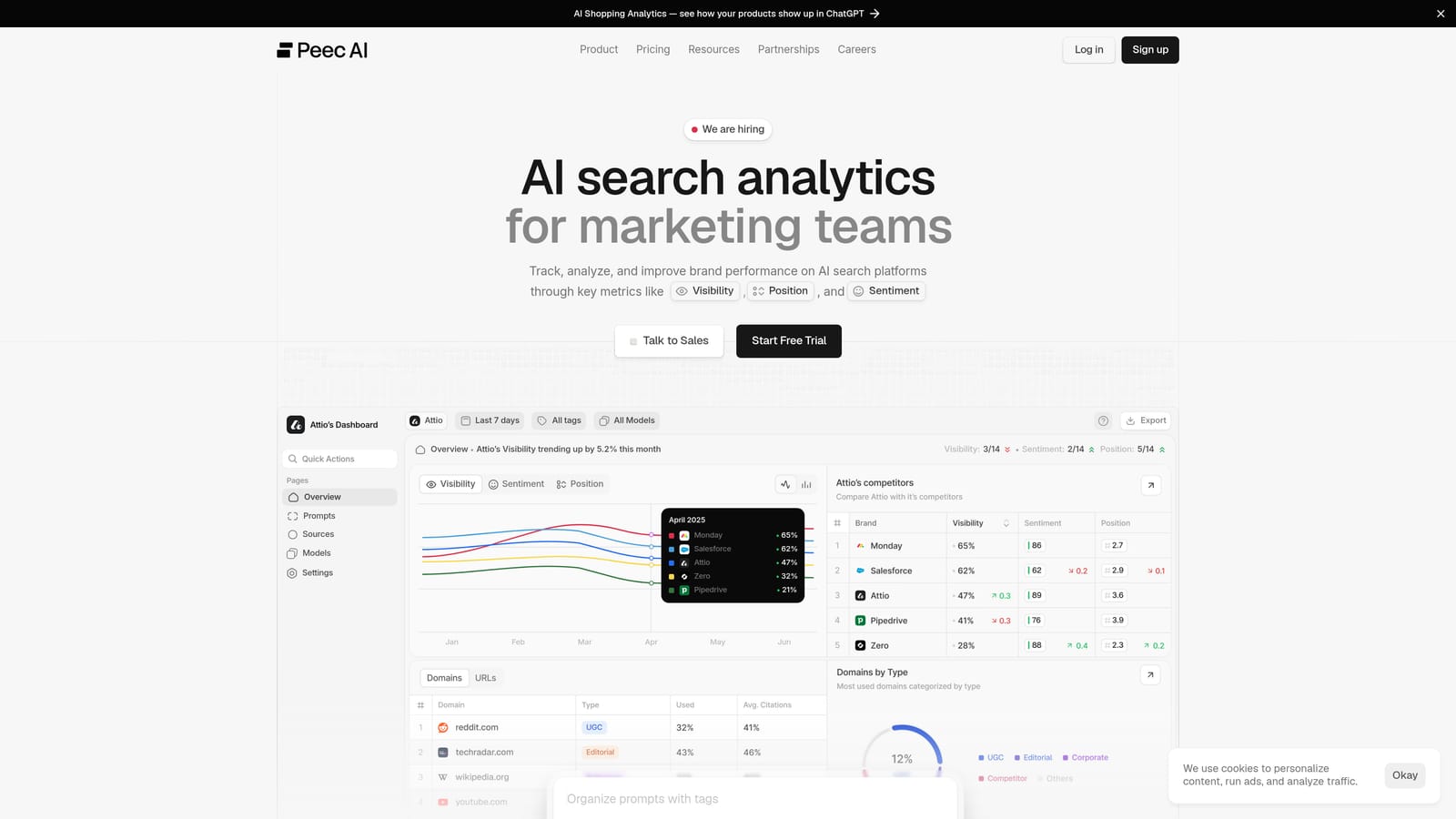
Peec is an AI search monitoring tool that tracks brand and competitor mentions across AI answer engines with prompt-level granularity.
Where This Tool Shines
Peec is designed with the agency use case clearly in mind. The reporting structure accommodates multi-client management, which is a practical consideration that more enterprise-focused tools sometimes overlook. SEO professionals can monitor multiple brands from a single dashboard and pull client-ready reports without significant manual formatting.
The prompt-level visibility data is the feature that sets Peec apart from broader brand monitoring tools. Rather than just knowing your brand appeared in AI results, you can see which specific queries produced those appearances, which gives content teams actionable direction for GEO optimization work.
Key Features
Brand Mention Tracking: Monitors when and how your brand appears in AI answer engine responses across major platforms.
Competitor Monitoring: Tracks competitor mentions in AI search results alongside your own for side-by-side benchmarking.
Prompt-Level Visibility Data: Identifies the specific user queries that surface your brand or your competitors in AI-generated answers.
Multi-Client Reporting: Structured for agencies managing AI search visibility across multiple client accounts simultaneously.
Trend Tracking: Monitors changes in AI search presence over time to identify improving or declining visibility patterns.
Best For
Peec is a strong choice for SEO agencies and consultants who need to monitor AI search performance across multiple clients and report on it clearly. It's also well-suited for in-house SEO teams actively building out a GEO strategy and needing granular query-level data to guide content decisions.
Pricing
Verify current pricing at peec.ai before committing to a plan.
6. Promptwatch
Best for: Brands refining GEO strategy by identifying which specific queries trigger AI model mentions.
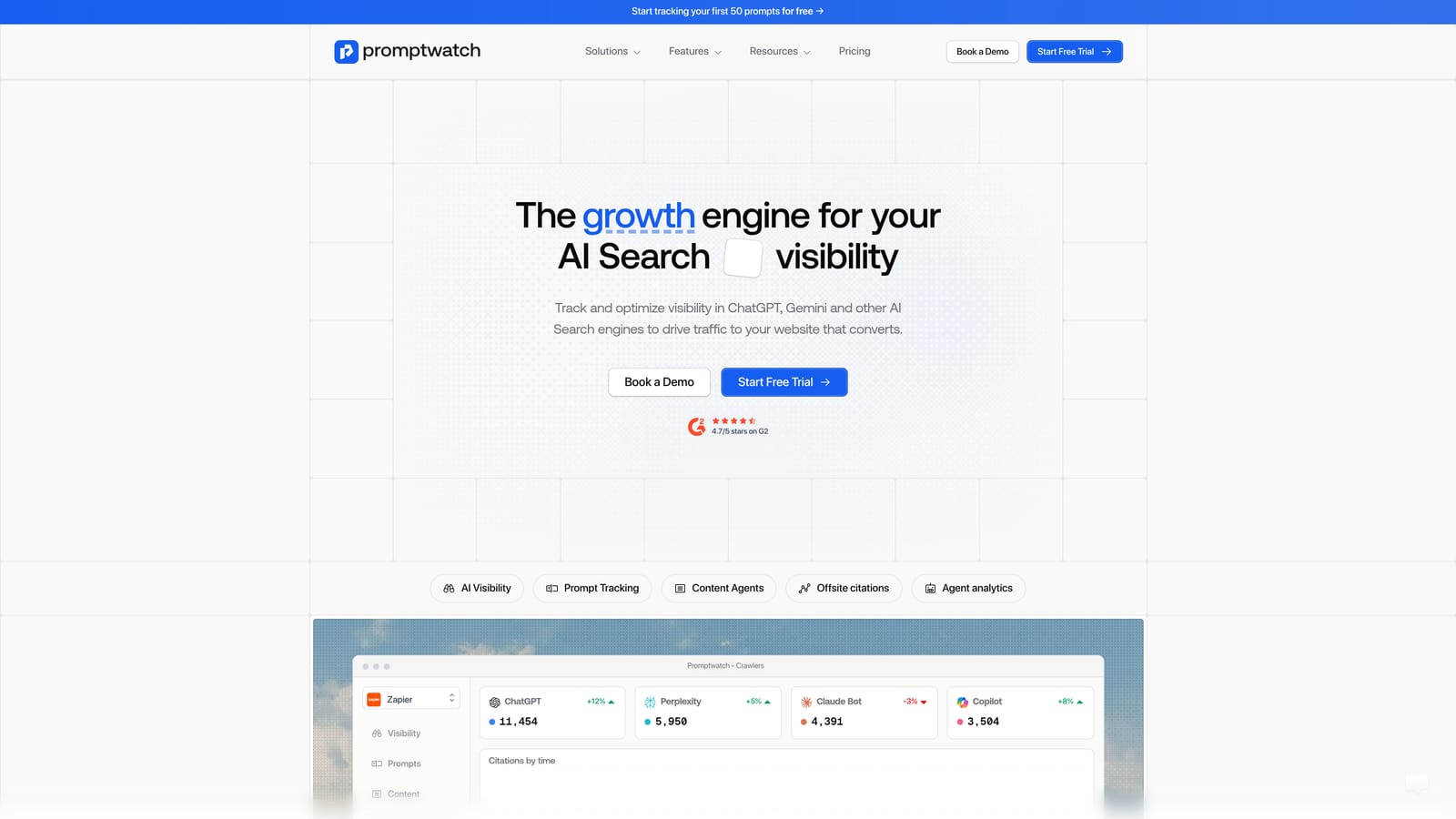
Promptwatch is a prompt-level AI brand monitoring tool that tracks exactly which user queries cause your brand to appear in AI-generated responses.
Where This Tool Shines
Promptwatch takes a surgical approach to AI visibility monitoring. Where other tools tell you that your brand appeared in AI results, Promptwatch tells you precisely which prompts produced that result. This distinction matters significantly when you're trying to build a GEO content strategy rather than just confirm you have some AI presence.
The gap identification capability is particularly actionable. Promptwatch surfaces queries where competitors appear in AI responses but your brand does not, which gives content teams a prioritized list of topics to address. That's a more efficient starting point than guessing which content to create next.
Key Features
Prompt-Level Brand Tracking: Identifies the specific user queries that trigger your brand's appearance in AI tool responses, not just aggregate visibility data.
Cross-Platform Monitoring: Tracks brand mentions across major AI platforms to give a consolidated view of AI search presence.
GEO Strategy Support: Provides the query-level data needed to build and refine a Generative Engine Optimization content strategy.
Competitor Gap Analysis: Identifies prompts where competitors appear in AI results but your brand does not, surfacing high-priority content opportunities.
Actionable Content Signals: Translates monitoring data into specific content recommendations for teams optimizing for AI discoverability.
Best For
Promptwatch is best for brands and content teams that are already thinking seriously about GEO and need precise data to guide their strategy. It's less of a general-purpose tool and more of a specialized instrument for teams committed to optimizing their AI search presence at the query level.
Pricing
Verify current pricing at promptwatch.io directly.
Choosing the Right Tool for Your Distribution Stack
The tools on this list cover three distinct problems: creating content optimized for AI and traditional search, monitoring how your brand appears in AI-generated answers, and automating the workflows that connect creation to distribution. Most teams will find they need at least two of these capabilities. The question is which gap is most urgent.
If AI visibility tracking is your priority, Profound and Peec both offer strong monitoring capabilities, with Profound leaning toward enterprise brand teams and Peec better suited for agencies managing multiple clients. Promptwatch adds a layer of prompt-level precision that's valuable when you're ready to move from monitoring to active GEO strategy execution.
For content generation at scale, Writesonic handles multi-format production well and is a practical choice when output volume is the primary bottleneck. AirOps serves a different need: it's for teams that already have their content process defined and want to automate the handoffs between steps.
Sight AI is the only platform on this list that addresses all three areas in a single product. It tracks AI visibility across six or more platforms, generates SEO and GEO-optimized content through 13 specialized agents, and automates distribution through IndexNow integration and CMS auto-publishing. For teams that want to avoid managing multiple separate tools, it's the most complete starting point.
The practical recommendation: audit your current distribution gaps first. If you're not appearing in AI-generated answers for queries relevant to your business, that's the gap to close first. If content volume is the constraint, start with generation. If distribution is the bottleneck, focus on automation.
Stop guessing how AI models like ChatGPT and Claude talk about your brand. Start tracking your AI visibility today and see exactly where your brand appears across top AI platforms, which content opportunities you're missing, and how to automate your path to consistent organic traffic growth.