Content distribution platform pricing can make or break your marketing budget. Some tools start free, others demand $60,000+ annually, and many hide costs in CPC models that spiral fast. The difference isn't just features—it's whether you're paying for clicks, seats, channels, or content credits.
This guide breaks down actual pricing structures across 9 platforms in 2026. You'll see transparent costs for AI-powered solutions, traditional syndication networks, and hybrid platforms. We're covering everything from startup-friendly tools under $100/month to enterprise systems requiring six-figure commitments.
Here are the top content distribution platforms with real pricing data to help you budget smarter.
1. Sight AI
Best for: Teams wanting AI-optimized content creation combined with distribution tracking and automation
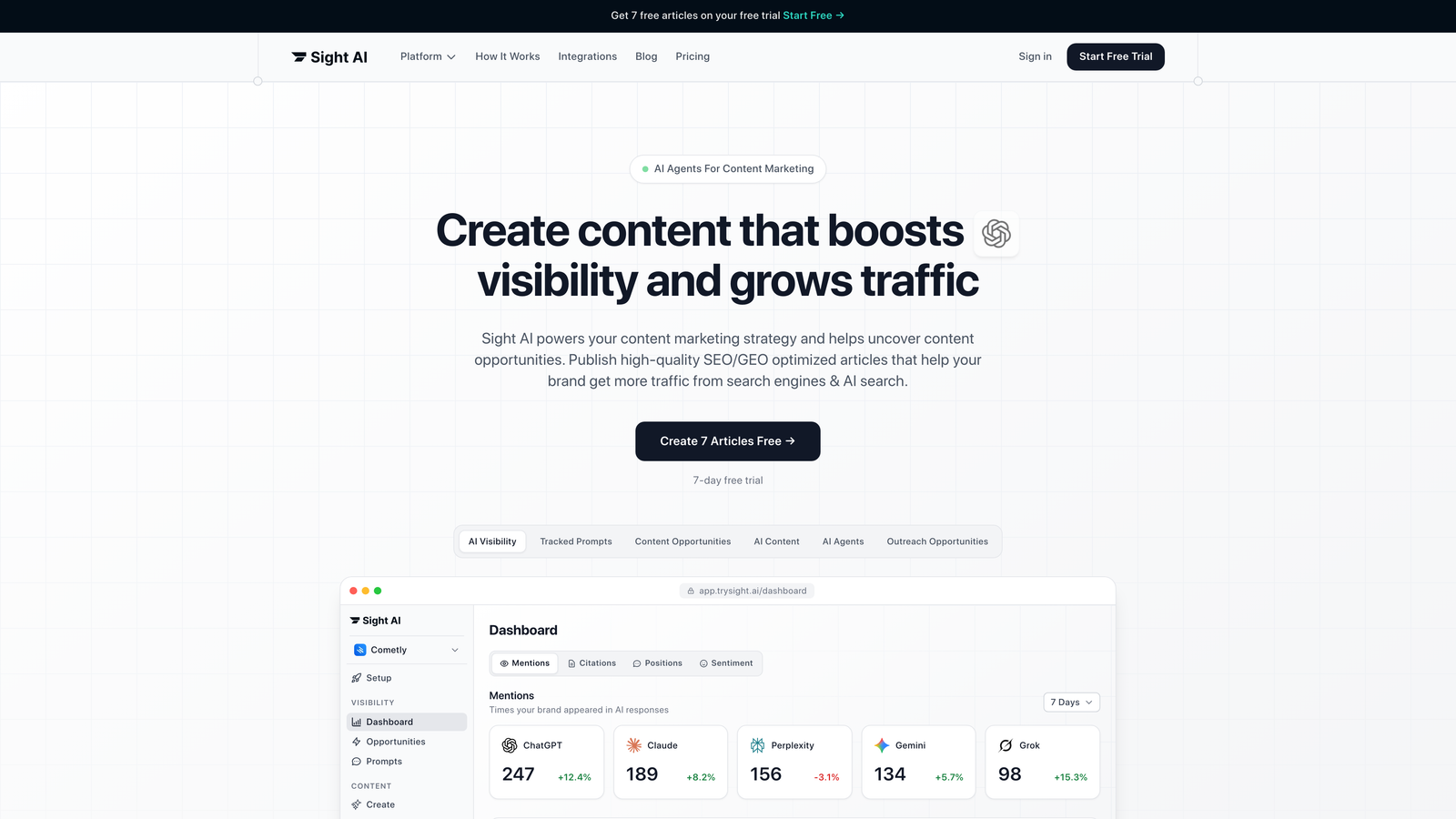
Sight AI combines content generation, AI visibility tracking, and automated distribution in one platform—eliminating the need for separate tool stacks.
Where This Tool Shines
Sight AI solves a problem most platforms ignore: you can distribute content everywhere, but how do you know if AI models like ChatGPT and Claude actually mention your brand? This platform tracks your AI visibility across 6+ AI platforms while generating SEO/GEO-optimized content through 13+ specialized AI agents.
The automation goes deeper than scheduling. IndexNow integration pushes your content to search engines immediately, while CMS auto-publishing handles the technical distribution. Autopilot mode runs your content marketing with minimal intervention.
Key Features
AI Visibility Score: Track how AI models mention your brand with sentiment analysis and prompt tracking across ChatGPT, Claude, Perplexity, and more.
13+ AI Agents: Specialized agents generate listicles, guides, and explainers optimized for both traditional search and AI model responses.
IndexNow Integration: Automatic content indexing pushes updates to search engines faster than traditional crawling methods.
CMS Auto-Publishing: Direct publishing to your website eliminates manual content upload workflows.
Autopilot Mode: Hands-off content marketing that generates, optimizes, and distributes content based on your parameters.
Best For
Marketing teams and agencies managing multiple brands who need visibility into how AI models represent their clients. Works especially well for companies prioritizing organic traffic growth through AI-optimized content rather than paid distribution.
Pricing
Subscription-based with content credits. Pricing tiers scale with content volume and team needs. Check their pricing page for current plans tailored to different business sizes.
2. Outbrain
Best for: Brands wanting native ad placement across premium publisher networks like CNN and The Guardian
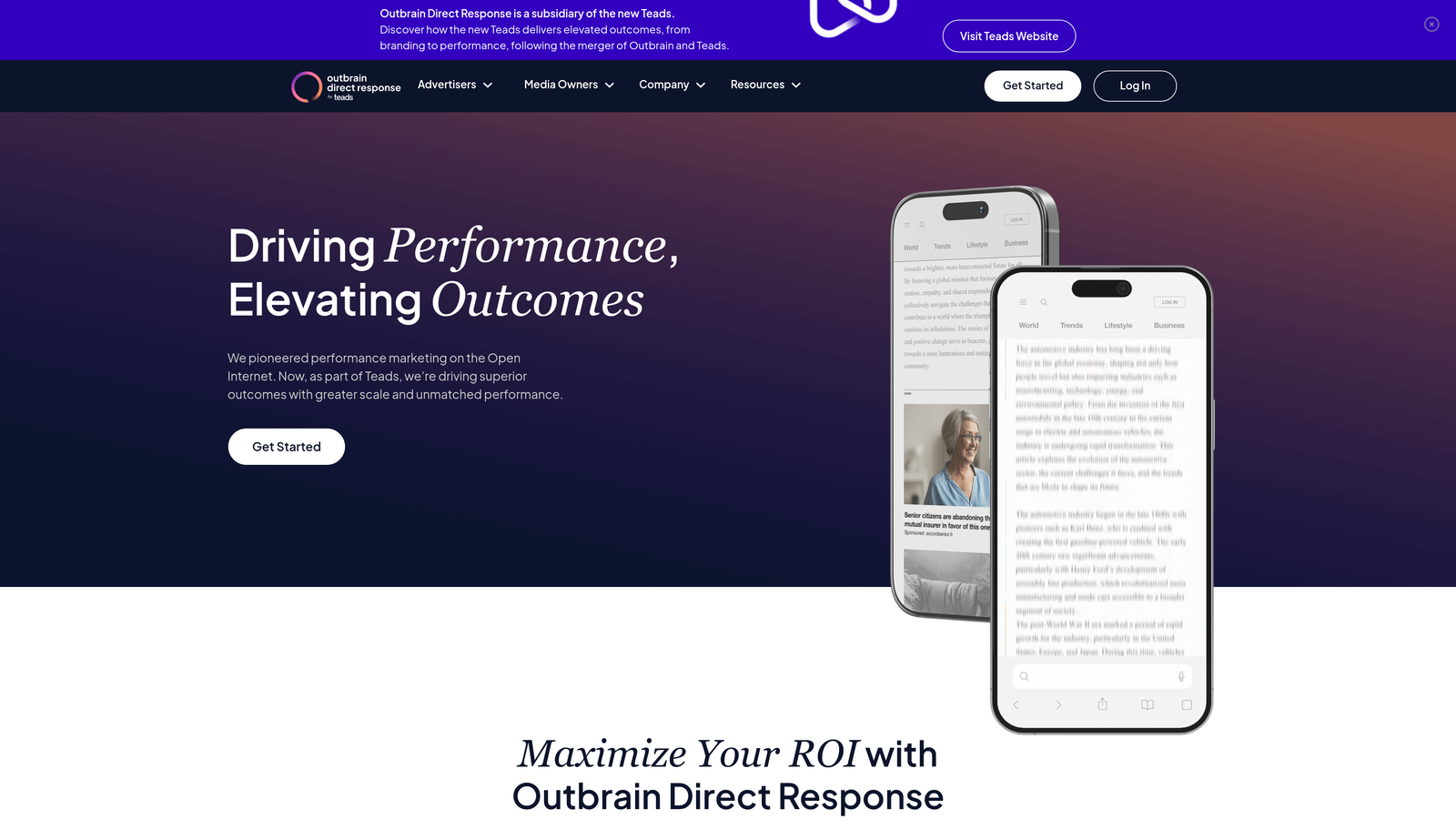
Outbrain powers those "recommended content" widgets you see at the bottom of major news sites.
Where This Tool Shines
Outbrain gives you access to premium publisher inventory that's nearly impossible to secure directly. Your content appears alongside editorial articles on trusted sites, borrowing credibility from the surrounding environment. The recommendation engine analyzes user behavior to show your content to readers most likely to engage.
The platform works particularly well for content that needs immediate visibility. Unlike organic strategies that take months, Outbrain can drive thousands of visitors within days if you're willing to pay for the clicks.
Key Features
Premium Publisher Network: Access to top-tier sites where your audience already spends time reading content.
CPC Bidding System: Pay only when someone clicks your content, with bid controls to manage spend.
Audience Targeting: Demographic, interest, and behavioral targeting plus retargeting capabilities for users who've visited your site.
Performance Dashboard: Real-time analytics showing which headlines, images, and placements drive the best results.
Brand Safety Controls: Block your content from appearing on sites that don't align with your brand values.
Best For
Brands with significant content marketing budgets who need rapid distribution across premium publishers. Works best when you have strong content that converts visitors into leads or customers, justifying the CPC investment.
Pricing
CPC model typically ranges from $0.10 to $0.50 per click depending on industry competition and targeting parameters. Minimum campaign budgets usually start at $500 to $1,000 to gather meaningful performance data.
3. Taboola
Best for: Large-scale native advertising campaigns across major publisher sites worldwide
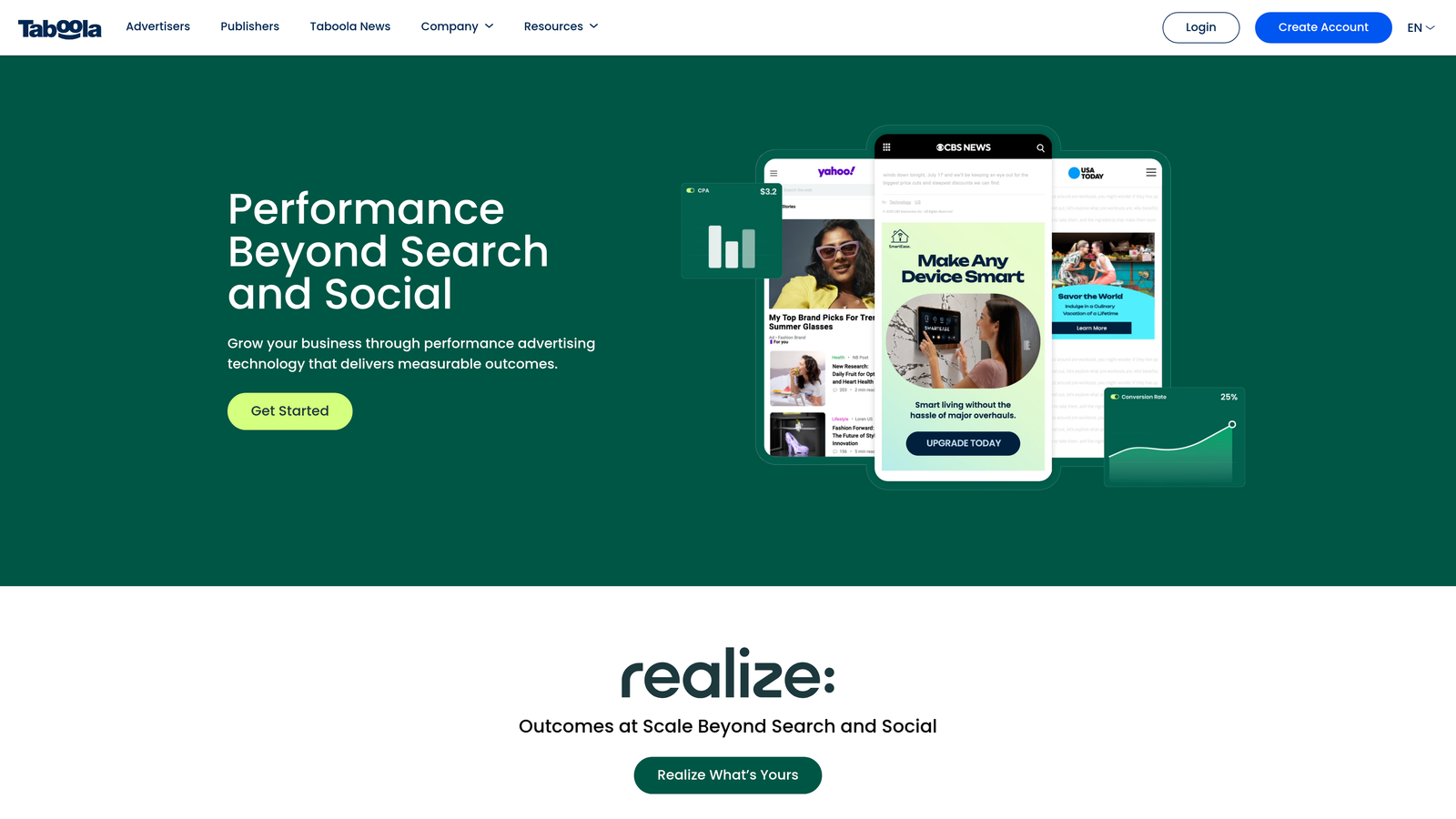
Taboola operates one of the world's largest content recommendation networks, reaching over 500 million daily users.
Where This Tool Shines
Taboola's massive scale means your content can appear on thousands of publisher sites simultaneously. The platform's smart bidding algorithms continuously optimize placements based on performance, shifting budget toward sites and audiences that actually convert. Video content distribution capabilities set it apart from competitors focused primarily on articles.
The self-serve option makes Taboola accessible to smaller budgets, though enterprise clients get dedicated account management and custom optimization strategies. Attentive Audiences targeting uses behavioral signals to find users most likely to engage deeply with your content.
Key Features
Global Publisher Network: Massive reach across premium and mid-tier publishers in virtually every market.
Smart Bidding Algorithms: Automated bid adjustments based on conversion probability and campaign goals.
Video Distribution: Native video placements that play inline within publisher content feeds.
Attentive Audiences: Targeting based on user engagement patterns and content consumption behavior.
Service Options: Choose between self-serve platform access or managed service with dedicated support.
Best For
Brands running multi-channel content campaigns who need both reach and performance optimization. Particularly effective for companies with content that appeals to broad audiences and strong conversion funnels to monetize the traffic.
Pricing
Auction-based CPC/CPM pricing. Self-serve accounts start at $10/day minimum spend, making it accessible for testing. Enterprise pricing is custom and typically involves minimum monthly commitments of several thousand dollars plus platform fees.
4. CoSchedule
Best for: Marketing teams needing unified calendar management for content planning and social distribution
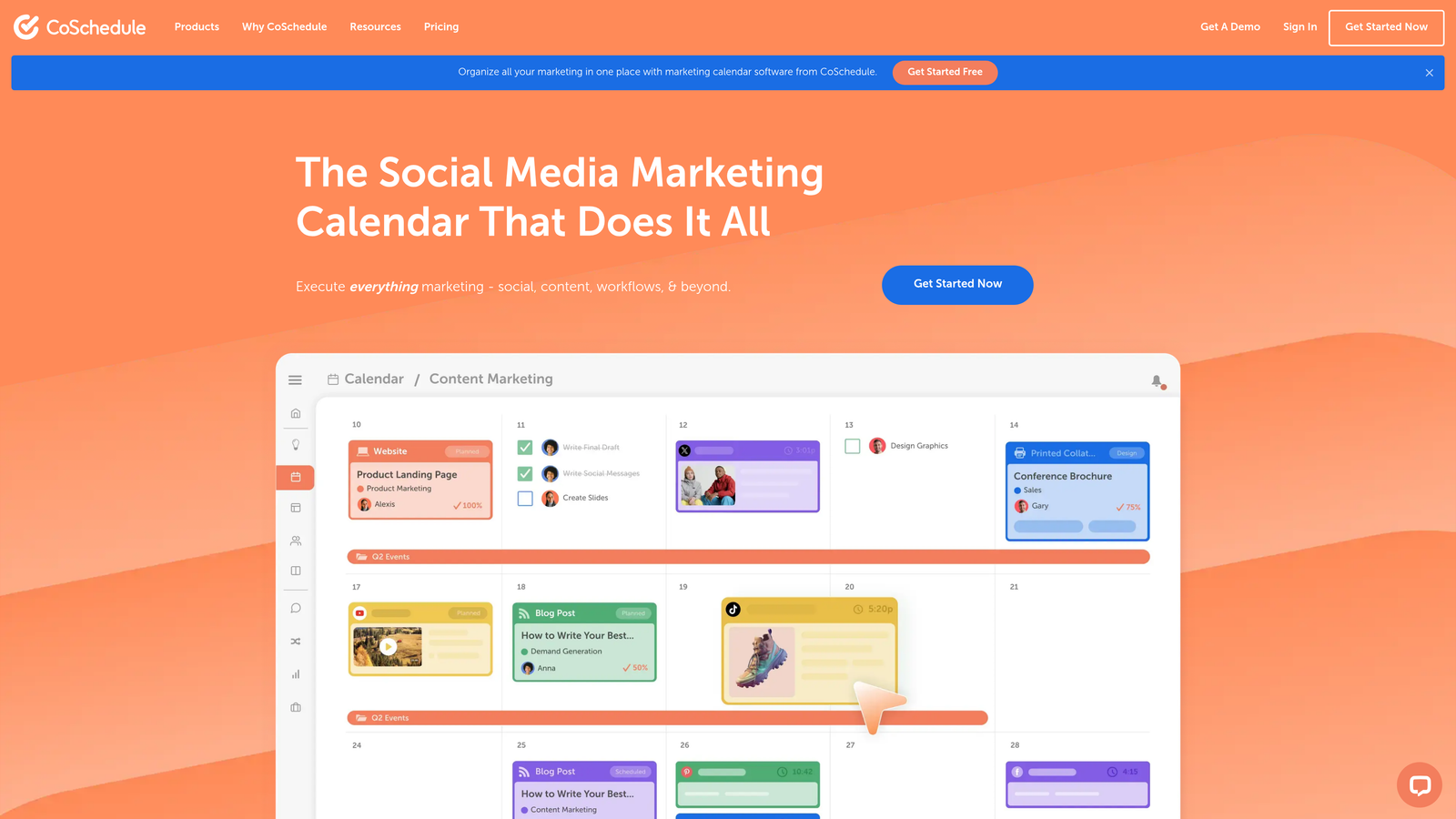
CoSchedule organizes your entire marketing operation around a visual calendar that connects content creation with distribution.
Where This Tool Shines
CoSchedule excels at eliminating the chaos of managing content across multiple channels and team members. The unified calendar shows blog posts, social updates, email campaigns, and project deadlines in one view. ReQueue automatically recycles your best-performing evergreen content, ensuring your social channels stay active without constant manual scheduling.
The collaboration features prevent the common problem of duplicate work or missed deadlines. Team members see exactly what's scheduled, what needs approval, and who's responsible for each piece. Marketing project management tools extend beyond just content to coordinate launches, campaigns, and cross-functional initiatives.
Key Features
Unified Marketing Calendar: Visual timeline showing all content, campaigns, and deadlines across channels in one place.
Social Scheduling Automation: Schedule posts across multiple platforms with bulk upload and optimal timing recommendations.
ReQueue: Automatically fills gaps in your social calendar by resharing top-performing evergreen content.
Team Collaboration: Task assignments, approval workflows, and comment threads keep everyone aligned.
Project Management: Campaign planning tools that coordinate content with broader marketing initiatives.
Best For
Small to mid-sized marketing teams managing multiple content types and distribution channels who need better organization. Works well for companies publishing consistently but struggling with workflow coordination and social media consistency.
Pricing
Marketing Calendar starts at $29 per user per month, covering basic scheduling and calendar features. Marketing Suite offers advanced capabilities with custom pricing for teams, typically starting around $1,000/month depending on team size and feature requirements.
5. Contently
Best for: Enterprise brands needing vetted freelance talent combined with content operations management
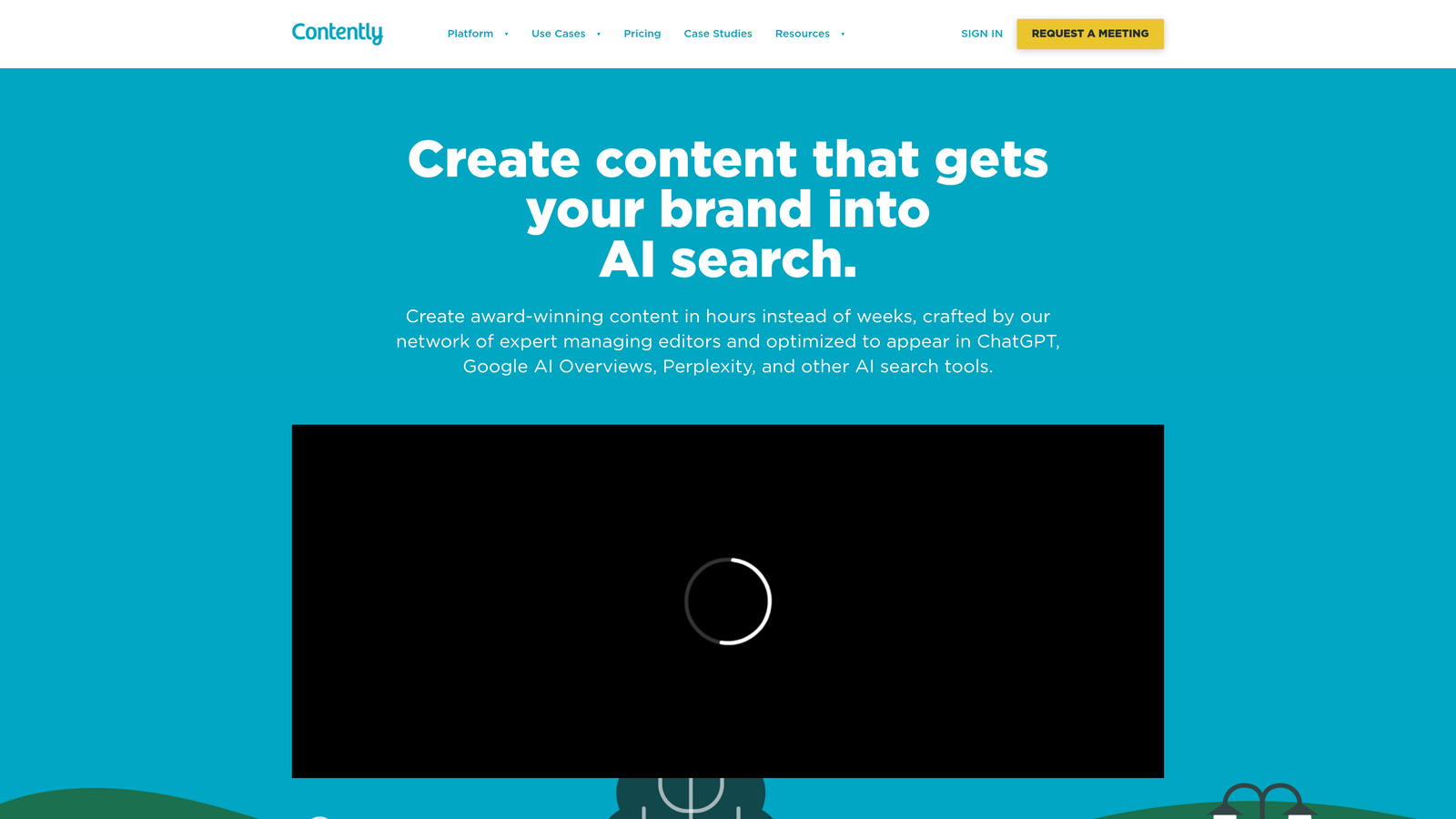
Contently connects brands with professional freelance writers, designers, and videographers while managing the entire content workflow.
Where This Tool Shines
Contently solves the talent problem that plagues content marketing. Their network includes thousands of vetted freelancers with expertise across industries and content formats. The platform handles matching, contracts, payments, and quality control—eliminating the administrative burden of managing multiple freelancers directly.
The workflow management goes beyond simple project tracking. Content moves through customizable approval stages with version control, feedback loops, and performance tracking. Brand voice and style guides ensure consistency across dozens of freelancers. The analytics connect content performance to business outcomes, showing which pieces actually drive conversions.
Key Features
Vetted Talent Network: Access to thousands of professional freelancers who've been screened for quality and reliability.
Workflow Management: End-to-end content operations from briefing through approval, publication, and performance analysis.
Performance Analytics: Attribution tracking that connects content to leads, conversions, and revenue.
Brand Guidelines: Centralized voice and style documentation that ensures consistency across all freelancers.
Strategy Consulting: Access to content strategists who help plan and optimize your content programs.
Best For
Large enterprises producing high volumes of custom content who need both talent sourcing and production management. Best suited for companies with content budgets exceeding $10,000/month who want professional execution without building large in-house teams.
Pricing
Custom enterprise pricing typically starts at $3,000+ per month for platform access, plus separate costs for content production based on volume and complexity. Implementation and strategy services add to the total investment.
6. Buffer
Best for: Small teams and solopreneurs wanting straightforward social media scheduling without complexity
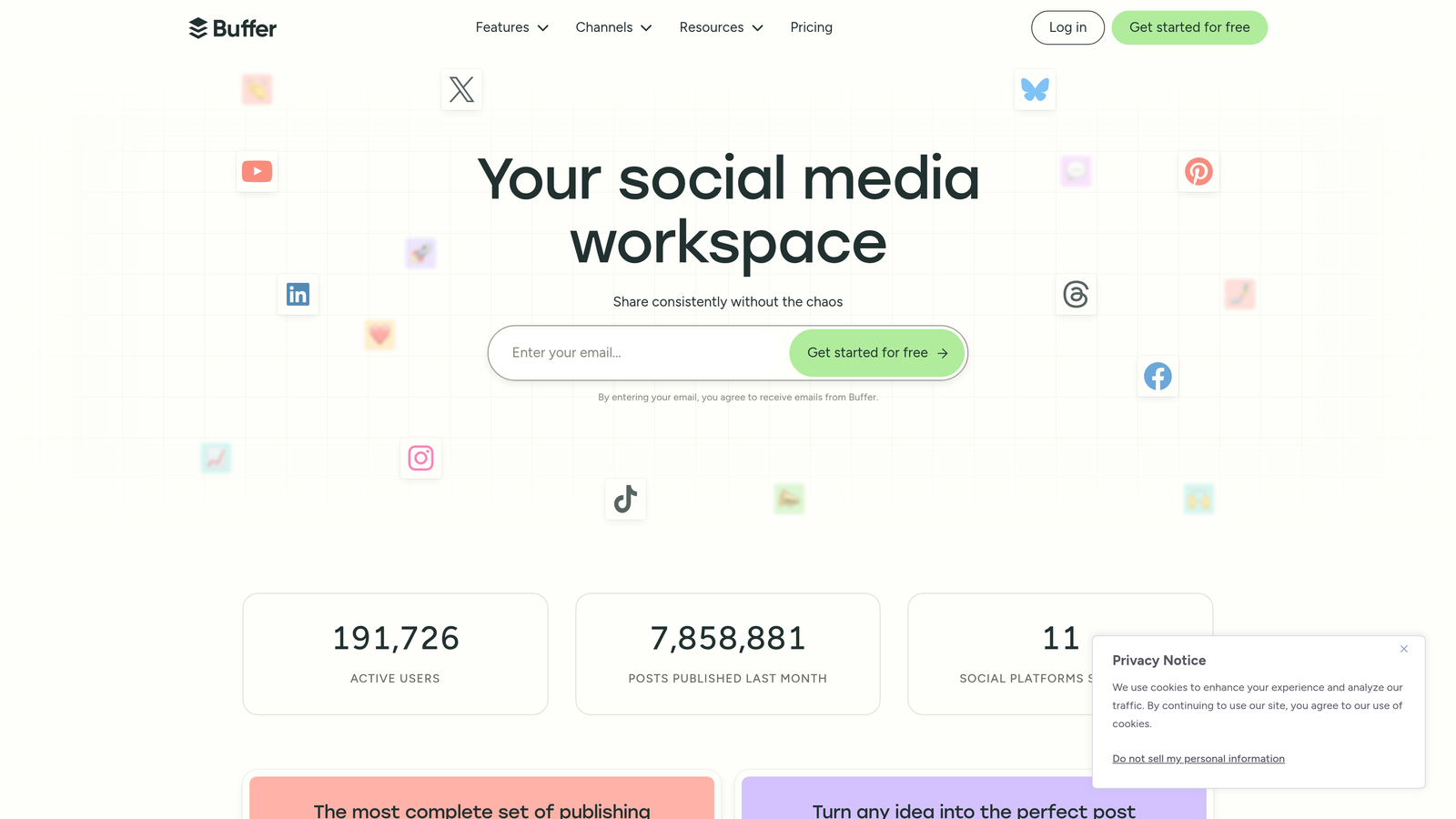
Buffer strips away advanced features to focus on simple, reliable social media scheduling and basic analytics.
Where This Tool Shines
Buffer's strength is its simplicity. You can schedule a week's worth of content in minutes without navigating complex menus or advanced targeting options. The browser extension makes sharing content you find online effortless—just click and schedule without leaving the page you're reading.
The pricing model is transparent and affordable. You pay per channel, so costs scale predictably as you add platforms. The free tier gives you genuine functionality rather than a frustrating trial, making it perfect for testing social distribution before committing budget.
Key Features
Multi-Platform Scheduling: Post to Facebook, Twitter, LinkedIn, Instagram, and Pinterest from one dashboard.
Content Calendar: Visual timeline showing your scheduled posts across all channels at a glance.
Basic Analytics: Engagement metrics and reach data for each post and channel without overwhelming detail.
Browser Extension: Share content directly from any webpage with pre-filled captions and scheduling options.
Team Collaboration: Multiple user access with draft sharing and approval workflows on higher tiers.
Best For
Freelancers, small businesses, and lean marketing teams who need reliable social scheduling without paying for enterprise features they won't use. Works well when social media is important but not your primary distribution channel.
Pricing
Free tier supports up to 3 social channels with 10 scheduled posts per channel. Essentials plan costs $6 per channel per month with unlimited scheduling. Team plan at $12 per channel per month adds collaboration features and advanced analytics.
7. Sprinklr
Best for: Global enterprises needing unified customer experience management across 30+ digital channels
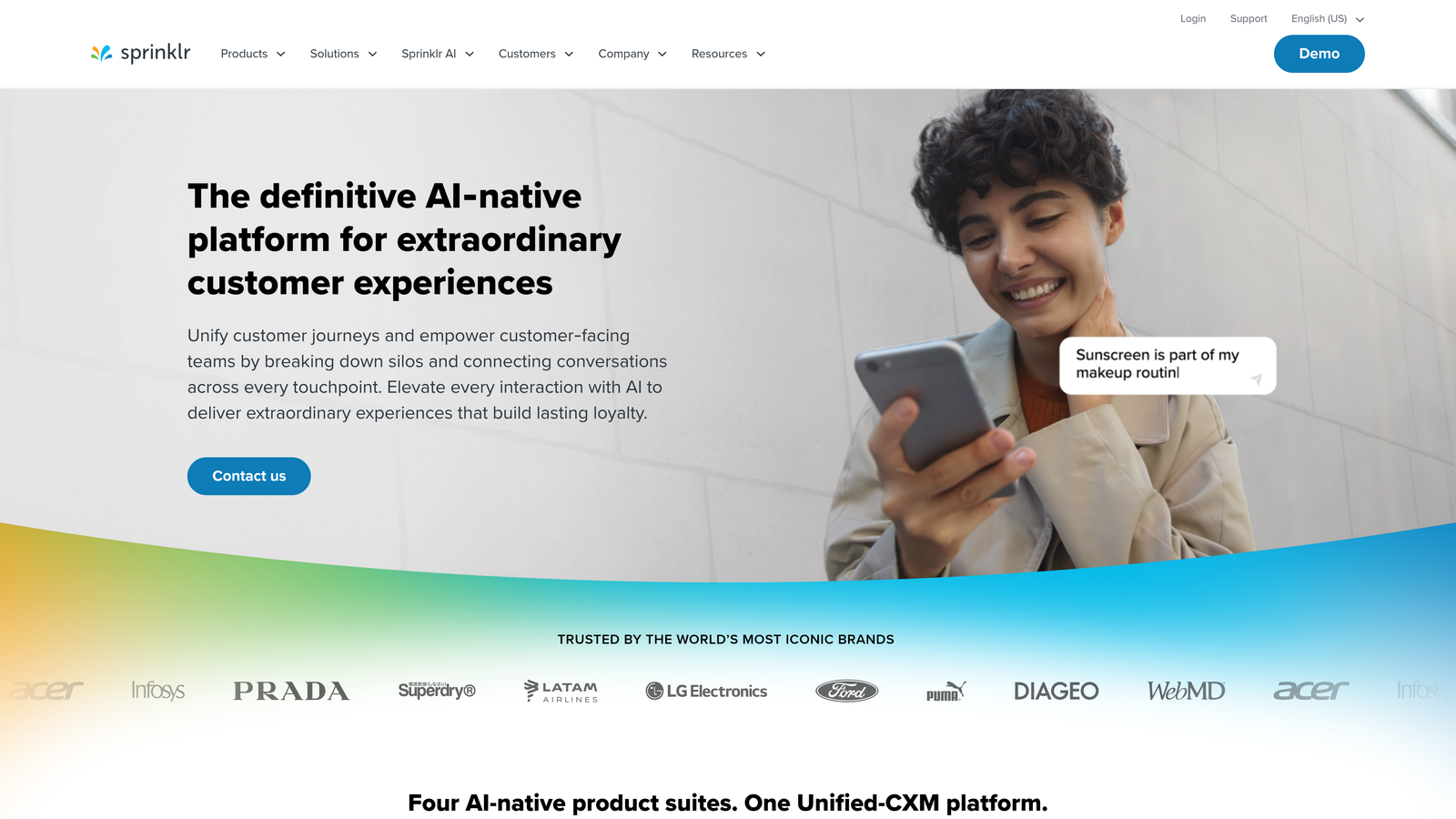
Sprinklr operates as a comprehensive platform managing content, social media, advertising, customer service, and analytics in one system.
Where This Tool Shines
Sprinklr handles complexity that breaks other platforms. Think managing hundreds of social accounts across dozens of countries, each requiring localized content, compliance approval, and performance tracking. The unified CXM approach connects content distribution with customer service interactions, showing how published content affects support ticket volume and customer sentiment.
AI-powered content recommendations analyze performance patterns to suggest optimal posting times, content formats, and messaging strategies. Enterprise-grade governance ensures brand consistency and regulatory compliance across every channel and region. The analytics connect digital interactions to business outcomes with attribution models sophisticated enough to satisfy CFOs.
Key Features
Unified CXM Platform: Content, social, advertising, research, and care integrated in one system with shared data.
AI Content Recommendations: Machine learning suggests content strategies based on performance patterns and audience behavior.
30+ Channel Support: Manage everything from major social platforms to messaging apps and review sites.
Enterprise Governance: Approval workflows, compliance controls, and brand safety measures for global operations.
Advanced Analytics: Attribution modeling, sentiment analysis, and business impact measurement across all touchpoints.
Best For
Fortune 500 companies and global brands managing complex, multi-market digital operations. Makes sense when you have dozens of team members, hundreds of channels, and need enterprise-level security, compliance, and integration capabilities.
Pricing
Custom enterprise pricing typically starts at $60,000+ annually with additional implementation and training fees. Total cost of ownership often exceeds $100,000 in the first year when accounting for setup, integration, and change management.
8. ContentStudio
Best for: Agencies and consultants managing content distribution for multiple client brands
ContentStudio builds multi-workspace management into its core, making it natural to separate client accounts while maintaining centralized control.
Where This Tool Shines
ContentStudio understands agency workflows. Each workspace operates independently with its own social accounts, content calendar, and team permissions. You can switch between clients instantly without logging out or navigating complex account structures. White-label reporting lets you present analytics under your agency branding rather than the tool's.
The content discovery engine helps you find trending topics and shareable content across your clients' industries. AI caption and hashtag generation speeds up social post creation when you're managing dozens of accounts. Approval workflows ensure clients review content before publication without endless email chains or missed approvals.
Key Features
Multi-Workspace Management: Separate client accounts with independent settings, teams, and billing within one platform.
Content Discovery: Find trending articles, videos, and social posts relevant to each client's industry.
AI Caption Generation: Automatically create social media captions and hashtag suggestions for faster posting.
White-Label Reporting: Client-facing analytics reports branded with your agency logo and colors.
Approval Workflows: Client review and approval processes built into the publishing workflow.
Best For
Marketing agencies, freelance social media managers, and consultants handling multiple client accounts who need efficient workspace separation and client collaboration features. Particularly valuable when managing 5+ brands with different content strategies.
Pricing
Starter plan at $25/month supports 1 workspace with 5 social accounts. Pro plan at $49/month adds more accounts and features. Agency plan at $99/month includes 10 workspaces, making the per-client cost just $10/month.
9. Zemanta
Best for: Performance marketers running programmatic native advertising campaigns with sophisticated targeting
Zemanta operates as a demand-side platform for buying native ad inventory programmatically across premium publishers.
Where This Tool Shines
Zemanta brings programmatic buying sophistication to native advertising. Instead of negotiating with individual publishers, you access inventory across thousands of sites through real-time bidding. Advanced audience targeting uses first-party data, lookalike modeling, and behavioral signals to find users most likely to engage with your content.
The optimization algorithms continuously adjust bids and placements based on performance. Cross-device attribution tracks users across desktop, mobile, and tablet to understand the full conversion path. Real-time reporting shows exactly which publishers, placements, and audience segments drive results, letting you shift budget toward what works.
Key Features
Programmatic Native Buying: Real-time bidding for native ad placements across premium publisher inventory.
Premium Inventory Access: Reach major publishers through programmatic channels typically reserved for direct deals.
Advanced Targeting: First-party data integration, lookalike audiences, and behavioral targeting capabilities.
Real-Time Optimization: Automated bid adjustments and budget allocation based on performance signals.
Cross-Device Attribution: Track user journeys across devices to understand true conversion paths.
Best For
Performance marketing teams with significant native advertising budgets who need programmatic buying capabilities and sophisticated optimization. Works best for brands that understand DSP platforms and have analytics infrastructure to track ROI.
Pricing
DSP platform fees plus media spend. Minimum monthly budgets typically start at $5,000+ to justify the platform costs and gather sufficient data for optimization. Pricing structure includes percentage-based platform fees on media spend.
Finding Your Pricing Sweet Spot
Your ideal content distribution platform depends on budget tier and business model. Startups under $100/month should look at Buffer's free tier or ContentStudio Starter. Growing teams with $100-500/month budgets fit well with CoSchedule or Sight AI's subscription tiers. Agencies managing multiple clients typically spend $500-2,000/month on tools like ContentStudio Agency or Contently's entry level. Enterprises exceeding $2,000/month need platforms like Sprinklr or Taboola enterprise contracts.
Consider total cost of ownership beyond the platform fee. Setup and implementation can add 20-50% to first-year costs for enterprise platforms. Training time affects productivity—simpler tools like Buffer require hours while Sprinklr demands weeks. Content production costs dwarf platform fees for services like Contently where freelancer payments exceed subscription costs.
The market is shifting toward integrated solutions. Paying for separate content creation, distribution, and analytics tools often costs more than platforms combining these capabilities. AI-powered solutions increasingly offer better value by automating tasks that previously required multiple tools or team members.
Evaluate platforms based on your primary distribution model. If you're buying clicks through native advertising, CPC platforms like Outbrain or Taboola make sense despite higher costs. If you're focused on organic reach through owned channels, subscription tools with strong scheduling and analytics deliver better ROI. If you need visibility into how AI models represent your brand alongside content distribution, platforms tracking AI mentions provide unique value.
Stop guessing how AI models like ChatGPT and Claude talk about your brand—get visibility into every mention, track content opportunities, and automate your path to organic traffic growth. Start tracking your AI visibility today and see exactly where your brand appears across top AI platforms.