Marketing agencies are under constant pressure to deliver more with less. Manual workflows eat into billable hours, limit how many clients you can serve, and create bottlenecks that slow growth. The good news is that automation has matured far beyond simple email sequences and social scheduling.
Today's best agency automation tools span content production, AI visibility tracking, SEO reporting, CRM, project management, and complex cross-platform workflows. The challenge is knowing which tools actually solve agency-specific problems versus tools designed for in-house teams with a single brand to manage.
This list covers the top marketing agency automation tools agencies are using in 2026, selected for their depth of automation, multi-client utility, and overall value for teams managing multiple accounts simultaneously.
1. Sight AI
Best for: Agencies automating SEO/GEO content production, AI visibility tracking, and website indexing across multiple clients
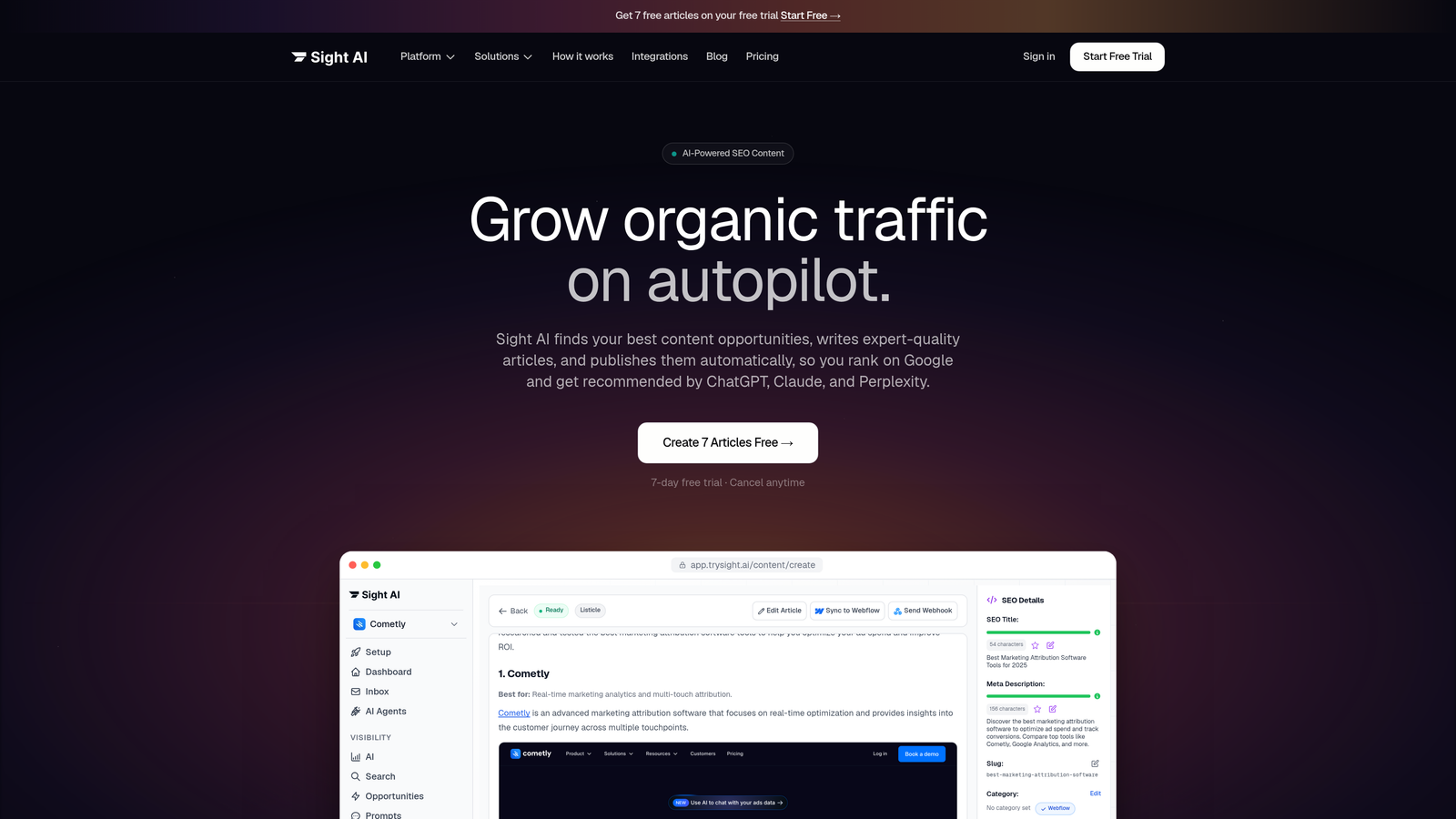
Sight AI is an all-in-one AI-powered platform combining content generation, AI brand visibility tracking, and automated website indexing for agencies and marketers managing multiple client brands.
Where This Tool Shines
Sight AI sits at the intersection of two major trends reshaping agency work: the shift to AI-generated content at scale and the rise of AI search. While most automation tools handle one layer of the workflow, Sight AI connects content creation, search indexing, and AI visibility monitoring in a single platform.
The Autopilot Mode is particularly useful for agencies running content programs across several clients. Instead of managing individual briefs, drafts, and publishing steps for each account, the platform's 13+ specialized AI agents handle the production pipeline from generation to CMS delivery, freeing up strategists for higher-value work.
Key Features
AI Visibility Score: Tracks how and how often client brands are mentioned across ChatGPT, Claude, Perplexity, and 3+ other AI platforms, giving agencies a new category of data to report to clients.
13+ Specialized AI Agents: Generates SEO and GEO-optimized articles including listicles, guides, and explainers with Autopilot Mode for hands-off, multi-client publishing.
IndexNow Integration: Automatically submits new content to search engines via IndexNow, reducing the time it takes for published content to get discovered and indexed.
CMS Auto-Publishing: Pushes content directly from the platform to client websites, eliminating the manual copy-paste step that adds hours to content workflows.
Sentiment Analysis and Prompt Tracking: Monitors not just whether a brand appears in AI responses, but how it appears and in what context, providing actionable insight for GEO strategy.
Best For
SEO and content agencies managing multiple client websites who need to scale article production without scaling headcount. Also a strong fit for any agency that wants to add AI visibility reporting as a new service offering, especially as clients increasingly ask how they appear in ChatGPT and similar platforms.
Pricing
Pricing is available on the Sight AI website. Plans are designed to scale by client volume and content output, making it practical for both boutique agencies and larger operations.
2. HubSpot
Best for: Agencies running inbound marketing, CRM management, and automated email workflows for clients
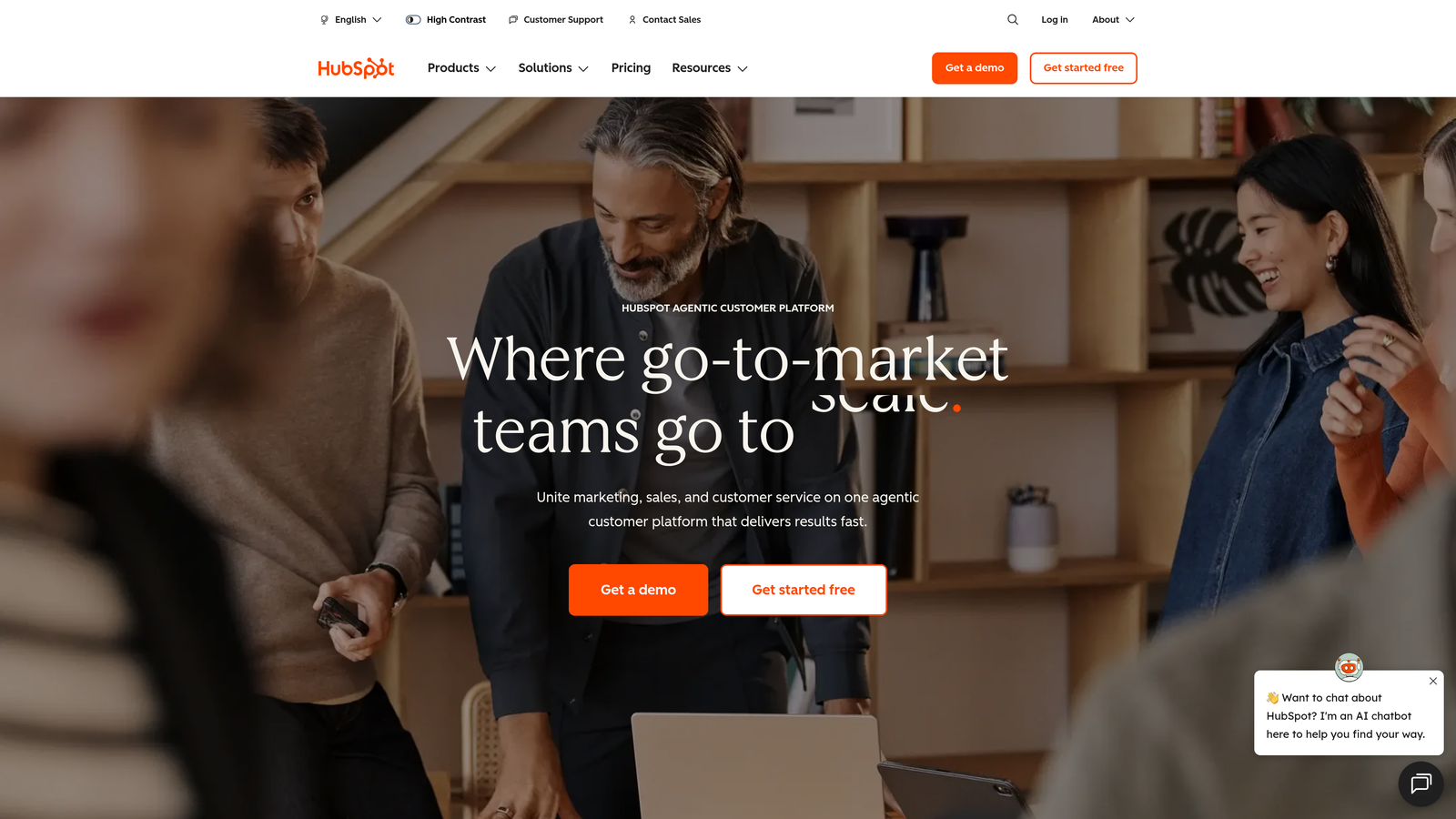
HubSpot is a comprehensive CRM and marketing automation platform with deep workflow capabilities across email, lead management, pipeline tracking, and reporting.
Where This Tool Shines
HubSpot's visual workflow builder makes it relatively straightforward to build complex automation sequences without writing code. Agencies can create behavior-triggered email campaigns, automate lead scoring updates, and manage deal pipeline transitions all from a single interface.
The agency partner program is a meaningful differentiator. It provides access to a multi-client portal, which simplifies managing separate HubSpot environments for different clients under one agency login.
Key Features
Visual Workflow Builder: Automates email sequences, lead scoring, and deal pipeline management using a drag-and-drop interface with conditional branching.
Native CRM: Tracks contacts and companies across all marketing touchpoints with full activity history and pipeline visibility.
Agency Partner Portal: Multi-client access with centralized management for agencies managing HubSpot across multiple accounts.
Automated Reporting Dashboards: Customizable metrics with scheduled report delivery, reducing manual reporting time for account managers.
1,000+ Integrations: Native connectors and API access cover virtually every tool in a modern agency stack.
Best For
Full-service and inbound marketing agencies that manage CRM, email marketing, and lead generation as core service lines. Particularly strong for agencies whose clients need a unified view of the customer journey from first touch to closed deal.
Pricing
Free tier available. Paid plans start at approximately $15/month for Marketing Hub Starter, with costs scaling significantly as contact lists and feature requirements grow.
3. Zapier
Best for: Connecting disparate tools in an agency stack without custom development
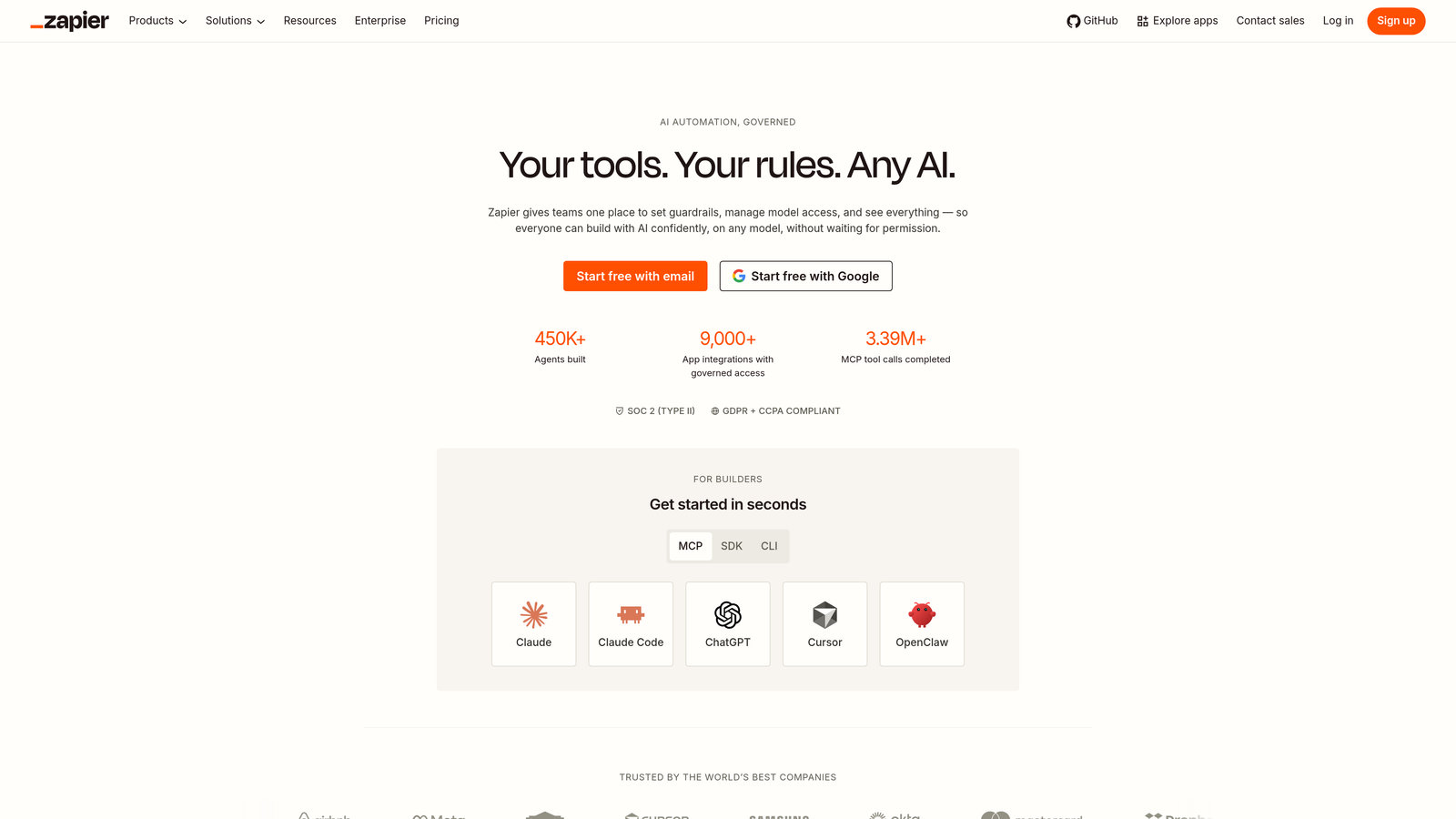
Zapier is the most widely used no-code automation platform, connecting 6,000+ apps to eliminate manual data transfer and repetitive cross-platform tasks.
Where This Tool Shines
Think of Zapier as the connective tissue of an agency's technology stack. It doesn't replace any individual tool but makes every tool work better together. When a new lead comes in from a form, Zapier can simultaneously update the CRM, notify the account team in Slack, create a project in ClickUp, and send a welcome email, all without a human touching it.
The AI-powered Zap builder is a recent addition that lowers the technical barrier further. You describe what you want to automate in plain language and the system generates the workflow structure, which is especially useful for account managers who aren't technically inclined.
Key Features
6,000+ App Integrations: Covers virtually every marketing, CRM, project management, and communication tool an agency might use.
Multi-Step Zaps with Conditional Logic: Builds complex workflows with filters, conditional paths, and multiple actions triggered by a single event.
AI-Powered Zap Builder: Generates automation workflows from natural language descriptions, reducing setup time for non-technical users.
Zapier Tables and Interfaces: Lightweight data management tools for building simple client intake forms and data trackers without a separate tool.
Team Workspaces: Shared automation management for agency teams with folder organization and access controls.
Best For
Any agency that uses more than three or four different software tools and wants to eliminate manual data entry between them. Most useful as a supporting layer rather than a standalone platform.
Pricing
Free tier available at 100 tasks per month. Paid plans start at approximately $19.99/month, scaling by task volume and feature access.
4. SEMrush
Best for: SEO agencies managing keyword tracking, site audits, and white-label reporting across multiple client projects
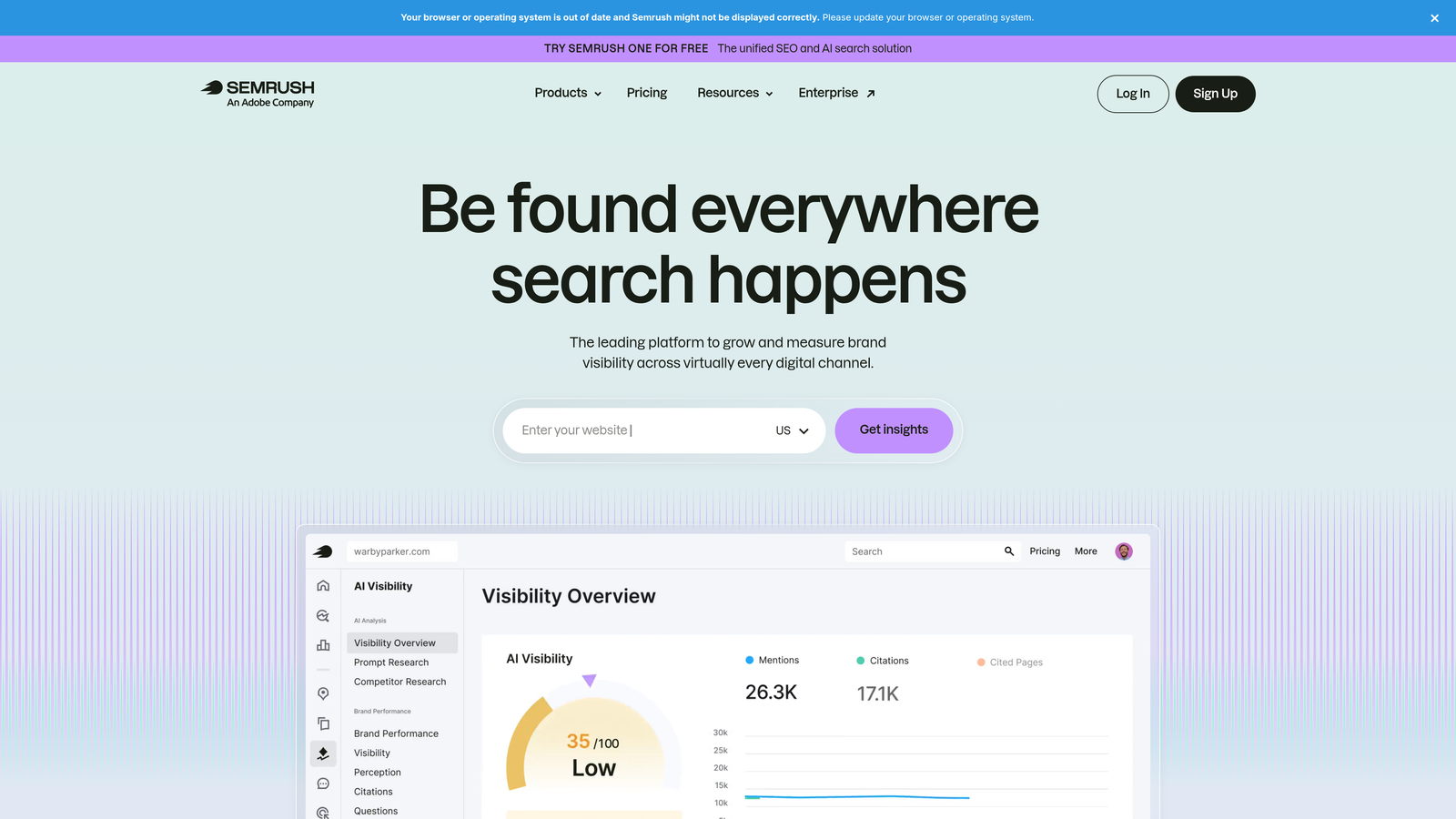
SEMrush is a comprehensive SEO and competitive intelligence platform with agency-specific features for managing and reporting across multiple client projects simultaneously.
Where This Tool Shines
SEMrush has built a substantial set of agency-oriented features on top of its core SEO functionality. Automated site audits with scheduled crawls mean agencies don't need to manually trigger checks, and rank change alerts surface issues before clients notice them.
The white-label reporting capability is particularly valuable for agencies that deliver regular SEO reports. Custom-branded PDFs with automated delivery schedules reduce the manual reporting burden that consumes significant account manager time each month.
Key Features
Automated Site Audits: Scheduled crawls with issue tracking and prioritized recommendations that update automatically without manual intervention.
Position Tracking with Alerts: Monitors unlimited keywords across client projects and sends automated notifications when rankings change significantly.
White-Label PDF Reporting: Custom-branded reports with scheduled delivery, reducing manual reporting work for account teams.
Competitive Research Automation: Tracks client and competitor visibility changes over time without requiring manual lookups.
Agency Growth Kit: Includes client management tools, a lead generation widget, and CRM features designed specifically for agency operations.
Best For
SEO-focused agencies managing five or more client accounts who need centralized keyword tracking, automated audits, and professional reporting without building custom dashboards from scratch.
Pricing
Plans start at approximately $139.95/month. Agency-specific plans with additional project capacity and white-label features are available at higher tiers.
5. AgencyAnalytics
Best for: Automating multi-channel client reporting with white-label dashboards and scheduled delivery
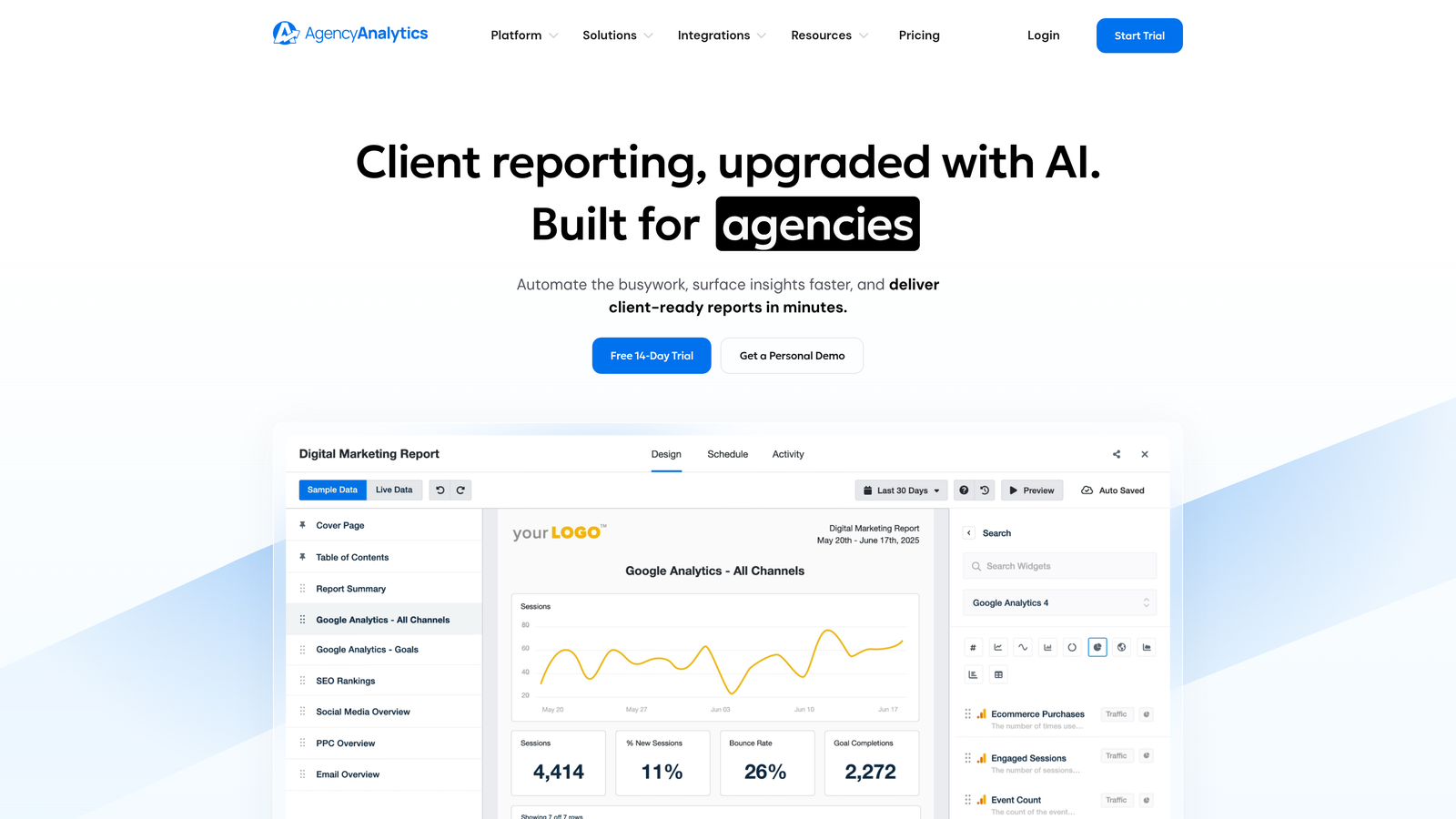
AgencyAnalytics is a reporting automation platform purpose-built for digital agencies, aggregating multi-channel data into white-label dashboards and scheduled client reports.
Where This Tool Shines
Client reporting is one of the most time-consuming recurring tasks in agency operations. AgencyAnalytics was built specifically to solve this problem. It pulls data from 80+ marketing channels into a single dashboard, applies your agency's branding, and delivers it to clients on a schedule you set.
The AI-generated report summaries are a practical time-saver. Instead of writing narrative commentary on each client's monthly performance, the platform generates draft summaries that account managers can review and personalize, compressing a multi-hour task into minutes.
Key Features
80+ Channel Integrations: Includes Google Analytics, Search Console, Meta Ads, Google Ads, LinkedIn, and dozens more in a single aggregated view.
Automated White-Label Report Delivery: Scheduled PDF and live dashboard delivery with full custom branding and domain options.
Live Client Dashboards: Real-time data updates that clients can access anytime, reducing ad hoc reporting requests.
AI-Generated Report Summaries: Automatically drafted performance narratives that account managers can edit before delivery.
Custom Metric Builder: Supports non-standard KPIs and calculated metrics for agencies with unique client reporting requirements.
Best For
Digital agencies of all sizes that deliver regular performance reports to clients across multiple marketing channels. Especially valuable for agencies where account managers are spending several hours per month on manual report assembly.
Pricing
Plans start at approximately $12/month per client campaign. Team plans with additional seats and features are available for larger agencies.
6. Buffer
Best for: Agencies managing social media scheduling and content publishing across multiple client accounts
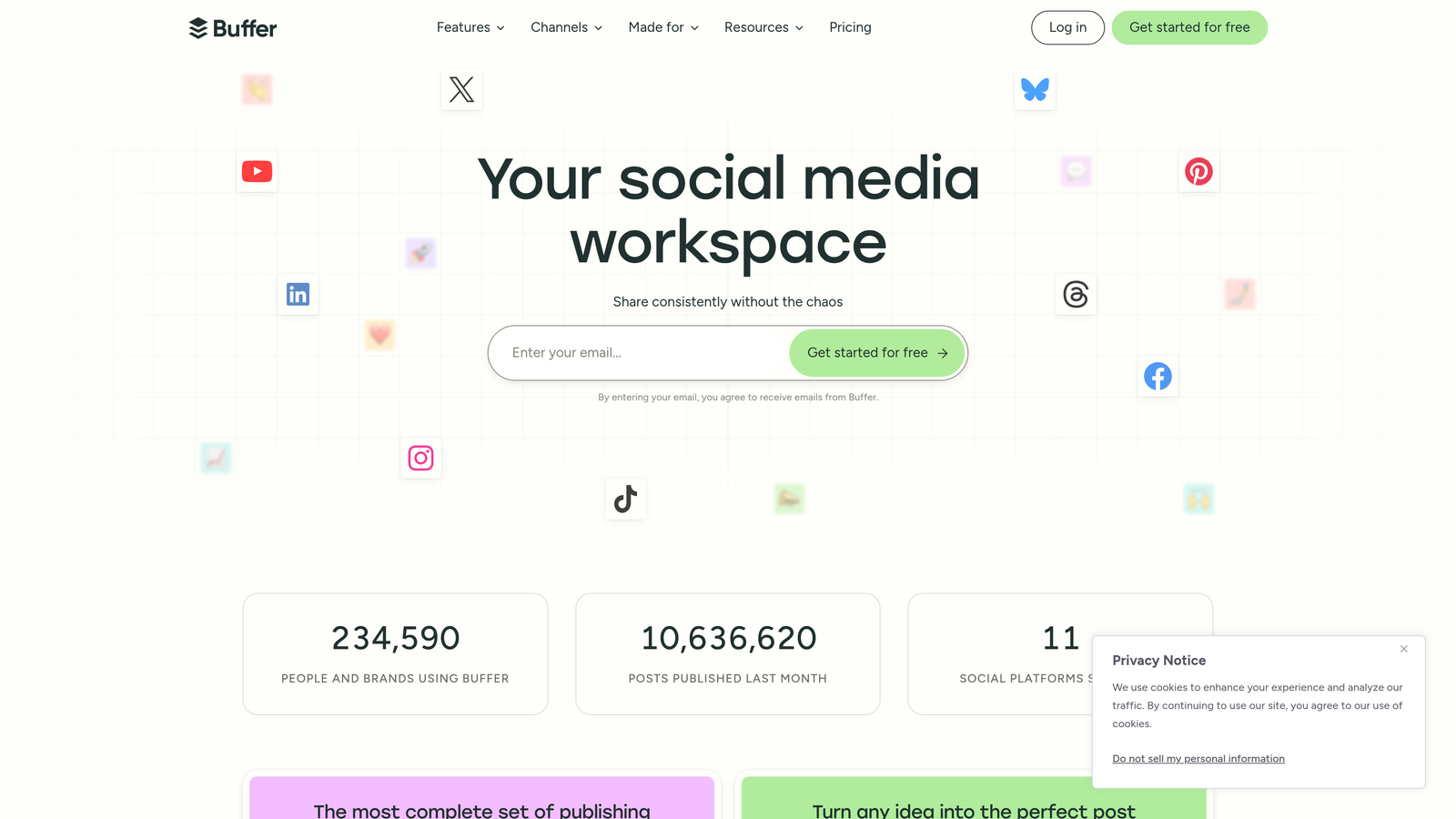
Buffer is a social media management and scheduling tool with clean multi-account support and AI-assisted content creation, well-suited for agencies offering social media as a service line.
Where This Tool Shines
Buffer's strength is its simplicity. Where some social management platforms become overwhelming with feature bloat, Buffer keeps the interface clean and the workflow straightforward. For agencies managing social across a handful of client accounts, that clarity translates directly into faster execution.
The AI Assistant handles content generation and repurposing, which is useful for agencies producing high volumes of social copy. You can generate platform-specific variations of a single idea across Instagram, LinkedIn, and X without rewriting each one manually.
Key Features
Multi-Account Scheduling: Manages Instagram, LinkedIn, X, Facebook, TikTok, and Pinterest across multiple client workspaces from a single interface.
AI Assistant: Generates and repurposes social post copy for different platforms and tones, reducing manual copywriting time.
Content Calendar: Drag-and-drop scheduling with visual calendar view for planning content across client accounts.
Engagement Inbox: Centralizes comments and DMs across accounts so community managers can respond without switching between platforms.
Analytics with Best-Time Recommendations: Performance data with automated suggestions for optimal posting times per account.
Best For
Small to mid-sized agencies managing social media for multiple clients who want an affordable, straightforward tool without the complexity or cost of enterprise social platforms.
Pricing
Free tier available. Paid plans start at approximately $6/month per channel, making it one of the more affordable options for agencies managing several accounts.
7. ActiveCampaign
Best for: Agencies running sophisticated email marketing programs with behavior-triggered automation and CRM integration
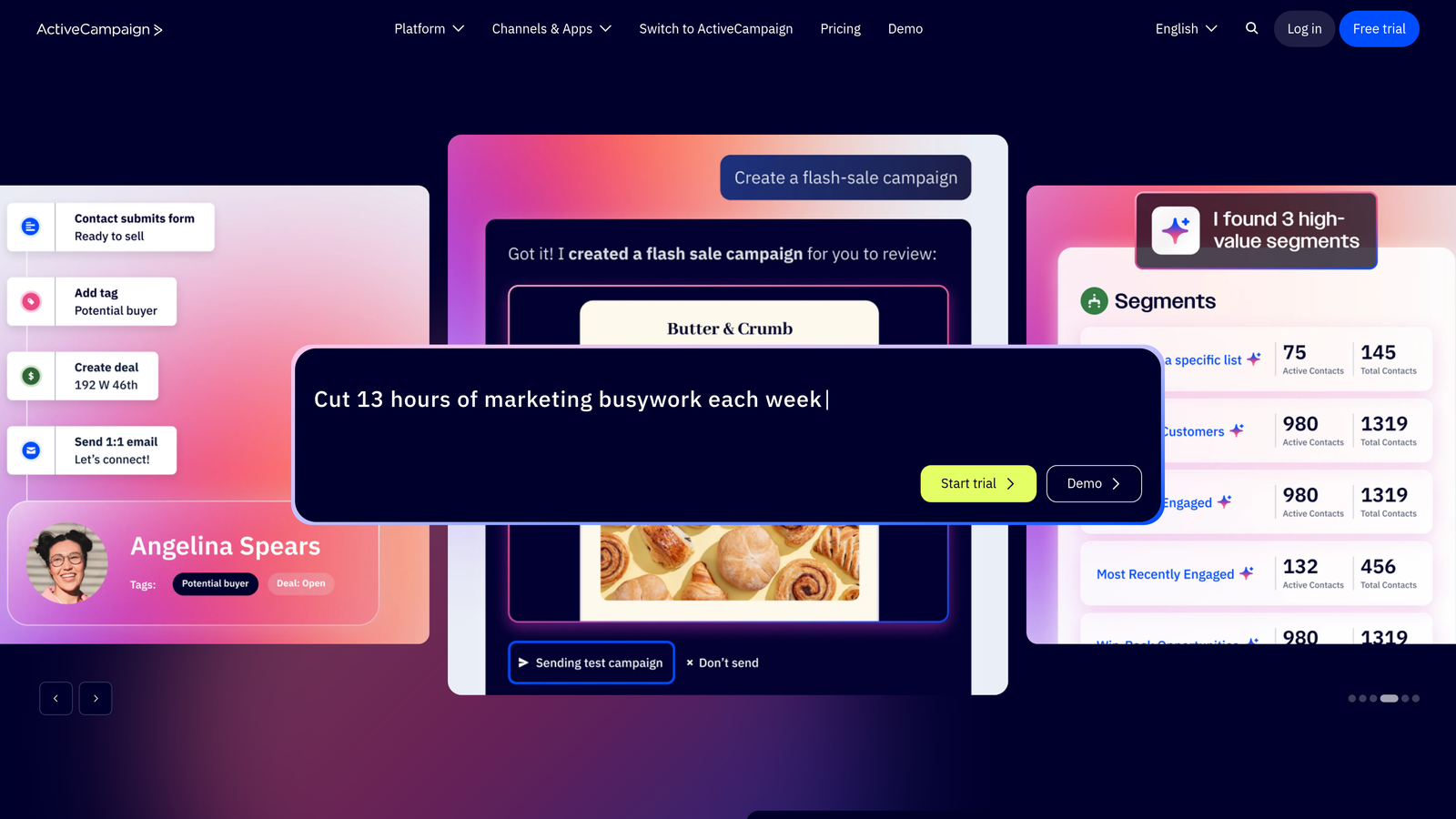
ActiveCampaign is an email marketing and CRM automation platform known for its depth of behavior-triggered workflows, making it a strong choice for agencies running email programs as a service.
Where This Tool Shines
ActiveCampaign's automation builder goes deeper than most email platforms. Beyond basic drip sequences, it supports conditional branching based on site behavior, purchase history, engagement scores, and custom events. For agencies managing email programs for clients with complex customer journeys, that depth is genuinely useful.
The predictive sending feature removes one of the more tedious optimization tasks from the workflow. Rather than manually A/B testing send times for each client list, the system learns individual subscriber behavior and delivers at the moment each person is most likely to open.
Key Features
Visual Automation Builder: Behavior-based triggers and conditional branching for complex, multi-path email workflows that respond to subscriber actions in real time.
Lead Scoring with CRM Updates: Automatically adjusts contact scores and CRM records based on email engagement and site activity.
Site and Event Tracking: Triggers personalized automations based on specific pages visited or actions taken on a client's website.
Predictive Sending: Optimizes email delivery timing per individual subscriber based on historical open behavior.
Agency Account Structures: Supports managing multiple client accounts with separate environments under an agency umbrella.
Best For
Agencies that manage email marketing as a primary or significant service line, particularly those working with clients who have longer sales cycles or complex segmentation needs.
Pricing
Plans start at approximately $15/month for the Starter tier. Costs scale primarily by contact list size, so agencies managing large lists for multiple clients should model this carefully.
8. ClickUp
Best for: Agencies automating project management, task assignment, and client approval workflows across teams
ClickUp is a project management platform with built-in automation rules that agencies use to streamline task creation, client approvals, and internal team coordination.
Where This Tool Shines
ClickUp's automation layer is what separates it from simpler project management tools. When a task status changes to "client review," it can automatically notify the client, assign a follow-up task to the account manager, and update a deadline, all without anyone manually triggering those steps.
Recurring task templates are a practical time-saver for agencies with repeatable deliverables. Monthly SEO reports, weekly social content calendars, and quarterly strategy reviews can all be templated with pre-built task structures that spin up automatically on schedule.
Key Features
Automation Rules: Triggers based on task status changes, due dates, or field updates that automatically assign tasks, send notifications, or update records.
Client Portals: Controlled visibility into project progress so clients can check status without requiring account manager updates.
Recurring Task Templates: Pre-built task structures for repeatable agency deliverables that generate automatically on set schedules.
Time Tracking and Workload Management: Built-in tracking across team members to monitor capacity and billable hours without a separate tool.
Native Integrations: Connects directly with Slack, Google Drive, HubSpot, and other common agency tools.
Best For
Agencies of any size that want to reduce the internal coordination overhead of managing multiple client projects simultaneously, particularly those with defined repeatable workflows.
Pricing
Free tier available. Paid plans start at approximately $7/user/month, making it accessible for growing agency teams.
9. Surfer SEO
Best for: Content agencies automating brief creation and on-page optimization scoring against top-ranking competitors
Surfer SEO is an on-page content optimization platform that automates content briefs and grades articles against top-ranking pages using NLP analysis.
Where This Tool Shines
Surfer removes a significant amount of manual research from the content production process. Instead of an SEO analyst spending an hour analyzing the top 10 results for a target keyword, the Content Editor generates a data-driven brief with recommended headings, word counts, and NLP terms in seconds.
The Topical Map feature is useful for agencies building out content cluster strategies for clients. It identifies gaps in a client's existing content coverage and suggests the topics needed to establish authority in a given niche, giving content strategists a structured roadmap rather than a blank slate.
Key Features
Content Editor with NLP Scoring: Real-time scoring against top-ranking competitors with specific term recommendations as writers work.
Automated Content Brief Generation: Produces recommended headings, word counts, and NLP terms based on SERP analysis, replacing manual competitor research.
SERP Analyzer: Breaks down ranking patterns at scale to identify what content factors correlate with top positions for specific keywords.
Topical Map: Identifies content cluster opportunities and gaps to guide long-term content strategy for client websites.
Surfer AI: Generates draft articles aligned to content scores, providing a starting point that writers can refine rather than build from scratch.
Best For
Content agencies and SEO teams that produce high volumes of written content and want to systematize the brief creation and optimization process across multiple client projects.
Pricing
Plans start at approximately $99/month. Agency-specific plans with higher content limits and additional user seats are available at higher tiers.
10. Make (formerly Integromat)
Best for: Technically capable agencies building complex, multi-step automation pipelines with granular data control
Make is a visual workflow automation platform offering more granular control than Zapier, preferred by agencies with developers or technically inclined operations staff who need to build sophisticated automation logic.
Where This Tool Shines
Where Zapier prioritizes accessibility, Make prioritizes power. The visual scenario builder shows every data transformation step explicitly, which makes it easier to debug complex workflows and build automations that handle edge cases gracefully. For agencies building automation infrastructure rather than one-off connections, that visibility matters.
The HTTP and Webhook modules are particularly valuable for connecting tools that don't have native Make integrations. If a client uses a niche platform or a proprietary internal system, Make can often integrate with it via API without requiring custom development work.
Key Features
Visual Scenario Builder: Drag-and-drop module connections with explicit data flow visualization, making complex workflows easier to build and debug.
Advanced Data Transformation: Filtering, conditional routing, and data manipulation at each step of a workflow, not just at the trigger level.
HTTP and Webhook Modules: Connects tools without native Make integrations via direct API calls, significantly expanding what can be automated.
Flexible Scheduling and Triggers: Supports both scheduled runs and real-time triggers depending on workflow requirements.
Team Workspaces: Shared scenario management with organizational folders and access controls for agency teams.
Best For
Agencies with a developer or technically capable operations lead who need to build automation workflows beyond what no-code tools handle well, particularly those connecting custom or niche platforms.
Pricing
Free tier available at 1,000 operations per month. Paid plans start at approximately $9/month, making it a cost-effective option even for complex use cases.
Which Tool Is Right for Your Agency?
The right combination depends on what kind of agency you run and where your biggest operational bottlenecks live.
SEO agencies will get the most leverage from pairing Sight AI with SEMrush and AgencyAnalytics. Sight AI handles content production and AI visibility tracking, SEMrush manages technical SEO monitoring and competitive intelligence, and AgencyAnalytics automates the reporting layer that ties it all together for clients.
Content agencies should look at Sight AI alongside Surfer SEO. Surfer handles brief creation and on-page optimization scoring, while Sight AI's 13+ AI agents and Autopilot Mode take care of scaled article production, CMS publishing, and indexing automation across multiple client sites.
Full-service agencies need a broader stack. HubSpot or ActiveCampaign as the CRM and email backbone, ClickUp for project and workflow management, and Zapier or Make as the connective layer between everything else will cover most operational needs.
The most practical starting point is an honest audit of where your team's hours are actually going. Identify the three workflows that consume the most non-billable time and address those first. Automation stacks built around real pain points deliver measurable returns. Stacks assembled from feature lists rarely do.
For agencies adding AI search visibility to their service offering, or those wanting to scale content production without adding headcount, Sight AI is worth exploring first. Start tracking your AI visibility today and see exactly where your clients' brands appear across the top AI platforms, including ChatGPT, Claude, and Perplexity. It's a category of data that clients are starting to ask about, and having the infrastructure in place before they do is a meaningful competitive advantage.