If you've ever published a well-researched article only to watch it sit on page three while thinner competitor content ranks above it, semantic relevance is likely the missing piece. Modern search engines don't just scan for your target keyword; they assess whether your content demonstrates genuine topical depth by looking at the related terms, entities, and concepts surrounding it.
This is where LSI keyword generators come in. While "LSI" technically refers to a specific mathematical technique from the 1980s, the SEO industry uses the term broadly to describe semantically related terms that help search engines and AI models understand what your content is really about. With AI platforms like ChatGPT, Perplexity, and Claude now surfacing content recommendations, semantic depth has become critical not just for ranking on Google but for getting your brand mentioned across AI search.
The right tool helps you uncover those related terms, build topical authority, and create content that performs across both traditional and AI-driven search environments. Selection criteria for this list include semantic analysis quality, ease of use, integration capabilities, and pricing transparency. Here are the top LSI keyword generators worth your attention in 2026.
1. Sight AI
Best for: Teams wanting semantic optimization built into content generation and AI visibility tracking
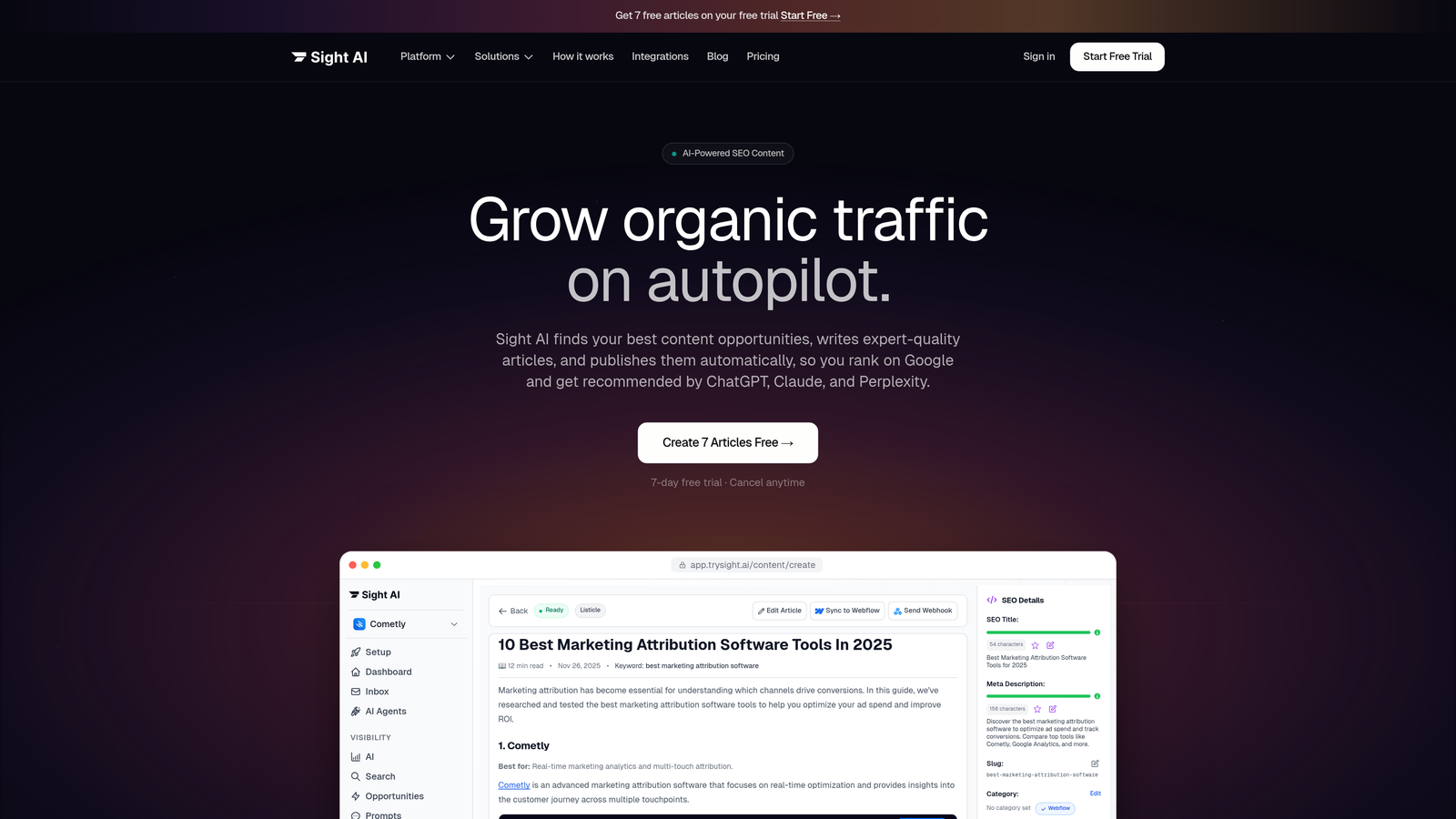
Sight AI is an AI-powered content platform that generates SEO and GEO-optimized articles with semantic keyword intelligence built in from the ground up.
Where This Tool Shines
Most LSI keyword tools give you a list and leave the rest to you. Sight AI takes a different approach: semantic enrichment is embedded directly into the content generation process itself. Its 13+ specialized AI writing agents don't just suggest related terms; they weave semantically relevant language into articles as they're written, so your content reflects genuine topical depth rather than keyword stuffing after the fact.
What genuinely sets Sight AI apart from every other tool on this list is its AI Visibility tracking layer. Beyond optimizing for Google, it monitors how AI models like ChatGPT, Claude, and Perplexity actually talk about your brand. For marketers and agencies focused on the emerging GEO landscape, this combination of semantic content generation and AI mention tracking is a meaningful advantage.
Key Features
13+ Specialized AI Writing Agents: Each agent handles a specific content format (listicles, guides, explainers) and automatically incorporates semantically related terms throughout the output.
AI Visibility Tracking: Monitors brand mentions across ChatGPT, Claude, Perplexity, and other major AI platforms with sentiment analysis and prompt tracking.
Autopilot Mode: End-to-end content generation with semantic optimization, from keyword research to published article, with minimal manual intervention.
IndexNow Integration: Automatically notifies search engines after publishing so your semantically optimized content gets discovered faster.
CMS Auto-Publishing: Streamlines the workflow from content creation to live publication, reducing the gap between content generation and indexing.
Best For
Marketers, founders, and agencies who want semantic optimization to happen automatically during content creation rather than as a separate step. Particularly valuable for teams tracking both traditional SEO performance and AI model visibility simultaneously.
Pricing
Visit trysight.ai for current pricing plans. Multiple tiers are available to suit different team sizes and content volumes.
2. LSIGraph
Best for: Quick, dedicated LSI keyword research with relevance scoring
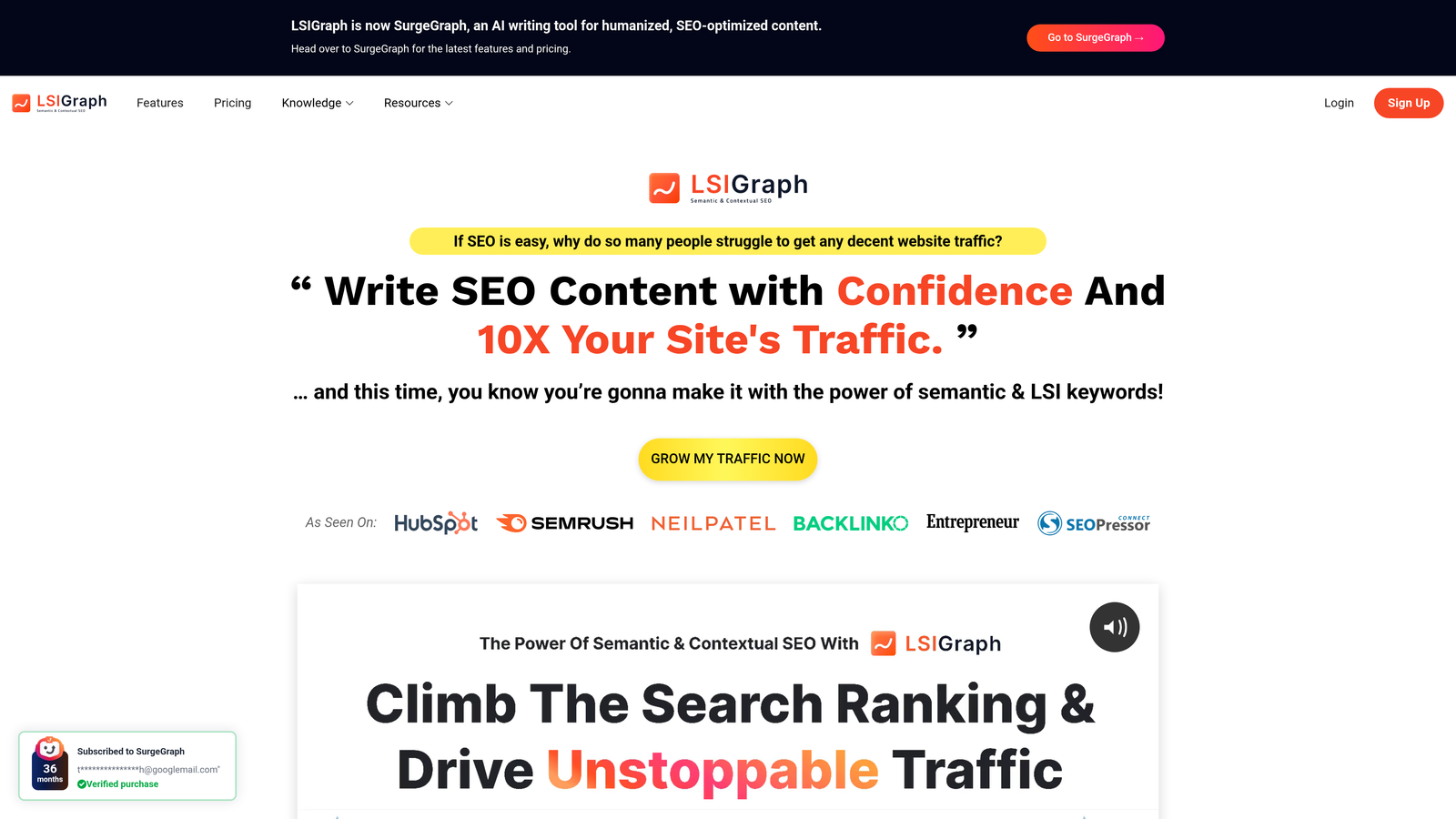
LSIGraph is a purpose-built LSI keyword generator that produces large lists of semantically related terms from any seed keyword, complete with content optimization scoring.
Where This Tool Shines
LSIGraph does one thing and does it well. Enter a seed keyword and you get an extensive list of semantically related terms with relevance scores attached to each. This makes it easy to prioritize which terms to incorporate first rather than guessing at semantic importance.
The content optimization score is a practical feature for existing pages. You can benchmark a published article against LSIGraph's semantic recommendations to identify which related terms you're missing, making it useful for both new content planning and updating older pages.
Key Features
Purpose-Built LSI Generation: Specifically designed to surface semantically related terms, not a generic keyword tool with LSI bolted on.
Relevance Scoring: Each suggested term comes with a score indicating how closely it relates to your seed keyword.
Content Optimization Score: Benchmarks existing pages against semantic recommendations to identify coverage gaps.
Trend Data and Search Volume: Adds keyword performance context so you can prioritize high-value semantic terms.
Best For
SEO writers and content managers who want a straightforward, affordable tool dedicated specifically to semantic keyword discovery without the overhead of a full content optimization platform.
Pricing
Free tier with limited searches available. Paid plans start around $44/month for expanded access and full feature sets.
3. Surfer SEO
Best for: Real-time semantic keyword suggestions during content writing
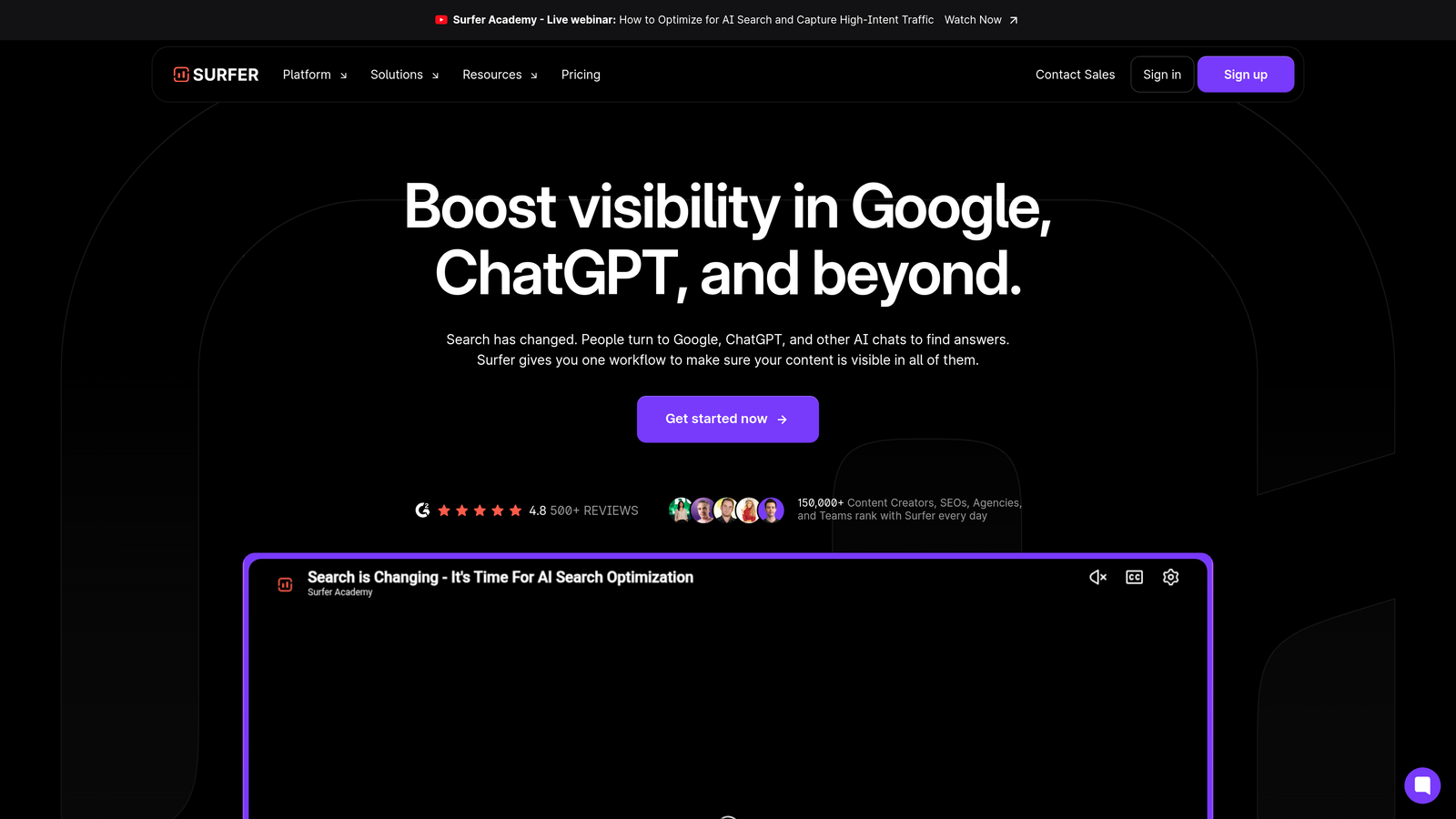
Surfer SEO is a content optimization platform that uses NLP analysis of top-ranking pages to surface semantically related keywords and provide real-time content scoring as you write.
Where This Tool Shines
Surfer's Content Editor is where most users spend their time. It analyzes the top-ranking SERP results for your target keyword and extracts the semantic terms those pages use, then displays them in a live sidebar as you write. You can see your content score update in real time as you incorporate recommended terms, which creates a useful feedback loop.
The SERP Analyzer adds another dimension by showing exactly how semantic term usage varies across the top results. This helps you understand not just which terms to include but how comprehensively your competitors are covering related topics.
Key Features
Content Editor: Real-time NLP-driven keyword suggestions with a live content score that updates as you write.
SERP Analyzer: Compares semantic term usage across top-ranking pages to identify patterns and gaps.
Integrations: Connects with Google Docs, WordPress, and Jasper for in-workflow optimization.
Audit Tool: Analyzes existing published content and identifies missing semantic terms for optimization.
Best For
Content teams and freelance writers who want semantic guidance directly inside their writing environment, and agencies managing multiple clients with ongoing content optimization needs.
Pricing
Plans start around $89/month. Higher tiers unlock additional Content Editor credits and team features.
4. SEMrush SEO Content Template
Best for: All-in-one SEO suite with semantic features included
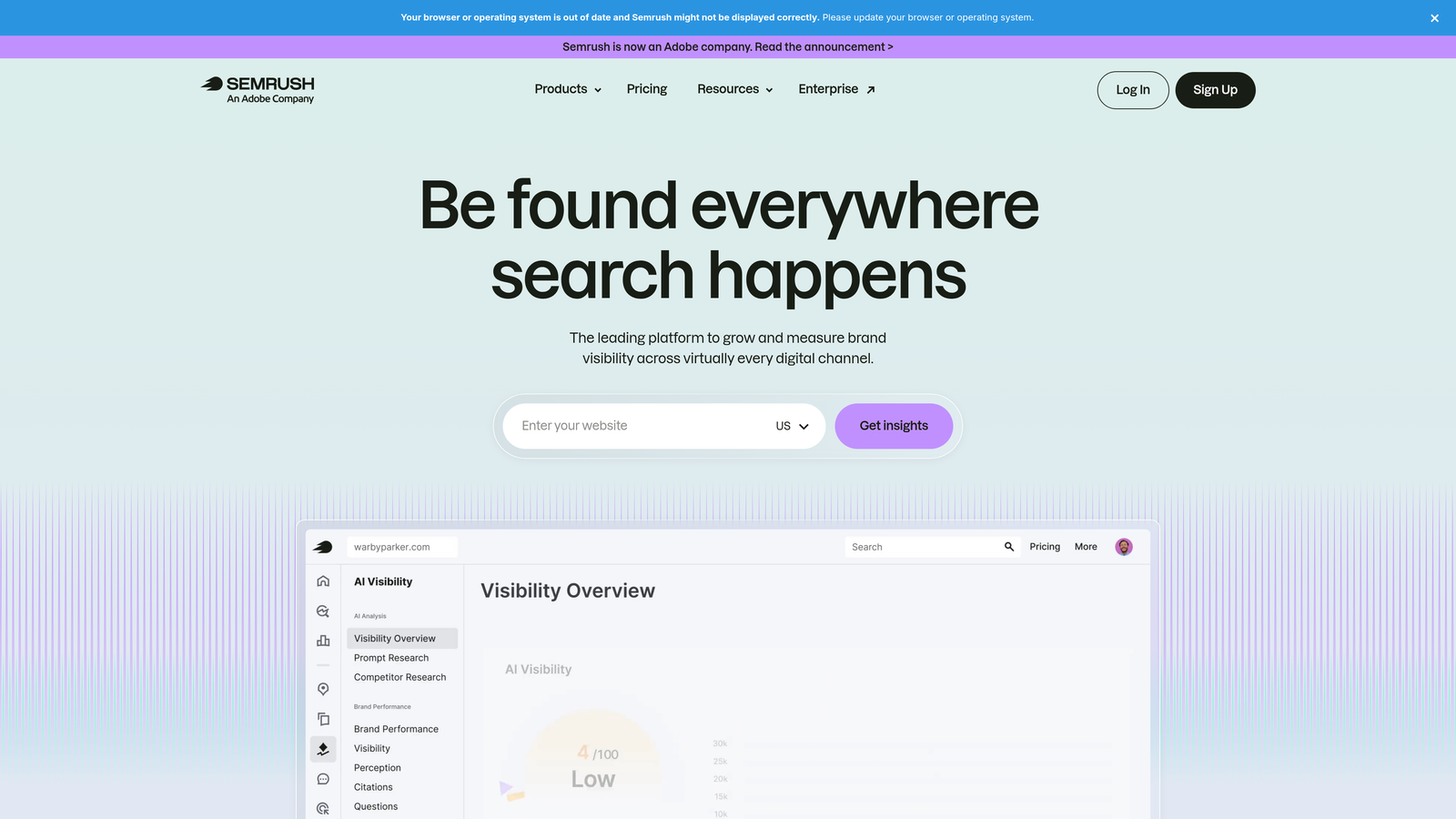
SEMrush is an enterprise SEO suite with built-in semantic keyword recommendations via its SEO Content Template and Topic Research tools.
Where This Tool Shines
SEMrush's approach to semantic keywords is embedded within a much broader platform. The SEO Content Template analyzes the top 10 SERP results for your keyword and extracts semantically related terms those pages use, presenting them as recommendations for your own content. This SERP-driven approach means recommendations are grounded in what's actually ranking.
The SEO Writing Assistant extends this into a real-time grading tool that evaluates your content's semantic coverage, readability, and originality simultaneously. For teams already using SEMrush for rank tracking, backlinks, and site audits, having semantic optimization in the same platform reduces tool sprawl significantly.
Key Features
SEO Content Template: Extracts semantically related terms from top-10 SERP results for any target keyword.
Topic Research: Maps related subtopics, questions, and heading structures to guide comprehensive content planning.
SEO Writing Assistant: Grades content in real time on semantic optimization, readability, and tone.
Full Suite Integration: Semantic features sit alongside rank tracking, backlink analysis, and technical site audit tools.
Best For
Marketing teams and agencies that already need a comprehensive SEO platform and want semantic keyword features included rather than paying for a separate dedicated tool.
Pricing
Plans start at $139.95/month. Semantic content features are included in the Pro tier and above.
5. Frase
Best for: Semantic content briefs built from SERP analysis
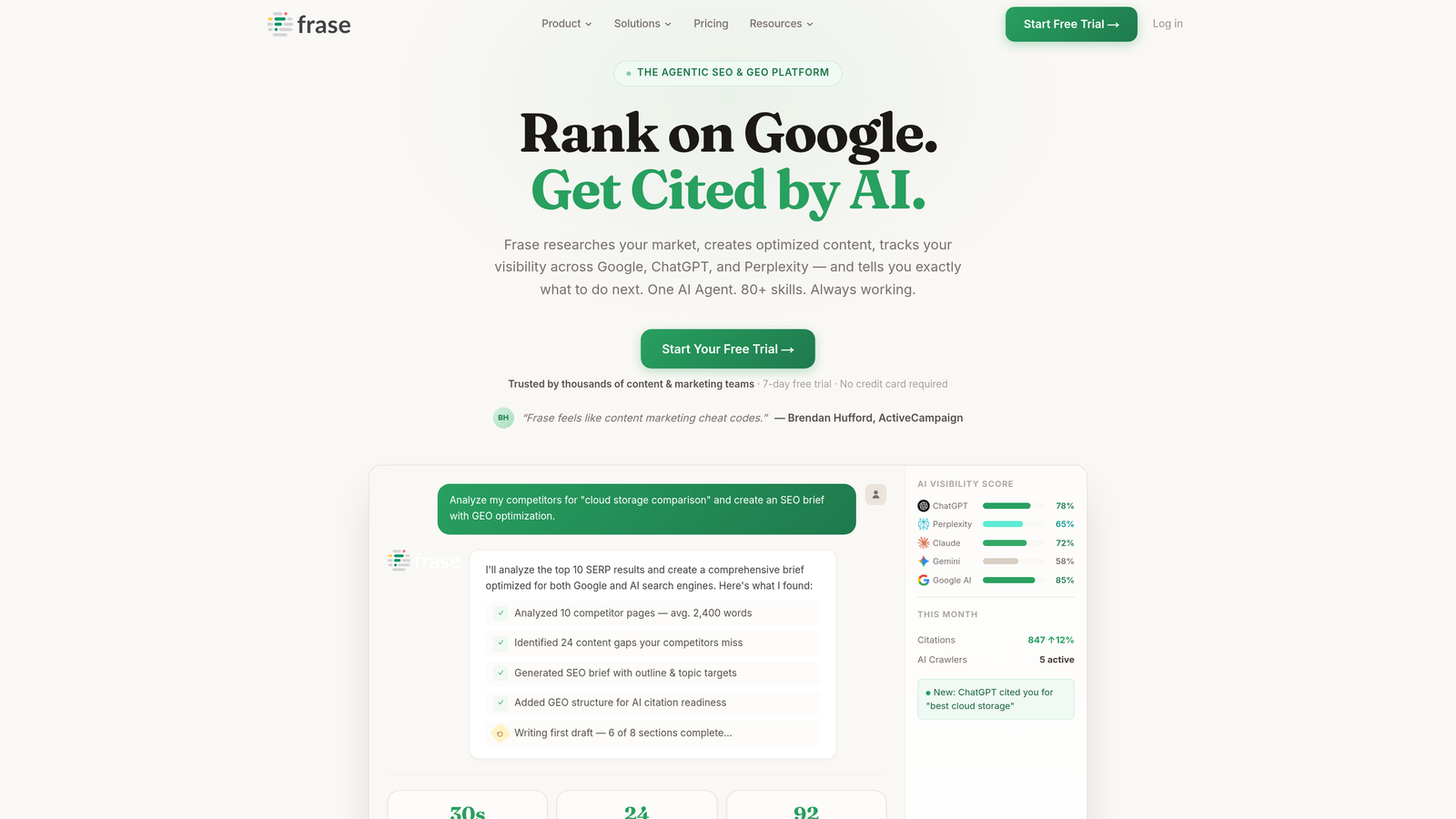
Frase is an AI content tool that builds comprehensive briefs by analyzing top SERP results and extracting semantically relevant topics, entities, and questions.
Where This Tool Shines
Frase excels at the research and briefing phase of content creation. It pulls the top-ranking pages for your keyword, extracts the semantic topics and entities they cover, and organizes these into a structured brief with suggested headings and related terms. This gives writers a clear semantic roadmap before they start writing.
The built-in AI writing assistant can then generate content that follows the brief, incorporating semantic suggestions as it goes. For content strategists managing multiple writers, Frase's briefing capabilities reduce the back-and-forth of explaining semantic requirements manually.
Key Features
SERP-Based Semantic Extraction: Identifies topics, entities, and related terms from top-ranking competitor pages.
AI-Generated Content Briefs: Produces structured briefs with suggested headings and semantically relevant terms.
Built-In AI Writer: Generates content that incorporates semantic suggestions from the brief.
Content Scoring: Grades your content against top-ranking competitors on semantic coverage.
Best For
Content strategists, editorial teams, and solo creators who need detailed semantic briefs to guide writing and want AI assistance that follows those briefs.
Pricing
Solo plans start at $15/month. Team plans from $115/month with expanded AI capabilities and user seats.
6. Clearscope
Best for: Premium NLP-driven semantic grading with clear content benchmarks
Clearscope is a premium content optimization platform using NLP to generate weighted lists of semantically important terms and grade content coverage from A++ to F.
Where This Tool Shines
Clearscope's grading system is its most distinctive feature. Every piece of content receives a letter grade based on how comprehensively it covers the semantically important terms for a given keyword. This makes it easy to set clear quality standards across a content team: aim for B or above before publishing, for example.
The importance weighting on semantic term recommendations is also genuinely useful. Not all related terms carry equal weight, and Clearscope's NLP analysis helps you distinguish between terms that are critical for topical completeness and those that are merely nice to have.
Key Features
Weighted Semantic Recommendations: NLP-powered term suggestions ranked by importance to topical completeness.
Content Grading System: Letter grades from A++ to F provide a clear, objective benchmark for semantic coverage.
Google Docs and WordPress Integrations: Optimize content directly within existing writing workflows.
Competitor Gap Analysis: Shows which semantic terms top-ranking competitors cover that your content currently misses.
Best For
Content teams at mid-size to enterprise companies that need consistent semantic quality standards across multiple writers and want clear, objective grading to enforce those standards.
Pricing
Starts at approximately $170/month for the Essentials plan. Higher tiers add team seats and additional report volume.
7. MarketMuse
Best for: Topical authority modeling and site-wide semantic gap analysis
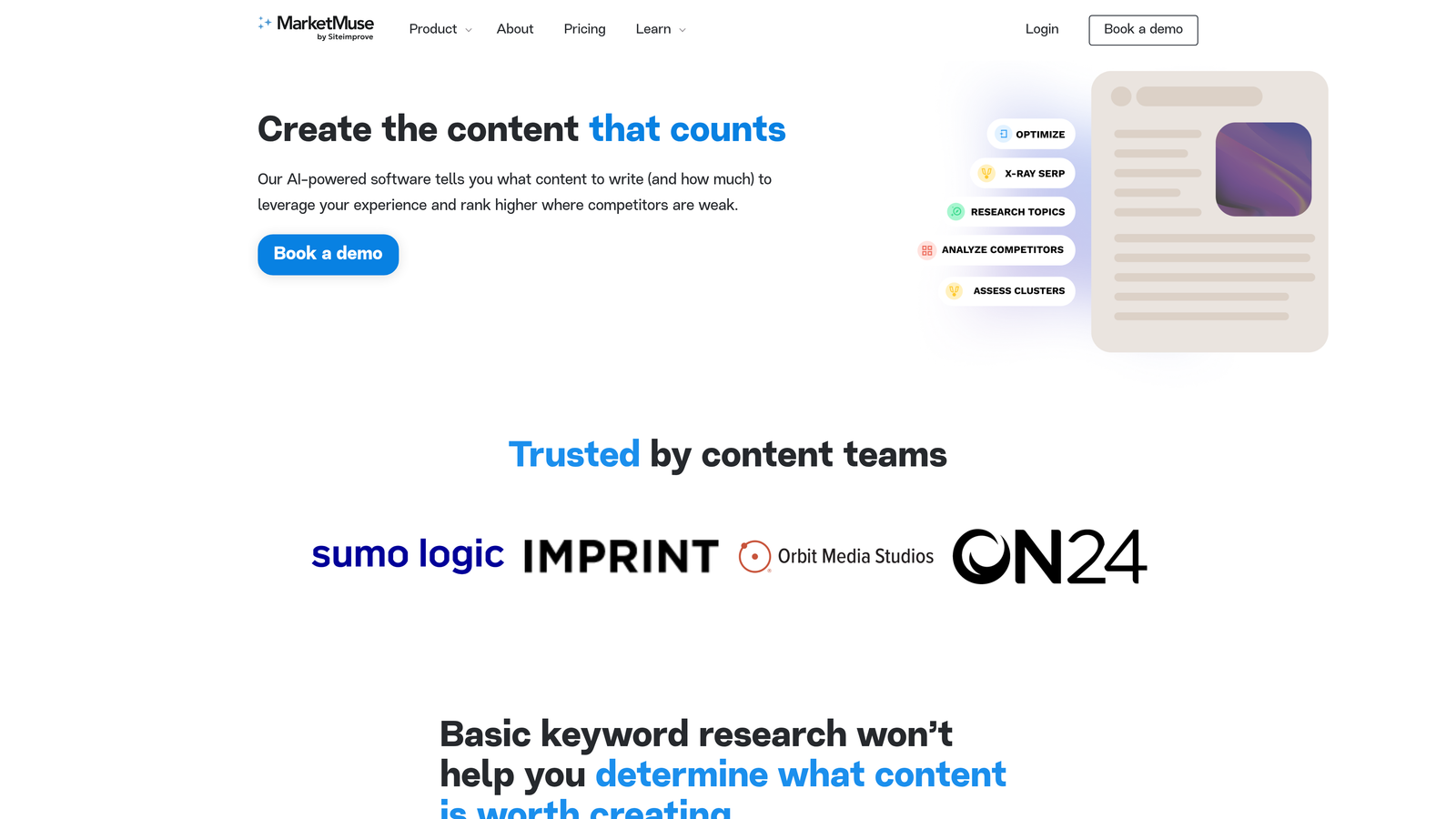
MarketMuse is an AI-driven content strategy platform that models topical authority and identifies semantic content gaps across your entire site, not just individual pages.
Where This Tool Shines
Where most tools focus on optimizing individual pieces of content, MarketMuse takes a site-wide view. Its topic modeling maps entire semantic clusters, showing you which subtopics and related terms your domain covers well and where significant gaps exist. This is particularly valuable for building the kind of topical authority that both Google and AI models reward.
The personalized difficulty scores are a standout feature. Rather than showing generic keyword difficulty, MarketMuse calibrates difficulty based on your site's existing topical authority. A topic that's hard for most sites might be achievable for you if you already have strong related content, and vice versa.
Key Features
Topic Modeling: Maps entire semantic clusters across your domain, not just individual keyword relationships.
Personalized Difficulty Scores: Calibrates keyword difficulty based on your site's existing topical authority.
Content Briefs: Includes semantically related topics, competitive benchmarks, and recommended word counts.
Content Inventory Analysis: Identifies semantic gaps across your entire published content library.
Best For
Content strategists and SEO managers at growing brands or agencies who are building long-term topical authority and need a strategic view of semantic gaps across their entire content ecosystem.
Pricing
Free tier available with limited access. Paid plans start around $149/month, with enterprise pricing for larger teams.
8. Twinword Ideas
Best for: Budget-friendly semantic clustering with visual keyword mapping
Twinword Ideas is a lightweight keyword tool with visual semantic clustering and user intent filtering, ideal for quick LSI research on a budget.
Where This Tool Shines
Twinword Ideas presents semantic keyword relationships visually, grouping related terms into clusters that make it easy to see how different topics connect around your seed keyword. For visual thinkers and content planners who want to map out semantic territory quickly, this interface is genuinely more intuitive than a flat list of terms.
The user intent filter adds practical value by sorting keywords into informational, transactional, navigational, and commercial categories. This means you can use Twinword not just to find semantically related terms but to understand the intent landscape around a topic, which helps with content planning across the funnel.
Key Features
Visual Mind-Map Interface: Groups keywords by semantic relevance in a visual cluster format rather than a flat list.
User Intent Filter: Categorizes keywords by informational, transactional, navigational, and commercial intent.
Semantic Score: Indicates how closely each term relates to the seed keyword.
Related Topic Discovery: Surfaces popular topics and related keyword groups beyond direct synonyms.
Best For
Freelancers, small business owners, and early-stage content teams who need solid semantic keyword research without committing to a high monthly subscription. Also useful for content planners who think visually.
Pricing
Free limited use available. Paid plans start from around $12/month, making it one of the most affordable options on this list.
9. Google Cloud Natural Language API
Best for: Technical teams building custom semantic keyword workflows
Google Cloud Natural Language API is Google's raw NLP engine for extracting entities, salience scores, and semantic categories from text, designed for technical teams who want to build custom semantic analysis pipelines.
Where This Tool Shines
This isn't a plug-and-play keyword tool. It's an API that gives you direct access to Google's own NLP capabilities, which means you can analyze text the same way Google does. You can feed it competitor content, extract entities and their salience scores, and reverse-engineer the semantic signals those pages are sending to search engines.
The flexibility is the point. Technical teams can build entirely custom workflows: automatically analyzing new competitor content, tracking semantic shifts in a niche over time, or integrating entity extraction into proprietary content management systems. No off-the-shelf tool offers this level of customization.
Key Features
Entity Extraction with Salience Scoring: Identifies key entities in any text and scores how central each is to the content's meaning.
Sentiment and Semantic Category Analysis: Provides deeper contextual understanding beyond simple entity identification.
Competitor Content Analysis: Can be used to reverse-engineer the semantic structure of top-ranking pages.
Scalable Pay-Per-Use Model: Scales with actual usage rather than a fixed monthly subscription.
Best For
Development teams, technical SEOs, and data-driven agencies who want to build proprietary semantic analysis tools or integrate NLP capabilities directly into existing platforms and workflows.
Pricing
Pay-per-use pricing. The first 5,000 units per month are free, then per-request pricing applies based on feature usage.
Which LSI Keyword Tool Is Right for You
The best choice depends on where semantic keyword research fits into your broader workflow. Here's a quick breakdown to help you decide.
If you want semantic optimization to happen automatically during content creation rather than as a separate research step, Sight AI is the standout choice. It's the only tool on this list that combines AI-powered semantic content generation with AI visibility tracking, so you're optimizing for both Google rankings and mentions across AI platforms like ChatGPT and Claude simultaneously.
For quick, dedicated LSI research without the overhead of a full platform, LSIGraph delivers focused results at an accessible price point. If you need semantic guidance directly inside your writing environment, Surfer SEO or Clearscope are the strongest options, with Clearscope's grading system being particularly useful for teams enforcing content quality standards at scale.
Teams already invested in an all-in-one SEO suite will find SEMrush covers semantic keyword needs without adding another subscription. For content strategy and briefing workflows, Frase works well at a mid-range price, while MarketMuse is the better choice when you need site-wide topical authority modeling. On a tight budget, Twinword Ideas offers solid semantic clustering at a fraction of the cost of enterprise tools. And for technical teams who want to build custom NLP pipelines, the Google Cloud Natural Language API offers unmatched flexibility.
One thing all these tools share: they reflect a broader shift in how search works. Semantic depth is no longer optional. Search engines and AI models alike reward content that demonstrates genuine topical authority, which means getting your semantic keyword strategy right has compounding benefits across both traditional SEO and the growing AI search landscape.
Ready to go further? Start tracking your AI visibility today and see exactly where your brand appears across top AI platforms. Stop guessing how ChatGPT and Claude talk about you and start building the semantic content strategy that gets you mentioned consistently.