AI models like ChatGPT, Claude, and Perplexity are already recommending brands, comparing tools, and guiding purchase decisions. The unsettling part? Your brand might be getting mentioned, misrepresented, or completely ignored right now, and you'd have no way of knowing. Traditional SEO dashboards track Google rankings, but they go completely dark when it comes to AI-generated answers.
This is the visibility gap that's quietly compounding for brands that haven't addressed it yet. To help you close that gap, this list covers tools across three critical angles: monitoring what AI models say about your brand, generating the kind of structured content that earns AI mentions, and indexing that content fast enough to matter. If you're working on broader organic growth strategies, it's also worth exploring how to improve website visibility and improve website ranking as complementary foundations.
Here are the top tools to stop losing visibility in AI platforms in 2026.
1. Sight AI
Best for: Teams that want monitoring, content generation, and indexing in one platform.
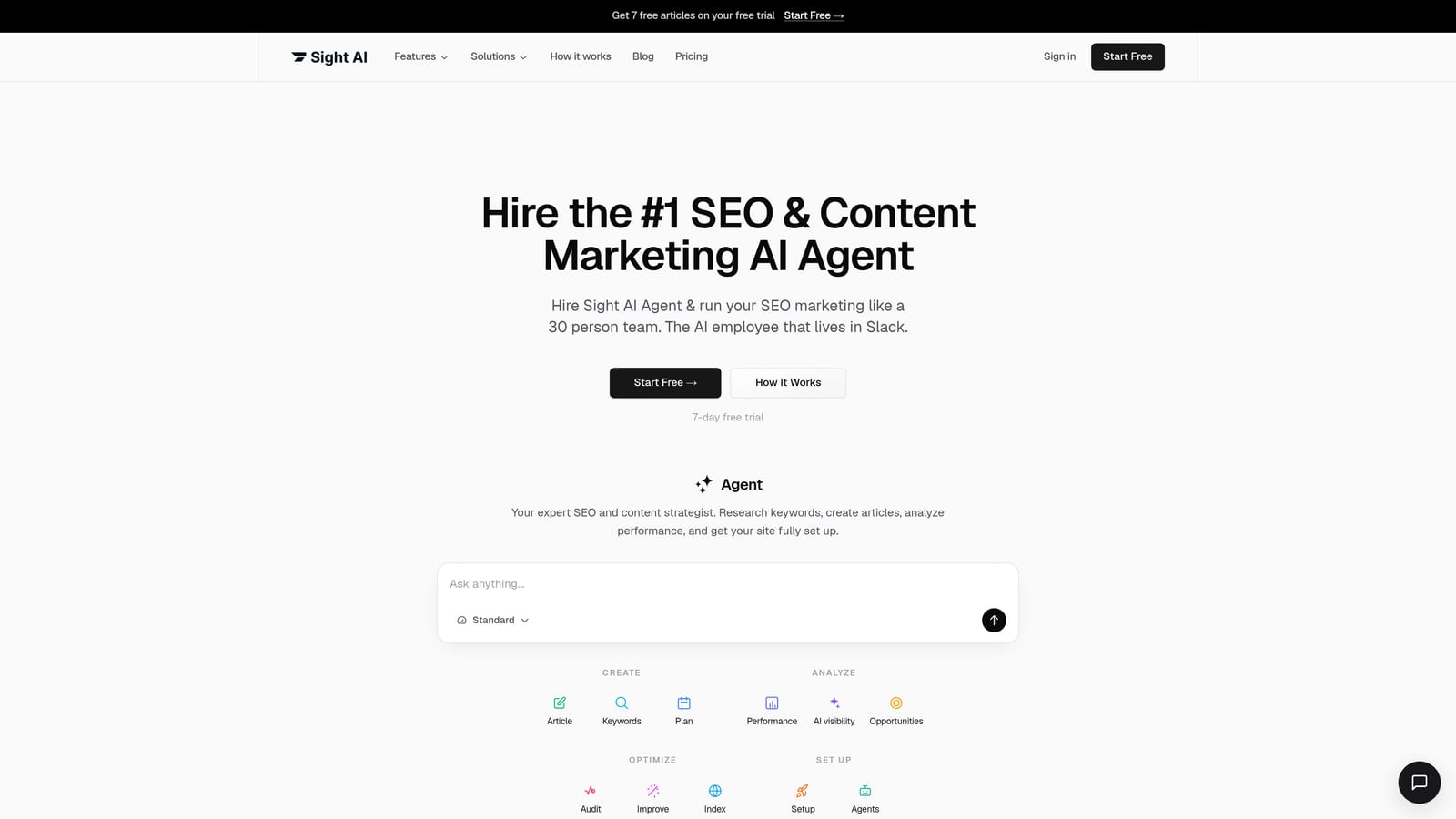
Sight AI is an all-in-one AI visibility platform that tracks brand mentions across 6+ AI models, generates SEO and GEO-optimized content using 13+ specialized AI agents, and accelerates content discovery through IndexNow integration.
Where This Tool Shines
Most tools in this space solve one piece of the puzzle. Sight AI addresses all three layers at once: knowing what AI models say about you, creating content that improves those signals, and making sure that content gets indexed before it becomes irrelevant. That end-to-end loop is genuinely rare in this category.
The AI Visibility Score gives you a concrete, trackable metric tied to sentiment analysis across major platforms. Prompt tracking goes a step further by showing you the exact queries that surface your brand or, critically, the ones where competitors appear and you don't. That kind of granularity makes it actionable rather than just informational.
Key Features
AI Visibility Score: Tracks brand presence and sentiment across ChatGPT, Claude, Perplexity, and more, giving you a single score to monitor over time.
Prompt Tracking: Surfaces the specific prompts where your brand appears or is absent, so you know exactly which content gaps to close.
13+ Specialized AI Agents: Generate listicles, how-to guides, explainers, and other structured content formats optimized for both traditional SEO and AI citation signals.
Autopilot Mode: Automates content publishing so your pipeline keeps running without constant manual input.
IndexNow Integration: Pushes newly published content to search engines immediately, reducing the lag between publishing and discovery.
CMS Auto-Publishing: Connects directly to your CMS for seamless deployment without extra workflow steps.
Best For
Marketers, founders, and agencies who want a single platform to track AI brand visibility, generate AI-optimized content at scale, and ensure that content gets indexed fast. Particularly strong for teams in competitive categories where AI recommendation slots are actively contested.
Pricing
Visit trysight.ai for current pricing tiers. Verify directly on the site before making a decision, as plans may have been updated.
2. Promptwatch
Best for: Brands that want granular, prompt-level insight into how AI chatbots reference them.
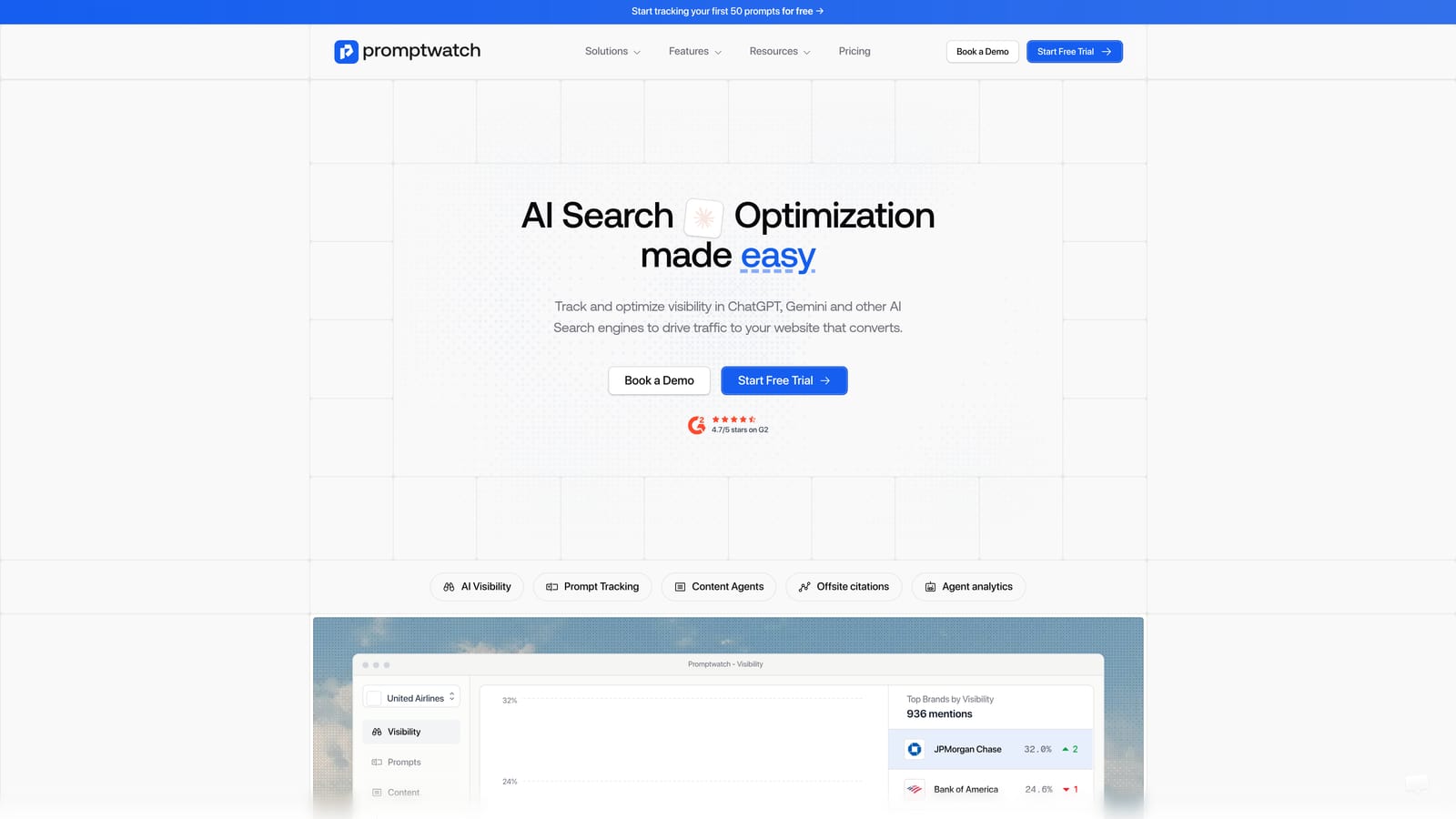
Promptwatch is an AI monitoring tool that tracks how AI chatbots respond to specific prompts, giving brands detailed visibility into the language and context AI models use when mentioning them.
Where This Tool Shines
Promptwatch's core differentiator is its prompt-level granularity. Rather than giving you a broad overview of AI mentions, it lets you see the exact phrasing and framing an AI model uses when your brand comes up in a specific type of query. That specificity is valuable when you're trying to understand not just whether you're mentioned, but how you're being described.
The competitive gap feature is particularly useful. If you run a prompt and see that two competitors appear while your brand doesn't, you have a concrete signal about where to focus your content strategy. It turns abstract AI visibility into a specific content brief.
Key Features
Prompt-Level Monitoring: Tracks how AI models respond to specific queries, capturing the exact language and framing used around your brand.
Multi-Platform Brand Tracking: Monitors mentions across major AI chatbots to give you a cross-platform view.
Competitive Gap Identification: Flags prompts where competitor brands appear and yours does not, highlighting content opportunities.
Historical Response Tracking: Stores prompt response history so you can identify how AI model behavior around your brand changes over time.
Best For
Brands that want to go beyond high-level monitoring and understand the specific prompts driving AI recommendations in their category. Well-suited for content strategists who want to use AI response data to inform their editorial priorities.
Pricing
Check the official Promptwatch site for current pricing. Verify before committing, as this is an actively evolving tool.
3. Profound
Best for: Enterprise teams and agencies tracking AI share-of-voice across multiple brands or clients.
Profound is an enterprise-focused AI answer monitoring platform that tracks brand presence and share-of-voice across major AI platforms, with a strong emphasis on competitive intelligence and structured reporting.

Where This Tool Shines
Profound is built for organizations that need structured, reportable data on AI visibility. The share-of-voice framing is borrowed from traditional media monitoring, and it translates well here: you can see not just whether your brand appears, but how often and with what prominence relative to the competitive field.
For agencies managing multiple clients or enterprise brands running multiple product lines, the multi-brand support and dashboard infrastructure make it much easier to report on AI visibility as a business metric rather than a one-off experiment.
Key Features
AI Share-of-Voice Tracking: Measures how often your brand appears in AI-generated responses relative to competitors across platforms.
Competitive Intelligence: Shows how competitor brands appear in AI answers, giving you a benchmark for your own visibility efforts.
Enterprise Reporting Dashboards: Provides structured, presentation-ready reporting for stakeholders who need visibility metrics without digging into raw data.
Multi-Brand and Multi-Client Support: Manages monitoring across multiple brands or clients from a single interface, making it practical for agency use.
Best For
Enterprise marketing teams and agencies that need to track AI visibility at scale, report on it to leadership or clients, and benchmark performance against competitors in a structured, repeatable way.
Pricing
Visit profound.co for current pricing. Enterprise tools in this category often have custom pricing, so expect a conversation with their team.
4. Peec
Best for: Brands in competitive categories that need to benchmark AI visibility against direct competitors.
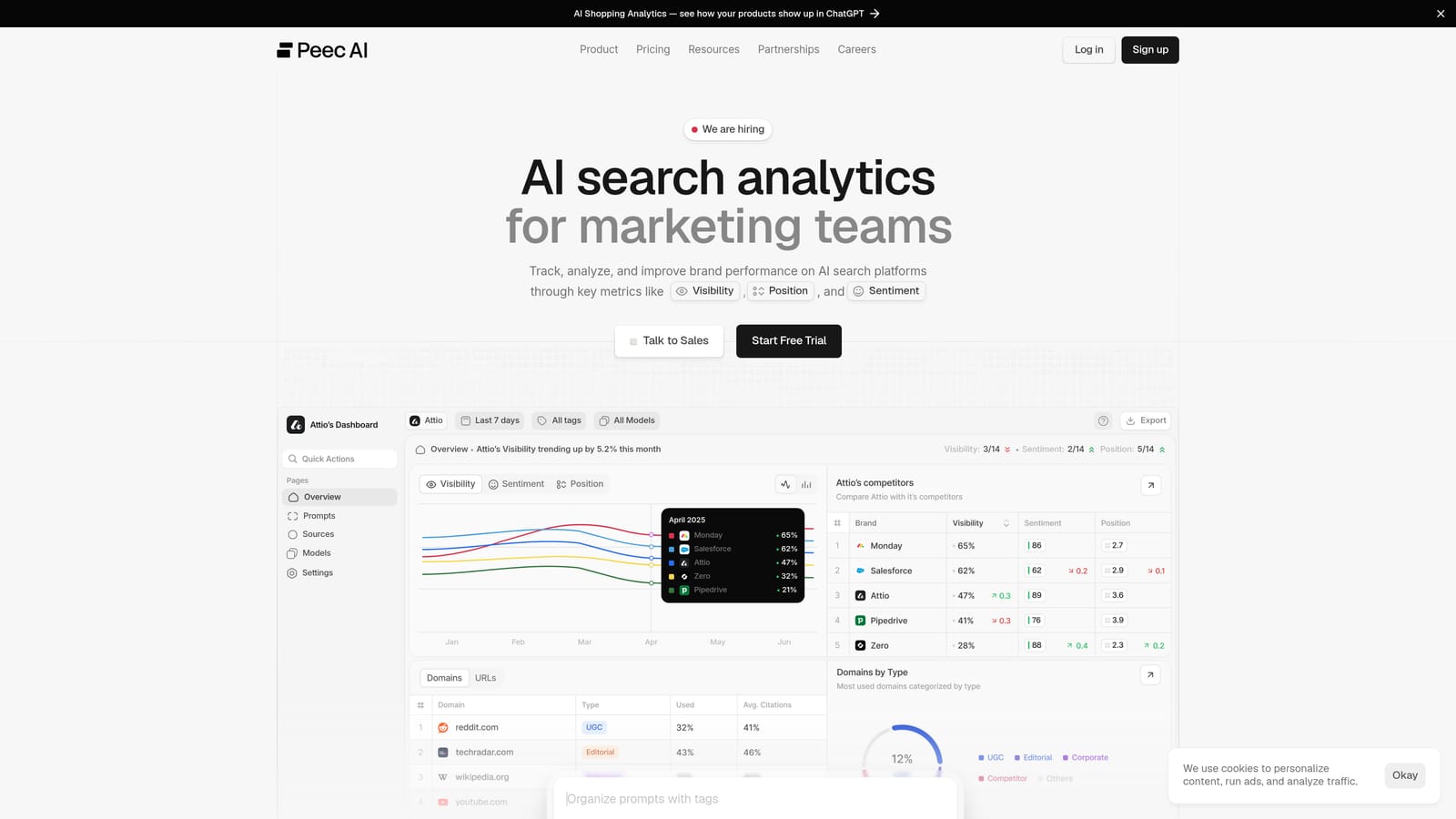
Peec is an AI visibility benchmarking tool that surfaces how your brand compares to competitors in AI-generated search responses and recommendations, with a focus on trend tracking over time.
Where This Tool Shines
Peec's value proposition is clarity through comparison. Rather than just telling you whether you're visible, it tells you where you stand relative to the brands competing for the same AI recommendation slots. In crowded categories where multiple brands are fighting for the same mentions, that relative positioning is often more useful than an absolute score.
The content topic angle is a practical feature. Peec can surface which content topics correlate with stronger AI recommendation rates, which gives content teams a data-backed way to prioritize what to create next rather than guessing.
Key Features
Competitive AI Visibility Benchmarking: Compares your brand's AI mention frequency and positioning against direct competitors.
Side-by-Side Comparison: Presents your brand vs. competitor AI visibility in a clear, comparable format.
Visibility Trend Tracking: Monitors how your relative AI visibility changes over time, helping you measure the impact of content and optimization efforts.
Content Topic Insights: Identifies which content topics are driving AI recommendations, so you can focus on what actually moves the needle.
Best For
Brands operating in competitive categories where multiple players are vying for the same AI-generated recommendations. Particularly useful for teams that want to tie content investments to measurable changes in competitive AI visibility.
Pricing
Verify current pricing at peec.ai directly. As an emerging tool, pricing structures may have evolved since initial launch.
5. AirOps
Best for: Content operations teams that need repeatable, structured AI content workflows at scale.
AirOps is an AI-powered content workflow platform that helps teams build structured, repeatable content pipelines without requiring engineering resources, making it a foundational lever for improving the authoritative signals AI models rely on.
Where This Tool Shines
AirOps sits slightly upstream from the monitoring tools on this list. Its role isn't to tell you what AI models are saying about you, but to help you produce the kind of structured, consistent content that improves your chances of being cited in the first place. AI models favor authoritative, well-organized sources, and consistent content output is one of the clearest ways to build that signal over time.
The no-engineering angle matters for marketing teams. Being able to build and iterate on content workflows without waiting for developer resources means faster experimentation and faster publishing, both of which compound over time.
Key Features
Repeatable AI Content Workflows: Build and run structured content pipelines that produce consistent output without manual setup each time.
No Engineering Required: Marketing and content teams can build workflows independently, reducing dependency on technical resources.
CMS and Data Source Integrations: Connects with existing tools and content management systems to slot into current workflows.
Custom AI Workflow Templates: Pre-built templates for common content operations tasks that teams can adapt to their specific needs.
Best For
Content operations teams and agencies managing high-volume content production who need structured, repeatable processes. Works well as a complement to monitoring tools: use AirOps to build the content pipeline, then use monitoring tools to track whether that content is improving AI visibility.
Pricing
Visit airops.com for current pricing details. Plans vary by workflow volume and team size.
6. Writesonic
Best for: Marketers who need high-volume, SEO-optimized content output with built-in brand voice controls.
Writesonic is an AI content generation platform with built-in SEO optimization, enabling marketing teams to produce structured, search-ready content across formats including blog posts, landing pages, and product descriptions.
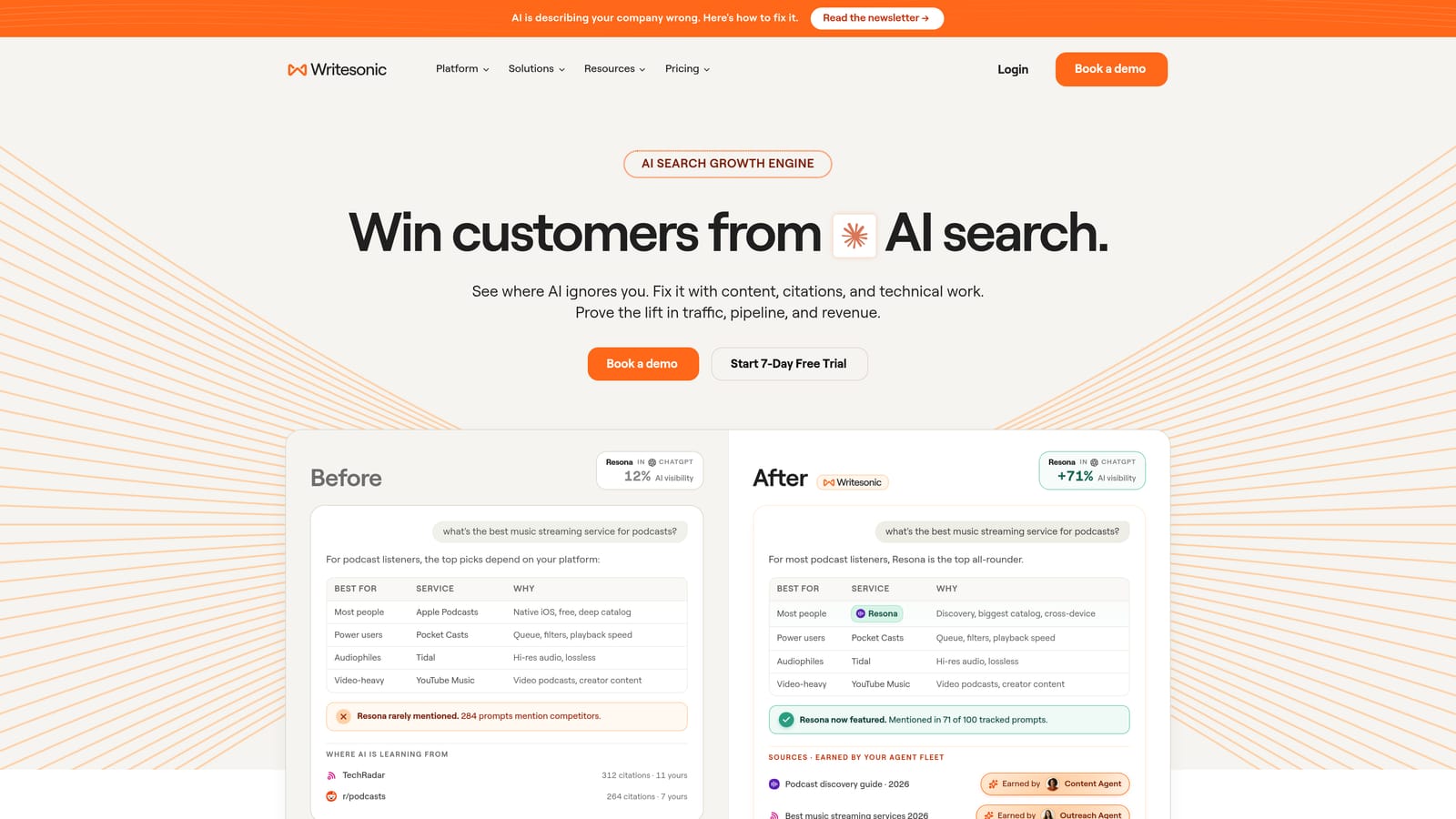
Where This Tool Shines
Writesonic's strength is breadth. It covers a wide range of content formats from long-form articles to short ad copy, all within a single platform. For teams that need to maintain consistent publishing velocity across multiple content types, that versatility reduces the number of tools in the stack.
The built-in SEO optimization features help ensure that content isn't just produced quickly, but produced in a way that's structured for discoverability. Consistent, keyword-targeted content is one of the foundational signals that influences how AI models assess and cite sources, making volume and quality both relevant here.
Key Features
Long-Form Content Generation: Produces full-length blog posts, guides, and articles with minimal manual input, supporting consistent publishing schedules.
Built-In SEO Optimization: Incorporates keyword targeting and on-page SEO signals directly into the content generation process.
Multi-Format Output: Handles landing pages, product descriptions, and ad copy alongside editorial content, reducing tool sprawl for content teams.
Brand Voice Customization: Allows teams to define and maintain a consistent brand voice across all generated content.
Best For
Marketing teams and agencies that need to produce large volumes of structured, SEO-optimized content consistently. A good fit for teams using content output as a long-term strategy for improving AI citation frequency, particularly when paired with a monitoring tool to track results.
Pricing
Check writesonic.com for current pricing. Multiple tiers are typically available based on word volume and team size.
Which Tool Is Right for Your Situation
The tools on this list aren't in direct competition with each other. They address different parts of the same underlying problem, which means the right choice depends on where your biggest gap is right now.
If you're starting from zero and want to understand what AI models are currently saying about your brand, Promptwatch and Peec are strong starting points. Promptwatch gives you prompt-level granularity on AI responses, while Peec puts your visibility in competitive context. For enterprise teams or agencies that need structured reporting and multi-brand management, Profound is the more scalable fit.
If content production is your primary lever, AirOps and Writesonic both help you build and maintain the kind of consistent, structured output that improves AI citation signals over time. They work best when paired with a monitoring tool so you can close the feedback loop between what you publish and how AI models respond.
For teams that want to address monitoring, content generation, and indexing without stitching together multiple tools, Sight AI is the all-in-one option. The combination of AI Visibility Score tracking, prompt-level monitoring, 13+ AI agents for content creation, and IndexNow-powered indexing means you're not managing separate platforms for each layer of the problem.
Here's the compounding reality: the longer your brand goes without input into AI-generated answers, the more those answers calcify around competitors who are actively managing their visibility. AI models form patterns based on what's available, and brands that wait are ceding that ground quietly.
If you're ready to take control of how AI models talk about your brand, explore how to automate content creation and apply content SEO best practices as part of your broader strategy. And when you're ready to see exactly where you stand, Start tracking your AI visibility today and get a clear picture of how your brand appears across ChatGPT, Claude, Perplexity, and more.