Every piece of content you publish starts a race against time. The faster search engines and AI platforms discover and index your pages, the sooner you capture organic traffic. Yet many marketers still rely on passive crawl schedules that can leave new content invisible for days or even weeks.
Modern indexing tools solve this by proactively pushing URLs to search engines, automating sitemap updates, and tracking how AI models surface your brand. Whether you're managing a high-volume content operation or a lean startup blog, the right tool can meaningfully compress the gap between "published" and "discoverable."
This list covers the top indexing tools available in 2026, evaluated on speed, automation depth, AI visibility features, and ease of integration. If you're also curious about the mechanics behind faster indexing, our guides on the Google Indexing API and how to index a website in Google provide solid technical context.
1. Sight AI
Best for: Teams that need indexing automation, AI visibility monitoring, and content generation in one platform.
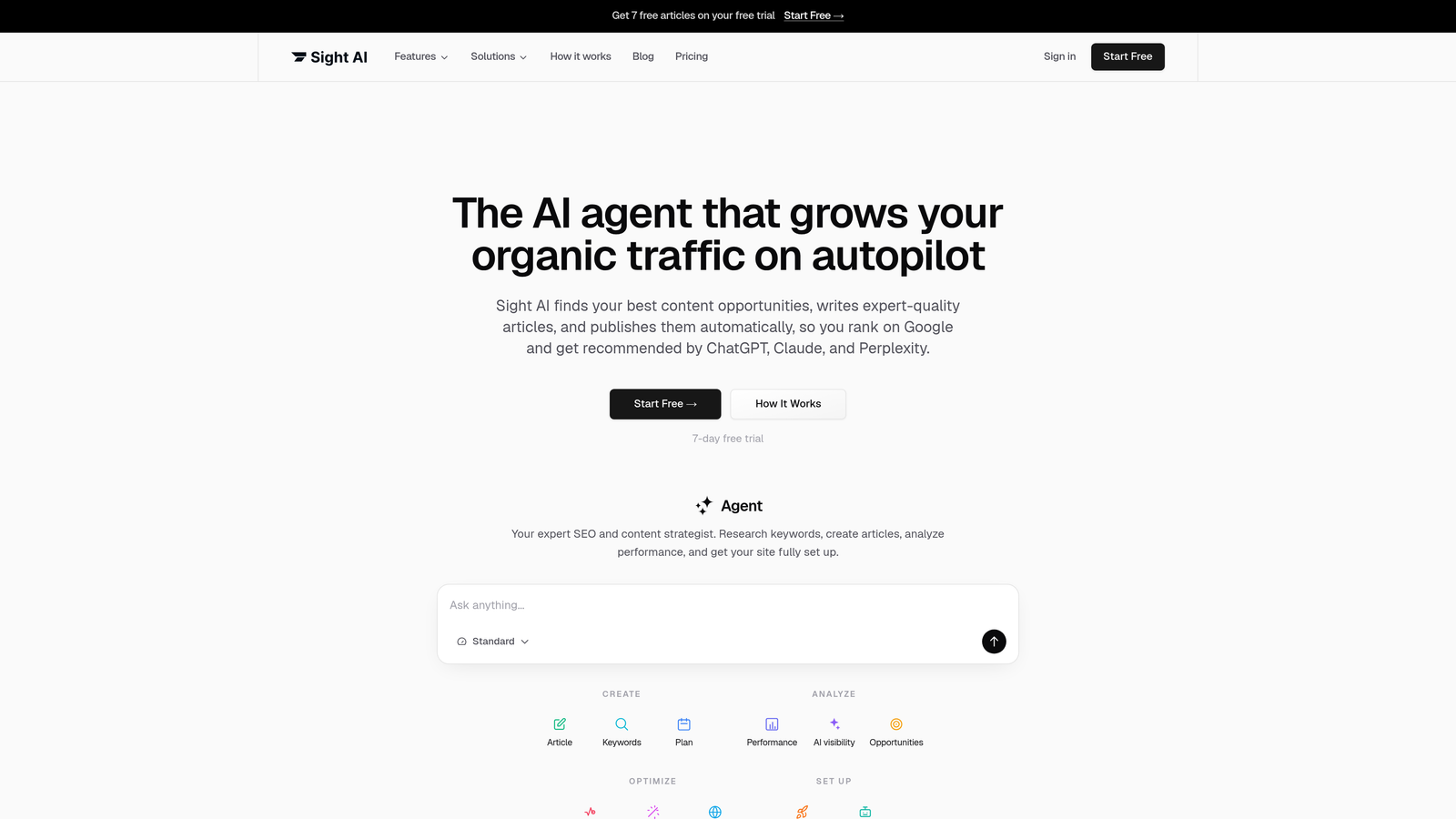
Sight AI is an all-in-one platform combining IndexNow-powered URL indexing, AI brand visibility monitoring across 6+ LLM platforms, and a 13-agent AI content engine with Autopilot Mode.
Where This Tool Shines
What separates Sight AI from every other tool on this list is scope. Most indexing tools solve one problem: getting URLs in front of search engine crawlers faster. Sight AI does that, but it also addresses the increasingly critical second layer of discoverability: whether AI models like ChatGPT, Claude, and Perplexity are actually surfacing your brand in their responses.
For content teams running at scale, the Autopilot Mode is particularly compelling. It connects content generation, CMS publishing, and URL submission into a single automated workflow, removing the manual handoffs that typically slow down the path from draft to indexed page.
Key Features
IndexNow Integration: Submits URLs to supported search engines in real time the moment content is published, bypassing passive crawl queues.
Automated Sitemap Updates: Triggers sitemap refreshes on content publish so search engines always have an accurate map of your site structure.
AI Visibility Score: Tracks brand mentions, sentiment, and prompt performance across ChatGPT, Claude, Perplexity, and three or more additional AI platforms, giving you a consolidated view of your generative search presence.
13+ Specialized AI Agents: Generates SEO and GEO-optimized content formats including listicles, guides, and explainers, each tuned for both search engine crawlability and AI model citation.
CMS Auto-Publishing with Autopilot Mode: Connects content creation directly to publishing and indexing in a hands-off pipeline, reducing time-to-discovery at every stage.
Best For
Sight AI is the strongest fit for marketers, founders, and agencies who recognize that "discoverability" in 2026 means more than Google rankings. If you're actively building a GEO strategy alongside traditional SEO, or if you want a single platform that handles content creation, publication, and visibility tracking without stitching together five separate tools, Sight AI is built for that workflow.
Pricing
Check trysight.ai for current pricing tiers. Multiple plans are available to accommodate teams of different sizes and content volumes.
2. Writesonic
Best for: Content teams that need fast, SEO-structured output to reduce on-page issues that slow crawling.
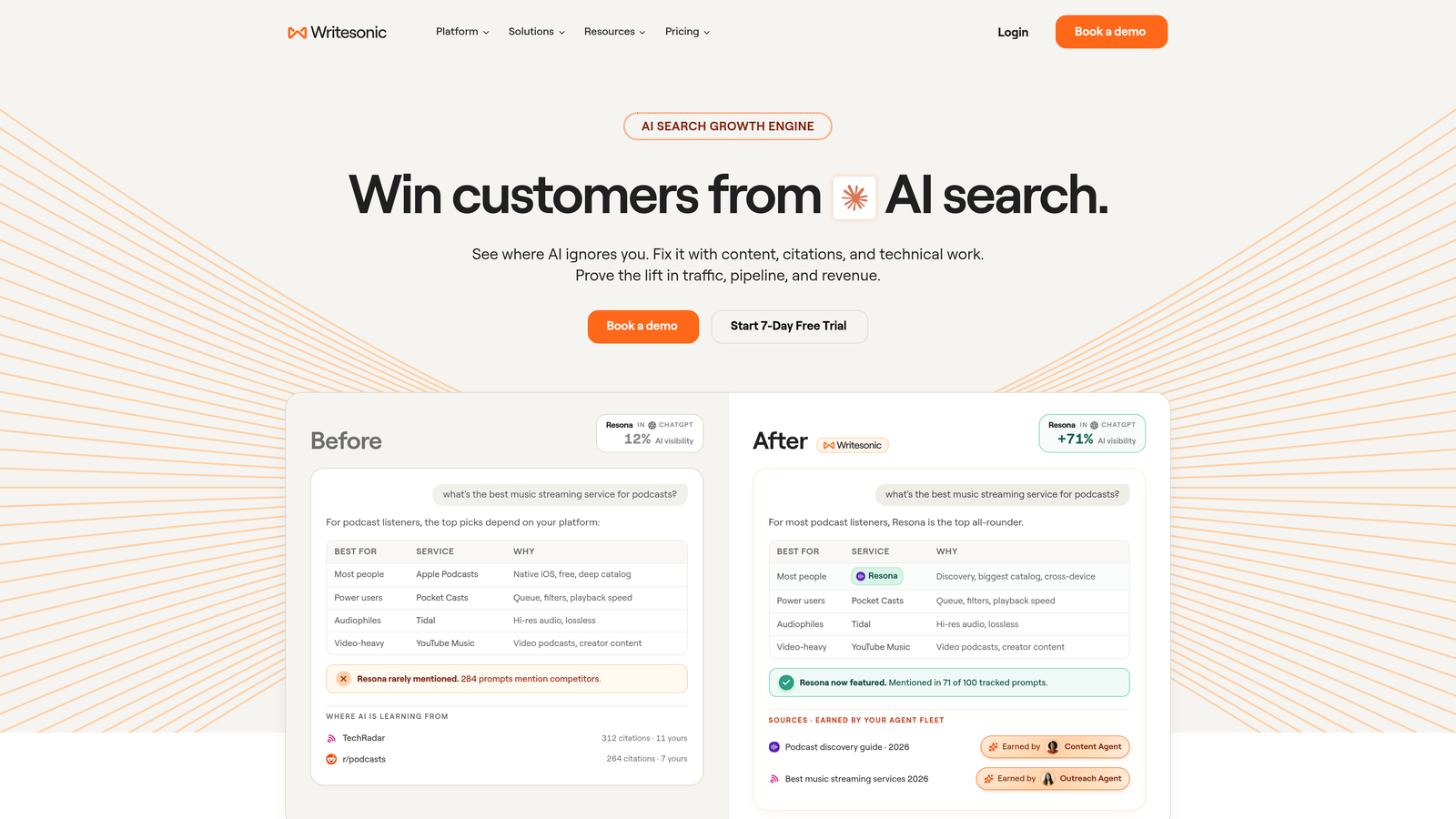
Writesonic is an AI content generation platform that accelerates the path from brief to published, producing SEO-structured content that reduces common on-page issues that slow crawling and indexing.
Where This Tool Shines
Writesonic's connection to faster indexing is indirect but real. Poorly structured content with thin headings, missing meta descriptions, or duplicate phrasing gives crawlers reasons to deprioritize your pages. Writesonic's built-in SEO optimization layer helps teams produce content that's crawl-friendly from the moment it's published, reducing the friction that delays indexing.
The platform also integrates with major CMS platforms, which shortens the gap between content completion and live publication. Faster publication means earlier entry into the indexing queue, which compounds over time for high-volume content operations.
Key Features
AI Article Writer: Generates long-form, SEO-optimized content with structured headings and meta elements built in.
Brand Voice Customization: Maintains consistent tone and terminology across all generated content, reducing post-production editing time.
CMS Integrations: Connects to popular publishing platforms for faster content deployment directly from the Writesonic interface.
On-Page SEO Checker: Flags common optimization issues before publication, reducing crawl friction caused by poor page structure.
Chatsonic AI Assistant: Supports content research and ideation, helping teams identify topics worth creating and indexing in the first place.
Best For
Writesonic works well for content marketers and agencies producing articles at scale who want SEO best practices embedded in the writing process rather than applied as an afterthought. It's less suited for teams whose primary bottleneck is URL submission speed rather than content quality or output volume.
Pricing
A free tier is available. Paid plans start at approximately $16 per month. Verify current pricing at writesonic.com, as tiers and rates may have changed.
3. AirOps
Best for: Operations teams eliminating manual bottlenecks between content creation and CMS publishing.
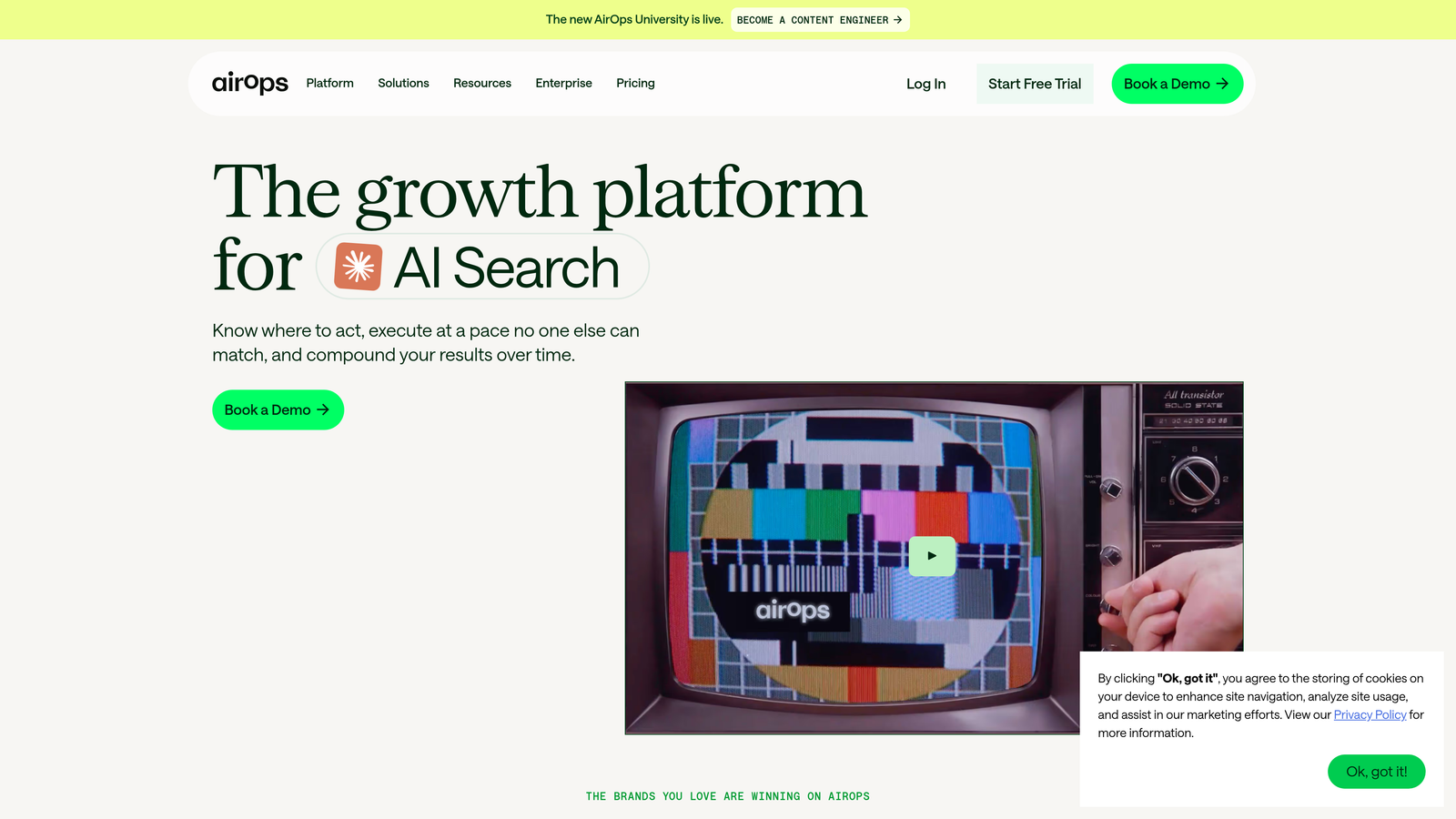
AirOps is an LLM-powered workflow automation platform that eliminates operational bottlenecks between content creation and CMS publishing, reducing the manual delays that slow down indexing pipelines.
Where This Tool Shines
AirOps doesn't submit URLs to search engines directly. What it does is remove the human handoffs that cause content to sit in a staging environment for days before it goes live. In high-volume content operations, those delays accumulate quickly, and every day a page isn't published is a day it isn't being indexed.
Its visual workflow builder makes it accessible to non-engineers, allowing content and marketing teams to build automated pipelines that connect LLM-generated content to CMS publishing triggers, with API hooks available for connecting downstream indexing tools like IndexNow-compatible services.
Key Features
Visual Workflow Builder: Drag-and-drop interface for constructing LLM-powered automation workflows without writing code.
CMS Connectors: Automated publishing triggers that push content to your CMS when generation and review conditions are met.
Bulk Content Operations: Handles high-volume content production tasks across large datasets, useful for programmatic SEO at scale.
Data Enrichment Pipelines: Transforms and structures raw inputs into publication-ready content formats.
API Integrations: Connects to external tools downstream, including indexing services, to create end-to-end automated publishing flows.
Best For
AirOps is ideal for content operations managers and technical marketing teams at companies producing content at significant volume. It's particularly valuable when the bottleneck isn't content quality but the operational overhead of moving content from creation to publication.
Pricing
Verify current pricing at airops.com. Plans vary based on workflow volume and team size.
4. Promptwatch
Best for: GEO practitioners validating whether indexed content influences AI-generated answers.
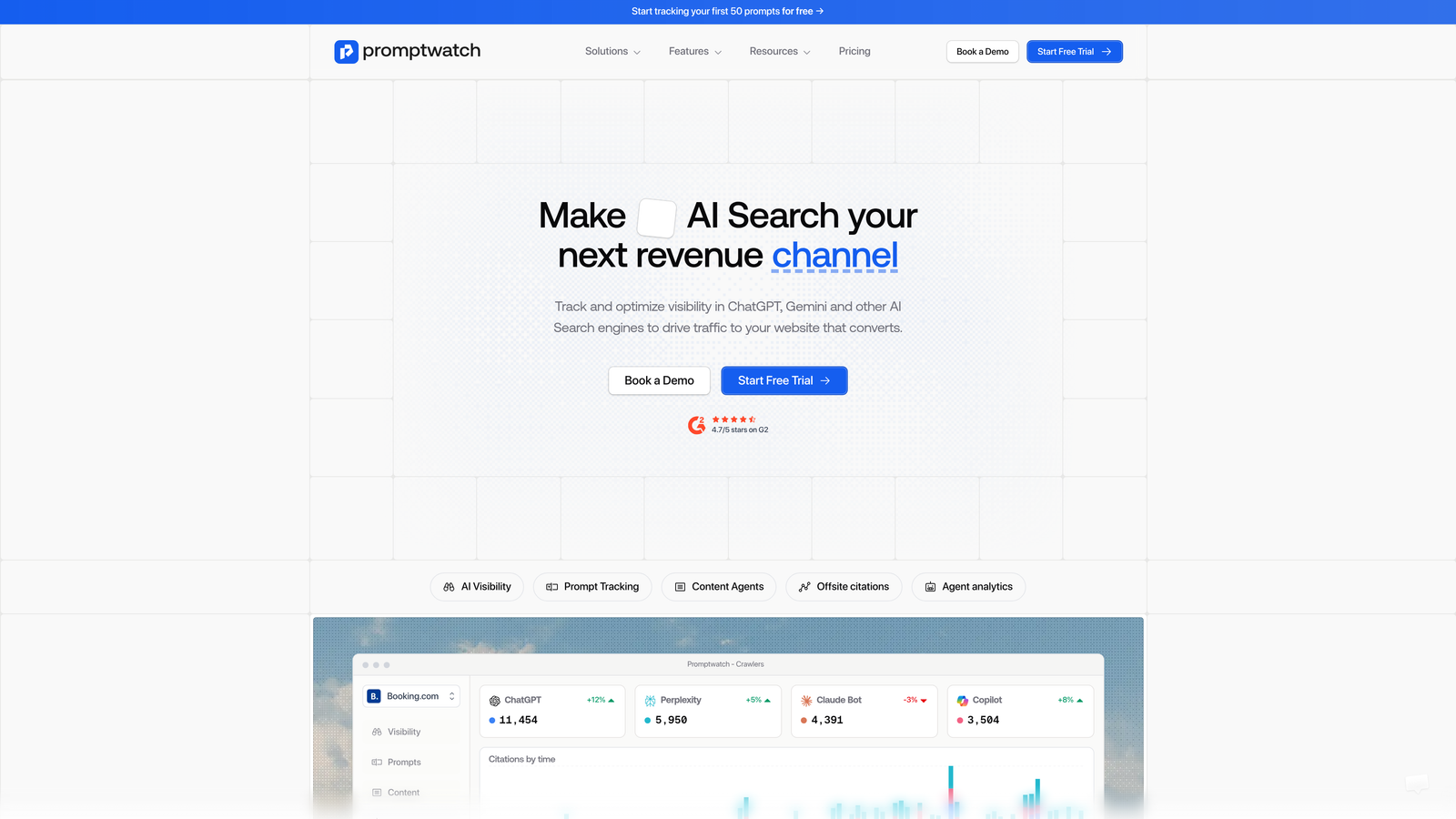
Promptwatch is an AI prompt monitoring tool that tracks how LLMs respond to brand-relevant queries, revealing whether your indexed content is influencing AI-generated answers.
Where This Tool Shines
Here's the challenge many SEO teams are only beginning to grapple with: getting your content indexed by Google doesn't guarantee it's being surfaced by ChatGPT or Claude. Promptwatch addresses this gap by monitoring the actual outputs of major LLM platforms in response to prompts relevant to your brand or industry.
This makes it a diagnostic tool as much as a monitoring tool. When you discover that your indexed content isn't influencing AI responses, Promptwatch gives you the signal to investigate whether the issue is content structure, topic coverage, or simply a gap in your GEO strategy.
Key Features
Prompt Tracking Across LLM Platforms: Monitors how major AI models respond to specific queries related to your brand or category.
Brand Mention Detection: Identifies when and how your brand appears in AI-generated responses, including context and sentiment.
Response Monitoring for GEO Validation: Confirms whether your content strategy is translating into actual AI model citations.
Content Gap Identification: Surfaces topics and queries where AI models lack context about your brand, informing future content and indexing priorities.
Best For
Promptwatch is most valuable for marketing teams actively running GEO strategies who need feedback on whether their published, indexed content is actually being picked up by AI systems. It's less relevant for teams focused purely on traditional search engine indexing speed.
Pricing
Verify current pricing at promptwatch.io.
5. Profound
Best for: Brands tracking share-of-voice in AI-generated search results at scale.
Profound is an AI answer engine monitoring platform that tracks brand presence in generative search results, providing visibility into whether your content is being discovered and cited by AI systems at scale.

Where This Tool Shines
Profound operates at the output layer of AI discoverability. Once your content is indexed and potentially ingested by LLM training or retrieval systems, the real question becomes: is it actually being cited? Profound answers that question by monitoring brand mentions across major AI answer engines and tracking how that presence shifts over time.
The competitive share-of-voice feature is particularly useful for category leaders and challenger brands alike. Understanding how much of the AI-generated conversation in your space you're capturing, relative to competitors, gives content and indexing strategy a concrete directional signal.
Key Features
Brand Mention Tracking in AI Answers: Monitors how frequently and in what context your brand appears across generative search platforms.
Competitive Share-of-Voice: Benchmarks your AI presence against competitors to identify where you're winning and where you're losing ground.
Trend Monitoring Across LLM Platforms: Tracks how your AI visibility changes over time as you publish and index new content.
Alerts for Brand Mention Changes: Notifies teams when significant shifts occur in how AI systems are referencing their brand.
Best For
Profound suits marketing leaders and agencies managing brand visibility at scale, particularly those competing in categories where AI-generated answers are increasingly influencing buyer research. It's a strategic layer on top of indexing, not a replacement for it.
Pricing
Verify current pricing at profound.co.
6. Peec
Best for: Teams prioritizing content creation based on competitive AI visibility gaps.
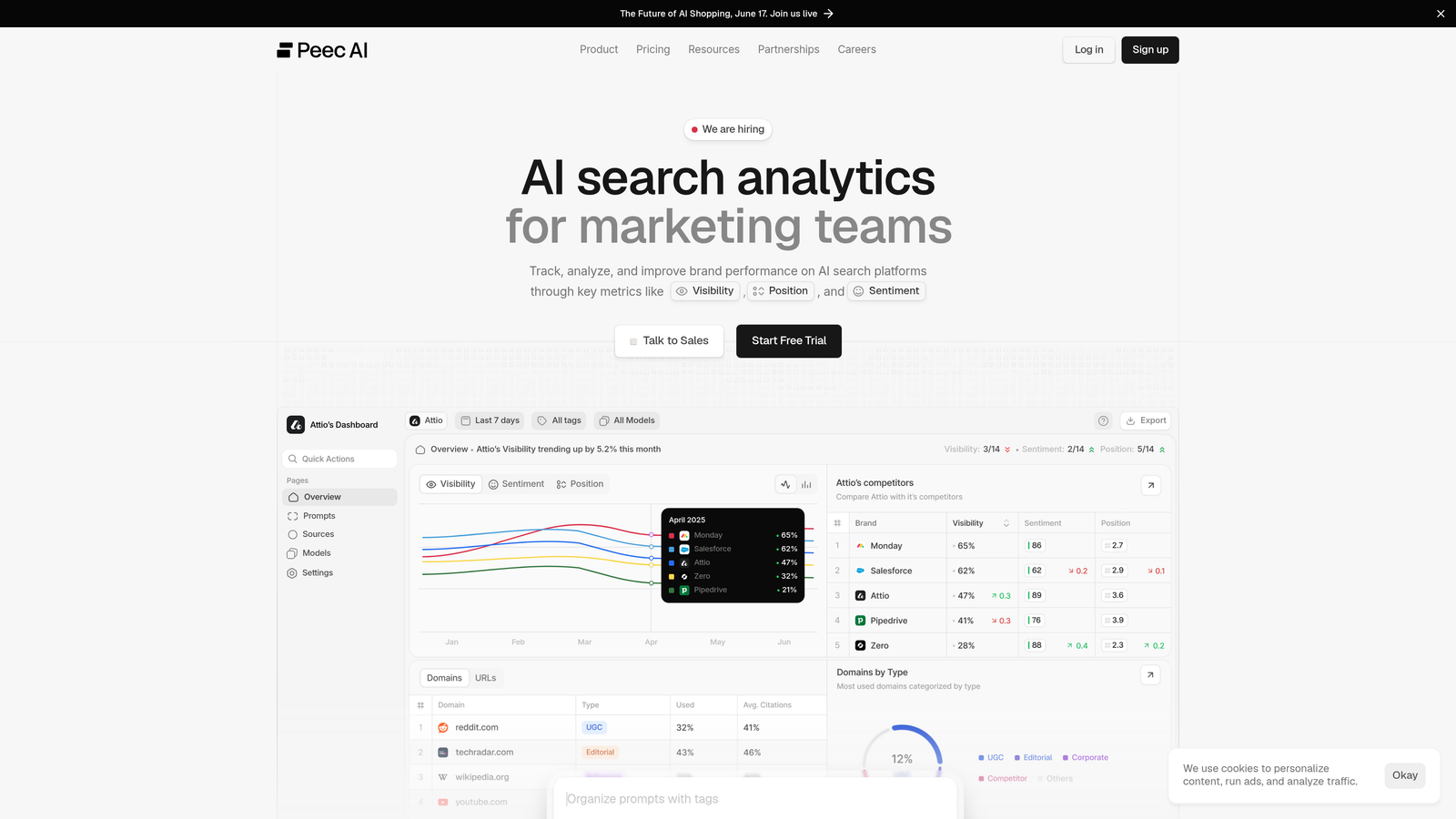
Peec is an AI visibility benchmarking tool that compares your brand's presence in AI-generated results against competitors, helping teams prioritize which content to create and index for maximum AI discoverability.
Where This Tool Shines
Peec approaches AI discoverability from a competitive intelligence angle. Rather than simply showing you where your brand appears in AI outputs, it contextualizes that presence against your competitive set. This distinction matters: knowing you appear in 30% of relevant AI responses means little without knowing whether your closest competitor appears in 60%.
That competitive framing makes Peec particularly useful for informing content strategy. When you can see exactly which topics and queries your competitors are winning in AI-generated results, you have a clear prioritization signal for what to create, optimize, and push into indexing pipelines next.
Key Features
Competitor AI Mention Frequency Comparison: Shows how often your brand appears in AI responses relative to named competitors across the same query sets.
Share-of-Voice Tracking Across LLM Platforms: Aggregates AI visibility data across multiple platforms to give a comprehensive competitive picture.
Visibility Trend Reporting: Tracks how competitive AI presence evolves over time, helping teams measure the impact of content and indexing efforts.
Content Gap Identification: Highlights specific topics and queries where competitors hold AI visibility advantages, directly informing editorial planning.
Best For
Peec is a strong fit for growth-focused marketing teams and agencies that want to use competitive AI benchmarking to drive content prioritization. It's a strategic planning tool rather than an operational one, best used to inform what gets created and indexed rather than to accelerate the indexing process itself.
Pricing
Verify current pricing at peec.ai.
Making the Right Choice for Your Discoverability Stack
The tools on this list address different layers of a problem that has grown considerably more complex in 2026. Faster discovery now means two things simultaneously: getting search engine crawlers to your pages quickly, and ensuring AI models are surfacing your brand in their generated responses. Tools that only solve one side of that equation are increasingly insufficient.
Here's how to think about selection by use case:
For pure indexing automation: Sight AI's IndexNow integration and automated sitemap updates handle real-time URL submission without manual intervention. If speed from publish to indexed is your primary bottleneck, that's where to start.
For AI visibility monitoring: Promptwatch, Profound, and Peec each approach this from a different angle. Promptwatch validates whether indexed content influences LLM responses. Profound tracks brand share-of-voice in AI-generated answers. Peec adds competitive benchmarking to understand where you stand relative to rivals. Many teams will benefit from more than one of these.
For content pipeline acceleration: Writesonic reduces the time from brief to publish-ready content, while AirOps removes the operational bottlenecks between content creation and CMS deployment. Both compress the time before content enters the indexing queue.
For an all-in-one approach: Sight AI is the only platform on this list that combines indexing automation, AI visibility tracking, and content generation in a single product. For teams that want to avoid managing multiple point solutions, that consolidation has real operational value.
If you're ready to stop guessing how AI models like ChatGPT and Claude talk about your brand, Start tracking your AI visibility today and see exactly where your brand appears across top AI platforms. For additional context on building a complete discoverability strategy, our guides on crawl budget optimization and sitemap optimization cover the technical foundations that make fast indexing possible.