A content discovery platform is software that helps your content get found, either by search engines (indexing tools such as IndexNow, Yoast and Rank Math), by human readers (recommendation networks such as Outbrain and Taboola), or by AI assistants (AI visibility platforms). For marketers whose main problem is slow indexing, the strongest options in 2026 are IndexNow-based tools that submit URLs on publish, paired with crawl diagnostics that remove the technical barriers that block indexing.
Traditional crawling can take days or weeks to pick up a new page, and every hour a page stays undiscovered is traffic that goes to a competitor. We evaluated each tool on indexing speed, automation depth, integration options and value for marketing teams. The list below focuses on search and AI discovery. The sections after it cover the other platform types and how to choose between them.
1. Sight AI
Best for: Teams wanting AI-optimized content creation with automatic instant indexing built-in.
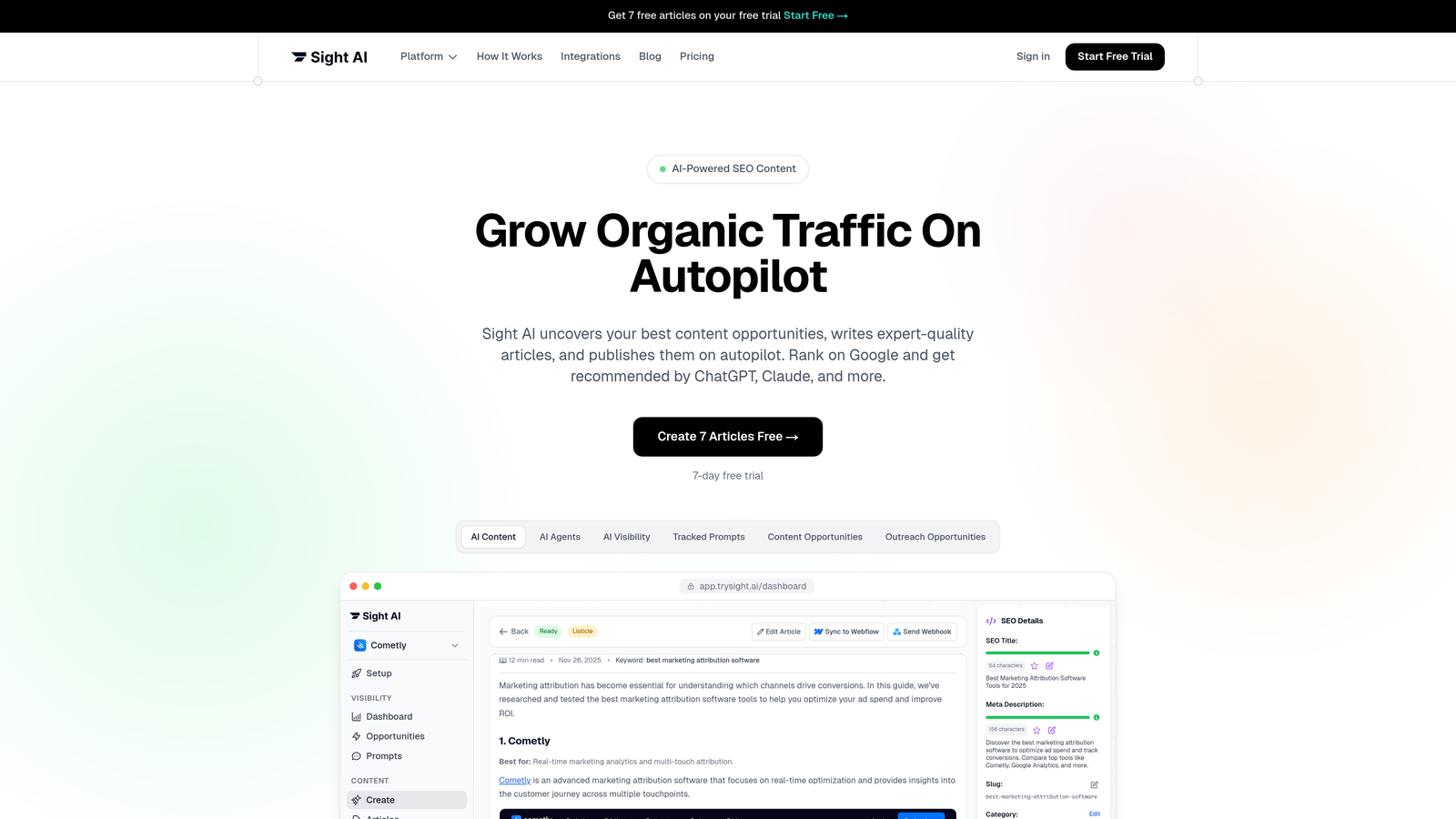
Sight AI combines AI-powered content generation with automatic IndexNow integration for instant content discovery across search engines and AI models.
Where This Tool Shines
Sight AI closes the gap between content creation and indexing by automating both in one platform. When you publish SEO/GEO-optimized content through the platform, IndexNow submissions trigger automatically. You do not need to configure anything manually.
The platform's 13+ AI agents generate content designed to be mentioned by AI models like ChatGPT, Claude and Perplexity. Combining traditional search indexing with AI visibility gives you one discovery strategy that covers how people actually find information in 2026.
Key Features
IndexNow Integration: Automatic URL submission to participating search engines the moment content publishes.
Automated Sitemap Updates: Dynamic sitemap generation and pinging for faster crawl discovery.
AI Content Generation: 13+ specialized AI agents create SEO/GEO-optimized articles, listicles, guides and explainers.
AI Visibility Tracking: Monitor how ChatGPT, Claude and Perplexity mention your brand across different prompts.
CMS Auto-Publishing: Direct publishing to your CMS with instant indexing triggers built into the workflow.
Best For
Marketing teams and agencies that want an all-in-one solution combining content creation with indexing automation. Particularly valuable for brands focused on AI visibility alongside traditional search performance.
Pricing
See the pricing page for current plans tailored to different team sizes and publishing volumes.
2. IndexNow API
Best for: Developers and technical teams wanting direct control over instant URL submissions.
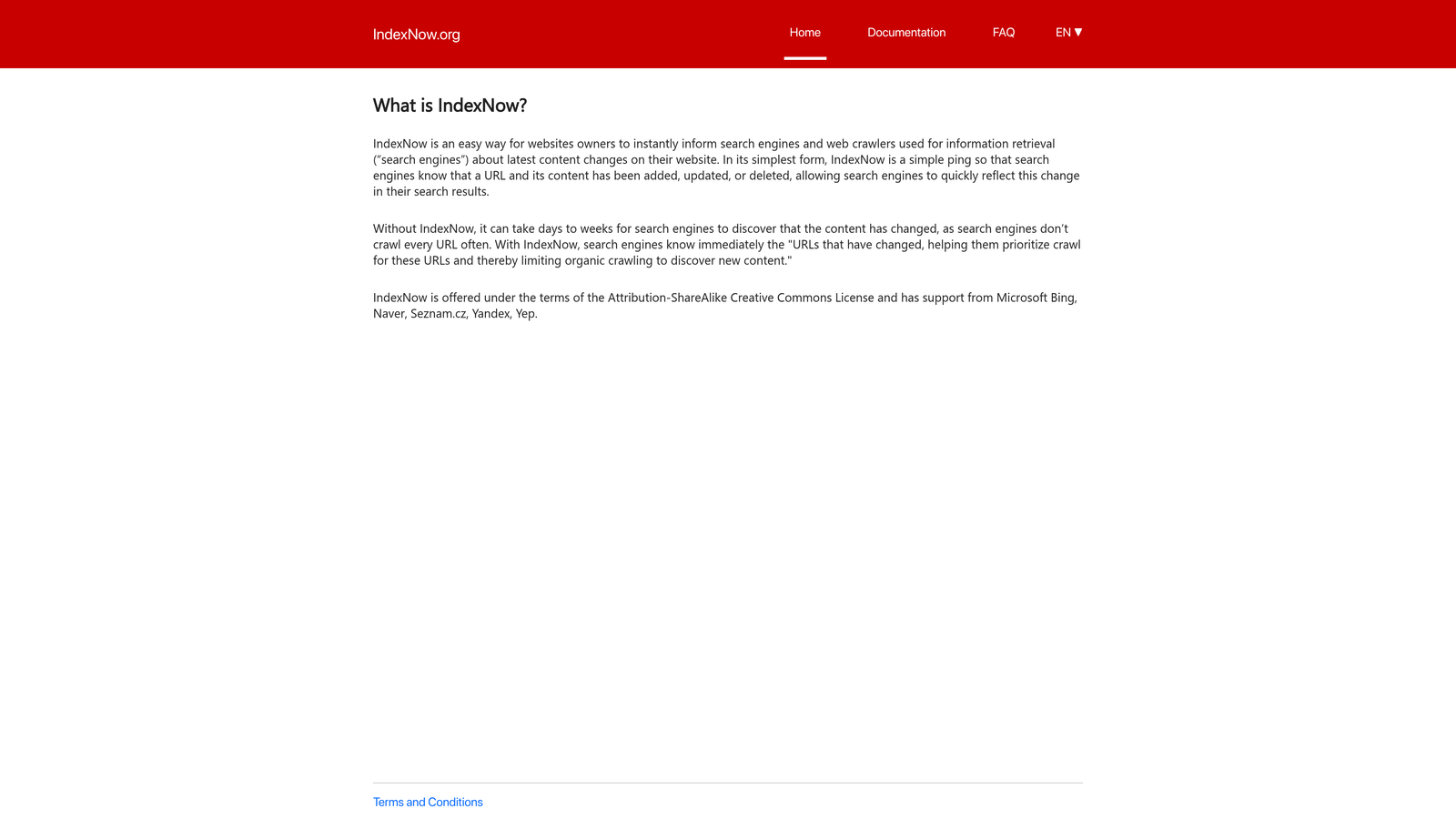
IndexNow API is an open protocol for instant URL submission to participating search engines, including Bing, Yandex, Seznam, Naver and Yep. Google does not participate.
Where This Tool Shines
IndexNow changes how search engines discover content. Instead of waiting for crawlers to find your updates, you notify search engines the moment content changes. Participating engines share submissions with each other, so a single API call reaches all of them.
The protocol is open, so there is no vendor lock-in and no usage fee. Any platform can implement IndexNow support, which is why it underpins many of the automated solutions on this list. Setup takes three steps:
- Generate a key.
- Host it as a text file at your domain root.
- POST changed URLs to the endpoint.
Our step-by-step IndexNow implementation guide walks through key hosting, request formats and response codes.
Key Features
Open Protocol: Free to use, with no usage fees from participating search engines.
Multi-Engine Reach: A single submission is shared with Bing, Yandex, Seznam, Naver and Yep.
Simple Implementation: Straightforward API that works with any platform or custom CMS.
Batch Submissions: Submit up to 10,000 URLs per request for efficient large-scale updates.
Best For
Development teams building custom indexing solutions, large publishers with proprietary CMS platforms, and agencies managing multiple client sites who want maximum control over the submission process.
Pricing
Completely free. It is an open protocol with no licensing fees or usage charges.
3. Yoast SEO Premium
Best for: WordPress users wanting zero-configuration IndexNow integration with comprehensive SEO features.
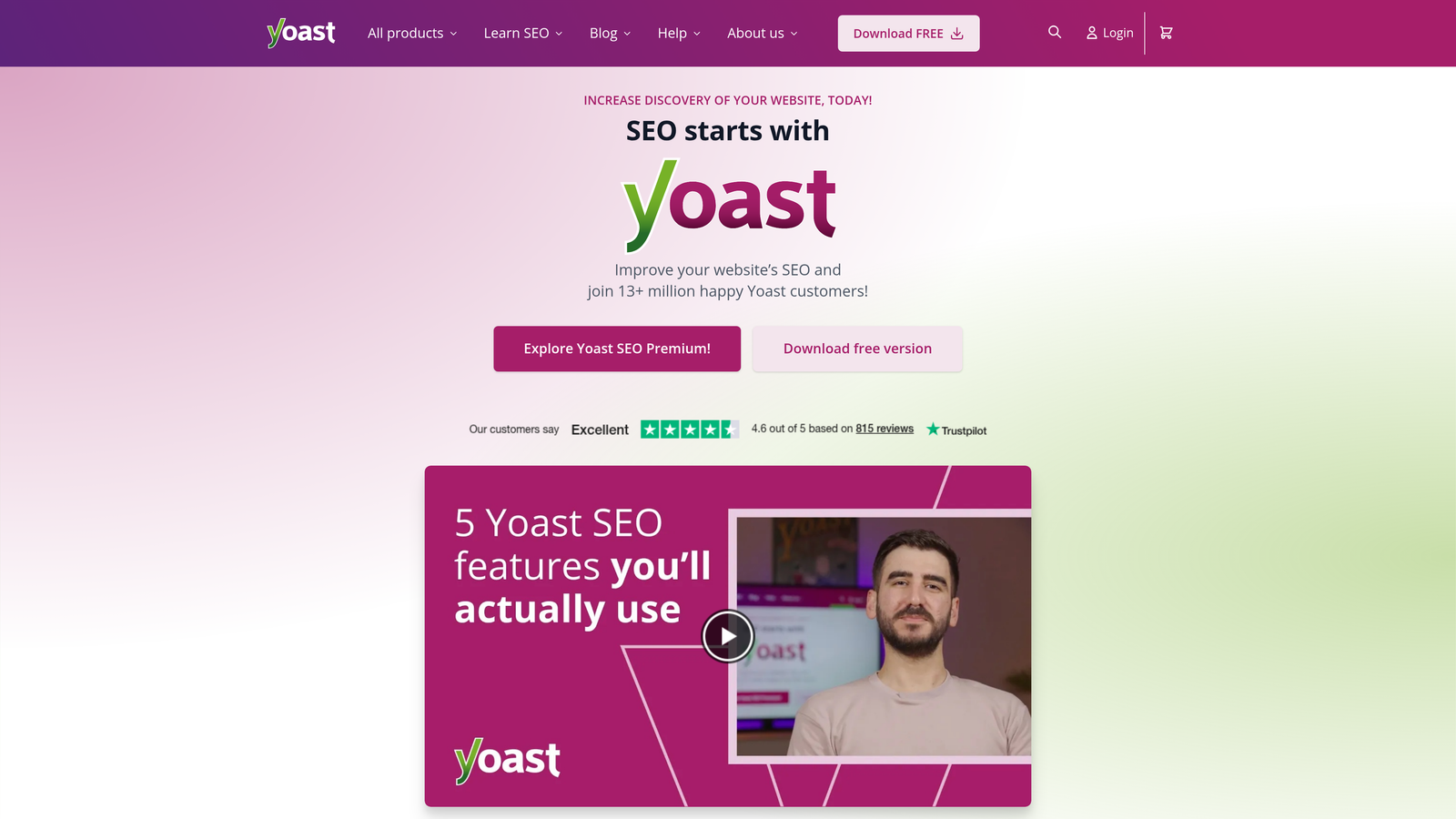
Yoast SEO Premium is a WordPress SEO plugin with built-in IndexNow integration for automatic content discovery submissions.
Where This Tool Shines
Yoast removes the technical complexity from IndexNow implementation. Once you activate the feature, every new post or page update triggers an automatic submission to participating search engines. There are no API keys to manage and no code to write.
The plugin pairs instant indexing with comprehensive SEO optimization, giving you one workflow from content creation to search engine discovery. Its redirect manager preserves link equity when you change URLs, so faster discovery does not come at the cost of SEO fundamentals.
Key Features
Automatic IndexNow Pings: Submissions trigger on publish and update without manual intervention.
Zero Configuration: IndexNow works out of the box with no API setup required.
XML Sitemap Generation: Comprehensive sitemaps with automatic updates.
Redirect Manager: Preserves link equity when URLs change, maintaining SEO value during content updates.
Best For
WordPress site owners who want comprehensive SEO features with built-in indexing automation. Ideal for marketing teams without dedicated development resources.
Pricing
Starting at $99 per year for a single site license, with multi-site options available.
4. Cloudflare Crawler Hints
Best for: Sites using Cloudflare CDN wanting edge-level indexing automation without code changes.
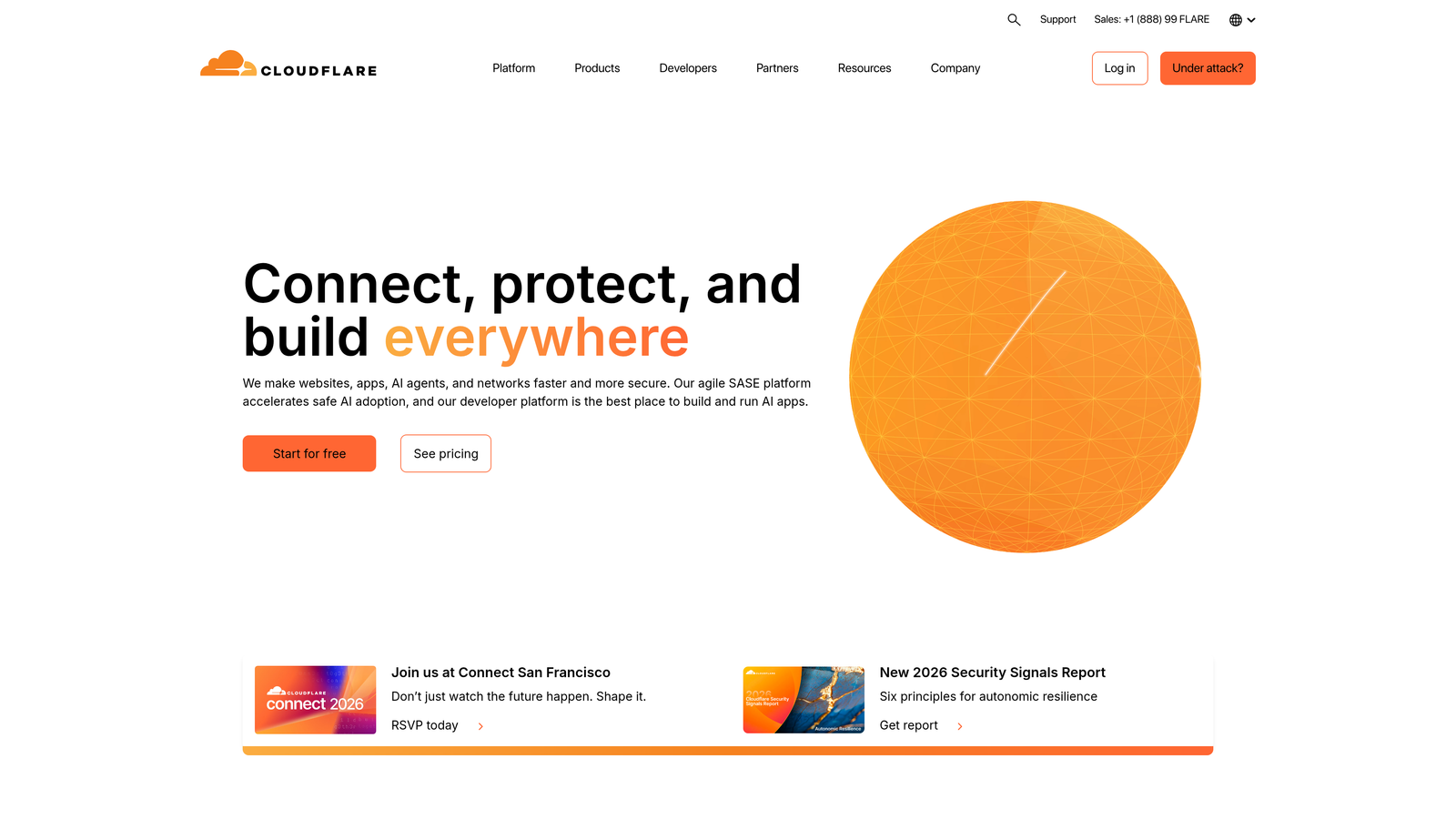
Cloudflare Crawler Hints provides edge-level IndexNow integration that automatically notifies search engines of content changes at the CDN layer.
Where This Tool Shines
Crawler Hints operates at the CDN edge, so it works regardless of your origin setup or CMS. When content changes, Cloudflare's edge network detects the update and triggers IndexNow submissions automatically.
This approach requires no changes to your site's code. If you already use Cloudflare, enabling Crawler Hints is a single toggle under Cache > Configuration, and it works with any backend technology stack.
Key Features
Automatic Detection: Cloudflare's edge network identifies content changes without origin-side configuration.
Platform Agnostic: Works with any CMS or custom platform behind Cloudflare's CDN.
Zero Code Changes: Enable it through the Cloudflare dashboard without modifying your site's codebase.
Available on All Plans: No additional cost beyond your existing Cloudflare setup.
Best For
Sites already using Cloudflare for CDN services, teams managing multiple sites with different technology stacks, and organizations wanting indexing automation without touching production code.
Pricing
Free. Crawler Hints is available on all Cloudflare plans, including the Free plan. Paid plans start at $20 per month for Pro, but you do not need one for this feature.
5. Screaming Frog SEO Spider
Best for: Technical SEO audits identifying crawlability and indexability issues blocking content discovery.
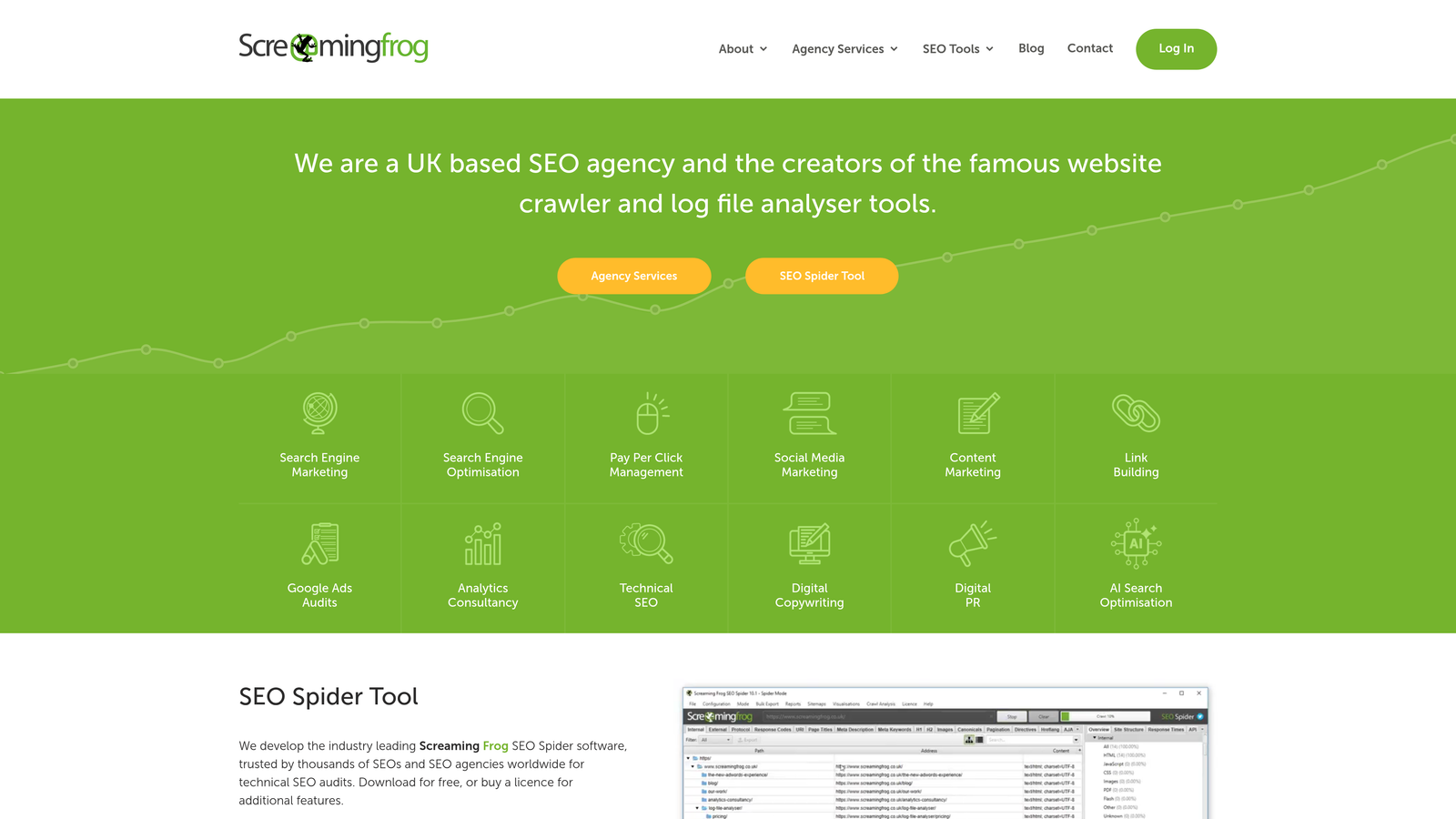
Screaming Frog SEO Spider is a technical SEO crawler that identifies crawlability and indexability issues preventing content discovery.
Where This Tool Shines
Screaming Frog covers the diagnostic side of content discovery. Instant indexing tools only work if search engines can actually crawl and index your content, and this tool reveals the technical barriers that prevent that.
The crawler simulates how search engines see your site. It flags robots.txt blocks, canonical tag issues, redirect chains and other technical problems that slow or prevent indexing. Its Google Search Console integration shows the gap between what you want indexed and what Google actually indexed.
Key Features
Deep Crawl Analysis: Unlimited URL crawling in the paid version, 500 URLs free for smaller sites.
Indexability Reports: Identifies pages blocked by robots.txt, meta robots tags or canonical directives.
Robots.txt Testing: Validates robots.txt rules and identifies unintended blocks.
Search Console Integration: Compares crawl data against actual Google index status.
Best For
Technical SEO professionals diagnosing indexing problems, agencies auditing client sites, and large publishers troubleshooting why specific pages won't index despite instant submission efforts.
Pricing
The free version crawls up to 500 URLs. A paid license costs £199 per year for unlimited crawling and advanced features.
6. ContentKing
Best for: Real-time monitoring of indexability changes and instant alerts when issues emerge.
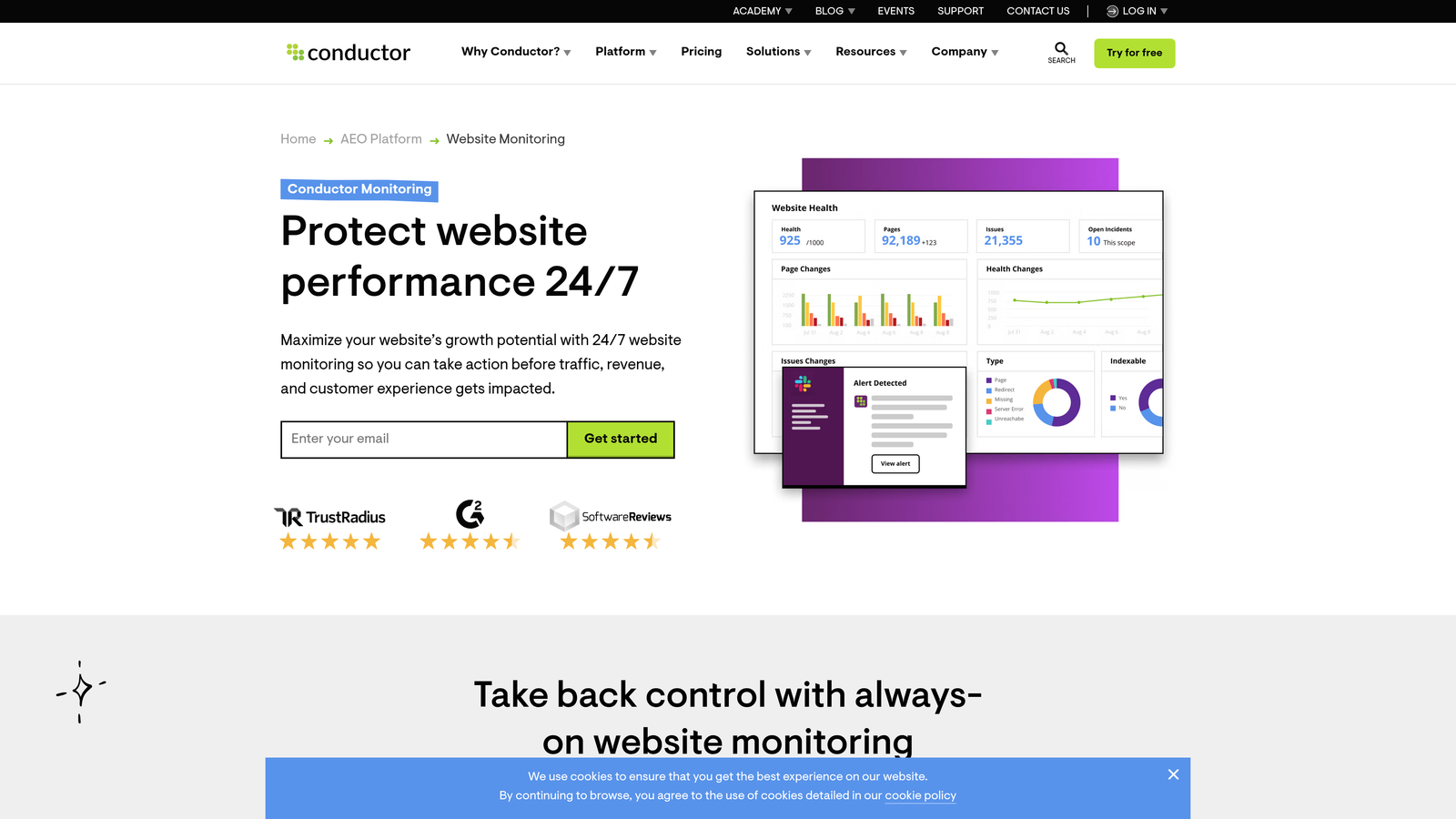
ContentKing is a real-time SEO auditing platform that continuously monitors sites for indexability changes and issues. Conductor acquired it in 2022, and it is now sold as part of Conductor's website monitoring offering.
Where This Tool Shines
ContentKing monitors your site 24/7 for changes that could affect indexability. If a developer accidentally adds a noindex tag to a critical page, or a CMS update breaks your sitemap, you get an alert before search engines drop those pages from the index.
The platform keeps a history of changes, so you can correlate indexing problems with specific site updates. That makes troubleshooting faster, because you can see exactly what changed and when.
Key Features
24/7 Real-Time Monitoring: Continuous site scanning detects changes as they occur.
Instant Alerts: Email and Slack notifications when indexability issues appear.
Change Tracking: Historical comparisons show what changed and when.
Multi-Site Management: A single dashboard for agencies managing multiple client properties.
Best For
Enterprise sites where indexing problems have high business impact, agencies managing multiple client sites, and teams that need to catch indexability issues before they affect search visibility.
Pricing
Historically started at $89 per month for smaller sites. Since the Conductor acquisition, pricing is quote-based and scales with site size and monitoring scope.
7. Oncrawl
Best for: Enterprise sites optimizing crawl budget through log file analysis and crawler behavior insights.
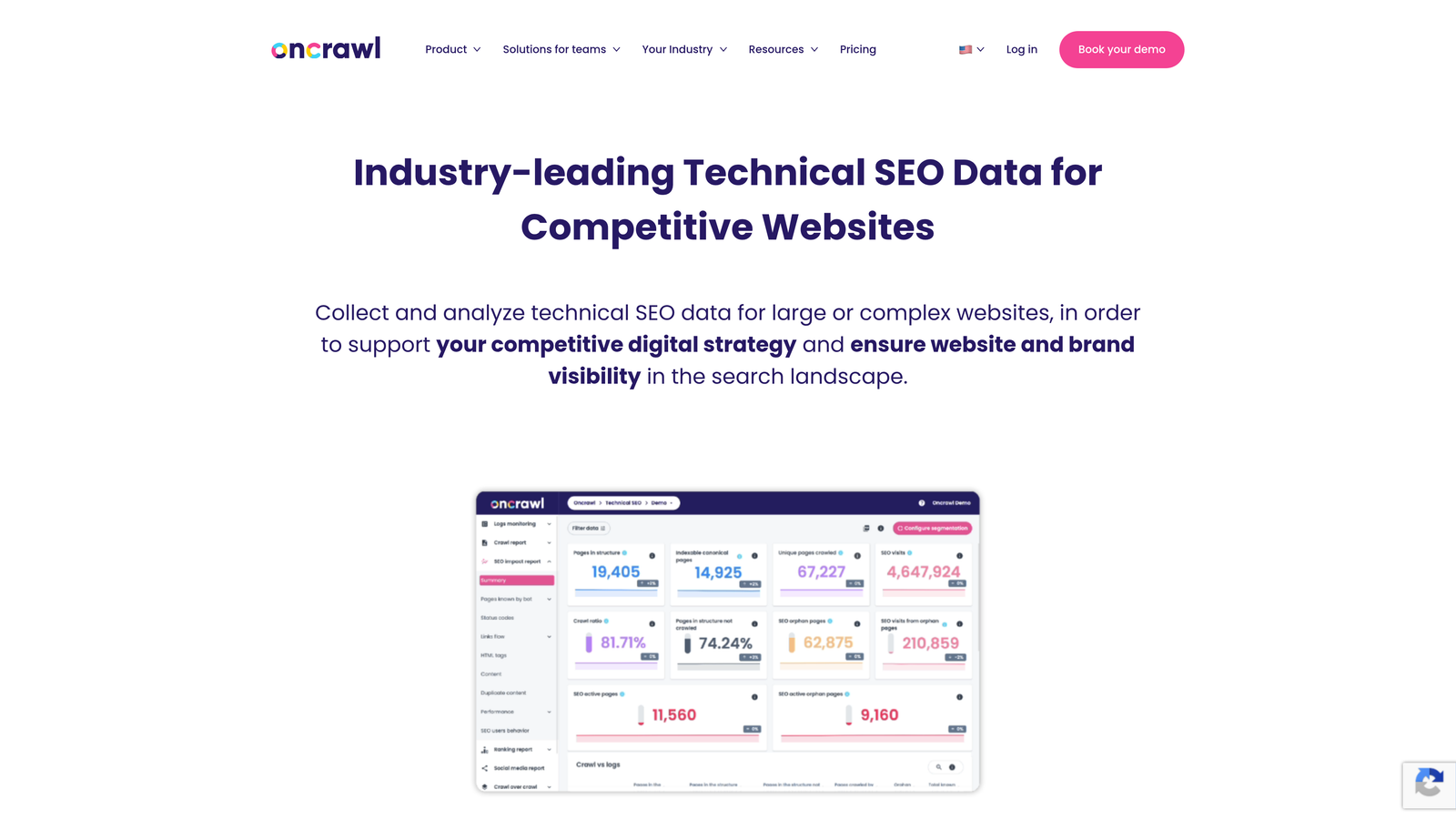
Oncrawl is an enterprise SEO platform combining log file analysis with crawl data to optimize content discovery and crawl budget.
Where This Tool Shines
Oncrawl shows how search engines actually crawl your site by analyzing server log files. You can see which pages Google crawls most often, which pages never get crawled, and where crawl budget is wasted on low-value pages.
That insight helps you prioritize what gets indexed. On sites with thousands or millions of pages, understanding crawler behavior lets you structure the site so important content is discovered faster and less crawl budget goes to duplicate or low-value pages.
Key Features
Log File Analysis: Direct insight into actual search engine crawler behavior on your site.
Crawl Budget Optimization: Recommendations for improving how search engines allocate crawl resources.
Segmented Analysis: Breaks down crawl patterns by page type, template or custom segments.
Data Studio Integrations: Exports data for custom reporting and analysis workflows.
Best For
Large publishers with complex site architectures, e-commerce platforms with thousands of product pages, and enterprise teams optimizing crawl efficiency at scale.
Pricing
Starting at $69 per month for the Explorer plan, with custom pricing for enterprise features and larger sites.
8. Rank Math SEO
Best for: WordPress users wanting feature-rich SEO with one-click IndexNow and Google Instant Indexing.
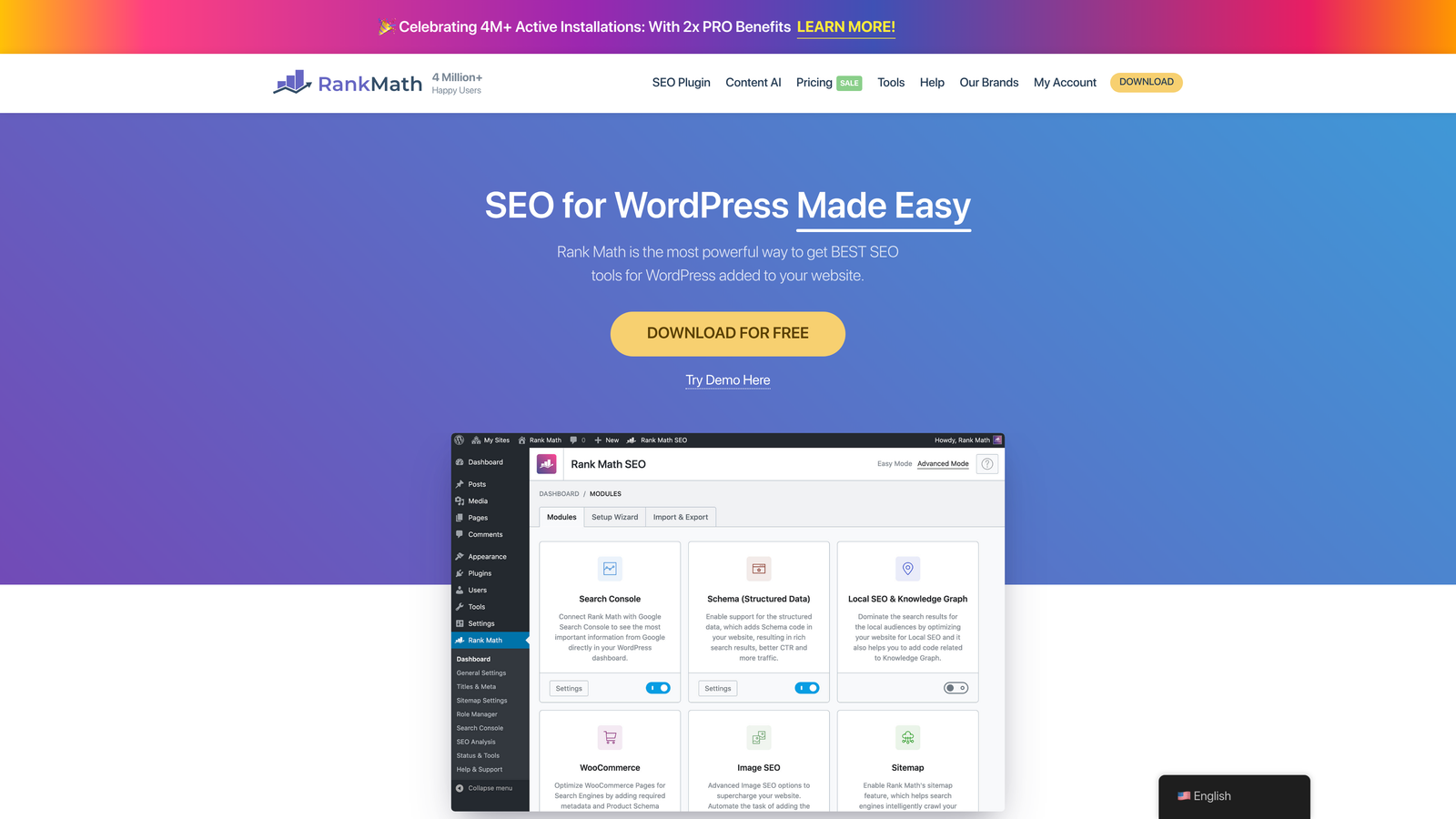
Rank Math SEO is a feature-rich WordPress SEO plugin with one-click IndexNow activation and instant indexing on publish.
Where This Tool Shines
Rank Math supports both IndexNow and Google's Indexing API, so you can submit instantly to IndexNow-participating engines and to Google specifically. One-click setup makes both protocols accessible without technical configuration.
The plugin's advanced schema markup support helps search engines understand your content faster once they discover it. Combining rich results markup with instant indexing improves both discovery speed and search visibility.
Key Features
One-Click IndexNow: Enables instant submissions to Bing, Yandex and other participating engines without API keys.
Automatic Publishing Pings: Triggers submissions on both publish and update actions.
Google Instant Indexing: Direct API integration for faster Google indexing. This requires a Google Cloud service account, and Google officially supports it only for job posting and livestream pages.
Advanced Schema Markup: Comprehensive structured data support for better content understanding.
Best For
WordPress users wanting comprehensive SEO features with multiple indexing options, teams publishing time-sensitive content that needs immediate visibility, and marketers who want both traditional and instant indexing protocols in one tool.
Pricing
The free version includes core features and IndexNow support. Pro starts at $59 per year for advanced features including Google Instant Indexing.
9. Google Search Console Indexing API
Best for: Direct programmatic access to Google's indexing system for quota-based instant submissions.
Google Search Console Indexing API provides direct programmatic access to Google's indexing system for faster URL submission, within quota limits.
Where This Tool Shines
Google's Indexing API lets you submit URLs for crawling and indexing directly, bypassing the traditional sitemap discovery process. Google officially limits the API to pages with JobPosting or BroadcastEvent (livestream) structured data. It has also warned that using the API for other content is spam-policy territory. Many publishers still use it for time-sensitive content, but treat that as a risk rather than a supported workflow.
The API confirms in real time that Google received your submission request. That helps with troubleshooting, because you know whether the problem is a submission failure or a different indexing barrier.
Key Features
Direct Google Submission: Programmatic access to request crawling and indexing of specific URLs.
Update and Removal Requests: Supports both adding new URLs and requesting removal of outdated content.
Batch Processing: Submit multiple URLs in a single API call for efficient large-scale operations.
Real-Time Confirmation: Immediate response showing whether Google accepted your submission request.
Best For
Job boards and livestream publishers using the API for its intended purpose, and development teams building custom indexing workflows that need direct Google integration.
Pricing
Free to use with quota limits. The default is 200 requests per day, and you can request higher quotas through Google Cloud Console for eligible use cases.
Content Discovery Platform Comparison: Choosing the Right Type for Your Goals
"Content discovery platform" means different things depending on who is asking:
- a publisher trying to get content indexed faster
- a marketer trying to reach new audiences
- a brand trying to appear in AI-generated answers
This comparison maps the right platform category to each use case, so you invest in tools that solve your actual problem.
Use Case 1: Getting Content Found by Search Engines Faster
If your goal is shrinking the gap between publishing and indexing, the tools in this guide are the right fit. Prioritize as follows:
- All-in-one (creation + indexing): Sight AI generates SEO/GEO-optimized content and triggers IndexNow automatically on publish.
- WordPress-first: Yoast SEO Premium or Rank Math SEO provide zero-configuration IndexNow with comprehensive on-page optimization.
- Infrastructure-level: Cloudflare Crawler Hints offers edge-level detection, and the IndexNow API gives direct control for custom stacks.
- Diagnostic (fix crawl blockers): Screaming Frog SEO Spider, ContentKing or Oncrawl identify and fix the technical barriers that slow discovery even when IndexNow is active.
Use Case 2: Getting Content Discovered by Human Audiences
If your goal is distribution and reach, meaning getting published content in front of new readers, you need a different category of platform entirely. These tools are not in the list above, but they are worth understanding:
- Content syndication networks: Outbrain, Taboola and Zemanta distribute your content as native recommendations on publisher sites. This exposes it to new audiences who would not find it through search.
- Social discovery tools: BuzzSumo and SparkToro help you identify where your target audience already consumes content, so you can distribute to those channels proactively.
- Email content discovery: Newsletters like Morning Brew, The Hustle and niche industry digests curate content for engaged subscribers. A feature in a relevant newsletter can drive significant referral traffic.
- RSS aggregators and Feedly: Many B2B and technical readers use feed readers. Making your content automatically synced and discoverable in aggregators adds a distribution layer beyond search.
Use Case 3: Getting Content Discovered by AI Models
In 2026, a growing share of content discovery happens when AI assistants like ChatGPT, Claude and Perplexity answer questions and recommend resources. This requires a specialized approach:
- AI visibility tracking: Monitor how often your brand and content appear in AI-generated responses across platforms.
- GEO (Generative Engine Optimization): Structure content so AI retrieval systems favor it. That means clear entity mentions, FAQ schema, authoritative citations and well-organized H2/H3 headings. If a specific engine ignores you, work through our guide on fixing content that is not showing in Perplexity.
- Content generation for AI authority: Sight AI generates content optimized for both traditional search indexing and AI model retrieval, and tracks brand mentions across ChatGPT, Claude and Perplexity in the same workflow.
Side-by-Side: Content Discovery Platform Types at a Glance
| Platform Type | What It Discovers | Who Needs It | Representative Tools |
|---|---|---|---|
| Indexing / crawl tools | Search engines find your content faster | Publishers, SEO teams, marketers | IndexNow, Yoast, Rank Math, Sight AI |
| Syndication / recommendation networks | Human readers discover your content on other sites | Content marketers, media brands | Outbrain, Taboola |
| Social/topic discovery | Identify where target audience already reads | Content strategists, social teams | BuzzSumo, SparkToro |
| AI visibility platforms | AI models surface your brand in generated answers | Growth marketers, SEO/GEO teams | Sight AI, IndexPilot |
| Crawl diagnostics | Remove technical barriers blocking all discovery | Technical SEO, enterprise teams | Screaming Frog, ContentKing, Oncrawl |
The most effective content discovery strategies in 2026 layer all three approaches:
- indexing tools, so search engines find content immediately
- AI retrieval optimization, to capture the growing share of queries answered by AI assistants
- distribution channels, to reach audiences who are not actively searching
How to Choose a Content Discovery Platform: A 2026 Buyer's Guide
Because so many tools use "content discovery platform" to mean different things, start by clarifying which discovery problem you are solving. This buyer's guide maps platform categories to specific goals, so you invest in tools that address your actual workflow gap.
Step 1: Define Your Discovery Problem
Before evaluating any platform, identify which discovery bottleneck you are solving:
- "My new content takes days or weeks to appear in search results." This is an indexing speed problem. You need a search engine discovery tool: IndexNow-based platforms like Rank Math SEO, Yoast SEO Premium or Cloudflare Crawler Hints, or the IndexNow API for direct control.
- "My content isn't reaching new audiences. Only people already searching for me find it." This is a distribution problem. You need audience-side discovery tools: content syndication networks (Outbrain, Taboola), newsletter placements, or social amplification tools like BuzzSumo.
- "My brand doesn't appear when AI assistants recommend solutions in my category." This is an AI visibility problem. You need GEO optimization and AI tracking tools. Sight AI covers both the tracking and the content optimization side of this gap.
- "Search engines are crawling my site but important pages still aren't indexed." This is a technical crawlability problem. You need diagnostic tools like Screaming Frog SEO Spider, ContentKing or Oncrawl to identify technical barriers.
Step 2: Match Platform Features to Your Content Stack
The best content discovery platform is the one that fits your existing infrastructure without extensive custom development. Use these fit criteria:
- WordPress sites: Yoast SEO Premium or Rank Math SEO activate IndexNow out of the box with zero configuration. This is the fastest time-to-value for WordPress teams.
- Sites already on Cloudflare CDN: Cloudflare Crawler Hints provides edge-level indexing automation without touching your codebase.
- Custom or headless CMS: The IndexNow API gives developers direct, platform-agnostic URL submission control with no vendor lock-in.
- Teams wanting creation + indexing in one workflow: Sight AI removes the gap between content generation and indexing. AI-generated content publishes with automatic IndexNow triggers built into the same platform.
Step 3: Prioritize Automation Depth
The most effective content discovery platforms in 2026 eliminate manual steps. Evaluate each platform by how many of these actions it automates without human intervention:
- URL submission to search engines on publish (IndexNow triggers)
- Sitemap generation and pinging on content update
- Crawl error detection and alerting (ContentKing runs 24/7)
- AI visibility tracking and brand mention monitoring
- Content generation optimized for both search and AI retrieval (Sight AI)
A platform that automates three or more of these steps saves time on every piece of content you publish, compared with a manual workflow. Each automated step is one fewer task that needs human attention.
Content Discovery Platform: Quick-Match Guide by Team Type
| Team Type | Primary Discovery Need | Recommended Platform(s) |
|---|---|---|
| Small marketing team on WordPress | Faster indexing with minimal setup | Yoast SEO Premium or Rank Math SEO |
| Dev team with custom CMS | Direct API control over URL submissions | IndexNow API + Google Indexing API |
| Site on Cloudflare CDN | Zero-code edge-level indexing automation | Cloudflare Crawler Hints |
| Content team or agency | Creation + indexing + AI visibility in one workflow | Sight AI |
| Enterprise / large publisher | Crawl budget optimization + real-time monitoring | Oncrawl + ContentKing |
| Technical SEO team diagnosing issues | Crawlability audits and indexability barriers | Screaming Frog SEO Spider |
What Is a Content Discovery Platform? (And Which Type Do You Need)
The phrase content discovery platform is used across three distinct software categories. Picking the wrong one wastes budget and time, so here is a plain-language breakdown of each type, plus a fast decision framework.
Category 1: Search Engine Indexing Platforms
These platforms speed up how quickly search engines discover and index your content after you publish. They use protocols like IndexNow to push URLs to Bing, Yandex and partner engines instantly, and automate sitemap submission to Google. Examples from this guide include Sight AI, Yoast SEO Premium, Rank Math SEO and Cloudflare Crawler Hints.
Choose this if: Your content takes days or weeks to appear in search results after publishing.
Category 2: Audience Discovery & Content Distribution Platforms
These platforms get your content in front of human readers through recommendation widgets, sponsored content networks and social amplification. They distribute content to audiences on third-party sites rather than speeding up search engine crawling. Examples include Outbrain, Taboola, Zemanta, BuzzSumo and SparkToro.
Choose this if: Your content ranks fine but isn't reaching new audiences who aren't already searching for you.
Category 3: AI Visibility Platforms
This newer category is built for the 2026 search landscape. These platforms track and optimize how often AI assistants like ChatGPT, Claude and Perplexity cite your content when answering user queries. Sight AI sits at the intersection of all three categories, handling indexing automation, GEO-optimized content generation and AI-model citation tracking in a single workflow.
Choose this if: You want to appear in AI-generated answers, not just traditional search results.
Content Discovery Platform Quick-Pick Guide
| Your Goal | Platform Category | Representative Tools |
|---|---|---|
| Get new pages indexed by Google & Bing faster | Search engine indexing | Sight AI, IndexNow API, Yoast SEO Premium, Rank Math SEO |
| Distribute content to new human audiences | Audience discovery / syndication | Outbrain, Taboola, BuzzSumo, SparkToro |
| Appear in ChatGPT, Claude & Perplexity answers | AI visibility | Sight AI, GEO optimization tools |
| Fix crawlability issues blocking all discovery | Technical SEO / diagnostics | Screaming Frog, ContentKing, Oncrawl |
Quick decision test: Ask which question describes you best.
- Am I trying to get search engines to find my content faster? Focus on the IndexNow-based tools in this list.
- Am I trying to reach new human audiences? Look at syndication and recommendation platforms.
- Am I trying to appear in AI-generated answers? Prioritize GEO optimization and AI visibility tracking alongside indexing.
Most teams benefit from combining categories.
Frequently asked questions
What is the definition of content discovery?
Content discovery is the process by which content gets found by its intended consumers. Those consumers can be search engine crawlers that index a page, human readers who encounter it through recommendations or feeds, or AI assistants that retrieve and cite it in answers. A content discovery platform is any tool that speeds up or expands one of those paths. See the category breakdown above for which type fits your goal.
What are the best content discovery platforms in 2026?
It depends on the discovery problem:
- Search indexing: Yoast SEO Premium, Rank Math, Cloudflare Crawler Hints and the IndexNow API.
- Human audience reach: Outbrain and Taboola.
- AI visibility: platforms like Sight AI, which track and improve how ChatGPT, Claude and Perplexity cite your brand.
- Diagnostics: Screaming Frog, ContentKing and Oncrawl remove crawl barriers that undermine every other tool.
Are there free content discovery tools?
Yes. Several capable options cost nothing:
- The IndexNow protocol is free.
- Cloudflare Crawler Hints is available on every Cloudflare plan, including Free.
- Rank Math's free version includes IndexNow.
- Screaming Frog crawls up to 500 URLs at no cost.
- Google's Indexing API is free within its 200-requests-per-day quota, though officially only for job posting and livestream pages.
Paid tools mainly add automation, monitoring and scale.
Does IndexNow work with Google?
No. Google does not participate in IndexNow. It has tested the protocol but still relies on its own crawling, XML sitemaps and Search Console. IndexNow submissions reach Bing, Yandex, Seznam, Naver and Yep. For Google, keep accurate sitemaps with lastmod dates, use strong internal linking to new pages, and use URL Inspection for priority pages. Because Bing results also feed some AI assistants, IndexNow still matters for AI discovery.
Can AI chat tools help with content discovery?
Yes, in two ways:
- As a research aid: ChatGPT, Claude and Perplexity can surface topics, sources and content gaps.
- As a discovery channel: these assistants increasingly recommend content and brands directly.
To be recommended, your pages must be crawlable, clearly structured and cited by authoritative sources. AI visibility tools measure how often you appear in AI answers so you can track progress.
Making the Right Choice
Your ideal content discovery solution depends on your specific workflow and technical resources. For all-in-one simplicity combining content creation with automatic indexing, Sight AI delivers both SEO/GEO-optimized content generation and instant IndexNow integration without manual configuration.
WordPress users have excellent options in Yoast SEO Premium and Rank Math SEO. Both offer one-click IndexNow setup with comprehensive SEO features. Yoast provides zero-configuration simplicity, while Rank Math adds Google Instant Indexing for teams wanting both protocols.
Technical teams wanting maximum control should use the IndexNow API directly for multi-engine submissions, or the Google Search Console Indexing API for eligible Google-specific workflows. Cloudflare Crawler Hints offers a middle ground: automatic edge-level indexing without code changes for sites already on Cloudflare.
Enterprise sites and large publishers benefit from combining instant submission tools with diagnostic platforms:
- Screaming Frog identifies technical barriers preventing indexing.
- ContentKing monitors indexability changes in real time.
- Oncrawl optimizes crawl budget through log file analysis.
The most effective strategy combines multiple tools. Use instant submission protocols (IndexNow or Google's API) to push new content, diagnostic tools to ensure crawlability, and monitoring platforms to catch issues before they affect visibility. This layered approach covers both the speed of initial discovery and the long-term health of your indexing setup.
In 2026, content discovery extends beyond traditional search engines. AI models like ChatGPT, Claude and Perplexity increasingly shape how people find information, which makes AI visibility as important as search engine indexing. Tools that address both traditional crawling and AI model awareness give modern marketing teams a complete discovery strategy.
Stop guessing how AI models like ChatGPT and Claude talk about your brand. Get visibility into every mention, track content opportunities, and automate your path to organic traffic growth. Start tracking your AI visibility today and see exactly where your brand appears across top AI platforms.