Ask ChatGPT to recommend project management tools, and it'll confidently list Asana, Monday, and Trello. Ask Claude which CRM works best for small teams, and you'll hear about HubSpot and Salesforce. But what if your product is objectively better—and AI never mentions it?
This isn't a hypothetical problem. Right now, millions of potential customers are asking AI platforms for product recommendations, solution comparisons, and buying advice. If your brand isn't part of those conversations, you're invisible to an entire discovery channel that's growing exponentially.
The shift is fundamental. Traditional SEO optimized content for Google's algorithm. AI discoverability requires optimizing for how language models retrieve, understand, and cite information. Your content needs to be structured so AI can parse it, authoritative enough that AI trusts it, and formatted so AI can extract clean answers.
This guide walks you through six concrete steps to improve your brand's AI discoverability. You'll learn how to audit your current AI presence, structure your website for AI crawlers, create content that gets cited, optimize for retrieval patterns, accelerate indexing, and measure results. Whether you're competing against established brands or building authority in a new category, these steps will help you get mentioned when it matters most.
Step 1: Audit Your Current AI Visibility Baseline
You can't improve what you don't measure. Before making any changes, you need to understand exactly how AI platforms currently talk about your brand—or if they mention you at all.
Start by querying the major AI platforms your target audience actually uses. Open ChatGPT, Claude, Perplexity, and Google's AI Overviews. Ask the same questions your potential customers would ask: "What are the best [product category] for [use case]?" or "How do I choose between [your brand] and [competitor]?"
Document everything. Which competitors appear in the responses? How are they positioned? What specific features or benefits does the AI highlight? Most importantly, does your brand appear at all—and if so, in what context?
Pay close attention to sentiment and accuracy. Sometimes AI mentions your brand but gets key details wrong. Maybe it describes outdated features, misrepresents your pricing model, or associates you with the wrong category. These inaccuracies matter because they shape how thousands of potential customers perceive you. Understanding AI model brand sentiment tracking helps you identify and address these perception issues.
Create a simple tracking spreadsheet with columns for platform, query, competitors mentioned, your brand's presence, sentiment, and accuracy. Run the same queries across multiple AI platforms because each model has different training data and retrieval mechanisms. ChatGPT might cite you while Claude doesn't, revealing specific gaps in how your content is structured or distributed.
Test different query variations. Users don't ask questions in just one way. Try "best [product] for [use case]" alongside "top [product] options" and "[product] comparison." Each variation might surface different results and reveal which content formats AI prefers for different query types.
This baseline audit becomes your benchmark. In 30 days, you'll run these same queries again to measure improvement. You'll see which content changes actually moved the needle and which platforms responded to your optimization efforts. Without this starting point, you're making changes blindly.
Step 2: Structure Your Website for AI Crawlability
AI models can't cite content they can't understand. Your website's structure determines whether AI crawlers can efficiently parse your information and extract meaningful insights.
Start by implementing an llms.txt file in your site's root directory. Think of it as a robots.txt file specifically for AI—a simple text file that provides a structured summary of your site's purpose, key pages, and content focus. This emerging standard helps AI models quickly understand what your site offers without crawling every page.
Your llms.txt should include your brand name, a clear one-sentence description of what you do, links to your most authoritative content, and any specific instructions for AI systems. Keep it concise and factual. AI models favor clarity over marketing language.
Next, audit your HTML structure. AI crawlers rely on semantic markup to understand content hierarchy and relationships. Use proper heading tags (H1 for page titles, H2 for main sections, H3 for subsections) in logical order. Every page should have exactly one H1 that clearly states the topic. Learning how to improve web indexing ensures your technical foundation supports AI discovery.
Create comprehensive FAQ sections using structured markup. Format them with clear question headings followed by direct, complete answers. AI models love this format because it maps perfectly to how users ask questions. When someone asks Claude "How does [your product] handle [specific feature]?" and you have an FAQ that answers exactly that, you've created a perfect citation opportunity.
Page speed matters more than you think. AI crawlers have limited resources and prioritize sites that load quickly. Compress images, minimize JavaScript, and ensure your site responds in under two seconds. Mobile responsiveness isn't optional—many AI training processes prioritize mobile-friendly content.
Implement breadcrumb navigation to show content relationships. When AI understands that your "Advanced Features" page sits under "Product Documentation," it can better contextualize information and make more accurate citations.
Clean up your internal linking structure. Every important page should be reachable within three clicks from your homepage. AI crawlers follow links just like search engines do, and orphaned pages rarely get indexed or cited.
Step 3: Build Authoritative, Citable Content Assets
AI models cite sources they trust. Generic blog posts don't cut it—you need content that establishes genuine authority in your niche.
Develop definitive guides that comprehensively cover core topics in your industry. These aren't 800-word blog posts. Think 3,000+ word resources that answer every major question someone might have about a specific topic. When AI searches for authoritative information, depth signals expertise.
Include original data, frameworks, or methodologies that exist nowhere else. AI models prioritize unique information because it provides value they can't find in a hundred other sources. Conduct original research, publish survey results, or document your proprietary process. This makes your content inherently citable.
Write clear, factual statements that can be directly quoted. Avoid marketing fluff and vague claims. Instead of "Our platform helps businesses succeed," write "The platform reduces manual data entry time by automating invoice processing and payment reconciliation." The second statement is specific, factual, and quotable.
Structure content with explicit definitions, numbered lists, and step-by-step processes. AI excels at extracting information from well-organized content. When you write "There are four key factors in choosing [product category]:" followed by a numbered list, you've created content that AI can cleanly extract and cite. Understanding how to improve content discoverability helps you create assets that AI systems consistently find and reference.
Create comparison content that positions your brand alongside competitors. AI often generates comparison tables or lists when users ask "What's the difference between X and Y?" If you've already created authoritative comparison content, you increase the odds of being included in those responses.
Include expert quotes and external citations. AI models favor content that references other authoritative sources because it signals research depth and accuracy. When you cite industry reports, academic research, or expert opinions, you strengthen your content's authority profile.
Update evergreen content regularly. AI training data has cutoff dates, but web crawlers continuously index updated content. Keeping your authoritative guides current increases the likelihood they'll be included in future training cycles and real-time retrieval systems.
Step 4: Optimize Content for AI Retrieval Patterns
AI doesn't read content the way humans do. It scans for patterns, extracts key information, and prioritizes content structured for efficient retrieval.
Use natural language that mirrors how users phrase questions. People don't ask AI "SaaS metrics analysis methodology"—they ask "How do I measure SaaS performance?" Write your headings and opening sentences using the same conversational phrasing your audience uses.
Front-load key information in every paragraph. AI models often extract the first sentence or two when generating responses. Don't bury your main point after three sentences of setup. State your conclusion first, then provide supporting details. This inverted pyramid style maximizes extraction efficiency.
Answer the what, why, and how within the first few sentences of each section. When someone asks "What is [concept]?" your section should immediately provide a clear definition, explain why it matters, and outline how it works. AI can then extract a complete, contextual answer from a single paragraph. Mastering how to improve content recommendation rates directly impacts how often AI systems surface your brand.
Include comparison tables whenever you're discussing multiple options, features, or approaches. AI models excel at parsing structured data and often generate tables in their responses. If your content already includes well-formatted tables, you've done the extraction work for the AI.
Use numbered lists for processes, steps, and sequential information. AI retrieval systems prioritize numbered content because it's unambiguous and easy to cite. When you write "The five steps to [process] are:" followed by a numbered list, you've created citation-ready content.
Create standalone paragraphs that work out of context. AI often extracts individual paragraphs or sentences to include in responses. Each paragraph should make sense even if someone reads it without the surrounding content. Avoid pronouns that require previous context—be explicit about what you're referencing.
Incorporate question-based subheadings throughout your content. Instead of "Implementation Process," use "How Do You Implement This System?" Question-based headings match user queries more directly and signal to AI that the following content provides an answer.
Step 5: Accelerate Content Indexing and Discovery
Great content doesn't matter if AI systems never discover it. You need to actively accelerate how quickly your content gets indexed and becomes available to AI training pipelines.
Implement the IndexNow protocol immediately. This open standard lets you notify search engines instantly when you publish or update content. Instead of waiting days or weeks for traditional crawling, IndexNow triggers near-instant indexing. Microsoft Bing, Yandex, and other search engines support it, and faster indexing accelerates the pipeline to AI training data. Our guide on how to improve content indexing speed walks through the complete implementation process.
Setting up IndexNow is straightforward. Generate an API key, add it to your site's root directory, and configure your CMS or publishing workflow to ping the IndexNow endpoint whenever content changes. Many modern CMS platforms now include IndexNow plugins that automate this entirely.
Maintain an updated XML sitemap with proper priority signals. Your sitemap tells crawlers which pages matter most and how frequently they change. Set higher priority values for your authoritative guides and cornerstone content. Update your sitemap automatically whenever you publish new content—manual updates introduce delays that slow discovery.
Publish consistently to signal active, authoritative content production. AI models favor sources that regularly publish fresh, relevant content. A site that publishes one comprehensive guide monthly signals more authority than one that publishes sporadically. Consistency matters more than volume.
Monitor indexing status through Google Search Console and Bing Webmaster Tools. Check for crawl errors, blocked resources, or pages that aren't being indexed. Resolve these issues immediately because every day content remains unindexed is a day it can't be cited by AI systems.
Submit your most important pages directly through search console tools. While sitemaps handle bulk indexing, manually requesting indexing for critical pages ensures they get prioritized. Do this for new authoritative guides, updated comparison content, and pages you want AI to discover quickly.
Step 6: Monitor, Measure, and Iterate on AI Mentions
AI discoverability isn't a one-time project—it's an ongoing optimization process that requires regular monitoring and refinement.
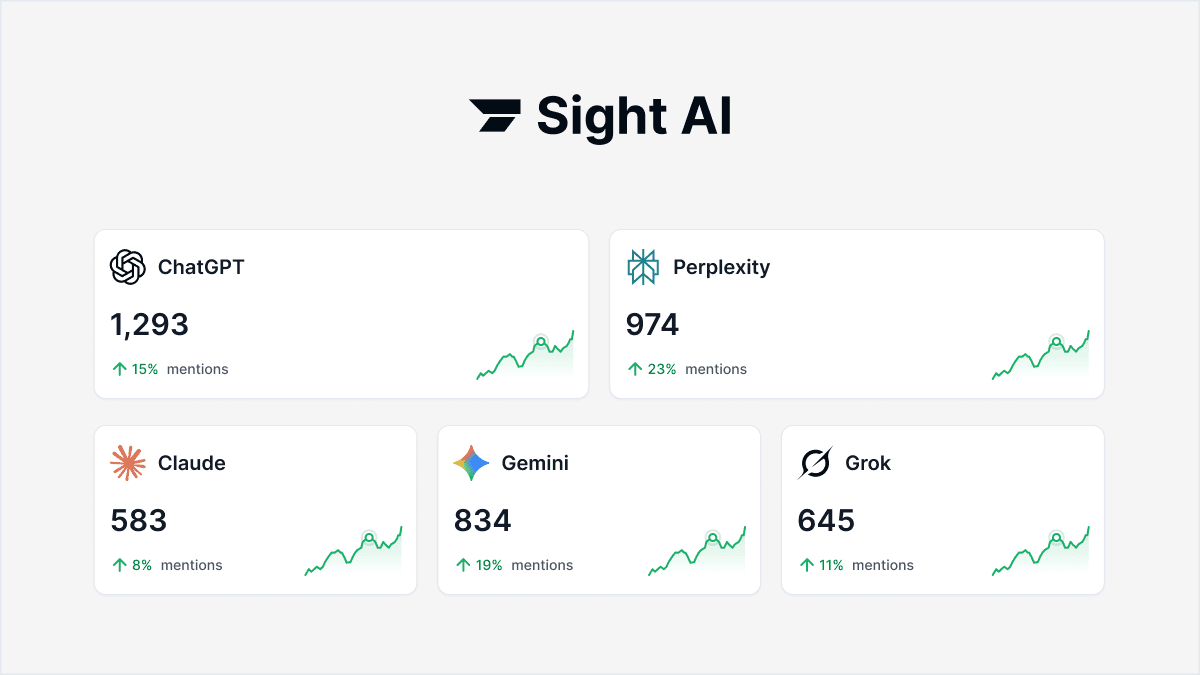
Track brand mentions across AI platforms weekly or bi-weekly. Use the same queries from your baseline audit and document any changes. Did you appear in new responses? Did your positioning improve? Are competitors still dominating mentions, or are you gaining ground? Using tools to track brand mentions in AI models automates this process and provides consistent data.
Analyze which content types generate the most AI citations. You might discover that your comparison guides get cited frequently while your case studies never appear. Or that FAQ-format content performs better than long-form articles. These patterns reveal what AI models actually prefer, letting you focus your content efforts where they'll have the most impact.
Identify gaps where competitors appear but you don't. When AI consistently mentions three competitors for a specific query but ignores you, that's a content gap. Either you lack authoritative content on that topic, or your existing content isn't structured for AI retrieval. Create or optimize content specifically to fill these gaps.
Test different content formats and structures. Publish two similar guides with different formatting approaches and track which one gets cited more frequently. Does AI prefer bullet-point summaries or paragraph-based explanations? Do comparison tables outperform narrative comparisons? Let actual AI behavior guide your content strategy.
Track sentiment and accuracy of mentions over time. As you publish more authoritative content, AI responses should become more accurate and positive. If you notice persistent inaccuracies, create targeted content that explicitly corrects those misconceptions using clear, factual language. Understanding real-time brand perception in AI responses helps you catch and address issues before they spread.
Document what works and scale it. When a specific content piece starts appearing in AI responses consistently, analyze what made it successful. Was it the format? The depth? The structure? The topic authority? Replicate those elements across other content to improve overall AI discoverability.
Putting It All Together
Improving brand AI discoverability requires a systematic, measurable approach. You've learned how to audit your baseline visibility, structure your site for AI crawlers, create authoritative content, optimize for retrieval, accelerate indexing, and continuously monitor results.
Use this checklist to track your progress:
✓ Baseline AI visibility documented across major platforms
✓ llms.txt file and structured markup implemented
✓ Authoritative content assets published with original data or frameworks
✓ Content optimized for AI extraction with front-loaded information
✓ IndexNow protocol and sitemap automation active
✓ Regular AI mention tracking system in place
Start with Step 1 today. Open ChatGPT, Claude, and Perplexity. Query them with the questions your target customers ask. Document which competitors appear and whether your brand gets mentioned. This baseline becomes your roadmap—showing you exactly where you need to improve and giving you a benchmark to measure progress against.
The brands that act now will capture AI visibility while competitors are still focused solely on traditional search. Every week you delay is another week where potential customers discover competitors through AI recommendations instead of finding you. The opportunity window is open, but it won't stay that way forever.
Start tracking your AI visibility today and see exactly where your brand appears across top AI platforms. Stop guessing how AI models like ChatGPT and Claude talk about your brand—get visibility into every mention, track content opportunities, and automate your path to organic traffic growth.