Guide content is one of the most durable formats in organic search. A well-structured how-to article or step-by-step explainer can drive traffic for years, earn backlinks naturally, and increasingly, surface as a cited source inside AI-generated answers from ChatGPT, Perplexity, and Claude. The challenge is producing guides at the quality and scale that modern SEO and GEO strategies demand.
Basic writing tools get you partway there. But if you want guides that rank on Google and get your brand mentioned by AI models, you need software built for both dimensions: content creation and AI search visibility. The tools below cover both camps, from AI writing platforms to brand monitoring tools that tell you exactly which guide topics are driving AI mentions.
Here are the best guide content creation software tools available in 2026, evaluated on AI writing quality, SEO and GEO optimization, workflow automation, and AI search visibility support.
1. Sight AI
Best for: Teams that want to create SEO/GEO-optimized guides and track AI brand visibility in one platform.
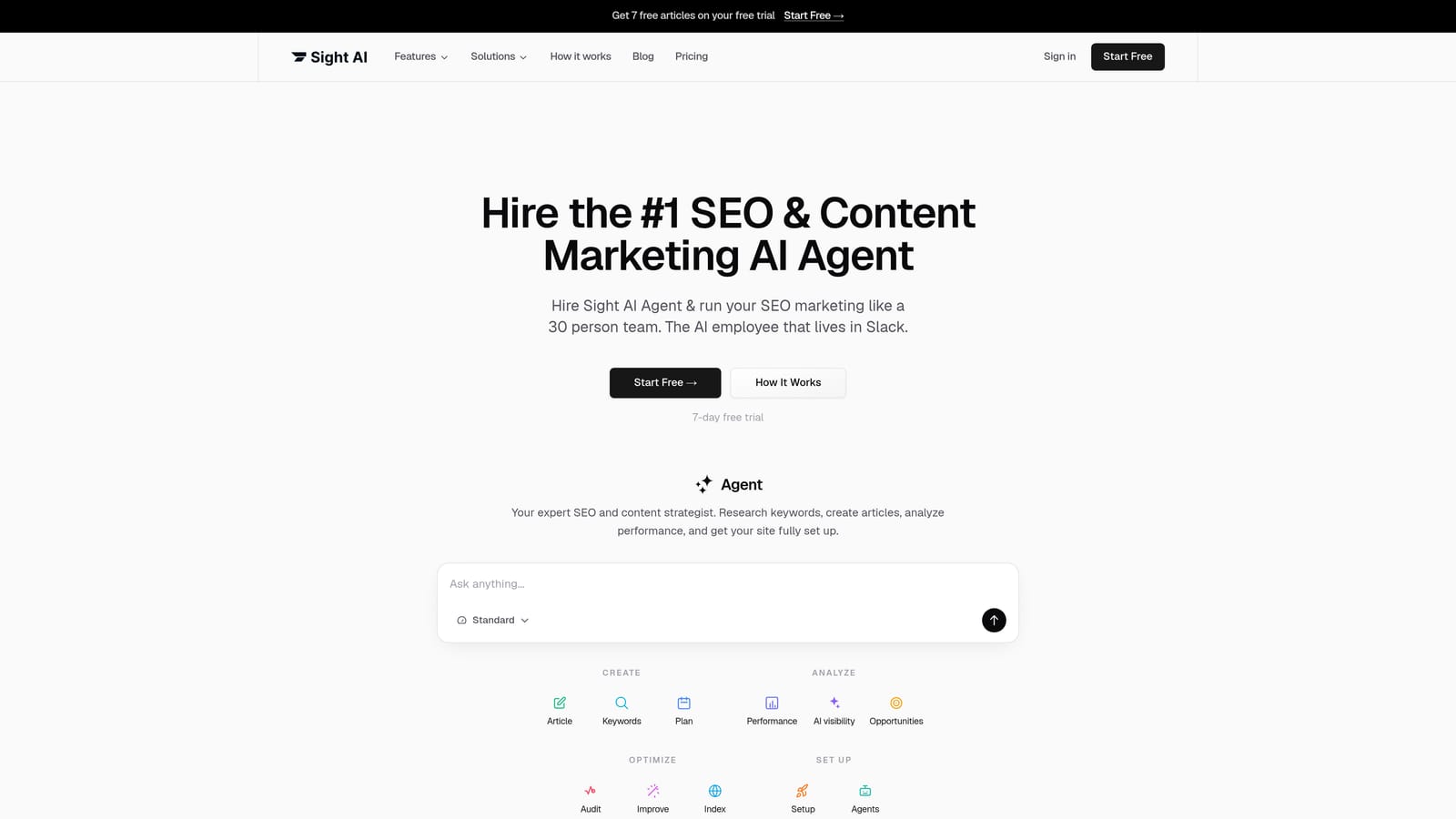
Sight AI is an all-in-one platform that combines AI-powered guide and long-form content creation with AI visibility tracking across ChatGPT, Claude, Perplexity, and other major AI models.
Where This Tool Shines
Most content tools stop at the draft. Sight AI goes further by connecting what you publish to how AI models respond to it. Its multi-agent content writer handles the full production pipeline for guides, listicles, and explainers, while a parallel AI Visibility layer monitors whether your published content is actually earning brand mentions inside AI-generated answers.
This combination is genuinely rare. For teams running GEO strategies alongside traditional SEO, having both functions in a single platform eliminates the need to stitch together separate tools for creation and measurement. The Autopilot Mode takes this further, enabling near-hands-free guide production at scale without sacrificing structural quality.
Key Features
13+ Specialized AI Agents: Each agent handles a distinct part of guide production, including research, writing, SEO optimization, and internal linking, producing content structured for both search engines and AI models.
Autopilot Mode: Automates the guide production workflow so teams can publish at scale without manual intervention at every step.
AI Visibility Score: Tracks how your brand is mentioned across 6+ AI platforms, including sentiment analysis and prompt-level tracking to reveal which guide topics are driving AI search presence.
IndexNow Integration: Automatically submits new guides for indexing and updates your sitemap, reducing the lag between publication and search discovery.
CMS Auto-Publishing: Connects directly to your CMS so finished guides publish without manual copy-paste steps, keeping your workflow tight.
Best For
Marketers, founders, and agencies that need to produce SEO and GEO-optimized guide content consistently while also tracking how that content performs inside AI search. Particularly strong for teams that want a single platform rather than a stack of disconnected tools.
Pricing
Verify current pricing at trysight.ai/pricing. Multiple tiers available to suit solo users through agency teams.
2. Writesonic
Best for: High-volume guide and article production with built-in SEO features and a broad content template library.
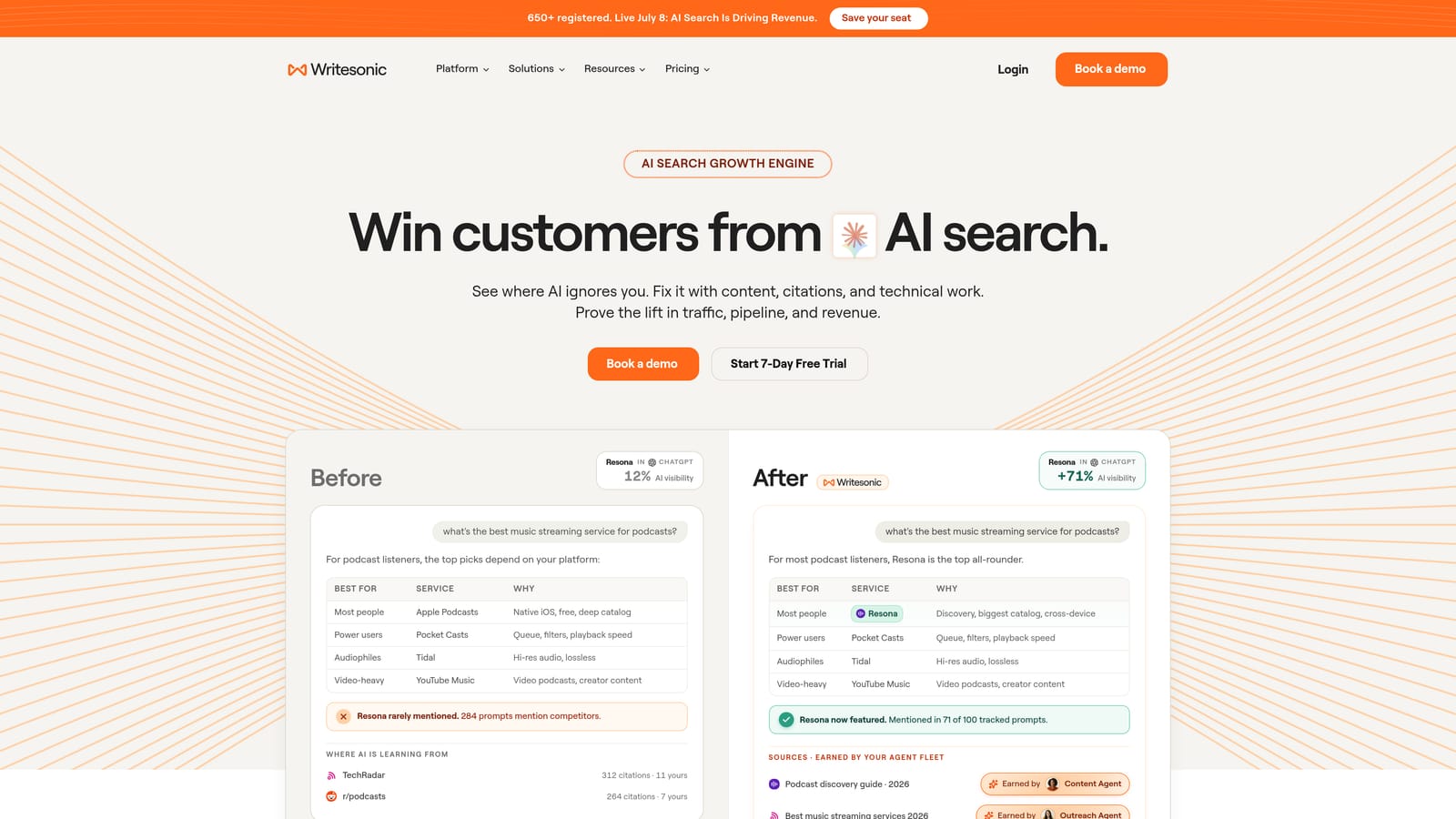
Writesonic is a widely-used AI writing platform built for fast, high-volume content generation, with dedicated features for long-form articles and guide formats.
Where This Tool Shines
Writesonic has built a strong reputation for speed. Its Article Writer feature is designed specifically for longer content formats, pulling in SERP data to inform structure and keyword integration before the writing even begins. For teams that need to produce a large volume of guides quickly, this approach reduces the research-to-draft cycle considerably.
The platform also includes Chatsonic, a conversational AI layer useful for ideation, topic research, and refining guide outlines before committing to a full draft. The combination makes it a solid choice for content teams that prioritize throughput.
Key Features
Dedicated Article Writer: Long-form content mode built for guide and article formats, with structured output and keyword targeting built into the generation process.
SERP-Informed Writing: Pulls in search result data to shape content structure and ensure keyword coverage aligned with what currently ranks.
Chatsonic: Conversational AI assistant useful for research, ideation, and refining guide topics before drafting.
Multi-Language Support: Generates guide content in multiple languages, useful for teams targeting international audiences.
Free Plan: Entry-level access available at no cost, with paid tiers unlocking higher volume and advanced features.
Best For
Content teams and agencies that need to generate a high volume of SEO-focused guides quickly. A strong fit for teams where raw output speed is the primary constraint, and where AI search visibility tracking is handled separately.
Pricing
Free plan available. Paid plans start at pricing listed on writesonic.com. Verify current tiers before committing.
3. AirOps
Best for: Technical content ops teams building repeatable, data-driven guide production pipelines at scale.
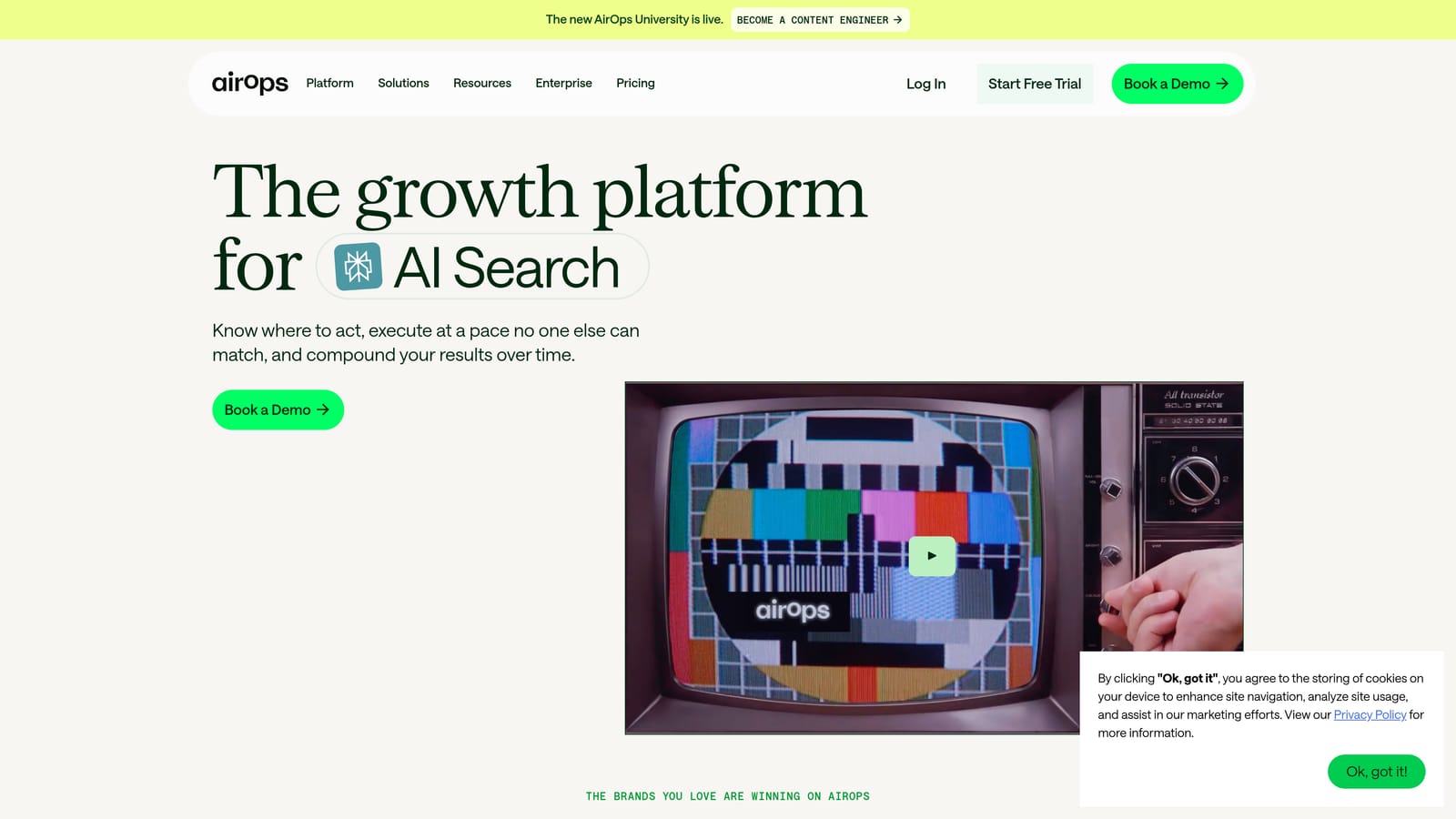
AirOps is an AI workflow orchestration platform that lets content teams build custom pipelines for guide production, connecting multiple AI models, data sources, and publishing systems in a single automated flow.
Where This Tool Shines
AirOps is less of a writing tool and more of a content operations platform. Where most AI writers give you a single interface for drafting, AirOps lets you design the entire workflow: what data goes in, which AI model processes it, how the output is structured, and where it gets sent. For agencies managing guide production across many clients or verticals, this level of control is genuinely valuable.
The ability to connect external data sources means guides can be informed by live product data, keyword research outputs, or competitive intelligence feeds, making the content more relevant and less generic than standard AI-generated output.
Key Features
Custom AI Workflow Builder: Design end-to-end guide production pipelines with configurable steps, data inputs, and output formats.
Multi-LLM Support: Connect multiple large language models within a single workflow, choosing the best model for each production stage.
Structured Content Output: Enforces consistent formatting across guide batches, critical for agencies producing content at scale across multiple clients.
Data Source Integrations: Pull in external data, keyword lists, or research inputs to ground guide content in real information rather than model defaults.
API-Friendly Architecture: Built for technical teams comfortable with integrations, enabling deep connection with existing content ops infrastructure.
Best For
Agencies and enterprise content ops teams with technical resources who need highly repeatable, templated guide production across many topics or clients. Less suited to solo users or teams without technical setup capacity.
Pricing
Verify current pricing at airops.com. Contact for enterprise plan details.
4. Profound
Best for: Enterprise SEO and brand teams tracking how their content appears inside AI-generated search responses.
Profound is an AI search analytics platform that tracks brand and content visibility across AI answer engines, helping teams understand which guide topics and formats are surfacing in AI-generated responses.

Where This Tool Shines
Profound sits firmly in the analytics layer rather than the creation layer, and that focus is a strength. It gives teams a structured view of how their existing content performs inside AI search, showing which topics trigger AI model citations and where competitors are appearing instead. For guide content strategy, this kind of data is invaluable: it tells you not just what to write, but what the AI models are actually rewarding.
The competitive benchmarking capability is particularly useful for teams operating in crowded verticals, where understanding share of voice in AI search is becoming as important as tracking traditional keyword rankings.
Key Features
AI Answer Engine Tracking: Monitors brand and content visibility across major AI platforms including ChatGPT and Perplexity, showing where your guides appear in generated responses.
Content Topic Intelligence: Identifies which guide topics and content formats are surfacing in AI-generated answers, informing future content planning.
Competitive Share of Voice: Benchmarks your AI search visibility against competitors to reveal gaps and opportunities.
Strategic Content Insights: Translates AI search performance data into actionable guidance for guide content strategy and topic prioritization.
Enterprise Focus: Built for larger teams with dedicated SEO and brand functions managing AI search as a strategic channel.
Best For
Enterprise SEO teams, brand managers, and agencies that need structured visibility into how their guide content performs inside AI search engines. Works best as a complement to a dedicated content creation tool rather than a standalone solution.
Pricing
Verify current pricing at profound.co. Enterprise-oriented; contact for plan details.
5. Peec
Best for: Brands monitoring AI mention frequency and competitive visibility as guide content is published over time.
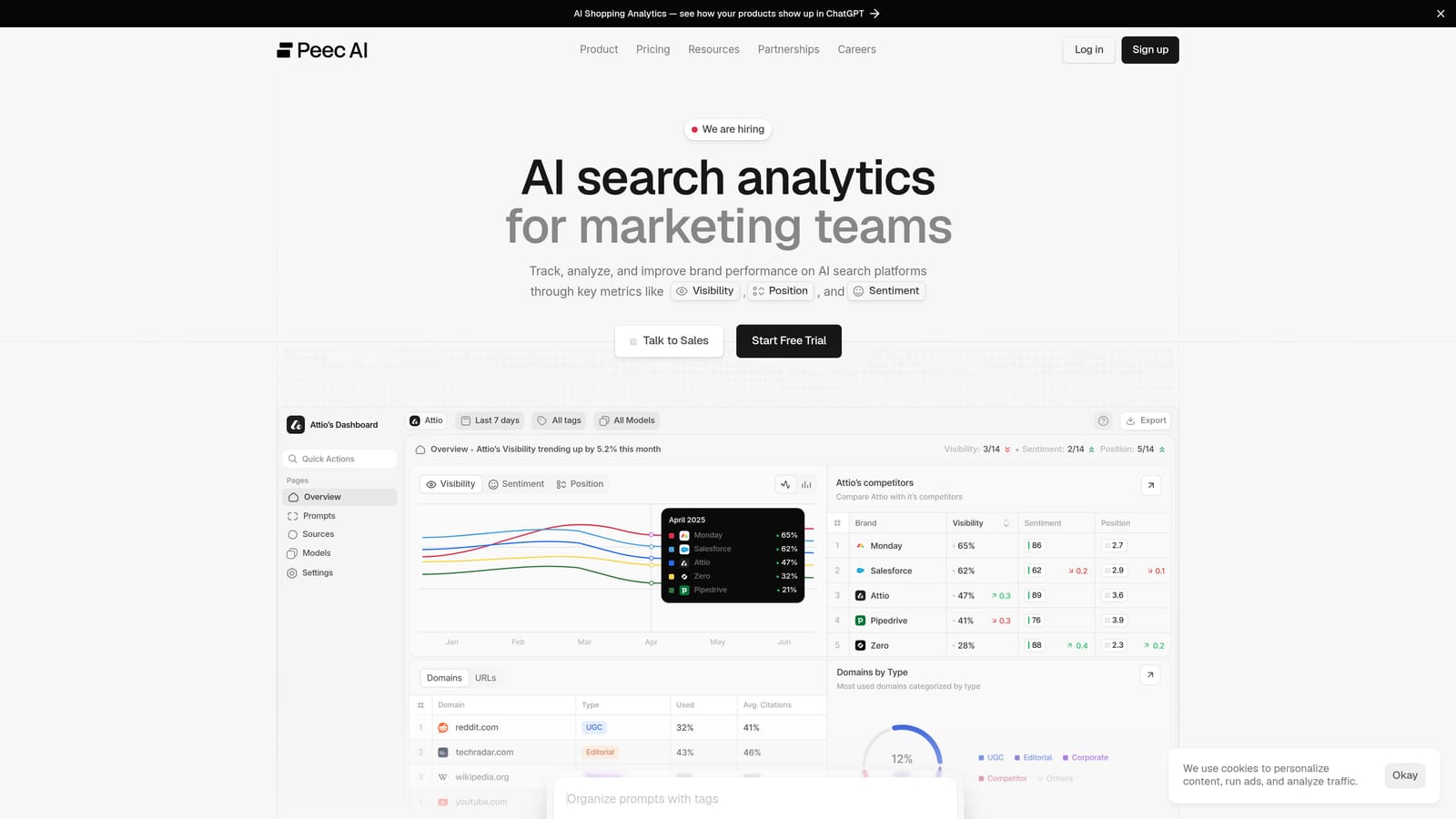
Peec is an AI brand monitoring tool that tracks brand mentions within AI model outputs and provides competitive benchmarking to measure whether guide content is improving AI search presence.
Where This Tool Shines
Peec focuses on a specific and increasingly important question: is your brand showing up when AI models answer questions in your space? As teams publish more guide content optimized for GEO, Peec provides the feedback loop that shows whether that content is moving the needle on AI mention frequency.
The competitive benchmarking angle is where Peec adds particular value. Knowing that a competitor is mentioned more frequently than your brand across AI platforms, and seeing that gap narrow as you publish more targeted guide content, gives content teams a concrete metric to work toward beyond traditional search rankings.
Key Features
AI Brand Mention Monitoring: Tracks how often and in what context your brand appears in AI model outputs across major platforms.
Competitive Benchmarking: Compares your AI mention share against competitors, showing relative visibility in AI-generated responses.
Visibility Trend Tracking: Monitors changes in brand mention frequency over time, connecting content publication to AI search outcomes.
Content Gap Identification: Highlights areas where competitors appear in AI responses and your brand does not, informing guide topic selection.
Reporting and Alerts: Notifies teams of significant changes in brand mention patterns, keeping AI visibility on the radar without manual checking.
Best For
Marketing teams and agencies that want to measure the AI search impact of their guide content over time, with a particular focus on competitive positioning. Best used alongside a content creation platform rather than as a standalone tool.
Pricing
Verify current pricing at peec.ai.
6. Promptwatch
Best for: SEO and GEO strategists who want prompt-level data to inform which guide topics will earn AI model mentions.
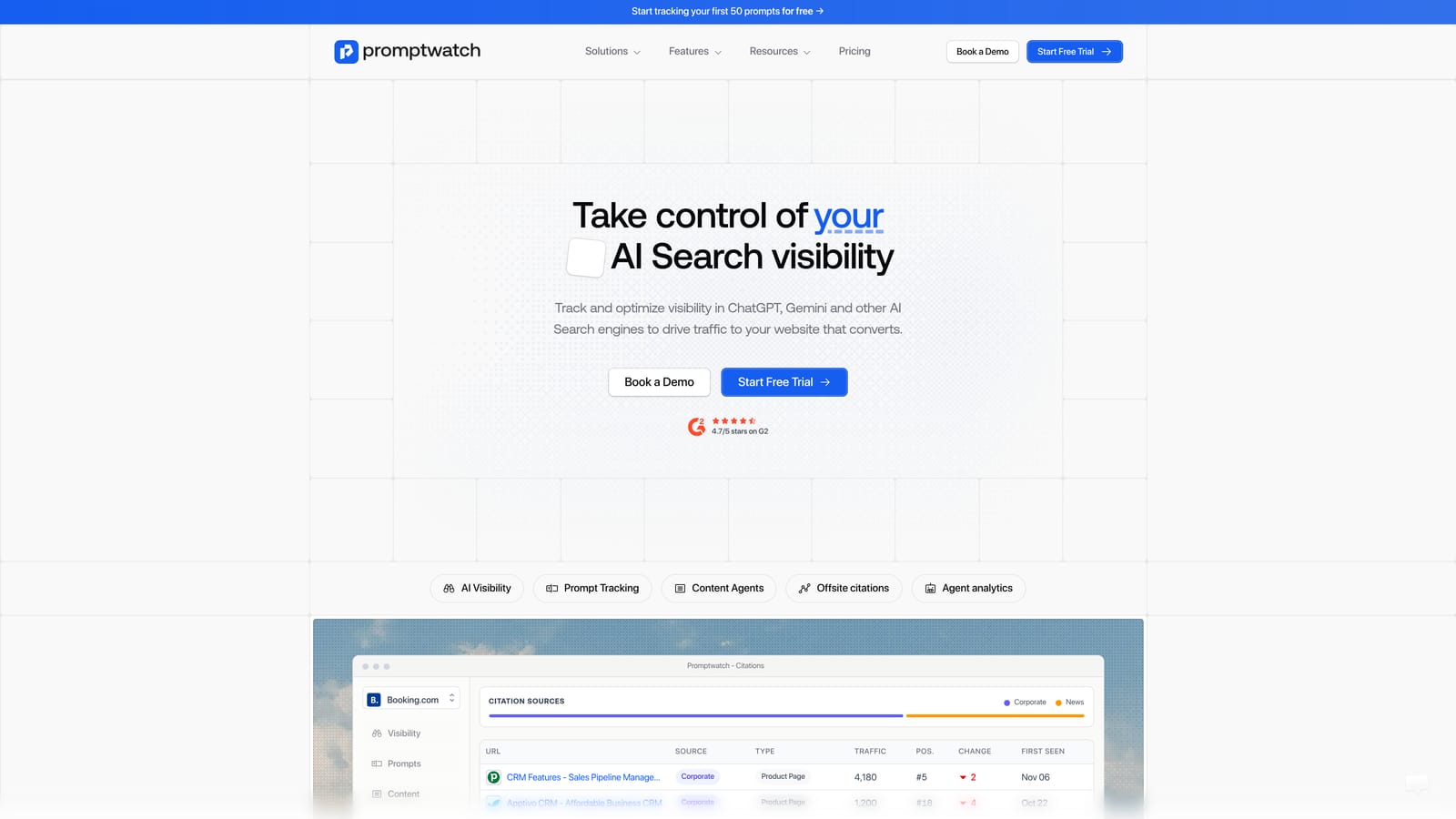
Promptwatch is a prompt-level AI tracking tool that identifies which specific user questions and prompts trigger AI model mentions of a brand, providing actionable data for guide content strategy.
Where This Tool Shines
Where most AI visibility tools tell you whether your brand appears in AI responses, Promptwatch tells you which prompts triggered those appearances. That distinction matters enormously for guide content strategy. Knowing the exact questions that cause AI models to mention a competitor but not your brand gives you a precise content brief: write a better guide answering that question, and track whether the mention pattern shifts.
This prompt-level granularity bridges the gap between content strategy and AI search performance in a way that broader monitoring tools cannot. For teams building question-focused guide content, it functions almost like keyword research for the AI search era.
Key Features
Prompt-Level Visibility Tracking: Identifies the specific questions and prompts that surface brand mentions in AI-generated responses, going deeper than aggregate brand monitoring.
Competitor Prompt Analysis: Shows which prompts trigger competitor mentions but not yours, creating a direct roadmap for guide content topics.
GEO Content Strategy Support: Maps guide topics to real AI search queries, grounding content planning in actual AI model behavior rather than assumptions.
Visibility Change Tracking: Monitors how prompt-level mention patterns shift as new guide content is published, closing the feedback loop between creation and AI search performance.
Actionable Content Briefs: Translates prompt data into specific content opportunities, making it a practical input for editorial planning and guide topic selection.
Best For
SEO strategists, GEO practitioners, and content teams who want to build guide content strategies grounded in real AI search query data. Particularly valuable for teams in competitive verticals where capturing AI model citations requires precise topic targeting.
Pricing
Verify current pricing at promptwatch.io.
Choosing the Right Tool for Your Guide Content Strategy
Each tool on this list solves a distinct problem, and the right choice depends on where your biggest constraint sits right now.
Sight AI is the strongest choice for teams that want to create and measure guide content in a single platform. The combination of multi-agent AI writing, Autopilot Mode for scale, and AI Visibility Score tracking means you can produce GEO-optimized guides and see exactly how they perform across AI search without switching tools.
Writesonic is the go-to for teams where raw content volume is the priority. It's fast, accessible, and well-suited to SEO-focused guide production, though you'll need to add a separate tool if AI search visibility tracking matters to your strategy.
AirOps fits technically capable agencies and content ops teams that need to build highly repeatable, templated guide pipelines across many clients or topics. It's a workflow platform first, writing tool second.
For AI search monitoring, the picture is more nuanced. Profound offers the broadest analytics view of how content performs inside AI answer engines, making it well-suited to enterprise teams with AI search as a strategic priority. Peec focuses on brand mention frequency and competitive share of voice over time, giving content teams a clear metric to track as they publish new guides. Promptwatch goes deepest on the strategy side, revealing which specific prompts trigger competitor mentions so you can build guides that capture those opportunities directly.
A practical framework: if you're starting from scratch, prioritize a platform that handles both creation and visibility, like Sight AI. If you already have a content production workflow and need to layer in AI search intelligence, Profound, Peec, or Promptwatch each offer meaningful signal depending on how granular you want to go.
The brands earning consistent mentions across ChatGPT, Perplexity, and Claude in 2026 are not getting there by accident. They're publishing well-structured guides on the right topics, indexing them fast, and measuring AI search performance the same way they measure organic rankings. Start tracking your AI visibility today and see exactly where your brand appears across top AI platforms, so your next guide lands where it matters most.