Generative Engine Optimization has quietly rewritten the rules of organic visibility. Your content no longer just needs to rank on a search results page; it needs to be cited, referenced, and recommended by AI models like ChatGPT, Claude, and Perplexity. That shift has created an entirely new category of tools built to help brands create, optimize, and measure content for this AI-first environment.
The challenge is that this space is still maturing. Some tools focus purely on generating content at scale, others on monitoring where your brand appears in AI-generated responses, and a small number attempt to bridge both. Choosing the wrong tool means either producing content with no way to measure its GEO impact, or tracking visibility without the infrastructure to act on what you find.
Here are the top GEO content generation software tools worth considering in 2026, evaluated on content quality, AI optimization capabilities, workflow efficiency, and overall value for marketers, founders, and agencies.
1. Sight AI
Best for: Teams that want content generation and AI visibility tracking in a single platform.
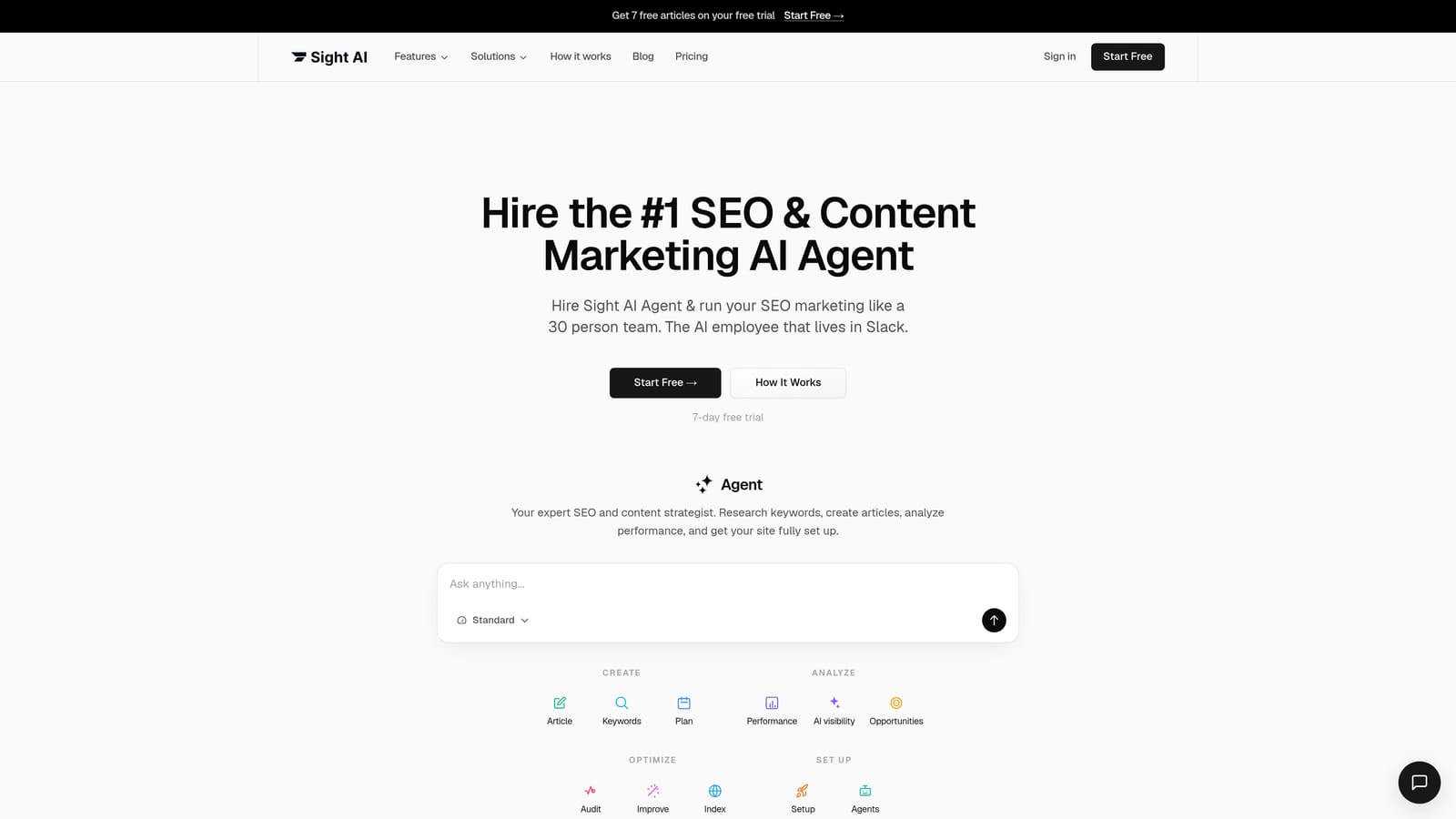
Sight AI is an end-to-end GEO platform that combines AI-powered content generation with real-time brand monitoring across the major AI engines.
Where This Tool Shines
Most GEO tools make you choose: either generate content or track visibility. Sight AI does both. Its 13+ specialized AI agents are designed to produce SEO and GEO-optimized content across formats, including listicles, guides, and explainers, with the kind of structural clarity that AI models tend to cite. That alone sets it apart from general-purpose AI writers.
The AI Visibility Score is particularly valuable for teams serious about GEO. It tracks how your brand is mentioned across six or more AI platforms, including ChatGPT, Claude, and Perplexity, with sentiment analysis and prompt-level tracking layered on top. You can see not just whether you're being mentioned, but how, and in what context. For teams running ongoing content programs, Autopilot Mode removes much of the manual overhead from the generation workflow.
Key Features
13+ Specialized AI Agents: Purpose-built agents for generating listicles, guides, and explainers optimized for both search engines and AI model citation.
AI Visibility Score: Tracks brand mentions across 6+ AI platforms with sentiment analysis and prompt tracking to show exactly how AI models reference your brand.
Autopilot Mode: Runs content generation workflows with minimal manual intervention, useful for agencies and teams managing high content volume.
IndexNow Integration: Automatically submits new content for faster indexing and discovery by search engines, reducing the lag between publishing and ranking.
CMS Auto-Publishing: Connects content generation directly to your CMS, streamlining deployment without manual copy-paste workflows.
Best For
Sight AI is the strongest fit for marketers, founders, and agencies who want a unified GEO workflow. If you're tired of stitching together a content tool, a tracking tool, and an indexing solution, this platform consolidates all three. It's particularly well-suited for teams where content output and AI visibility measurement need to work in tandem.
Pricing
Tiered plans are available based on usage and features. Visit trysight.ai for current pricing details, as plans are updated regularly.
2. Writesonic
Best for: High-volume content teams that need broad format support and fast output.
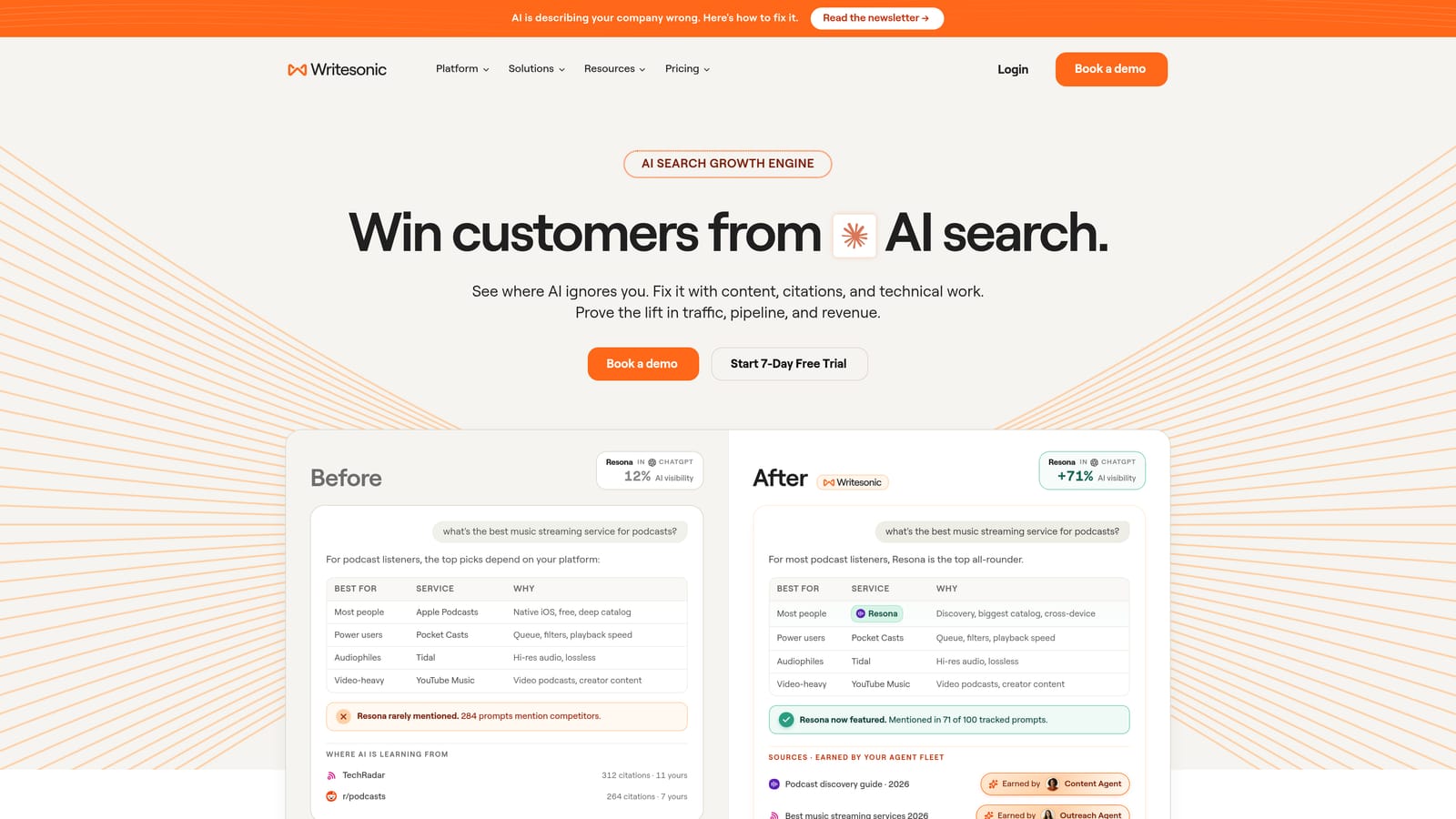
Writesonic is a well-established AI content generation platform known for producing large volumes of content quickly across a wide range of formats.
Where This Tool Shines
Writesonic has built a reputation for speed and versatility. Its AI article writer handles long-form blog posts and landing pages with reasonable quality, and Chatsonic, its conversational AI assistant, is useful for research, ideation, and iterating on drafts in real time. For teams managing high content throughput, the platform's ability to handle multiple formats, from ads to email copy to social posts, within a single interface reduces context switching.
Where Writesonic has limitations for GEO-specific use cases is in its lack of native AI visibility tracking. It can help you produce content at scale, but it won't tell you whether that content is being cited by AI models. Teams serious about GEO will likely need to pair it with a dedicated monitoring tool to close that gap.
Key Features
AI Article Writer: Generates long-form blog posts and landing pages with keyword targeting built into the workflow.
Chatsonic: A conversational AI assistant for research, content ideation, and iterative drafting.
Built-in SEO Mode: Supports keyword targeting and on-page optimization during the content creation process.
Multi-Format Support: Covers ads, emails, social copy, and product descriptions alongside long-form content.
Brand Voice Customization: Allows teams to define and apply consistent brand tone across content outputs.
Best For
Writesonic works well for content teams and agencies that need to produce large volumes of content efficiently and can manage AI visibility tracking through a separate platform. It's a solid choice if content generation volume is the primary bottleneck rather than GEO measurement.
Pricing
A free plan is available. Paid plans start at approximately $16 per month, though pricing tiers change regularly. Verify current rates on the Writesonic website before committing.
3. AirOps
Best for: Technical growth and content teams building custom AI-powered content pipelines at scale.
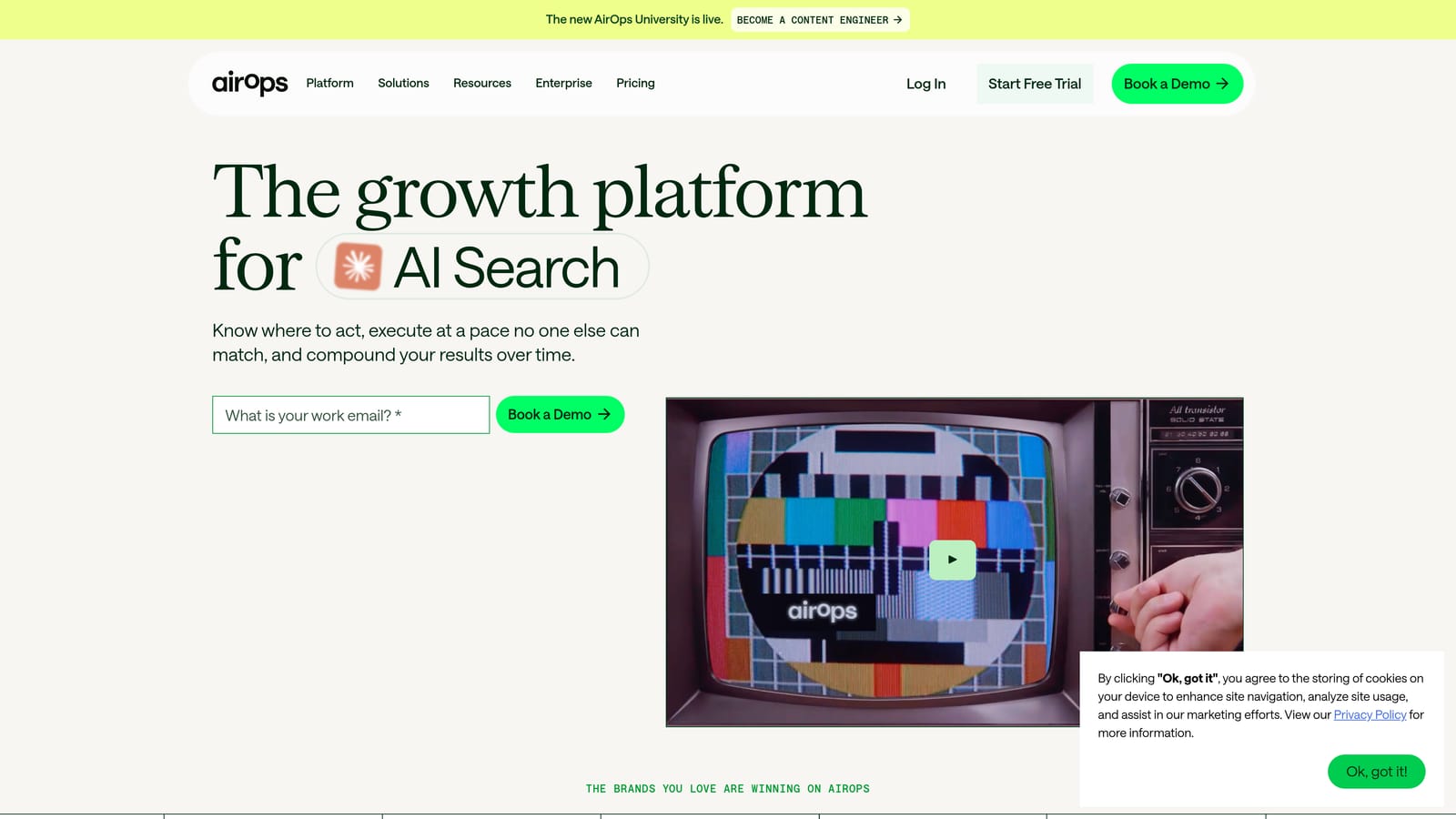
AirOps is an AI workflow automation platform that lets teams build custom pipelines connecting data sources to scalable content outputs.
Where This Tool Shines
AirOps takes a fundamentally different approach from most content tools. Rather than giving you a pre-built article writer, it gives you the infrastructure to build your own AI workflows. You can connect spreadsheets, CRM data, product feeds, or keyword research outputs to content generation steps, then route those outputs through multiple AI models within a single pipeline. For programmatic content generation at scale, this flexibility is genuinely powerful.
The tradeoff is that AirOps rewards teams with technical resources. Getting the most out of it requires some willingness to build and iterate on workflows, which makes it less plug-and-play than other tools on this list. It also doesn't offer native GEO visibility tracking, so like Writesonic, it works best when paired with a monitoring solution.
Key Features
Custom AI Workflow Builder: Build tailored pipelines for programmatic content generation connected to your existing data sources.
External Data Source Connections: Integrates with spreadsheets, CRMs, and APIs to feed real data into content workflows.
Multi-Model Support: Run content through multiple AI models within a single pipeline for quality control or variation testing.
Template Library: Pre-built workflow templates for common content and growth use cases to reduce setup time.
Team Collaboration Tools: Supports shared workflows and collaborative content operations across larger teams.
Best For
AirOps is best suited for growth teams and content operations leads who need programmatic content at scale and have the technical capacity to build and maintain custom workflows. It's less ideal for solo operators or small teams looking for a quick setup.
Pricing
Usage-based pricing with tiered plans. Costs scale with workflow volume and feature access. Verify current pricing directly on the AirOps website.
4. Profound
Best for: Enterprise teams prioritizing AI search share analytics and competitive visibility benchmarking.
Profound is an AI search analytics platform focused on tracking brand visibility within AI-generated responses and providing strategic guidance for enterprise content teams.

Where This Tool Shines
Profound is built for organizations where understanding AI search share is a strategic priority. Its core capability is tracking how your brand appears in AI-generated answers across major AI engines, alongside competitive benchmarking that shows how your visibility compares to others in your category. For enterprise teams running quarterly content strategy reviews, the reporting and dashboard infrastructure is designed to support that level of analysis.
It's worth noting that Profound leans heavily toward measurement and strategic guidance rather than content generation. It can tell you where you're missing from AI-generated answers and help you prioritize content investments, but it won't write the content for you. Think of it as the analytics layer in a broader GEO stack.
Key Features
AI Search Share Tracking: Monitors brand visibility across major AI engines to quantify your share of AI-generated mentions.
Content Gap Identification: Surfaces areas where your brand is absent from AI responses based on query and category analysis.
Competitive Visibility Benchmarking: Compares your AI visibility against competitors to identify relative strengths and weaknesses.
Strategic Recommendations: Provides guidance on content priorities to improve AI citation rates.
Enterprise Reporting Dashboards: Structured reporting tools designed for enterprise-scale analysis and stakeholder communication.
Best For
Profound is a strong fit for enterprise marketing teams and agencies managing large brand portfolios where AI search share is a key performance metric. It's less suited for smaller teams or those who need content generation alongside their analytics.
Pricing
Enterprise pricing model. Contact Profound directly for a quote based on your organization's scope and requirements.
5. Peec
Best for: Brands that need focused AI mention monitoring with prompt-level visibility insights.
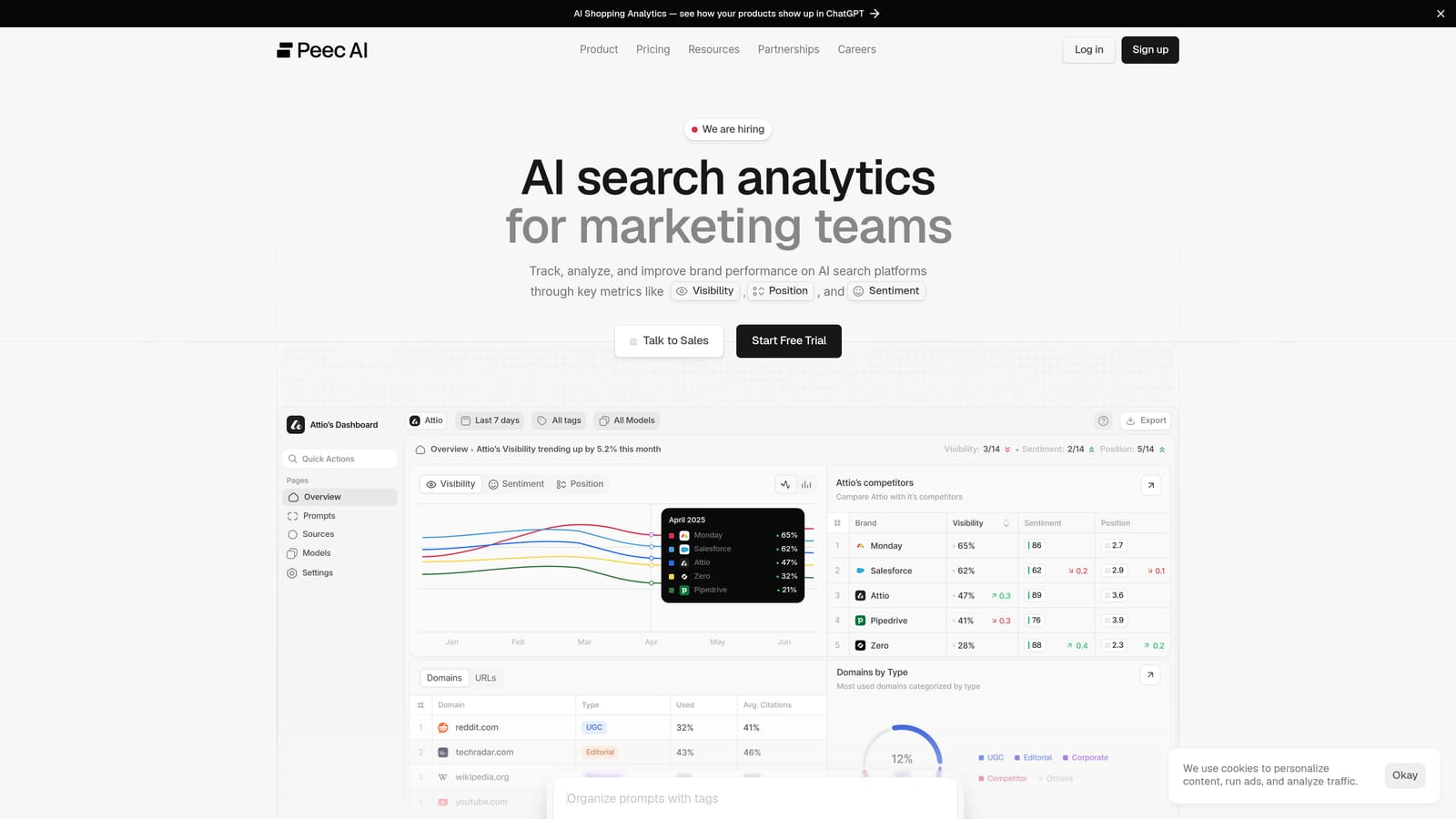
Peec is an AI visibility monitoring tool that tracks how and when AI models mention your brand in response to relevant queries.
Where This Tool Shines
Peec keeps its focus narrow and does it well. Rather than trying to cover content generation or broad analytics, it concentrates on tracking brand mentions at the prompt level across AI model responses. That granularity is useful: you can see not just whether your brand is mentioned, but in response to which specific types of queries, and how that compares to competitor mentions in the same category.
The alert functionality is a practical feature for ongoing brand monitoring. When your mention frequency changes, or a competitor starts appearing in queries where you previously had visibility, Peec surfaces that shift. For teams that want a lightweight, dedicated AI monitoring tool without the overhead of a full enterprise platform, Peec fills that role cleanly.
Key Features
Brand Mention Tracking: Monitors AI model responses for brand mentions across relevant query types.
Prompt-Level Visibility Insights: Breaks down visibility by specific prompts and query categories for granular analysis.
Competitor Mention Monitoring: Tracks how competing brands appear in AI responses alongside your own visibility data.
Category and Keyword-Level Tracking: Organizes visibility data by topic category and keyword to inform content strategy.
Mention Change Alerts: Notifies you when brand mention frequency shifts, enabling faster response to visibility changes.
Best For
Peec suits founders, in-house marketers, and small agency teams that want dedicated AI visibility monitoring without committing to an enterprise analytics platform. It works best when paired with a content generation tool to act on the insights it surfaces.
Pricing
Tiered plans available. Check the Peec website directly for current pricing, as tiers and features are updated periodically.
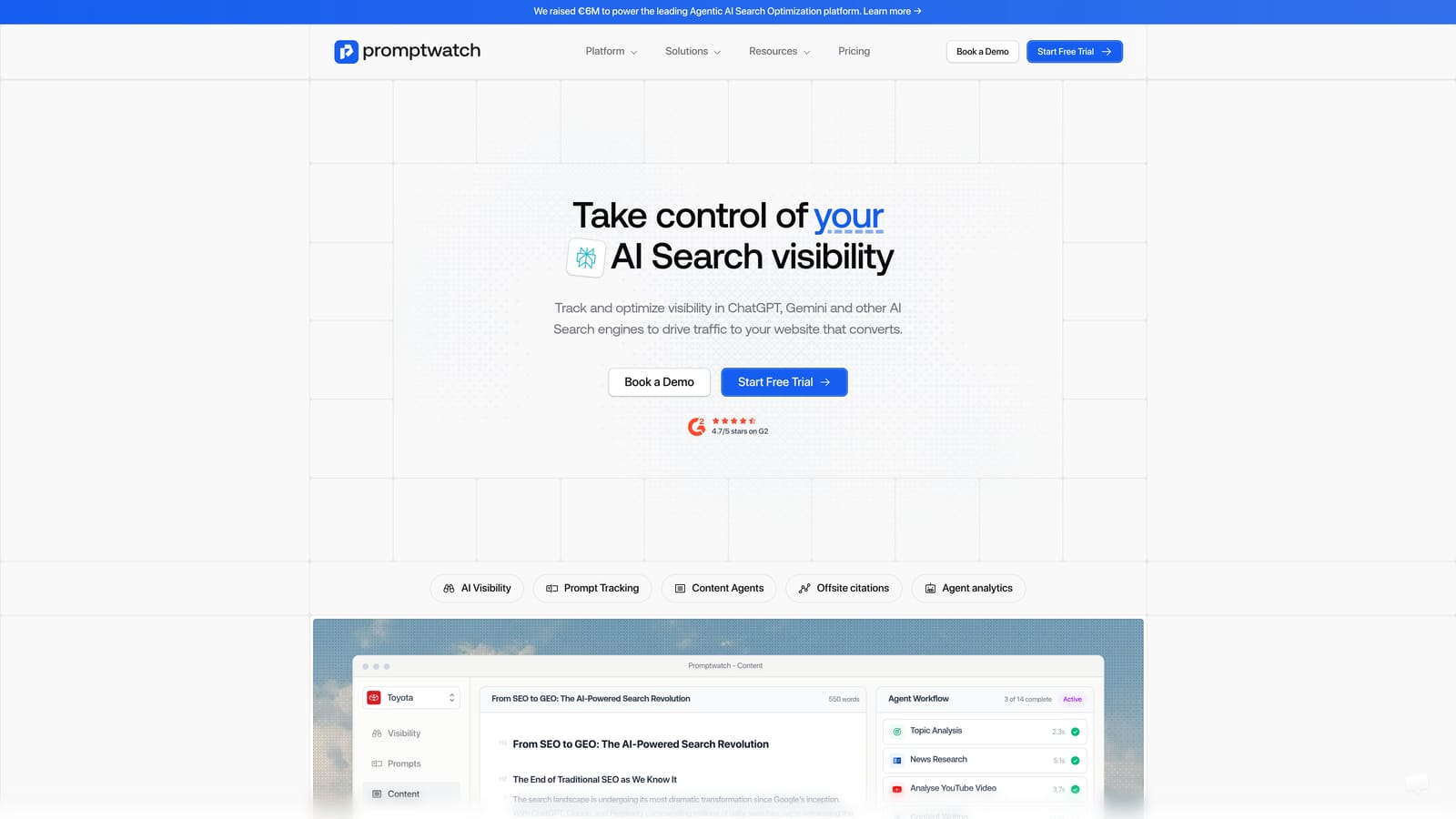
6. Promptwatch
Best for: Content strategists who need to understand how AI models currently respond to queries in their category.
Promptwatch is a prompt monitoring tool that analyzes how AI models respond to queries in your brand's category, helping identify where your brand is absent from AI-generated answers.
Where This Tool Shines
Promptwatch approaches the GEO problem from a research angle. Its core function is monitoring AI model responses to specific prompts over time, giving content teams a clear picture of how AI engines are currently talking about their industry, which brands they reference, and where gaps exist. That historical tracking is particularly useful for spotting trends: if an AI model starts recommending a competitor more frequently in response to a specific query type, Promptwatch captures that shift.
It's more of a research and intelligence tool than an action platform. Promptwatch tells you what the AI landscape looks like; it doesn't generate content or prescribe a specific content strategy. For teams in the early stages of building a GEO program, it can provide valuable baseline data before investing in content production.
Key Features
Prompt-Centric Response Monitoring: Tracks AI model responses to specific prompts in your brand category over time.
Brand and Competitor Mention Tracking: Identifies which brands appear in AI-generated answers by query type.
AI Model Behavior Analysis: Surfaces how different AI models respond to prompt variations, revealing model-specific patterns.
Content Gap Identification: Highlights query areas where your brand is consistently absent from AI-generated responses.
Historical Prompt Response Tracking: Maintains a record of how AI responses to specific prompts change over time.
Best For
Promptwatch is well-suited for content strategists, SEO leads, and agency teams in the research and planning phase of a GEO program. It's a strong intelligence layer, but teams will need complementary tools for content generation and deeper analytics.
Pricing
Tiered plans available. Visit the Promptwatch website for current pricing details.
Which Tool Is Right for Your GEO Strategy?
The right tool depends on where your biggest gap is: generating content, measuring AI visibility, or both.
If you're a solo founder or small team looking for efficiency, you want a platform that handles content creation and visibility tracking without requiring you to manage multiple tools. That's the case for Sight AI, which combines 13+ specialized AI agents with real-time AI Visibility Score tracking across the major AI platforms. You generate content and immediately see how it affects your brand's presence in AI-generated responses, all within one workflow.
For agencies managing multiple clients at scale, the combination of Sight AI's Autopilot Mode and CMS auto-publishing reduces the manual overhead that typically slows down high-volume content operations. The IndexNow integration also means new content gets discovered faster, which matters when you're managing content calendars across multiple brands.
Enterprise teams with dedicated analytics needs may find value in layering Profound or Peec alongside a content generation platform for deeper competitive benchmarking. Promptwatch works well as a research layer during the strategy phase, while AirOps suits technical teams building custom programmatic workflows. Writesonic remains a reliable option for teams that prioritize content volume and can handle visibility tracking separately.
For teams that want generation and tracking unified in a single platform, Sight AI is the clearest choice in this list. Stop guessing how AI models like ChatGPT and Claude talk about your brand. Start tracking your AI visibility today and see exactly where your brand appears across top AI platforms, while building the content infrastructure to grow that presence over time.