If you're building SEO dashboards, automating rank tracking, or scaling content operations, you need reliable search visibility data you can pull programmatically — not a manual tool you log into every morning. The right platform lets you retrieve ranking signals, integrate them into your own workflows, and act on position changes before they become problems.
One important note before diving in: this list covers search visibility platforms and APIs evaluated for marketers, founders, and agencies in 2026. As search increasingly happens inside AI models like ChatGPT, Claude, and Perplexity, "keyword position tracking" has expanded beyond traditional Google SERPs. The tools below reflect that shift honestly, covering both traditional SEO capabilities and the growing AI search visibility layer.
Whether you're a solo founder, a marketing team, or an agency managing dozens of clients, here are the top search visibility platforms worth evaluating this year.
1. Sight AI
Best for: Teams that need keyword and brand visibility across both Google and AI search platforms in one place.
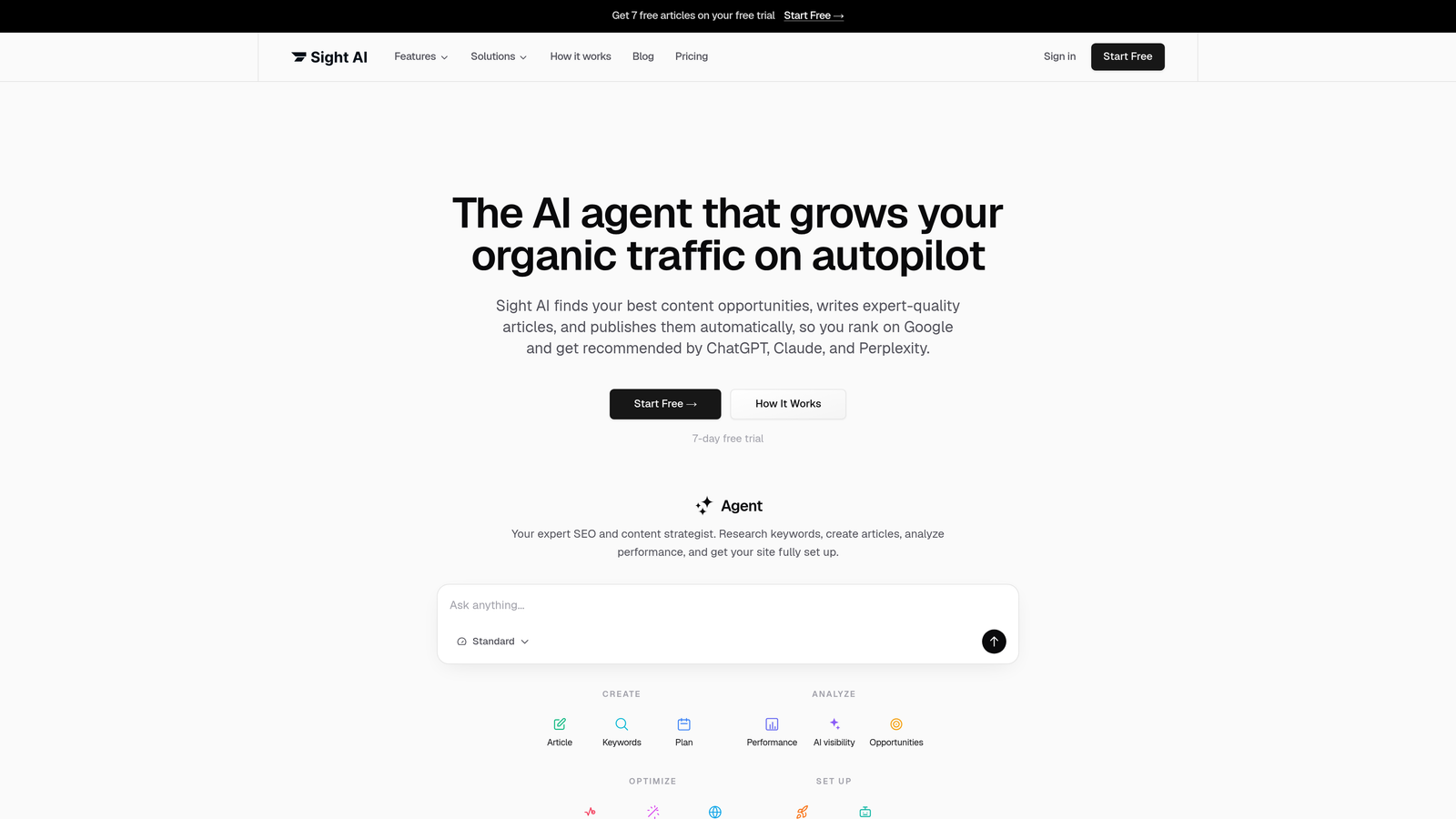
Sight AI is an all-in-one AI visibility and SEO platform that tracks how your brand and keywords appear across traditional Google search and AI models like ChatGPT, Claude, and Perplexity.
Where This Tool Shines
Most rank tracking tools stop at Google. Sight AI goes further by monitoring how AI models actually talk about your brand when users ask relevant questions. This matters because a growing share of search queries now get answered directly inside AI interfaces, bypassing traditional SERPs entirely.
Beyond visibility tracking, Sight AI includes a full content generation suite and website indexing tools, so you're not just seeing where you rank — you're equipped to act on it. For teams that want to close the loop between insight and execution, that combination is genuinely useful.
Key Features
AI Visibility Score: Tracks brand mentions and sentiment across 6+ AI platforms, giving you a clear picture of your AI search footprint.
Prompt Tracking and Sentiment Analysis: Monitors how specific queries surface your brand inside AI-generated responses, with sentiment context.
AI Content Writer: 13+ specialized agents generate SEO and GEO-optimized articles, listicles, and guides designed to improve both Google rankings and AI mentions.
Website Indexing with IndexNow: Automatically submits updated content to search engines for faster crawl discovery, reducing the lag between publishing and ranking.
CMS Auto-Publishing: Connects content generation directly to your CMS, streamlining the path from draft to live page.
Autopilot Mode: Hands-off monitoring and content operations for teams that want consistent output without manual oversight.
Best For
Marketers, agencies, and founders who need to track search visibility across both Google and AI platforms simultaneously. Particularly strong for content-driven teams that want visibility data and content execution in the same workflow rather than stitching together multiple tools.
Pricing
Tiered plans available. Verify current pricing and plan details at trysight.ai.
2. Writesonic
Best for: Content teams scaling programmatic SEO content production with API access.
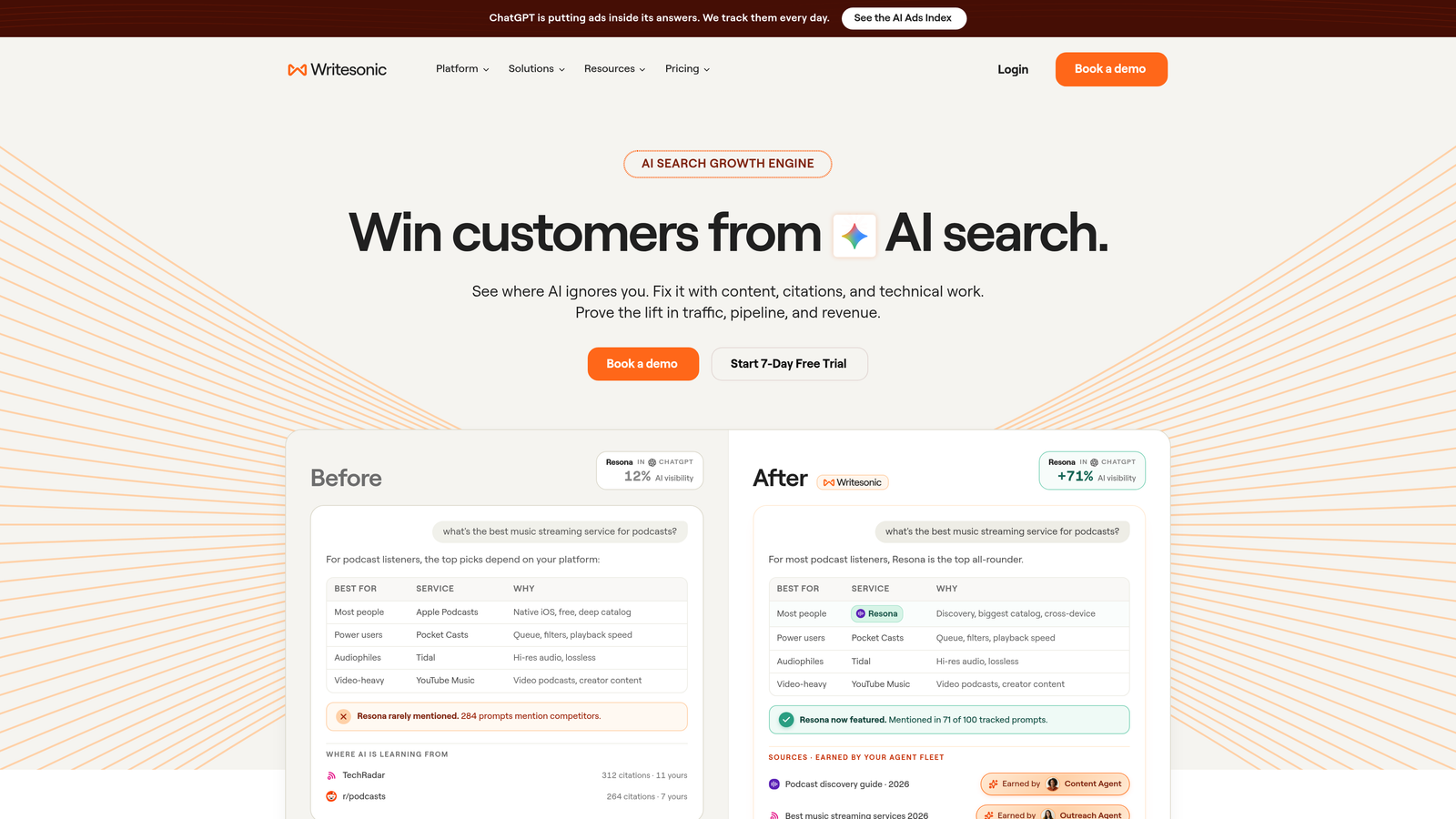
Writesonic is an AI content generation platform with built-in SEO optimization features and API access for teams producing content at scale.
Where This Tool Shines
Writesonic's strength is in volume. For teams running programmatic SEO strategies, the ability to generate keyword-optimized content through an API — rather than manually prompting an AI tool — meaningfully changes what's operationally possible. You can pipe keyword targets in and get structured content out, integrated into your existing publishing workflow.
The platform also includes topic and keyword research features, which helps teams move from "what should we target?" to "here's the draft" without jumping between tools.
Key Features
SEO-Integrated AI Writing: Generates content with keyword targets baked in, aligned to search intent rather than just keyword density.
Content Optimization Suggestions: Surfaces recommendations for improving existing content based on competitive gaps and search intent signals.
API Access: Enables programmatic content generation at scale, useful for teams building custom content pipelines or automating brief-to-draft workflows.
Multi-Format Support: Handles long-form articles, landing pages, ad copy, and more from a single platform.
Keyword and Topic Research Tools: Built-in research features to identify opportunities before writing begins.
Best For
SEO teams and agencies producing high volumes of content who need API access to automate generation workflows. Also useful for smaller teams that want keyword research and writing capabilities in one subscription rather than managing separate tools.
Pricing
Free tier available. Paid plans offered at varying price points. Verify current pricing at writesonic.com.
3. AirOps
Best for: Technical SEO and marketing teams building custom AI-powered content and data workflows.
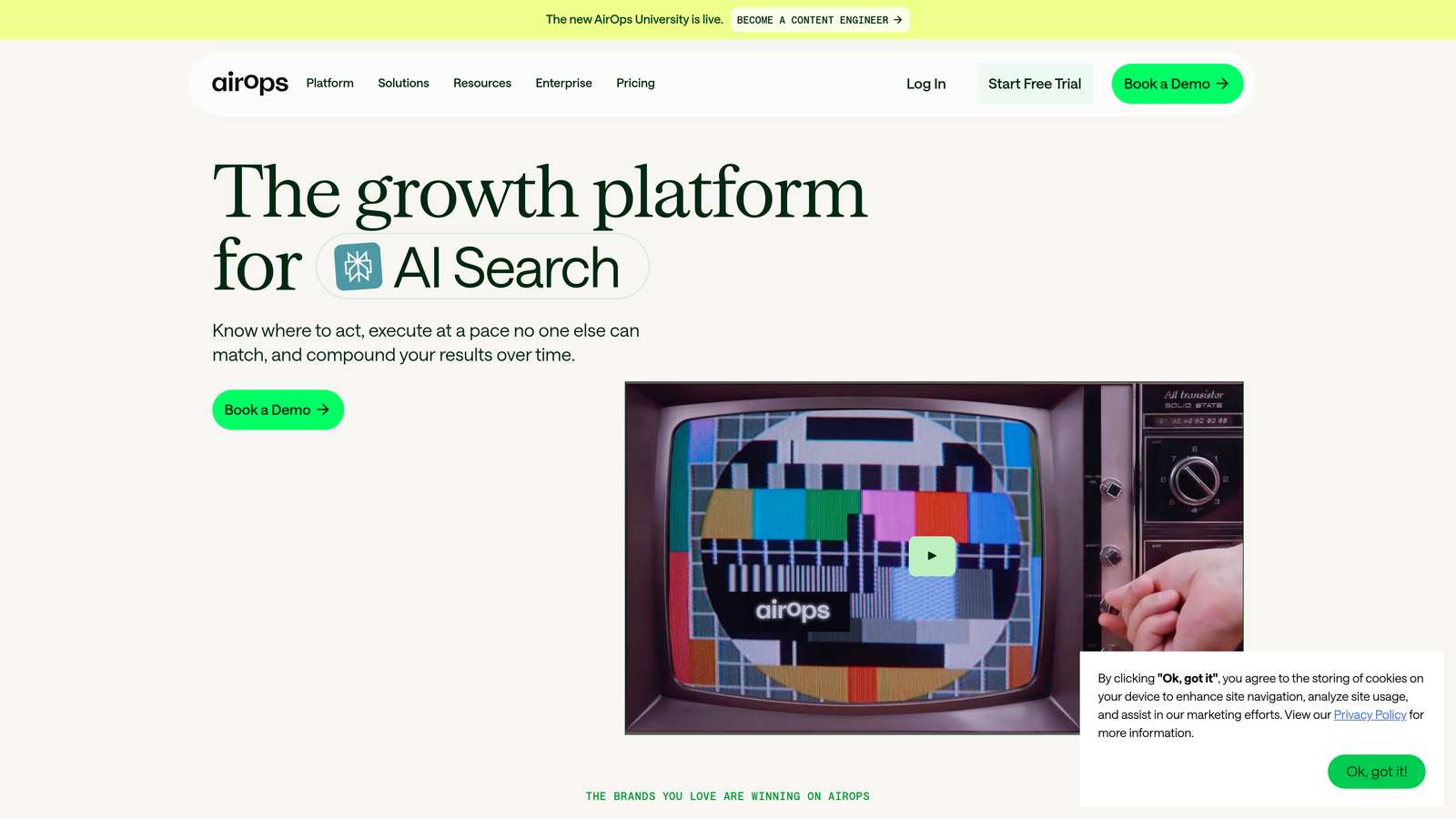
AirOps is an AI workflow automation platform that lets teams build custom pipelines connecting keyword data, content generation, and publishing operations via API.
Where This Tool Shines
AirOps is built for teams that find off-the-shelf tools too rigid. Rather than giving you a fixed workflow, it gives you the building blocks to construct exactly the pipeline your SEO operation needs. That might mean connecting a keyword data source to an AI writing step, then routing output to a CMS or Slack alert.
For technical marketing teams comfortable with APIs and workflow logic, this flexibility is a real advantage. You're not limited to the use cases the product team imagined — you build the ones your business actually needs.
Key Features
Custom AI Workflow Builder: Visual and API-accessible pipeline creation for SEO and content operations, without requiring deep engineering resources.
External Data Source Integration: Connect keyword data, analytics platforms, or other inputs directly into your AI workflows.
Programmatic Content Generation: Scale content production through automated pipelines rather than one-off manual requests.
Bulk Processing: Handle large keyword sets or content briefs in batch operations, reducing manual throughput bottlenecks.
SEO-Specific Templates: Pre-built workflow templates for common SEO use cases to accelerate setup.
Best For
Technical marketing teams and agencies that need custom workflow automation rather than a fixed product. Strongest fit for teams with existing data infrastructure who want to layer AI capabilities on top without rebuilding from scratch.
Pricing
Tiered plans available. Verify current pricing at airops.com.
4. Profound
Best for: Enterprise teams tracking brand visibility inside AI-generated search answers at scale.
Profound is an AI answer engine optimization platform that monitors how brands appear within AI-generated search responses across major AI platforms.
Where This Tool Shines
Profound is purpose-built for a specific and increasingly important problem: understanding how your brand shows up when an AI model answers a user's question. Traditional rank trackers tell you where you appear on a Google results page. Profound tells you whether you're being cited, recommended, or ignored when AI systems synthesize answers from across the web.
The platform's competitive benchmarking capabilities are particularly useful for enterprise teams. Knowing your own AI visibility is one thing; knowing how it compares to direct competitors across specific topics gives you a clearer picture of where to focus content and optimization efforts.
Key Features
Brand Visibility Tracking in AI Answers: Monitors how and when your brand appears in AI-generated responses across major answer engines.
Competitive Benchmarking: Compares your brand's AI search presence against competitors across specific topics and queries.
Topic and Keyword Monitoring: Tracks brand mentions tied to specific keyword clusters and topic areas relevant to your business.
Reporting and Alerting: Notifies teams when brand mention patterns change, enabling faster response to shifts in AI model behavior.
Enterprise Dashboard and Analytics: Designed for larger teams with structured reporting needs and multiple stakeholders.
Best For
Enterprise marketing teams and large agencies that need structured, scalable AI search visibility monitoring with competitive intelligence built in. Less suited for small teams or solo operators given its enterprise focus.
Pricing
Enterprise pricing model. Verify current plans and contact options at profound.ai.
5. Peec
Best for: SEO teams that need competitive intelligence on brand visibility in AI search results.
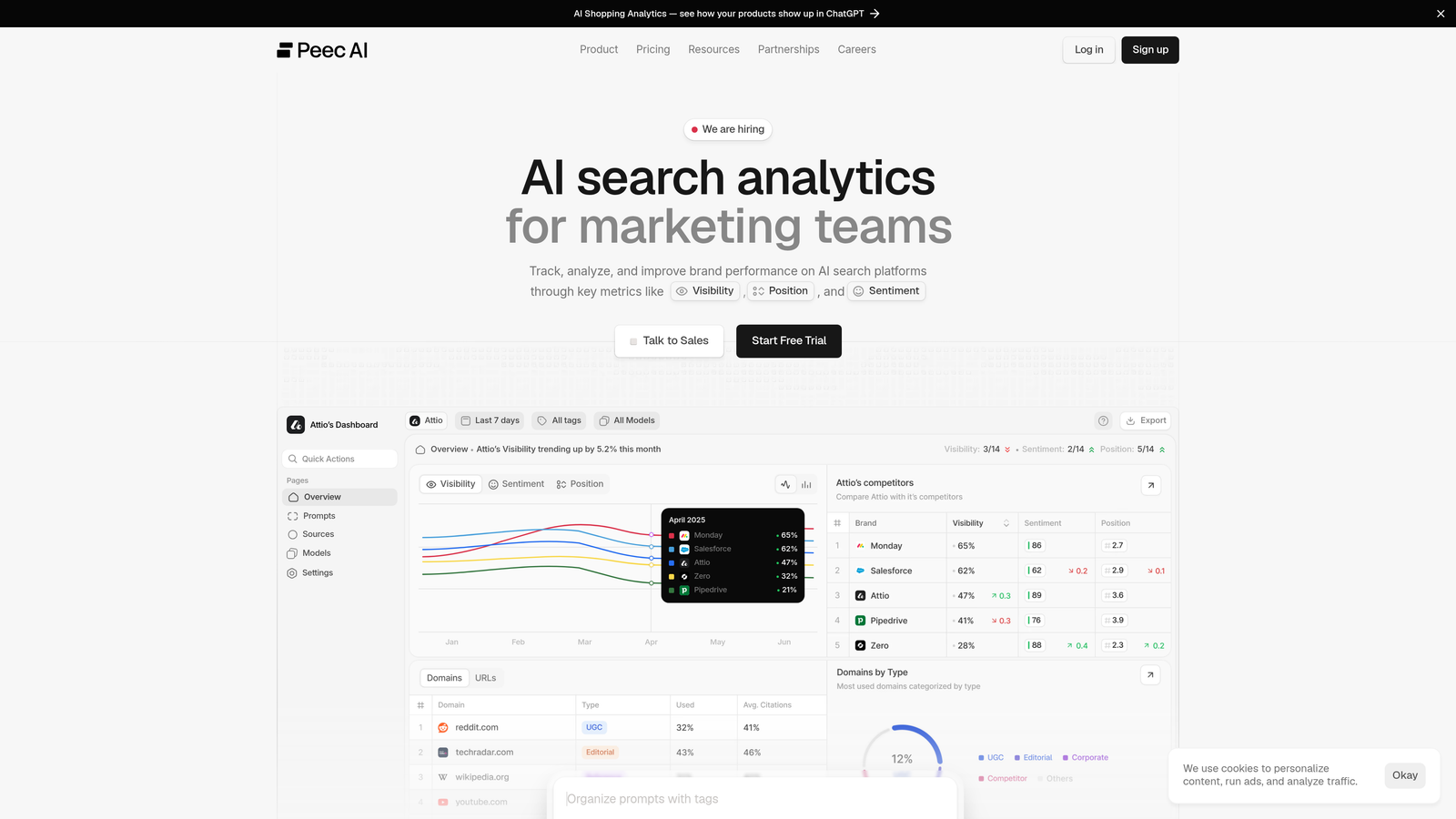
Peec is an AI search visibility platform that monitors brand and competitor mentions inside AI-generated results, giving teams actionable competitive intelligence for the AI search era.
Where This Tool Shines
Peec's value proposition centers on competitive context. It's not just tracking whether your brand appears in AI answers — it's showing you how your visibility compares to competitors across the same queries and topics. That comparative view is what turns raw monitoring data into something you can actually prioritize and act on.
For SEO teams already thinking about AI search as a channel, Peec provides the kind of structured competitive analysis that previously only existed for traditional SERP rankings. Regular monitoring reports mean you're not manually checking — the data comes to you.
Key Features
Brand Mention Tracking in AI Results: Monitors when and how your brand surfaces in AI-generated search responses.
Competitor Visibility Comparison: Side-by-side view of how your brand stacks up against named competitors in AI answer engines.
Keyword and Topic Monitoring: Tracks AI-generated responses tied to specific keywords and topic clusters relevant to your market.
Actionable Improvement Insights: Surfaces recommendations for improving AI search presence based on visibility gap analysis.
Monitoring Reports and Alerts: Regular reporting and change alerts so teams stay informed without manual checking.
Best For
SEO teams and agencies that want competitive intelligence specifically for AI search visibility. A strong fit for teams already tracking traditional rankings who want to extend that competitive lens into AI-generated results.
Pricing
Verify current pricing and plan options at peec.ai.
6. Promptwatch
Best for: Teams that need granular, prompt-level tracking of brand mentions across AI platforms.
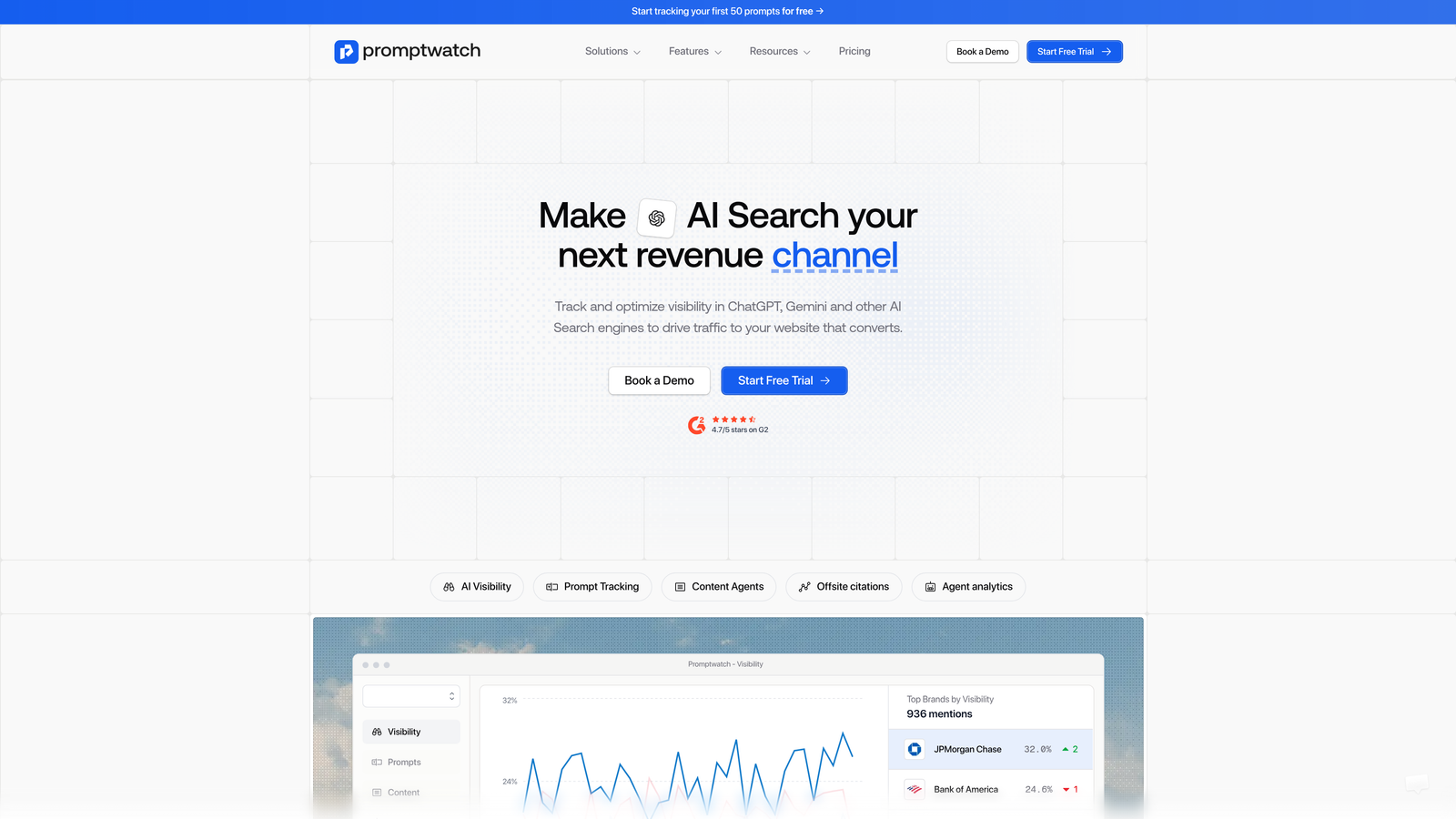
Promptwatch is a prompt-level monitoring tool that tracks how specific queries surface brand mentions across AI models, giving teams a detailed view of their AI search footprint.
Where This Tool Shines
Where other AI visibility platforms operate at the brand or topic level, Promptwatch goes deeper. It tracks what happens when a specific prompt is submitted to an AI model — which brands get mentioned, how they're framed, and how that changes over time. For teams running content experiments to influence AI model responses, that granularity is genuinely valuable.
The trend analysis over time is another differentiator. AI model behavior isn't static — models update, training data shifts, and brand mentions can change without any obvious trigger. Promptwatch surfaces those shifts so teams can investigate and respond rather than discovering problems months later.
Key Features
Prompt-Specific Tracking: Monitors brand mentions at the individual query level across multiple AI platforms, not just aggregate brand visibility.
Multi-Platform Coverage: Tracks responses across different AI models so you can see where your brand appears and where it doesn't.
Visibility Trend Analysis: Shows how brand mentions tied to specific prompts change over time, helping teams detect model behavior shifts.
Alerts for Response Changes: Notifies teams when AI model responses to tracked prompts change in meaningful ways.
Content Impact Testing: Useful for testing whether new content or optimization efforts actually influence how AI models respond to relevant queries.
Best For
SEO and content teams that want detailed, prompt-level visibility into AI search behavior. Particularly useful for teams actively testing whether content changes affect AI model responses, or for those who need to understand AI search at a granular level rather than a broad brand view.
Pricing
Verify current pricing at promptwatch.io.
Making the Right Choice for Your Stack
The honest answer is that the best tool depends on what you're actually trying to measure and act on. If you're building a programmatic rank tracking dashboard focused purely on Google SERP positions, evaluate each platform's data freshness, rate limits, and query volume pricing carefully before committing.
For teams that need to understand search visibility more broadly, the picture looks like this:
For all-in-one AI visibility plus content execution: Sight AI gives you brand and keyword tracking across both Google and AI platforms, paired with content generation and website indexing tools. It's the strongest fit for teams that want insight and action in one place.
For content-first SEO teams: Writesonic and AirOps both offer strong AI writing and workflow automation alongside keyword capabilities. Writesonic is more accessible for teams that want a ready-to-use tool; AirOps suits technical teams that want to build custom pipelines.
For AI search monitoring specifically: Profound, Peec, and Promptwatch each bring focused visibility into how brands surface in AI-generated answers. Profound skews enterprise; Peec emphasizes competitive benchmarking; Promptwatch goes deepest at the prompt level.
Start with a free trial where available, test the API or integration against your actual query volume, and prioritize tools that fit your existing tech stack. The best visibility platform is the one your team will actually use consistently and act on.
Stop guessing how AI models like ChatGPT and Claude talk about your brand. Start tracking your AI visibility today and see exactly where your brand appears across top AI platforms, alongside the content tools to improve it.