Most GEO software costs between $15 and $400 per month. Budget content-optimization tools such as Frase, NeuronWriter and WriterZen start at roughly $15–$50, mid-range platforms such as Surfer SEO, Semrush and MarketMuse run about $90–$180, and enterprise or multi-seat plans range from $170 to $400+ or move to custom quotes. The real monthly cost also depends on usage limits such as credits, tracked prompts and seats, so compare limits as well as headline prices.
Generative Engine Optimization (GEO) software helps brands get mentioned and cited in AI answers from ChatGPT, Perplexity, Claude and Google AI Overviews. If you are new to the discipline, start with our explainer on what GEO is and how it differs from SEO. Pricing models vary widely, from credit-based plans to flat monthly fees to enterprise quotes. The guide below breaks down each tool's monthly cost, what each tier includes, and which teams each tool suits.
GEO software monthly cost at a glance
| Tool | Entry price / month | Higher tiers | Pricing model | Tracks AI visibility? |
|---|---|---|---|---|
| Sight AI | See trysight.ai/pricing | Tiered by team and features | Flat tiers | Yes |
| Surfer SEO | $89 | $179, enterprise custom | Flat tiers | Limited |
| Clearscope | $170 | Custom | Flat tiers + quotes | No |
| MarketMuse | Free / $149 | $399, Premium custom | Tiered, brief limits | No |
| Frase | $15 | $45, $115 | Tiered, document limits | No |
| Semrush ContentShake AI | Included in Pro ($139.95) | Add-on options | Suite subscription | Via separate toolkit |
| Jasper | $49 | $69, Business custom | Per seat | No |
| NeuronWriter | $23 | $45, $69 | Credits | No |
| WriterZen | $27 | $47, $67 | Tiered | No |
Prices are list prices for monthly billing and change frequently. Annual billing is usually 15–20% cheaper. Confirm current prices on each vendor's site before you buy.
What drives GEO software cost
- Tracked prompts or queries: Visibility platforms usually cap how many prompts they monitor across AI engines. More prompts or more engines put you on a higher tier.
- AI engines covered: Coverage of ChatGPT only costs less than coverage of ChatGPT, Perplexity, Claude, Gemini and Google AI Mode together.
- Content credits: Optimization and writing tools meter articles, briefs or analyses. NeuronWriter and Frase are typical examples.
- Seats and workspaces: Agencies pay more for multiple users and client projects.
- Refresh frequency: Daily tracking costs more than weekly tracking because each check runs live queries against AI models.
1. Sight AI
Best for: Brands that want to track AI visibility and generate optimized content in one platform
Sight AI combines AI visibility tracking, GEO-optimized content generation and automated indexing in a single workflow built for AI search presence.
Where This Tool Shines
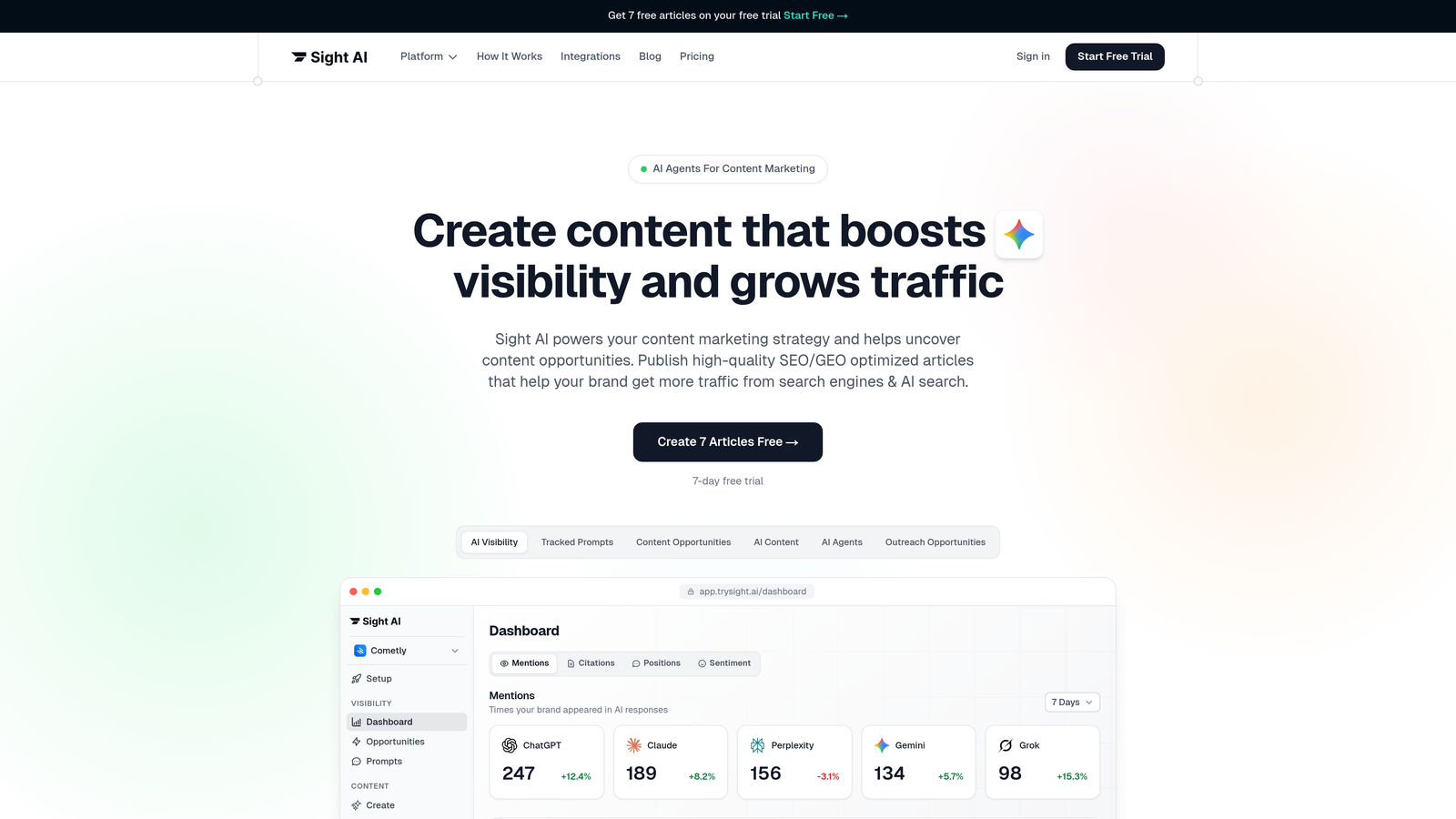
Sight AI shows how AI models describe your brand today. Instead of guessing whether your content optimization is working, you see your visibility across ChatGPT, Claude, Perplexity and six other AI platforms.
The platform's 13+ specialized AI agents produce formats from listicles to comprehensive guides, and Autopilot Mode can run the entire content workflow. IndexNow integration helps search engines and AI systems discover newly published content faster.
Key Features
AI Visibility Score: Tracks brand mentions across multiple AI platforms, with sentiment analysis showing how you are portrayed.
Prompt Tracking: Shows which queries trigger mentions of your brand in AI responses.
13+ AI Agents: Specialized content creation for different formats, all optimized for GEO principles.
Autopilot Mode: Automated content workflows that handle research, writing and optimization without constant oversight.
IndexNow Integration: Automated sitemap updates and faster content discovery by AI systems and search engines.
Best For
Marketing teams and agencies that need both visibility monitoring and content production. It is especially useful if you want to understand your current AI presence before you invest in content creation.
Pricing
Sight AI publishes tiered pricing at trysight.ai/pricing. Monthly cost depends on team size and feature needs, and every tier has a listed price rather than a custom quote.
2. Surfer SEO
Best for: Teams moving from traditional SEO to AI-optimized content strategies
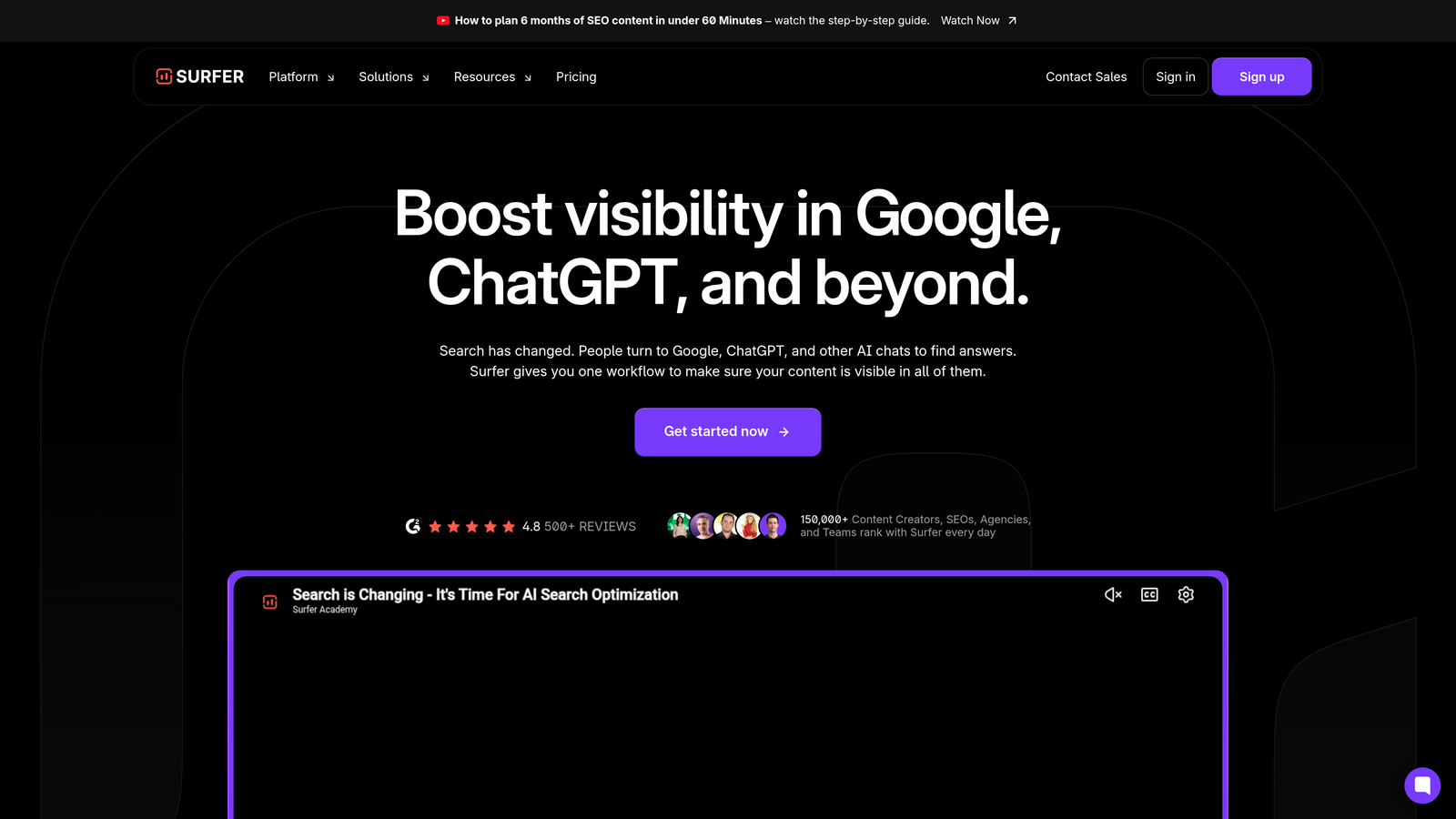
Surfer SEO is a content optimization platform that is adding GEO-relevant features for AI search visibility.
Where This Tool Shines
Surfer's Content Editor scores your content in real time as you write, so you can see how it compares with top-performing competitors. The visual interface shows writers what is missing without requiring deep technical knowledge.
The SERP Analyzer provides competitive intelligence on what currently ranks, which still informs content strategy as AI search evolves. Keyword clustering identifies the topic relationships that matter for comprehensive coverage.
Key Features
Content Editor: Real-time scoring that evaluates your content against optimization benchmarks.
SERP Analyzer: Competitive analysis of the content that currently performs well in search results.
AI Writing Assistant: Integrated AI suggestions for improving content quality and relevance.
Keyword Research: Topic clustering and keyword discovery for content planning.
Outline Builder: Automated content structure suggestions based on competitive analysis.
Best For
Content teams that already know SEO workflows and want to keep their existing processes while adding AI optimization. It also works well for agencies managing several client content calendars.
Pricing
The Essential plan starts at $89/month and Scale costs $179/month. Enterprise pricing is available for larger teams. All plans include the core Content Editor and SERP analysis features.
3. Clearscope
Best for: Enterprise teams that prioritize content quality and editorial collaboration
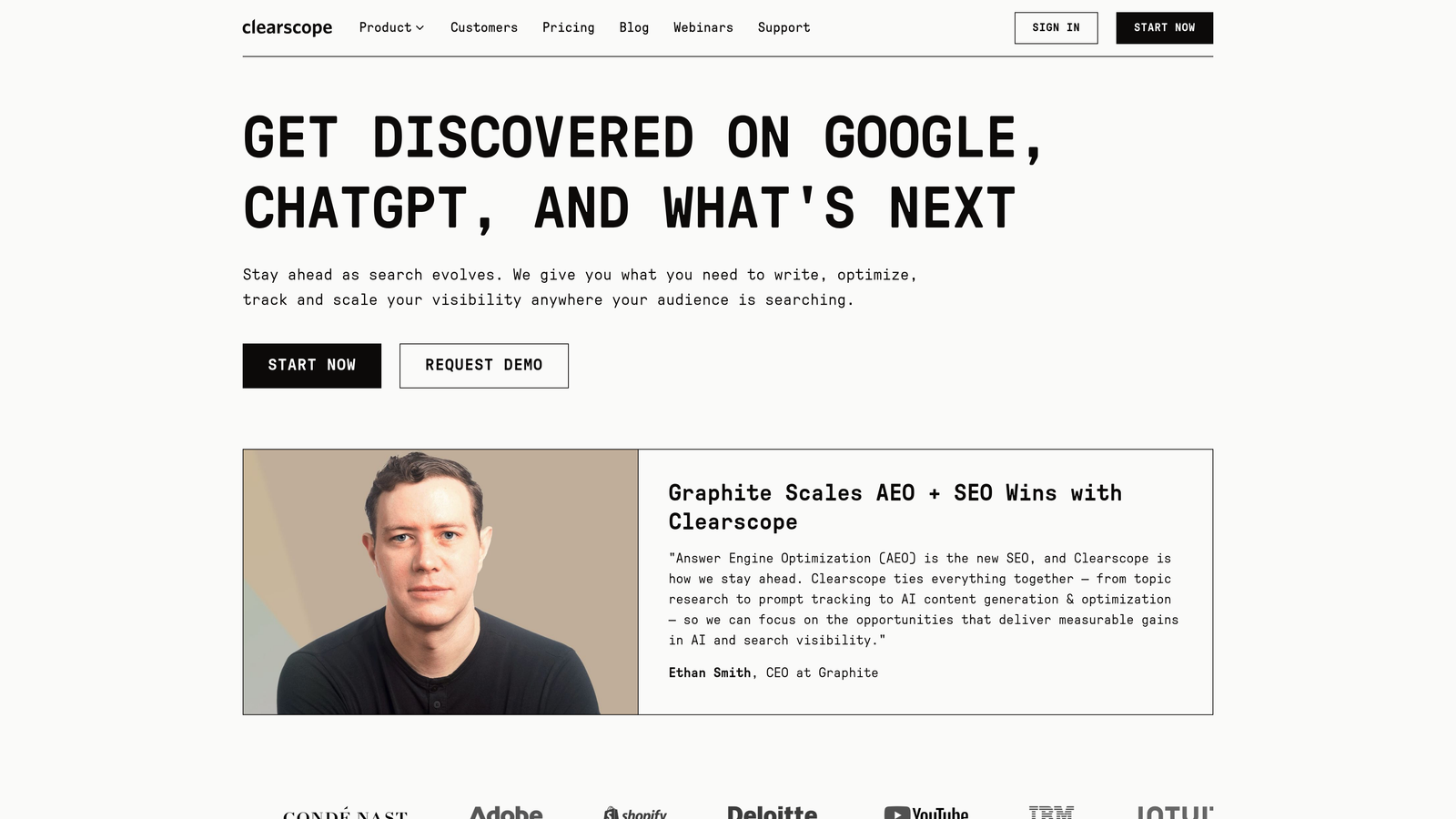
Clearscope is an enterprise-grade content optimization platform focused on content grading and competitive analysis.
Where This Tool Shines
Clearscope grades comprehensiveness and relevance in enough detail to suit editorial teams. Beyond flagging what is missing, it explains why certain topics and terms matter for thorough coverage.
Integrations with Google Docs and WordPress let editors optimize content without switching tools. The collaboration features work well for teams with established editorial review processes.
Key Features
AI-Powered Content Grading: Detailed scoring of content quality and comprehensiveness.
Google Docs Integration: Optimize content inside your existing writing environment.
Competitive Content Analysis: Compare your content with top-performing competitors.
Team Collaboration: Built-in workflows for editorial review and approval.
WordPress Plugin: Direct publishing integration for streamlined content workflows.
Best For
Established content teams and enterprises with dedicated editors who value detailed analysis over speed. It suits teams that produce fewer, higher-quality pieces rather than high-volume operations.
Pricing
The Essentials plan starts at $170/month. Business and Enterprise tiers require custom quotes. The higher entry price reflects Clearscope's enterprise positioning and collaboration features.
4. MarketMuse
Best for: Content strategists building topic authority across large content libraries
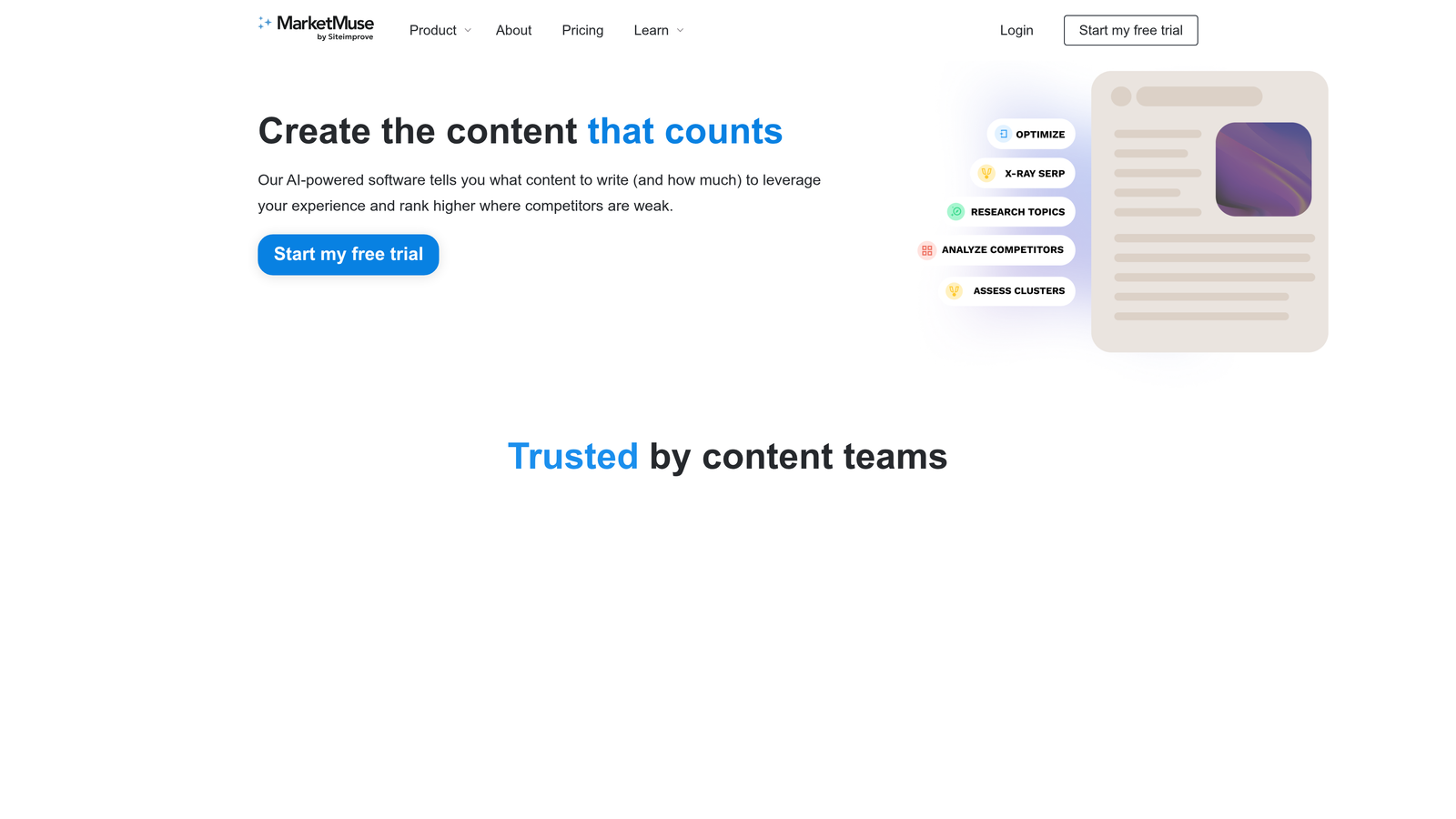
MarketMuse is an AI-driven content strategy platform that offers topic modeling and content briefs designed for comprehensive coverage.
Where This Tool Shines
MarketMuse identifies content gaps across your entire site, not just within individual articles. Topic authority scoring shows where you are strong and where competitors hold advantages you have not addressed.
Its AI-generated content briefs go beyond keyword lists to suggest specific subtopics and questions for comprehensive coverage. This approach aligns well with how AI models judge content authority when deciding what to cite.
Key Features
AI-Generated Content Briefs: Detailed outlines suggesting topics, questions and structure for comprehensive articles.
Topic Authority Scoring: Measures your content's depth and authority on specific topics.
Content Inventory Analysis: Site-wide audit of gaps and opportunities across your content library.
Competitive Gap Identification: Shows where competitors have content advantages you are missing.
Personalized Difficulty Scores: Estimates how hard it will be for your specific site to rank for a topic.
Best For
Content strategists and SEO managers focused on long-term content authority rather than quick wins. It is particularly valuable for sites with large existing libraries that need strategic optimization.
Pricing
A free tier covers basic research. Standard costs $149/month, Team costs $399/month, and Premium requires custom pricing. Standard includes a limited number of content briefs, while Team unlocks more extensive analysis.
5. Frase
Best for: Budget-conscious teams that need both content optimization and AI writing
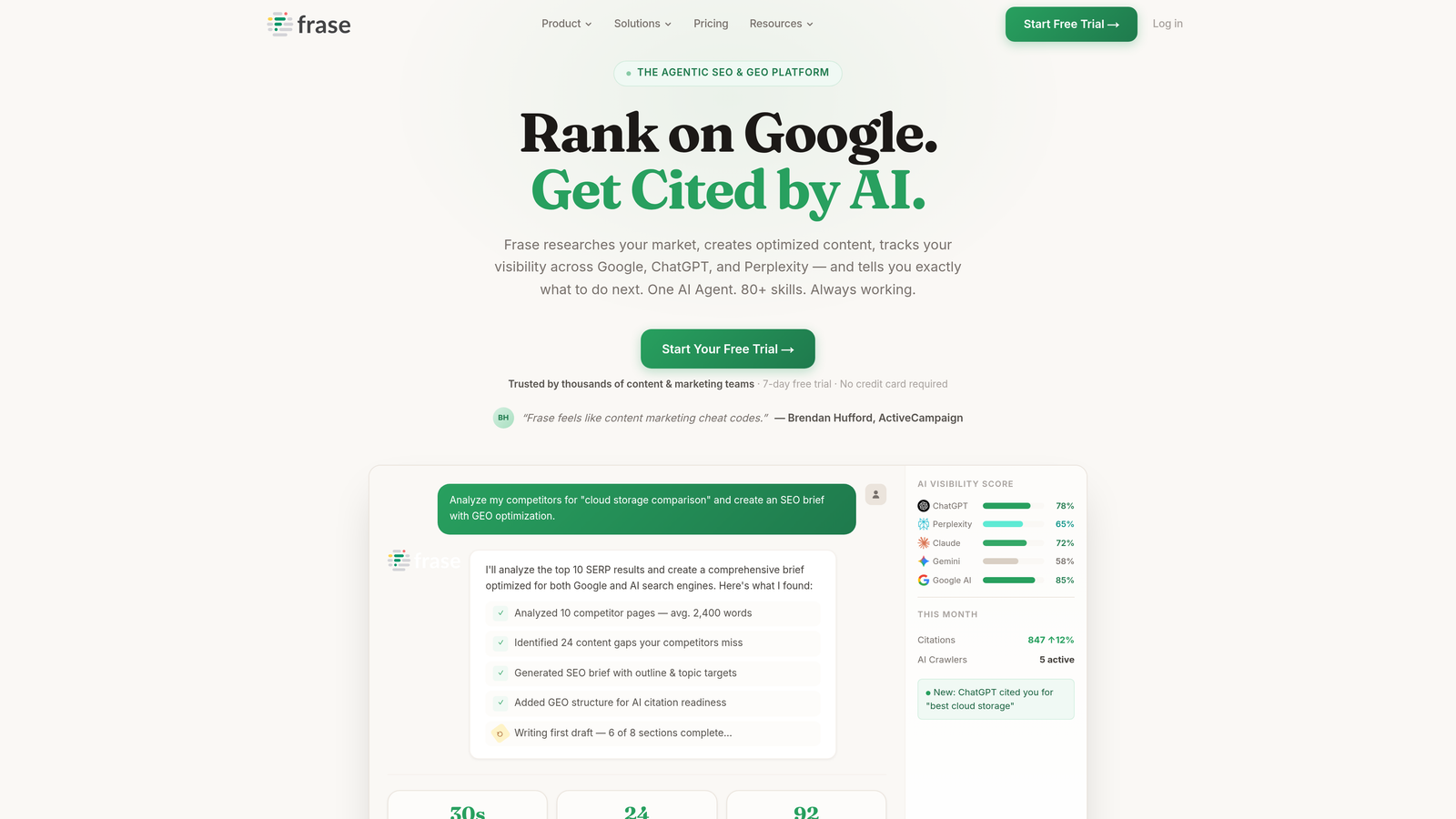
Frase is a budget-friendly content optimization tool with AI writing and question research for targeting AI-answered queries.
Where This Tool Shines
Frase's question research pulls from "People Also Ask" boxes and related queries to show which questions people want answered. This matters for GEO because AI models often answer queries in a question-and-answer format.
AI content generation sits alongside the optimization tools, so you can research, write and optimize in one interface. Its prices are well below most competitors, which makes it accessible for smaller teams testing GEO strategies.
Key Features
AI Content Generation: Built-in AI writing that drafts content from your optimization research.
Question Research: Finds common questions related to your topic in search data.
Content Brief Builder: Automated briefs listing the topics and terms to cover.
SERP Analysis: Competitive analysis of what currently ranks for your target keywords.
Answer Engine: Optimization focused on question-based queries.
Best For
Solo marketers, small agencies and startups that need professional optimization tools without enterprise budgets. It works well for teams producing moderate content volumes with limited resources.
Pricing
The Solo plan costs $15/month with limited features, Basic costs $45/month and Team costs $115/month. Basic includes the AI writing and optimization features most teams need for effective GEO content.
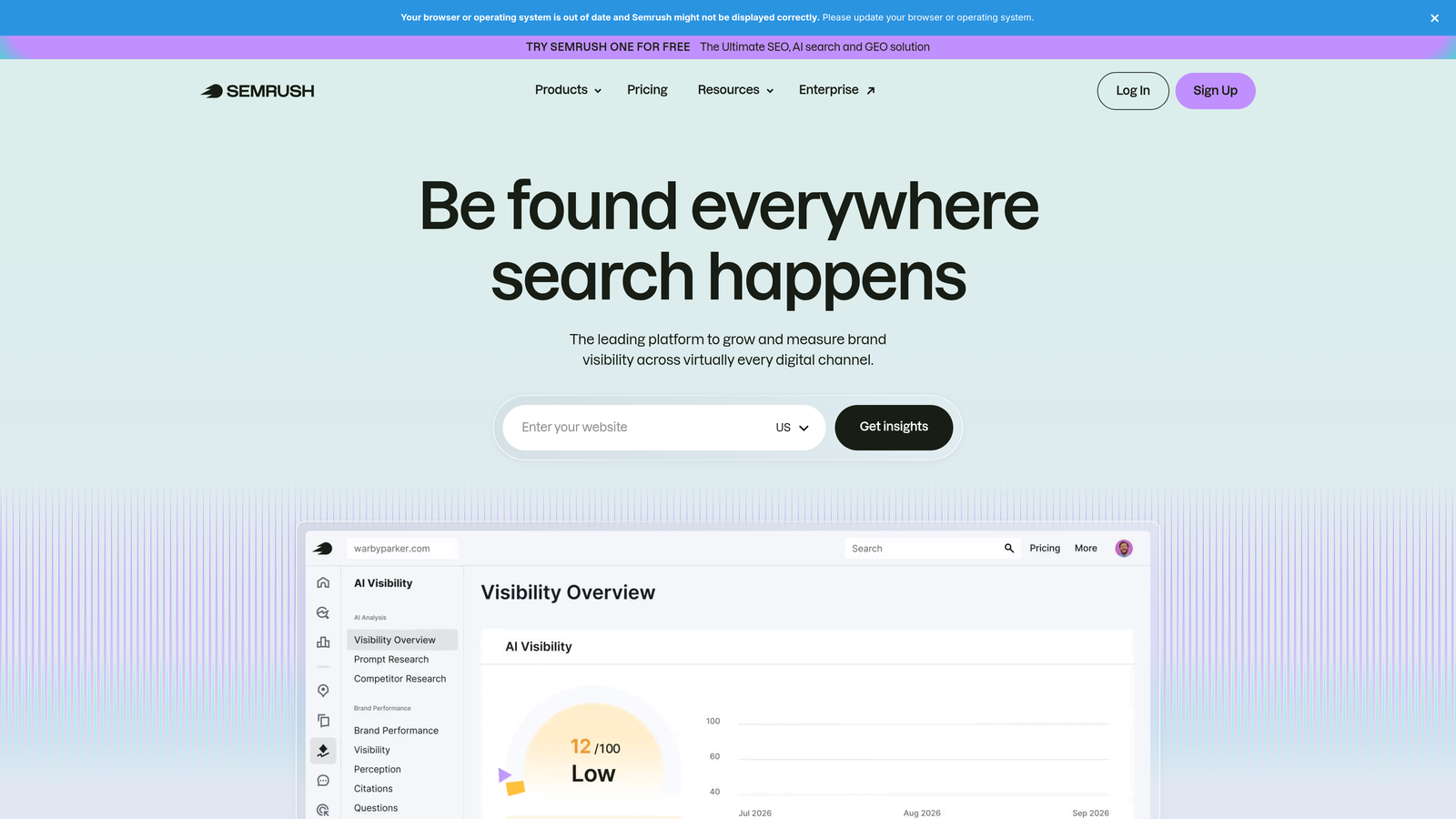
6. Semrush ContentShake AI
Best for: Existing Semrush users adding AI content generation to their toolkit
Semrush ContentShake AI is an AI writing assistant that helps teams move from traditional SEO content to AI-optimized articles.
Where This Tool Shines
ContentShake AI draws on Semrush's extensive keyword and competitive data to inform content creation. If you already use Semrush for SEO research, the generator uses the same data for its suggestions.
Direct WordPress publishing streamlines work for teams managing multiple sites. SEO recommendations appear inside the writing interface, which cuts the back-and-forth between research and writing.
Key Features
AI-Powered Article Generation: Creates full articles from keywords and competitive analysis.
Competitive Content Analysis: Uses Semrush's database to show what competitors publish.
Built-in SEO Recommendations: Optimization suggestions inside the writing interface.
WordPress Publishing: Publishes directly to WordPress sites without manual copying.
Topic Research: Access to Semrush's keyword and topic databases for content planning.
Best For
Marketing teams already invested in the Semrush ecosystem who want content generation without managing another platform. It is less suitable if you do not already use Semrush for other marketing work.
Pricing
ContentShake AI is included with the Semrush Pro subscription at $139.95/month and is also available as an add-on to existing Semrush plans. The Pro plan includes the full Semrush suite beyond the content tools.
7. Jasper
Best for: Enterprise teams producing high-volume marketing content in a consistent brand voice
Jasper is an enterprise AI content platform with brand voice training for teams producing large volumes of marketing content.
Where This Tool Shines
Jasper's brand voice training teaches the AI your tone, style and messaging guidelines. This matters when you publish dozens of articles a month and need them to sound consistent.
The template library covers formats from blog posts to social media, and team workflows support content review and approval. API access enables custom integrations for teams with specific workflow requirements.
Key Features
Brand Voice Training: Teaches the AI your tone, style and messaging preferences.
Multiple Content Templates: Pre-built frameworks for different content types and formats.
Team Collaboration Workflows: Built-in review and approval processes for content teams.
API Access: Custom integrations that connect Jasper to your existing tools and workflows.
Browser Extension: AI-assisted writing directly in Google Docs and other platforms.
Best For
Marketing teams at mid-size and enterprise companies producing high content volumes with many contributors. It is most valuable when brand consistency across many pieces is critical.
Pricing
The Creator plan costs $49/month for individual users and Pro costs $69/month for small teams. The Business tier requires custom pricing for larger organizations. Higher tiers unlock team features and higher usage limits.
8. NeuronWriter
Best for: Data-driven content teams focused on detailed NLP optimization
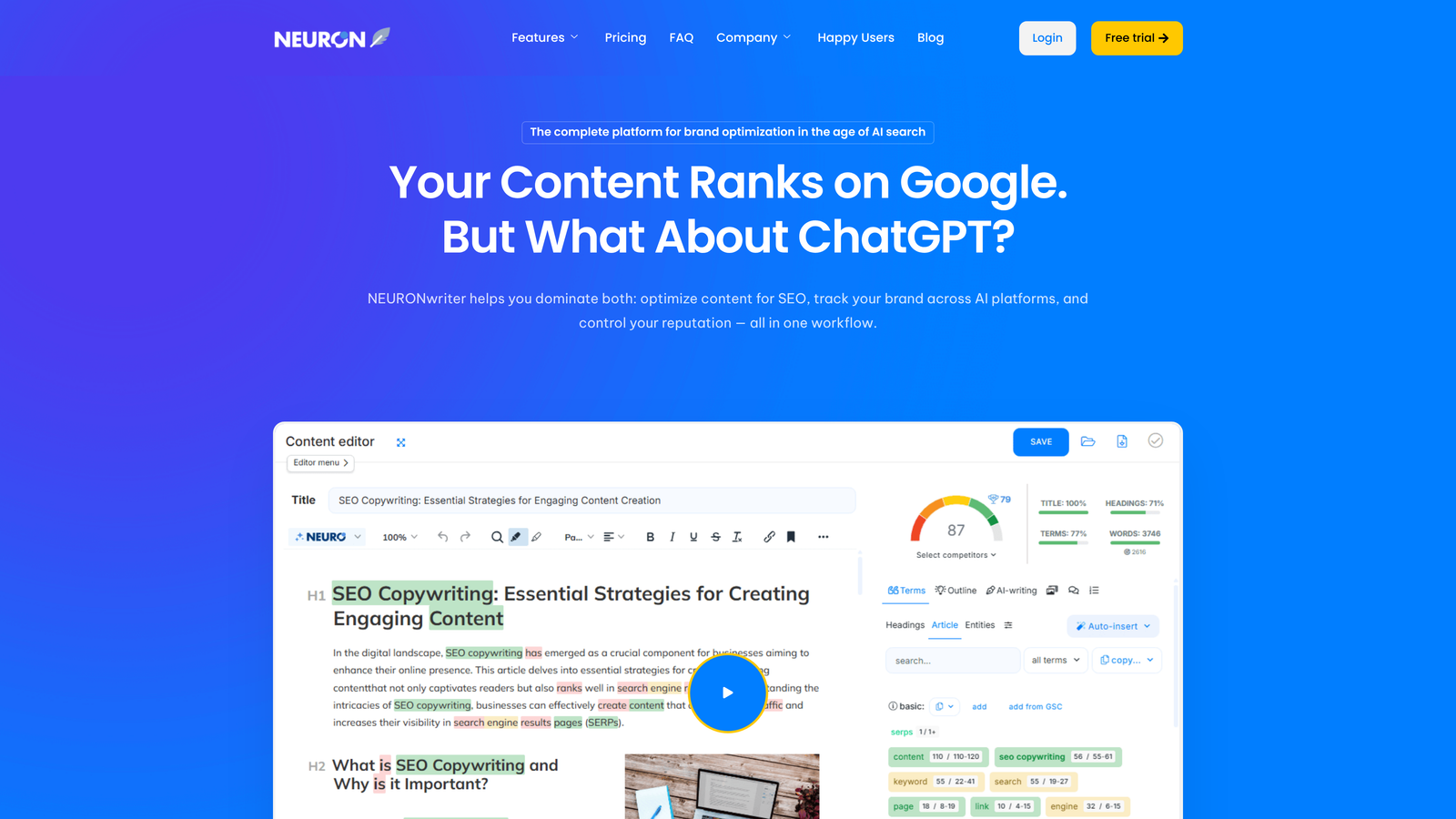
NeuronWriter is an NLP-focused content optimization tool with detailed scoring and competitor analysis.
Where This Tool Shines
NeuronWriter's NLP-based scoring goes deeper into semantic analysis than basic keyword matching. It evaluates how well your content covers a topic from a natural language processing perspective, which is closer to how AI models read content.
Its competitor analysis shows how competitors structure content and cover topics, not just which terms they use. This granular view helps explain why some content performs better from an AI comprehension standpoint.
Key Features
NLP-Based Content Scoring: Semantic analysis of content quality beyond keyword matching.
Competitor Content Analysis: Detailed breakdowns of how top-performing content covers topics.
AI Writing Assistance: Content generation based on optimization recommendations.
Content Planning Features: Built-in project management for organizing content work.
SERP Analysis: Shows what currently ranks and why it performs well.
Best For
Content teams comfortable with technical SEO concepts who want detailed optimization data. It works well for agencies and consultants who need specific metrics to justify their recommendations.
Pricing
Bronze costs $23/month, Silver $45/month and Gold $69/month. NeuronWriter uses a credit system in which each content analysis consumes credits. Higher tiers include more monthly credits and additional features.
9. WriterZen
Best for: Streamlined keyword-to-content workflows with topic clustering
WriterZen is a keyword-to-content workflow tool with topic discovery and AI writing for streamlined content production.
Where This Tool Shines
WriterZen's topic discovery groups related keywords into logical topic clusters to surface content opportunities. This builds the comprehensive topic coverage that AI models tend to treat as authoritative.
The platform follows a clear workflow: discover topics, explore keywords, create content briefs, then write with AI assistance. It also includes a plagiarism checker, a quality-control step that many competitors charge extra for.
Key Features
Topic Discovery and Clustering: Groups related keywords into topic clusters to identify content opportunities.
Keyword Explorer: Keyword research with search volume and competition data.
AI Content Writer: Generates content from your research and optimization briefs.
Plagiarism Checker: Verifies originality before publishing, included at all pricing tiers.
Content Brief Builder: Detailed briefs for writers based on competitive analysis.
Best For
Content teams and agencies managing multiple projects who need a clear path from research to publication. It is particularly useful if you work with freelance writers who need detailed briefs.
Pricing
Lite costs $27/month, Plus $47/month and Pro $67/month, and all plans include the core features. WriterZen occasionally offers lifetime deals that can significantly reduce long-term costs.
Making the Right Choice for Your Budget
The monthly cost differences between these GEO tools reflect different approaches to the same problem: getting your brand mentioned in AI-generated responses.
If you need AI visibility tracking alongside content creation, Sight AI covers both in one platform. You create optimized content and also monitor whether it is working across ChatGPT, Claude, Perplexity and other AI systems.
Budget-conscious teams should consider Frase or WriterZen, which both offer solid optimization features for under $50/month. NeuronWriter sits in a similar price range and adds deeper NLP analysis for teams that want more technical insight.
For teams already invested in a specific ecosystem, the choice is simpler. Semrush users get natural integration with ContentShake AI, while enterprise teams with complex brand voice requirements will benefit from Jasper's training capabilities.
The real cost question is whether a tool helps you achieve AI visibility, not just its monthly subscription. Surfer SEO and Clearscope optimize content well, but they do not show whether AI models are citing your brand. MarketMuse excels at strategic content planning, but its full feature set requires a significant monthly investment.
Decide on your primary goal first. You might want to understand your current AI presence, create more content optimized for AI citation, or do both. Teams serious about GEO need to see how AI models currently talk about them before investing heavily in content production. Our 6-step framework for measuring AI visibility performance explains which metrics to track once a tool is in place.
Frequently asked questions
What is GEO software in marketing?
GEO software helps brands appear in answers generated by AI assistants such as ChatGPT, Perplexity, Claude and Google AI Overviews. It typically does two jobs. The first is monitoring: tracking which prompts mention your brand, how often, and with what sentiment. The second is optimization: creating and structuring content that AI models are more likely to cite. Some tools do only one of these jobs, while platforms like Sight AI combine both.
Are there overage charges or usage limits in GEO platforms?
Most GEO platforms enforce usage limits rather than billing surprise overages. Common limits include tracked prompts, AI engines monitored, content credits, seats and refresh frequency. When you hit a cap, you usually have to upgrade a tier or buy add-on credits. Credit-based tools such as NeuronWriter stop analyses until credits renew. Before you buy, check the prompt and credit allowances on each tier and calculate what your monthly volume actually requires.
How much time per week does GEO monitoring require?
With an automated platform, expect about 1–3 hours per week. Most of that time goes to reviewing visibility and sentiment changes, checking which prompts gained or lost mentions, and deciding which content to update. The initial setup of choosing prompts, competitors and engines takes a few extra hours. Manual monitoring, where you query each AI model yourself, can take 5–10 hours per week and still yields less consistent data.
Do I need an extra budget for GEO on top of SEO?
Often you do not need much more. Many teams reallocate part of their existing SEO tool and content budget, because GEO builds on the same assets: high-quality pages, clear structure and authoritative coverage. The new cost is usually a visibility-tracking tool, ranging from budget tiers to a few hundred dollars per month. Agencies that offer GEO as a service generally charge a retainer on top of tool costs.
What features should I look for in GEO software?
Prioritize coverage of the AI engines your audience uses, prompt-level tracking, sentiment analysis, competitor benchmarking, and content recommendations tied to visibility gaps. For e-commerce brands, product and category prompt tracking matters most. Indexing support, such as IndexNow, helps new content get discovered faster. Finally, confirm that pricing is transparent and that usage limits match your volume, as covered in the comparison table above.
Start tracking your AI visibility today and see exactly where your brand appears across top AI platforms. Stop guessing how AI models like ChatGPT and Claude talk about your brand. See every mention, track content opportunities, and automate your path to organic traffic growth.