As AI-powered search engines like ChatGPT, Claude, and Perplexity increasingly shape how users discover brands and products, traditional SEO metrics no longer tell the full story. Ranking on page one of Google matters less if your brand is invisible inside AI-generated answers — which is where a growing share of discovery now happens.
Generative search visibility tools help marketers, founders, and agencies track how their brand appears inside AI responses, identify content gaps, and publish optimized content that AI models are more likely to cite. The right platform can mean the difference between being referenced by AI and being completely absent from the conversation.
This guide covers the top generative search visibility tools available in 2026, evaluated on AI monitoring depth, content optimization capabilities, indexing support, and overall value for teams focused on organic and AI-driven growth.
1. Sight AI
Best for: Teams that need AI visibility monitoring, GEO content creation, and automated indexing in one platform.
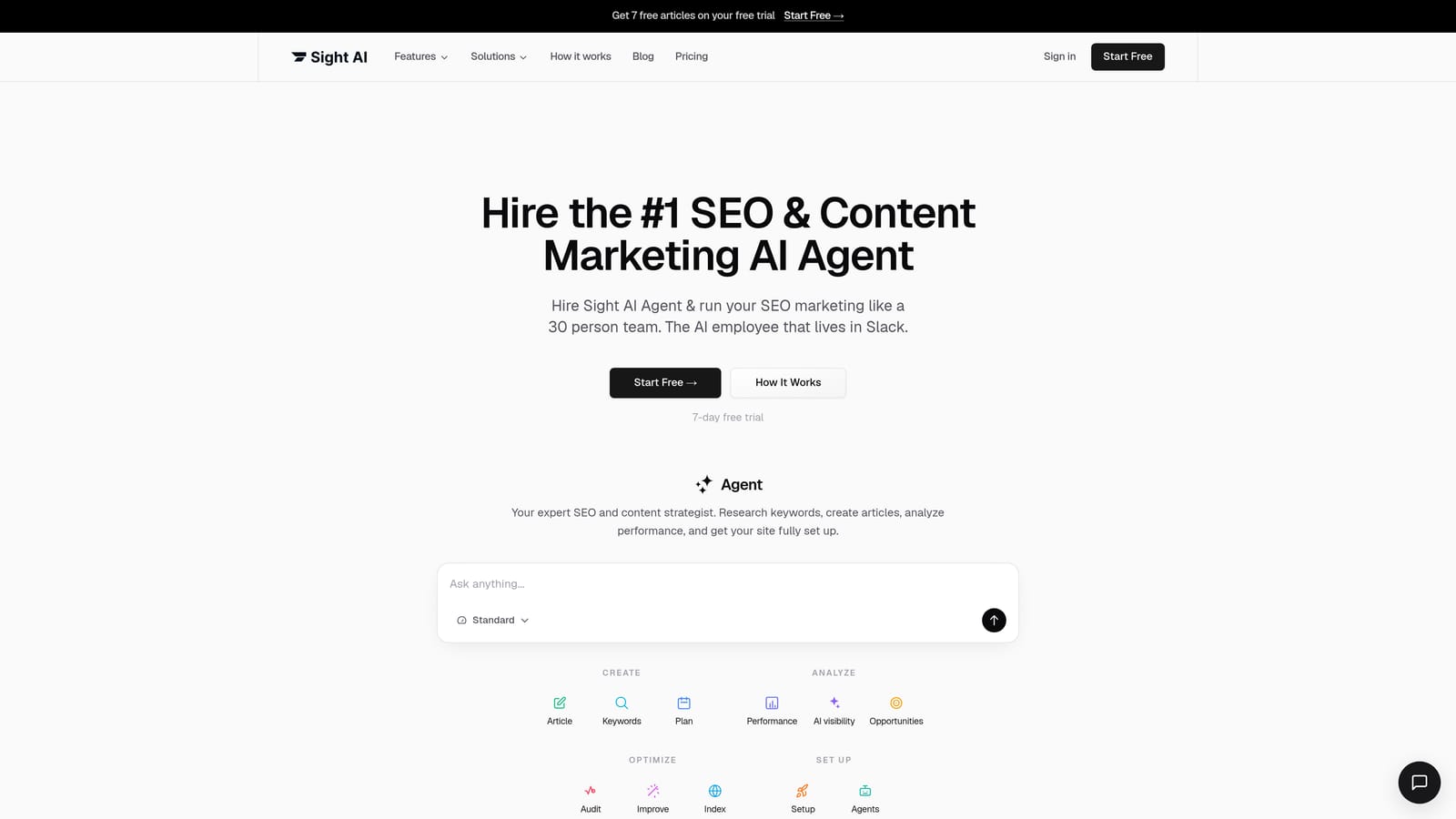
Sight AI is an all-in-one platform purpose-built for tracking brand visibility across AI models, generating GEO-optimized content, and automating website indexing — designed specifically for marketers and agencies competing in AI-powered search.
Where This Tool Shines
Most tools in this space make you choose between monitoring your AI presence and doing something about it. Sight AI connects both sides of the equation. You can see exactly how AI models like ChatGPT, Claude, and Perplexity talk about your brand, then immediately act on that intelligence by generating and publishing the content needed to improve your positioning.
The platform's Autopilot Mode takes this further by enabling scheduled, hands-off content publishing at scale. For agencies managing multiple clients or founders running lean teams, this removes a significant operational bottleneck without sacrificing content quality or GEO alignment.
Key Features
AI Visibility Score: Tracks brand mentions across 6+ AI platforms with sentiment analysis and prompt-level granularity, so you know not just whether you're mentioned but how.
13+ Specialized AI Writing Agents: Purpose-built agents for listicles, guides, explainers, and other SEO/GEO content formats — each tuned for the structure AI models tend to cite.
Autopilot Mode: Schedules and publishes content automatically, enabling consistent output without manual intervention on every piece.
IndexNow Integration: Automated sitemap updates and IndexNow support push new content to search engines faster, accelerating discovery timelines.
CMS Auto-Publishing: Connects directly to your CMS to reduce manual workflow steps between content generation and live publication.
Best For
Sight AI is the strongest fit for marketing teams, growth-focused founders, and agencies that want a single platform covering the full AI visibility workflow: monitoring where they stand, creating content to improve that standing, and automating the publishing process. Teams that currently juggle separate tools for tracking, writing, and indexing will find the consolidation particularly valuable.
Pricing
Sight AI offers tiered plans to fit different team sizes and use cases. Visit trysight.ai for current pricing details.
2. Profound
Best for: Enterprise marketing teams that need structured AI answer monitoring and competitive intelligence reporting.
Profound is an enterprise AI answer monitoring platform that tracks how AI models respond to category and brand-level queries, with reporting designed for larger marketing organizations.

Where This Tool Shines
Profound is built for teams that need to understand their AI search presence at a strategic level. Rather than prompt-by-prompt granularity, it focuses on how AI models position a brand within broader category conversations — useful for understanding share of voice across an entire product category, not just direct brand searches.
The structured reporting dashboards make it easier for enterprise marketing teams to communicate AI visibility findings to stakeholders. If your team regularly produces executive-level reports on brand performance, Profound's output format fits naturally into that workflow.
Key Features
Brand and Industry Query Monitoring: Tracks how AI models respond to both brand-specific and category-level queries, giving a broader view of AI positioning.
Share-of-Voice Analysis: Measures how often your brand appears in AI-generated answers relative to competitors across a defined query set.
Structured Reporting Dashboards: Pre-built reporting views suited to enterprise marketing teams and cross-functional stakeholder communication.
Competitive Intelligence: Surfaces how competitors are positioned within AI-generated answers, helping teams identify gaps and opportunities.
Best For
Profound is best suited for enterprise marketing teams or large agencies with dedicated analytics functions. It works well as an intelligence layer for organizations that have separate teams handling content creation and don't need an integrated writing tool alongside their monitoring.
Pricing
Profound operates on enterprise pricing. Contact their team directly for plan details and custom quotes.
3. Promptwatch
Best for: Brand managers who need focused, prompt-level tracking of how AI model answers change over time.
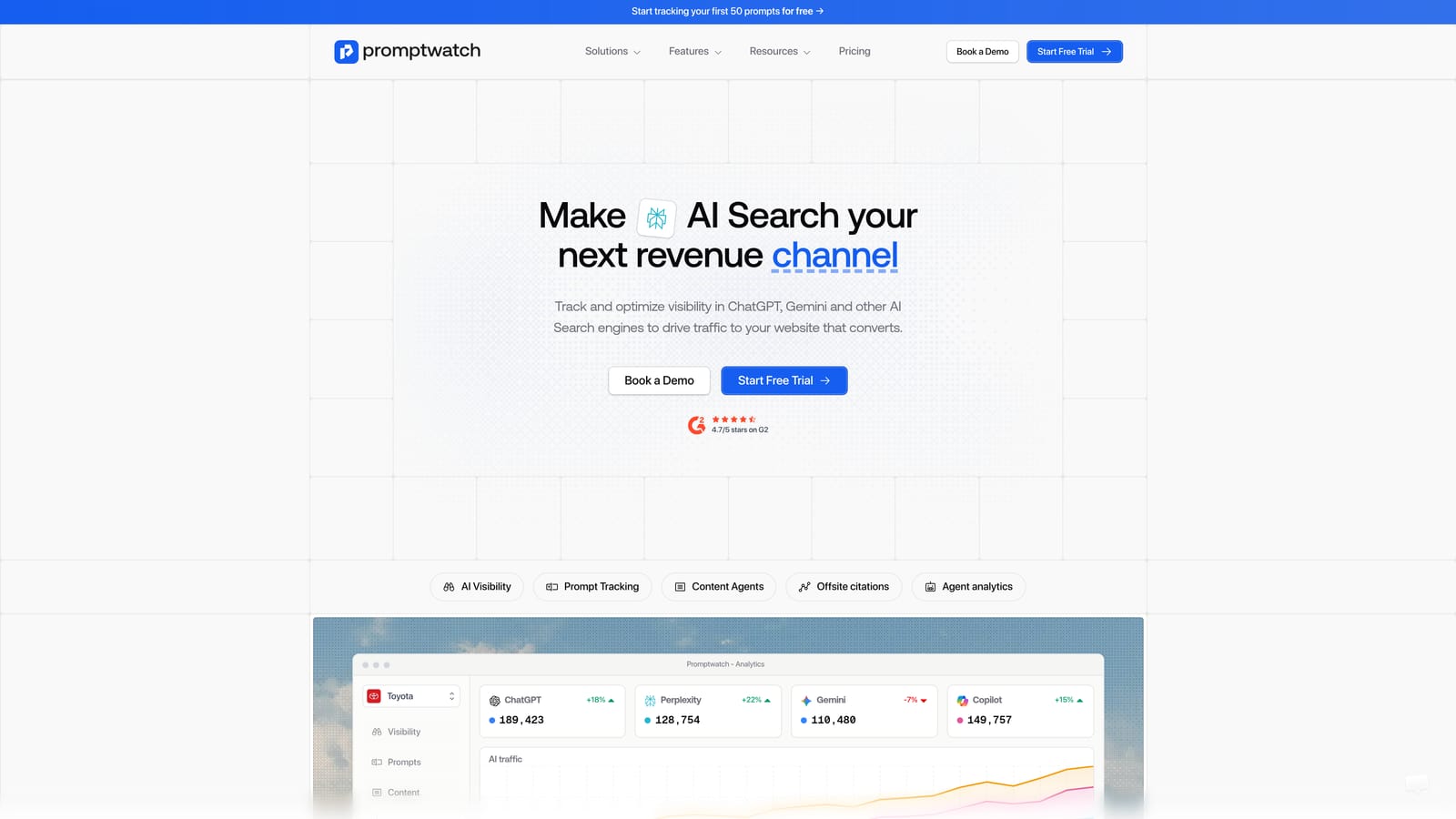
Promptwatch is a prompt-level AI monitoring tool that tracks how specific queries are answered by AI models over time, helping teams understand shifts in how their brand is mentioned or omitted.
Where This Tool Shines
Promptwatch takes a narrow but genuinely useful approach: instead of broad category-level monitoring, it lets you define specific prompts and watch exactly how AI model answers to those prompts evolve. This is particularly valuable when you've published new content or made changes to your brand positioning and want to know if those changes are being reflected in AI responses.
The lightweight interface keeps the focus on monitoring rather than layering in features you may not need. For teams that already have a content production workflow and just need reliable AI answer tracking, this simplicity is a real advantage.
Key Features
Prompt-Level Tracking: Monitors specific queries and records how AI model answers to those exact prompts change over time.
Brand Mention Monitoring: Identifies when and how your brand appears within AI-generated responses to tracked prompts.
Historical Tracking: Maintains a record of prompt answer changes, enabling before-and-after analysis of content or positioning efforts.
Lightweight Interface: A focused, monitoring-first design that avoids feature bloat for teams with straightforward tracking needs.
Best For
Promptwatch is a good fit for brand managers and SEO professionals who want dedicated AI answer tracking without paying for content generation features they won't use. It pairs well with a separate content creation tool for teams that want to keep those workflows distinct.
Pricing
Promptwatch offers tiered plans. Visit their website for current pricing information.
4. Peec
Best for: Agencies running periodic AI visibility audits and competitive benchmarking for clients.
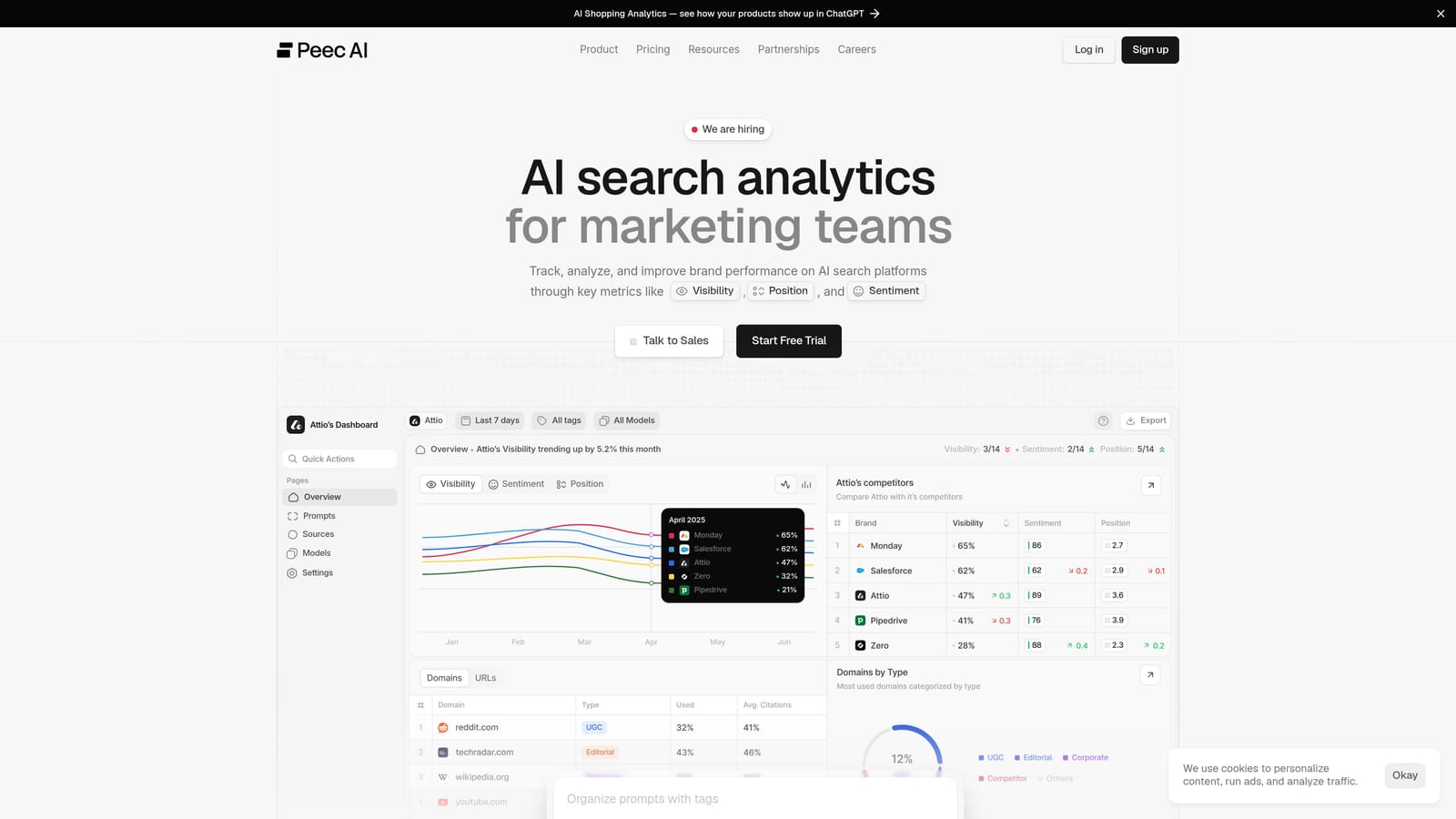
Peec is an AI search visibility benchmarking tool that scores brand presence in AI-generated responses and compares it against competitors, with reporting designed to support agency client deliverables.
Where This Tool Shines
Peec's core strength is structured comparison. Rather than simply telling you whether your brand appears in AI answers, it scores that presence and benchmarks it against competitor performance. This makes it particularly useful for agencies that need to show clients a clear before-and-after picture of AI visibility efforts.
The agency-friendly reporting format is a meaningful differentiator here. Audit-style deliverables that show a client's AI visibility score alongside competitor scores translate well into client presentations and quarterly reviews — which is exactly the output format many agencies need.
Key Features
AI Visibility Scoring: Generates structured scores for brand presence in AI-generated responses, enabling consistent measurement over time.
Competitor Benchmarking: Compares your brand's AI visibility score directly against competitors, surfacing relative positioning gaps.
Benchmarking Dashboards: Periodic audit-style views designed for tracking AI visibility trends across reporting cycles.
Agency-Friendly Reporting: Output formats suited for client-facing deliverables, making it easier to communicate AI visibility results to non-technical stakeholders.
Best For
Peec is best suited for agencies and consultants who need to run AI visibility audits for clients and present findings in a structured, professional format. It functions primarily as an intelligence and reporting tool rather than a content creation platform.
Pricing
Peec offers tiered plans. Visit their website for current pricing details.
5. AirOps
Best for: Content operations teams that need templated LLM workflow pipelines for high-volume, structured content production.
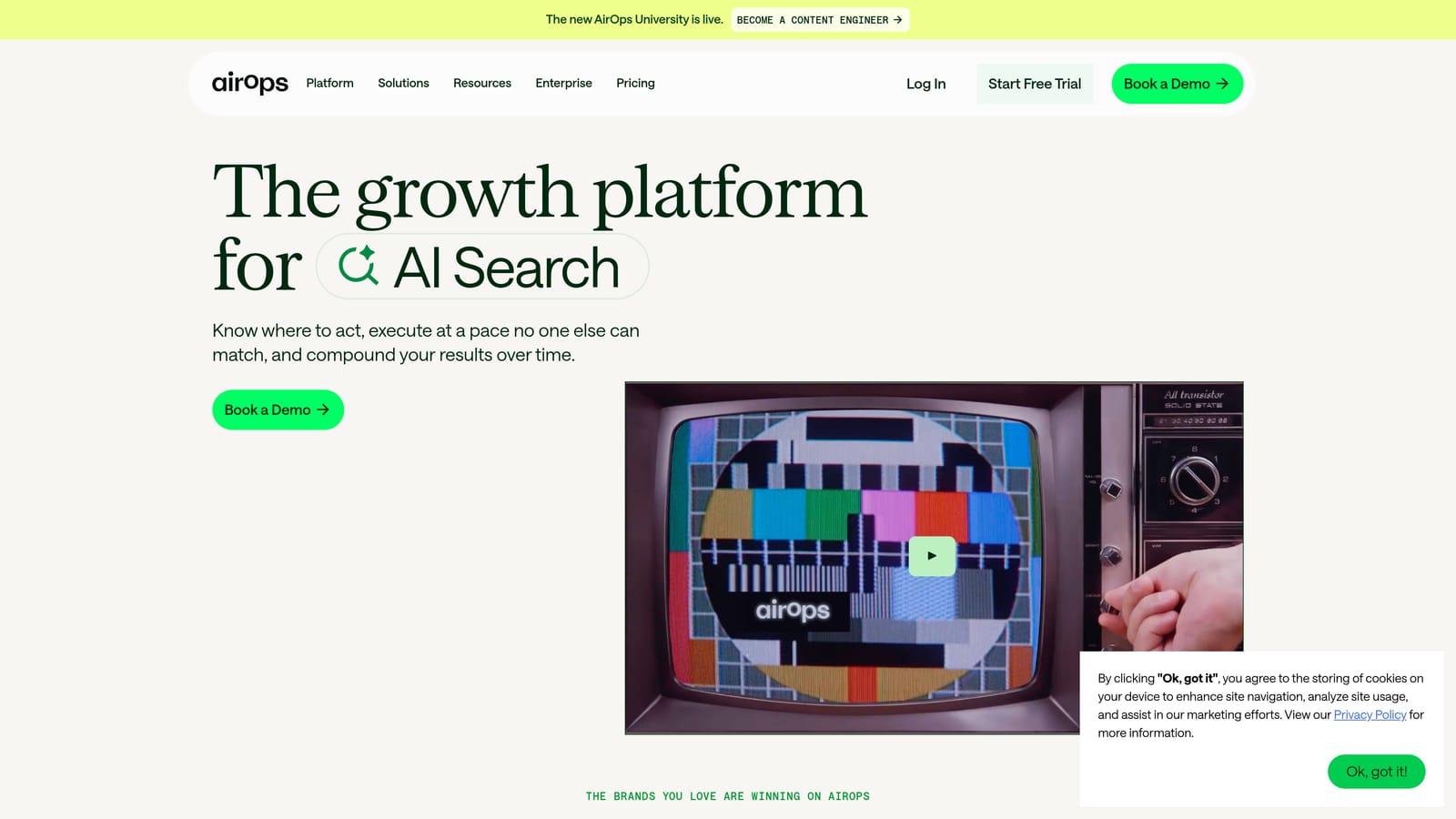
AirOps is an AI content workflow automation platform that enables teams to build templated LLM pipelines for repeatable, high-volume content production at scale.
Where This Tool Shines
AirOps is built around workflow logic rather than individual content creation. If your team produces content at high volume with consistent structure — think product descriptions, location pages, or templated blog formats — AirOps lets you encode that structure into reusable LLM pipelines. The result is more consistent output with less manual oversight per piece.
The ability to run multiple AI models within a single workflow gives teams flexibility to route different content types to the model best suited for that task. For content operations teams with defined, repeatable processes, this architecture is a genuine efficiency driver.
Key Features
Templated LLM Pipelines: Build reusable workflow templates that standardize content production across large content programs.
Multi-Model Support: Run multiple AI models within a single workflow, routing tasks to the most appropriate model for each step.
Team Collaboration: Shared workflow access and collaboration features designed for content operations teams working at scale.
Tool Integrations: Connects with existing content and publishing tools to fit into established team workflows without requiring a full stack replacement.
Best For
AirOps is best suited for content operations teams and growth marketers who have well-defined, repeatable content workflows they want to automate. It is primarily a production and workflow tool; teams that also need AI visibility monitoring will need to pair it with a dedicated monitoring platform.
Pricing
AirOps offers tiered plans including a free tier. Visit their website for current pricing information.
6. Writesonic
Best for: Individual marketers and small teams that need fast, accessible AI content creation with built-in SEO guidance.
Writesonic is a broad AI writing platform with SEO-oriented features and a large template library, designed for marketers and small teams producing content at speed.
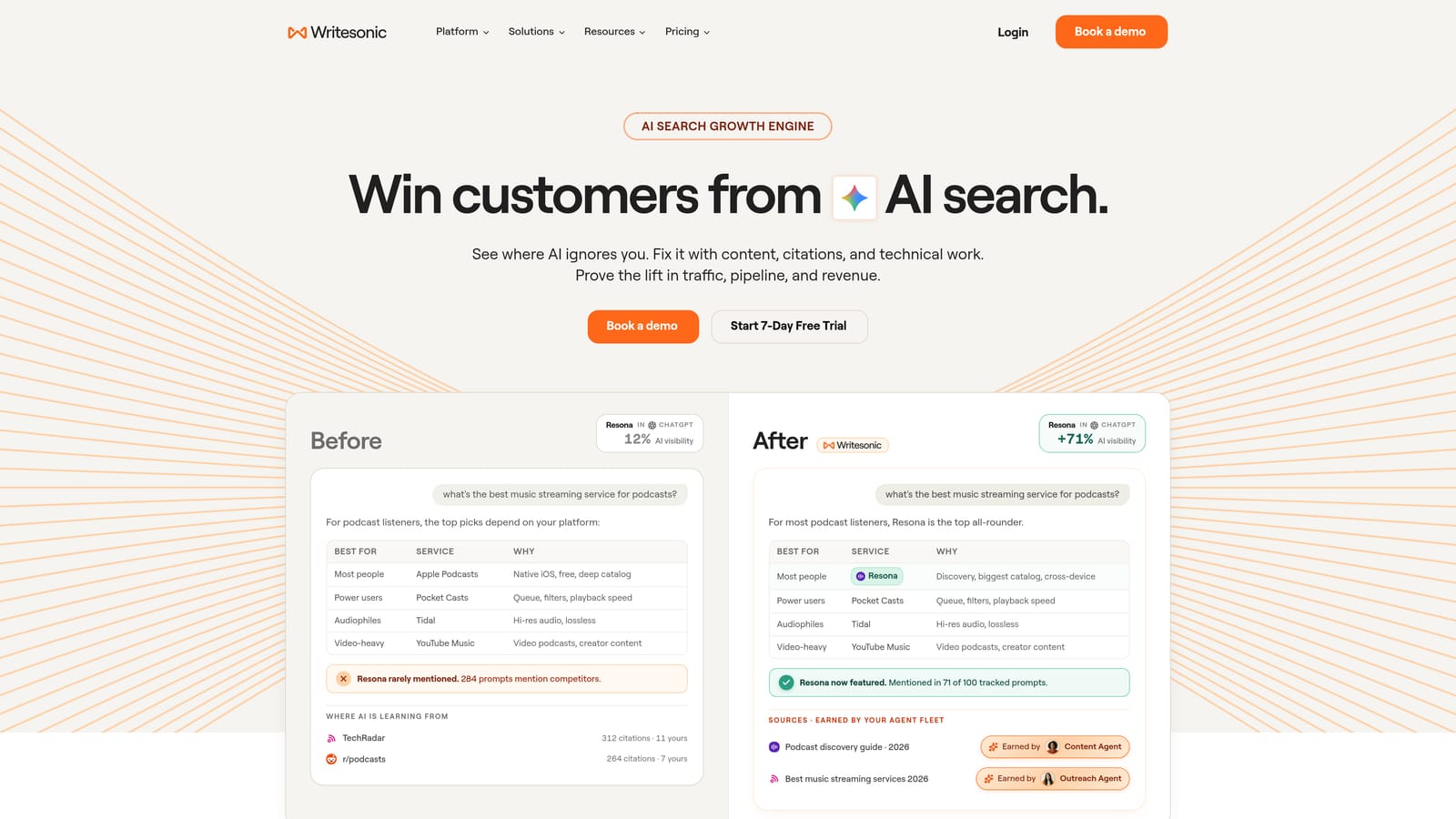
Where This Tool Shines
Writesonic's primary strength is accessibility. The platform offers a wide range of content templates covering blogs, ads, landing pages, and web copy — making it easy for marketers without dedicated content teams to produce a high volume of drafts quickly. The built-in SEO optimization guidance helps users align content with search intent without needing a separate SEO tool for basic guidance.
The pricing structure is also worth noting. For individual marketers or small teams with tighter budgets, Writesonic's accessible tiers make AI-assisted content production available without enterprise-level investment. It's a practical entry point for teams just beginning to scale content output.
Key Features
Large Template Library: Covers blogs, ads, web copy, and more — reducing setup time for common content formats.
Built-in SEO Guidance: Provides SEO optimization suggestions within the content drafting interface to help align output with search intent.
AI Article Writer: Generates longer-form articles with options for factual grounding, suitable for blog and content marketing programs.
Accessible Pricing Tiers: Tiered plans designed for individuals and small teams, with a free tier available for getting started.
Best For
Writesonic is a practical choice for individual marketers, small business owners, and early-stage teams that need to produce content quickly without a large budget. It does not offer AI visibility monitoring or brand tracking across AI models, so teams that need those capabilities will need a complementary tool.
Pricing
Writesonic offers a free tier along with paid plans at accessible monthly rates. Visit their website for current pricing details.
Which Tool Is Right for Your Team?
The generative search visibility space has matured enough that there's now a meaningful distinction between what different tools actually do — and choosing the wrong category of tool for your use case is an easy mistake to make.
Here's a practical breakdown by use case:
If you need monitoring only: Promptwatch, Profound, and Peec are all solid options depending on your scale and reporting needs. Promptwatch works well for focused prompt-level tracking; Profound fits enterprise teams that need category-level intelligence and structured reporting; Peec is the strongest fit for agencies running competitive AI visibility audits for clients.
If you need content production at scale: AirOps is the better choice if your team has well-defined, repeatable content workflows you want to automate through templated LLM pipelines. Writesonic is a more accessible entry point for smaller teams or individuals who need fast content drafts with basic SEO guidance.
If you need the full workflow in one place: Sight AI is the only platform on this list that combines AI visibility monitoring, GEO-optimized content generation, and automated indexing in a single workflow. For teams that currently manage separate tools for tracking, writing, and publishing, the consolidation alone is a significant operational advantage — and the prompt-level sentiment tracking gives you the intelligence to act on what you find.
The honest reality is that most teams competing seriously in AI-powered search will eventually need all three capabilities: knowing where they stand, creating content to improve that position, and getting that content discovered quickly. Building that stack from separate tools is possible, but it adds coordination overhead that compounds as your content program grows.
Stop guessing how AI models like ChatGPT and Claude talk about your brand. Get visibility into every mention, track content opportunities, and automate your path to organic traffic growth. Start tracking your AI visibility today and see exactly where your brand appears across top AI platforms.