Generative AI has fundamentally changed how marketing teams create content, track brand presence, and compete for visibility — not just in Google, but across AI-powered search engines like ChatGPT, Perplexity, and Claude. The challenge today isn't finding an AI marketing tool; it's finding one that actually addresses where your audience is discovering brands in 2026.
This list covers the best generative AI marketing platforms available right now, evaluated on content quality, AI visibility tracking, workflow automation, and scalability for marketers, founders, and agencies. Whether you need to produce SEO/GEO-optimized content at scale, monitor how AI models talk about your brand, or automate your entire publishing pipeline, there's a platform here built for your workflow.
1. Sight AI
Best for: Teams that need content generation, AI visibility tracking, and automated indexing in one platform.
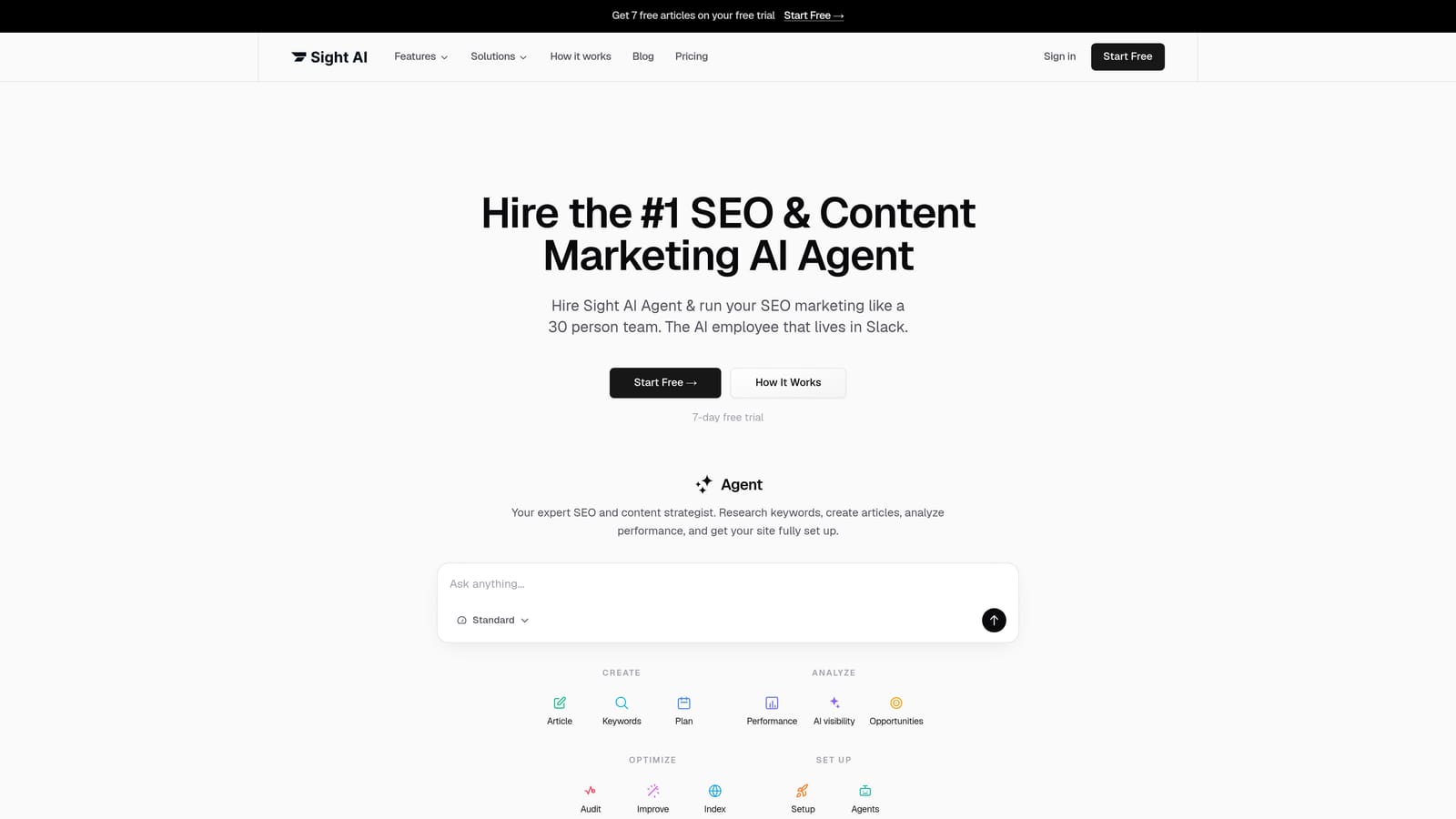
Sight AI is an all-in-one generative AI marketing platform combining brand visibility monitoring across 6+ AI models, a 13-agent content writer for SEO/GEO-optimized articles, and automated website indexing with CMS auto-publishing.
Where This Tool Shines
Most platforms force you to choose between creating content and tracking how AI models talk about your brand. Sight AI connects both. You can identify exactly where your brand is missing from AI-generated answers, generate content specifically structured to close those gaps, and then automatically index and publish it without touching a single CMS setting manually.
The AI Visibility Score is particularly useful for teams trying to move beyond vanity metrics. Rather than showing you a vague "brand health" number, it provides sentiment analysis and tracks specific prompts across ChatGPT, Claude, Perplexity, and more — giving you actionable data on where your brand stands and where it needs to improve.
Key Features
AI Visibility Score: Tracks brand mentions, sentiment, and prompt-level performance across 6+ AI platforms including ChatGPT, Claude, and Perplexity.
13+ Specialized AI Agents: Generates listicles, guides, and explainers optimized for both traditional SEO and generative engine optimization (GEO).
Autopilot Mode: Hands-off content publishing workflow that handles scheduling, formatting, and CMS delivery automatically.
IndexNow Integration: Automated sitemap updates and faster content discovery through direct search engine notification on publish.
CMS Auto-Publishing: Connects content generation directly to your website, eliminating manual copy-paste steps from draft to live page.
Best For
Sight AI is best suited for marketers, founders, and agencies who want a single platform covering the full AI content lifecycle: from identifying brand gaps in AI answers, to generating optimized content, to publishing and indexing it automatically. It's especially valuable for agencies managing multiple client sites on Autopilot Mode.
Pricing
Check trysight.ai for current plans. Pricing reflects the platform's all-in-one positioning across content, visibility, and indexing capabilities.
2. Writesonic
Best for: Content teams that need high-volume output across multiple formats and marketing channels.
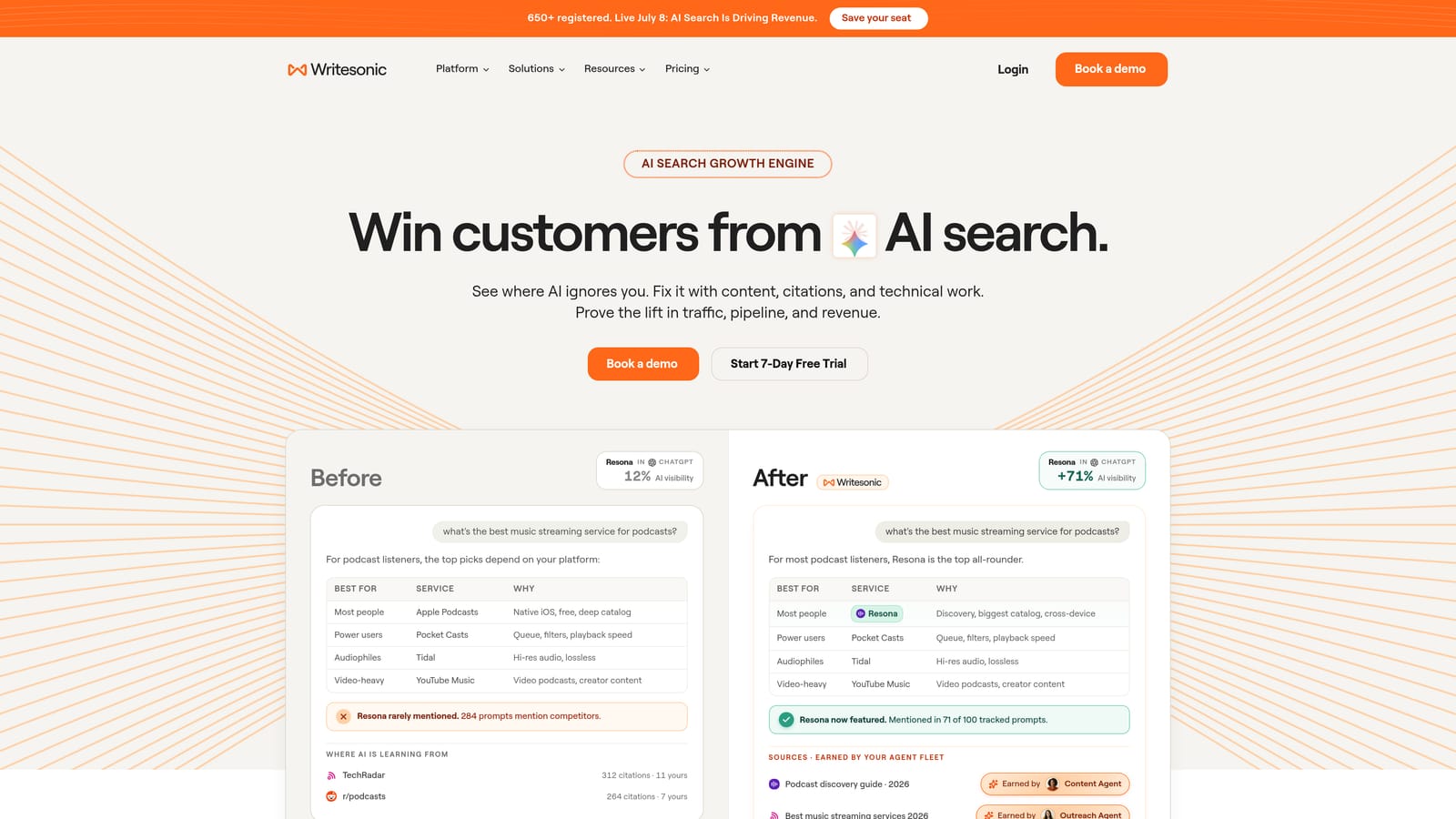
Writesonic is a high-volume AI content generation platform with a broad template library covering blogs, ads, landing pages, and social copy, with web search integration for factually grounded output.
Where This Tool Shines
Writesonic's strength is breadth. If your team produces content across many formats simultaneously — blog posts, paid ad copy, product descriptions, email sequences — the template library keeps output consistent without requiring a prompt engineer for every task. It's a practical choice for content operations that prioritize volume alongside quality.
The web search integration is a meaningful differentiator for factual content. By grounding AI-generated output in current information, Writesonic reduces the hallucination risk that makes some AI writers unreliable for topic-specific articles. This makes it more dependable for content that references recent events, product details, or industry data.
Key Features
Long-Form AI Article Writer: SEO-focused editor for producing structured blog posts and guides with keyword optimization built in.
Web Search Integration: Grounds content generation in current information, reducing factual errors in time-sensitive content.
Broad Template Library: Covers blogs, ads, landing pages, social media, emails, and product descriptions across marketing channels.
Chatsonic: Conversational AI assistant for real-time content ideation, drafting, and refinement within a chat interface.
Team Collaboration Features: Shared workspaces and content workflows for marketing teams working on concurrent projects.
Best For
Marketing teams and content agencies that need to produce large volumes of content across diverse formats. Particularly well-suited for teams running multi-channel campaigns where consistent, on-brand output at scale is the primary requirement.
Pricing
Free tier available for getting started. Paid plans scale by usage volume. Check writesonic.com for current pricing tiers.
3. AirOps
Best for: Marketing operations teams that want to automate AI workflows without writing code.
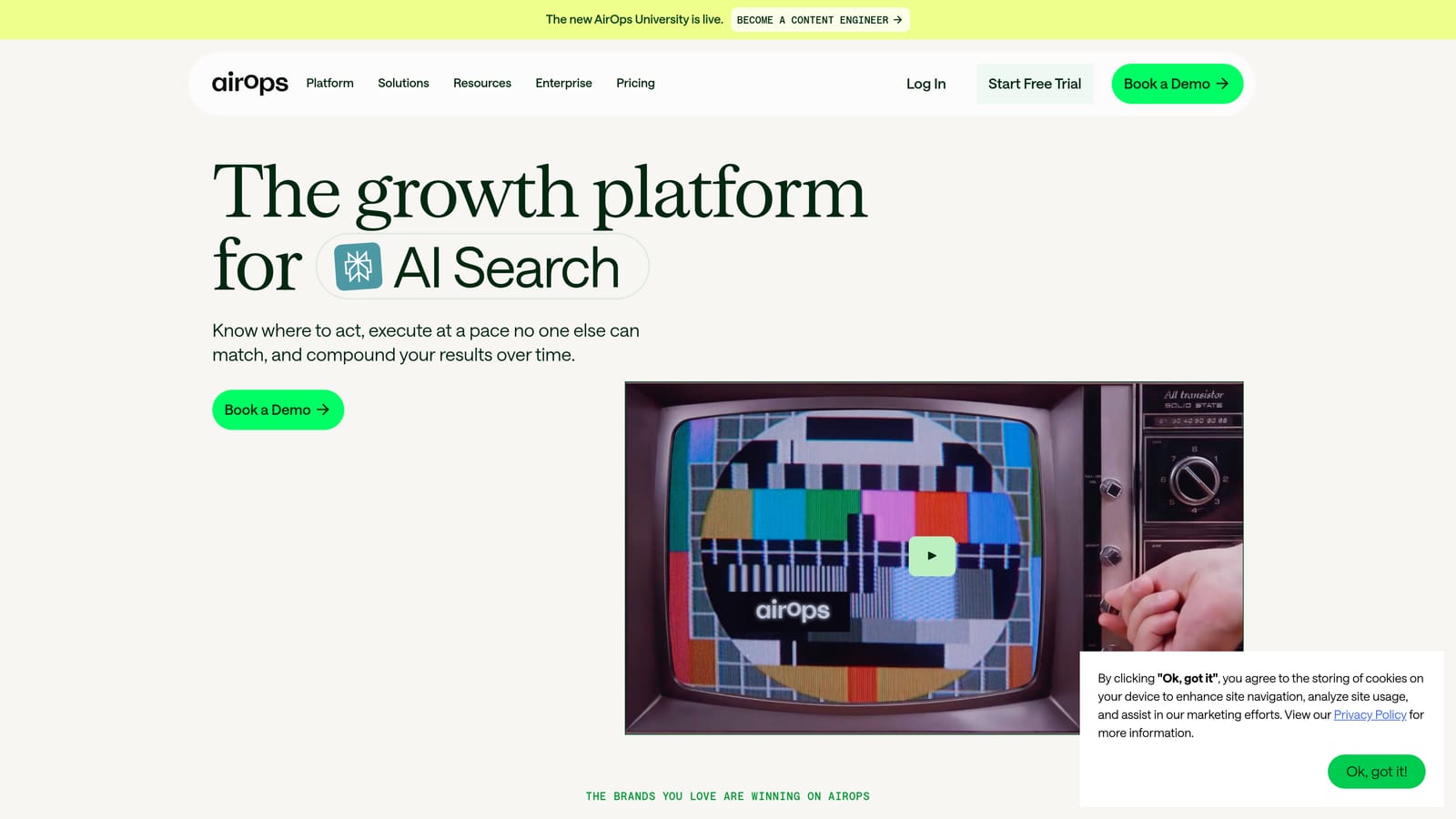
AirOps is a no-code AI workflow automation platform for marketing operations, enabling teams to build custom LLM-powered pipelines that connect to existing tools and data without engineering resources.
Where This Tool Shines
AirOps occupies a distinct position in this list: it's less about generating a single piece of content and more about building repeatable systems that do it at scale. Think of it as the connective tissue between your AI models, your CRM, your content tools, and your marketing data. If your team runs the same AI-assisted tasks repeatedly, AirOps turns those into automated workflows.
The no-code interface is genuinely accessible. Marketing ops professionals can build complex LLM pipelines that pull data from one system, process it through an AI model, and push outputs to another system — without waiting on engineering support. This makes it particularly valuable for agencies and growth teams with high operational complexity.
Key Features
No-Code Workflow Builder: Visual interface for constructing custom AI-powered marketing automations without technical development.
System Integrations: Connects LLMs to existing CRMs, content management tools, and marketing data sources within a single pipeline.
Bulk Content Operations: Handles large-scale tasks like content brief generation, metadata writing, and content repurposing at volume.
Multi-LLM Support: Allows teams to use multiple AI model providers within a single workflow, choosing the right model for each task.
Scalable Architecture: Designed for large content operations that need consistent, repeatable AI output across many projects simultaneously.
Best For
Marketing operations teams, growth agencies, and content managers who need to systematize AI-assisted work across large volumes of tasks. Ideal when the bottleneck is process repeatability rather than individual content quality.
Pricing
Check airops.com for current plans, which reflect the platform's enterprise workflow positioning.
4. Profound
Best for: Enterprise marketing teams and agencies tracking competitive brand visibility in AI-generated search results.
Profound is an AI answer engine optimization (AEO) analytics platform that tracks and benchmarks brand visibility in AI-generated search results, with competitive share-of-voice reporting.
Where This Tool Shines
Profound is purpose-built for the analytics layer of AI visibility. Where other platforms focus on content creation, Profound focuses on understanding how your brand performs in AI-generated answers relative to your competitors. This is the kind of structured reporting that enterprise marketing teams and agencies need when presenting AI search performance to stakeholders.
The competitive benchmarking capability is particularly useful for identifying where competitors are outperforming your brand in AI answers. Rather than guessing at content gaps, Profound surfaces the specific areas where your brand is underrepresented, giving content teams a clear brief for what to create next.
Key Features
AI Search Visibility Tracking: Monitors brand presence across major AI platforms and tracks changes in visibility over time.
Competitive Share-of-Voice Analytics: Benchmarks your brand's AI search presence against named competitors for the same category queries.
Structured Stakeholder Reporting: Delivers enterprise-ready reports on AI visibility performance for marketing leadership and client presentations.
Content Gap Identification: Surfaces specific areas where competitor content outperforms your brand in AI-generated answers.
AEO Strategy Insights: Translates visibility data into actionable content recommendations for improving AI answer presence.
Best For
Enterprise marketing teams and agencies that need rigorous, reportable analytics on AI search visibility. Works best as a complement to content creation platforms rather than a standalone solution — it tells you what to create, not how to create it.
Pricing
Check helloprofound.com for current plans. Pricing reflects the platform's enterprise analytics positioning.
5. Peec
Best for: Marketing teams that need clear, stakeholder-ready reporting on AI brand visibility without a steep learning curve.
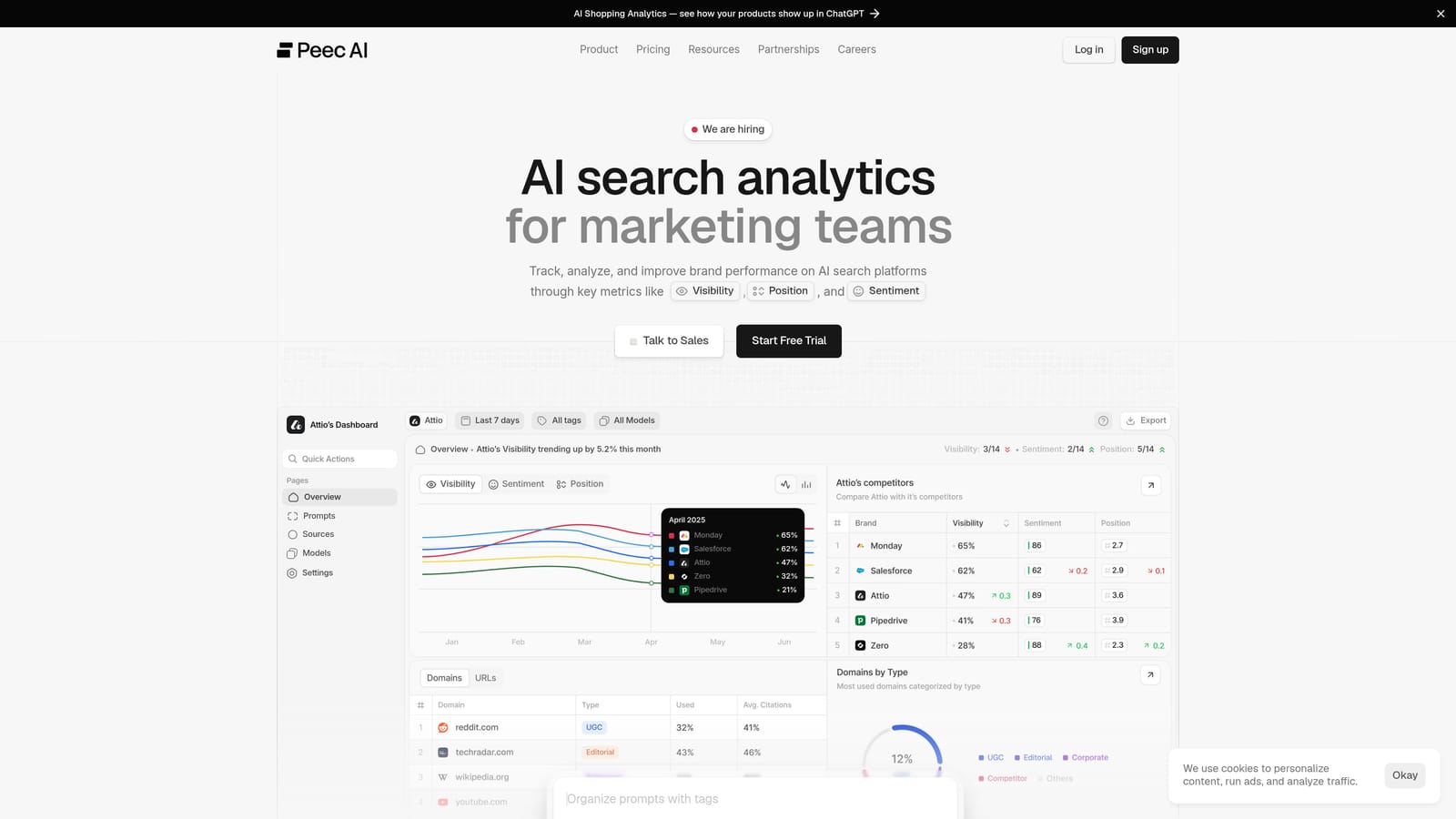
Peec is an AI visibility analytics platform that tracks brand mentions and share of voice across AI search platforms using prompt-based monitoring, with clean reporting designed for marketing stakeholders.
Where This Tool Shines
Peec's accessibility is its defining characteristic. Prompt-based monitoring means you define the queries most relevant to your brand, and Peec tracks how AI models respond to those prompts over time. This makes it straightforward to set up and easy to interpret — you don't need to be a technical SEO practitioner to extract meaningful insights from the platform.
The reporting interface is designed with non-technical stakeholders in mind. If you regularly need to show leadership or clients how your brand is performing in AI-generated search, Peec's output is clean, visual, and easy to contextualize without extensive data interpretation.
Key Features
Prompt-Based Brand Monitoring: Users define specific queries relevant to their brand and track AI model responses to those prompts over time.
Share-of-Voice Tracking: Measures how often your brand appears in AI-generated answers relative to competitors across monitored prompts.
Stakeholder-Ready Reporting: Clean, visual dashboards designed for presenting AI visibility data to marketing leadership or clients.
Multi-Model Tracking: Monitors brand presence simultaneously across multiple AI platforms from a single interface.
Trending Prompt Discovery: Identifies emerging prompts relevant to your brand category, surfacing new monitoring opportunities.
Best For
Marketing managers and agency teams who need to report on AI brand visibility without deep technical expertise. Well-suited for teams presenting AI search performance to clients or leadership on a regular cadence.
Pricing
Check peec.ai for current plans.
6. Promptwatch
Best for: Technical SEO professionals and brand managers optimizing for AI-generated answer visibility at the prompt level.
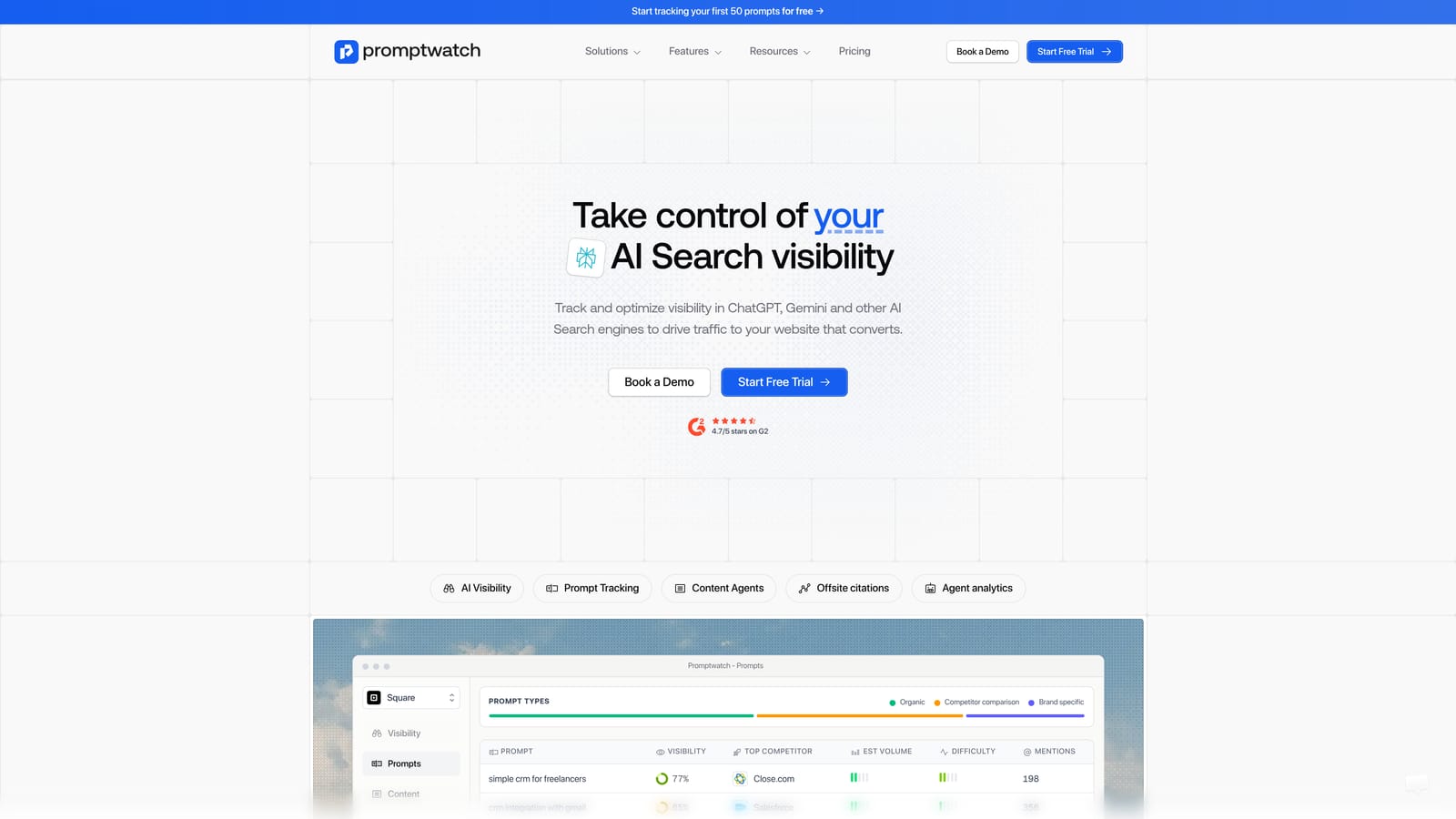
Promptwatch is a granular prompt-level tracking tool that monitors how specific queries return brand results across AI models, designed for practitioners who want detailed insight into AI answer composition.
Where This Tool Shines
Promptwatch goes deeper than most AI visibility tools. While platforms like Peec offer accessible share-of-voice reporting, Promptwatch is built for practitioners who want to understand the mechanics behind why certain prompts surface certain brands. It tracks how AI model behavior around branded and category-level queries shifts over time, which is valuable intelligence for anyone actively optimizing for AI answer inclusion.
The competitive intelligence angle is particularly strong. Promptwatch shows you which prompts consistently surface your competitors' brands, helping you identify high-opportunity queries where your brand is absent and where a targeted content strategy could shift the outcome.
Key Features
Prompt-Level Brand Tracking: Monitors exactly how specific queries return brand appearances in AI model responses, with granular detail.
Competitor Visibility Monitoring: Tracks which brands appear for the same prompts you're monitoring, revealing competitive positioning in AI answers.
High-Opportunity Prompt Identification: Surfaces queries where your brand's AI visibility is weak relative to competitors, prioritizing where to focus content efforts.
Behavioral Change Tracking: Monitors shifts in AI model behavior around branded queries over time, capturing changes in how models reference your brand.
Technical SEO Orientation: Designed for practitioners comfortable with prompt analysis who want detailed, query-level data rather than summary dashboards.
Best For
SEO professionals, brand managers, and technical marketers who want granular control over AI visibility analysis. Best suited for teams actively running AI answer optimization campaigns rather than those looking for high-level brand monitoring.
Pricing
Check promptwatch.io for current plans.
Which Platform Is Right for Your Team?
The right generative AI marketing platform depends on where your biggest gap is right now. Here's a quick way to think through it.
If you need a single platform that handles content creation, AI visibility tracking, and automated publishing in one place, Sight AI is the strongest option on this list. It's the only platform here that directly connects what you create to how AI models talk about your brand — which is the direction the entire discipline is moving.
If your primary need is high-volume content generation across multiple formats, Writesonic's template library and web-grounded output make it a reliable workhorse for busy content teams. If your bottleneck is operational — you need to systematize AI workflows across tools and data sources — AirOps is built precisely for that use case.
For teams focused specifically on AI visibility analytics, the choice comes down to depth versus accessibility. Profound and Peec both offer solid brand monitoring, with Profound leaning toward enterprise reporting and Peec toward ease of use for stakeholder presentations. Promptwatch is the right call for technical SEO practitioners who want prompt-level granularity and competitive intelligence in AI answer composition.
The broader trend is clear: in 2026, brands that understand how AI models talk about them — and create content specifically structured to influence those answers — have a meaningful advantage. That's the discipline of GEO, and it's becoming as important as traditional SEO for full-funnel visibility.
Stop guessing how AI models like ChatGPT and Claude talk about your brand. Start tracking your AI visibility today and see exactly where your brand appears across top AI platforms — then use Sight AI's content generation and automated indexing to close the gaps that matter most.