When enterprise teams publish hundreds or thousands of pages per month, getting that content discovered by search engines quickly becomes a critical bottleneck. Slow indexing means delayed organic traffic, missed revenue opportunities, and wasted content investment. Traditional methods like waiting for crawlers to find new URLs, manually submitting sitemaps, or relying on internal linking alone simply don't scale at the enterprise level.
Modern content indexing solutions automate URL submission, leverage protocols like IndexNow, monitor crawl budgets, and ensure every page gets indexed as fast as possible. Whether you're running a large publishing operation, a multi-brand e-commerce platform, or an agency managing dozens of client sites, the right tool can dramatically close the gap between "published" and "discoverable." Here are the top enterprise-grade options evaluated on automation capabilities, protocol support, scalability, integration options, and pricing transparency.
1. Sight AI
Best for: Enterprise teams that want content creation, automated indexing, and AI visibility tracking in one platform.
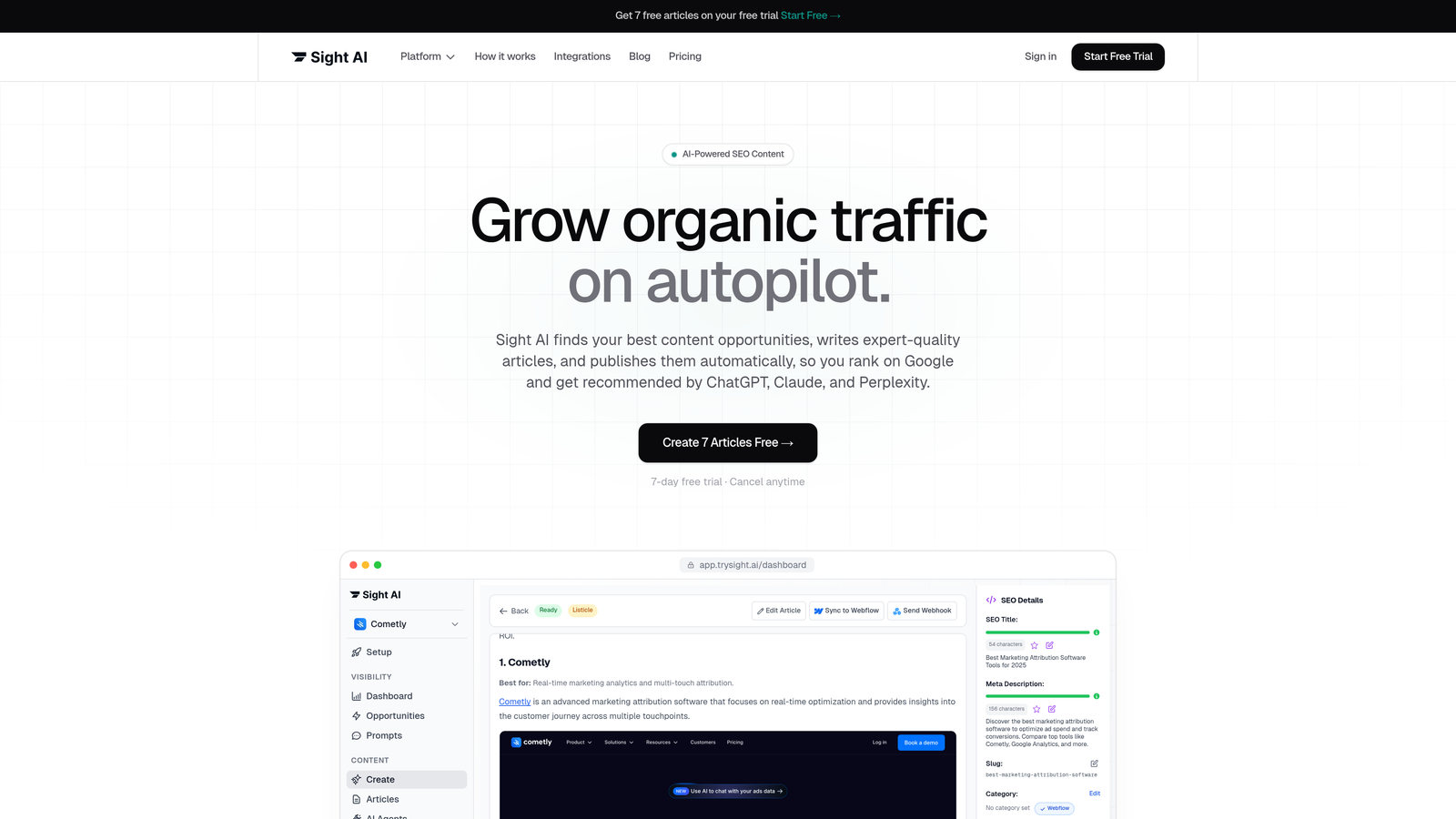
Sight AI is an all-in-one platform combining AI content generation, automated IndexNow-powered indexing, and AI visibility tracking to close the loop from content creation to search engine discovery.
Where This Tool Shines
Most indexing tools stop at URL submission. Sight AI takes a broader view: it connects the moment content is created to the moment it's discoverable by both search engines and AI models like ChatGPT, Claude, and Perplexity. That end-to-end coverage is genuinely rare in this space.
The Autopilot Mode is particularly valuable for large content teams. It handles content creation, CMS publishing, and indexing submission as a single continuous workflow, removing the manual handoffs that typically slow down enterprise content operations.
Key Features
IndexNow Integration: Automated sitemap updates trigger instant URL submission to all supporting search engines the moment content goes live.
AI Content Writer: 13+ specialized agents generate SEO and GEO-optimized articles including listicles, guides, and explainers at scale.
AI Visibility Tracking: Monitors how your brand is mentioned across ChatGPT, Claude, Perplexity, and other major AI platforms with sentiment analysis and prompt tracking.
CMS Auto-Publishing: Publishes content directly to your CMS and triggers indexing immediately, eliminating manual delays between drafting and submission.
Autopilot Mode: Hands-off workflow that runs content creation and indexing continuously without requiring manual intervention at each step.
Best For
Marketers, founders, and agencies who want to consolidate their content production, indexing automation, and AI brand monitoring into a single platform. Especially useful for teams investing heavily in both traditional SEO and emerging AI search visibility.
Pricing
Visit trysight.ai/pricing for current enterprise plans. Pricing is structured to accommodate teams at different publishing volumes.
2. IndexNow API (Direct Implementation)
Best for: Engineering-led teams that want maximum control over URL submission with zero licensing cost.
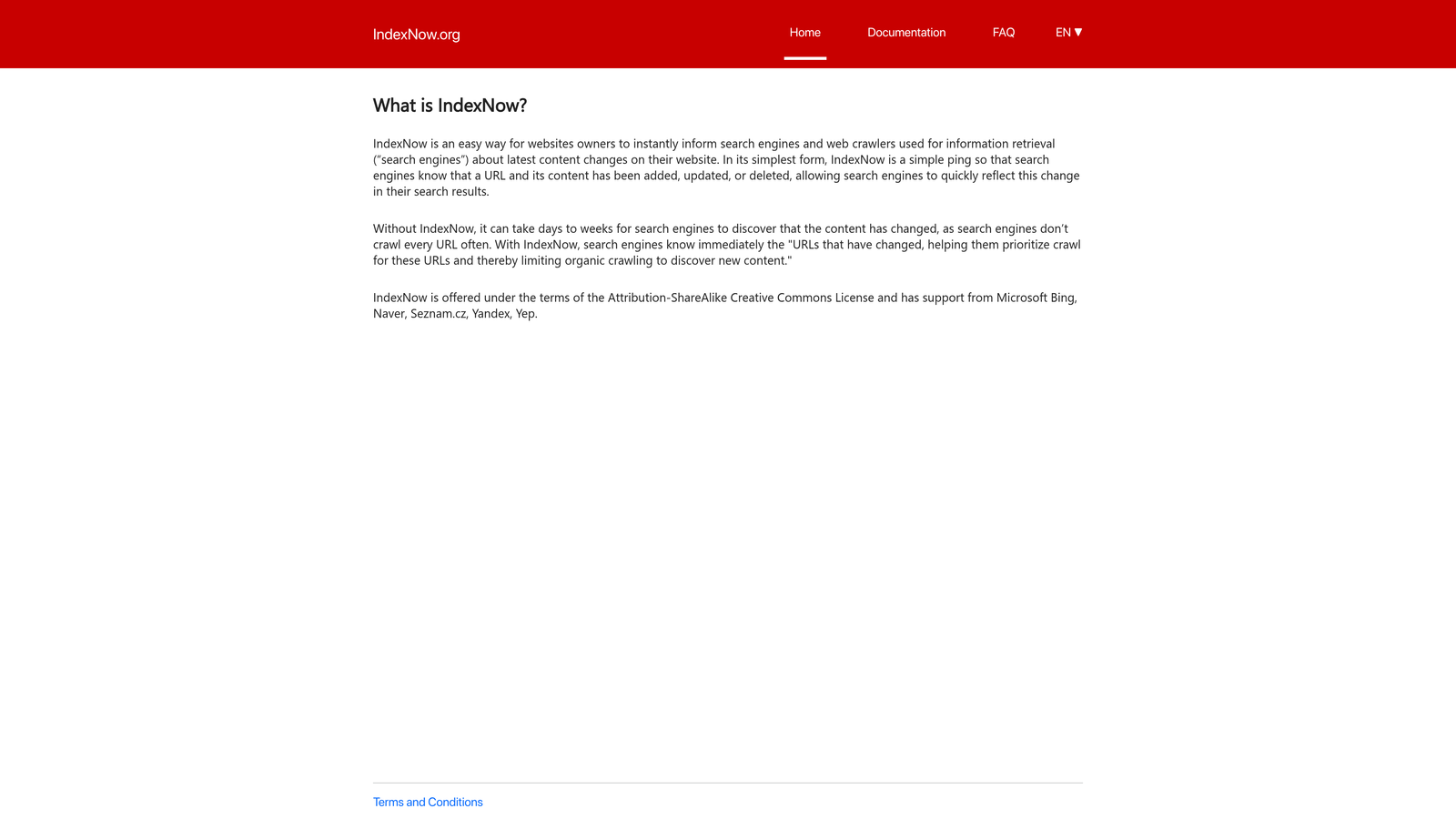
IndexNow is an open protocol that allows websites to notify participating search engines instantly when content is created, updated, or deleted, eliminating the wait for crawlers to rediscover changes.
Where This Tool Shines
The appeal of direct IndexNow implementation is straightforward: it's free, fast, and increasingly well-supported. Bing, Yandex, Naver, and Seznam all participate, meaning a single API call notifies multiple engines simultaneously. For enterprises with strong engineering resources, this is the most cost-efficient path to near-instant indexing.
The simplicity of the authentication model (key-based, no complex OAuth flows) means integration is typically a lightweight project. The real investment is in building the logic that triggers submissions at the right moments in your content pipeline.
Key Features
Free Open Protocol: No licensing costs, no vendor lock-in, and full transparency into how submissions work.
Multi-Engine Notification: A single submission notifies Bing, Yandex, Naver, Seznam, and other participating engines simultaneously.
Batch Submission: Submit up to 10,000 URLs per request, making it practical for large-scale content operations.
Simple HTTP POST API: Minimal setup with key-based authentication that most backend developers can implement quickly.
No Rate Penalties: Designed for high-frequency submission without throttling concerns for legitimate publishers.
Best For
Enterprises with in-house engineering teams who want a no-cost, fully controlled indexing pipeline. Less suitable for teams without development resources or those who need a managed solution.
Pricing
Completely free to use. The primary cost is developer time for integration and ongoing maintenance of the submission logic.
3. Google Search Console API
Best for: Teams that need programmatic Google-specific index monitoring and URL inspection at scale.
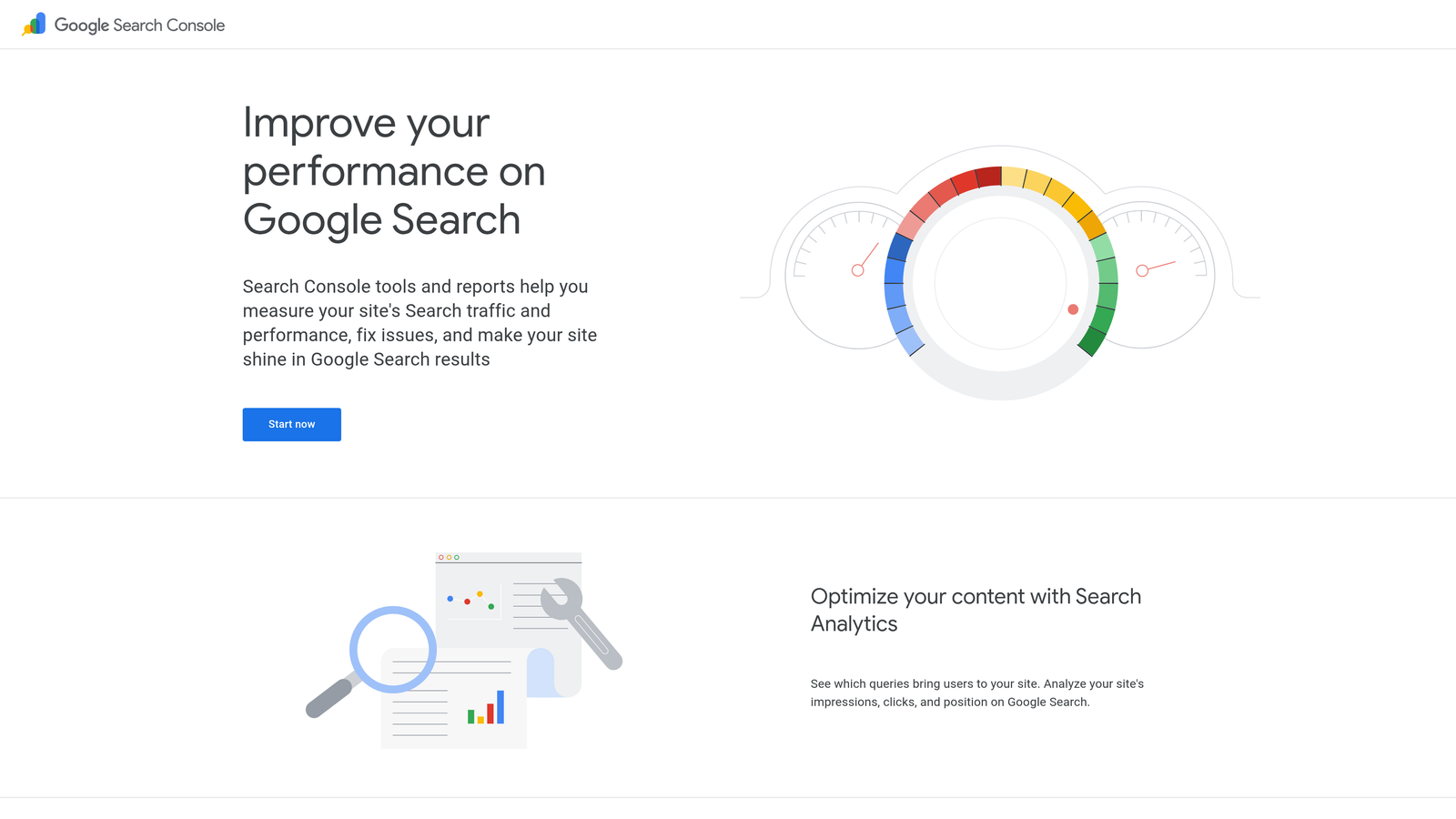
Google Search Console is Google's official interface for programmatic URL inspection, indexing requests, and crawl performance monitoring, giving enterprises direct visibility into how Google sees their content.
Where This Tool Shines
Google remains the dominant search engine for most markets, and its Search Console API gives enterprises a direct line into Google's index. The URL Inspection API is particularly valuable: you can programmatically check whether any given URL is indexed, identify why it isn't, and submit it for reconsideration without touching the UI.
The integration with Google's broader ecosystem (Analytics, BigQuery, Looker Studio) makes it a natural fit for enterprises that already run their reporting infrastructure on Google Cloud. Building automated indexing dashboards that combine crawl stats, coverage data, and traffic performance becomes significantly easier.
Key Features
URL Inspection API: Programmatically check the index status of any URL and diagnose why pages may be excluded from Google's index.
Sitemap Management: Submit and monitor XML sitemaps via API, with status reporting on processed versus indexed URLs.
Crawl Stats Reports: Access detailed data on Googlebot's crawl activity to identify budget inefficiencies and coverage gaps.
Google Ecosystem Integration: Connects natively with Analytics, BigQuery, and Looker Studio for unified reporting.
Daily Inspection Quota: Supports up to 2,000 URL inspection requests per day, sufficient for monitoring high-priority pages continuously.
Best For
SEO and technical teams at enterprises where Google traffic dominates. Works best as part of a broader indexing stack rather than a standalone solution, given the daily quota limitations for very large sites.
Pricing
Free to use. Requires a Google Cloud project setup for API access, which may involve minor infrastructure costs depending on usage volume.
4. Botify
Best for: Large enterprises with complex site architectures that need deep crawl intelligence and crawl budget optimization.
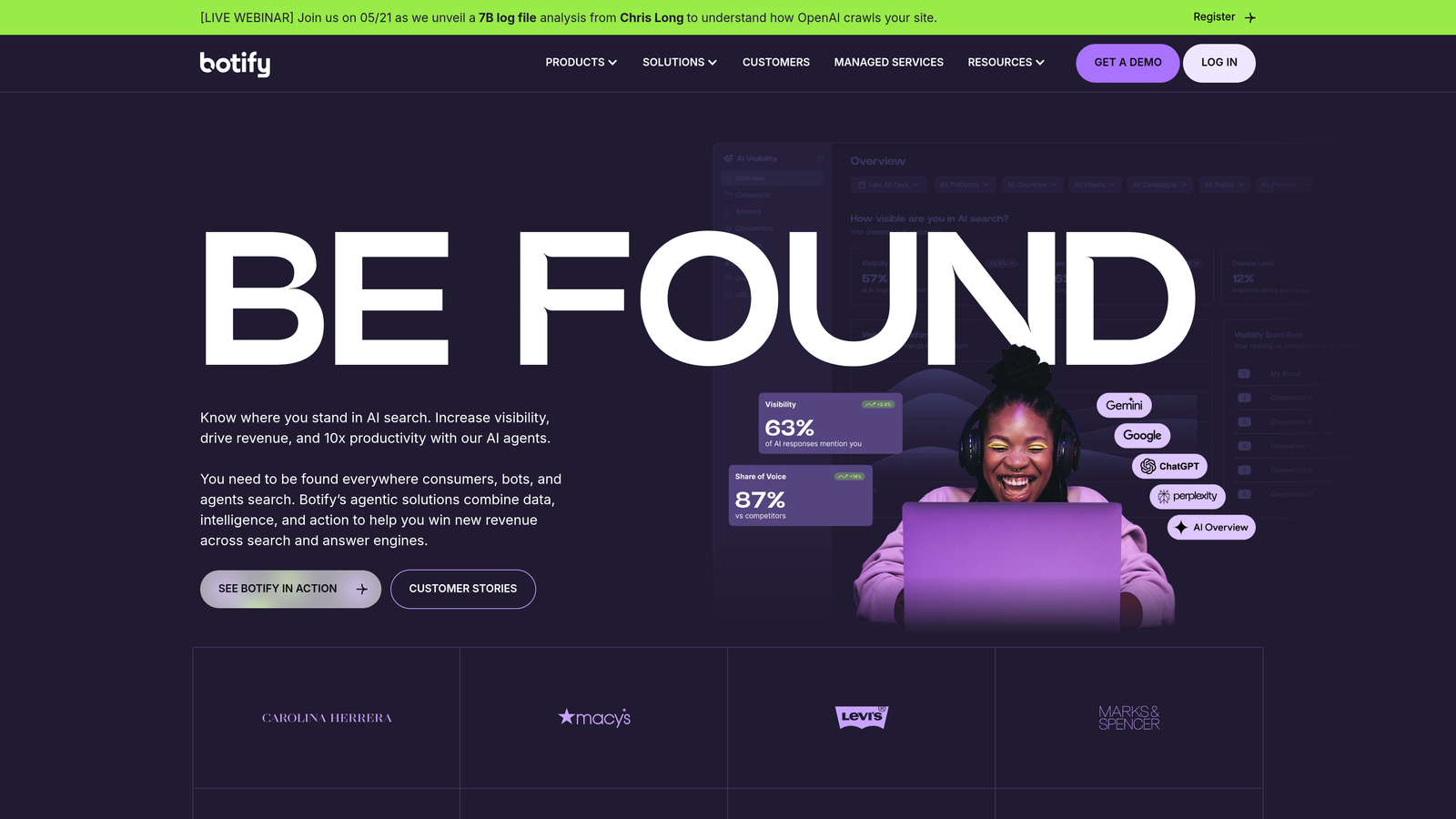
Botify is an enterprise technical SEO platform that combines deep crawl analysis, log file insights, and automated optimization to maximize crawl budget and indexing efficiency across large, complex websites.
Where This Tool Shines
Botify's real differentiator is its log file analysis capability. Rather than inferring how search engines crawl your site, you can see exactly what Googlebot and Bingbot are actually doing: which pages they visit, how often, and which they skip entirely. This is invaluable for diagnosing why certain content isn't getting indexed despite being technically accessible.
SpeedWorkers, Botify's server-side rendering feature, addresses one of the most common enterprise indexing problems: JavaScript-heavy pages that bots struggle to render. By pre-rendering content at the server level, it removes a major barrier between your content and the search engine index.
Key Features
SpeedWorkers: Server-side rendering that ensures bots receive fully rendered HTML, solving JavaScript indexability challenges at scale.
Log File Analysis: Real-time visibility into search engine bot behavior, showing exactly which pages bots crawl and which they ignore.
Crawl Budget Optimization: Automated prioritization that directs bot attention toward your highest-value, most indexable content.
ActionBoard: Automated SEO task management that translates crawl insights into prioritized, actionable fixes.
Enterprise Integrations: Connects with CDNs, major CMS platforms, and analytics tools for a unified technical SEO workflow.
Best For
Enterprise SEO teams at large publishers, e-commerce platforms, and media companies with millions of URLs and complex JavaScript architectures. The investment is substantial, so it's best suited for organizations where indexing efficiency directly drives significant revenue.
Pricing
Custom enterprise pricing, typically starting in the mid-five-figure range annually. Best suited for organizations with dedicated SEO budgets and technical teams.
5. ContentKing (by Conductor)
Best for: Teams that need continuous, real-time indexing health monitoring rather than periodic audits.
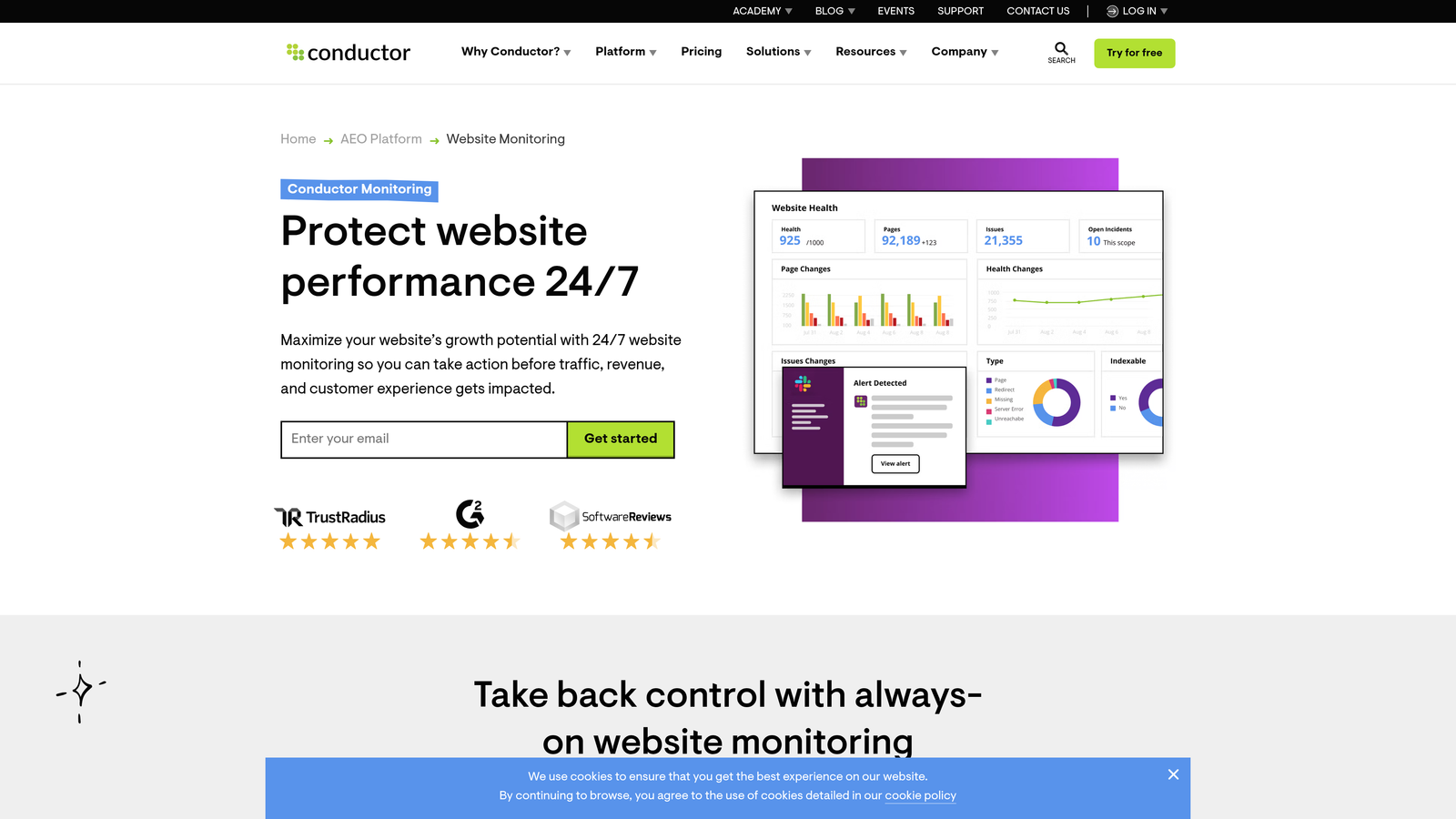
ContentKing is a real-time website auditing and monitoring platform that catches indexing issues 24/7 before they can compound into significant organic traffic losses.
Where This Tool Shines
Most SEO crawlers run on a schedule: weekly, daily at best. ContentKing runs continuously, which means it catches the moment a noindex tag gets accidentally added, a robots.txt change blocks a critical section, or a canonical suddenly points to the wrong URL. For enterprise sites where a single misconfiguration can affect thousands of pages, that speed of detection is genuinely valuable.
The change tracking feature is particularly useful for large teams where multiple developers, marketers, and content editors are touching the site simultaneously. You get a complete audit trail of what changed, when, and what the indexing impact was.
Key Features
24/7 Continuous Monitoring: No scheduled crawls; the platform audits your site in real time and alerts you the moment an indexing issue appears.
Indexability Change Detection: Tracks noindex tags, canonical issues, robots.txt changes, and HTTP status codes across all monitored pages.
Change History: Full audit trail showing exactly what changed on any page and when, making it easy to correlate technical changes with traffic shifts.
Alert Integrations: Connects with Slack, Google Analytics, and major SEO platforms so alerts reach the right people immediately.
No Crawl Scheduling Required: Continuous auditing by default means there's no gap between a problem occurring and your team being notified.
Best For
Enterprise SEO teams and agencies managing high-traffic sites where indexing regressions need to be caught and resolved within hours, not days. Particularly valuable for sites with frequent content updates or large developer teams.
Pricing
Custom pricing based on the number of monitored pages. ContentKing is part of Conductor's broader SEO platform, so pricing often reflects bundled capabilities.
6. Oncrawl
Best for: Data-driven SEO teams that need to correlate crawl behavior with log file data and export findings to BI tools.
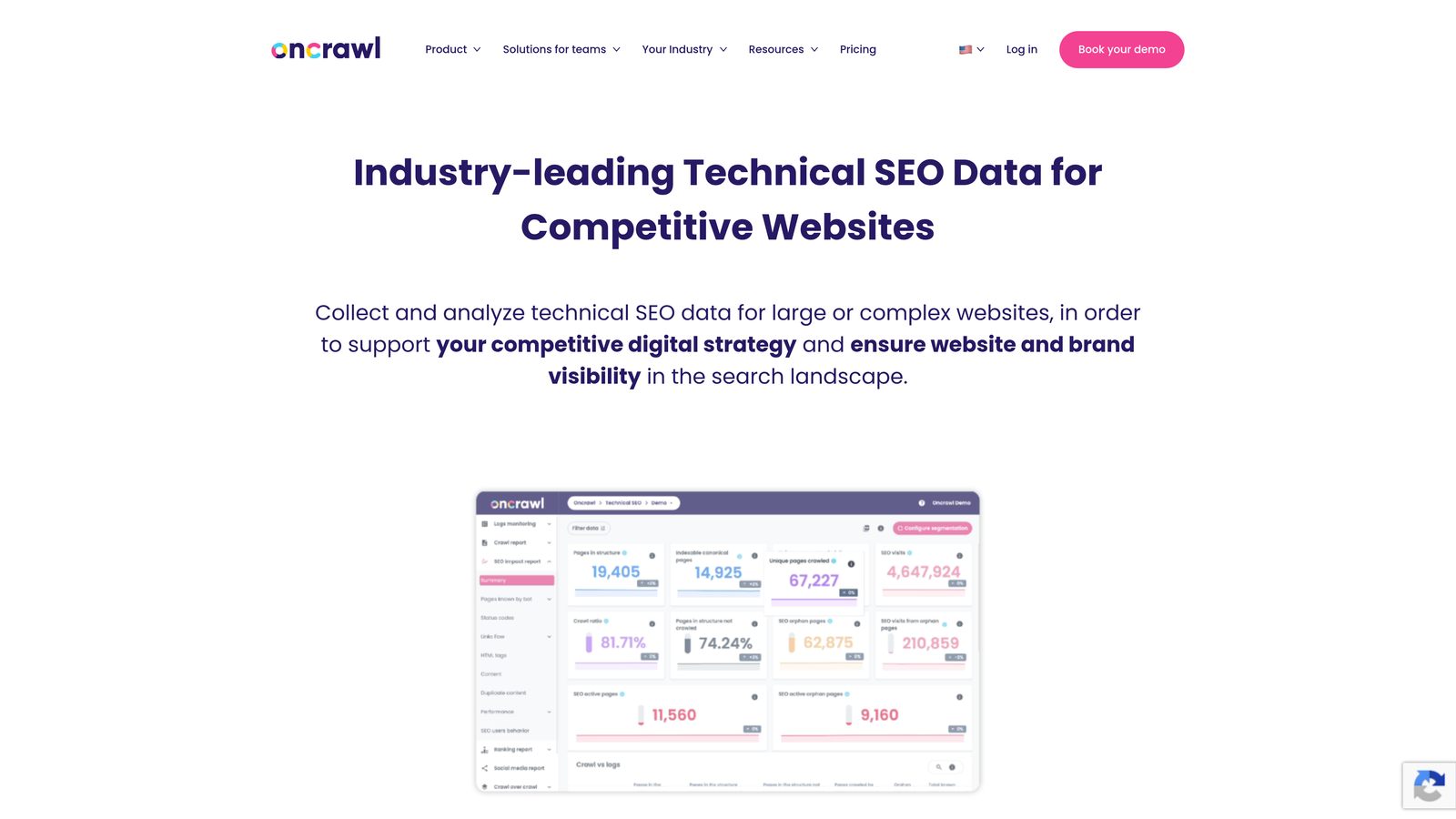
Oncrawl is a data science-powered SEO crawler that combines log file analysis with crawl data to provide deep indexing intelligence, particularly for enterprises that want to feed SEO data into their broader analytics infrastructure.
Where This Tool Shines
Oncrawl's strength is in data depth and flexibility. The platform doesn't just crawl your site; it overlays that crawl data with actual bot log files to show you the complete picture of how search engines interact with your content. This combination makes it easy to identify orphan pages, crawl budget waste, and indexing gaps that would be invisible from crawl data alone.
For enterprises with existing BI infrastructure, the ability to export directly to BigQuery, Data Studio, or custom tools is a significant advantage. SEO data becomes part of the broader business intelligence layer rather than living in a siloed platform.
Key Features
Log File Analysis: Combines server log data with crawl results to show real bot behavior alongside your site's technical structure.
Segmentation Engine: Analyze indexing patterns across specific site sections, content types, or URL structures to identify where indexing is failing.
BI Tool Integration: Native export to BigQuery, Data Studio, and custom BI platforms for enterprise-level reporting.
Orphan Page Detection: Identifies content that search engines can't reach through normal crawling, a common source of indexing gaps on large sites.
JavaScript Rendering: Handles SPAs and dynamically rendered content to ensure accurate indexability analysis for modern web architectures.
Best For
SEO analysts and data teams at enterprises that want to combine crawl intelligence with log analysis and route the findings into existing reporting infrastructure. Strong fit for technically sophisticated teams comfortable working with raw data exports.
Pricing
Plans start around $69/month for smaller sites; enterprise plans are available with custom pricing based on crawl volume and data retention requirements.
7. Yoast SEO (Enterprise/Premium)
Best for: Large WordPress publishing operations that need CMS-native indexing automation without custom development.
Yoast SEO is the leading WordPress SEO plugin with built-in XML sitemap generation, IndexNow support, and on-page optimization designed to handle large publishing operations at scale.
Where This Tool Shines
For enterprises running on WordPress, Yoast removes the need for custom indexing infrastructure by handling sitemap generation, IndexNow submission, and canonical management natively within the CMS. Every time a post is published or updated, the sitemap updates automatically and IndexNow notifications fire without any manual intervention or engineering effort.
The multisite support is particularly relevant for enterprise WordPress installations managing multiple brands or regional sites from a single dashboard. Indexing automation scales across the entire network without requiring separate configuration for each site.
Key Features
Automatic XML Sitemaps: Generates and updates sitemaps on every publish action, keeping search engines informed of new and updated content in real time.
IndexNow Integration: Notifies supporting search engines instantly when content is published or updated, no custom development required.
Canonical URL Management: Prevents duplicate content indexing issues with automated canonical tag generation and management.
Redirect Manager: Maintains link equity during content migrations and URL restructuring with built-in redirect management.
Multisite Support: Scales across enterprise WordPress networks with consistent indexing automation across all sites in the installation.
Best For
Enterprise content teams and large publishers running WordPress who want robust indexing automation without relying on custom API integrations. Less applicable for teams on non-WordPress CMS platforms.
Pricing
Yoast SEO Premium starts at $99/year per site. Volume discounts are available for multisite installations, making it cost-effective for enterprises managing multiple WordPress properties.
8. Screaming Frog SEO Spider
Best for: Technical SEO teams that need a powerful diagnostic crawler for identifying indexing blockers before they impact organic performance.
Screaming Frog SEO Spider is the industry-standard desktop crawler for auditing enterprise sites to identify indexing blockers, orphan pages, and technical SEO issues at scale.
Where This Tool Shines
Screaming Frog is the go-to diagnostic tool for enterprise SEO audits precisely because it gives you complete, granular control over what you crawl and how. You can crawl millions of URLs, filter by indexability status, identify redirect chains, and surface noindex directives across an entire site in a single session. It's the kind of tool that reveals problems other platforms miss.
The command-line scheduling capability is what elevates it from a manual audit tool to an automated workflow component. Enterprises can schedule regular crawls, export results to their reporting stack, and maintain continuous visibility into indexing health without manual intervention.
Key Features
Large-Scale Crawling: Crawl millions of URLs to surface noindex directives, redirect chains, broken links, and other indexing blockers across the full site.
JavaScript Rendering: Audits SPAs and dynamically rendered content for indexability issues that standard crawlers miss.
Search Console Integration: Correlates crawl data with Google index coverage data for a complete picture of indexing performance.
Custom Extraction: XPath and regex-based extraction for auditing structured data, metadata, and custom on-page elements at scale.
Command-Line Automation: Schedule recurring crawls and automate result exports for integration into broader reporting workflows.
Best For
Technical SEO specialists and agencies conducting deep indexing audits. Works best as a diagnostic layer within a broader indexing stack rather than as a standalone real-time monitoring solution.
Pricing
Free for up to 500 URLs. The paid license is £259/year per user, making it one of the most cost-effective enterprise-grade crawlers available.
9. Cloudflare Zaraz + Workers
Best for: Enterprises that need infrastructure-level control over bot access, rendering, and indexing behavior at the edge.
Cloudflare Workers is an edge computing platform that gives enterprises the infrastructure-level tools to control how search engine bots access, render, and index their content globally.
Where This Tool Shines
This is the most technically sophisticated option on the list, and intentionally so. Cloudflare's edge network sits between your origin server and every visitor, including search engine bots. That position gives you capabilities that no SEO tool operating at the application layer can match: dynamic bot routing, edge-level pre-rendering, custom IndexNow triggers, and cache controls that directly influence crawl freshness signals.
Zaraz's server-side tag management is particularly relevant for indexing. Client-side tag bloat is a well-documented contributor to slow page loads that discourage bot crawling. Moving tag execution server-side reduces page weight for bots, improving crawlability without sacrificing analytics or marketing functionality.
Key Features
Serverless Workers: Build custom bot management and pre-rendering logic at the edge, ensuring bots receive fully rendered, fast-loading pages regardless of origin server performance.
Zaraz Server-Side Tags: Moves tag execution server-side to reduce client-side bloat that negatively impacts crawlability and page speed signals.
Custom IndexNow Triggers: Build IndexNow submission logic directly into edge Workers, triggering URL notifications based on any custom condition.
Cache and TTL Controls: Fine-grained cache management that influences how frequently search engine bots re-crawl and refresh your content.
Global CDN Delivery: Ensures fast page delivery to search engine bots from any geographic location, supporting consistent crawl performance worldwide.
Best For
Engineering teams at large enterprises that already use Cloudflare as their CDN and want to extend their edge infrastructure to serve indexing and crawl management goals. Requires significant development expertise to implement effectively.
Pricing
Workers free tier available for light usage. Paid plans start from $5/month; enterprise plans with custom pricing are available for high-volume deployments.
Choosing the Right Solution for Your Enterprise
The right content indexing solution depends heavily on your team's technical capabilities, CMS environment, and the specific bottleneck you're trying to solve. Here's a quick framework for matching tool to use case.
For all-in-one content and indexing automation: Sight AI is the standout choice for teams that want to connect content creation, automated IndexNow submission, and AI visibility tracking in a single workflow. It's particularly well-suited for marketing teams and agencies that don't want to stitch together separate tools for writing, publishing, and indexing.
For deep technical auditing: Screaming Frog and Oncrawl are the workhorses. Screaming Frog excels at diagnostic crawls and identifying blockers; Oncrawl adds the log file correlation layer for enterprises that need to understand actual bot behavior, not just site structure.
For real-time monitoring: ContentKing is the clear choice when your priority is catching indexing regressions the moment they happen, especially on sites with frequent updates and large developer teams.
For custom-built pipelines: The IndexNow API (direct implementation) and Cloudflare Workers give engineering-led teams maximum control with minimal vendor dependency. Google Search Console API fills the Google-specific monitoring gap that IndexNow doesn't cover.
For WordPress enterprises: Yoast SEO Premium handles indexing automation natively within the CMS at a fraction of the cost of enterprise platforms.
Many enterprise teams end up combining two or three of these tools: an all-in-one platform for content and indexing automation, a diagnostic crawler for periodic audits, and real-time monitoring for regression detection. The key is identifying your primary bottleneck first, then building outward.
If AI search visibility is part of your growth strategy alongside traditional SEO, tracking how AI models reference your brand is becoming just as important as tracking Google rankings. Start tracking your AI visibility today and see exactly where your brand appears across top AI platforms, alongside the automated indexing workflows that keep your content discoverable from the moment it publishes.